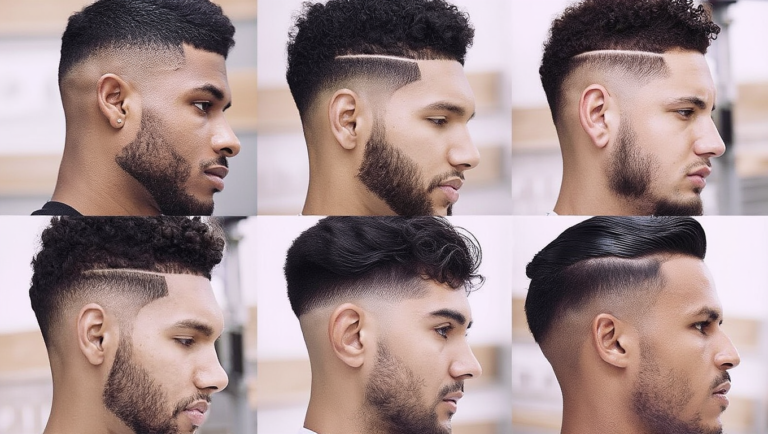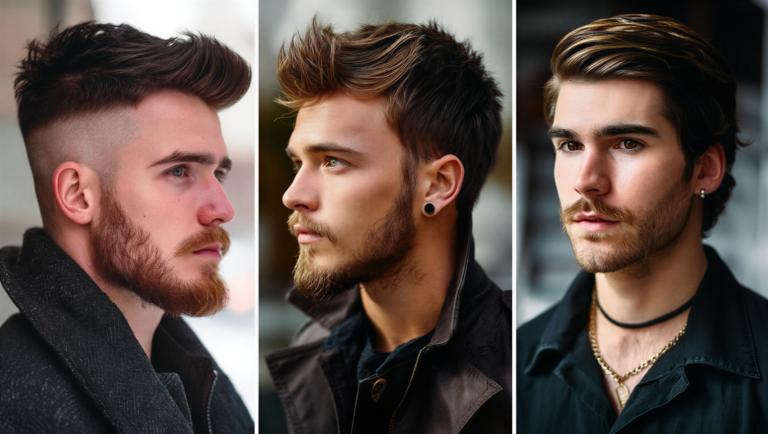
Low Maintenance Haircuts for Men: Look Good Without the Daily Effort
Low Maintenance Haircuts for Men: What Actually Makes a Haircut Low Maintenance
The term low maintenance gets used loosely in men’s grooming. Every haircut is described as easy to style. Then the man who had it cut discovers it needs a specific blow-drying technique, a particular product layering routine, and fifteen minutes he does not have.
A genuinely low maintenance haircut has three qualities. It holds its shape for weeks rather than collapsing within days. It looks acceptable with no product at all on the mornings when there is no time. And it grows out evenly, so it reads as intentional rather than overgrown between appointments. The fifteen haircuts below meet all three.
Buzz Cut: Zero Styling, Maximum Practicality

The buzz cut is the most honest answer to the question. It removes the styling variable rather than reducing it. No product, no comb, no technique, no mirror time. The haircut simply does what it was cut to do until the next appointment.
The modern buzz cut runs slightly longer than the strict military version. A two or three on top with a taper through the sides is typical. That small amount of variation separates a contemporary buzz cut from a home clippers job. It also keeps the result looking like a barbershop decision. For anyone whose morning routine needs to be as short as possible, nothing else competes.
Crew Cut: The Classic Low Maintenance Choice for Every Age
The crew cut sits one step above the buzz in length and versatility. It adds no meaningful maintenance in exchange. The extra length on top shows natural texture, which is what makes it read as a hairstyle rather than a practical length decision.
Asking for it accurately is the main thing. A useful request is scissor length on top, roughly an inch at the front graduating shorter toward the crown, with a taper through the sides and neckline. That front-to-back graduation is the detail most people forget to mention, and it is what stops the top looking like a flat platform. The cut needs no daily product to look neat. A pea-sized amount of matte clay adds definition when a meeting or event calls for something sharper. It suits every face shape, works in every professional setting, and stays presentable for three to four weeks. Among the classic men’s haircuts, few cover as much ground for as little effort.
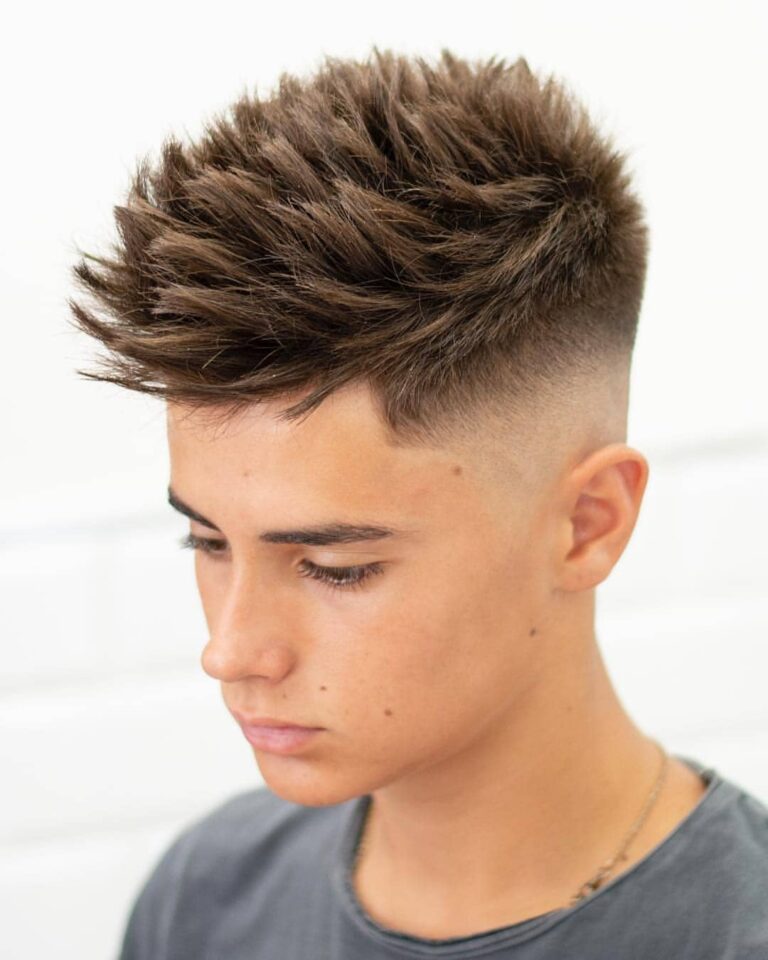
Short Textured Crop: Modern Style Built Into the Cut Itself
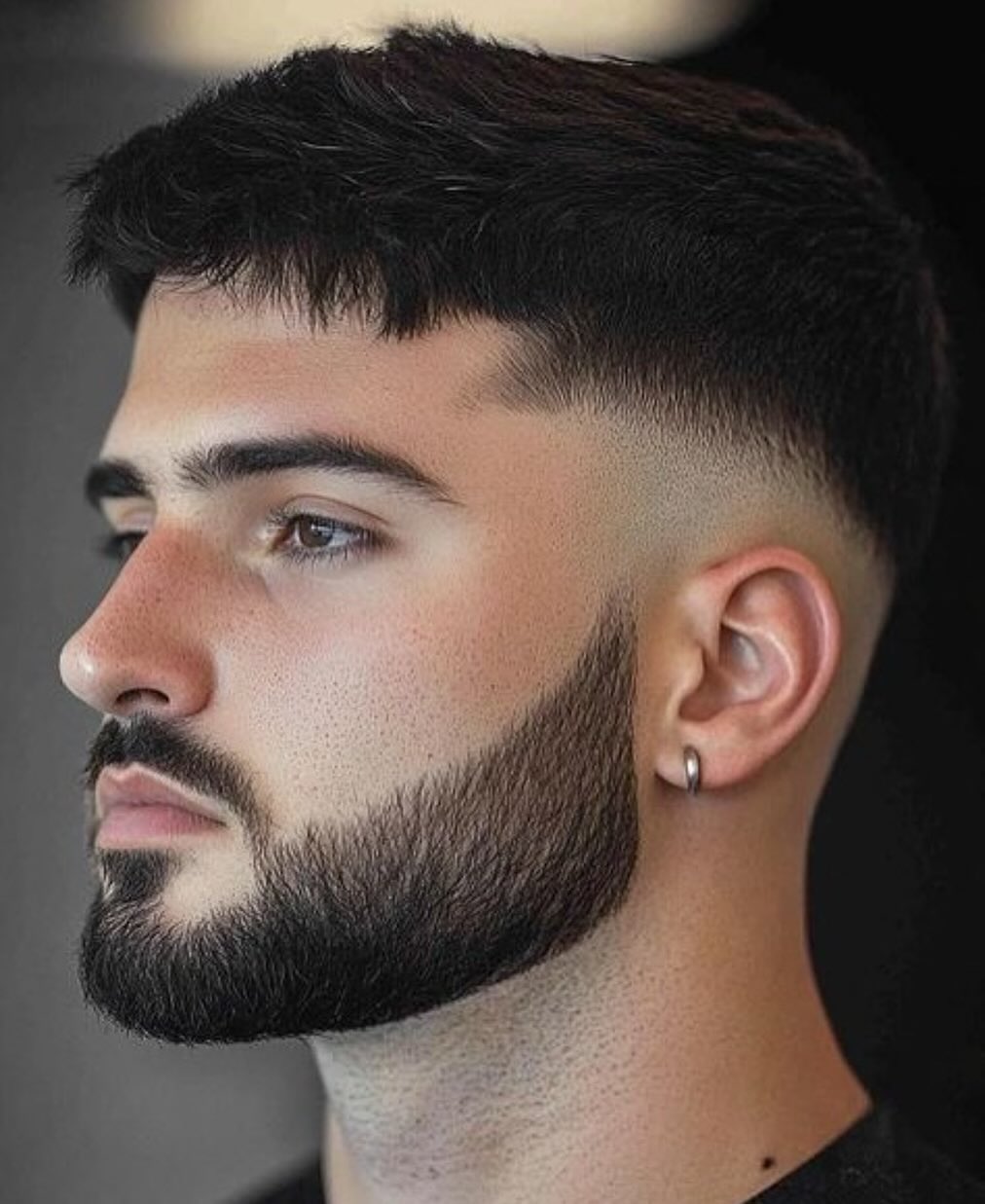
The short textured crop suits men who want the cut to look current rather than merely short. The choppy layering the barber applies builds texture and dimension into the hair itself. Neither quality has to be recreated with product each morning.
Washed and left to air dry, the crop sits with visible movement. The varied section lengths do that work on their own. A small amount of matte clay sharpens the definition when something more polished is wanted. On mornings with no time for product, the cut still looks deliberate. The texture lives in the cut, not in the styling.
Classic Taper Cut: The Foundation That Makes Every Style Look Better

A taper is a technique rather than a style. The hair graduates shorter from the crown down toward the neckline and sideburns. That gradual finish gives a smooth perimeter, which is what makes a haircut look maintained from every angle instead of simply cut to one length.
The reason it lasts is arithmetic. Scalp hair grows around half an inch a month, and that rate is fairly consistent from person to person. A hard, squared perimeter shows every millimetre of that growth as a thickening line. A graduated one absorbs it, because there is no single edge for the eye to measure against. Ask for a natural taper at the neckline and scissor-over-comb work above the ears, and specify no hard line at the back. Worn with a natural finish on top, a taper covers a corporate meeting and a weekend without adjustment. It is also the gentler relative of the low taper fade, which uses the same principle with a shorter finish.
Low Fade Haircut: Contemporary Clean Lines With Minimal Upkeep

A low fade gives the barbershop-quality perimeter that reads as current. It does so without the high contrast of mid and high fades, which need more frequent visits to stay sharp. The fade begins close to the natural hairline and rises gradually. That suits professional settings while still looking modern rather than conservative.
It also stretches the gap between appointments further than higher versions. Regrowth at a low fade line is simply less visible as it comes in. That makes it the practical fade for men who want the look without committing to monthly bookings. Paired with almost any top style here, a low fade completes the haircut and asks nothing of the morning routine.
French Crop: The Hairstyle That Styles Itself
The French crop earns its place because of the fringe. That blunt horizontal front section holds its forward position through its own weight. No product and no technique are needed to keep it there.
Hair type decides how well this works. Straight and slightly wavy hair falls forward naturally and behaves perfectly. Very curly hair pushes the fringe upward instead, so the same cut needs a shorter, more textured fringe to sit right. A cowlick at the front hairline causes the other common problem, and a barber can point-cut into the fringe to break its weight so it lies flat. The crop also has a practical advantage worth knowing: the forward fringe covers a receding front hairline better than almost any short cut. Kept with tapered or faded sides, it looks neat all day and stays that way for weeks. Anyone considering it should also look at the textured crop, which is its softer, less blunt relative.
Ivy League Cut: Professional Versatility With Zero Complexity

The Ivy League works across several levels of formality with no change in approach. The top is slightly longer than a crew cut. That length is enough to comb neatly to one side for formal settings, or to leave with natural texture for casual ones. One haircut, several appropriate outcomes.
The trade-off is a slightly shorter window between cuts. Once the top passes about two inches, it starts to lose the clean shape the style depends on. Four weeks is realistic. In exchange, it is one of the few short cuts that genuinely handles a wedding and a Saturday morning without any change in routine.
High and Tight: Sharp, Structured and Genuinely Effortless
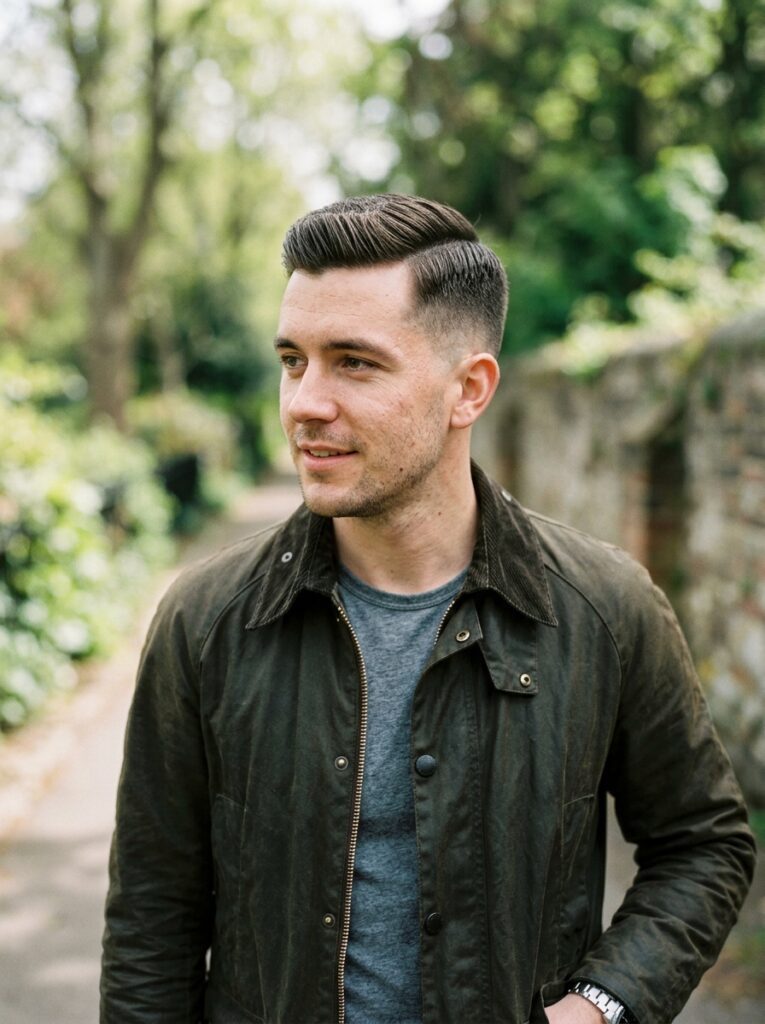
The high and tight takes the buzz cut and adds contrast. The sides and back go very short or bare. A defined block of length stays on top. The result looks deliberate and structured rather than simply cropped.
Styling time stays at zero. The top is short enough to need nothing. The catch is the visit schedule, because high contrast shows regrowth faster than low contrast does. Two to three weeks keeps it looking correct. If that frequency does not suit you, drop the fade line lower and the same shape holds far longer. The full range of options is covered in our guide to fade haircuts for men.
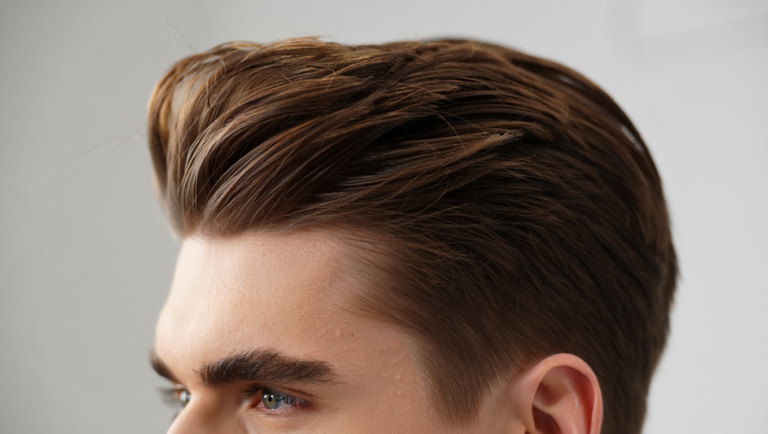
Short Quiff: Volume Without a Long Routine

A full quiff is not a low maintenance style. A short quiff is a different proposition entirely. Keeping the front section under two inches means the hair lifts with far less help.
The whole routine is one step. Push the front up and back with your fingers while the hair is still slightly damp. A small amount of matte paste locks it. Thirty seconds is enough. Ask the barber to cut the top with graduated length, longest at the front. That built-in graduation is what removes the need for a blow dryer.
Caesar Cut: Short, Forward and Almost Impossible to Get Wrong
The Caesar cut keeps everything short and pushes the top forward into a straight, level fringe. It is one of the oldest short cuts in continuous use. It also remains one of the least demanding.
Two things make it worth considering. The forward direction disguises a receding hairline more effectively than most short cuts. And the uniform length means there is no shape to maintain, so it grows out without ever looking wrong. A dab of matte cream separates the fringe if you want more definition. Skip it and the cut still holds.
Short Comb Over: The Office-Ready Cut That Takes One Minute

The short comb over gets confused with much more demanding styles. Kept short, it is one of the easiest polished looks available. The hair simply moves to one side and stays there.
The key detail is the part. Ask the barber to cut with your natural part rather than against it. Hair that is cut along its own growth direction falls into place on its own. Cut against it, and you will fight the same cowlick every morning. With a taper on the sides, this covers formal and casual settings with one comb stroke.
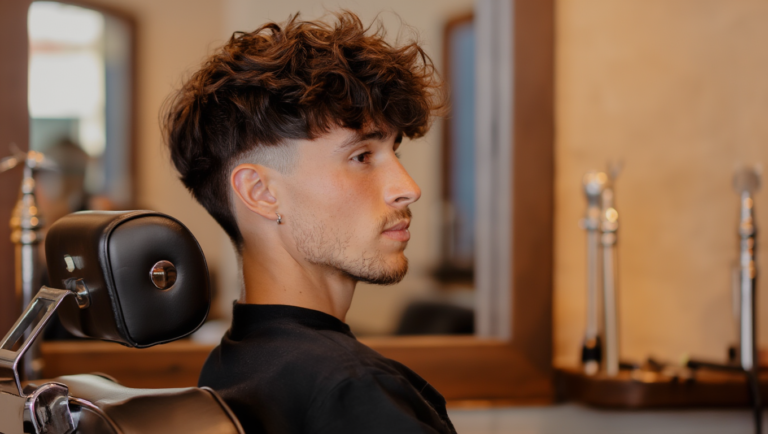
Short Curly Crop: Working With Curl Instead of Against It
Curly hair becomes high maintenance only when it is cut like straight hair. Cut correctly, curls do most of the styling work themselves. The short curly crop keeps two to three inches of curl on top with tapered sides.
Two rules keep the effort low. Ask for a dry cut, so the barber can see where each curl actually sits. And avoid thinning shears through the top, which cause frizz rather than removing bulk. A leave-in conditioner on damp hair is the only product needed. For the full range of cuts by curl pattern, see our guide to curly hairstyles for men.
Shaved Head With Stubble Beard: The Lowest Effort Look That Still Reads Deliberate
A fully shaved head removes hair maintenance completely. On its own it can look severe. Pairing it with a short, evenly trimmed beard solves that immediately.
The beard restores the facial framing that hair usually provides. It also signals a deliberate choice rather than a response to hair loss. Keep the beard between three and six millimetres for the cleanest balance. Scalp skin needs moisturiser and sunscreen once the hair is gone, since it is now exposed skin like any other. That is the whole routine.
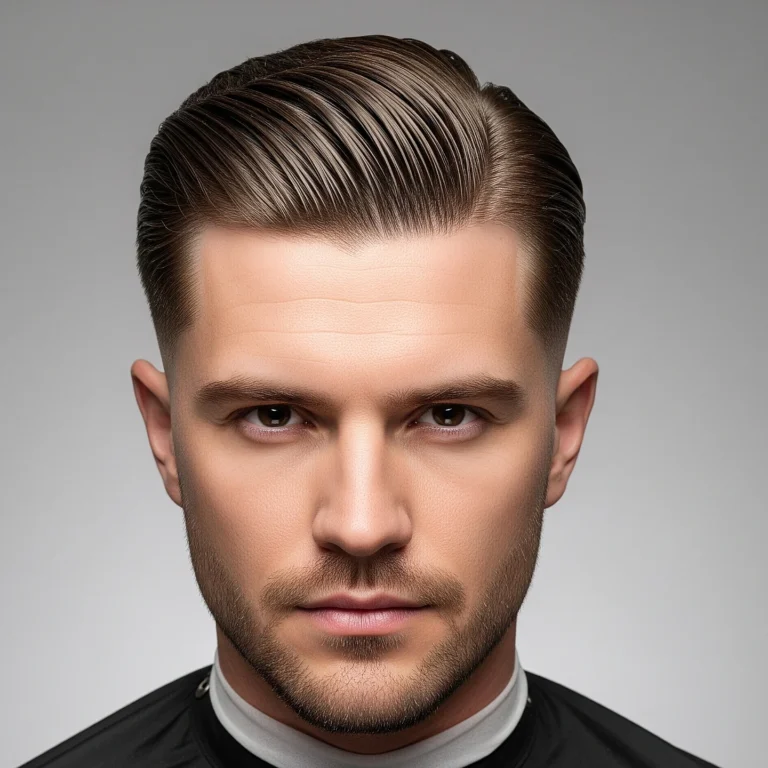
Short Side Part: Traditional, Neat and Nearly Foolproof
The short side part is the most conservative cut on this list, and that is the point. It has looked appropriate in every decade since the 1920s. It will look appropriate in the next one too.
Length on top stays around an inch and a half. The sides are tapered rather than faded, which keeps the look traditional and stretches the time between cuts. Comb through once after a shower and it holds all day. Some barbers cut a light guide line at the part, though a natural part is usually enough and grows out more gracefully.
Short Layered Cut for Fine Hair: Structure Where There Is Little Density
Fine hair goes flat quickly, and heavy products make it worse. A short layered cut fixes the problem structurally rather than chemically. Light layers through the top create lift that stays without help.
Keep the overall length short, because weight is what pulls fine hair down. Avoid anything with shine, since gloss makes thin areas more visible. A matte powder or dry texture spray at the roots adds volume in seconds. Our guide to haircuts for men with thin hair covers the options in more depth.
How to Make Any Haircut Lower Maintenance
The cut matters most, but a few habits reduce daily effort further regardless of which style you choose.
Match your washing frequency to your scalp rather than to a schedule. The American Academy of Dermatology advises washing based on how quickly your hair gets oily. Straight hair with an oily scalp may need daily shampooing. Coarse or tightly curled hair usually needs far less, because oil travels down the shaft more slowly.
Own one product rather than four. A single matte clay or paste covers almost every short style here. Tell your barber how long you want between visits, and let them adjust the cut to that number. A haircut designed for a six-week gap is cut differently from one designed for three.
Finally, keep the neckline natural rather than squared. A blocked neckline looks sharp for a week and untidy for the three that follow.
Low Maintenance Haircuts for Men: Common Questions
How often do low maintenance haircuts need a trim?
It depends on contrast, not length. Tapered cuts hold their shape for five to six weeks. High contrast fades need two to three. If visit frequency is your main concern, choose a taper over a fade.
Which haircut needs the least styling of all?
The buzz cut and the shaved head both require none. Between the two, the buzz cut is more forgiving, since it does not expose scalp irregularities the way a full shave does.
Can thick hair be low maintenance?
Yes, but the bulk has to be removed in the cut. Ask the barber to thin the interior while keeping the outline. Thick hair left uniformly medium-length turns into a helmet shape and needs daily work.
What should I tell my barber to get a low maintenance result?
Give them the number of weeks you want between visits. Ask for a natural neckline and a taper rather than a hard line. Say clearly that you want it to look right with no product. Most barbers will adjust the cut accordingly.