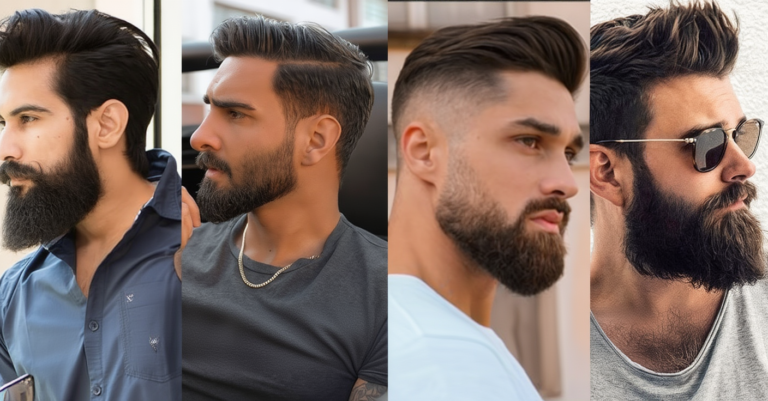

Textured Fringe Haircut for Men: Modern Stylish Looks
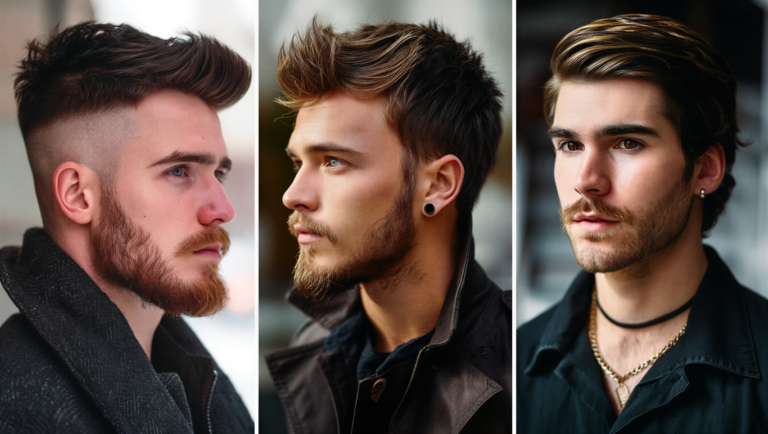
The textured fringe has held its place as one of the most requested men’s haircuts for several years now. The reason is simple. It looks deliberately styled while asking almost nothing of the man wearing it.
Fourteen variations follow. But most guides skip the thing that actually determines whether you get the haircut you wanted, so this one starts there.
Texture Is a Cutting Technique, Not a Product
This is the part men get wrong. Texture is created by the barber with scissors, not by you with clay in the morning. If the cut has no texture in it, no product will add any.
Three techniques produce it. Point cutting means the scissors are held vertically and cut into the ends, leaving them uneven rather than blunt. That is the most common method and the safest on most hair types.
Slide cutting runs the blades down the hair shaft to remove weight through the length rather than only at the ends. It suits thicker hair that needs bulk taken out.
Razor cutting gives the softest, most broken-up ends of the three. It produces beautiful movement on straight hair and causes frizz on curly or coarse hair, so it is worth asking about rather than assuming.
Ask for point cutting through the fringe as a default. Say the word texture out loud, because a barber who is not told will often cut a blunt fringe and leave you styling something that has no movement built into it.
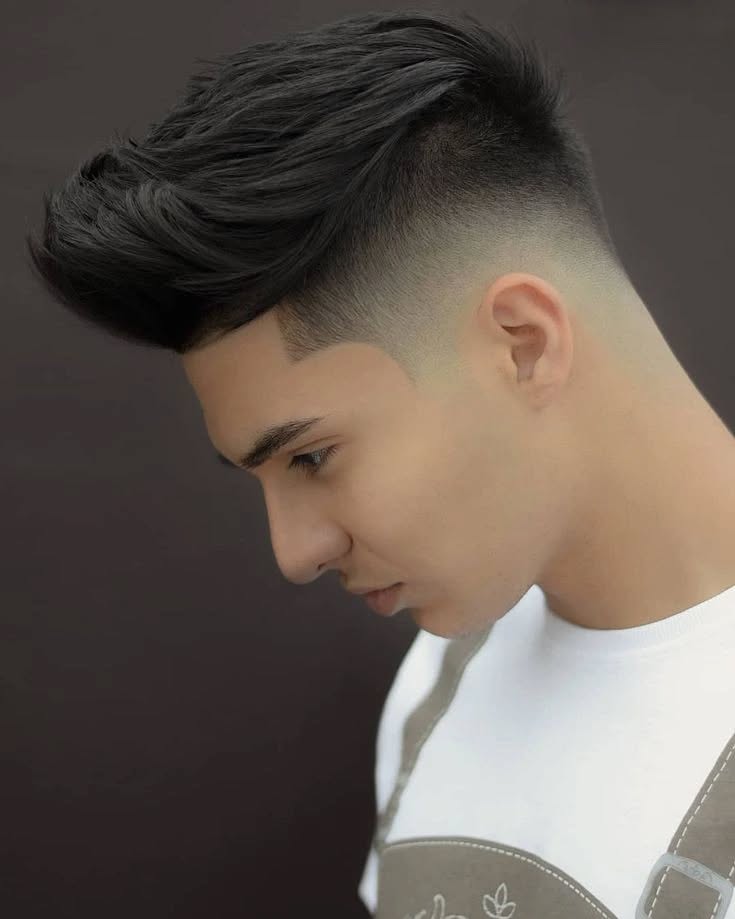
Textured Fringe with Low Fade

The version most men arrive at eventually. The fringe sits forward from the crown with natural movement, and the low fade gives a clean perimeter that finishes the cut from every angle.
Starting the fade close to the natural hairline keeps it contemporary without the contrast that makes a cut feel too bold for a normal week. A small amount of matte clay through the fringe is the whole routine. Every other variation here builds from this one.
Swept to One Side
The closest thing to a traditional side part while keeping the movement of a textured finish. The hair is directed across the forehead in one sweep, following the natural growth direction.
With a mid or low fade, it sits between a classic comb-over and a modern crop. Light product gives the direction permanence; no product and it still falls where the growth pattern sends it. Both outcomes look intentional, which is what makes it useful.
Textured Fringe Crop with Skin Fade

The strongest visual statement here. Taking the sides to skin creates a hard contrast against the textured fringe that reads sharp from any distance.
The line where the fringe meets the forehead is more defined than in softer versions. Be realistic about upkeep: regrowth shows on a skin fade within two weeks, so this is a standing appointment rather than an occasional visit. Fade heights are compared in our fade haircuts guide.
Messy Textured Fringe with Undercut
The most character of any combination on the list. Closely cut undercut sides against a deliberately disheveled fringe give a strong silhouette.
The messiness is the goal rather than a shortfall. Work matte product through damp hair and let it dry naturally. Wavy and naturally textured hair suits it best, since the movement adds to the effect instead of needing to be created.
Textured Fringe with Curtain Hair

A middle part with texture through the fringe area, so the hair falls to both sides and frames the face rather than covering the forehead.
The texture is what stops it lying flat and heavy, which is the difference between a considered style and medium-length hair that simply has not been cut. Keep the sides tapered or lightly faded. Oval and heart faces suit it particularly well.
Long Top with Fade
Grown into genuine medium-length territory, a textured fringe gains weight and falls with more intention. It moves more visibly than any shorter version.
A fade on the sides keeps the perimeter clean so the longer top reads as deliberate rather than overgrown. Thicker hair carries this best, since density holds the length. Fine hair does better with a shorter fringe. Our guide to medium-length hairstyles covers the grow-out.
Textured Fringe Quiff

The quiff’s height without the polished, product-heavy finish. The hair is pushed up and slightly forward, but left textured rather than smoothed into place.
The practical difference is that it improves as the day goes on. As the product relaxes, the texture becomes more apparent rather than the style collapsing. That is the opposite of what a traditional quiff does.
Blunt Textured Fringe
A clean horizontal line across the forehead with texture worked through the hair behind it. The blunt edge gives an architectural quality; the texture behind it stops the whole thing reading as rigid.
Straight or very slightly wavy hair holds the clean edge naturally. Square and oval faces suit the horizontal line best.
Textured Fringe on Wavy Hair

Wavy hair has a real advantage here. The wave supplies the movement that straight-haired men need technique to create, so the cut settles into shape as it dries.
The barber’s job is weight removal, taking enough out that the wave expresses itself cleanly rather than turning bulky. Use a curl cream or light mousse instead of heavy clay. Our guide to haircuts that work with wavy hair goes further.
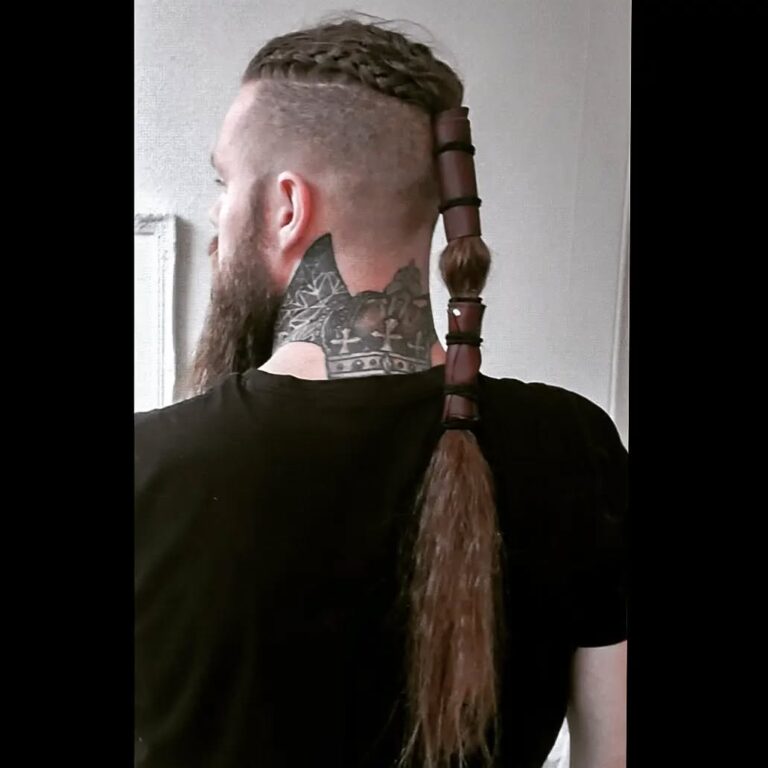
With a Disconnected Undercut
The most dramatic version. No gradual fade connects the close sides to the longer top, so the line between them is visible and intentional.
The fringe moves freely and independently above that line. It is the boldest thing on this list and the fastest to lose its definition, since the disconnection blurs as the sides grow.
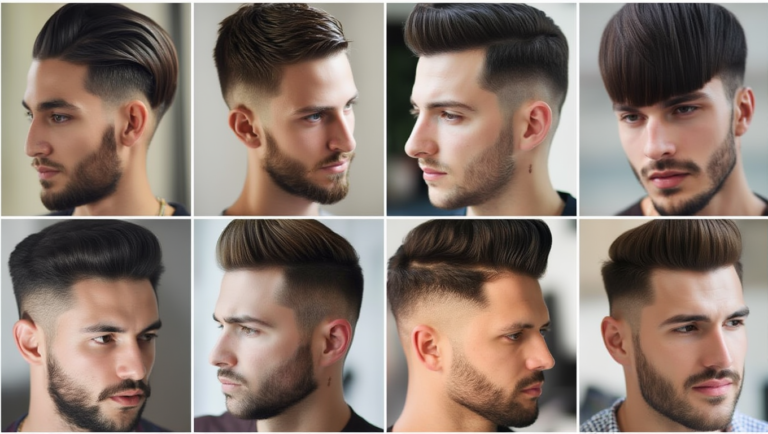
Textured Fringe Comb Over with Fade

The version that sits most comfortably in smart casual settings. Hair directed to one side, but with enough texture that it never reads as product-slicked.
The result looks like effort was made without the effort being visible, which is the whole aim of smart casual. A light hold product keeps it consistent through a working day without needing adjustment.
Textured Fringe Wolf Cut
The most layered and expressive option. Shorter layers through the crown, longer lengths through the mid-section, and a fringe that moves freely at the front.
The sides are not faded in the usual sense. A light taper keeps the perimeter defined without abrupt contrast. For wavy or naturally textured hair, this is the version that works most completely with what the hair already wants to do.
Brushed Forward

Swept toward the face rather than back or to one side. It partially covers the forehead, which suits heart and oval faces by easing the prominence of the upper face.
The texture keeps it from lying flat against the skin. With a mid or low fade, this is the most wearable starting version of the style, and the one most men keep coming back to.
Textured Fringe with Mid Fade
The mid fade starts around the temple and gradates cleanly downward, framing the fringe without overwhelming it. It is the most proportionally balanced backdrop of the three heights.
It also wears better between visits than a skin or high fade, because regrowth is less immediately visible. If you want the cut to look consistently good for four weeks rather than spectacular for one, this is the fade to ask for.
Styling It at Home

One principle covers most of it: use less product than feels necessary. A textured fringe needs enough to define the texture and hold direction, not enough to feel heavy or crunchy.
Matte clay or texture paste is right for almost every version, because it holds without shine. Apply to damp hair before drying and work it through with fingers rather than a comb.
Air drying gives the most relaxed result. A dryer on low heat with your fingers gives more control over direction and volume. If you use heat daily, keep it low, since dermatologists list aggressive heat styling among the everyday habits that damage hair.
What to Say at the Barbershop
Three things get you the haircut you came in for.
Name the fade height: low, mid or skin. Say how long you want the fringe, ideally by pointing at your own forehead rather than guessing at centimetres. And ask for point cutting through the fringe rather than a blunt cut.
That third instruction is the one almost nobody gives, and it is the one that decides whether the haircut has texture in it at all. If your hair is fine, mention that too, since a razor can leave fine hair looking thinner rather than fuller. Our guide to haircuts for thin hair covers why. And if you want the same texture principle in a shorter cut, the textured crop is the close relative worth comparing.