Professional Haircuts for Men: Office Style That Commands Respect
Almost every professional haircut guide gives you the same fifteen cuts and calls them all office-appropriate. That is not much help when your actual question is narrower: will this work at my job?
A partner at a law firm and a designer at an agency do not have the same bar. So the cuts below are grouped by the kind of workplace they suit, rather than presented as one undifferentiated list.
Three Kinds of Workplace
Conservative. Law, finance, insurance, client-facing consultancy, medicine. Visible precision is read as competence here. Contrast and texture are read as distraction.
Mainstream corporate. Most offices. Anything neat passes. The cuts here are judged on whether they look maintained rather than on what style they are.
Creative and technical. Agencies, design studios, technology, media. Looking too formal can read as out of step. Texture and personality are assets rather than risks.
If you are unsure which you are in, look at the person two levels above you rather than at your peers. That is the standard you are actually being measured against.
Conservative: The Side Part

The safest cut in this entire category. It has never stopped reading as appropriate in a formal room, and it never will.
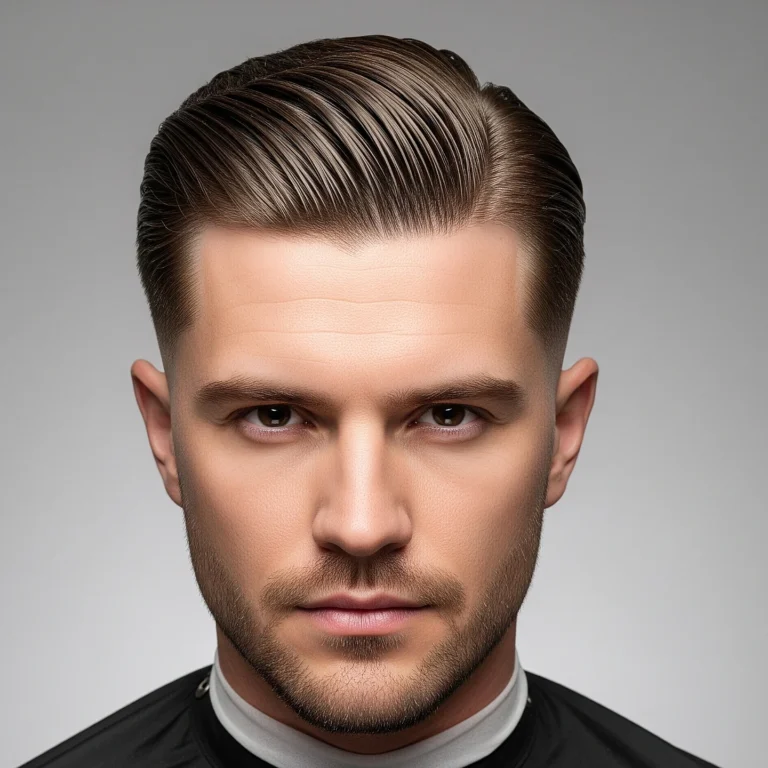
Shorter sides, slightly longer top, combed cleanly to one side. Straight and slightly wavy hair carry it best. A little pomade or cream holds the direction without weight.
Cut it along the natural parting rather than against it, or you will be fighting the same section every morning.
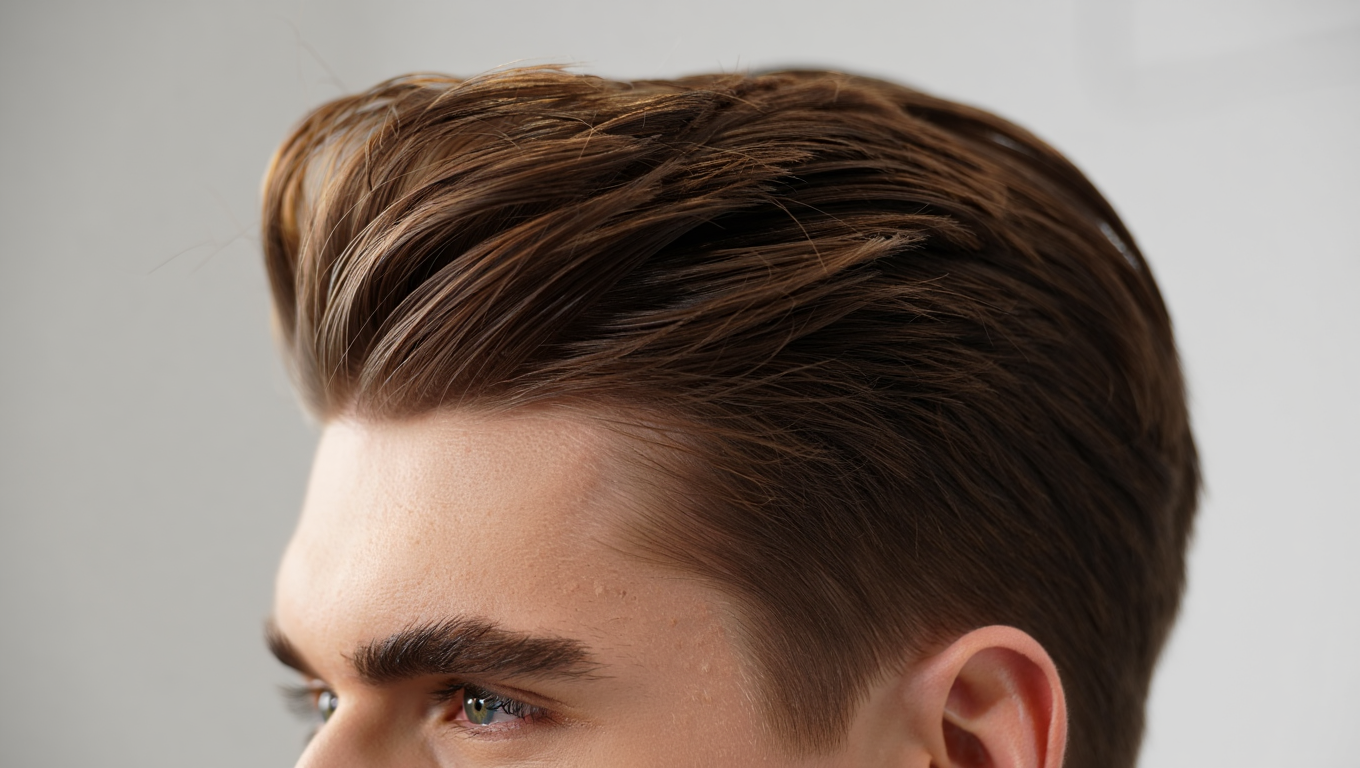
Conservative: The Slick Back
Hair brushed back and smoothed with a medium-hold product, sides lightly tapered. It reads as deliberately authoritative rather than merely tidy.
It needs medium to longer hair on top and suits straight hair most naturally, because the backward direction has to hold cleanly for a full day.
One honest caution: it is the least forgiving cut here of a poor styling day. When it drops, it drops visibly.
Conservative: The Regulation Cut
Military in origin and precise in execution. Short tapered sides, a clean neat top, every edge deliberate.
It communicates discipline more directly than anything else on this page, which is why it holds up in finance and law specifically.
The trade is frequency. It needs a competent barber and a visit every two to three weeks, because the precision is the entire point and it softens quickly.
Conservative: The Hard Part
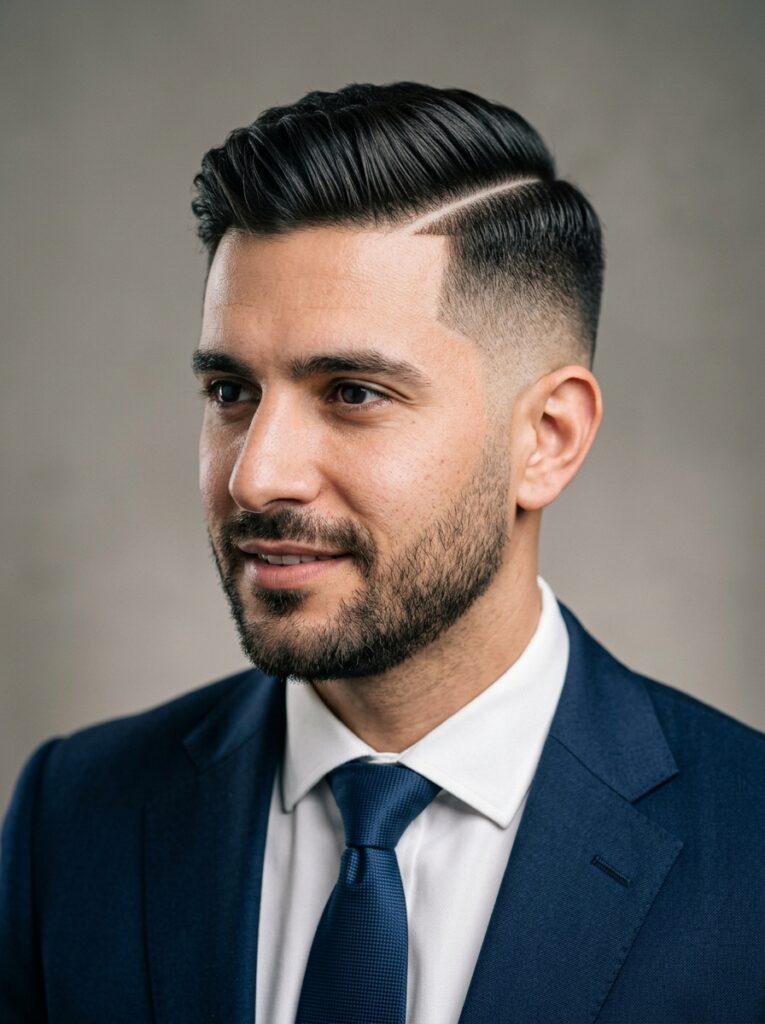
A side part with the parting shaved in as a clean line rather than combed. The precision reads at close range, which is where it matters: interviews, client meetings, across a table.
It pairs naturally with comb overs and low fades, both of which reinforce the structured quality.
Worth knowing before committing: the line blurs within two to three weeks, so this is a cut with a standing appointment attached.
Mainstream: The Classic Taper

Not a style so much as a technique, and the one that makes almost every other cut here look better.
Hair shortens gradually from the crown down to the neckline and sideburns, giving a clean perimeter with no hard edge. It suits every workplace tier because there is no contrast to object to.
It also has a formal name worth knowing at an unfamiliar barbershop. Barbering references call this family the regular haircut, which also travels as short back and sides, businessman cut and professional cut. Asking for a regular haircut with a natural neckline lands almost anywhere.
Mainstream: The Ivy League
Between a crew cut and a side part. Short enough to need almost nothing, long enough on top to style when the day calls for it.
Brushed back or parted for a meeting; left textured with matte clay for an ordinary Tuesday. One cut, two registers.
It also grows out evenly, which stretches the gap between visits. If you want one haircut that covers everything without thinking about it, this is it.
Mainstream: Comb Over with a Low Fade

The cut that bridges classic structure and modern barbering, which is why it has become the default in most offices.
The low fade keeps the sides neat without the drama of a higher one. The top is combed across in a direction that reads as chosen.
Fade height is what moves this between tiers: low for conservative, mid for mainstream, high only in creative rooms. The differences are set out in our fade haircuts guide.
Mainstream: The Crew Cut
The most time-efficient option available. Uniformly short on top with a taper or fade at the sides, and no morning routine at all.
A touch of matte clay at the front adds definition when something specific is on the calendar.
It grows out evenly and stays presentable for weeks, which makes it the cheapest cut here in both money and time. It also sits comfortably in every tier.
Mainstream: Short Back and Sides with a Longer Top

The most adaptable structure in professional hair, because one base cut produces several daily options.
Side part for a formal day. Natural texture for a quiet one. Light comb back for a client meeting. Nothing changes but the styling.
That makes it the right answer for men whose week genuinely varies in formality, and it grows out more gracefully than shorter structured cuts.
Mainstream: The Low Fade Side Part
Two strong elements combined: directional structure on top, a clean graduated perimeter below.
It avoids anything bold while still reading as current rather than generically short, which is a narrow gap and a useful one to occupy.
Straight and wavy hair both take it, and it suits most face shapes without technical adjustment.
Mainstream: The Modern Pompadour

Height and volume swept up and back, with tapered sides keeping the proportions in check.
The current version uses a matte finish rather than the heavy gloss of older decades, which is precisely what makes it wearable in daylight at work.
It needs thicker hair and a blow-dryer, so be honest about whether you will actually do it. Thinner hair does better with the options in our guide to haircuts for thin hair.
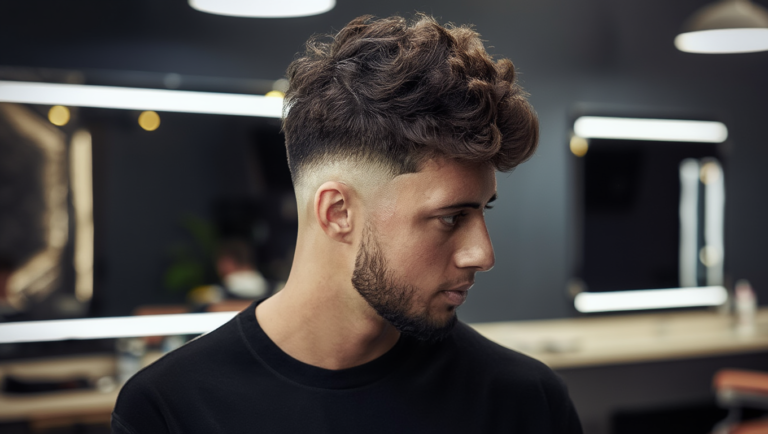
Creative: The Textured Crop
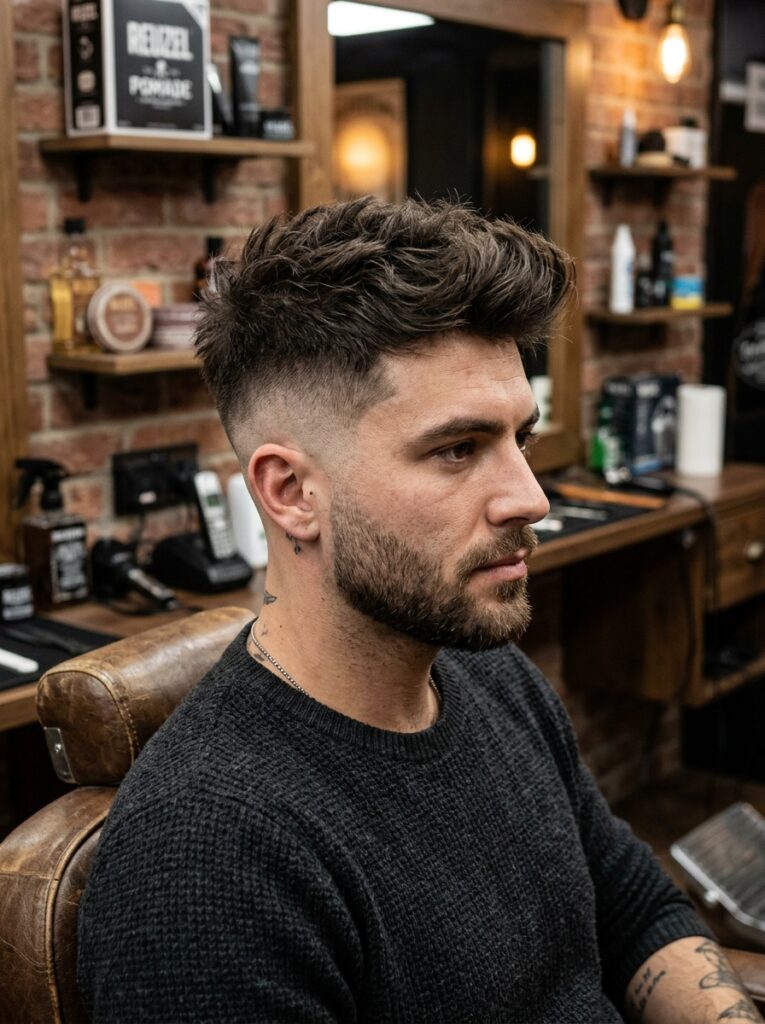
The most requested cut in modern workplaces, and the one that reads as current rather than conservative.
Short faded sides with a choppy layered top. The texture is cut in, so it looks deliberate with no product on the days you do nothing.
It passes in mainstream offices too, provided the fade stays low or mid. It is only the high-faded version that belongs strictly in creative rooms.
Creative: The Classic Undercut

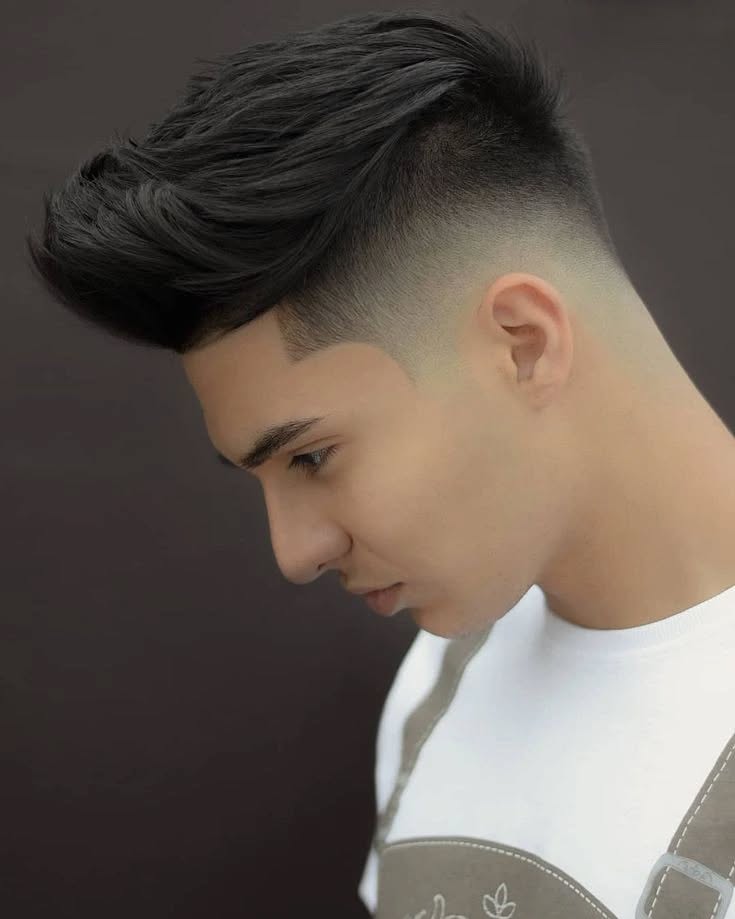
Sides considerably shorter than the top, but with a graduated transition rather than the hard disconnection that reads as streetwear.
The top can go back, to one side, or stay textured, which gives it range across a week.
Oval and square faces suit it best. In a conservative office, take the graduated version and keep the contrast modest.
Creative: The Scissor Cut
Scissors follow the hair’s natural growth direction instead of cutting uniformly across it, which produces a softer, lived-in result.
That organic quality reads as appropriate in design and agency environments where looking rigidly formal can work against you.
It suits wavy and naturally textured hair especially, because the technique enhances movement rather than removing it. A light cream after washing finishes it.
The Finish Is the Actual Variable
Here is the part worth taking away, and it undercuts the premise of every list like this one.
None of these cuts is professional or unprofessional on its own. A textured crop with sharp edges and a clean neckline outperforms a side part grown out by five weeks in any room, including a conservative one.
So the request that matters at every appointment is the finish: clean edges at the hairline and temples, defined sideburns, a sharp neckline. It costs nothing extra at a competent barber and most men never ask for it by name.
Then match the cadence to the cut. Hard parts, regulation cuts and high fades need two to three weeks. Tapers, crew cuts and the Ivy League stretch to five or six. Choosing a cut whose cadence you will not keep is the most common way a professional haircut stops looking professional.
One last detail people forget: a beard has to be on the same schedule. A sharp cut above an overgrown jaw undoes itself, and the pairings are covered in our guide to matching a beard to a haircut. If you are weighing length more broadly, our guide to short versus long hair works through that decision, and the enduring options are in our guide to classic men’s haircuts.