Thanksgiving Tablescape Ideas: Elegant and Easy Designs for Every Style
Thanksgiving Tablescape Ideas: Why the Table Sets the Entire Tone
The Thanksgiving table is where the meal happens, but it is also where the gathering feels most intentional. A beautifully set table communicates to every guest that their presence was prepared for and that the occasion was taken seriously. That communication happens before anyone sits down and before the food arrives.
The fifteen tablescape ideas in this guide cover every style direction from the simplest two-element setup to the more layered and considered arrangements. Every one of them is achievable at home with accessible materials and without professional event styling experience. The guide focuses on specific decisions that make each approach work rather than simply listing what to put on the table.
Rustic Harvest Tablescape: Natural Materials That Belong Together
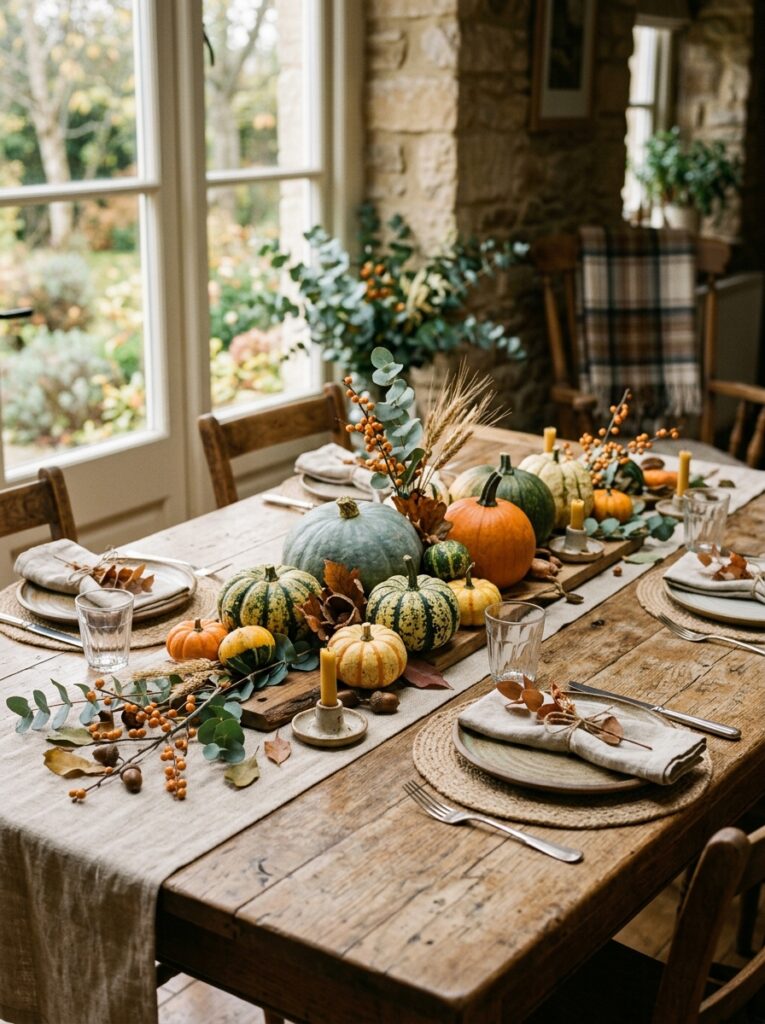
A rustic harvest tablescape works because every element within it references the same natural, agricultural world. Wooden boards, pumpkins and gourds in natural orange and buff tones, simple linen runners, and dried botanical elements all speak the same visual language and coexist without any coordination effort required from the person assembling them.
The rustic harvest tablescape is the most forgiving of all the styles in this guide because none of its materials need to match precisely and small imperfections in the arrangement add to rather than detract from the overall quality. Varying the heights of display elements by placing some pumpkins on a wooden board and others directly on the table creates the organic layered appearance that professional event tables achieve. A few pillar candles in the arrangement provide the warm evening light that makes the natural materials glow most impressively after the sun sets.
Neutral Thanksgiving Tablescape: Calm and Timeless Above Any Single Trend
View this post on Instagram
A neutral Thanksgiving tablescape in beige, cream, and taupe is the style that photographs best across every decade because neutral tables never date in the way that specifically on-trend color choices do. Guests remember the warmth and elegance of the occasion rather than remembering which specific color scheme was fashionable that year.
The neutral tablescape’s success depends on texture variation rather than color contrast for its visual interest. A linen runner against a polished wooden table. Ceramic plates with a slightly different finish than the serving bowls. Candleholders in matte terracotta beside smooth cream pillar candles. Each textural difference creates the visual depth that prevents the neutral palette from feeling flat. A single sprig of dried botanicals or eucalyptus beside each place setting adds the organic quality that keeps the neutral table feeling genuinely warm rather than simply understated.
Pumpkin and Candle Tablescape: The Simplest Setup That Always Works
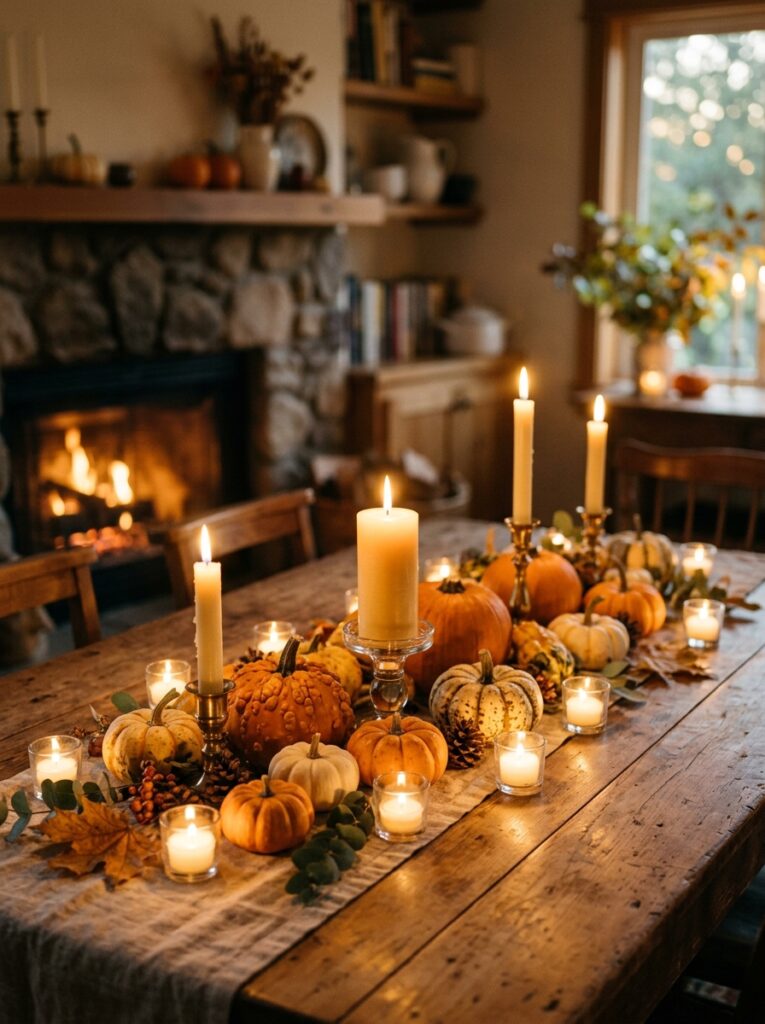
Pumpkins and candles together create the foundational Thanksgiving tablescape combination that has endured because it solves the table’s two most important atmospheric requirements simultaneously. The pumpkins provide the seasonal visual identity that signals Thanksgiving specifically. The candles provide the warm, flickering evening light that makes the meal feel like a genuine occasion.
Varying pumpkin sizes from large at the center of the arrangement through medium and small toward the ends of the table creates the visual rhythm of a properly designed centerpiece without requiring any additional materials. Mixing real pumpkins with faux alternatives at the smaller sizes reduces the cost and extends the display’s lifespan beyond a single week. LED candles in glass votives provide consistent warm light without the fire safety concerns of open flame on a table occupied by a full gathering.
Mini Pumpkin Place Setting: The Personal Touch That Guests Remember
View this post on Instagram
A mini pumpkin at each place setting is the tablescape detail that guests most consistently mention after the meal because it communicates direct individual attention in a way that a shared centerpiece does not. The pumpkin at each seat says that someone thought about each person sitting there specifically rather than about the table as a whole.
Writing each guest’s name on a small tag tied to the pumpkin with a piece of twine doubles the place setting decoration as a place card and provides each guest with a take-home favor from the meal. The practical benefit of this approach is that it solves the place card problem while eliminating the need for a separate card holder purchase. Using mini pumpkins in both traditional orange and white or buff tones creates enough variety across the table to look interesting without requiring any additional materials beyond the pumpkins themselves.
Dried Wheat Thanksgiving Tablescape: Harvest Character With Minimal Cost
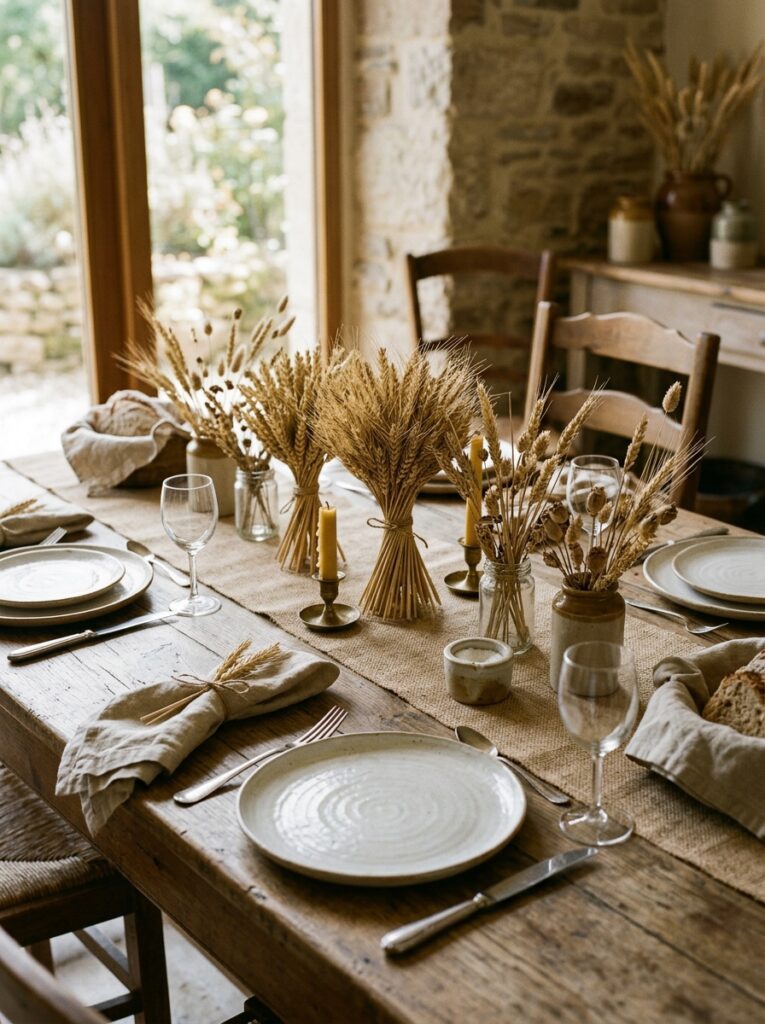
Dried wheat is one of the most cost-effective and most specifically harvest-appropriate Thanksgiving table materials available because it references the agricultural character of the season directly and contributes both texture and warm golden color without competing with any other element placed alongside it.
A simple bundle of dried wheat tied with natural twine and placed at the center of the table is enough to give the whole arrangement a harvest character that more elaborate centerpieces sometimes lack despite their greater cost. Three smaller bundles placed at intervals down the center of a longer table create a rhythmic repetition that reads as deliberately designed rather than simply scattered. Dried wheat is also one of the most reliably stable table materials because it does not wilt, fade, or require water throughout the full Thanksgiving period.
Farmhouse Thanksgiving Tablescape: Everyday Warmth Made Special
View this post on Instagram
A farmhouse Thanksgiving tablescape elevates what most households already own into a cohesive and welcoming table setting through the combination of elements rather than through the cost of any individual piece. White or cream dishes, wooden chargers or boards, cloth napkins in natural linen or cotton, and simple seasonal elements create the farmhouse quality when they are arranged with intention.
The wooden charger beneath each plate creates the most significant individual visual improvement available in farmhouse table styling because it adds warmth, texture, and the impression of a fully composed place setting that plates placed directly on a linen cloth do not achieve as effectively. A simple white dish placed on a wooden charger with a cloth napkin folded naturally alongside it is the complete place setting that requires nothing additional to look considered and welcoming.
White Pumpkin Tablescape: Modern Restraint in a Traditional Season
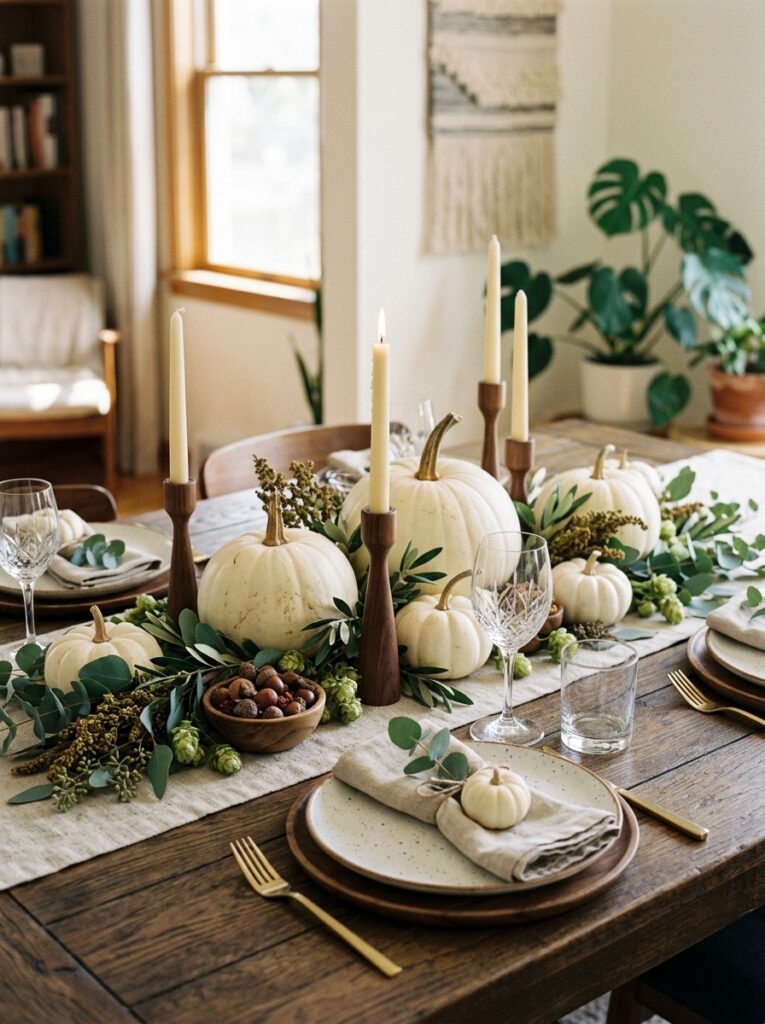
White pumpkins offer a specifically contemporary interpretation of the Thanksgiving table that suits homes with modern interior design more naturally than traditional orange alternatives. Their neutral tone allows them to work alongside a much wider range of table linen colors, plate choices, and centerpiece materials without any risk of color clash that orange pumpkins sometimes introduce against cooler or more saturated palettes.
White pumpkins combined with dark greenery, eucalyptus stems, or dusty sage leaves create a particularly sophisticated combination where the neutral pumpkin tones provide gentle contrast against the green without the visual competition that orange pumpkins would introduce in the same arrangement. Candles in warm amber tones alongside white pumpkins add evening warmth that prevents the neutral palette from reading as cold after the sun goes down.
Eucalyptus Greenery Tablescape: The Organic Runner That Sets Every Color Off
View this post on Instagram
A eucalyptus runner laid down the center of the table is the single most transformative and most cost-effective table decoration available for Thanksgiving because the organic, flowing quality of laid stems creates an impression of abundance and natural beauty that manufactured table runners and formal centerpieces rarely achieve at the same price point.
Fresh eucalyptus has the additional benefit of a subtle, pleasant fragrance that contributes to the sensory atmosphere of the meal. Dried or preserved eucalyptus achieves the same visual result without the two to three day freshness limitation of cut stems. Interspersing small pumpkins, candles, or botanical pods within the eucalyptus runner creates a more layered and considered center arrangement while the organic quality of the greenery provides the visual foundation that makes every other element belong together.
Plaid Runner Thanksgiving Tablescape: Seasonal Pattern as the Centerpiece
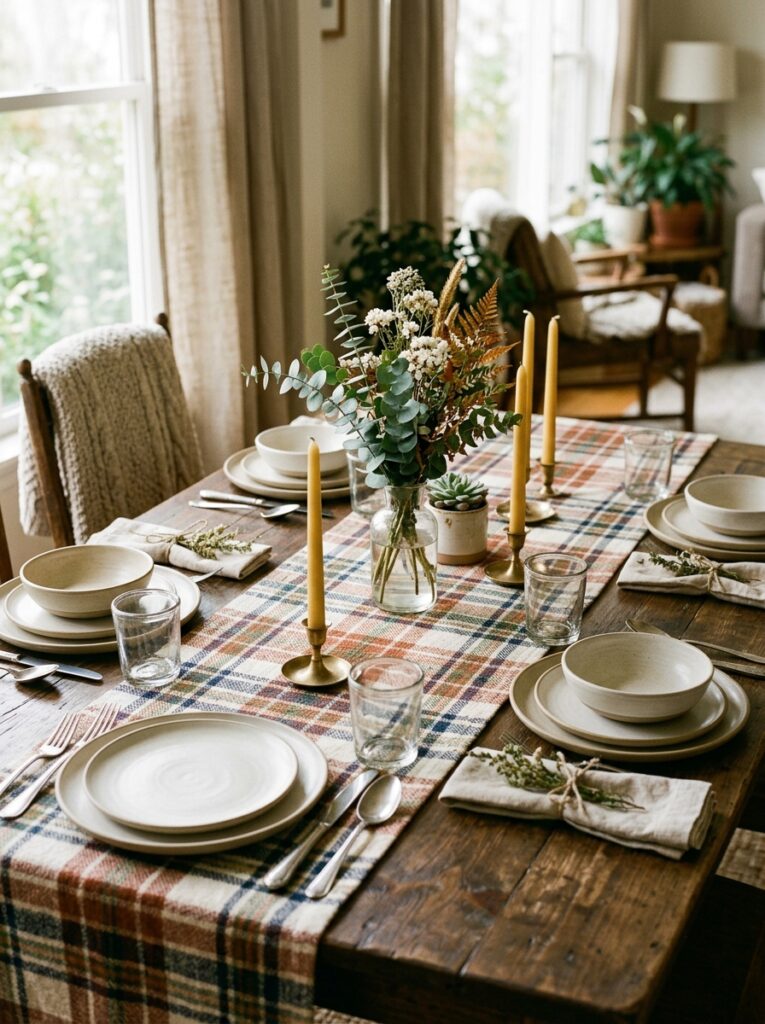
A plaid table runner is the single-element tablescape decision that adds the most immediate seasonal warmth and cozy character to any table because the pattern itself carries the autumn and harvest associations that the season calls for without requiring any additional decorative elements to complete the impression.
Pairing a plaid runner with completely plain and neutral everything else, simple white or cream dishes, plain napkins, and minimal centerpiece elements, allows the pattern to read clearly as the intended statement rather than competing with other visual elements for the same attention. The key is restraint in the surrounding elements: the more neutral and simple everything around the plaid, the more confident and considered the plaid itself reads. A single small centerpiece, three candles at different heights or a simple arrangement of pumpkins, is the maximum additional decoration this approach needs to feel complete.
Mason Jar Thanksgiving Tablescape: Versatile Vessels That Do Multiple Jobs
View this post on Instagram
Mason jars are one of the most genuinely multi-purpose Thanksgiving table elements available because the same jar can function as a candle holder, a small vase for dried or fresh botanical stems, a place card holder, a favor container, or a utensil and napkin arrangement simultaneously. That versatility allows a collection of mason jars to serve multiple functions across the table rather than requiring separate purchases for each purpose.
Filling jars with sand, small stones, or seasonal elements like dried corn kernels or cranberries before placing candles inside them weights them against accidental tipping and adds visual interest at the base. Varying jar sizes across the table, from larger Ball quart jars for candles and taller botanical stems down to smaller jelly jars for individual place setting details, creates a visual rhythm that reads as considered rather than uniform.
Burlap and Linen Tablescape: Two Natural Textures That Belong Together
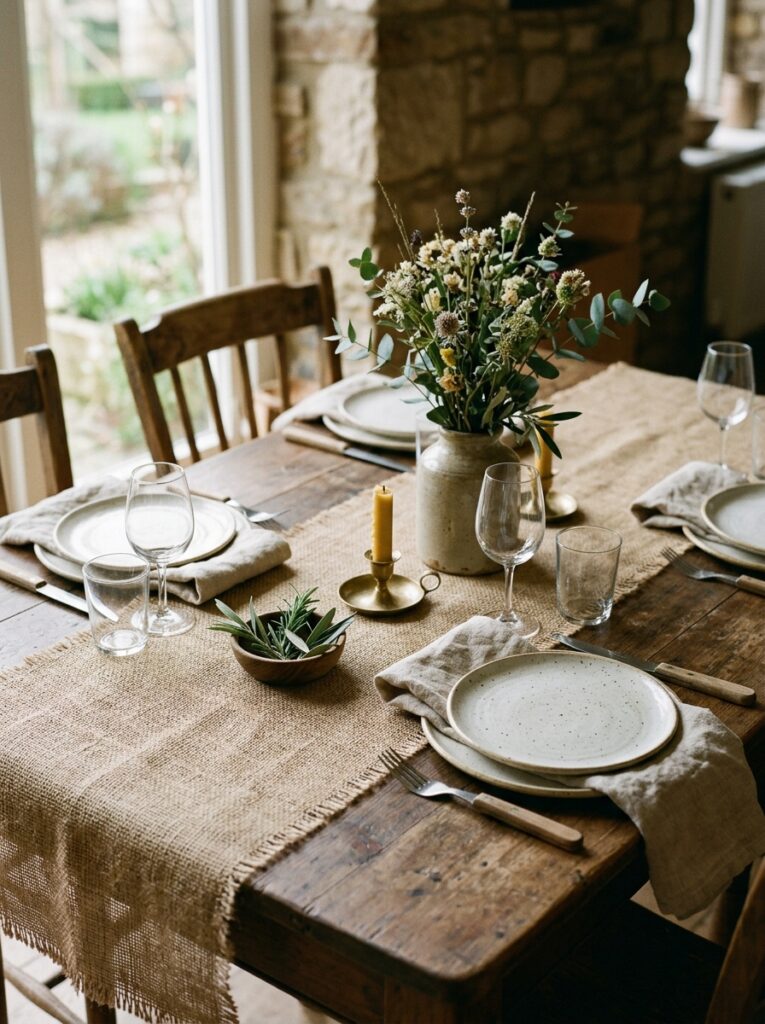
Burlap and linen create the most tactilely interesting natural material combination available for a Thanksgiving table because their textures are meaningfully different from each other while both belonging to the same natural, woven material family. Burlap’s rough, open weave reads as rustic and substantial. Linen’s finer weave reads as refined and soft. Together they create a layered quality that either material alone cannot provide.
A burlap table runner laid down the center of the table with linen napkins at each place setting creates the full textural contrast of this combination in the simplest possible arrangement. The burlap provides the harvest character and the visual grounding of the center. The linen provides the softness and refinement of each individual place setting. These two qualities together create a table that feels both seasonally specific and genuinely welcoming in equal measure.
Candlelit Thanksgiving Tablescape: Evening Atmosphere as the Priority
View this post on Instagram
A candlelit tablescape places the quality of the evening atmosphere above all other design considerations, which is specifically appropriate for Thanksgiving when the meal happens after dark for many households and when the warmth of the gathering matters more than the visual impressiveness of the daytime table.
Varying candle heights is the single most important principle for a candlelit Thanksgiving table because flat uniformity of candle height creates a less interesting visual result than a composition that moves the eye upward and downward through the arrangement. Tall taper candles in simple holders at intervals down the center, alongside medium pillar candles at a lower height, alongside votives set even lower, creates the multi-level composition that makes candlelit tables look specifically designed rather than simply lit. LED alternatives in the same heights and forms create an identical evening result without any fire safety concern at a fully occupied table.
Autumn Leaf Tablescape: The Material the Season Provides for Free
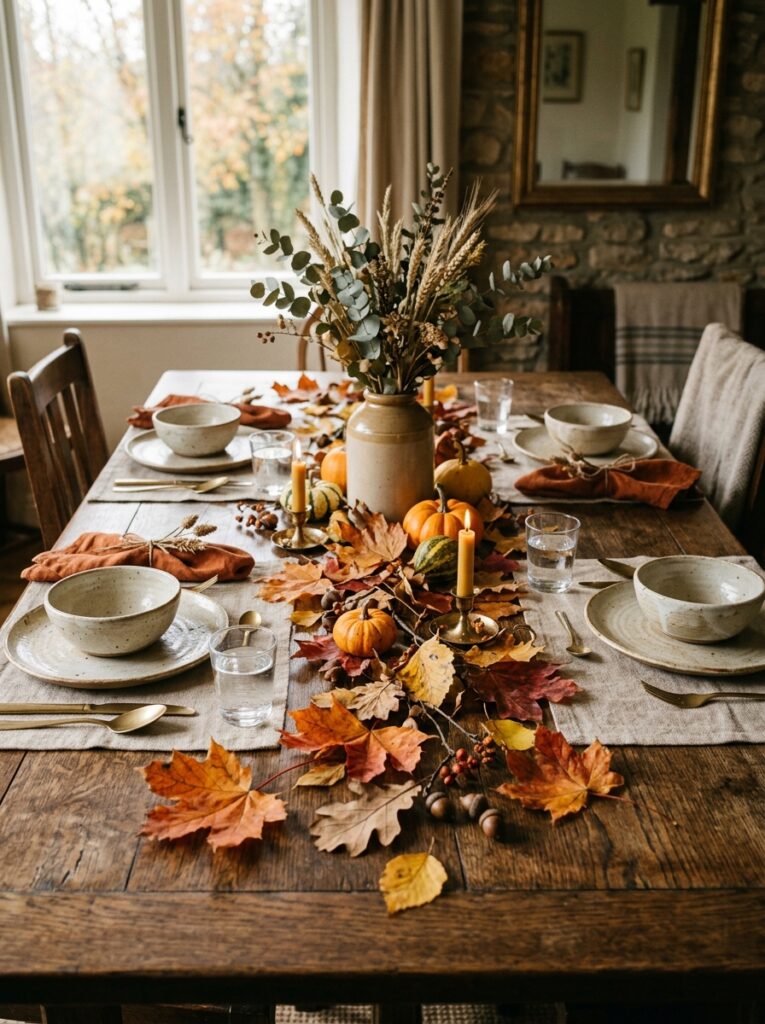
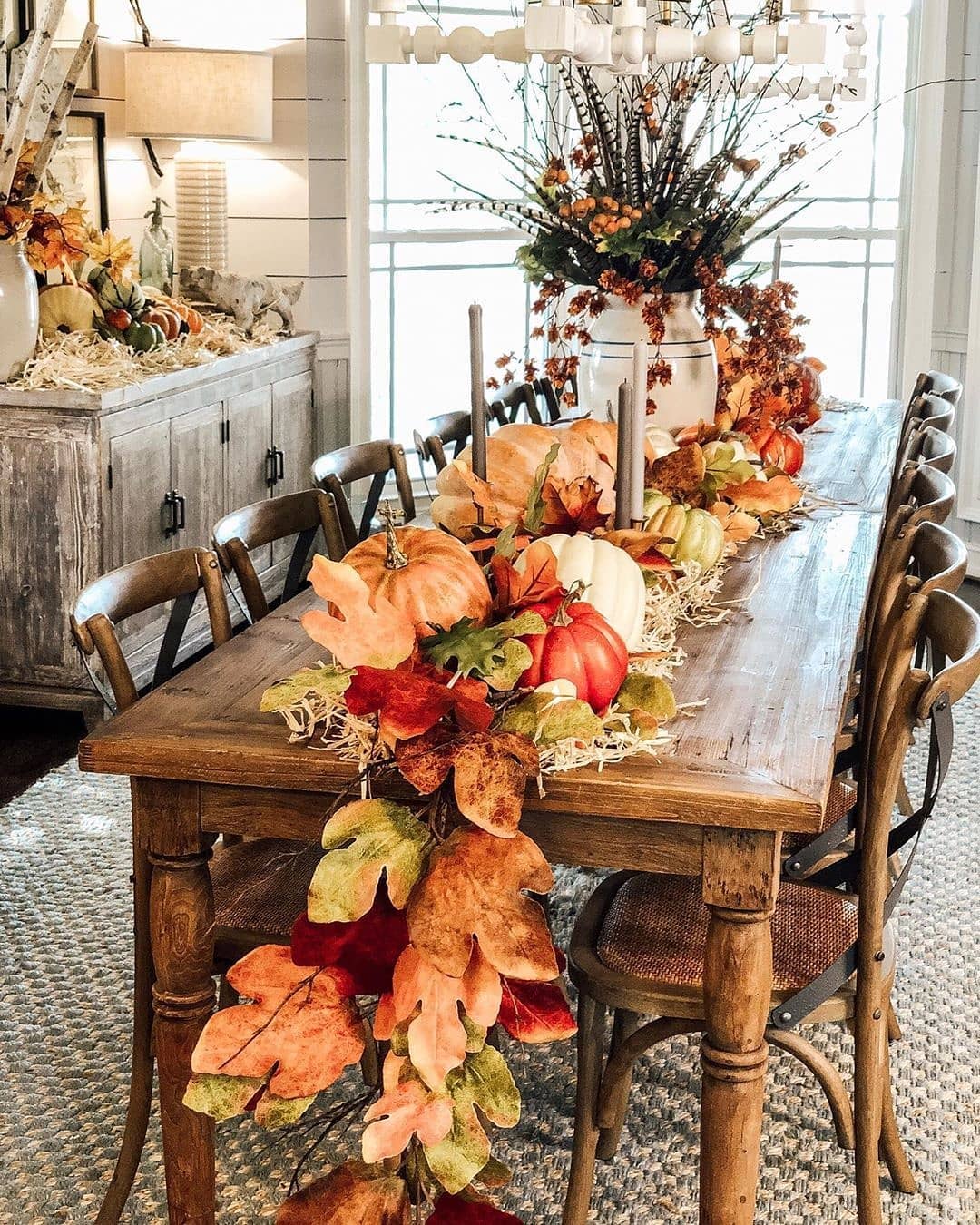
Autumn leaves scattered along the center of the table bring the specific visual character of fall directly to the Thanksgiving setting in the most literally seasonal and most naturally occurring way possible. The colors of autumn leaves, ranging from deep burgundy through orange, red, amber, and golden yellow, are the colors of the season itself rather than a manufactured approximation of them.
Gathered leaves dried and pressed flat in the days before Thanksgiving maintain their color and shape through the meal. Preserved autumn leaves available from craft stores maintain their appearance season after season. Scattering the leaves loosely rather than arranging them in a specific pattern creates the natural, windfall quality that makes leaf tablescapes look organic and genuinely autumnal rather than applied. Small pumpkins and tea light candles placed among the leaves add the three-dimensional element that a purely flat leaf arrangement benefits from.
Simple Fall Tablescape: The Proof That Less Is More
View this post on Instagram
A simple fall tablescape is the approach that requires the fewest elements to achieve the most complete and comfortable table impression because each element present was specifically chosen for what it contributes rather than included by default. Three neutral pumpkins in a small cluster at the table’s center, a linen runner, two taper candles, and clean white dishes at each setting is a complete tablescape that needs nothing additional to look genuinely ready for the occasion.
The temptation when setting a Thanksgiving table is to add more elements throughout the preparation process until the table feels sufficiently decorated. The simple fall approach inverts this tendency by starting with the minimum number of elements needed and adding only when a genuine visual gap exists rather than adding whenever an additional object is available. A table set with restraint and intention consistently looks more sophisticated than one that accumulated every available seasonal decoration.
Natural Wood Thanksgiving Tablescape: Material Warmth That Outlasts Any Trend
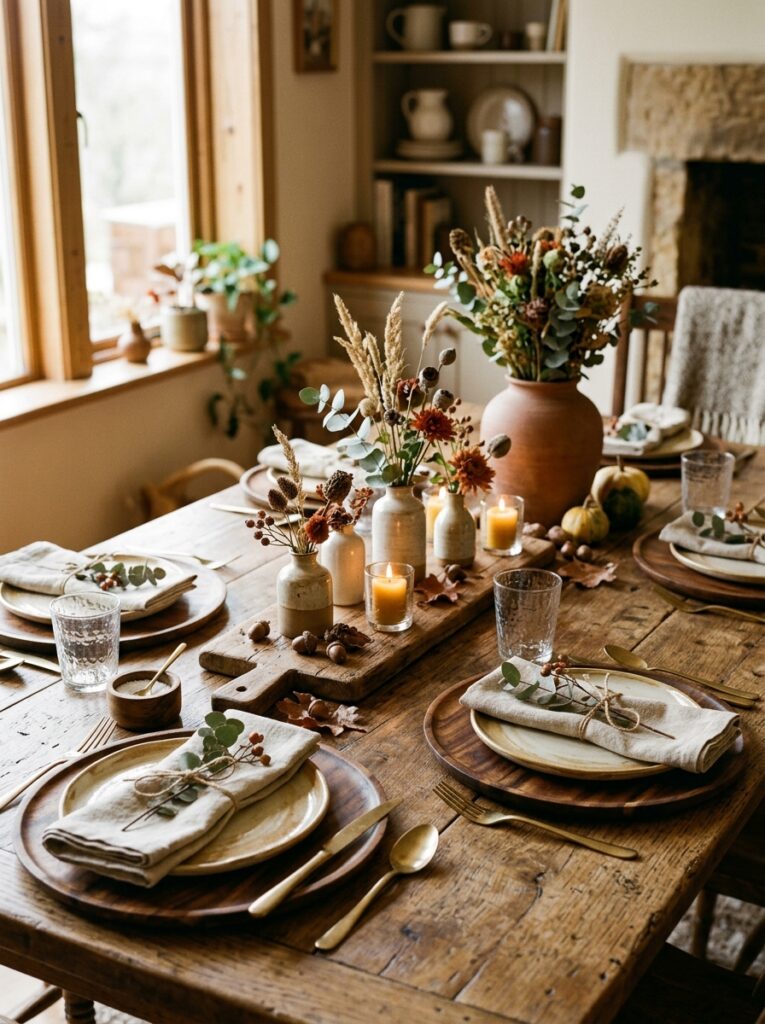
Natural wood elements on a Thanksgiving table create a warmth and grounded quality that manufactured alternatives at any price cannot replicate because wood’s grain variation, natural tonal range, and organic surface character all communicate genuine material quality that the eye responds to positively at close range throughout a meal.
Wooden chargers beneath each place setting are the highest-impact wood element at the individual scale. A wooden board or slice serving as a centerpiece platform elevates whatever is placed on it and creates visual warmth at the table’s center. Small wooden candle holders or serving vessels add material consistency across the table. The natural tonal variation between different pieces of wood in the same arrangement reads as collected and personal rather than matched and corporate, which is precisely the quality that Thanksgiving table settings benefit from most.
Setting a Thanksgiving Table That Serves the Meal and the Gathering
The most beautifully designed Thanksgiving tablescape serves two masters simultaneously: it looks impressive in the moments before the meal begins and it remains functional throughout the actual eating.
A centerpiece taller than the eye level of seated guests prevents the conversation across the table that Thanksgiving specifically creates. Candles placed where reaching across the table to the serving dishes requires navigating an open flame are both impractical and unsafe. Place settings spaced so narrowly that elbows cannot rest comfortably alongside plates prioritise visual density over the physical comfort of every person seated.
Designing the table with these practical constraints in mind first, and then styling it for visual quality within those constraints, consistently produces a table that guests experience as both beautiful and genuinely comfortable rather than choosing one quality at the expense of the other. The best Thanksgiving table is the one that makes the meal easier and more enjoyable, not the one that makes the photographs most impressive.