Spiky Hairstyles for Men: Easy to Style, Hard to Ignore
Spiky Hairstyles for Men: Why This Style Category Keeps Coming Back
Spiky hair has a longer history in men’s grooming than most people credit it with. It is not simply a teenager’s cut from the early 2000s. The category in 2026 runs from barely-there texture on a natural crop to bold faux hawk ridges and disconnected undercut combinations. The common thread is direction. The hair moves upward instead of lying flat, which creates height and visual energy that flat styles never produce.
The fifteen styles below cover every interpretation, from the most conservative to the most expressive. Each one includes guidance on the hair types and face shapes it suits. Each also names the product that delivers the most reliable daily result.
Classic Spiky Hair: The Version That Started Everything and Still Works
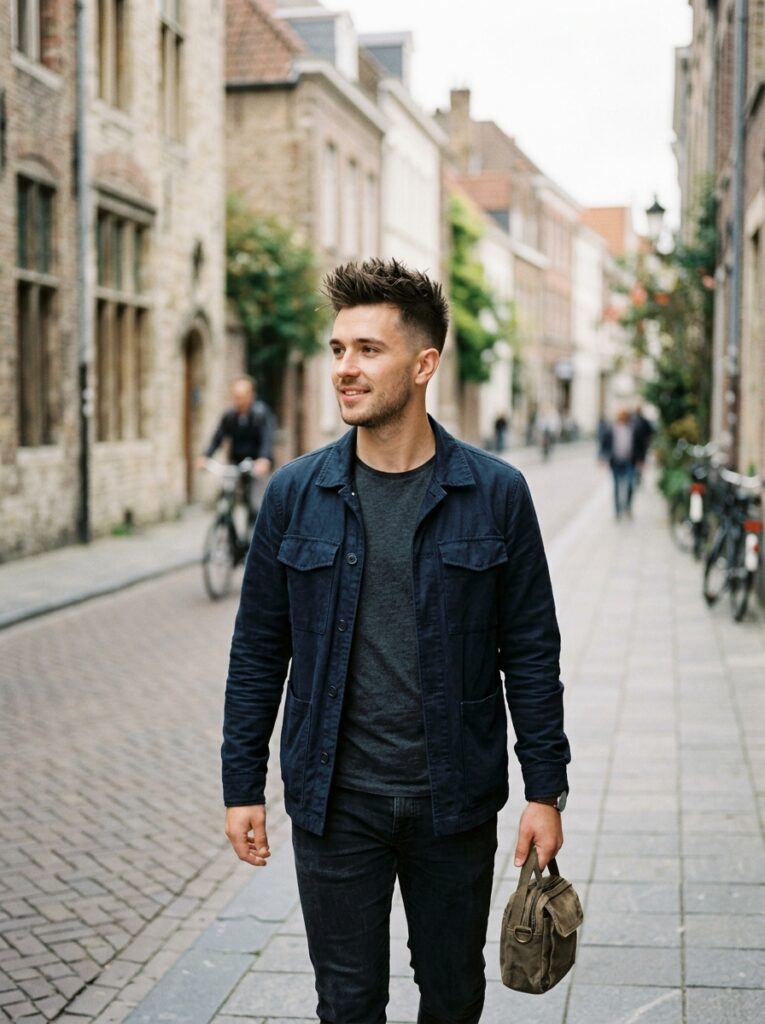
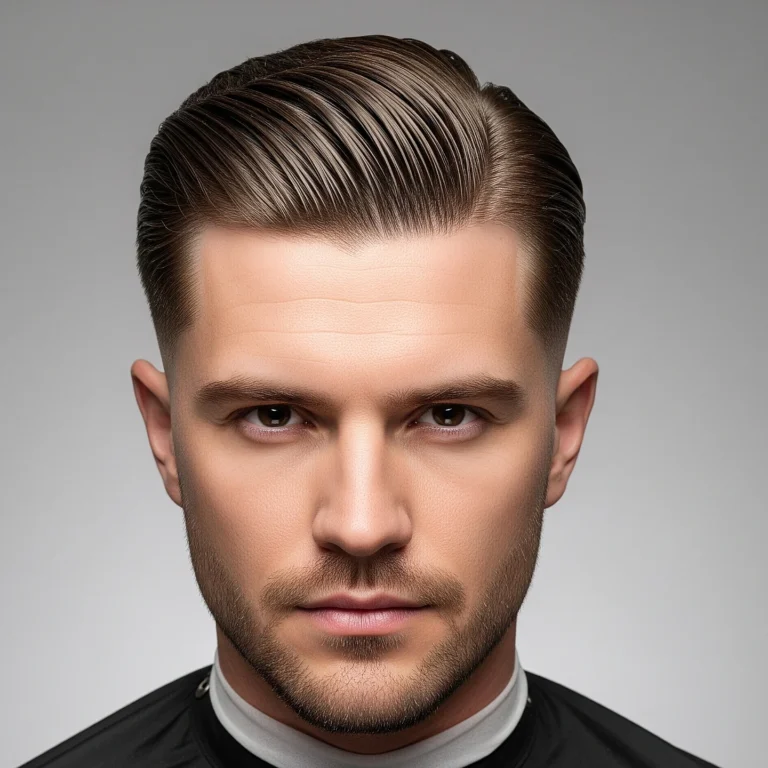
Classic spiky hair keeps the sides short and the top slightly longer. The top is worked upward with the fingers and a medium-hold product to form individual points. It is the purest version of the idea behind the whole category. Hair pointing up from the scalp creates energy and height that nothing flat-lying achieves.
Oval and square faces suit it particularly well, since the upward direction complements both sets of proportions. It performs best on straight or slightly wavy hair of medium thickness, because those textures hold the direction without heavy product. A medium-hold wax or paste applied to dry hair and worked through with the fingers separates the sections so each one points independently rather than clumping. The style consistently looks more considered than the small amount of time it takes.
Textured Spiky Crop: The Modern Interpretation With Daily Versatility
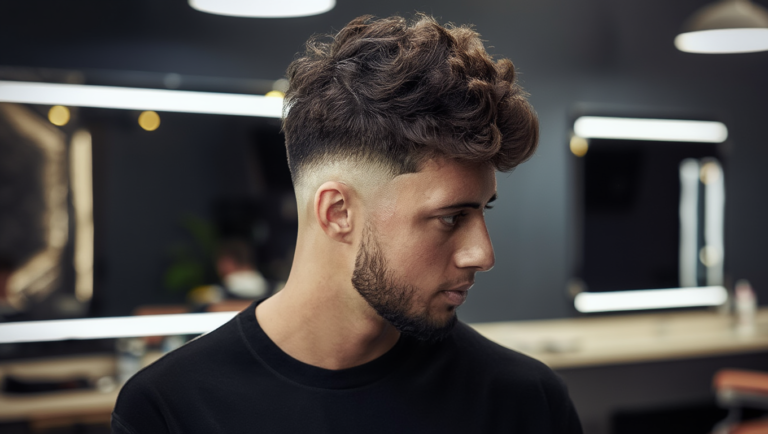
The textured spiky crop borrows the choppy layering of a crop cut and adds a gentle upward direction on top. The spikes read as organic rather than constructed. Each section sits at a slightly different height and angle, which gives multi-directional movement instead of a uniform row of points.
Getting it starts at the chair, and the request is specific. Ask for point cutting through the top, roughly one and a half to two inches of length, and a fringe left slightly shorter than the crown. Point cutting is the detail that matters, because blunt-cut ends sit as a flat block and no amount of product later will separate them properly. The styling is quick. Work a fingertip of matte clay through towel-damp hair, then finger-shape it as it air dries. Damp application is deliberate, since clay on bone-dry hair grips the first section it touches and distributes unevenly. The matte finish is what keeps the result current rather than product-heavy. This is also the most office-friendly member of the family, as the soft texture never announces itself the way a structured spike does. Anyone wanting the softer version without upward direction should compare it with the standard textured crop.
Short Spiky Fade: Clean Sides That Amplify Everything Above Them
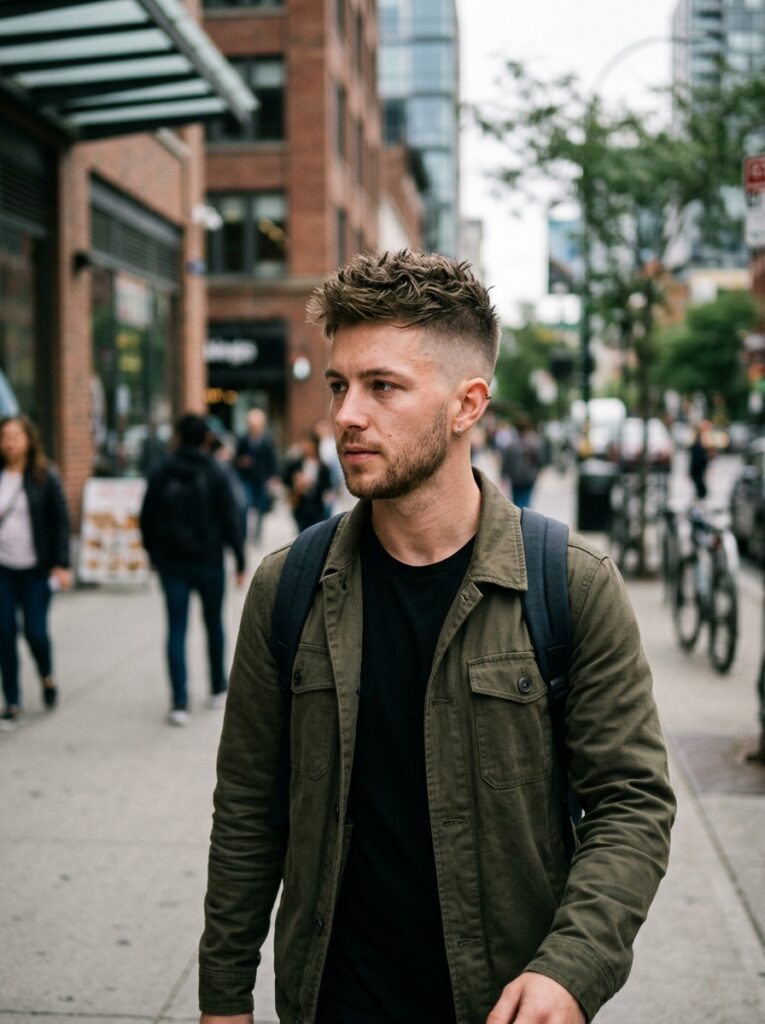
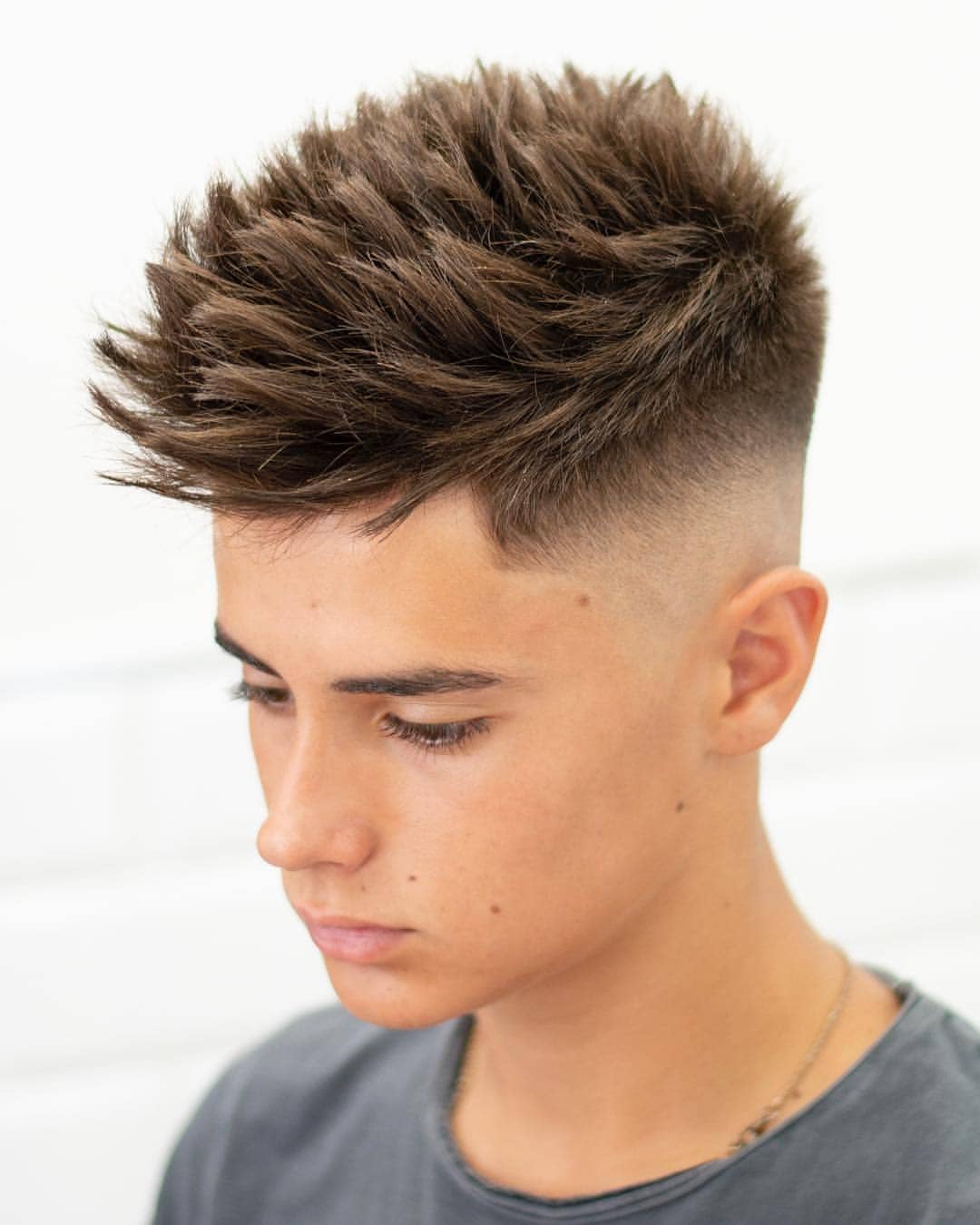
A fade does more for spiky hair than most men expect until they try it. The clean graduated sides create a defined perimeter. The spiky top then reads as deliberately positioned above a sharp boundary rather than sitting on an average-length haircut.
Fade height controls how strong the result reads. A low fade keeps the combination conservative enough for professional settings while still feeling contemporary. A mid fade adds visible contrast and suits more casual environments. A high fade makes the spiky top the dominant element from every angle. Any spiky cut improves with a fade at the sides. This version treats that relationship as the whole design rather than a finishing detail.
Messy Spiky Haircut: Deliberate Disorder That Reads as Effortless Confidence
The messy spiky cut succeeds by looking untried. Achieving that convincingly takes more product judgement than a neat structured spike does. The sections point in varied directions rather than uniformly upward, so the hair looks like it landed there after washing.
Product weight decides everything here. A light-hold matte product is correct; a strong gel or heavy paste produces rigid points that look built rather than relaxed. The reliable routine has two stages. Mist sea salt spray through damp hair and let it air dry, then warm a small amount of matte clay between the palms and rake it through with the fingers from the back forward. Raking rather than combing preserves the irregularity the style depends on. Second-day hair often looks better than first-day hair, revived with damp fingers and no extra product. Buildup is the thing to watch over time, since layered clay and spray gradually turn texture into weight. Washing frequency should follow hair type rather than habit, and dermatologists set out sensible intervals in their guidance on healthy hair care. The style suits oval and round faces, since the varied directions add interest without excessive height.
Spiky Quiff: Volume at the Front With Upward Energy Throughout

The spiky quiff pairs the lifted front of a classic quiff with spiky texture across the rest of the top. A standard quiff pushes volume forward and up from the forehead. This version spreads that upward energy more evenly over the crown as well.
It suits men who want the height and face-lengthening effect of a quiff without the formality of a pompadour-style structure. Thick hair performs best, since its density supplies volume that finer hair needs product to imitate. Apply a medium-hold clay while the hair is still slightly damp, then blow-dry with a round brush for lift. Finger-shaping the individual sections afterward finishes the look in under two minutes.
Spiky Faux Hawk: The Statement Spike Style That Stays Wearable
The spiky faux hawk raises a central ridge of hair from the front hairline through to the crown. The sides stay considerably shorter. It references the mohawk without shaved sides, so the silhouette is bold without reading as confrontational in most settings.
Ridge width is the measurement that decides the whole result. Two to three fingers wide is the usual range, and anything wider stops reading as a ridge while anything narrower looks severe on most head shapes. Explain it that way at the barber: keep the length through a defined central strip, then shorten progressively toward the ears with no hard line. Styling is easier with a dryer than without one. Aim the airflow from each side toward the centre while the hair is damp, which trains both halves to meet at the top; product alone tends to leave the ridge leaning. Height is adjustable from day to day. A lower, softer ridge passes at work, while a taller structured one suits an evening out from the same haircut. The cut also grows out kindly, since the ridge simply softens rather than collapsing. Oval and diamond faces suit it best, as the vertical axis complements their symmetry.
Low Fade Spiky Top: Conservative Frame for Bold Upward Texture
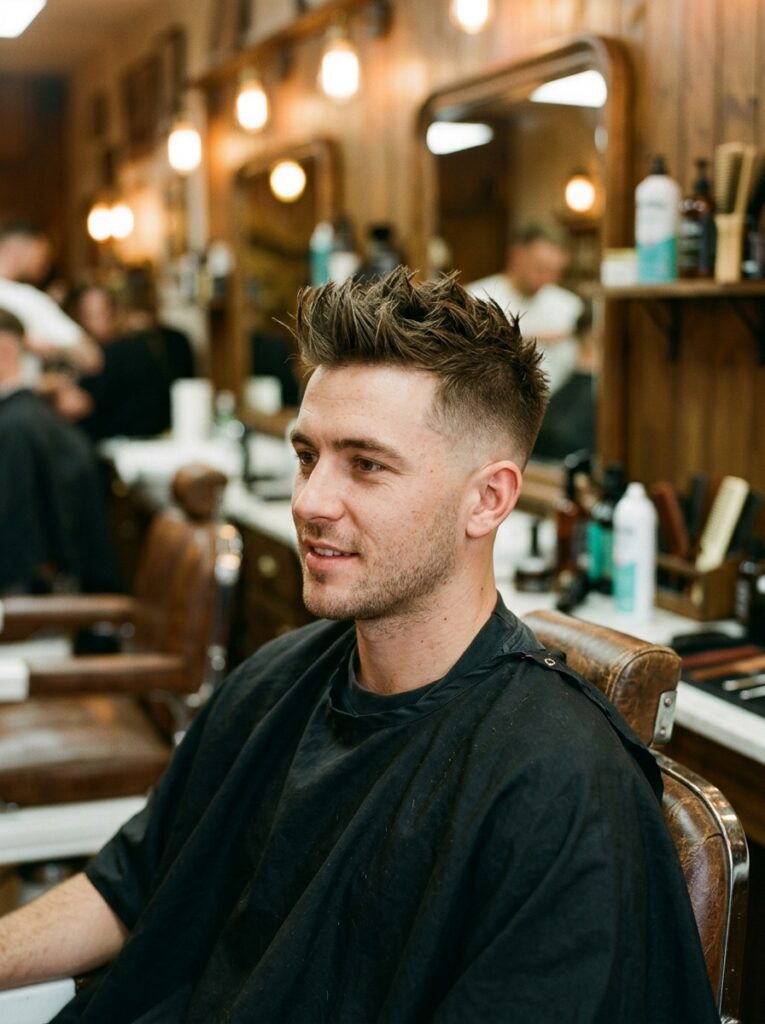
The low fade with a spiky top suits the widest range of professional settings. The conservative side treatment gives a clean perimeter without the high contrast that mid and high fades introduce. The spiky top then reads as personal style inside a conventionally well-groomed shape.
This is the right combination for workplaces where some expression is fine but anything fashion-forward would be noticed. The low fade also grows out more gracefully than higher versions, which stretches the gap between barber visits. The top can be dressed down with less product on formal days. On casual days, more product and more height change the character without changing the cut.
Short Choppy Spikes: Texture and Masculinity in a Compact Package
Short choppy spikes work at the shortest end of the category. The interest comes from irregularity, since neighbouring sections sit at different heights and point in different directions. No uniform pattern is applied across the top.
Fine hair benefits most, and the reason is optical. Sections standing at varied angles give the eye more surface to read, which registers as density even when the individual strands are lightweight. Two techniques improve that further. Apply a strong-hold matte clay to completely dry hair, warming a very small amount between the palms first, then pinch sections between the thumb and forefinger rather than raking. Pinching creates definition at the tips where it is visible. Avoid gel and anything with shine, because a reflective surface separates the sections and makes the scalp underneath more visible, which is the opposite of the intended effect. A root-lifting powder at the crown adds height on flat days. The wider set of options for lightweight hair is covered in this guide to haircuts for men with thin hair.
Spiky Undercut: Maximum Contrast for the Most Confident Wearers
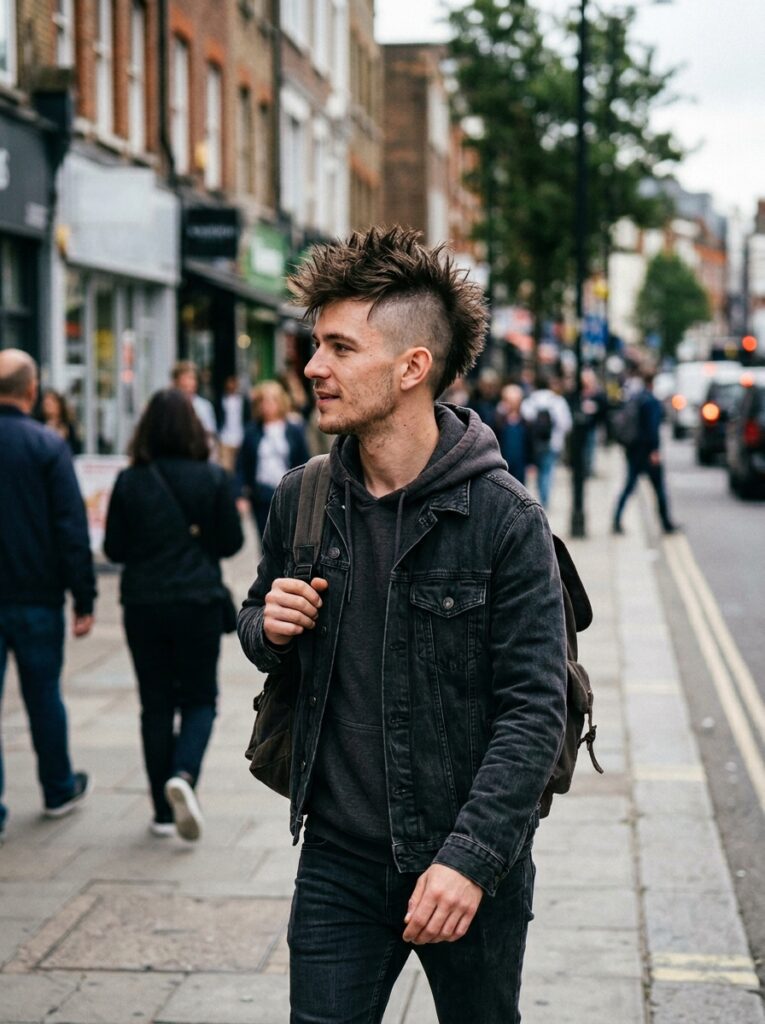
The spiky undercut sets closely shaved or very short sides against a longer spiky top. The contrast is the most dramatic in this category. The result reads as bold and fashion-aware from every angle and at every distance.
The top section is flexible. It can be spiked throughout for maximum energy, pushed forward into a textured fringe, or built into a higher ridge for a faux hawk effect. All three come from the same undercut base, which gives real daily variety from one haircut. Oval and square faces suit it best, since the clean sides frame their structure without adding emphasis anywhere disproportionate.
Modern Spiky Hair: The 2026 Interpretation
Modern spiky hair has moved a long way from the high-shine gel points of earlier decades. The current look is softer and more organic. Sections point upward and outward with variation and movement rather than standing in rigid uniform spikes.
Three specifics separate the current version from the dated one. Sections are wider, so the hair reads as texture rather than a row of needles. The finish is matte, because shine is what dates the style faster than anything else. And the perimeter is tapered or softly faded rather than cut to a hard line. Matte clay or a light texture paste is the product that makes this possible, since both hold direction while leaving the surface touchable. Application matters as much as choice: warm the product fully, start at the back and crown where hair is densest, and leave the front until last so it never receives too much. Heavy daily product and rough handling take a toll over months, and dermatologists count aggressive styling among the common habits that damage hair, so a clarifying wash every few weeks is worth building in. The soft, varied quality suits nearly every hair type, and the broader direction of travel is covered in this look at current men’s haircut trends.
Spiky Taper Cut: Neat Perimeter With Personal Character Above
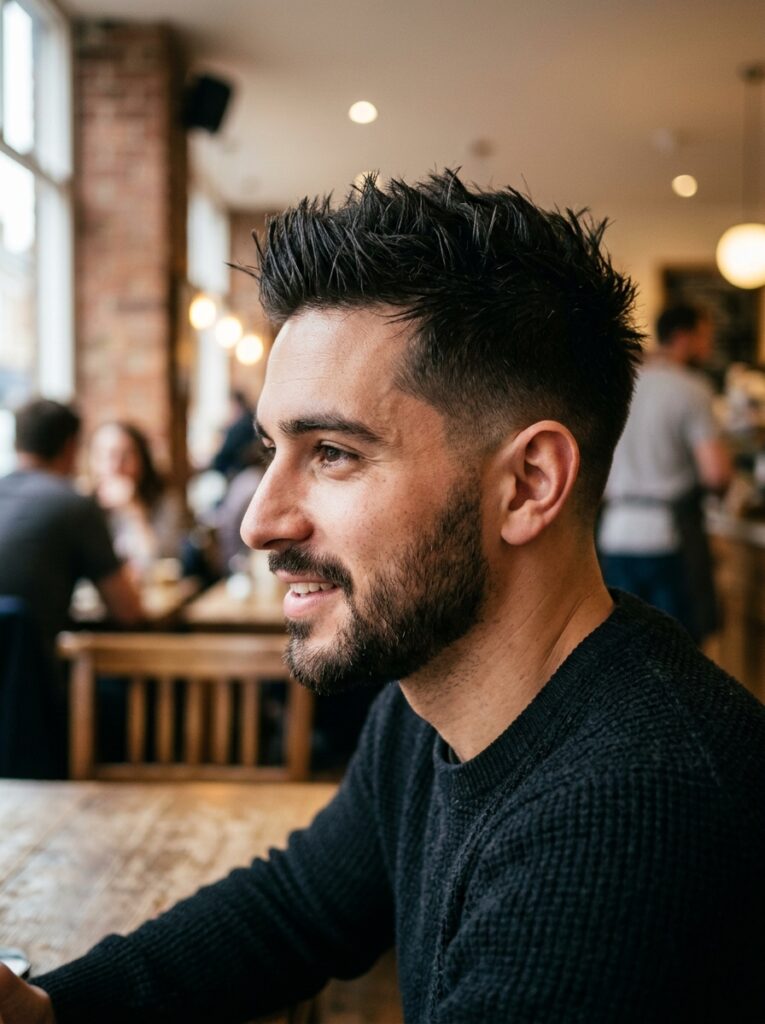
A taper gives the cleanest and most broadly appropriate perimeter for any spiky style. The gradual graduation at the neckline and sideburns looks properly barbered without the sharp contrast of a fade. Above that clean edge, the spiky top carries the personal expression.
The combination reads as care taken with grooming alongside genuine personal character. It avoids defaulting to a purely conventional result. The taper also grows out evenly, so the clean perimeter lasts longer than a fade would. That makes this a practical choice for anyone whose schedule or budget does not support monthly appointments.
Soft Spiky Haircut: The Entry Point for Men New to the Style
Soft spiky hair uses a light-hold product applied sparingly. The result has upward character without the height, rigidity or boldness of structured versions. The spikes suggest rather than declare, adding energy while still passing as a natural finish at a glance.
This is the sensible starting point for anyone drawn to the category but unsure how it will land in his own environments. Length is the main requirement, and around an inch to an inch and a half on top is enough to lift without committing to anything dramatic. The real advantage is that it works both ways on the same cut. Skip product entirely and the hair falls as an ordinary short style; add a pea of light clay to dry hair, pressed upward at the roots with the fingertips, and the texture appears in about thirty seconds. Trying it for a week before booking anything bolder is a low-cost way to find out whether the direction suits you. That flexibility makes it the most practical version of the family for men moving between different daily contexts with one haircut.
Disconnected Spiky Cut: Architectural Contrast for the Fashion-Forward

The disconnected spiky cut leaves a visible separation between the short sides and the longer spiky top. No fade or taper connects the two. That abrupt line is the defining element, and it makes the top read as a designed feature above a deliberate boundary.
This is the boldest structural version in the category. It suits men who want their haircut to state something clear about their relationship with contemporary style. Creative and urban environments accommodate it most comfortably. The disconnection line needs upkeep to stay sharp, which means visits every two to three weeks to keep the cut at its best.
Spiky Caesar Cut: The Classic Shape Made More Interesting
The spiky Caesar keeps the traditional forward fringe and adds upward texture behind it. The front stays horizontal across the forehead. The crown and mid-section lift instead of lying flat, which gives the shape far more energy than the original version has.
Two directions in one haircut means the product goes on in two ways. Press the fringe forward and flat with the palm, then pinch the crown sections upward with the fingertips. Doing the whole top with one motion pulls the fringe out of position and the style loses its defining line. Straight hair suits it best, since the fringe holds forward without help. The fringe also needs trimming every three to four weeks, because it grows into the eyeline well before the rest of the cut needs attention. Round and wider faces gain the most, as the horizontal fringe balances width while the texture above adds vertical lift. Anyone comparing it with the plain original will find the traditional shape covered among these classic men’s haircuts.
Layered Spiky Hair: Natural Movement Through Internal Structure
Layered spiky hair relies on the cut rather than the styling. The barber creates different lengths through the top, so individual layers sit at different heights and angle slightly differently. The variation is built in rather than produced with product each morning.
Medium and thick hair suit this best, since layering needs enough mass to create meaningful differences between sections. On very fine hair the layers may lack the weight to sit independently. On thicker hair the approach produces the most naturally impressive spiky result available, because the hair’s own structure does most of the work and product only supports it.
Choosing the Right Product for Spiky Hairstyles
Product choice affects the final result more than technique does. The wrong product undermines even a well-executed style, and no amount of skill at the mirror compensates for it.
Gel delivers the highest hold and the sharpest points. It also leaves a shiny, rigid surface that looks dated in most modern contexts. Save it for very structured styles worn for a specific occasion rather than daily. Wax gives strong hold with a more natural finish, which suits classic and structured spikes that must last a full day unattended. Matte clay offers medium hold with a completely natural finish and covers most everyday versions, from the modern and soft interpretations through to the textured crop and messy styles. Sea salt spray adds light texture and lift with no hold, so it works alongside a little clay rather than on its own.
Application makes a measurable difference too. Slightly damp hair takes product more evenly than bone-dry hair and produces a more natural finish. Start with less than you think you need and add more only if the result genuinely calls for it. Over-application is the single most common mistake in this whole category.