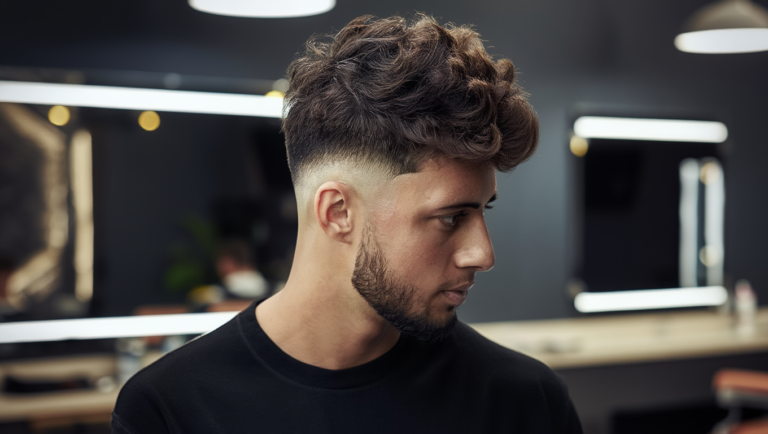

Fade Haircuts Explained: Low, Mid, High and Skin
The fade is the most requested technique at barbershops worldwide, and it has held that position for years. It suits nearly every face shape and hair type, and the same fade base pairs with dozens of different tops.
It is also the haircut men are worst at asking for. Most guides list the variations without ever saying where the line actually sits on the head, which leaves you pointing at a photo and hoping. This one starts there.
What Fade Height Actually Means
“Low”, “mid” and “high” describe one thing only: where on the side of the head the fade begins its climb. Everything else about the haircut is separate.
Use three landmarks on your own head. The top of the ear. The temple, roughly level with the outer corner of the eyebrow. And the parietal ridge, which is the corner where the side of the skull turns and becomes the top.
A low fade starts at or just above the top of the ear. A mid fade starts around the temple, between the ear and the ridge. A high fade starts at or near the parietal ridge.
Skin is a separate decision from height. “Skin fade” describes how short the bottom goes, not where the line starts, which is why a low skin fade and a high skin fade are both real and look nothing alike.
Guard numbers are the other half of the vocabulary. A 0 is bare skin, a 1 is about 3mm, a 2 about 6mm, a 3 about 9mm. Saying “a mid fade, zero up to a two, with about two inches left on top” tells a barber more than any photo does.
Low Fade
The most conservative and most widely accepted option. Starting at the ear means most of the length above stays intact, so the transition reads as natural rather than deliberate.
Longer faces benefit most, since the retained width at the sides balances vertical proportion. It pairs with side parts, crew cuts and medium-length tops. Three to four weeks between visits, because low lines grow out softly. The gentlest version is covered in our low taper fade guide.
Mid Fade

If you are choosing blind, choose this one. Starting at the temple gives enough contrast to look intentional without committing to anything dramatic.
It adapts to straight, curly and thick hair equally, and suits almost every face shape without modification. Textured crops, comb overs and messy quiffs all sit well above it. Matte clay, finger-shaped, is the whole styling routine.
High Fade
Starting at the parietal ridge produces the strongest contrast available before you get to designs. The top becomes an unmistakable block of length above very little else.
Square and oval faces carry it best, since the high line pulls the eye upward. It pairs with pompadours, quiffs and faux hawks.
Be realistic: two to three weeks. High contrast shows regrowth faster than any other version, and a soft high fade looks like a mistake rather than a choice.
Skin Fade

Also called a bald fade. The bottom of the gradient goes to bare skin, which gives the sharpest possible edge between sides and top.
Combine it with any height. Low skin fade for an office, high skin fade for a statement. It needs genuine barber skill, since there is nowhere to hide a bad blend.
One thing nobody mentions at the chair: clipper work taken to the skin, especially at the neckline, is where ingrown hairs and razor bumps appear. The American Academy of Dermatology’s guidance on ingrown hairs applies here too. Do not pick at bumps on the neckline, keep the area clean, and if they keep recurring, ask for a taper instead of a skin finish at the nape.
Taper and Fade Are Not the Same Word
This is the single most common misunderstanding in the barbershop, and it causes more disappointing haircuts than any other.
A taper is a gradual shortening around the ears and the neckline only. It leaves real length there. Nothing goes to skin, and the sides above stay largely untouched.
A fade takes that gradient up the whole side of the head and usually much shorter. Every fade contains a taper. Not every taper is a fade.
If you want something clean that still looks like you have hair on the sides, ask for a taper. Men who ask for a fade and mean a taper walk out with far shorter sides than they wanted.
Burst Fade

Instead of running straight up the side, the burst fade radiates in a semicircle around the ear and stops there. The nape is left alone entirely.
It suits short afros, mohawks and thick textured tops, and it is one of the fastest-growing requests globally. Oval and diamond faces suit the curved shape particularly well.
Drop Fade
People confuse this with the burst fade constantly. The difference is simple: a drop fade follows the whole side but curves downward behind the ear instead of cutting straight across.
That curve flatters longer faces by adding width at the back. It works under almost any top length and complements textured hair, which benefits from a curved perimeter rather than a straight one.
Comb Over Fade

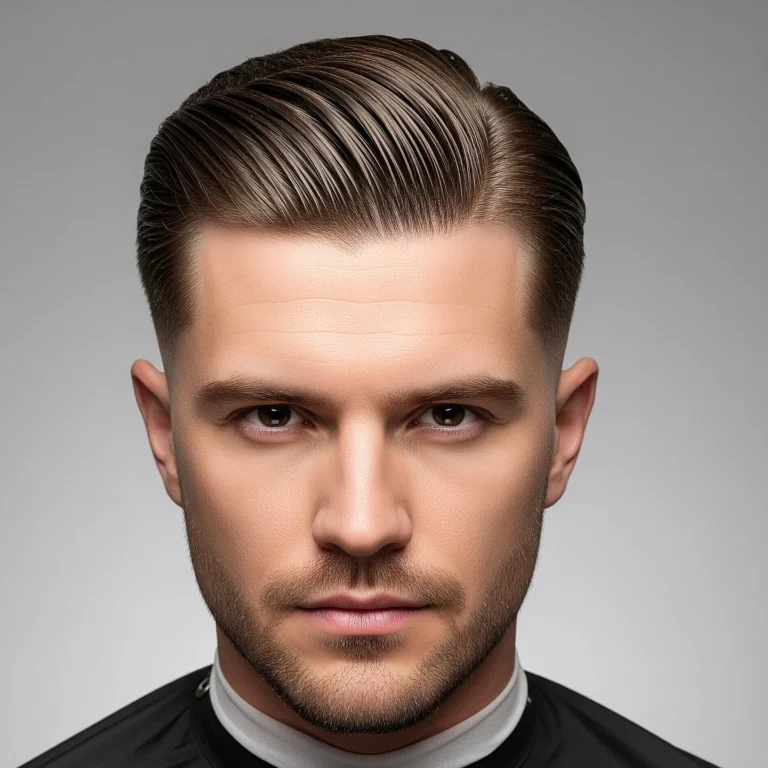
A classic side-parted top over modern faded sides. It reads as timeless and current at the same time, which is why it stays in demand across every kind of workplace.
Straight and thick hair hold the structure best. A mid fade keeps it everyday; a high fade pushes it toward street style. Molding paste and a blow-dry while combing gives the smooth finish. Square, oval and oblong faces all suit it.
Pompadour Fade
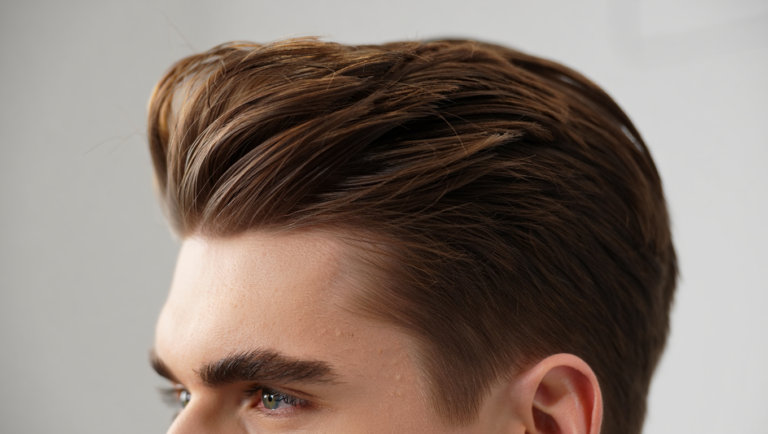
Length swept up and back over clean faded sides, for genuine height in the silhouette.
Thicker hair is close to a requirement, since volume is what makes the shape hold. The 2026 version favours matte texture and softer lines over the stiff gelled look of older ones. Use clay rather than gel, and keep the fade low or mid so the proportions stay balanced. The styling detail sits in our guide to slicked back and swept-back styles.
Choosing Fade Height by Face Shape

Fade height changes facial proportion more than most men realise, and the rule is consistent.
Round faces need height and narrow sides. A high fade removes width at the widest point and draws the eye up. Pair it with a quiff, spiky top or faux hawk. Avoid low fades worn with a heavy horizontal fringe, which widen what is already wide.
Square faces want the opposite. Low and mid fades keep a little length at the bottom, which softens a strong jaw rather than exposing it. A crew cut or textured crop over a mid fade is the reliable combination. A high skin fade can make angular features read as severe.

Oval faces take every variation without adjustment. If this is you, choose on preference rather than proportion and experiment freely with burst, drop and pompadour versions.
Longer and oblong faces want width rather than height, which makes the low fade and the drop fade the two strongest options.
What a Fade Costs You in Time
Every fade is a standing appointment, and the height decides how often.
Skin fades and high fades: two to three weeks. Mid fades: three. Low and taper fades: three to four, sometimes more. Choose the height that matches your calendar rather than the one that looks best on day one.
Between visits, the top is the only part you control. Wash with something suited to your hair texture, skip hot water, and book the next appointment before you leave the chair. Delayed trims, not bad cuts, are why most fades stop looking sharp.
Products, Matched to the Top
The fade needs nothing. The top needs one product, chosen to match it.
Matte clay for textured and casual tops. Molding paste for comb overs and side parts that need structure. Pomade for slick backs and pompadours, where a little shine reads as polished. Curl cream for curly and wavy tops. Texture powder for short tops that need lift, which is especially useful on finer hair, as covered in our guide to haircuts for thin hair.
One product, applied to damp hair, in roughly the amount you think is too little.
The One Thing to Say Before He Starts
Before the clippers come out, say three things in one sentence: the height, the shortest guard, and what you want left on top.
“Low fade, down to a one, leave about two inches on top” is unambiguous. So is “mid fade to skin, textured crop on top.” Neither leaves room for the misunderstanding that produces a haircut you did not want.
Then ask how long it will hold before it needs redoing. A barber who tells you two weeks is being honest, and you can decide right there whether to drop the height. That single question prevents more regret than any reference photo.