Low Taper Fade Explained: How to Ask Your Barber for It
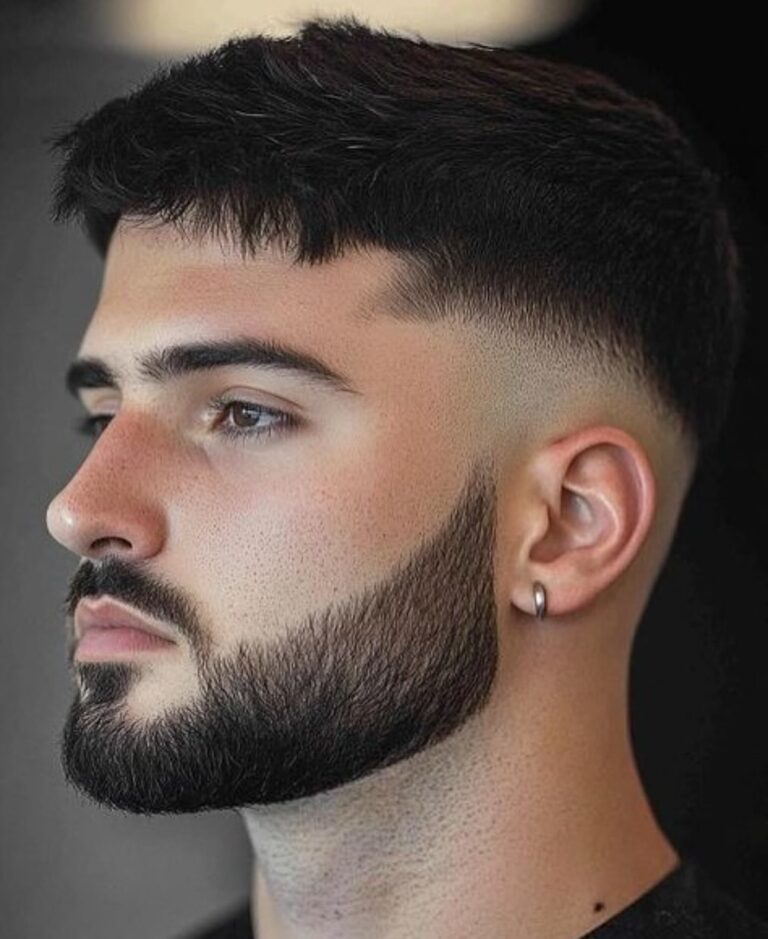
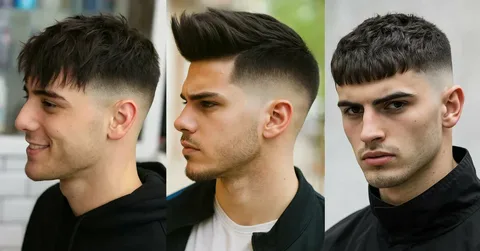
There’s a reason the low taper fade has become the default request at barbershops worldwide. It’s the most forgiving, most versatile fade variation available. Where a high skin fade demands the right face shape and the confidence to carry it, the low taper works quietly across nearly every man and every setting without drawing attention to itself.
The fade begins just above the ear and blends gradually toward the neckline, creating a transition that looks sharp on day one and still presentable in week three. It suits professional environments where a higher fade might read as too aggressive, and it grows out gracefully alongside short crops, slick-backs, and natural curls alike. For a broader look at where the low taper sits among other fade heights, our fade haircuts guide covers the full range. This guide covers every popular combination worth knowing this year.
Modern Pompadour with Low Taper Fade: Wearable Every Day
The 2026 pompadour has moved well past its retro roots into something genuinely wearable for daily life. Hair is blow-dried upward and back for front volume while the low taper keeps both sides structured without harsh contrast.
Unlike older versions, today’s pompadour favours a matte finish over high shine, making it less formally demanding and more natural-looking in casual and professional settings alike. Strong-hold pomade or a volume cream builds and holds the shape through a full day, and it’s a combination our classic men’s haircuts guide touches on as one of the styles that keeps reinventing itself rather than going out of fashion.
Crew Cut with Low Taper Fade: Sharp and Low Maintenance

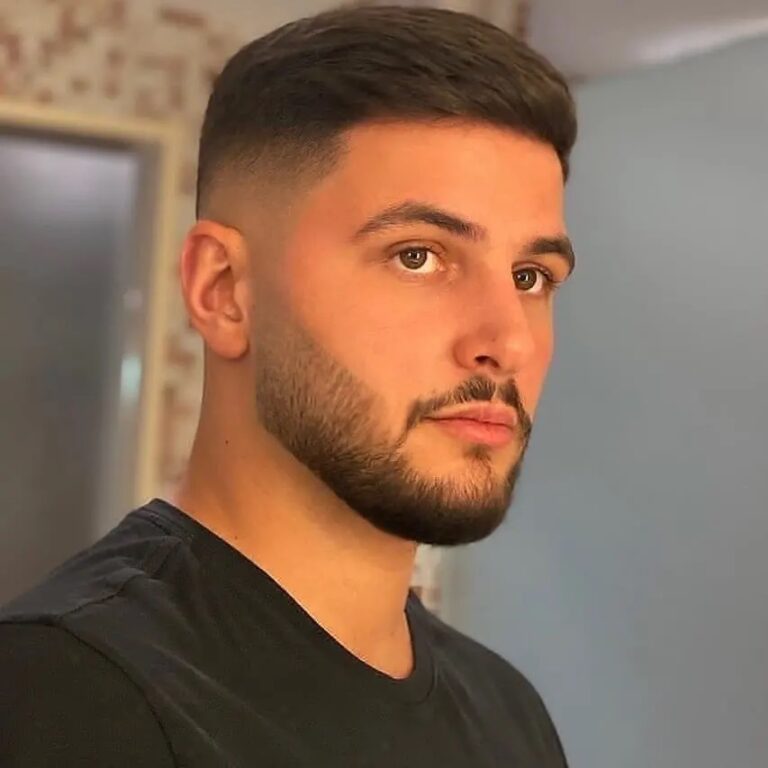
This pairing has stayed relevant across decades because it works on almost every man without requiring a particular hair type or styling skill. The top stays short with enough length to comb, while the sides taper cleanly from ear to neckline.
A light pomade keeps the top sitting neatly without looking overdone. Side-part it for the office or leave it natural for casual days — it holds its shape either way without demanding much daily attention.
Comb Over with Low Taper Fade: Professional and Polished
The comb over with a low taper communicates polish more naturally than almost any other men’s cut. The top sweeps across from a defined side part, creating volume while the low sides stay neat without competing with the length above.
Pomade applied in the direction of the sweep gives hold and a healthy, non-greasy finish. This one transitions between formal and social settings without any restyling in between, which is exactly the kind of practicality our professional haircuts guide is built around. The hard-part variation, with a razor line shaved into the parting, adds an extra level of precision for those who want it.
Hard Part with Low Taper Fade: Precision and Real Character
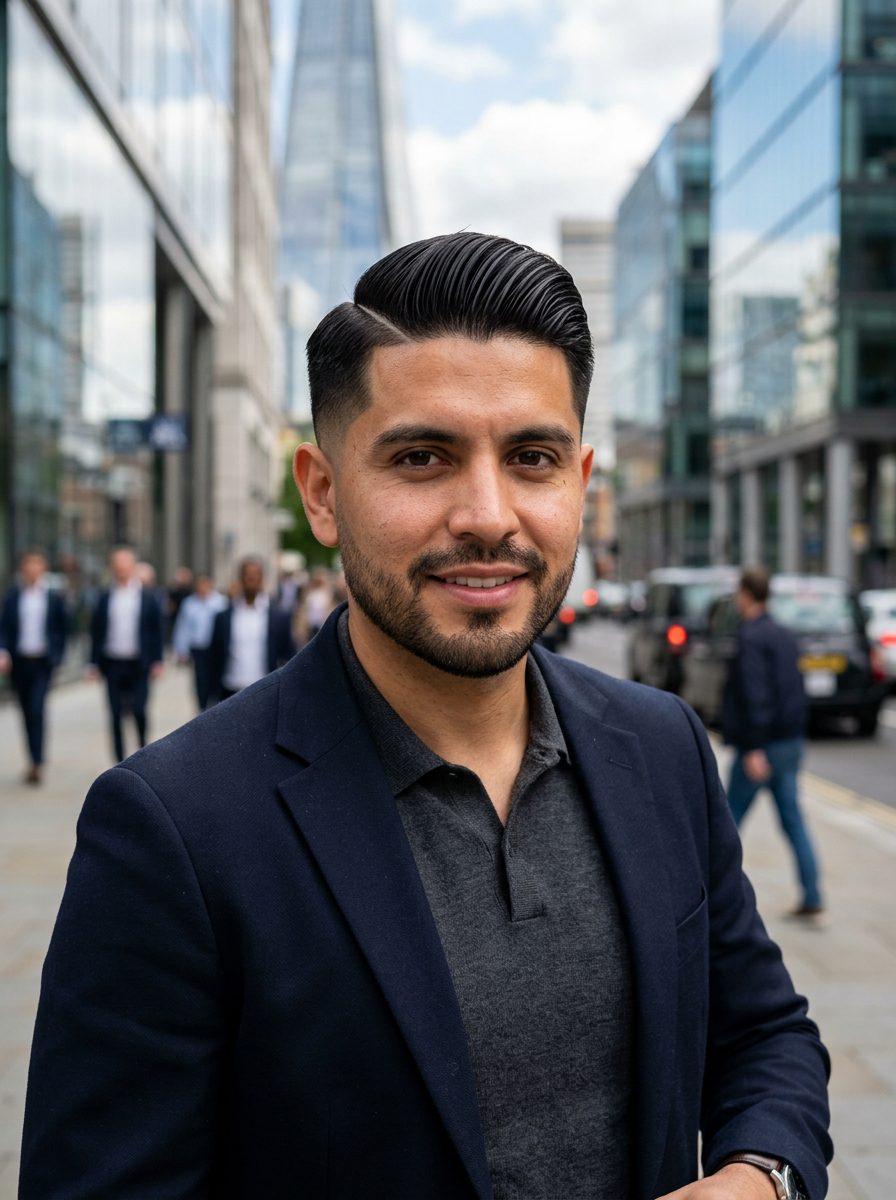
The hard part is a razor-etched line dividing the hair into two deliberate sections. Combined with a low taper, the result is sharp and visually striking — the top flows over in a brushed sweep while the sides taper without any harsh contrast pulling focus away.
Rich, dark hair tones make the line stand out clearly against the faded sides. Pomade adds subtle shine and keeps every strand in place through the day — a combination many professional environments favour precisely because it looks considered without being ostentatious.
Slick Back with Low Taper Fade: Relaxed but Genuinely Refined
The 2026 slick back has shed the wet, over-styled reputation it once carried. Rather than pressing every strand flat with a comb, hair is pushed back with fingers to let real volume and movement come through.
The hairline stays relaxed rather than plastered, which makes the whole thing feel more current. A low taper fade on both sides provides structure without adding stiffness — starting on damp hair with a hydrating pomade and blow-drying backward creates the right daily foundation. Medium to thick hair on oval or square faces carries this combination most naturally.
Brush Back with Low Taper Fade and Line-Up: Structure and Volume
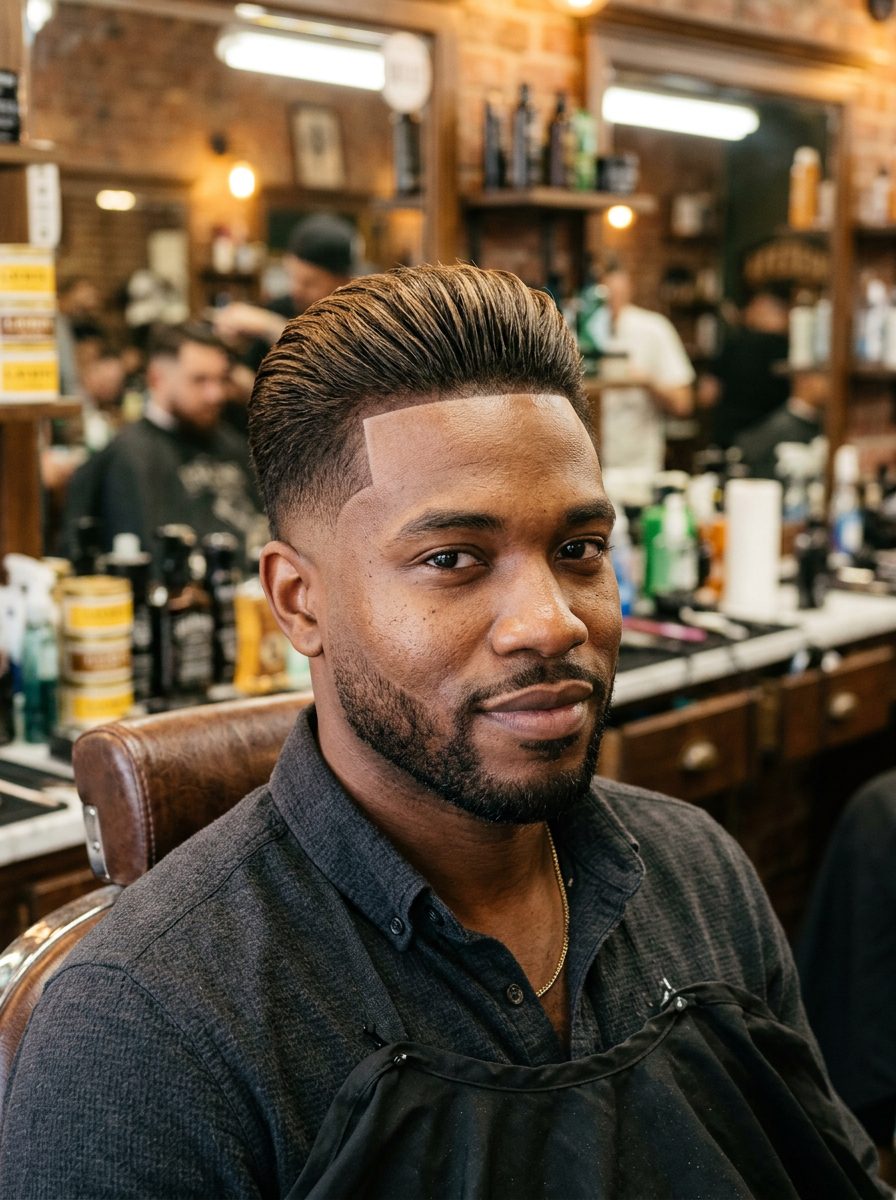
Hair on top is blow-dried or brushed backward for a smooth, controlled silhouette while the taper drops cleanly from both sides. A sharp line-up at the hairline adds a defined geometric edge that immediately sharpens the whole look.
Light pomade with a blow dryer produces the hold and subtle shine this one needs to look deliberate rather than accidental. Warm or golden hair tones add depth that a single flat dark shade sometimes misses.
French Crop with Low Taper Fade: A Global Barbershop Favourite
The French crop has become one of the fastest-growing men’s haircuts worldwide. A short horizontal fringe sits straight across the forehead while closely tapered sides and a clean neckline frame the face with balanced symmetry.
The fringe offers natural coverage for men managing a strong forehead or an early receding hairline, which has driven a good share of its growing popularity. Blow-drying it forward and finishing with a light wax or sea salt spray gives the texture needed to look deliberate rather than flat — it suits all face shapes and most hair types, which is exactly why barbers recommend it so consistently to new clients.
Curly Hair with Low Taper Fade: Natural Texture at Its Best
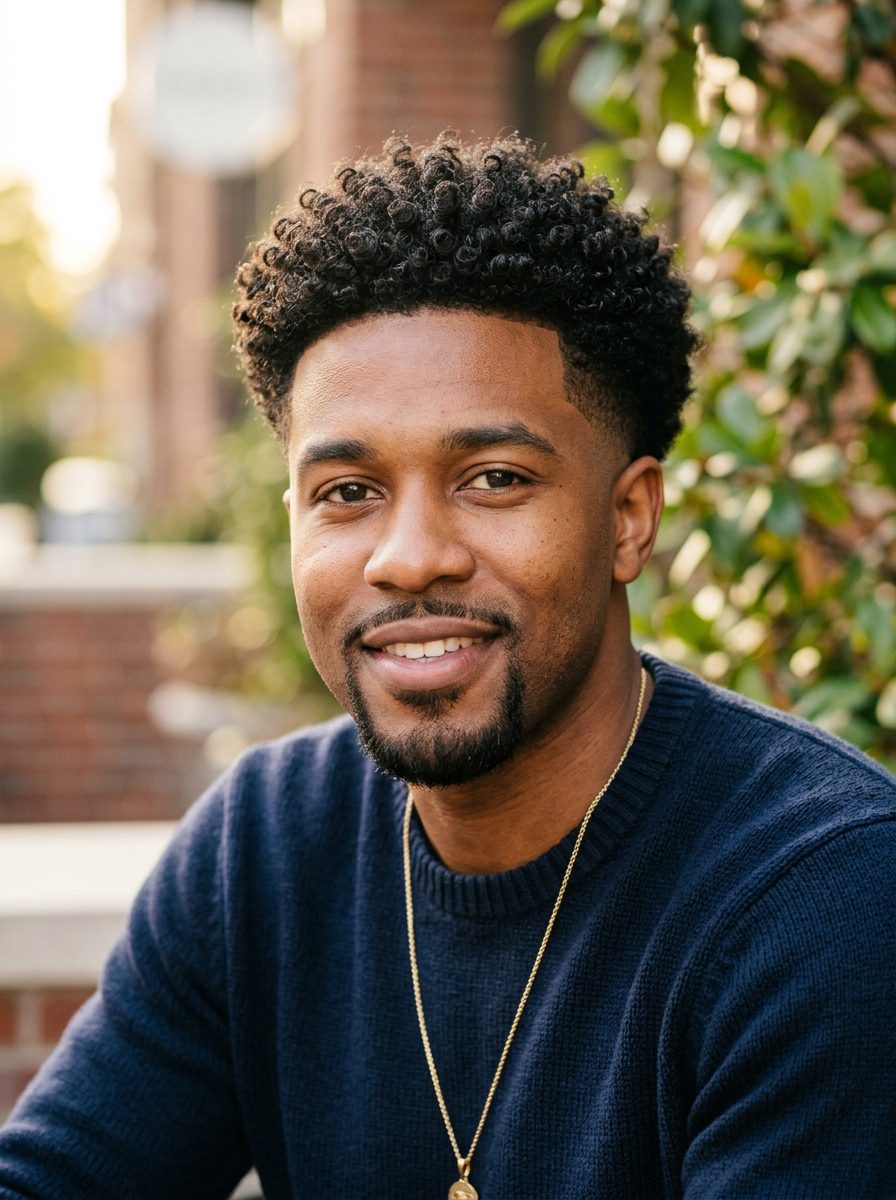
Men with natural curls often find the low taper is the cut that finally makes their texture work for them. The sides taper smoothly down while the curls on top shape into a full, rounded silhouette that shows off natural texture with real intention.
Curl cream or a moisturising pomade defines each coil and manages frizz without adding heaviness, and a shaped beard or neat goatee — our hair and beard styling guide covers a few pairings worth trying — adds structure and visual anchoring to the overall look.
Man Bun with Low Taper Fade: Volume Meets Clean Sides
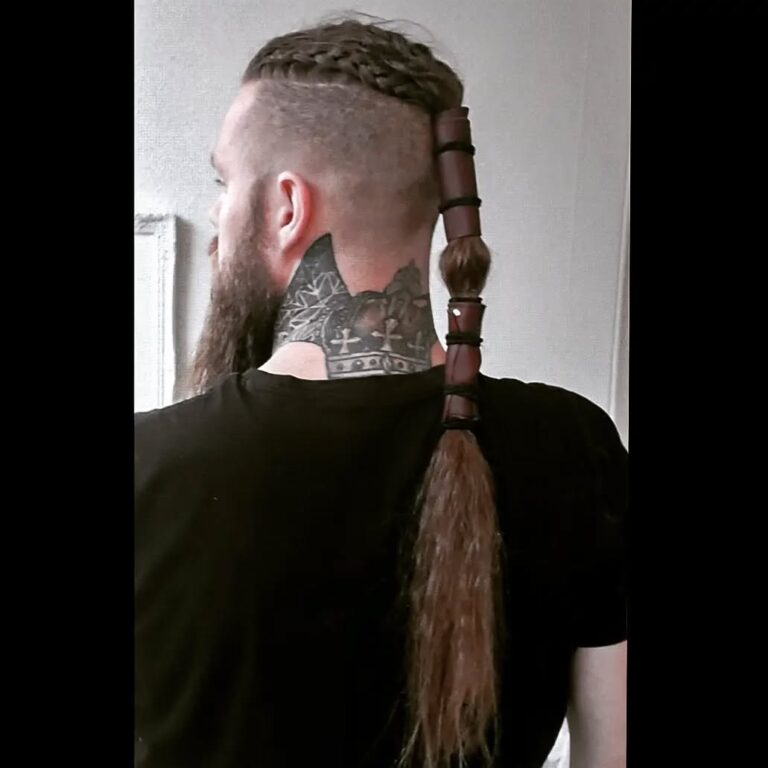
Long hair and a low taper work together far better than most men expect before trying it. The sides stay tight and proportionate while the hair on top remains full and natural in texture — worn up it reads as polished, and worn down with loose waves it shifts into relaxed, casual territory without changing the underlying cut.
A full beard adds a grounded, masculine quality that balances the longer hair well. For men weighing whether to grow their hair out this long in the first place, our guide to longer hair styles covers a different route to the same general commitment.
Spiky Top with Low Taper Fade: Bold and Consistently Sharp
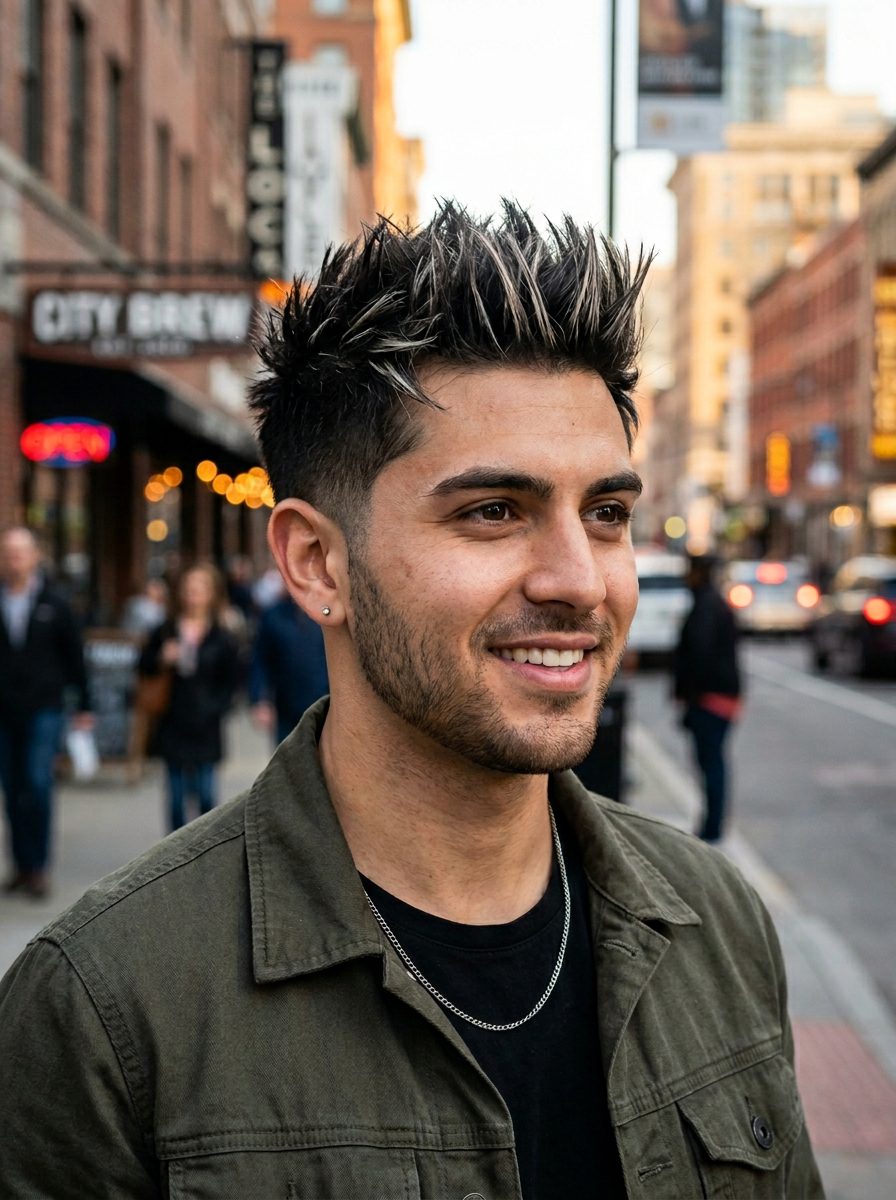
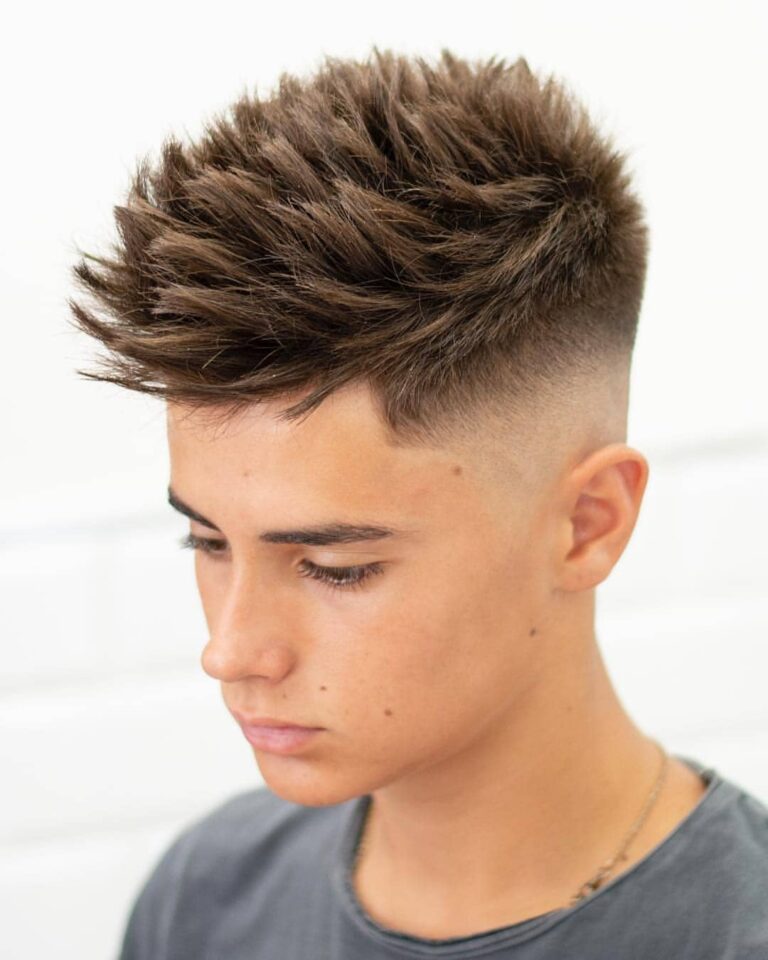
Spiky hair has always carried a naturally energetic personality, and pairing it with a low taper brings enough refinement to make it genuinely wearable for daily life rather than something reserved for weekends. Strong-hold wax or gel shapes the spikes upward from the crown while the tapered sides keep the overall silhouette from looking chaotic.
Thick or coarse hair gets the most consistent results, since the natural texture holds spikes without constant restyling through the day. Platinum or ash highlights scattered through the spikes add contrast against the shorter sides for extra impact.
Drop Taper Fade with Quiff: Height and Flow Together
The drop taper curves downward behind the ear rather than following a straight horizontal line, giving a rounded, slightly softer finish that suits fuller styles on top particularly well. Paired with a quiff, the contrast between the built-up height above and the clean curved drop below reads as both structured and relaxed at once.
Volume cream on damp hair before blow-drying sets a solid foundation for the quiff, and a wax fibre product worked through fully dry hair locks everything in without stiffness. Fine to medium hair benefits most from this combination, since the cream adds body the hair wouldn’t otherwise have.
Low Taper Fade for Black Men: Celebrating Natural Texture
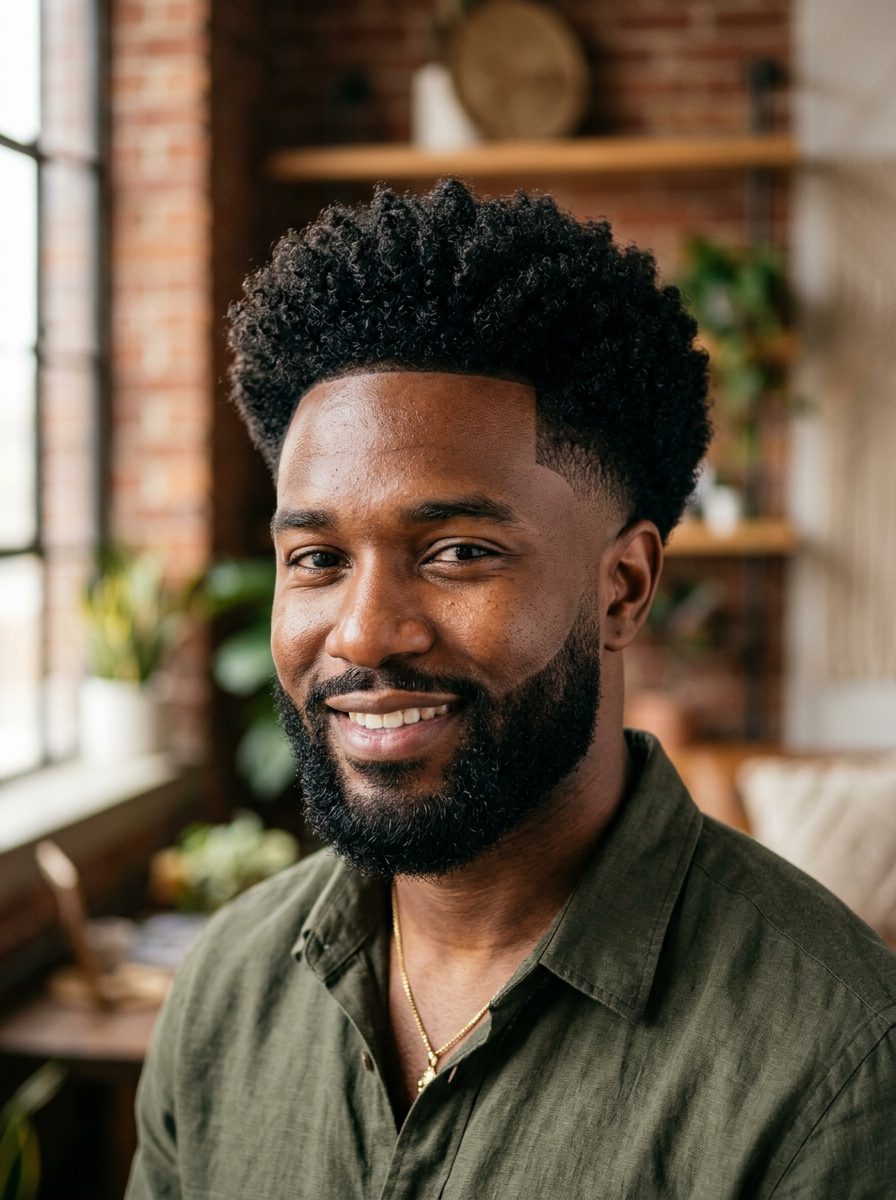
The low taper fade is one of the most widely loved cuts among Black men because it works with natural hair texture rather than against it. Tight coils or kinky curls on top shape into a full, rounded silhouette while the sides taper smoothly into the neckline for a crisp finish.
A curl sponge and moisturising pomade define each coil and hold the shape without making the hair feel heavy. Jet black tones make the contrast between the dense top and faded sides particularly striking, and a shaped beard or goatee reinforces the structure of the whole look.
Long Brush-Up with Low Taper Fade: Dimension and Natural Flow
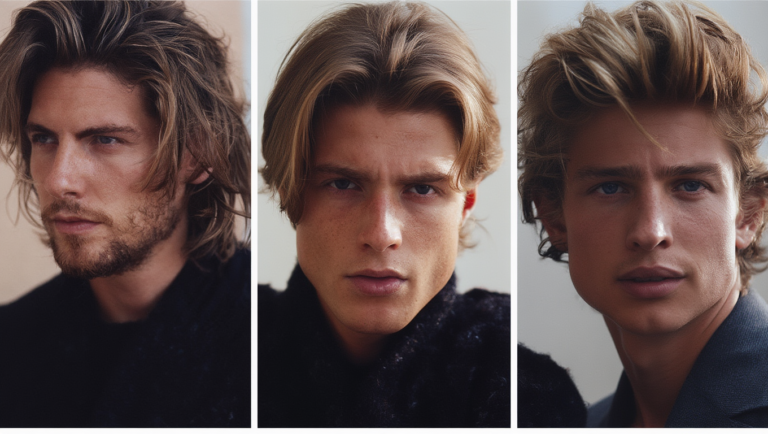
For real dimension and movement without fully committing to a long style, the long brush-up delivers. Hair on top brushes upward for visible height and natural flow, while the low taper on both sides keeps the overall shape proportionate and clean.
A touch of mousse or lightweight pomade holds the lift without stiffness, and sea salt spray adds texture for a more natural, lived-in finish. Barbers regularly suggest this to first-time fade clients specifically because it’s forgiving and grows out gracefully without losing its character.
Low Taper Fade for Black Men: Maintenance Between Barber Visits
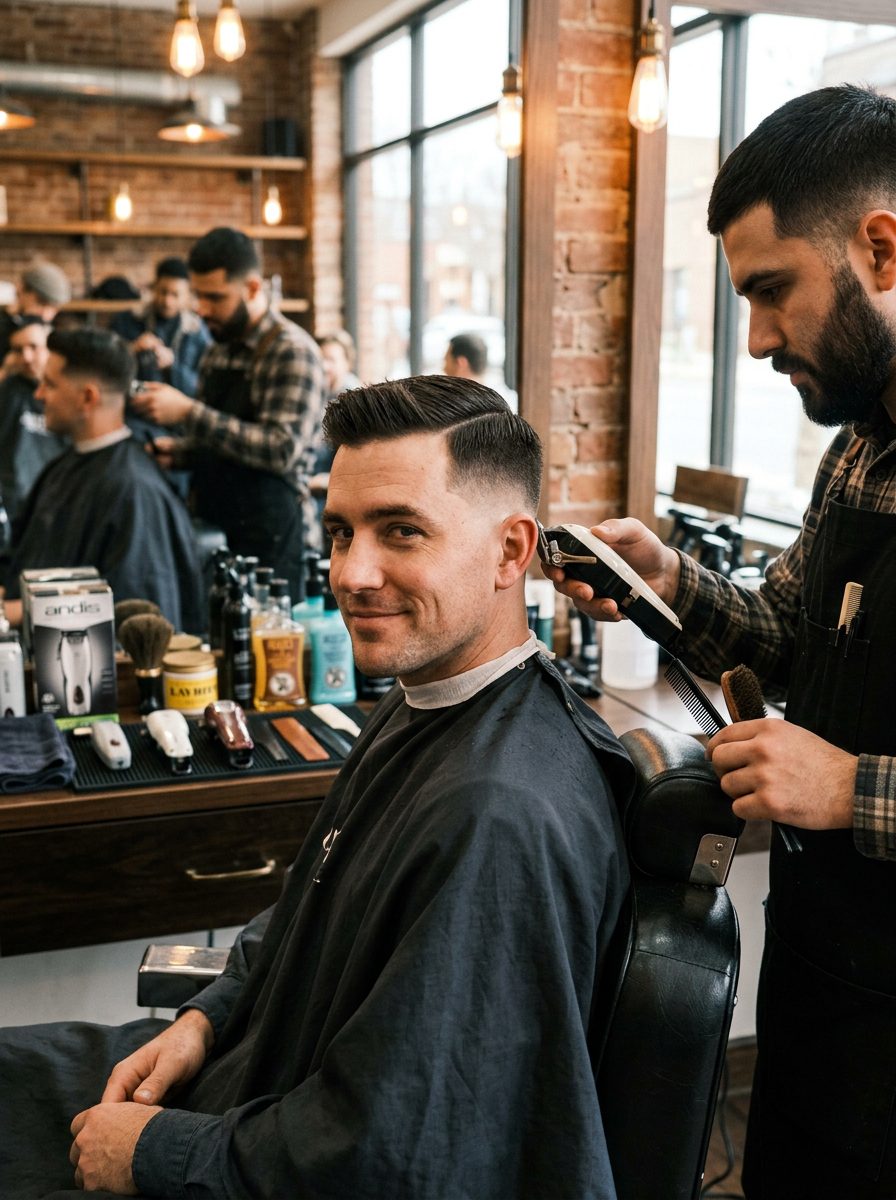
Keeping the fade itself sharp is only half the job — the coils on top need their own routine to stay healthy between appointments, and that routine looks different from what straighter hair needs.
Dermatologist guidance from the American Academy of Dermatology notes that tightly coiled hair doesn’t need daily or even weekly washing — every two to three weeks is generally enough to keep both scalp and hair healthy, since more frequent washing tends to leave coily textures dry and harder to manage. A moisturising, sulfate-free shampoo followed by a leave-in conditioner or oil on the top section keeps curl definition intact between barber visits, which matters more here than it does for straighter cuts since the fade itself needs a trim every two to three weeks regardless.
How Face Shape Affects Your Low Taper Fade Choice
The low taper fade is the most universally flattering fade variation precisely because it suits a wider range of face shapes than any higher, more aggressive alternative. Understanding how face shape interacts with the top styling choice still makes a meaningful difference.
Oval faces are the most flexible and suit every combination in this guide without modification. Round faces benefit from top styles that add vertical height — quiffs, brush-ups, and pompadours — which elongate the face and balance proportions. Square faces suit softer top styling, like textured crops and matte comb overs, that ease a strong jawline without losing sharpness. Longer or rectangular faces benefit from styles that add width at the sides rather than more height, keeping proportions balanced rather than stretching the vertical dimension further.
Bringing a reference photo that matches both face shape and hair type to the appointment is always worth doing — it removes ambiguity and gives the barber something concrete to work from.