Best Curly Hairstyles for Men: Define, Shape, and Own Your Curls
Curly Hairstyles for Men: Working With the Texture Most Men Underestimate
Curly hair is one of the most visually dynamic textures in men’s styling. It creates natural volume, texture and movement. Straight or wavy hair needs a great deal of product effort to imitate any of that. The problem most curly-haired men face is not a shortage of options. It is a shortage of specific knowledge about which cuts suit their curl pattern and which products define curls rather than flatten or frizz them.
The fifteen styles below cover the full range. They run from tightly faded short cuts through medium-length layers to fully defined ringlets. Each section covers the curl types the style suits, the products that hold definition, and the daily habits that make curly hair look genuinely impressive rather than simply present.
Curly Taper Fade: The Clean Modern Foundation for Natural Curls
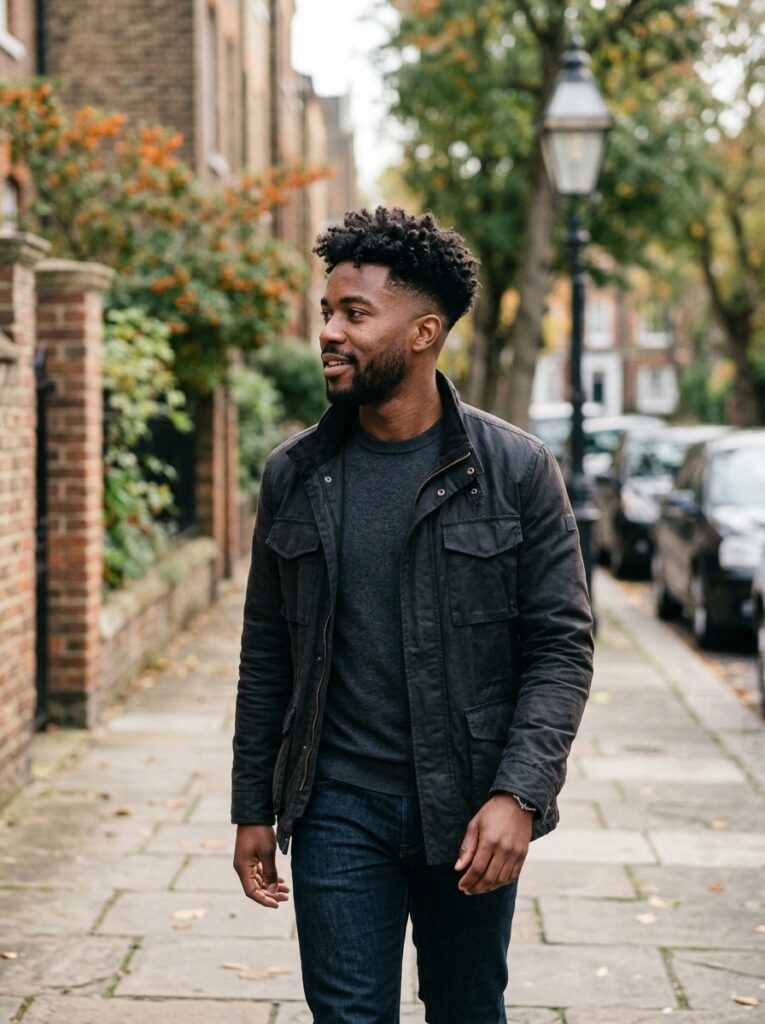
The curly taper fade is the most consistently popular curly hairstyle for men. It gives a clean, shaped perimeter that makes curls look deliberately styled. The curl pattern on top stays completely intact. The taper shortens the sides and back gradually from the natural hairline upward, which balances the fuller volume above without the abrupt contrast of a high fade.
Straight hair tapers can look slightly imprecise at the fade line, because every strand is visible on its own. Curly hair groups naturally at the sides, so the taper line reads softer and more organic. That difference matters between visits. The curl’s own edge softens regrowth gradually instead of exposing it as a hard line. A curl cream applied to damp hair after washing defines each section and holds the shape through a full day.
Short Curly Crop: Maximum Freshness, Minimum Daily Effort
A short curly crop keeps the curls close to the scalp at one short length. It feels genuinely cool in warm weather. It also needs almost nothing daily to look neat. At this length the curl pattern still shows texture and movement, but no curl is long enough to fall under its own weight or start tangling.
Getting the length right is the whole decision. Around an inch to an inch and a half of curl works for most patterns. Shorter than that and tighter coils lose their visible shape, becoming texture rather than curl. Longer and the crop starts behaving like a full curly top with the upkeep to match. One point catches people out at the barber: curls shrink as they dry, often by half their wet length, so a crop cut to look right while wet can end up far shorter than intended. Asking the barber to cut it dry solves that completely. The style earns its place in warm, humid climates because it dries fast after washing. Longer curl lengths absorb moisture at the surface while the inside stays dry, and that mismatch is where humidity frizz begins. A pea-sized amount of curl cream or a light leave-in on damp hair before air drying is genuinely all this cut needs.
Curly Fringe Haircut: Natural Curl Fall That Softens and Frames

The curly fringe lets the front section fall forward across the forehead in its natural direction. Nothing is pushed up, back or across. The result is relaxed and specifically youthful, because the curl’s own movement frames the face softly instead of forming a hard edge.
It works across most curl types, since gravity rather than curl pattern drives the fall. Tighter coils make a shorter, denser fringe that sits close to the forehead. Looser curls travel further and create a softer frame. A light curl cream through the fringe on damp hair, then air drying, gives the most authentic result. Towel-drying or blow-drying without a diffuser reliably introduces the frizz that undoes whatever the product achieved.
Curly Undercut: Bold Contrast That Makes the Curls the Entire Point
The curly undercut sets closely shaved or very short sides directly against a full curl section on top. There is no graduation between the two. That immediate jump from skin to volume is the most dramatic contrast available in curly styling, and it makes the curls above look fuller than the same curls would against a taper.
This is a style with a maintenance schedule attached. The sides need attention every two to three weeks, because the contrast is the entire idea and soft, growing-in sides change the style from bold to overgrown. Anyone unsure about that commitment should ask for a disconnected taper instead, which reads similarly but tolerates four or five weeks. Two other details decide how well it sits. Weight on top should be removed from inside the section rather than off the surface, or the curls sit as one heavy mass above bare sides. And the transition point matters: taken too high above the temples, the top can look like a cap rather than a deliberate contrast. A diffuser dry on the top adds lift and definition, which sharpens the difference between clean sides and full curls. Sleeping on a satin pillowcase keeps that top section from flattening on one side overnight.
Textured Curly Top: Volume and Definition Through Layering
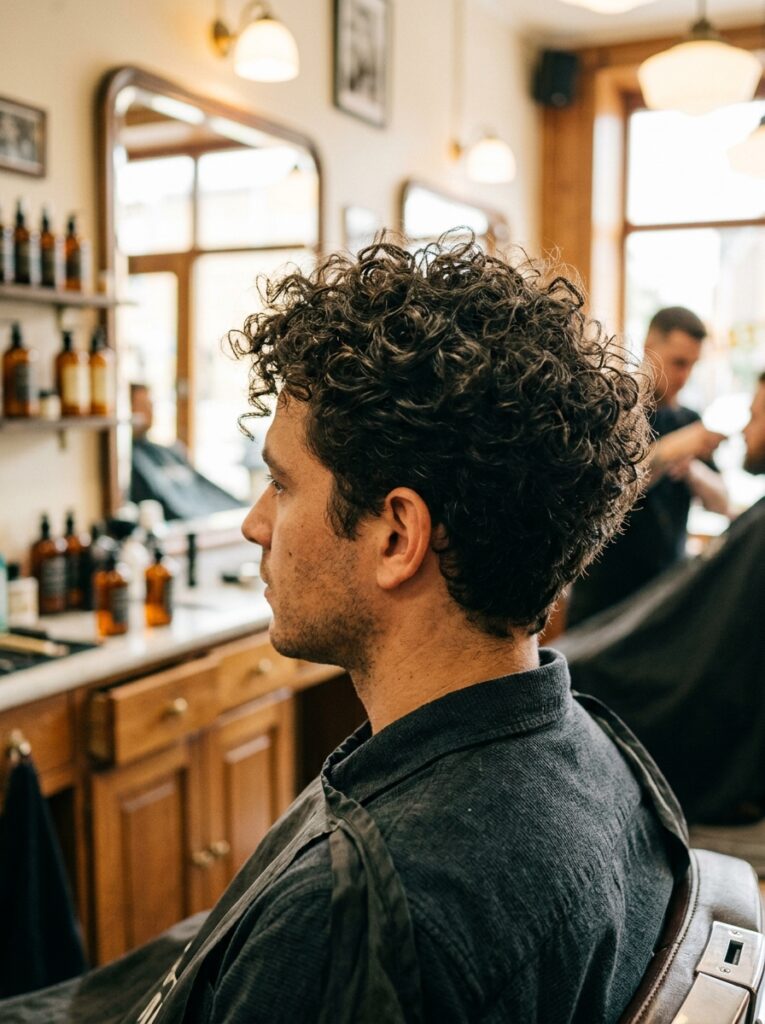
A textured curly top uses layering through the top section to spread the volume evenly. Each curl then holds its own definition instead of compressing into a single dense mass. Without layers, curly hair at most lengths sits as bulk, because the weight of the outer curls presses down on the ones underneath.
With layers, every section has its own space and its own weight. Each curl can express its natural shape independently. The top gains real dimension, since curls at different heights catch light from several angles. Medium and thick curl types suit this best, as the technique needs enough curl diameter to create meaningful variation. A curl cream followed by diffuser drying gives the fullest, most defined result.
Curly High Fade: Maximum Contrast for the Most Confident Statement
A curly high fade starts the fade line well above the temples. The contrast between the close sides and the full curl section is sharp and immediate. That contrast is the reason men choose it over lower alternatives, and it photographs strongly from every angle.
Two technical points make or break it. The first is shrinkage. Curls can lose a third to a half of their wet length as they dry, so a fade blended to a wet top will look badly out of proportion once everything dries. A barber who cuts curly hair dry, or dries the top before blending, avoids that entirely. The second is the transition. On tightly coiled hair the fade can meet the top too abruptly and create a visible shelf, which is why the top inch of the fade should blend into the curl rather than stop under it. Bring a photo and name the fade height you want, since the difference between mid and high changes the whole character of the cut. Anyone weighing up the options will find the heights compared in this guide to fade haircuts for men. A moisturising curl cream on the top each day keeps the curls healthy while the fresh sides carry the sharp finish.
Loose Curl Caesar: The Modern Update on a Classic Shape
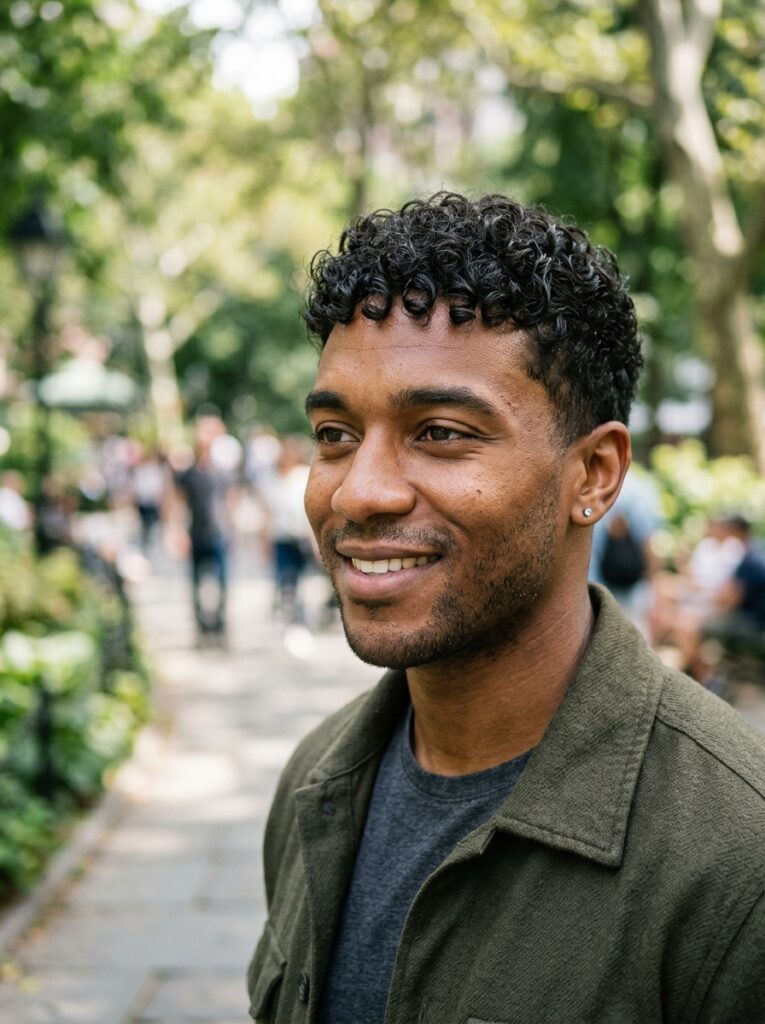
The loose curl Caesar takes the traditional Caesar’s forward horizontal fringe and applies it to naturally curly hair. The curls give that fringe texture and movement. A straight Caesar produces a flat, uniform forward fall instead. The curly version keeps the recognisable structured shape while gaining real visual character.
Loose curl types suit it most naturally. The larger, lighter curl pattern falls forward with visible movement and none of the density that tighter coils bring at the same length. The sides stay trimmed and clean through a taper or low fade. A curl-enhancing cream through the fringe, directed forward with the fingers before air drying, creates the direction and the definition together.
Curly Quiff: Natural Volume That Does the Work Product Cannot
The curly quiff uses volume the hair already has. Straight hair needs blow-drying and volumising product to build height at the front. Curls grow away from the scalp in several directions on their own, so the lifted front section largely happens by itself.
The work is in preserving that lift rather than creating it. Product order does most of it: a light leave-in on soaking wet hair, then a curl cream, then a light-hold product only once the hair is nearly dry. Applying a heavy cream or gel early weighs the roots down and the height disappears before the day starts. Drying with a diffuser held against the scalp, with the head tipped forward, lifts the roots rather than pressing them flat. Overnight is the other variable. Gathering the top loosely into a high, slack tie, sometimes called pineappling, keeps the front from crushing while you sleep. Medium-length curls suit the style best, since they have enough length to show the lift and enough diameter to read as volume above the tapered sides. Tight coils give a compact, textured version, and long loose curls give a more flowing one.
Curly Ivy League: Professional Elegance Without Suppressing the Natural Texture

The curly Ivy League brings the classic cut’s polish to curly hair without straightening or suppressing anything. The sides are trimmed and clean. The top keeps enough length to show genuine curl character. The overall impression is of careful grooming worn alongside natural texture rather than against it.
This is the curly option for formal environments. It signals the same grooming investment as the straight Ivy League and makes no apology for the curl. A moisturising light-hold cream on damp hair, then a diffuser on low heat, gives the most natural finish. Direct heat at high temperature separates the curl groups into individual strands and brings frizz, which undermines exactly the polish this cut relies on.
Natural Curly Afro Fade: Celebrating Volume With a Structured Frame
The natural afro fade pairs full coil volume with a shaped perimeter. The fade gives the style a clear base, frames the face and anchors the silhouette. Nothing about the curl’s natural growth direction is restricted. The structure comes from underneath rather than from control on top.
Tighter coil patterns suit it best, since their density produces the rounded shape the style depends on. Shaping is a barber’s job every three to four weeks, and it should be done dry with the hair picked out, because a wet-cut afro dries into an uneven shape. Daily care matters as much as the cut. Pick the hair out from the roots while it is dry and moisturised, never while wet, as wet coils stretch and snap. Coily hair is also structurally fragile, and dermatologists recommend washing weekly or fortnightly, conditioning every wash and coating the ends, which are the oldest part of each strand; the American Academy of Dermatology’s everyday care guidance for Black hair sets that routine out clearly. A satin durag or bonnet overnight preserves both moisture and shape. Anyone considering more length later will find the options in this guide to long hairstyles for Black men.
Curly Low Fade: The Everyday Curly Hairstyle for Every Context

The curly low fade is the most versatile daily option in this category. Its conservative fade height and focused curl top suit professional and casual settings without any change between them. The sides stay clean and contemporary with none of the drama of a high fade. It reads as well maintained in formal rooms and completely natural everywhere else.
The gentle graduation also suits curly hair particularly well. It works with the natural grouping of curl sections at the sides instead of cutting through them abruptly. The fade line ends up softer and more organic than the same fade on straight hair. That means it ages more gracefully between visits. This is the curly cut that asks for the fewest daily decisions and delivers the most consistently appropriate result.
Medium-Length Curly Layers: Bounce and Movement at Their Best
Medium length is where curly hair reaches its full potential. There is enough length for each curl to form completely, and enough space between layers for movement. Shorter cuts cannot develop that bounce. Longer ones can dilute it under their own weight.
Getting there requires patience with an awkward stage. Curls shrink as they dry, so hair that measures six inches wet may read as three, and the growth appears to stall for weeks while it is actually widening outward. Internal layering fixes that. Weight is removed from inside each section rather than off the visible surface, which keeps the silhouette full while letting individual curls move. The drying routine matters just as much. Apply curl cream section by section on soaking wet hair, then leave it alone; touching curls while they set breaks the forming groups and creates frizz that no later product can repair. Rough towel-drying does the same damage, which is why dermatologists list aggressive drying and brushing among the most common causes of hair damage. A microfibre towel or cotton t-shirt is the safer swap. The grow-out stages are covered further in this guide to medium-length hairstyles for men.
Curly French Crop: Short and Structured With Natural Front Character
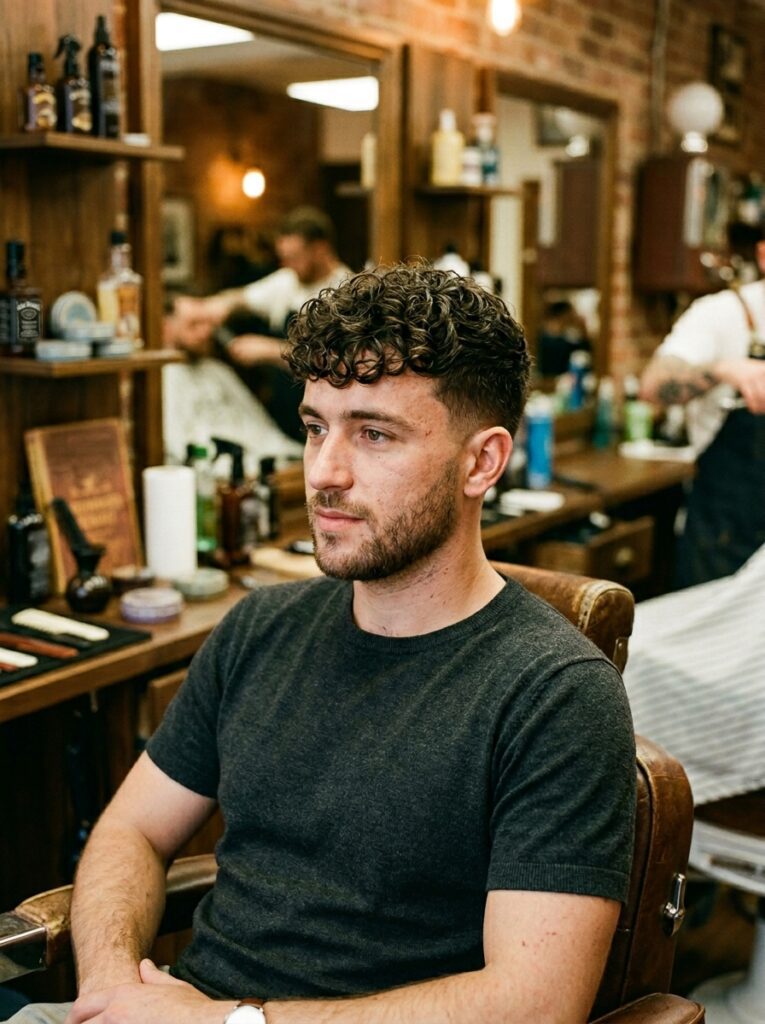
The curly French crop applies the crop’s horizontal fringe to curly hair. The curls give that fringe a textured, dimensional quality. Straight hair cannot produce the same effect at this length. The fringe sits across the forehead with visible movement instead of forming a flat band.
Shorter curl types suit it particularly well, since the tighter length presses the fringe forward and reinforces the structure. Looser curls at the same length give a softer version. The sides stay short and clean with a fade or taper. Work a small amount of curl cream through the fringe on damp hair, then press it forward with the palm rather than the fingers. That keeps each curl section defined while encouraging the forward direction the style depends on.
Messy Curly Top with Tapered Sides: Relaxed But Always Deliberate
This style says its wearer is entirely comfortable with his own texture. The curls sit where they land after washing and drying, and that is the whole styling method. The tapered sides supply the structure that keeps the loose top reading as a choice rather than as neglect.
Two things separate relaxed from unkempt, and neither is complicated. The first is the request at the barber: ask for a natural taper that follows the hairline rather than a squared neckline, because a hard line grows out into an obvious edge while a taper simply softens. The principle is the same one behind the low taper fade, applied more gently. The second is moisture. Dry, frizzy curls above any side treatment look neglected, while moisturised curls in their natural arrangement look confident. A leave-in conditioner each morning covers most of it. On day two or three, a spray bottle of water with a few drops of leave-in revives the curl shape in seconds without a full wash. One more habit protects the look over months: use a clarifying shampoo roughly once a month, since cream and leave-in build up on curly hair and gradually turn definition into limpness.
Defined Ringlet Curls: The Style That Rewards Proper Curl Care

Defined ringlets take the tightest, most uniform curl patterns and bring out each coil individually. The quality here comes entirely from the precision and health of every ringlet. It does not come from the cut’s structure or a fade’s contrast. The ringlets are the style, and everything else exists to show them properly.
Technique decides the outcome. Section damp hair, then apply curl cream through each section from root to tip by scrunching upward rather than pulling down. Scrunching lets each curl form inside its natural coil pattern. Pulling downward stretches it against gravity during application. Then let it air dry completely without touching it, since even light contact with damp forming ringlets breaks the pattern and creates frizz. Applied consistently, the method produces a head of hair where every ringlet reads as its own defined unit.
The Curly Hair Care Foundation That All Fifteen Styles Depend On
Every style on this list performs at its best only when the curls underneath are healthy. Curly hair is more porous and more prone to dryness than straight hair. The curl shape stops the scalp’s natural oils travelling down the shaft. Straight hair moves those oils easily, and curly hair does not. That single structural fact is why external moisture matters more here than for any other hair type.
A sulfate-free shampoo preserves the oils curls need to stay supple and defined. Deep conditioning every one to two weeks restores the moisture and elasticity that washing, weather and styling steadily remove. A leave-in conditioner after every wash carries moisture through the days between. Never towel-dry curly hair aggressively, because the friction breaks up forming curl groups and creates frizz no product can undo afterward.
None of this is an optional extra alongside the styling. It is the foundation the styling sits on. A well-cut curly hairstyle on dry, neglected hair looks flat and undefined, while the same cut on moisturised, healthy curls looks like the photograph that inspired it.