Medium-Length Hairstyles for Men (And How to Survive the Grow-Out)
Medium length is the sweet spot of men’s hair. Long enough to show real texture and movement, short enough to stay manageable on a weekday morning. The men who look consistently well-groomed without appearing to try are almost always working somewhere in this range.
Getting there is the part nobody writes about. Most men who set out to grow their hair quit somewhere around month five, and they quit for the same reason every time. The hair has stopped being a haircut and has not yet become a style. This guide covers that stretch first, then the fourteen styles waiting at the end of it.
The Grow-Out, Month by Month
Scalp hair grows at roughly half an inch a month, and that rate is fairly consistent from person to person. Nothing you buy meaningfully changes it. What that figure gives you is a realistic timeline, which is far more useful than a promise.
Months one and two. Your old cut simply looks overdue. The sides push out before the top gains any real length, which is why the head starts to look wider rather than longer. Ask for the sides to be tidied and the top left completely alone.
Months three to five. This is the stretch that ends most attempts. The top is long enough to fall in the wrong direction but too short to be pushed anywhere on purpose. Product does not fix it because there is nothing yet for the product to hold.
The single most useful instruction at this stage is to tell the barber to shape it, not shorten it. Most barbers default to taking length off when a cut looks unstructured, and that resets your progress by two months. Say you are growing it out and you want the weight removed rather than the length.
Months six to nine. The hair starts behaving. There is enough weight for it to fall consistently in one direction, and most of the styles below become possible somewhere in here. A middle part or curtain fringe usually arrives first.
Month ten onward. Full flexibility. Bro flow, wolf cut and the longer shag variations all need this much length to read properly. If you are aiming past this point, our guide to long hair for men picks up where this one stops.
Curtain Fringe: The Most Universally Flattering Option
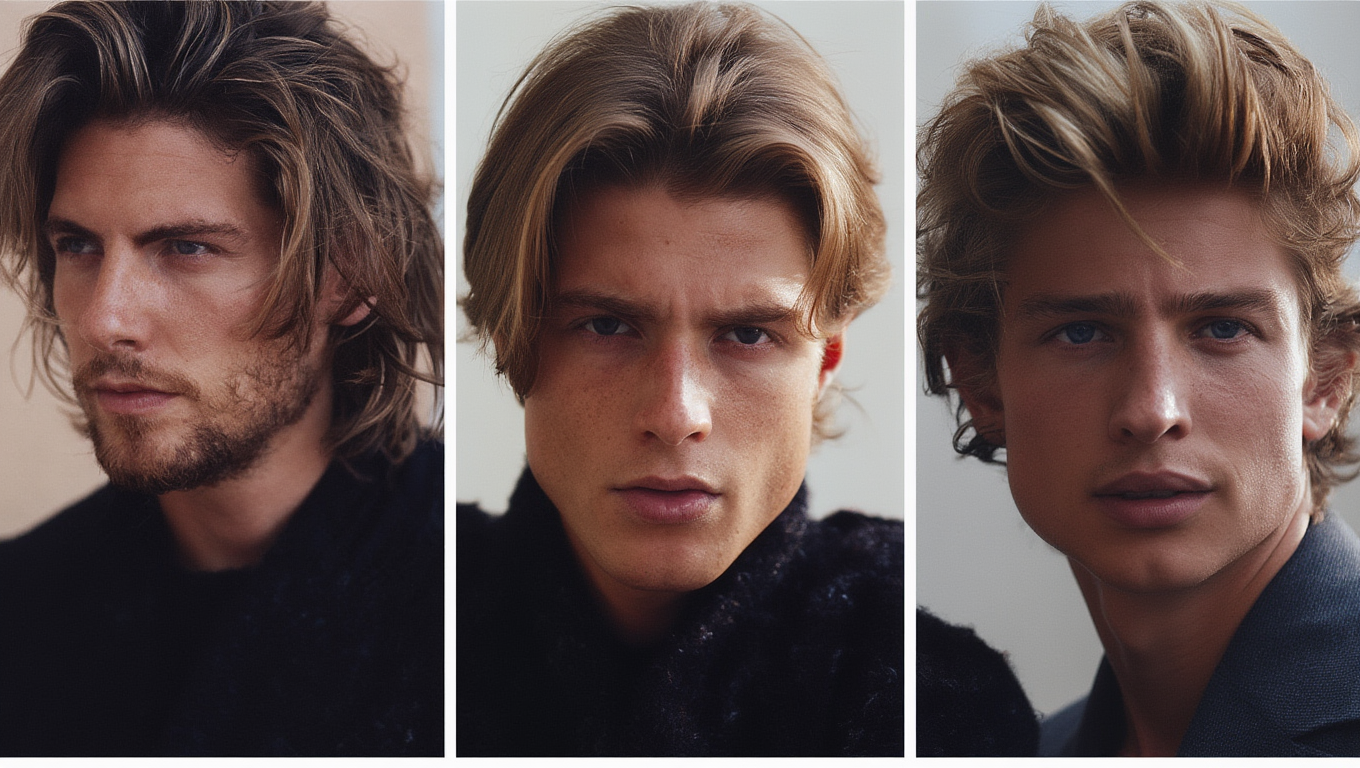
The curtain fringe is the most requested medium style of 2026. A soft centre part with face-framing layers sweeping outward creates natural symmetry that suits a wide range of face shapes.
It flatters oval, heart and diamond shapes especially, because the outward sweep balances a wider forehead. Blow-dry from front to back and separate the centre with a wide-toothed comb. Lightweight styling cream gives a flexible finish without stiffness.
It is also the first proper style most men reach during a grow-out, which makes it the natural starting point for anyone undecided.
Layered Waves: Natural Texture Without a Routine

Soft layers through the top and sides reduce bulk while letting natural movement come through. Medium hair cut in one solid length goes flat, and layering is what prevents that.
Sea salt spray on damp hair brings out the wave without adding weight. Air drying gives a more honest result than heat, though it takes longer. Wavy and straight hair both take this cut well, and our guide to haircuts that work with wavy hair goes further on the texture side.
Medium Quiff: Height and Structure
Hair swept upward and back from the forehead creates height at the front that tapers toward the crown. It is one of the few medium styles that adds genuine vertical structure.
Thick straight hair carries it best. Square and round faces benefit most, since the added front height lengthens both. Blow-dry upward with a round brush, then use a medium-hold product to keep the shape without the rigid quality heavy gel produces.
Bro Flow: Relaxed and Genuinely Low Effort

Hair brushed back and left to fall naturally around the ears and neck, with soft volume on top and lightly layered sides.
Blow-dry backward with your fingers for root lift and finish with sea salt spray. Wavy hair suits it exceptionally well, because the natural texture supplies body with no product effort beyond the spray.
It also sits comfortably across ages in a way few styles manage. A teenager and a man in his forties can both wear it without either looking out of place.
Trim every six to eight weeks to hold the shape without losing the length the style depends on.
Medium Undercut: Sharp Contrast
Very short or closely faded sides against significantly longer hair on top. The contrast is immediate and reads as a deliberate decision rather than a grown-out cut.
It suits oval, square and diamond faces. Blow-dry the top upward and back, then use a strong-hold product to keep the direction through the day.
Be honest with yourself about the upkeep before choosing it. The sides need attention every two to three weeks, and the moment they soften, the whole idea stops working. The variations are compared in our low taper fade guide.
Modern Mullet: Retro, Rebuilt
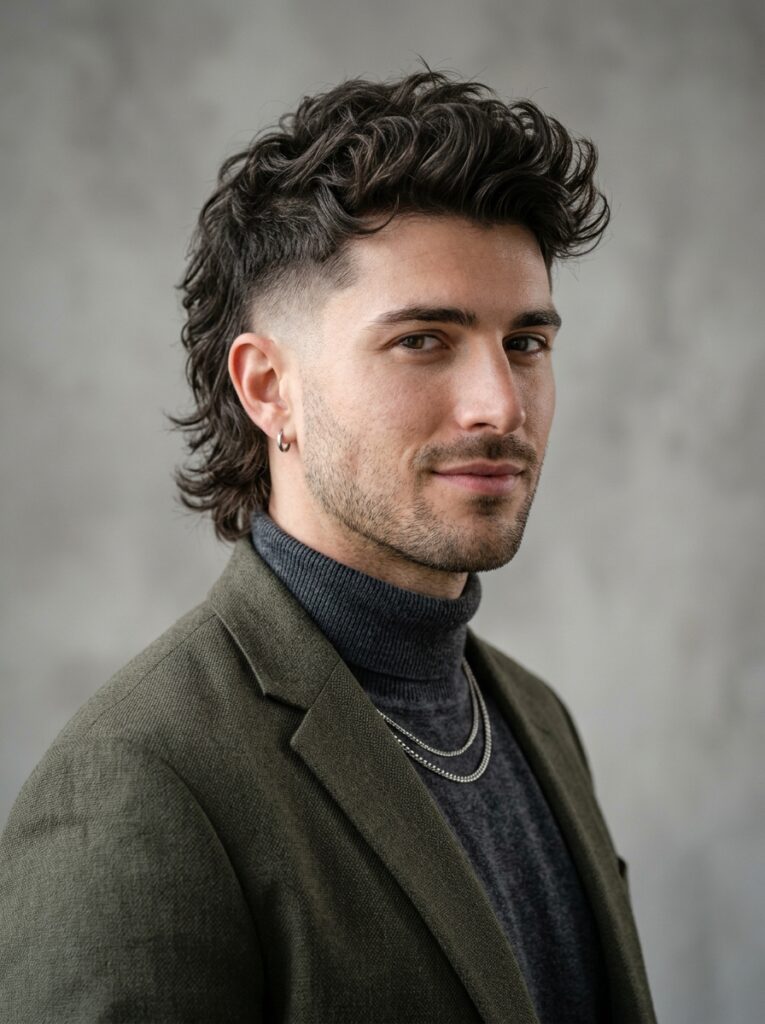
The current version looks nothing like the style most people picture when they hear the name. Clean blending, a textured top and subtle fade at the sides turn it into something genuinely wearable.
Square, oval and heart shapes all take it. Layers and razored ends through the back are what keep that section looking deliberate rather than simply long. A lightweight cream or texturising mousse handles the day.
Middle Part: Symmetry With Almost No Effort
A soft centre parting frames the face evenly on both sides. It is the most time-efficient style in this guide and one of the first to become available during a grow-out.
Diamond, heart and round faces suit it best, since the symmetry balances those structures more naturally than a side sweep. Straight, wavy and textured hair all work with minimal product.
Wolf Cut: The Most Expressive Option

Short choppy layers on top with longer layers flowing down the sides and back. The silhouette is deliberately wild and it accentuates strong features rather than softening them.
Oval faces and naturally wavy or curly textures get the strongest version, because those hair types enhance the layered movement the cut is built around.
Texturising mousse or salt spray on damp hair, then blow-dry for volume. It looks best finished messy. Styling it neatly removes the entire point.
One thing worth knowing before committing: the wolf cut needs real length through the back, so it usually sits at month eight or later in a grow-out.
Slicked Back: Polished and Professional
Medium hair swept cleanly off the face with a smooth backward flow. It communicates authority in a way relaxed styles simply do not.
Apply product to damp hair and comb straight back, then blow-dry while combing to set the direction. Square faces and thick straight hair suit it most.
The product quantity is the control. Less gives a relaxed version of the same shape, more gives a fully structured one. That range is covered in detail in our guide to slicked back hairstyles.
Layered Shag: Effortless Texture

Choppy textured layers throughout create movement and a lived-in quality that looks relaxed rather than unstyled.
Salt spray or texturising mousse on damp hair, then air-dry. Naturally wavy and thick textures suit it best, since they supply organic movement that fine straight hair cannot replicate on its own.
Of everything here, this is the style that holds up best on the days you do nothing to it at all.
Comma Hair: Korean-Inspired and Refined
Smooth layers flow forward at the front and end in a soft C-shaped curve just above the eyebrows. The sides sit close to the head while the top stays forward-swept.
Oval and heart faces suit it especially well. Blow-dry the front inward while shaping with your fingers to form the curve, then a molding paste holds it and keeps the surface smooth.
Straight and slightly wavy hair reach the finished shape with the least effort. Coarse or very curly hair will fight the curve, and forcing it with heat every day is not worth the damage.
Medium Pompadour: Volume With History
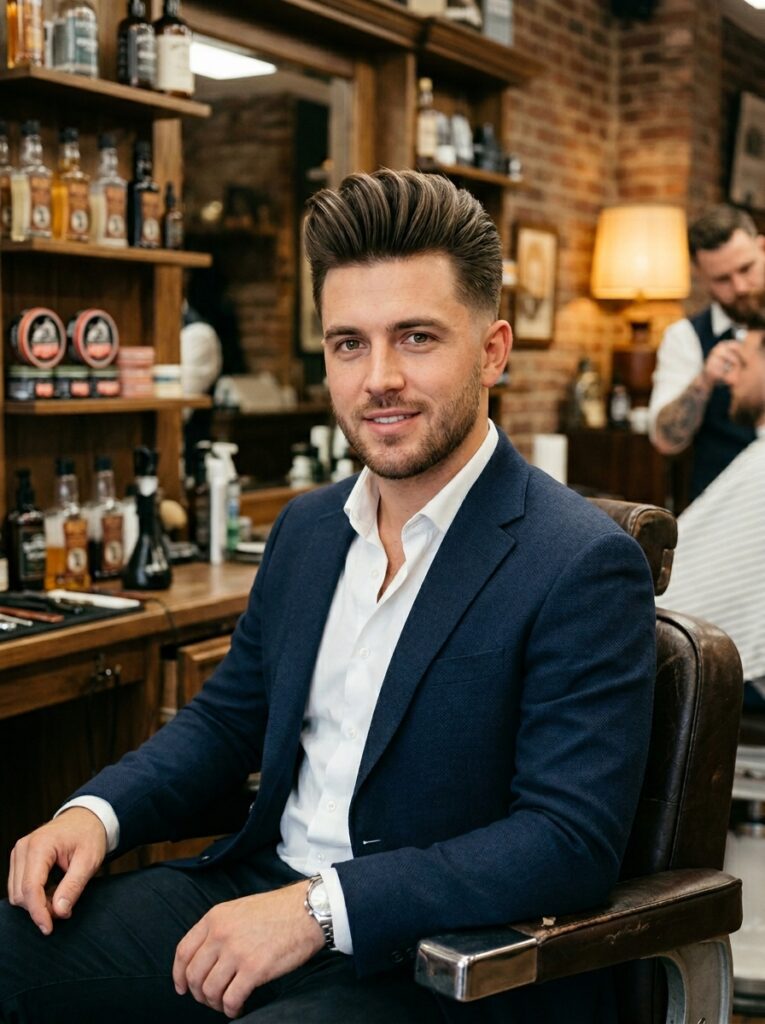
Longer hair on top swept upward and backward against shorter sides. The 2026 version favours softer lines and a matte finish over the rigid gelled look of earlier decades, which makes it far more wearable day to day.
Thick, straight or slightly wavy hair suits it. Blow-dry upward with a round brush to build the volume, then use a matte product rather than gel so the shape keeps some movement in it.
Windswept Waves: Minimal Styling by Design
This one embraces natural texture completely and lets the waves fall wherever they want.
Salt spray on damp hair, then air-dry. That is the whole routine. It suits wavy and naturally textured hair and genuinely improves as the texture strengthens with consistent salt spray use.
Trims every six to eight weeks remove the split ends that gradually dull the movement. Skip them for long enough and the waves stop catching light properly.
Straight Hair at Medium Length: The Honest Version
Most medium-length inspiration you see online is wavy hair, and that is worth naming. Straight hair at this length behaves differently. It carries more weight, falls flatter, and holds far less shape on its own.
Three of the styles above are built for it rather than adapted to it: the quiff, the slicked back and the comma. All three use direction and structure instead of relying on natural movement.
Layering matters more here than anywhere else, since weight removal is the only thing that stops straight medium hair going lank. Our guide to adding texture to straight hair covers the cutting side in detail.
Caring for Medium Hair Between Appointments

Medium hair needs a routine in a way short hair does not. The ends are now old enough to be damaged, and damaged ends are what make a medium style look frayed rather than relaxed.
Wash two to three times a week rather than daily. Condition every wash, concentrating on the ends. Apply heat protectant before any blow-dry, because at this length you will be blow-drying far more often than you used to.
Trim every four to six weeks once you have reached your target length. Past six weeks a medium cut quietly loses its shape, and the difference between intentional and overgrown is almost entirely about that timing.
What to Say at Each Stage
Most of the damage during a grow-out happens in the barber’s chair, not between visits. Three sentences prevent almost all of it.
Early on: “I’m growing it out. Tidy the sides and neck, leave the top.” That keeps the shape presentable without costing you length.
Through the awkward stage: “Take the weight out, not the length.” This is the one that matters most, and it is the instruction most men never think to give.
Once you arrive: name the style rather than the length. Ask for a curtain fringe or a shag by name, and the barber cuts toward a shape instead of simply trimming what is there.