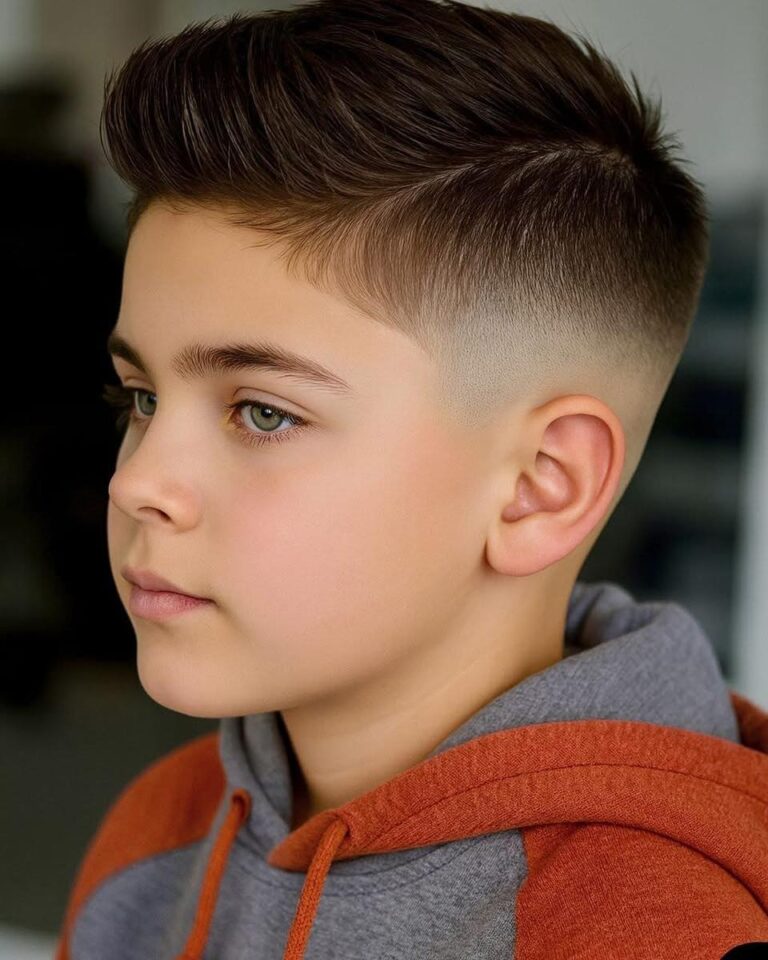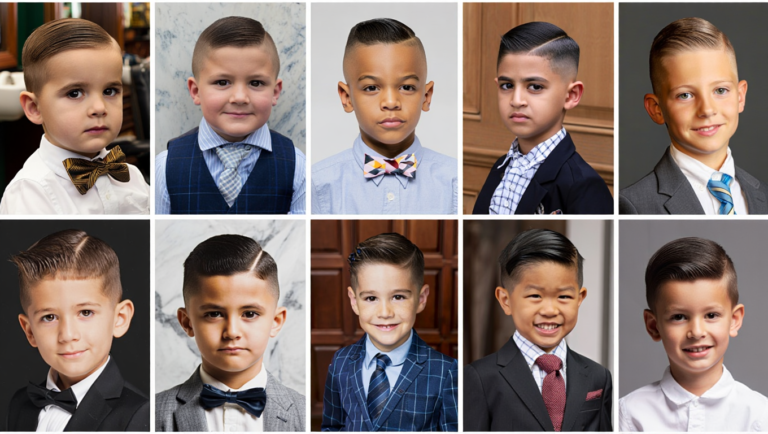
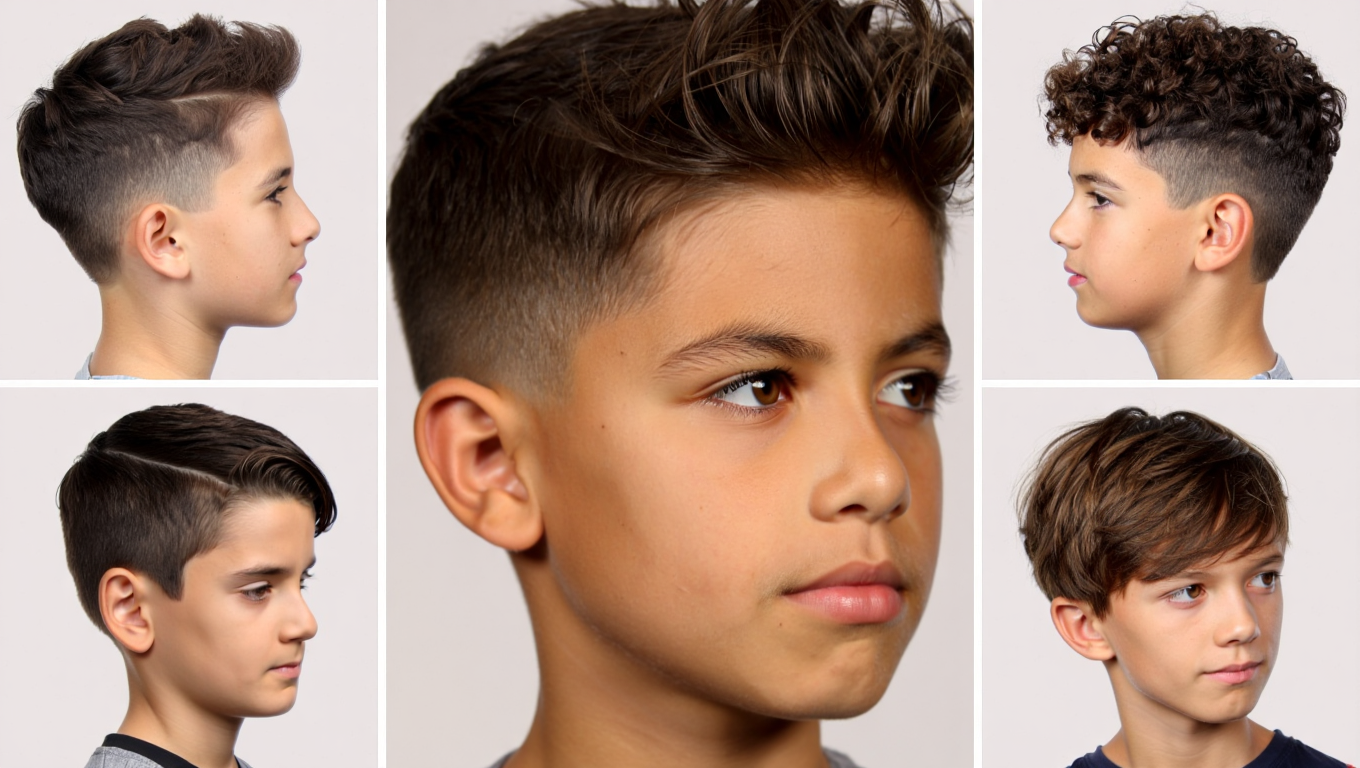
Boys’ Haircuts for Thick Hair That Stay Neat All Week
Thick hair is one of the more genuinely useful hair types a boy can have. It holds shape better than fine hair, builds impressive natural volume without any product, and responds well to almost every modern cutting technique. The challenge isn’t the hair itself — it’s finding a cut that works with the density instead of fighting it.
The right haircut for thick hair does two things at once: it controls the density so hair sits correctly through the day, and it turns that natural volume into a real style advantage rather than something to suppress. Thinning shears, layered cuts, and strategic fades are the tools barbers reach for most, and this guide covers the strongest options built around them.
Textured Crop: The Best Everyday Thick Hair Cut
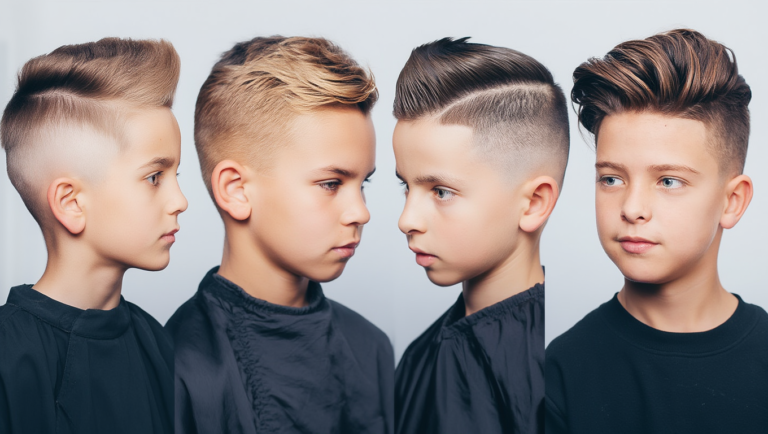
The textured crop is the most practical, consistently stylish everyday option for boys with thick hair. Faded sides paired with a choppy, layered top reduce bulk and add genuine movement that flat, heavy thick hair rarely has on its own.
The choppy layers break up density so hair moves naturally rather than sitting as a solid mass. Matte clay on damp hair, tousled with fingers, gives a casual finish for school mornings, and a low or mid fade on the sides removes bulk where it shows most — around the ears and neckline — while keeping the top full. It’s the most dependable starting recommendation for thick hair, and our dedicated textured crop guide goes further into styling variations if this ends up being the one.
Blowout Taper: Volume Control with Modern Energy
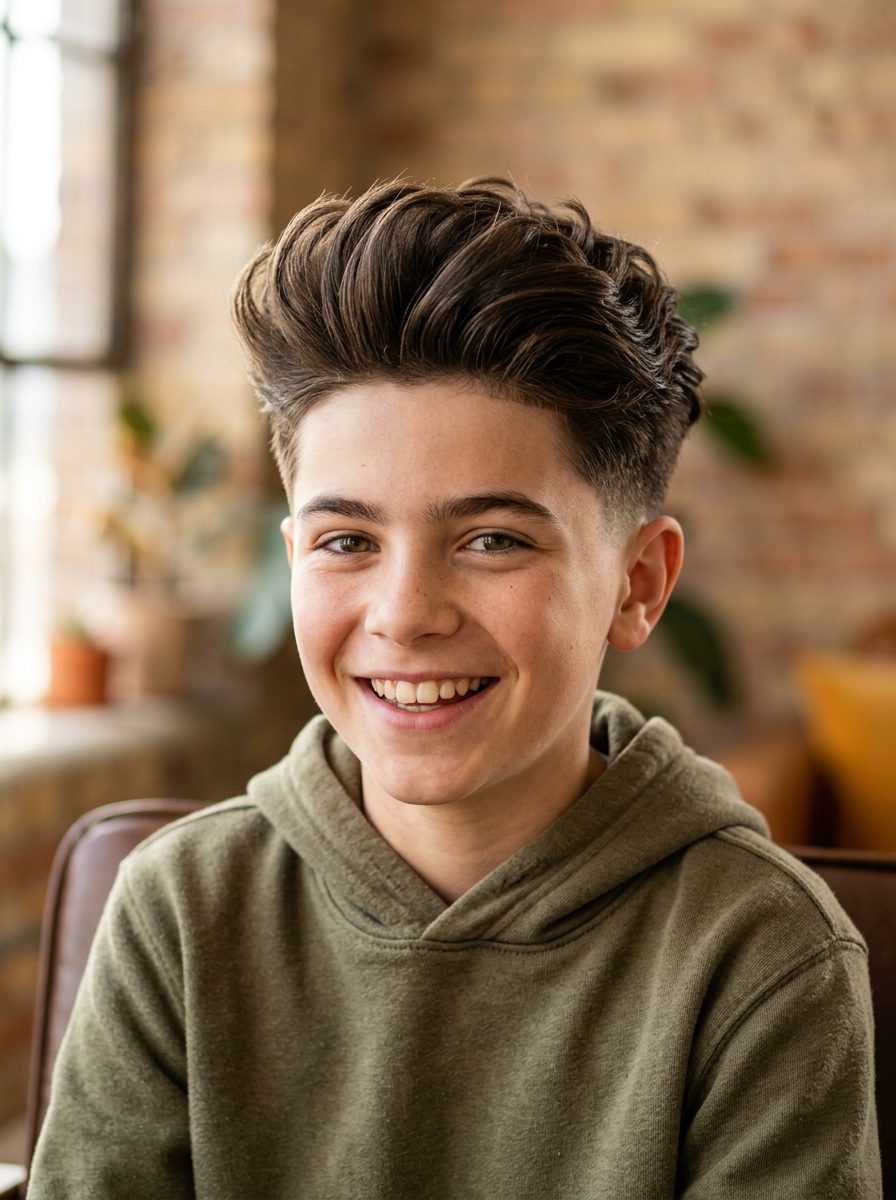
The blowout taper uses natural density as the whole point of the style. A lifted, blown-out shape starting at the crown and flowing back creates a volume and bounce that finer hair simply can’t replicate.
Tapered sides keep things neat without stripping away the fullness that makes the front of this cut so striking. Blow-drying the top and back sections outward builds maximum lift, and a volumizing mousse holds the airy shape without adding weight. Ask the barber to use thinning shears during the cut itself so the finished blowout sits naturally instead of collapsing under its own weight.
Disconnected Undercut: Bold Contrast for Maximum Impact
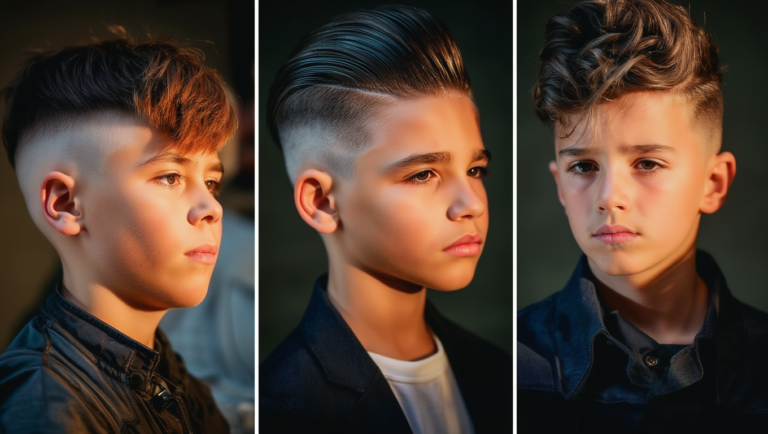
Thick hair makes the disconnected undercut hit harder than it would on finer hair, since the contrast between the closely shaved sides and the fuller top becomes dramatically more visible. That sharp separation is exactly what gives the style its edge.
It suits square, oval, and diamond face shapes well. Style the top back smoothly with pomade for a controlled finish, or leave it textured with matte clay for something more casual. This one needs a barber visit every two to three weeks — without that upkeep, the sides grow out and the whole contrast softens away. For a broader look at where this style sits alongside other undercuts, our undercut guide for boys covers the family it belongs to.
Fringe with Tapered Sides: Textured Volume That Frames the Face
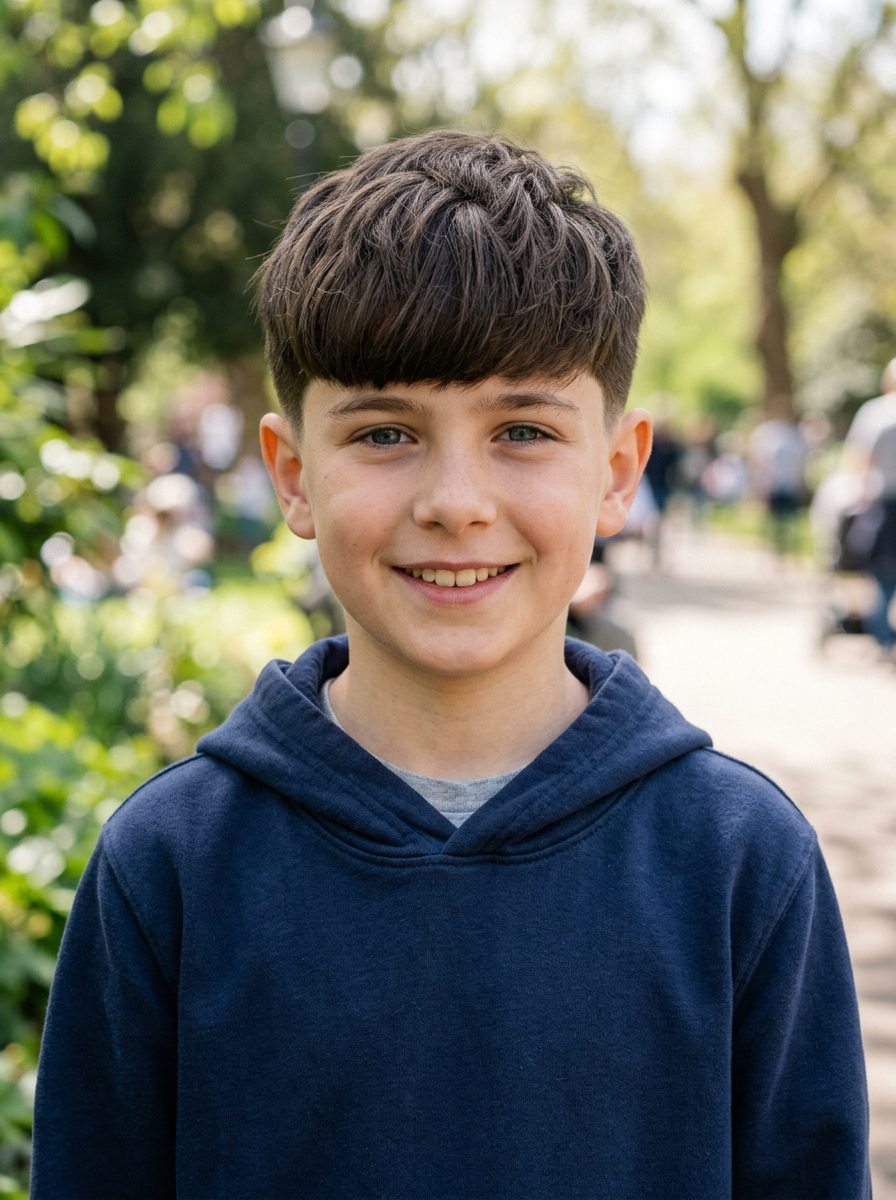
This one keeps the front long and naturally textured while tapered sides add clean contrast around the ears and neckline. Thick hair produces a genuinely full fringe that sits across the forehead without needing heavy product to hold it forward.
Oval and heart-shaped faces suit it particularly well, since the fringe adds horizontal interest that balances a wider forehead. A sea salt spray gives a matte, textured finish through the week, or a light gel dresses it up for formal school days. Thinning shears through the fringe itself keep it from sitting too heavily.
Side Quiff with Mid Fade: Sharp and Sophisticated
The side quiff with a mid fade suits boys who want a polished, structured look that works in both school and social settings. A full quiff against cleanly faded sides reads as confident without trying too hard.
Thick hair gives the quiff the lift it needs for genuine impact — thick-haired boys get there with far less product effort than fine-haired boys managing the same shape. It suits square and round faces especially well, since the added height elongates and balances the proportions. Blow-dry the front upward with a round brush and finish with a medium-hold cream.
French Crop with Skin Fade: Clean, Sharp, and Edgy
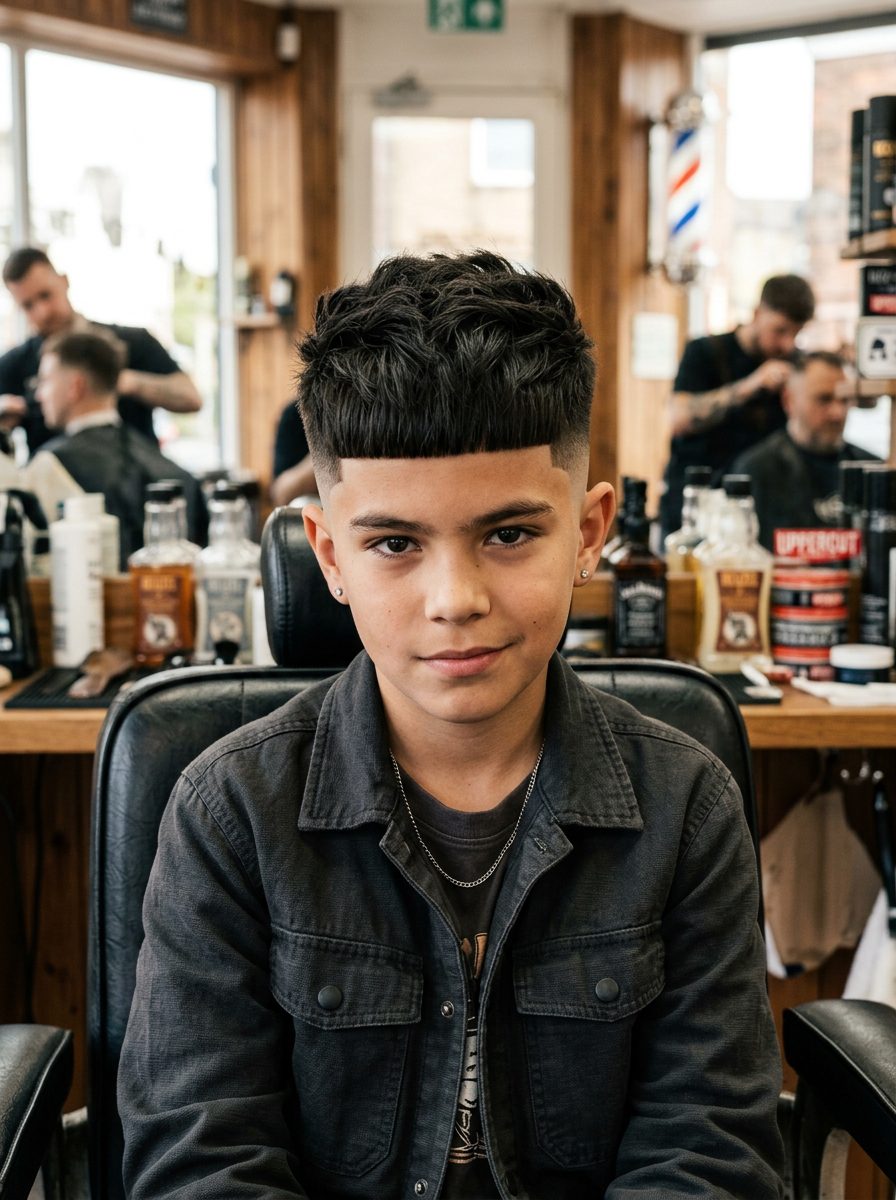
A short horizontal fringe against a clean skin fade creates a strong, geometric shape that reads as intentional from every angle. Thick hair makes the fringe look particularly full and impactful, which is exactly why this pairing works so well on dense hair specifically.
The skin fade removes side bulk entirely, making the whole head feel lighter through the day. It suits oval and angular faces well, and a lightweight pomade defines the fringe without stiffness. Barber visits every two to three weeks keep the fade and fringe line sharp.
Medium Shag: Relaxed Layers for Artistic Boys
The medium shag is the most relaxed, personality-driven option here for medium-to-long thick hair. Generous layers add movement and reduce bulk, creating a lived-in look that suits a more creative personality better than anything structured.
Wavy, thick hair gets the most out of the shag’s layering, since natural texture and density interact to create organic movement that straight, fine hair can’t replicate. A texturising mousse or sea salt spray, air-dried rather than blow-dried, gives the most authentic result, and thinning shears throughout keep it light instead of heavy. It also grows out unusually well, keeping its relaxed character even as the layers lengthen.
Modern Mullet: Bold and Trend-Forward
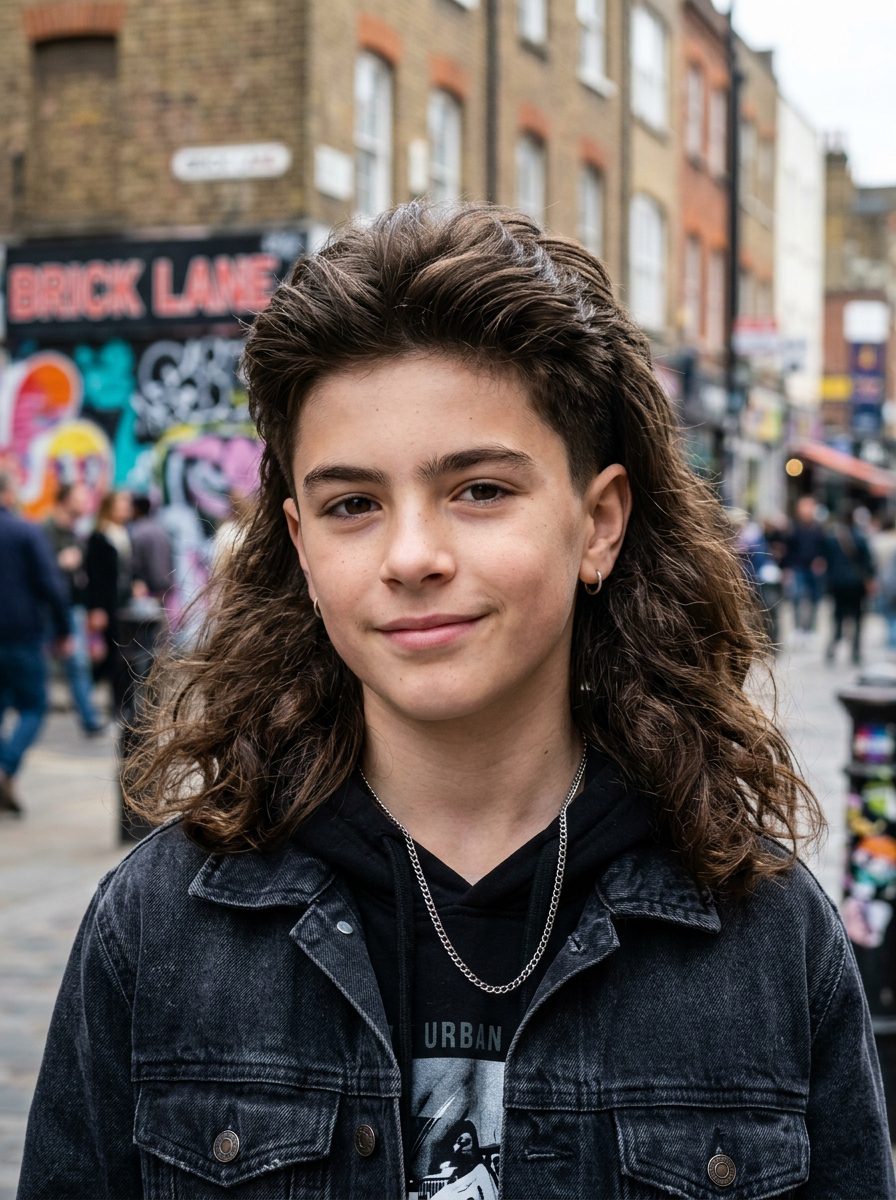
Shorter, tapered sides and front against longer hair flowing at the back gives a retro silhouette that thick hair elevates considerably — the back carries real volume and movement that fine-haired boys rarely achieve with the same cut.
Straight and wavy thick textures hold the shape most effectively through an active day. Volumizing mousse and a blow-dry add body at the back, while styling paste shapes the front and adds texture at the crown. It suits square, oval, and heart-shaped faces, and it rewards boys who want something that stands apart from a standard barbershop request.
Crew Cut with Taper Fade: Reliable, Low-Maintenance, Always Sharp
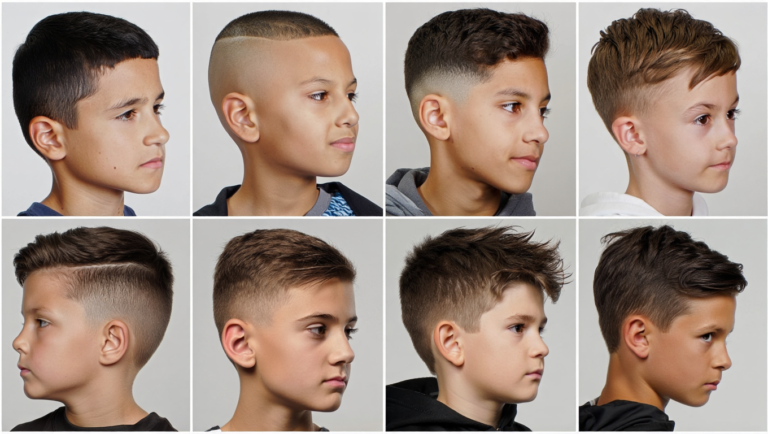
This is the most practical option here for a boy who needs a clean, low-effort everyday style that never looks untidy. A short, uniform top against a smooth taper reduces bulk dramatically while staying appropriate everywhere a boy’s week takes him — sport included, which is where our sports haircuts guide picks up if practice and helmets are the bigger daily concern.
Ask the barber to thin the top section with shears during the cut, which lightens thick hair significantly without shortening it. A touch of matte clay on the front adds definition without weight, and regular visits every three to four weeks keep the taper looking as sharp in week three as it did on day one.
High Skin Fade with Textured Top: Maximum Impact
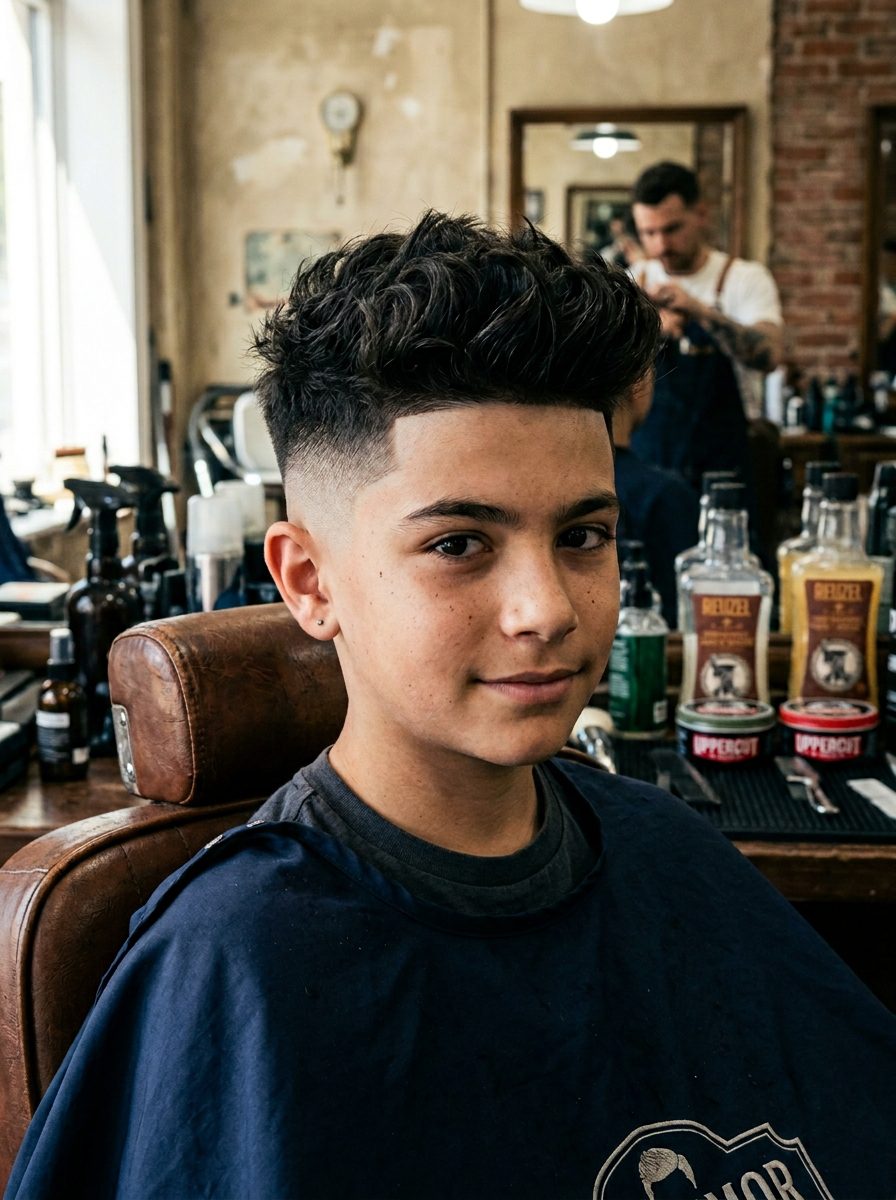
Sides taken all the way to skin create dramatic contrast against the fuller, textured crown, and thick hair makes that contrast especially strong since the top holds real volume against the bare sides in a way finer hair can’t match.
It suits oval and square faces well, drawing the eye upward toward the crown. Texturising paste on damp hair, blow-dried upward, gives lift and definition, and a barber visit every two to three weeks keeps the lines crisp — left too long, the fade grows soft and the whole contrast loses its punch.
Slicked-Back Undercut: Polished Style That Tames Volume
The slicked-back undercut suits a boy who wants something mature and controlled rather than simply trendy. Closely faded sides against a longer top styled straight back creates a sleek sweep that thick hair pulls off more impressively than any other hair type.
It suits oval, square, and oblong faces, and it reads as genuinely put-together for formal or smart-casual settings. A strong-hold pomade applied to damp hair, combed straight back and blow-dried into place, holds through a full day. It also grows out gracefully, since the length on top absorbs the extra growth before the sides look noticeably soft.
Bowl Cut 2026: Modern Reinvention of a Classic Shape
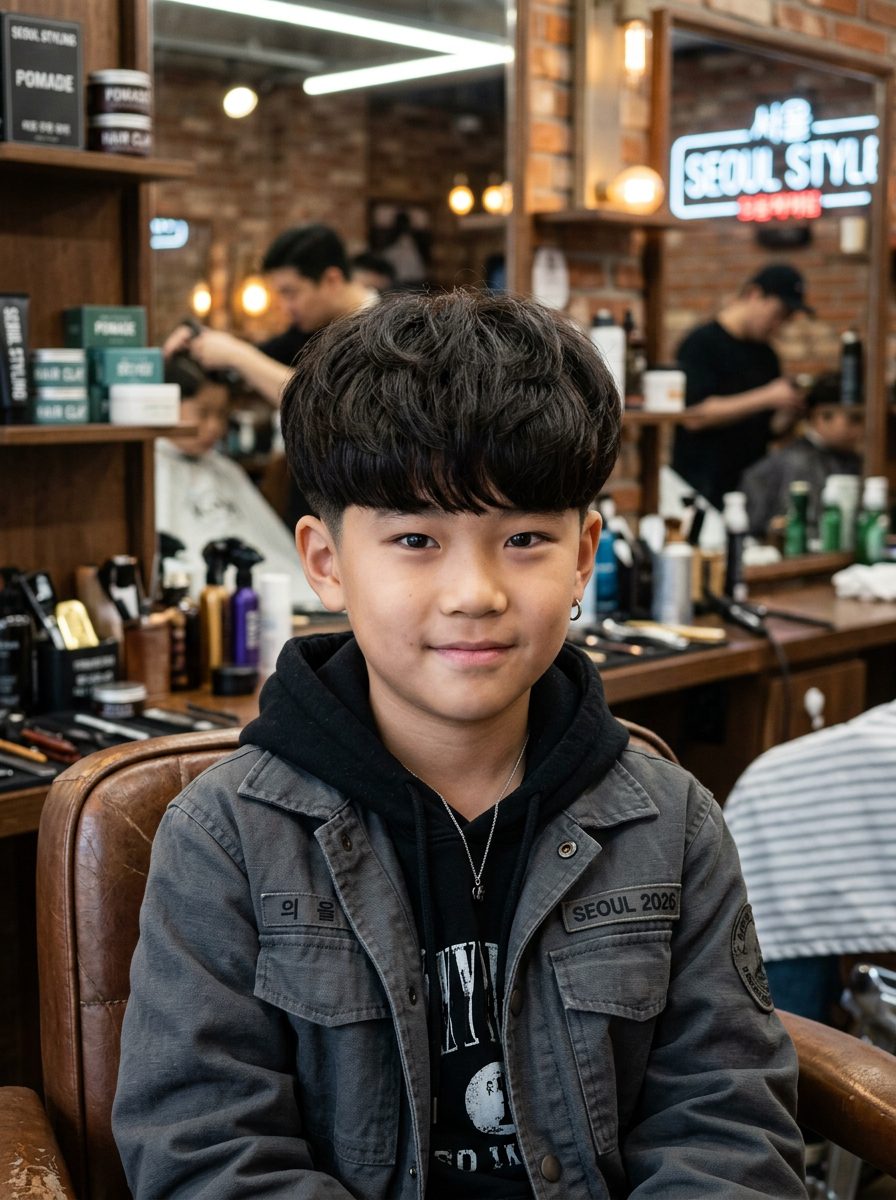
The 2026 version of the bowl cut is a long way from the one most parents remember. Textured layers, undercut transitions, and fade blending turn a basic childhood shape into something genuinely current, and thick hair suits it particularly well since the natural density gives the rounded silhouette its defining fullness.
Styling cream gives a polished, defined finish, while matte clay reads more relaxed and textured. Regular barber visits maintain the clean perimeter that keeps the whole thing looking intentional rather than simply grown out.
How to Control Thick Hair Volume Between Barber Visits
Managing volume is the real daily challenge with thick hair, and a few consistent habits make a noticeable difference between appointments.
Use a lightweight, clarifying shampoo that clears buildup without adding weight, and apply conditioner from mid-length to ends only — never the roots — to avoid extra flatness at the scalp. Blow-drying is the single most useful daily volume tool available: medium heat, airflow directed in the intended style direction, shapes the hair actively rather than letting it fall however it wants. On washing frequency generally, the American Academy of Dermatology’s guidance for children suggests most boys this age do well shampooing every other day to once or twice a week depending on hair type and activity level, fine-tuning from there if the scalp looks oily or the hair starts looking dull.
Thinning shears at every barber visit reduce internal bulk without changing the outer length or shape — it’s worth specifically requesting if it isn’t already part of the routine. Matte clay and texture paste hold shape on thick hair far better than heavy gel or wax, which tend to clump and add sticky weight that dense hair doesn’t need.
Best Styling Products for Boys with Thick Hair
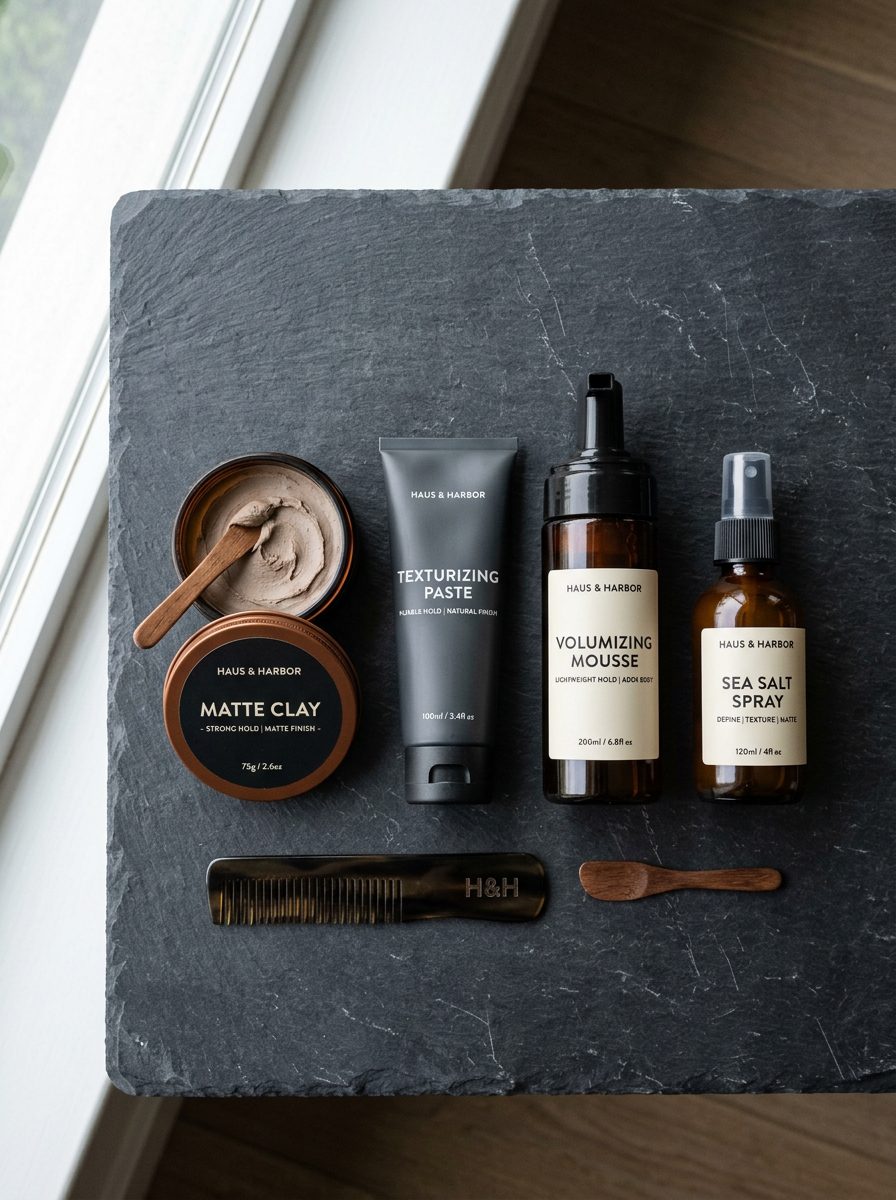
Matte clay is the single most recommended product for thick hair, giving natural, flexible hold without the weight or greasy finish that thick hair doesn’t need in the first place. Apply to damp hair and work through with fingers.
Texturising paste adds definition to longer, layered styles like the shag, and a lightweight volumizing mousse applied before blow-drying keeps a finished style airy rather than heavy. Sea salt spray gives relaxed styles natural grip without any buildup. Heavy gel is worth avoiding on thick hair entirely — it clumps strands together and leaves an uncomfortable, rigid feel that lightweight, matte-finish products simply don’t create.
Choosing the Right Cut for Your Boy’s Face Shape
Face shape guides thick-hair cut selection more than any other single factor, and understanding it before the appointment consistently leads to a more satisfying result.
Round faces benefit from height at the crown and tighter sides — the side quiff, blowout taper, and high skin fade all elongate the face by drawing the eye upward. Square faces suit softer styles that ease the angularity: a layered shag, a tapered crop, or a medium-length cut all soften a strong jawline without losing sharpness. Oval faces are the most versatile and suit virtually everything here, and oblong or rectangular faces tend to benefit more from width at the sides than extra crown height. A deeper look at each shape lives in our boys’ haircuts by face shape guide, which covers the reasoning behind each recommendation in more detail.
Bringing a reference photo to the appointment removes most of the remaining ambiguity. Combined with an honest read on the boy’s activity level and how much morning routine is actually realistic, it consistently produces the most satisfying result across every thick hair option here.