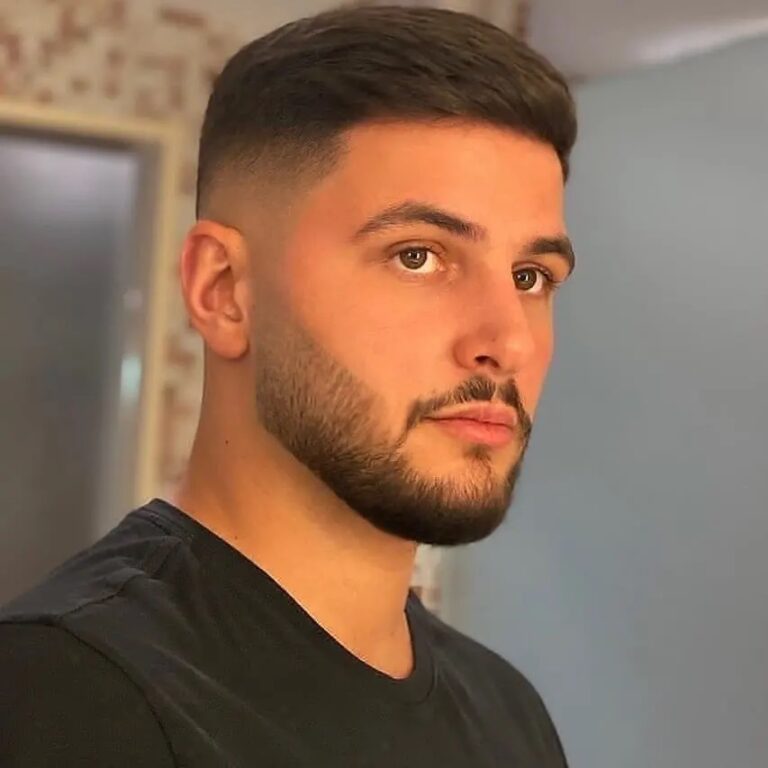
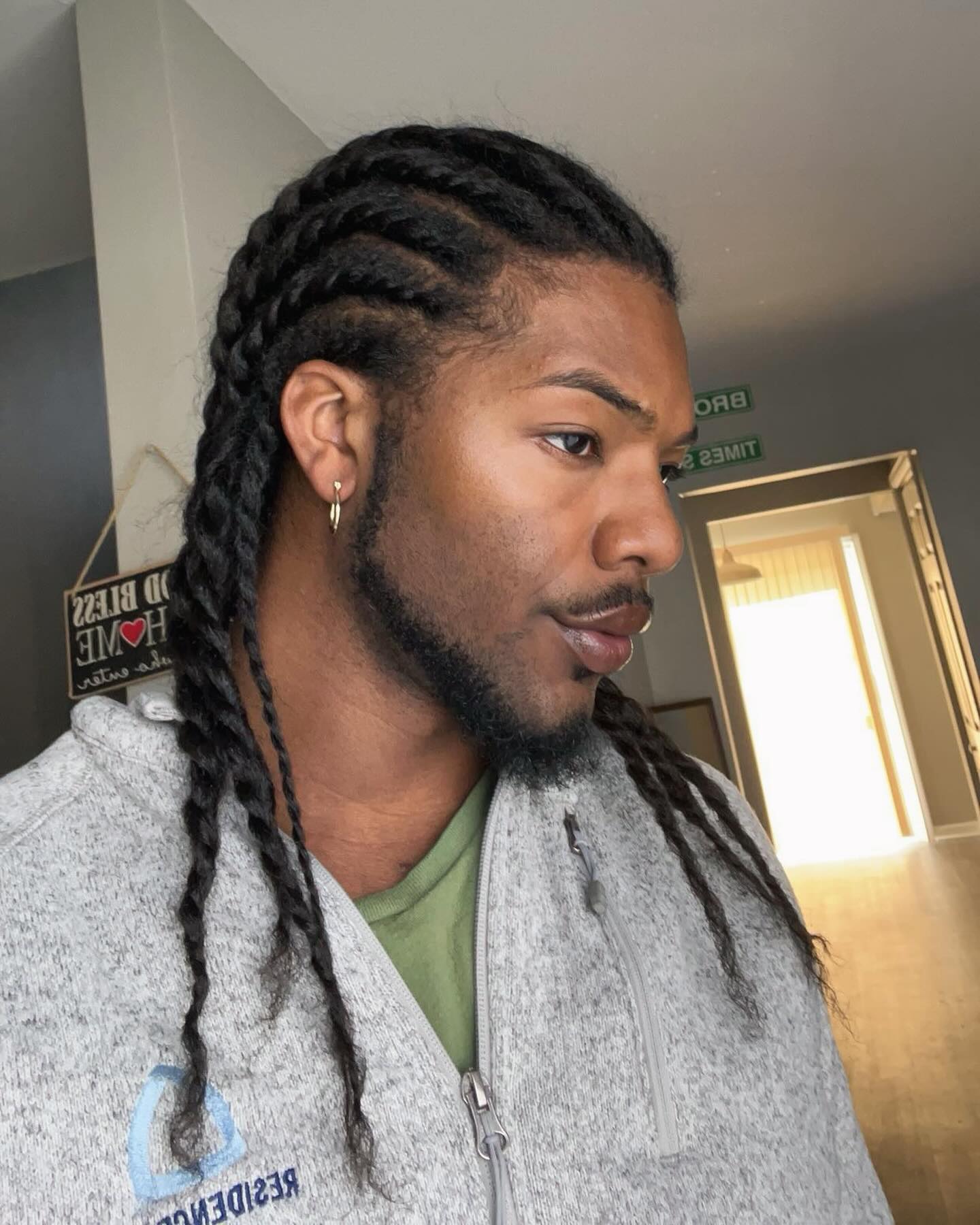
Best Long Hairstyles for Black Men: Bold Styles Worth Wearing
Long Hairstyles for Black Men: Why Length Changes Everything
Long hair on Black men carries a presence few other styles match. Locs, box braids and a full natural afro all do something short cuts cannot. Length gives textured hair the room to show what it actually does.
Getting there is a real commitment. It takes consistent care, the right products, and patience through the awkward middle stage. That stage is where most men give up.
The fifteen styles below run from the most structured to the most organic. Each one names what it demands and what it gives back. If you are still growing out, our guide to surviving the grow-out covers the stage before these become possible.
Long Dreadlocks: The Timeless Style That Carries Real Cultural Weight
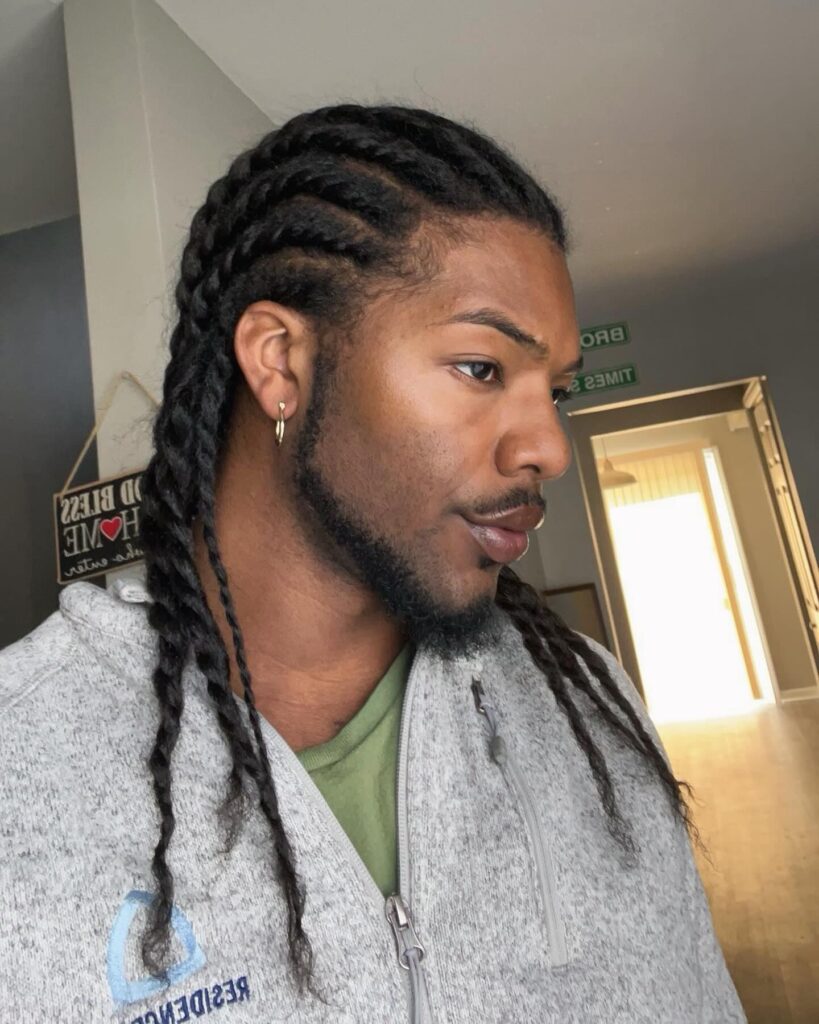
Long locs are among the most visually powerful hairstyles available. They carry identity and heritage, and they represent a process measured in years. The longer they get, the more of that history sits in each strand.
At full length the styling range opens up. Wear them loose for maximum presence. Pull them into a high bun for a formal evening. Tie them into a low ponytail for an ordinary Tuesday.
That versatility is the most underrated part of the style. From outside it looks like one thing. From inside it is dozens of looks from one foundation. Regular moisturising and retwisting keep long locs strong as the weight increases, and the full range of loc styles is covered in our dreadlocks guide for men.
Freeform Locs: The Authentic Journey That Produces Something Genuinely Unique
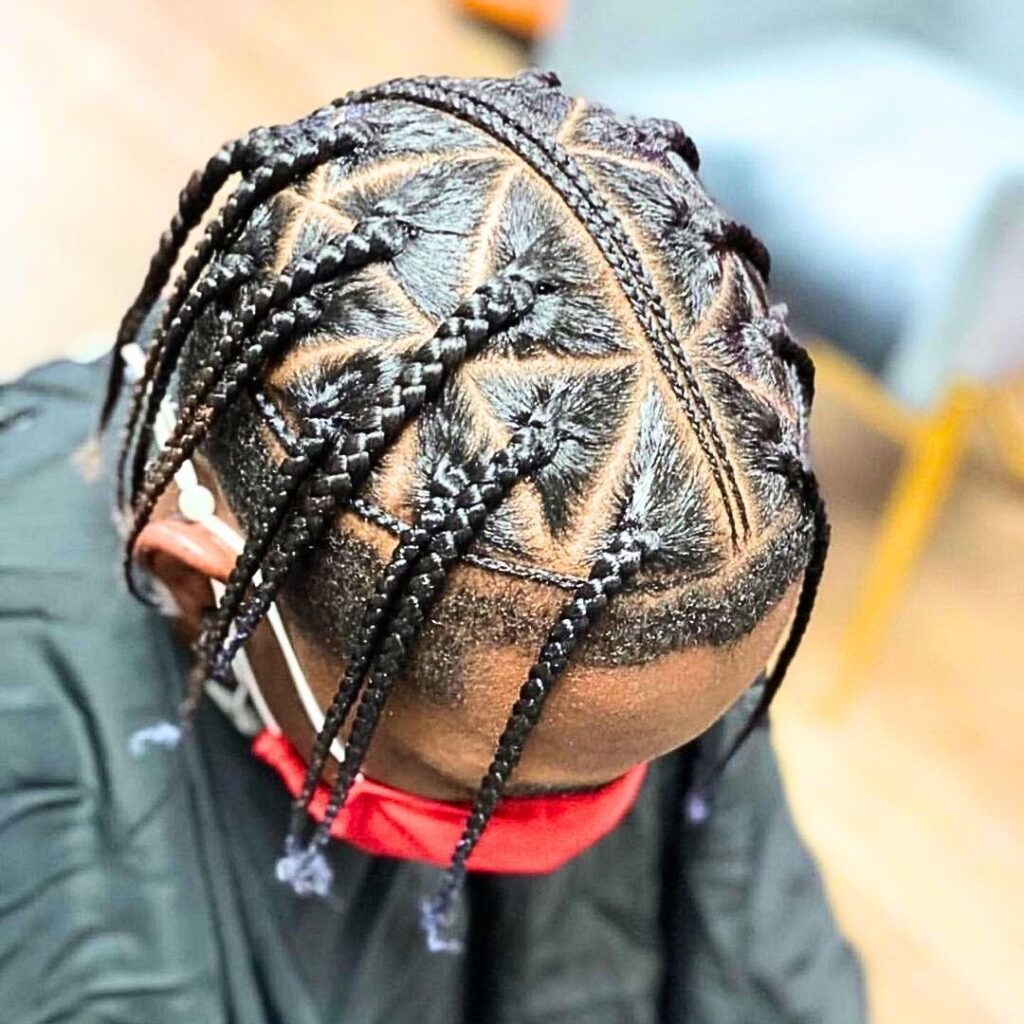
Freeform locs strip out the sectioning and retwisting that structured methods rely on. The hair is washed, moisturised and left alone. Locs form, merge and settle on their own terms.
The result belongs to the person growing it. No two freeform journeys land in the same place. Texture, grouping and merging patterns all combine differently every time.
Freeform is low effort, not no effort. Washing and moisturising still matter, since neglected locs trap product and lint rather than locking cleanly. Expect the first eighteen months to look unfinished before the shape settles.
Two-Strand Twist Locs: Clean Definition from the Very Beginning
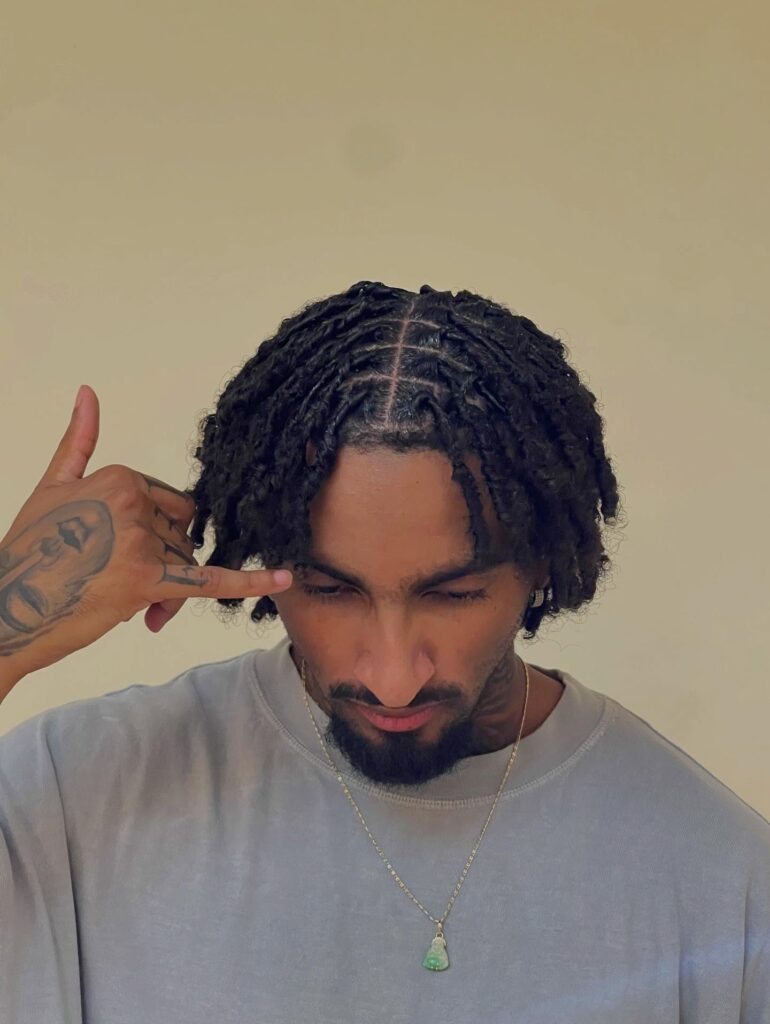
Two-strand twists give structure from day one. Hair is sectioned, then two strands within each section are twisted together. As they mature into locs they keep a uniform rope-like surface.
That definition suits professional settings well. The locs look deliberate even in the early months, when other methods can read as unfinished.
Retwisting keeps neighbouring locs from merging. Do not overtighten at the root, though. Aggressive retwisting is the most common cause of thinning at the hairline in loc wearers.
Long Box Braids: Protective Length with Maximum Styling Flexibility
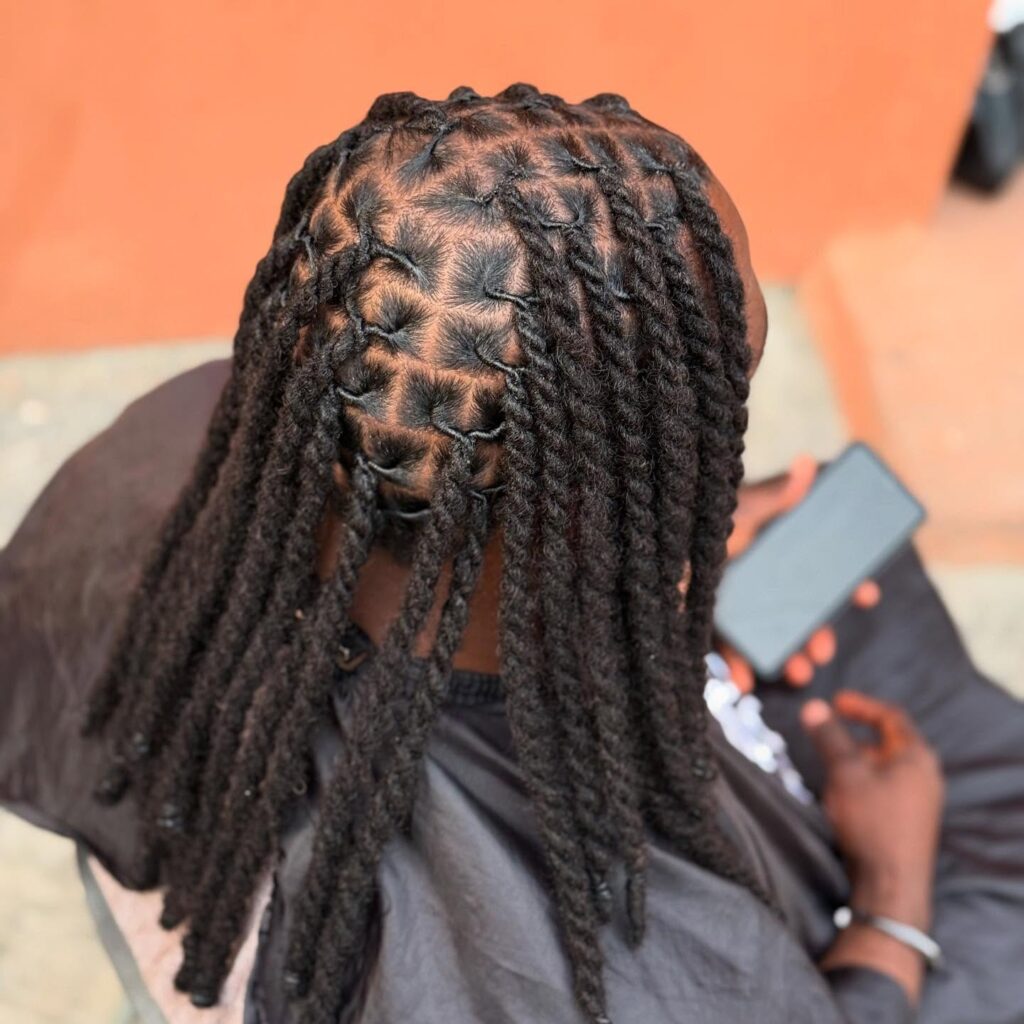
Box braids give the experience of long hair while protecting the natural hair underneath. Daily manipulation drops to almost nothing. The hair beneath gets a genuine rest.
At long lengths they wear loose for flow, pull back into a ponytail, or gather into a bun. They also hold their fresh appearance for weeks between installs. That makes them practical for demanding schedules.
Two rules protect the hairline. Ask for thicker braids rather than very fine ones, since thin braids pull harder per follicle. And take them out after eight weeks rather than stretching to twelve.
Cornrows with Long Length: Traditional Technique with Contemporary Impact
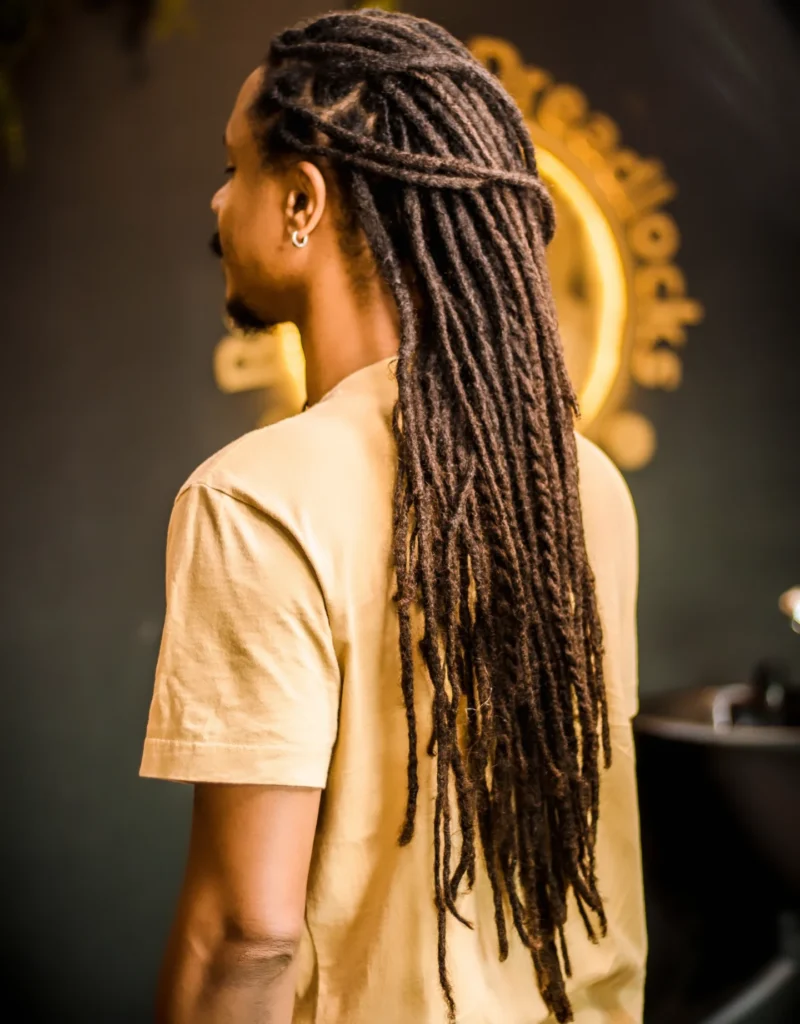
Long cornrows combine scalp-braiding precision with the movement only length provides. The flat braids sit close to the scalp in whatever pattern was designed. That adds an architectural quality no other long style shares.
Extensions can add length and thickness beyond what the natural hair currently reaches. The scalp pattern is highly visible, so the quality of the braiding shows from every angle.
The pattern can also be directed to flatter your face. Curved or diagonal rows soften a square jaw. Straight-back rows lengthen a rounder face.
Long Afro: Full Natural Volume at Its Most Honest and Impressive
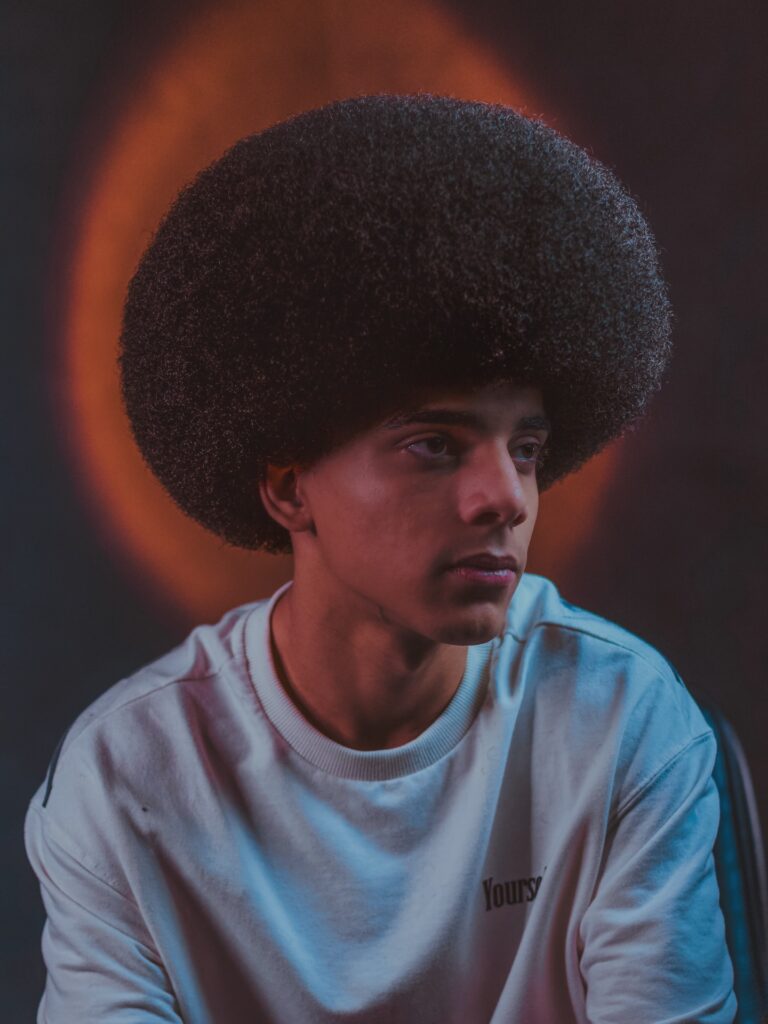
A full long afro makes the strongest statement in this category. It takes what the hair does naturally and presents it at full scale. Volume, rounded silhouette and light-catching texture all work together.
Moisture is what holds the shape. Dry natural hair at length turns brittle and loses the suppleness the silhouette depends on. A well-moisturised afro has visible sheen and a soft outer texture.
Regular shaping matters as much as moisture. Growth is rarely even across the head. A barber who understands afro shaping keeps the outline balanced rather than lopsided.
Curly High Top with Length: Height and Volume Combined
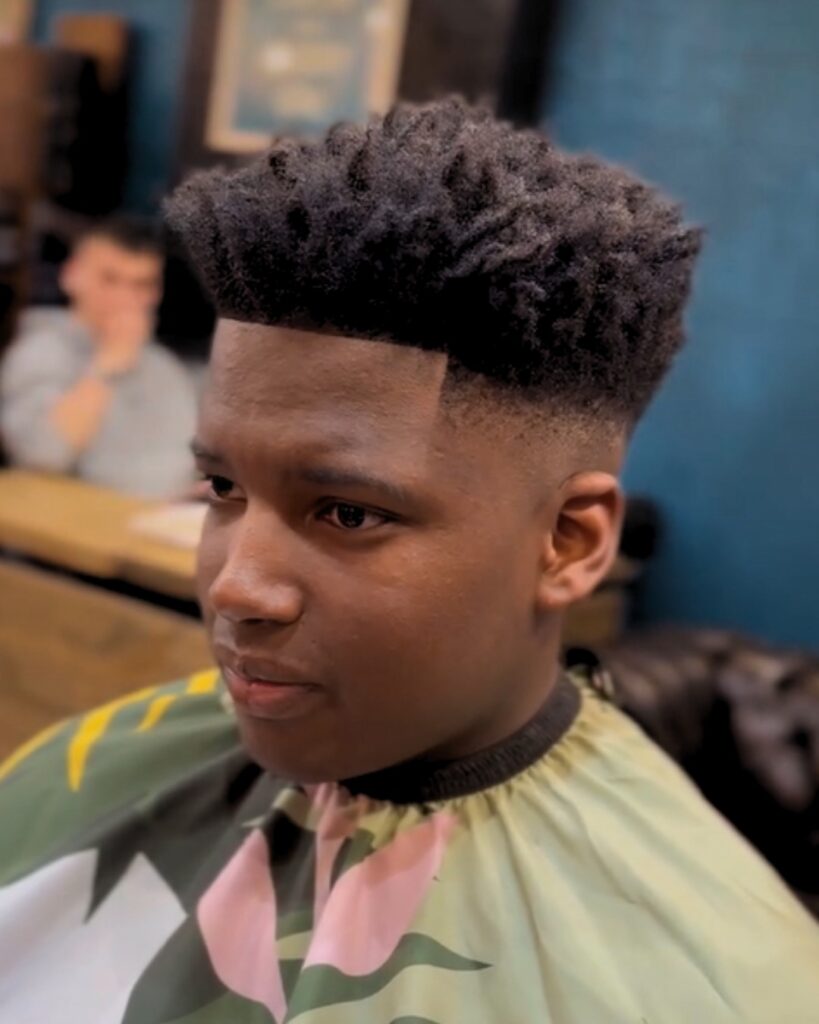
The curly high top adds longer curl length to the crown. Tapered or faded sides keep the shape defined. The longer curls above supply the visual energy.
Added height elongates the face. Round and oval shapes gain the most from that vertical proportion.
Apply a curl-defining cream to damp hair and let it set. A diffuser adds lift without breaking the curl pattern. More options by curl type are covered in our guide to curly hairstyles for men.
Long Sponge Curls: Defined Texture with Everyday Simplicity
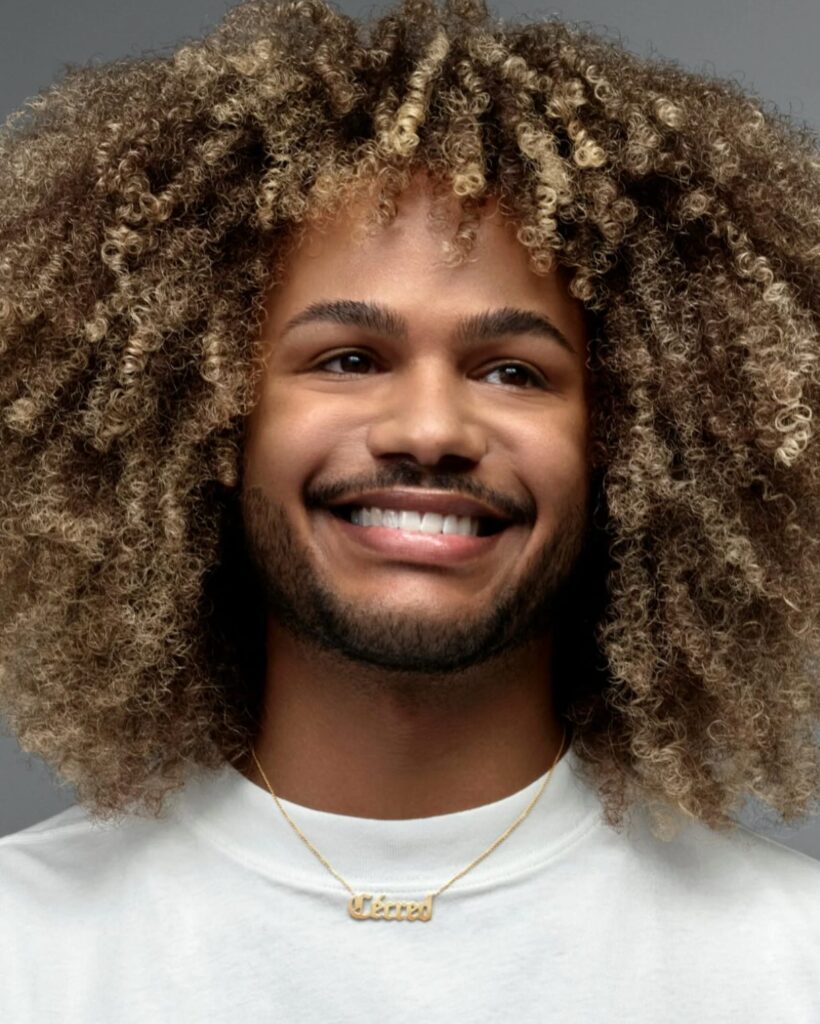
A textured hair sponge creates consistent coils across the whole surface. At longer lengths the result is full and rounded, with each coil clearly separated. No heavy product is needed.
The routine is short. Moisturise with a curl cream, then work the sponge over damp hair in small circles. The coils set as the hair dries and hold through the day.
Use light pressure. Pressing hard tangles the hair into the sponge and snaps strands at the root. That is the single mistake that turns this easy style into a damaging one.
Braided Ponytail: Secure Length That Moves Between Settings
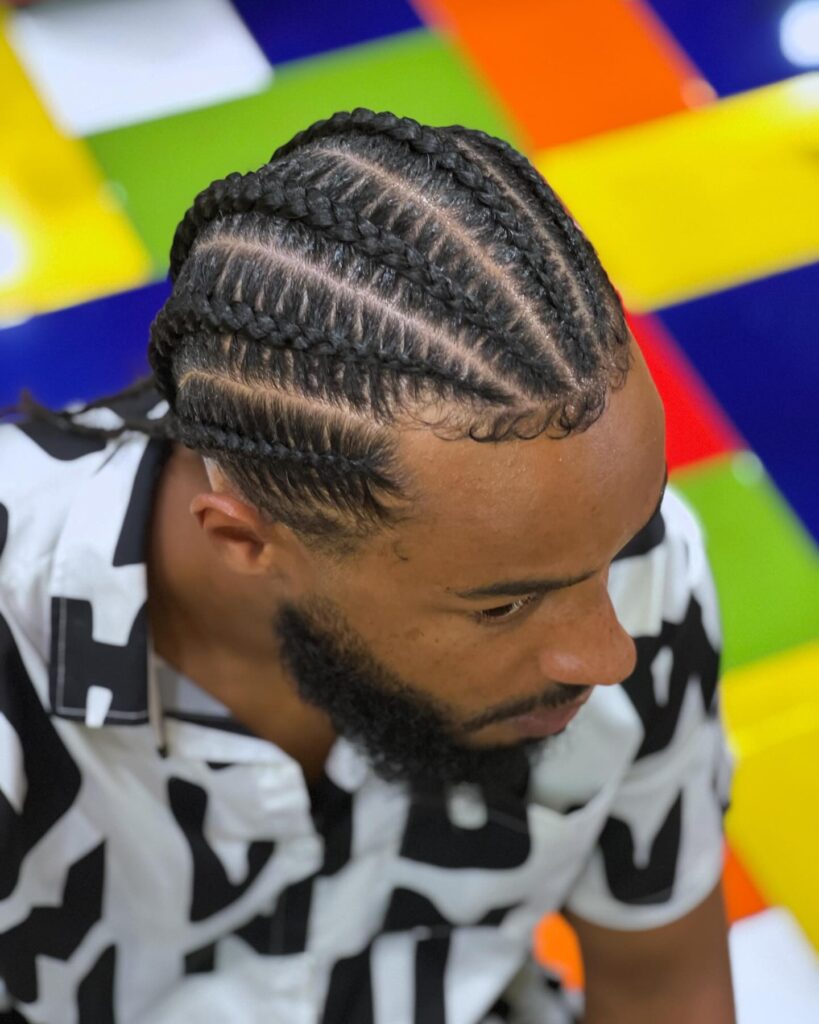
A braided ponytail gathers long braids, twists or locs into one collected arrangement at the back. It reads as polished in an office and practical at the gym. Braiding the gathered section stops it hanging as an undifferentiated mass.
This works with almost every style on this list. The hair stays secured and off the face without losing the presence of the length.
Use a fabric-covered band rather than a plain elastic. Bare elastics grip individual strands and snap them when the tie comes out.
Man Bun Locs: Sophistication Through Gathered Length
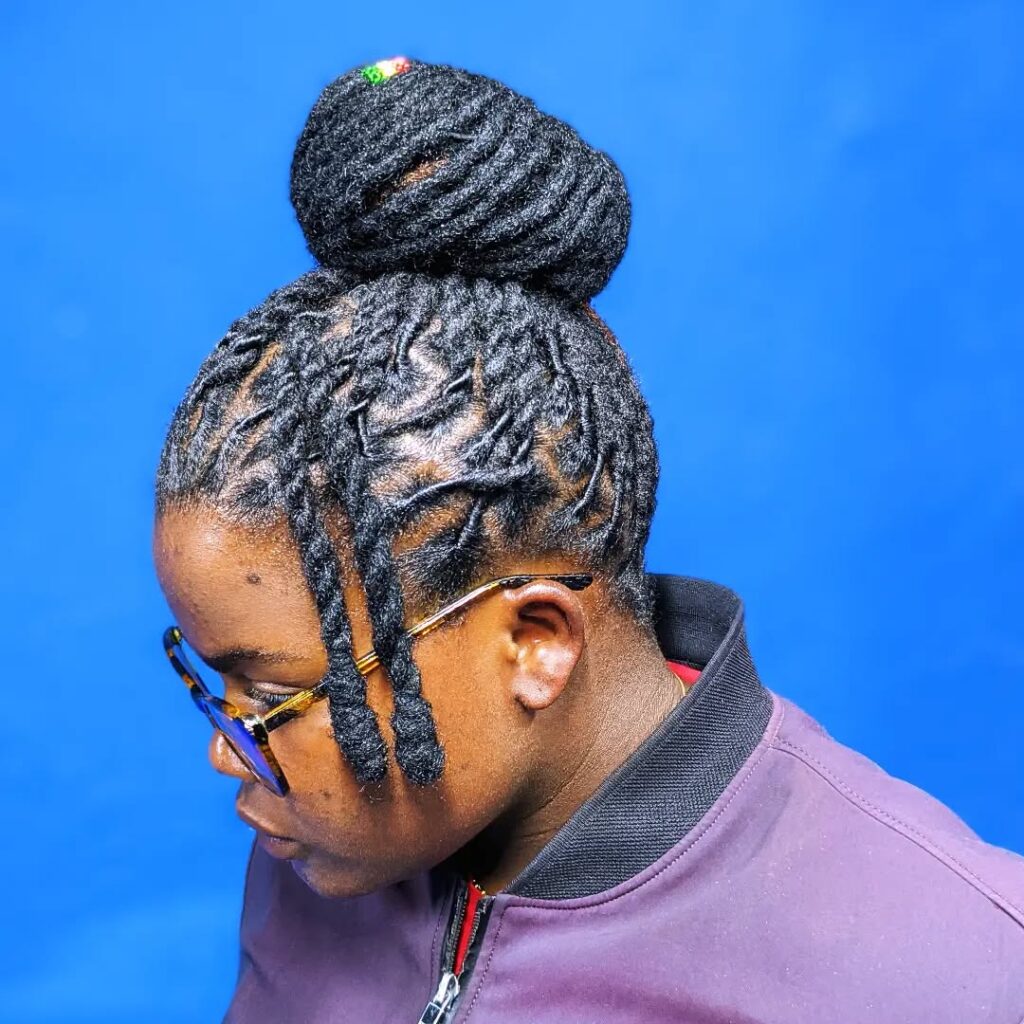
A bun formed from long locs is the easiest sophisticated option available. The locs are gathered, loosely twisted and secured at whatever height suits the day. The individual character of each loc still shows.
The weight and texture of locs give the bun a presence that finer hair cannot produce. It never reads as flat, even from a distance.
Vary the height and position from day to day. Securing a heavy bun at the same spot every morning concentrates tension in one place, which is exactly what causes thinning there.
Half-Up Half-Down Locs: Showing the Length While Managing the Weight
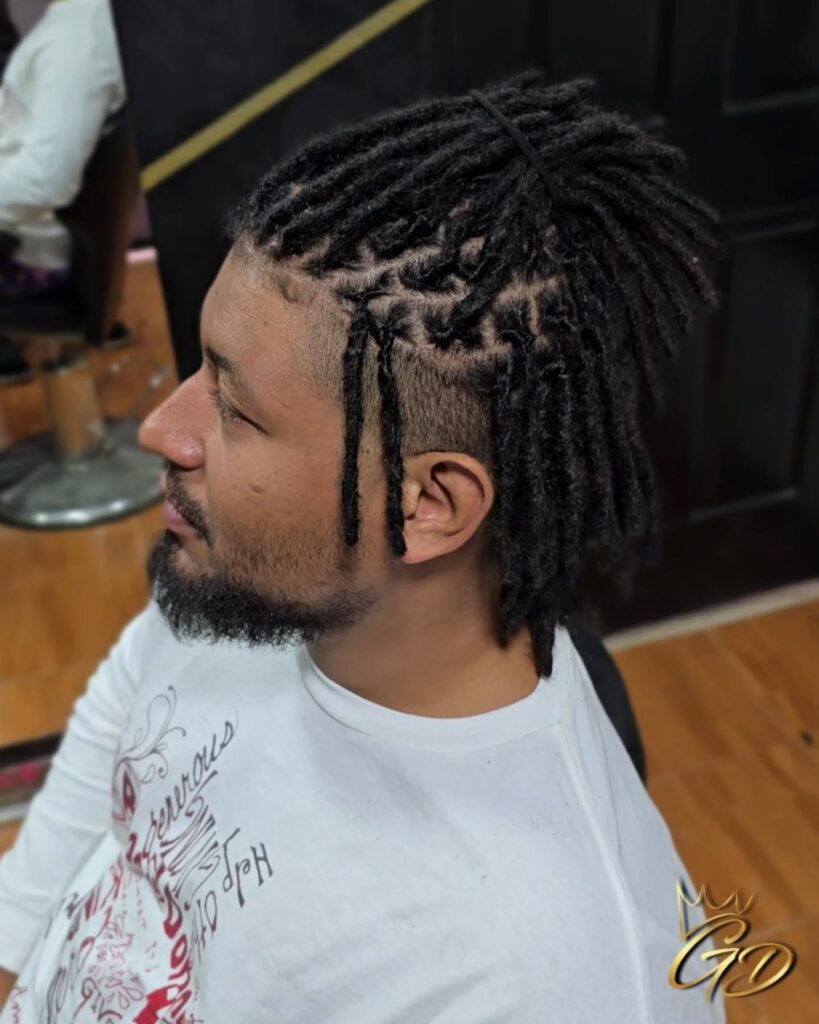
This arrangement secures the top section and leaves the rest falling free. The gathered upper part frames the face. The loose lower locs still show the full length.
The practical benefit is weight. Fully loose locs concentrate their pull at the crown across a whole day. Lifting half of it relieves that noticeably.
It sits between a full bun and fully loose wear. For most men with real loc length, this becomes the default weekday choice.
Long Twists Hairstyle: Protective Length with Visible Movement
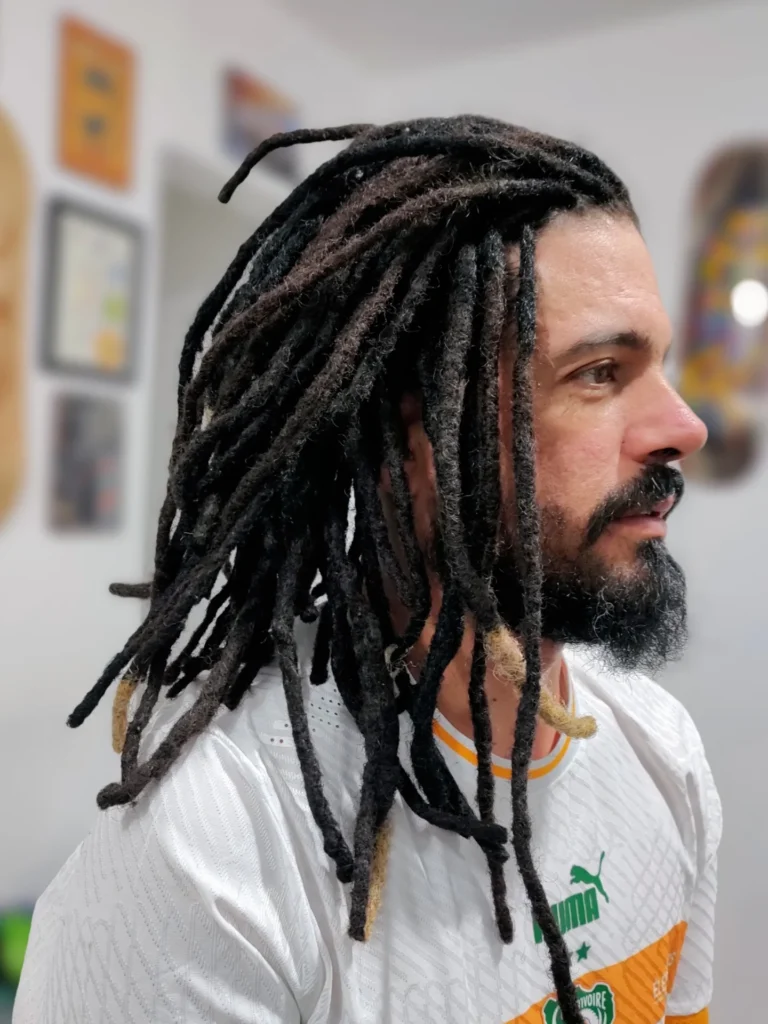
Long twists add visible movement that loose natural hair at the same length would not produce. Each twist catches light and moves independently. The effect is dynamic rather than static.
The protective benefit is real. The natural hair underneath avoids friction, manipulation and daily environmental exposure. Moisture stays where it should.
Refresh the twists once new growth shows at the roots. Leaving them far past that point causes matting where the new growth meets the twisted section.
Long Curly Frohawk: Bold Silhouette with Natural Curl Character
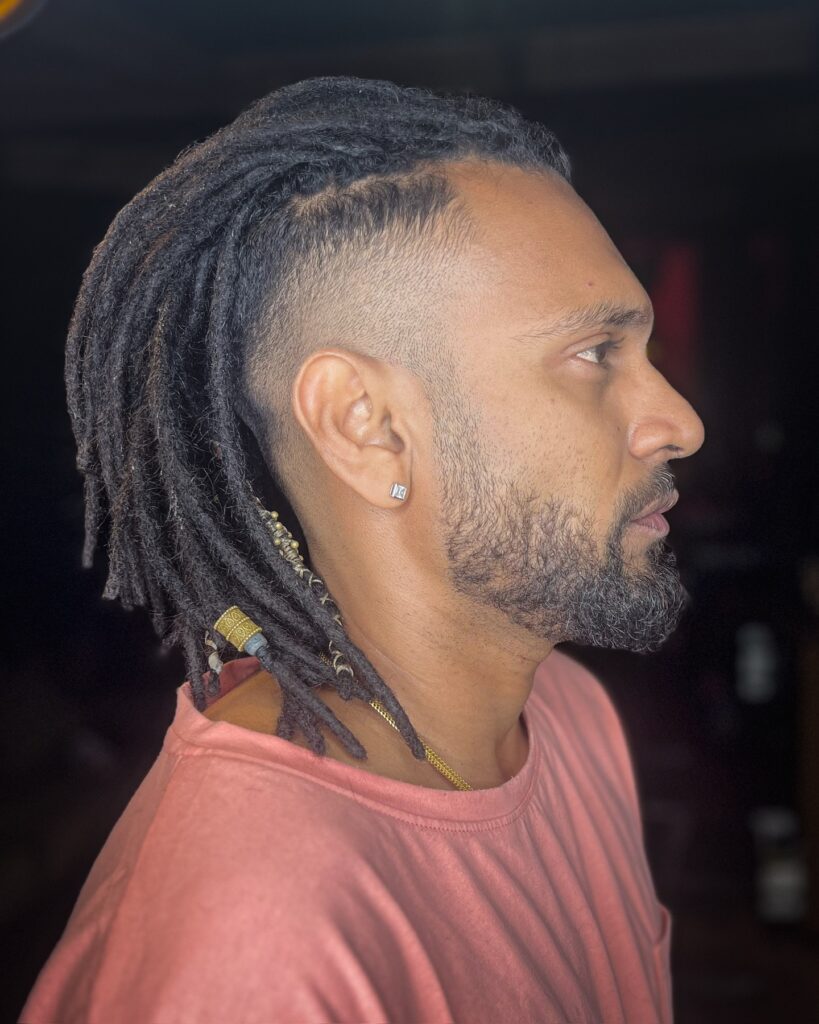
The long frohawk runs a fuller central section from the front hairline to the nape. Tapered or faded sides frame that central ridge. At length the silhouette becomes genuinely dramatic.
Longer curls fall and move rather than standing upright. That gives the long version a softer character than the short frohawk.
Curl cream on damp hair, then air dry or diffuse. Heavier products add stiffness at this length and kill the movement the style depends on.
Braids with Tapered Sides: The Modern Balance Between Structure and Length
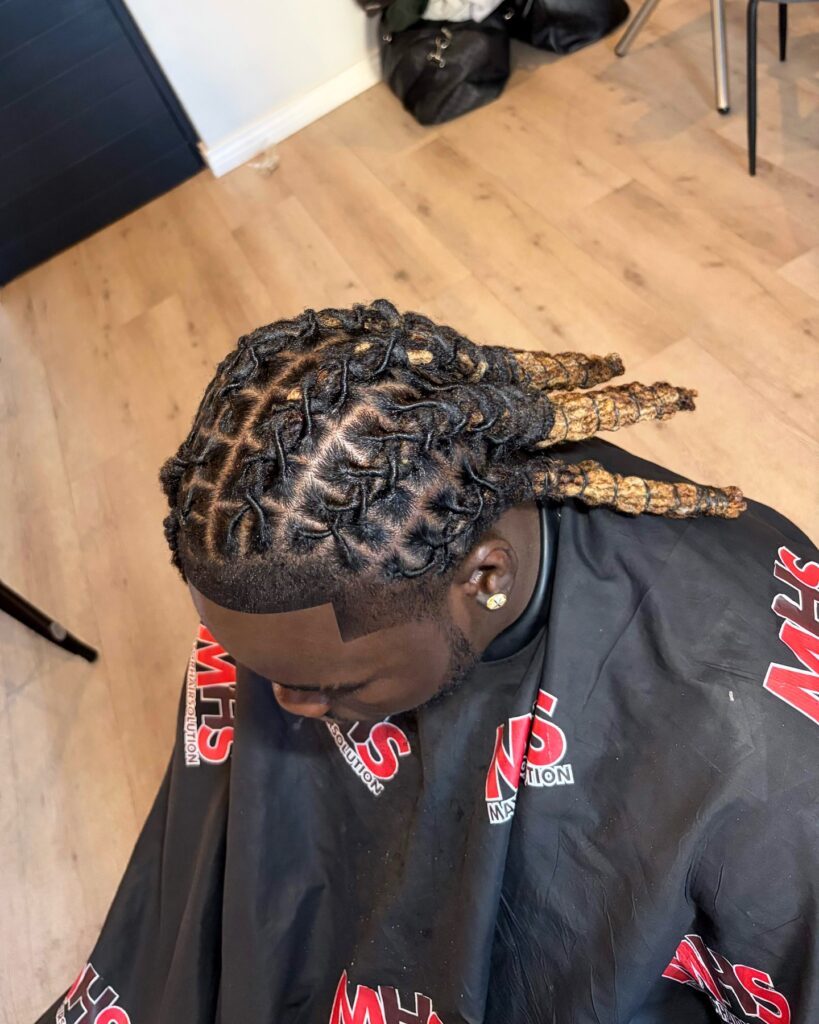
This combination brings barbershop fading to a braided style. The clean sides frame the braided length above. The contrast is what makes it read as modern rather than traditional.
Fade height controls the register. Low fades stay conservative and office-friendly. High fades push it toward streetwear.
Book the barber and the braider close together. The fade grows out faster than the braids, so a fresh taper is what keeps the whole thing looking deliberate. Fade heights are compared in our guide to fade haircuts for men.
Long Natural Coils: Tight Texture at Its Most Expressive
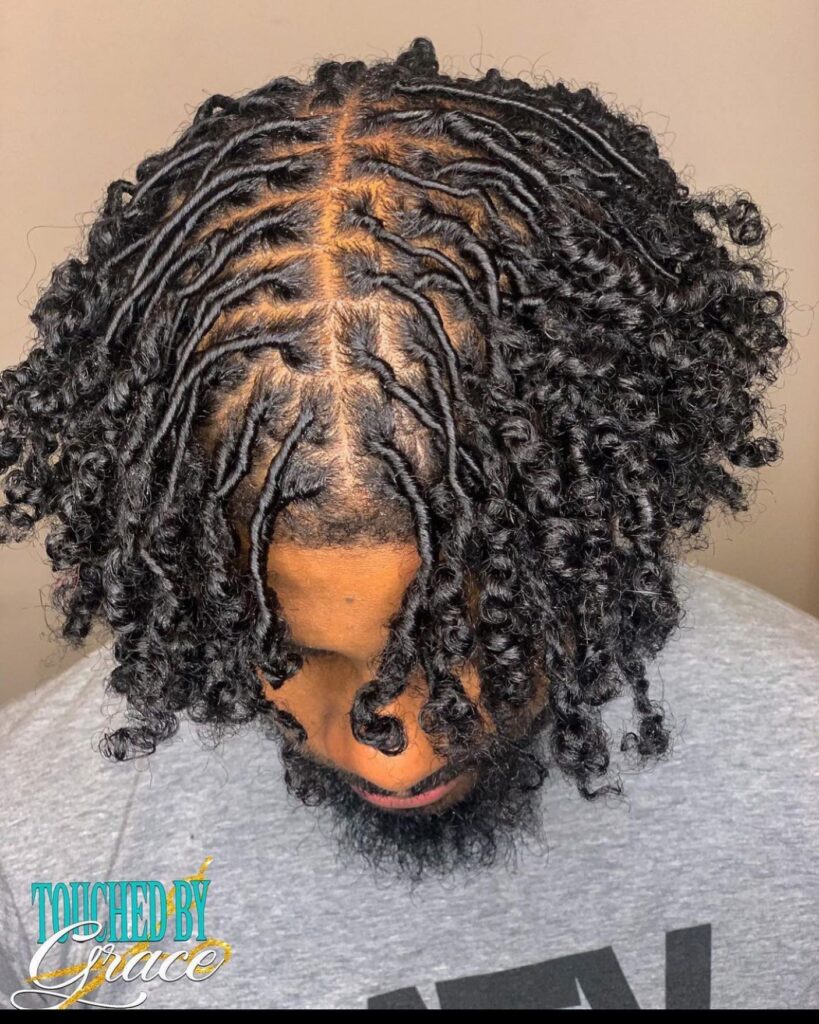
Long natural coils take the tightest curl pattern and let it express itself at length. The surface is visually complex and rich. It also changes character completely between dry and moisturised.
Moisture is the whole game here. The tighter the coil, the harder it is for scalp oils to travel down the strand. That is a structural fact of the curl pattern, not a care failure.
A leave-in conditioner after washing, then a light sealing oil over it, forms the base routine. Protective styling between wash days prevents breakage at the oldest, most fragile ends.
Caring for Long Black Hair: The Foundation Every Style Depends On
Every style above rests on the same foundation. Length amplifies both the quality and the damage of the hair it works with.
Washing frequency is where most routines go wrong. The American Academy of Dermatology’s everyday care guidance for Black hair recommends washing once a week or every other week. More often strips product build-up along with the oils the hair needs.
The same guidance adds three habits worth building in. Condition every single wash, and coat the ends deliberately, since the ends are the oldest and most fragile part of any strand. Use a hot oil treatment twice a month for moisture and elasticity. Apply a heat protectant to wet hair before any styling that involves heat.
A sulfate-free shampoo cleans without stripping. A leave-in conditioner after every wash covers the days in between. Protective styling handles the rest.
Protective Styles and Your Hairline: What to Watch For
Locs, braids, cornrows and buns are protective for the hair. They can still be hard on the follicle if worn too tight for too long.
The condition is called traction alopecia, and it comes from repeated pulling rather than genetics. The AAD’s guidance on hairstyles that pull gives one test that settles it: if the style hurts, it is too tight. A braider or loctician who says the pain will pass is wrong.
Watch for specific early signs. Broken hairs along the front hairline. A hairline that is quietly moving back. Tenderness, stinging, small bumps or flaking where the hair is pulled.
Caught early, it usually reverses once the tension stops. Left for years, the follicle scars and the loss becomes permanent. Rotating between tight and loose styles, choosing thicker braids over very fine ones, and seeing a dermatologist at the first sign are what protect the hairline long term.
Long Hairstyles for Black Men: Common Questions
How long does it take to grow locs to a decent length?
Expect two to three years for shoulder length, depending on your starting point and growth rate. The first six to twelve months are the budding stage, where locs look messy before they mature. That stage is normal, not a sign anything went wrong.
Do box braids actually help hair grow?
They do not speed growth. They protect existing length from breakage, so more of what grows is retained. That retention is what people notice as growth.
How should long natural hair be protected at night?
A satin or silk bonnet, or a satin pillowcase, is the single most useful habit. Cotton draws moisture out of the hair and creates friction. Loose locs and braids also benefit from being gathered loosely rather than left free.
Which long style is easiest for a first attempt?
Two-strand twists or box braids. Both are installed in a single appointment, both look intentional immediately, and both can be removed if you change your mind. Locs are the bigger commitment.