Small Bathroom Remodel Ideas: High-End Results in Tiny Spaces
Small bathrooms expose every design decision more completely than any other room in the home. Because the space is compact and every surface is within close viewing range throughout daily use, cheap materials look cheap, poor planning creates daily friction, and inconsistent hardware reads as careless in a way that would go unnoticed in a larger room. That level of exposure makes small bathrooms both the most challenging and the most rewarding room to remodel well.
The fifteen ideas in this guide cover every major small bathroom remodel direction from modern and minimal to storage-focused, farmhouse, and walk-in shower designs. Each one includes specific guidance on what makes the approach effective in a compact space and which decisions within each style deliver the highest daily return. Getting the design right in a small bathroom improves every single morning and evening routine for years after the renovation is complete.
Modern Small Bathroom Remodel: Precision Creates Luxury
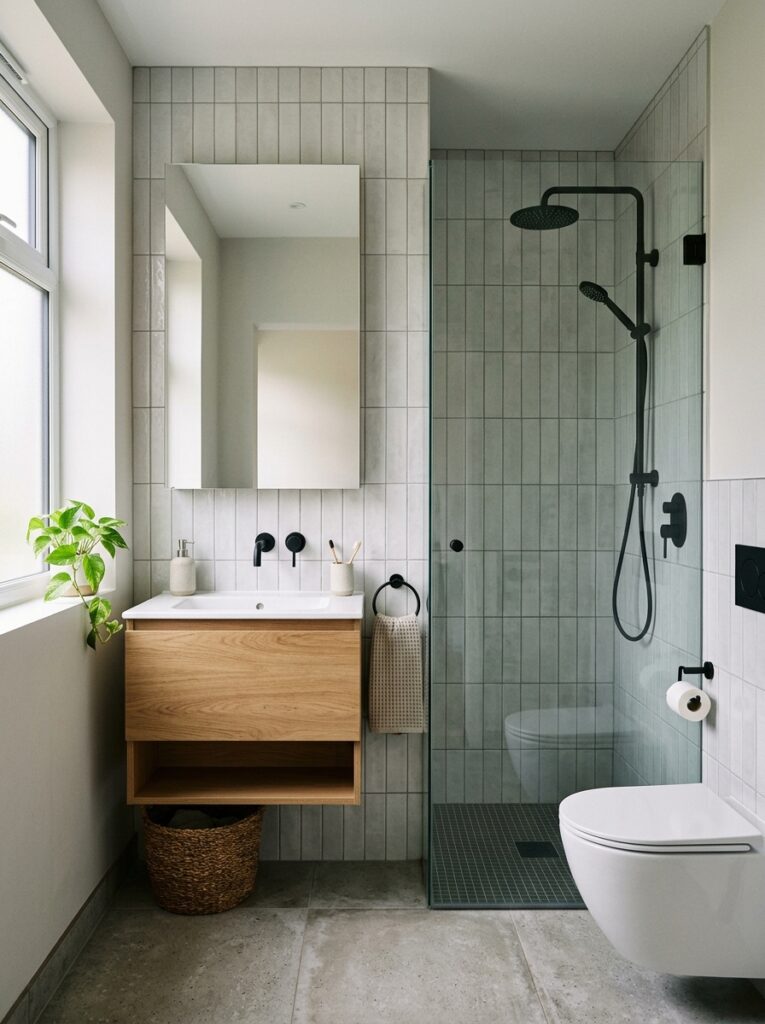
A modern small bathroom remodel achieves its high-end quality through precision in surfaces and fixtures rather than through scale or quantity. Clean lines in tile work, sleek wall-mounted fixtures that do not interrupt the floor plane, and a consistent hardware finish throughout the room all communicate a level of design attention that registers immediately to anyone using the space.
Matte black hardware creates one of the strongest modern small bathroom statements because the matte finish reads as genuinely sophisticated against both white and neutral tile backgrounds. Chrome hardware creates a cleaner, brighter alternative that suits rooms needing maximum perceived brightness. The most important discipline in a modern small bathroom is hardware consistency: the same finish on every visible metal element, from the tap to the towel bar to the shower fitting to the cabinet handles. Inconsistent hardware is the single detail that most undermines modern bathroom design at close range.
Minimalist Bathroom Update: Visual Calm Through Deliberate Reduction
A minimalist bathroom update is the renovation that improves the space primarily by reducing visual complexity rather than by adding elements, which makes it the most budget-accessible approach on this list. Removing accumulated countertop clutter, replacing mismatched accessories with coordinated alternatives, and installing hidden or recessed storage so everyday items disappear behind closed doors all transform the visual quality of the bathroom without significant expenditure.
The practical foundation of a successful minimalist bathroom update is genuinely adequate hidden storage. If there is nowhere to put the things that currently live on the countertop, the minimalist quality will last only as long as the initial motivation to keep it clear. Installing one quality recessed cabinet behind the mirror, adding a small floating shelf for the most frequently needed items, and fitting a drawer organiser inside the vanity unit together create the storage infrastructure that makes a minimalist bathroom sustainable as a daily living environment rather than only as a one-day styling project.
Budget-Friendly Bathroom Refresh: Three Changes That Transform the Room
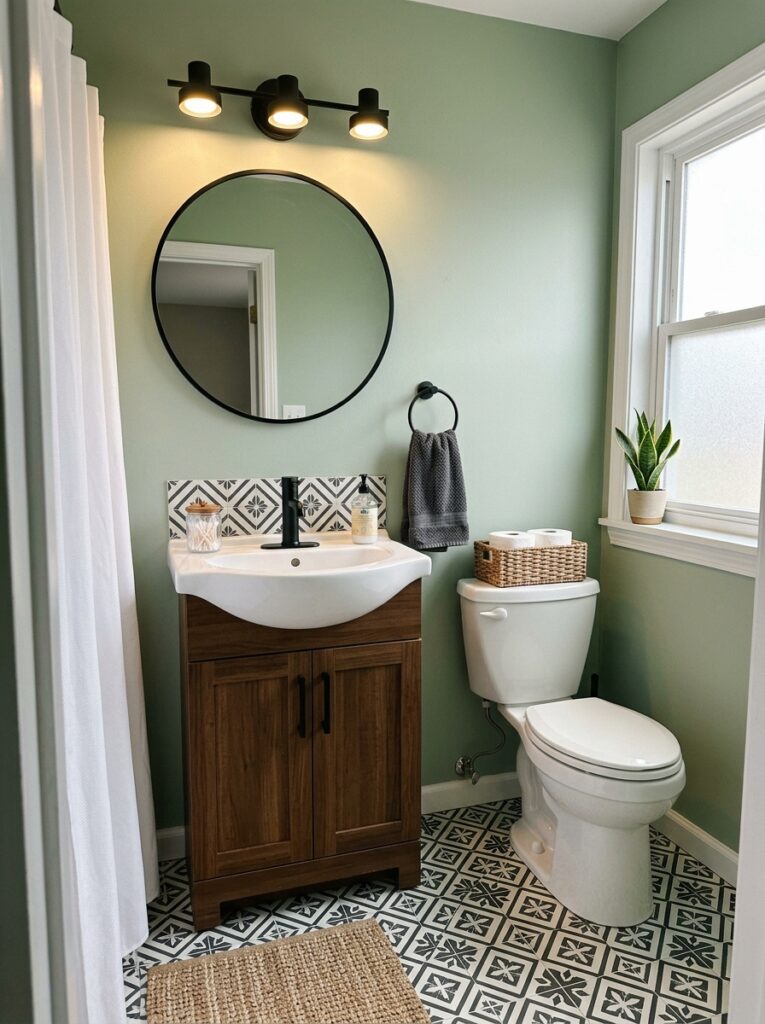
A budget bathroom refresh concentrates the available investment in the three changes that deliver the most visible transformation per pound spent. In a bathroom, those three changes are consistently the same regardless of the room’s existing condition or aesthetic direction.
New tap and fixtures are first because they are handled multiple times daily, they are always within close viewing range, and updating from dated chrome to contemporary matte black or brushed nickel changes the room’s character immediately. New lighting is second because the quality of bathroom lighting affects every daily routine and a single warm, well-positioned vanity light improves the room’s atmosphere more dramatically than most individual decorative additions. Hardware replacement on cabinets and towel bars is third because it completes the fixture update coherently and finishes the room. These three changes together cost a modest fraction of a full renovation while producing a result that most visitors attribute to significantly greater investment.
Small Bathroom Makeover: The Complete Update Without Structural Change
A small bathroom makeover updates the entire visual character of the room without touching the plumbing, the layout, or the structural elements. This approach is right for bathrooms where the existing layout functions well but the surfaces, fixtures, and accessories are dated or mismatched.
New mirrors are the highest-impact single accessory change available in any bathroom because a large frameless or well-framed mirror above the vanity changes the room’s proportions and light quality simultaneously. Updated fixtures in a consistent finish, new coordinated accessories like soap dispensers, towel rings, and toilet roll holders in the same metal family, and a simple textile update in towels and a bath mat complete the makeover. Using lighter colours throughout the update ensures the refreshed room reads as larger and more open than the previous version, which is the consistent priority in small bathroom design.
Neutral Tone Bathroom Remodel: The Foundation That Everything Else Works Around
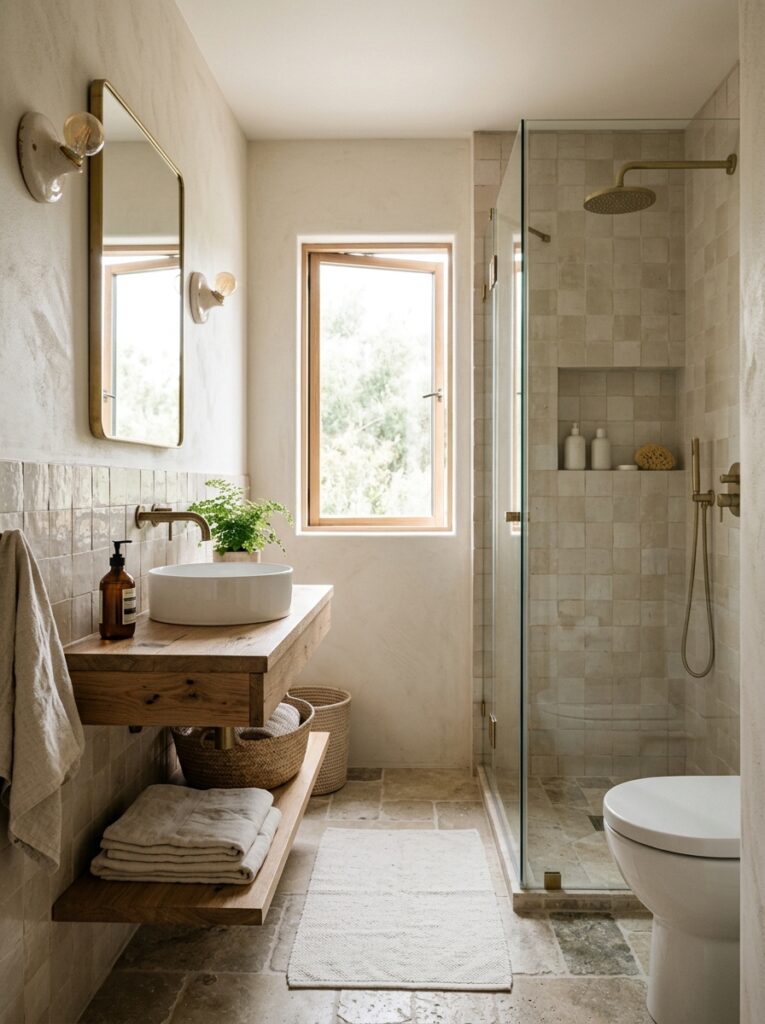
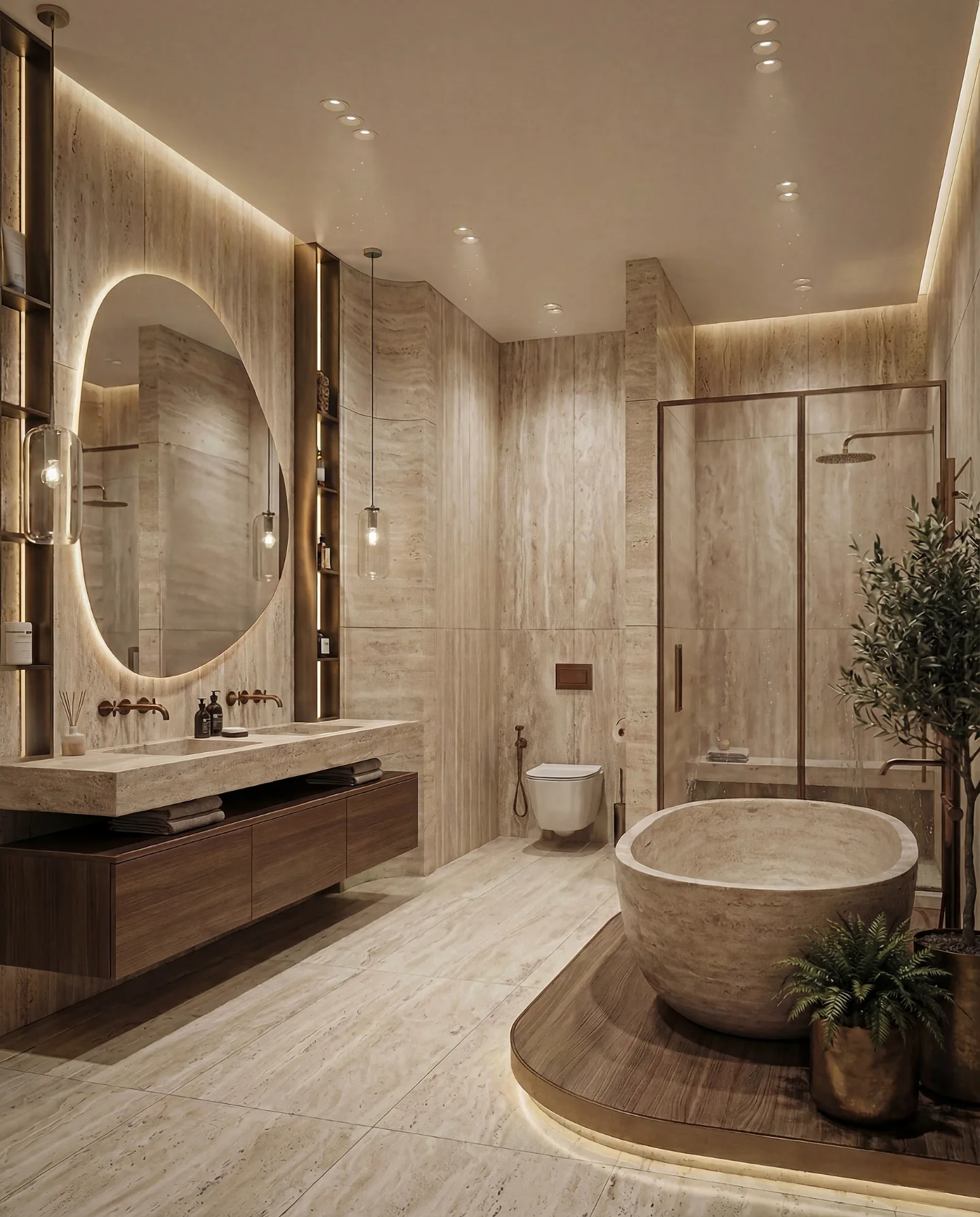
A neutral tone bathroom in beige, cream, warm grey, and soft white creates the most versatile renovation foundation available because neutral surfaces work with every future fixture update, accessory change, and textile replacement without requiring the whole room to be reconsidered. Neutral bathrooms age better than bathrooms built around specific colour trends because the neutral palette never becomes specifically wrong.
Textured tiles within the neutral family add the visual interest that prevents a neutral bathroom from reading as flat or characterless. A warm beige tile with visible surface variation creates more visual depth than a perfectly uniform tile at the same neutral tone. Natural wood accents in vanity materials, shelf edges, or a simple wooden stool add genuine warmth to a neutral palette without introducing colour complexity. The neutral bathroom is not a safe default. It is a considered decision that prioritises longevity over novelty.
Space-Saving Bathroom Design: Every Decision Justifies Its Dimensions
Space-saving bathroom design applies specifically to rooms where the physical dimensions genuinely limit what can be installed rather than simply requiring careful furniture selection. The principle is that every fixture and fitting should be chosen for the smallest possible footprint that still meets its functional requirement without compromise to daily comfort.
A corner basin takes advantage of a space that standard basins leave unused. A wall-hung toilet eliminates the visual bulk of the cistern from the floor level and allows the floor area beneath it to remain visually clear. A sliding shower door requires no swing space in front of it, which is particularly significant in narrow bathrooms where a hinged door would consume the only circulation space available. These decisions are more expensive than standard alternatives but they are the only approach that makes genuinely tiny bathrooms function without daily frustration.
Tiny Bathroom Renovation: Making Proportion Work in Your Favour
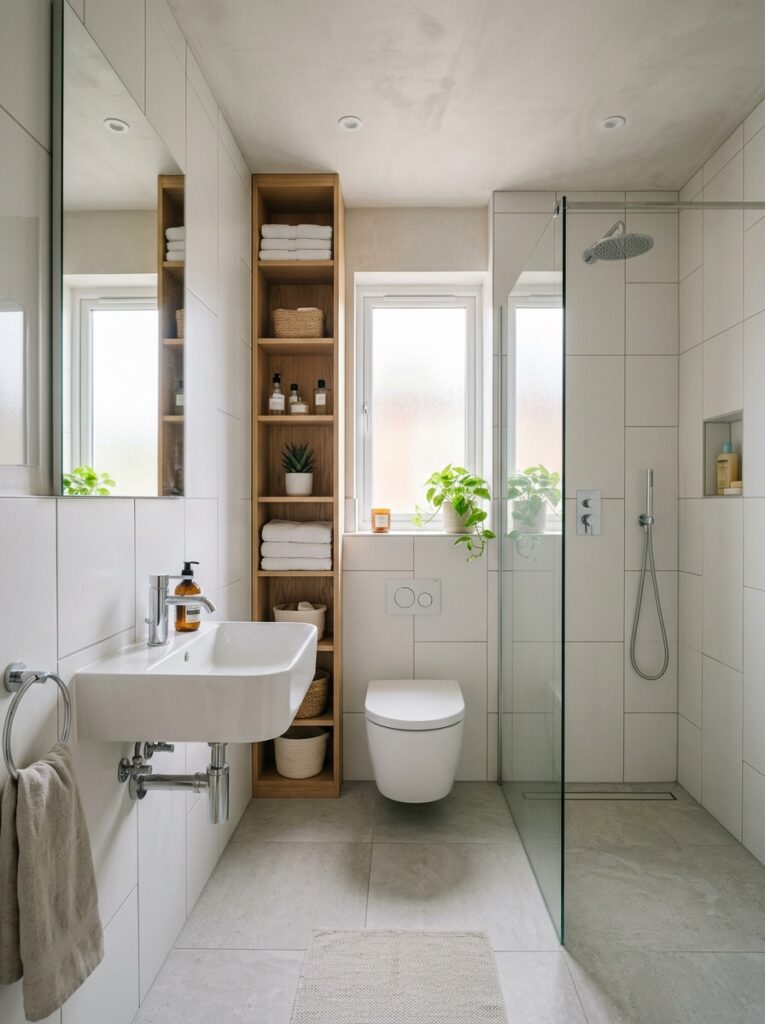
A tiny bathroom renovation succeeds when it works with the room’s proportions rather than fighting against them. Large format tiles on the floor and walls reduce the number of grout lines visible, which makes the room appear more continuous and therefore larger than smaller tiles with more frequent grout joints would in the same space. Using the same tile format on both the floor and the lower section of the walls removes the visual boundary between the two planes and increases the perceived height of the room.
Vertical tile layouts on the walls draw the eye upward and make the ceiling feel higher. Wall-hung fixtures including the basin, toilet, and any storage elements keep the floor visible from every angle, which creates the impression of more floor area than the room actually has. These are perceptual and proportional decisions that cost no more than their standard alternatives when specified at the design stage.
Walk-In Shower Small Bathroom: Opening the Space Through Transparency
A walk-in shower in a small bathroom is one of the most impactful spatial decisions available because replacing a closed bath or shower enclosure with an open or glass-enclosed walk-in removes a significant physical and visual barrier from the room’s most used area. The bathroom reads as more open and more generous as a result even when no additional floor area has been created.
Frameless glass panels rather than framed alternatives keep the visual obstruction to an absolute minimum because there is no frame structure drawing a line through the room’s visual field. A curbless shower entry removes the step that would otherwise interrupt the floor plane between the bathroom proper and the shower area. These decisions together create the seamless, spacious quality that high-end bathrooms in genuinely small spaces consistently achieve and that any small bathroom can reach with the right choices at the specification stage.
Floating Vanity Bathroom Remodel: Visual Space Through Elevation
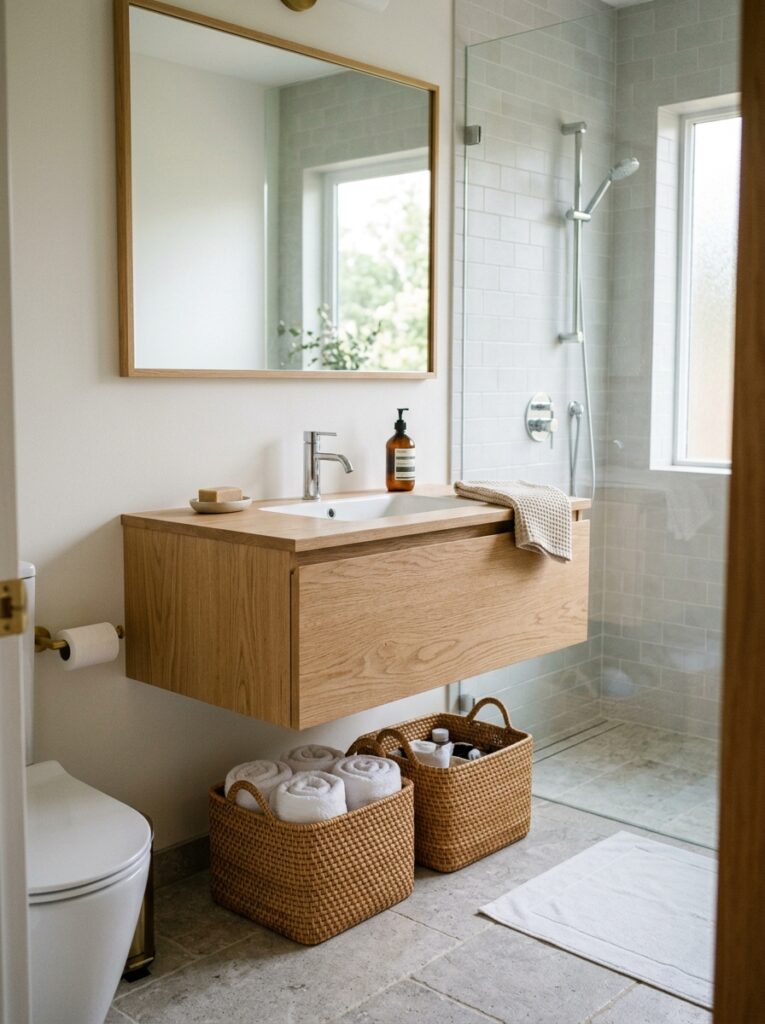
A floating vanity, mounted directly to the wall with the floor remaining clear beneath it, delivers more perceived visual space per pound of investment than almost any other single bathroom renovation decision. The visible floor area beneath the vanity makes the room appear wider than a floor-standing cabinet in the same position because the eye perceives the continuous floor as a single uninterrupted plane rather than as two sections divided by furniture.
The practical benefit alongside the visual one is cleaning convenience. A floor that can be mopped completely without navigating around cabinet legs is significantly easier to maintain in the clean condition that small bathrooms require to look their best. The space beneath the vanity also accommodates baskets or small containers for items that need accessible storage without occupying the vanity surface. A floating vanity is the bathroom renovation decision that simultaneously improves the room’s appearance, its daily maintenance, and its perceived dimensions in one installation.
Light and Bright Bathroom Remodel: Light Quality as the Primary Investment
The quality and quantity of light in a small bathroom determines how the room reads at every time of day and in every weather condition. A poorly lit small bathroom feels cramped and uninviting regardless of how well the surfaces and fixtures were chosen. A well-lit small bathroom feels welcoming even at very modest dimensions.
Natural light should be maximised wherever possible by keeping window areas unobstructed and using sheer or no window treatments that allow daylight to reach the full room. Vanity lighting positioned on the sides of the mirror rather than above it distributes light evenly across the face without creating shadows, which improves the functional quality of the light while also improving the room’s overall atmosphere. Warm white bulbs at 2700 Kelvin create a flattering and welcoming light temperature that cool daylight alternatives specifically cannot achieve in an enclosed bathroom environment.
Compact Bathroom Redesign: Layout Before Aesthetics
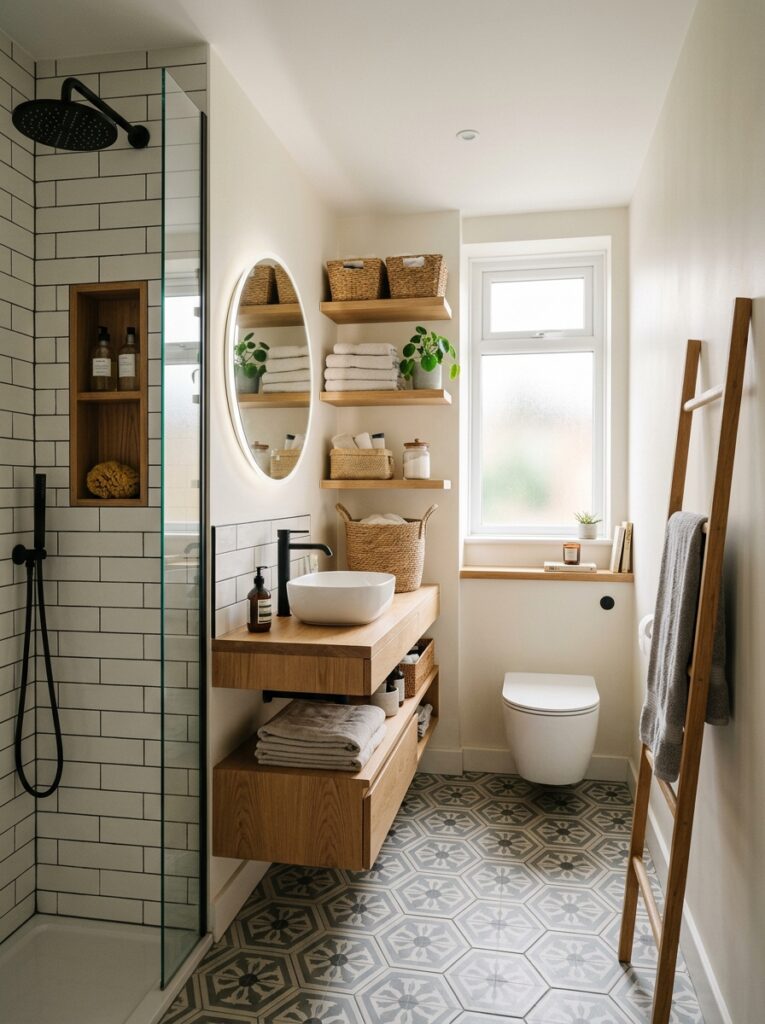
A compact bathroom redesign starts with the layout before any aesthetic decisions are made, which is the correct sequence and the one that most small bathroom renovations get backwards. The layout determines the daily experience of using the room for every year the renovation lasts. The aesthetics determine the visual impression for the first few years before familiarity makes them invisible.
Assessing whether the existing layout places the shower, toilet, and basin in the most logical positions relative to each other and relative to the door and window is the first step before any purchase is made. In many small bathrooms, the existing layout was determined by plumbing positions that are entirely moveable rather than by deliberate design consideration. Relocating the basin to opposite side of the room or moving the shower to the end wall can transform the daily experience of the room more significantly than any surface material update.
Farmhouse Small Bathroom Remodel: Character in a Compact Space
A farmhouse small bathroom achieves its distinctive warm character through the honest use of traditional materials in a contemporary spatial context. Shiplap panelling on one wall behind the vanity creates the most immediately recognisable farmhouse bathroom element at relatively low cost. A ceramic undermount sink with a vanity in natural or painted wood replaces the standard bathroom unit with something that reads as genuinely chosen rather than default specified.
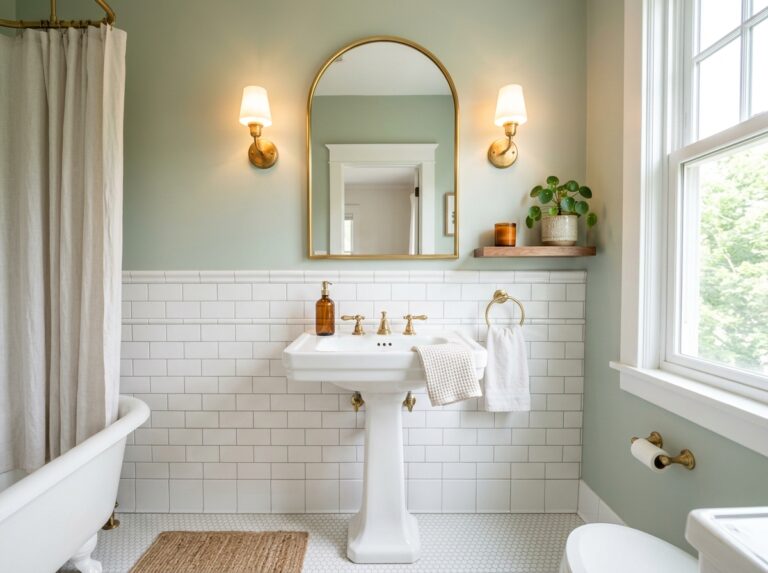
Vintage-inspired tapware in brushed bronze or unlacquered brass adds the patina quality that farmhouse style specifically values. Soft neutral colours throughout prevent the warm materials from making the room feel heavy. The farmhouse bathroom is the style where small imperfections and the visible character of natural materials contribute to the aesthetic rather than working against it, which makes it specifically forgiving in renovation contexts where perfect execution is not achievable within the available budget.
Scandinavian Small Bathroom Design: Simplicity That Maximises Brightness
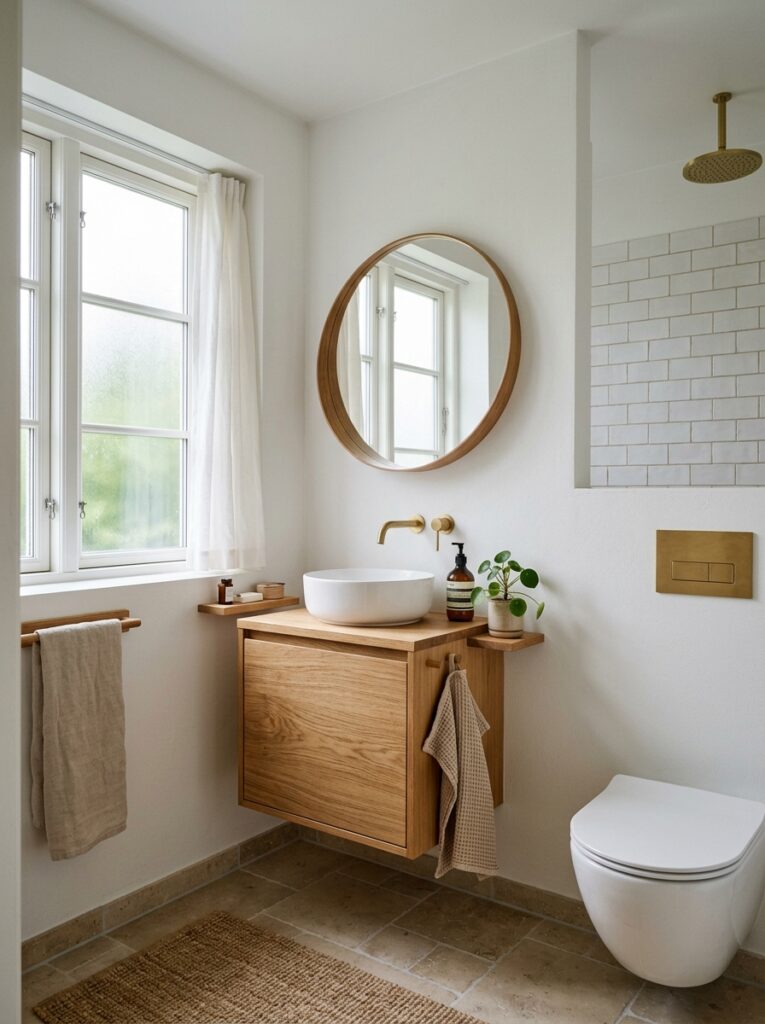
A Scandinavian small bathroom maximises both perceived space and natural light quality through the consistent application of pale surfaces, natural materials, and genuinely minimal decoration. White walls and a pale grey or natural stone tile floor reflect available light throughout the room rather than absorbing it. Light timber accents in the vanity or on a simple shelf add organic warmth that prevents the pale palette from reading as clinical.
The Scandinavian bathroom principle of including only what is genuinely needed means the room stays visually clear without requiring daily discipline to maintain. When the storage infrastructure is adequate and the items that would otherwise accumulate on surfaces have a designated place within closed storage, the Scandinavian bathroom looks as it was designed to look without any ongoing effort. That effortless quality is the most practically valuable quality any small bathroom design can achieve.
Simple Tile Bathroom Update: The Surface Change With the Most Lasting Impact
A tile update is the single renovation decision that changes the bathroom’s character most completely because tiles cover more surface area in a bathroom than any other single material. The floor, the shower enclosure, and the splashback area behind the basin collectively represent the majority of what the eye sees in any bathroom visit. Updating these surfaces changes the room fundamentally rather than updating a detail within an existing aesthetic framework.
Subway tiles in a vertical brick-bond pattern are one of the most versatile and enduringly appropriate choices for a small bathroom because their proportions, their surface texture, and their association with bathrooms across multiple decades of design history all make them feel consistently appropriate rather than specifically of any single moment. Patterned floor tiles combined with plain wall tiles create visual interest at foot level where it contributes personality without overwhelming the room. Tile choice is the bathroom renovation decision that most determines the room’s character for the longest subsequent period.
Storage-Focused Small Bathroom Remodel: Organisation as the Foundation of Luxury
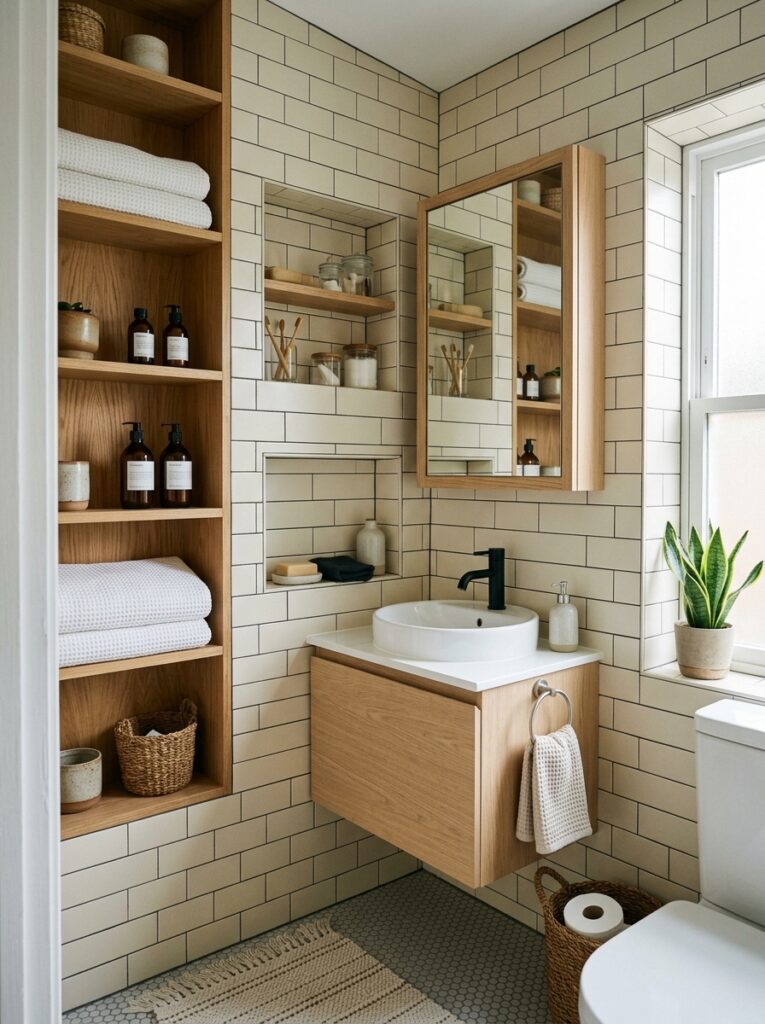
The most consistently underappreciated quality of a genuinely luxurious small bathroom is adequate, well-organised hidden storage. A bathroom where every daily-use item has a specific place within closed storage, and where the surfaces remain clear because the storage infrastructure makes clearing them effortless, feels more luxurious than a bathroom with expensive materials and fixtures but nowhere to put the products and tools that daily bathroom routines require.
Recessed niches built into the shower wall during renovation create storage that takes no floor or visual space. A mirrored cabinet above the basin conceals storage within the mirror’s functional footprint. A vanity with genuine interior organisation, drawers with dividers, a pull-out section for hair tools, a dedicated shelf for skin care products grouped by frequency of use, removes the daily negotiation with bathroom contents that happens when storage is inadequate. Investing in storage organisation at the design stage costs less than correcting it after the renovation is complete and delivers a daily return that never diminishes.
The Small Bathroom Principle That Everything Else Follows From
Every successful small bathroom remodel on this list achieves its quality through the same foundational principle: the decisions were made in the correct sequence. Layout was considered before fixtures. Fixtures were specified before surfaces. Surfaces were chosen before accessories. Storage was planned before anything decorative was decided.
This sequence ensures that each decision creates the right conditions for the next rather than constraining it. A layout that works well makes every fixture decision easier. Fixtures chosen for the layout make every tile selection more straightforward. Tiles chosen to complement the fixtures make every accessory choice more coherent. The bathroom that results from this sequence feels designed rather than assembled, which is precisely the quality that distinguishes a high-end small bathroom from one that cost the same to renovate but, was decided in the reverse order.