
Men’s Haircut Trends 2026: What Clients Are Actually Asking For
Most trend articles are style catalogues with a year in the title. They describe fifteen haircuts and tell you nothing about which direction things are actually moving.
This one is a report rather than a catalogue. What barbers are being asked for more often, what is levelling off, and what is on the way out. Where a cut has its own full guide on this site, it is linked rather than described twice.
The Shift Behind Almost Everything

Four changes explain most of what follows, and they point in the same direction.
Matte has beaten shine. Clay and paste have largely replaced gel and high-shine pomade. A wet-look finish now reads dated in most settings, and only the deliberately formal styles still use it.
Texture is cut in, not styled in. The biggest technical change of the past few years. Barbers point-cut and slide-cut so the movement lives in the hair. That is why current cuts look acceptable on a morning when nothing gets done to them.
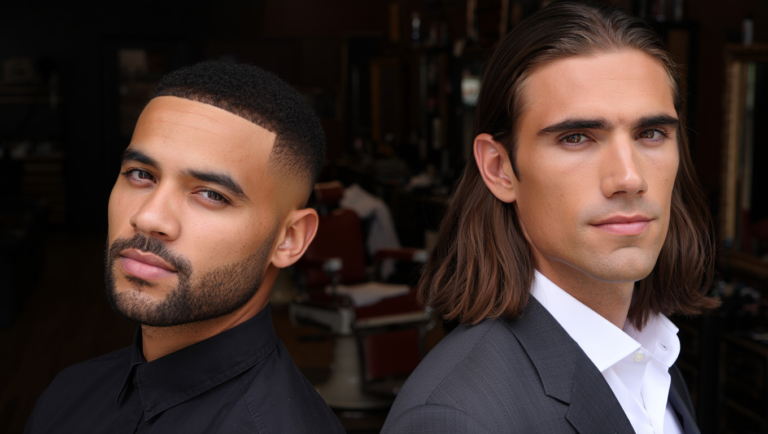
Contrast is softening. Skin fades and hard disconnections are giving ground to mid and low fades and blended transitions. Partly appearance, mostly practicality: a softer perimeter looks intentional at week four, where a sharp one does not.
Length is creeping back. After a decade of short sides dominating, medium-length tops and full medium-length cuts are growing steadily.
Rising: The Textured Crop
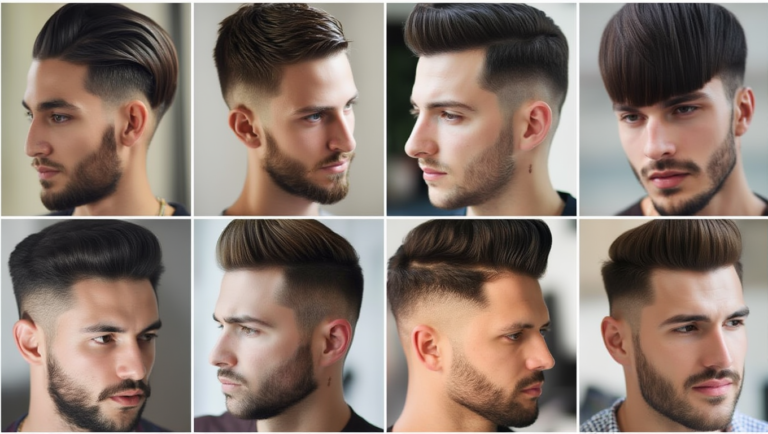
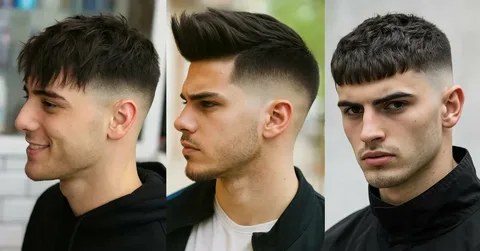
Still the most requested men’s haircut in barbershops worldwide, and it has held that position for several years rather than spiking and fading.
The reason is that it sits exactly where the four shifts above meet. Matte finish, texture built into the cut, a fade that can go low, and enough length on top to feel current. It suits nearly every face shape and hair type, which is rare.
A cut that stays this popular this long stops being a trend and becomes a standard. The full version is in our guide to the textured crop.
Rising: Curtains and Medium Length

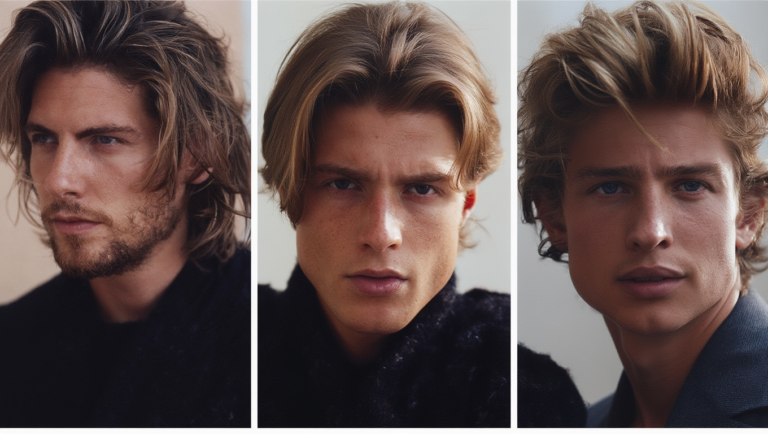
The clearest directional change in men’s hair right now. Curtain fringes, bro flow and medium-length tops are all growing, and they are the same trend wearing different names.
What is driving it is a reaction. After years of very short sides, a generation of men are growing their hair out and finding that medium length asks less of the barber even if it asks slightly more of the morning.
Wavy hair benefits most, since the wave supplies movement that straight hair needs product to fake. The full range is covered in our guide to medium-length hairstyles, including the grow-out stage where most attempts fail.
Rising: Working With Natural Texture

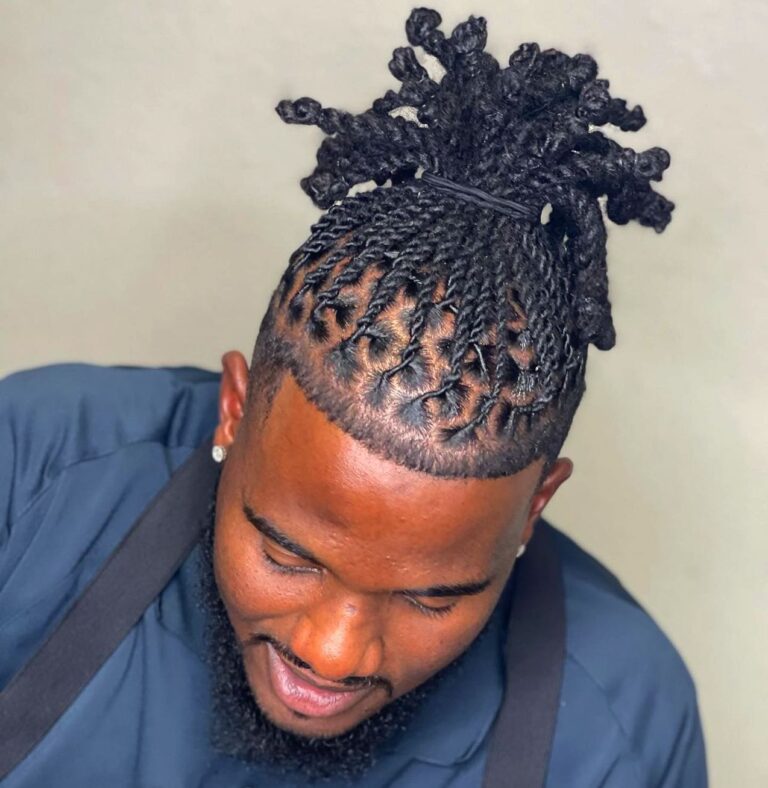
Taper fades paired with natural curls and coils are growing faster than almost anything else, and this is the most genuinely positive shift on the list.
For years, curly and coily hair was managed around rather than cut for. The current approach does the opposite. The taper gives a clean perimeter while the natural texture stays full and expressive on top.
The technical change behind it matters: more barbers now cut textured hair dry, so they can see where each curl actually sits. Ask for that specifically. Fade heights are compared in our fade haircuts guide.
Rising: The Modern Mullet

The comeback nobody predicted, and the current version genuinely looks nothing like the one that earned the name its reputation.
The difference is execution. Clean blending at the sides, layered texture through the back, and a front section that reads as a decision rather than an accident. Oval and square faces suit it best.
It is also the clearest example of how hair revivals actually work, which is worth understanding if you want to predict what comes next.
Why Revivals Keep Happening
Almost nothing in men’s hair is new. Most of what trends is something returning on a cycle measured in decades.
The undercut is the clearest documented case. It was fashionable from the 1910s to the 1940s, disappeared, began returning in the 1980s, and came fully back in the 2010s. Roughly seventy years from peak to peak, with a partial revival at the halfway point.
The pattern is consistent enough to be useful. A style has to be gone long enough that nobody associates it with their own embarrassing photographs. That is why the mullet could only return once the men who wore it first stopped being the ones setting the trend.
On that logic, the styles of the early 2000s are next. Spiky tips and heavy fringes are already reappearing at the edges of menswear.
Levelling Off: The Slick Back

Not falling, but no longer growing. The slick back has settled into being a reliable option rather than a fashionable one, which is usually where a style stays for years.
What has changed is the finish. The high-shine version now reads as formal and occasion-specific. The matte version, swept back with clay rather than pomade, is what most men actually wear.
Both versions are covered in our guide to slicked back hairstyles.
Levelling Off: The Wolf Cut

The wolf cut arrived fast and has settled into a smaller, committed audience rather than going mainstream.
That is not a failure. It is what happens to genuinely expressive cuts. It suits wavy and thick hair and it suits men who want their hair to say something specific. It was never going to be the default.
Our guide to haircuts that work with wavy hair covers where it fits.
Falling: Hard Disconnections and Skin Fades

The clearest decline in current men’s hair. The disconnected undercut and the very high skin fade are both being requested less than they were.
The reason is not that they stopped looking good. It is upkeep. Both need a barber visit every two to three weeks, and both look visibly wrong rather than merely grown out by week four.
Men are choosing cuts that age well between appointments. That single preference explains more current movement than any aesthetic shift does.
Falling: Shaved Designs
Lines and geometric patterns cut into the sides have moved from mainstream back to niche.
Same reason. A design looks its best for about two weeks and blurs after that. As a proportion of what barbers are asked for, it is down.
It has not disappeared, and for boys and teenagers it remains popular. But it is no longer something the average adult client requests.
The Edgar Cut: Genuinely Divisive
Worth naming separately because it does not fit the rising or falling pattern. The Edgar has a blunt straight fringe over a high or mid fade, and reactions to it are unusually split.
It has a strong following in specific communities and is close to absent elsewhere. It is also the cut most tied to cultural identity on this list, which is part of why it does not follow a normal trend curve.
Practically: it needs precise edges and frequent visits. Angular and oval faces suit it. If the edges soften, the cut loses its entire character.
Trends That Do Not Survive Real Life

A trend being popular does not make it right for you, and three questions filter out most of the mismatches before you sit in the chair.
How often will you realistically get to a barber? Under three weeks opens up skin fades, disconnections and designs. Over four rules all three out, whatever is trending.
What does your hair actually do? The wolf cut and curtain styles need texture. Fine straight hair fakes it with product and never quite gets there.
How long do you want to spend in the morning? The pompadour needs a dryer and intent. The textured crop needs thirty seconds. Both are trending, and they are not comparable commitments.
Answer those three honestly and the list narrows to two or three genuine options. The cuts that survive every trend cycle are covered in our guide to classic men’s haircuts.
How to Ask for Any of This
Knowing a name is only half of it. Two barbers will interpret “textured crop” or “wolf cut” differently depending on training and region.
Bring two or three photos rather than one. Different angles show the fade height, the fringe direction and the top length at once, which no description manages.
Then give the barber the three answers from the section above: how often you will return, what your hair does, and how long you will spend in the morning. A good barber adjusts the technical choices within a style so it still looks right in week three.
That last part is what separates a haircut that photographs well on day one from one that works for the month you actually have to live in it.