Best Hairstyles for Men with Thick Hair: Bold Styles That Work With Your Hair
Hairstyles for Men with Thick Hair: Working With the Asset Most Men Want
Thick hair is one of the most envied types in men’s grooming. It holds a style reliably, creates volume without product, and keeps its shape through weather and activity in a way fine hair cannot. Most men with fine hair wish they had it. Most men with thick hair wish someone had explained earlier how to work with it rather than fight it.
The problem is never a shortage of options. It is an excess of volume that the wrong cut turns into bulk instead of shape. Every style below works with natural density rather than against it. Each one also covers the technical approach that makes thick hair look impressive rather than simply heavy.
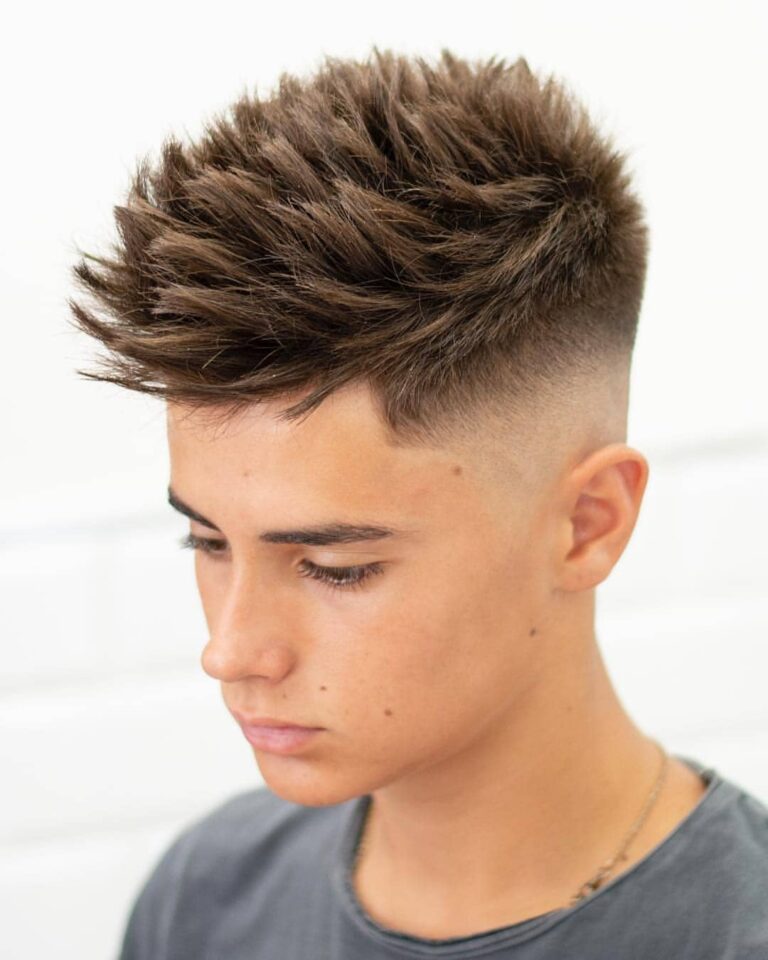
Textured Crop: The Thick Hair Haircut That Solves the Bulk Problem Directly
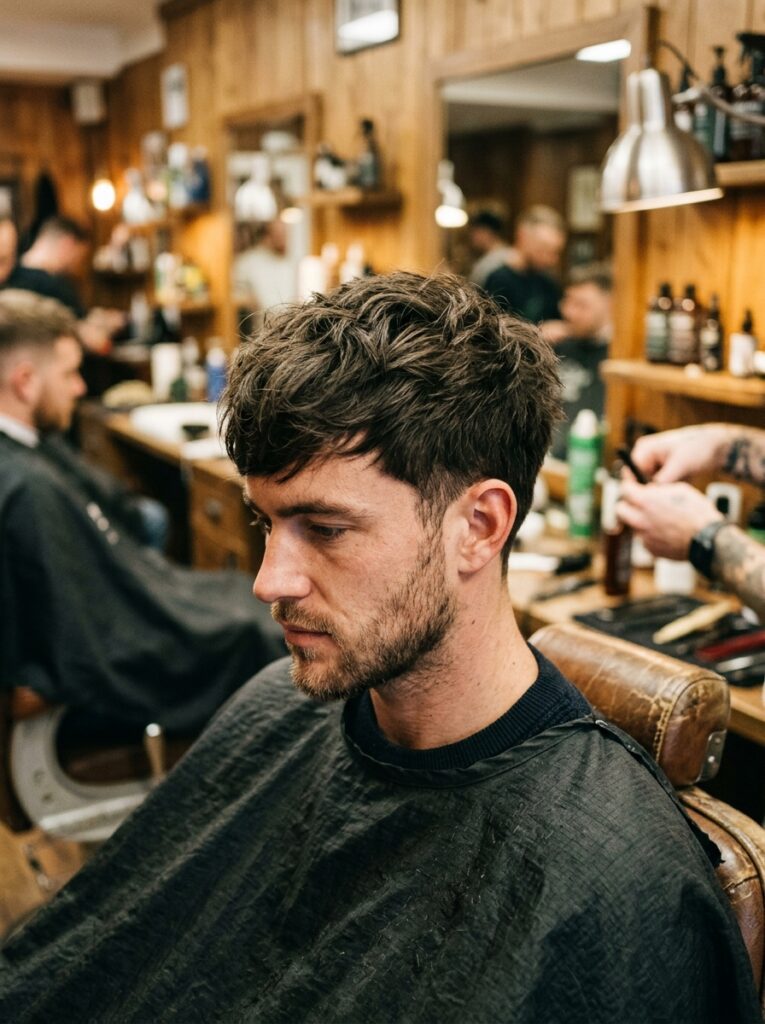
The textured crop is the most effective short cut for thick hair. Choppy layering removes weight from the top without reducing the visual density that makes thick hair look good. The barber cuts through the top at different angles and depths, creating sections of varied length that sit at different heights instead of lying flat.
The result has real movement and dimension. Thick hair cut uniformly short compresses into a heavy block, and this avoids that entirely. The choppy surface catches light from several angles through the day, so the cut looks styled even with no product in it. For anyone with thick hair who wants a modern, low-maintenance result that genuinely manages the volume, this is the strongest starting recommendation.
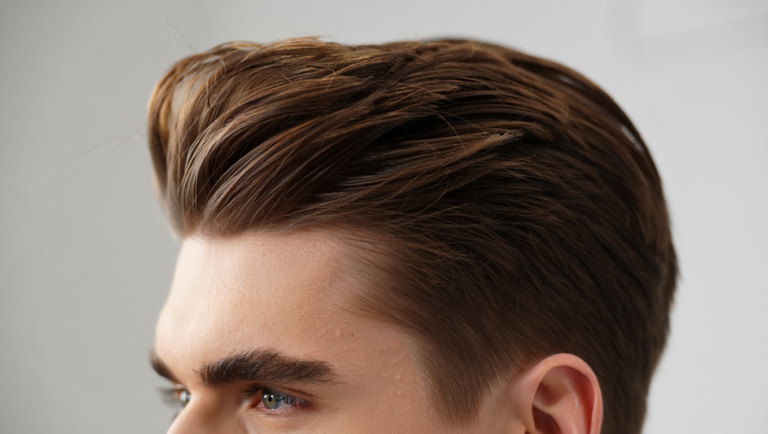
Thick Hair Quiff: Natural Volume Used For Maximum Impact
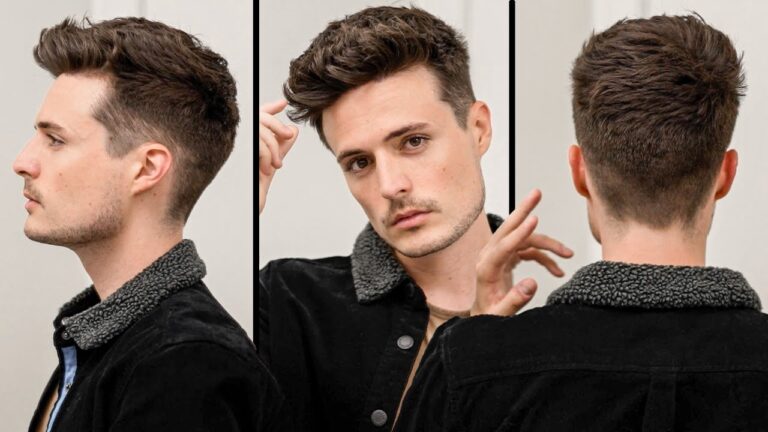
The quiff treats thick hair’s volume as the main asset rather than a problem to control. The front lifts up and sweeps back from the forehead. Density supplies the body and hold that direction needs, so the style largely builds itself.
Fine hair requires mousse and careful drying to fake this. Thick hair reaches the same place with a little matte clay and thirty seconds of hand-shaping. A few specifics make the difference. Three to four inches at the front gives enough length to lift and sweep; shorter than that and the hair stands up rather than flowing back. Choose clay or paste over pomade, since oil-based products add weight to hair that already has plenty and drag the lift down by midday. Dry the front backward with the fingers while the hair is still damp, then apply product once it is dry, not before. The sides also need managing, because thick hair expands outward at the temples and an unfaded quiff quickly becomes wider than it is tall. A taper or fade keeps the silhouette vertical. The payoff is durability: a thick quiff survives wind and a car journey in a way a fine-haired one never does.
Layered Pompadour: Structure and Control for Ambitious Volume
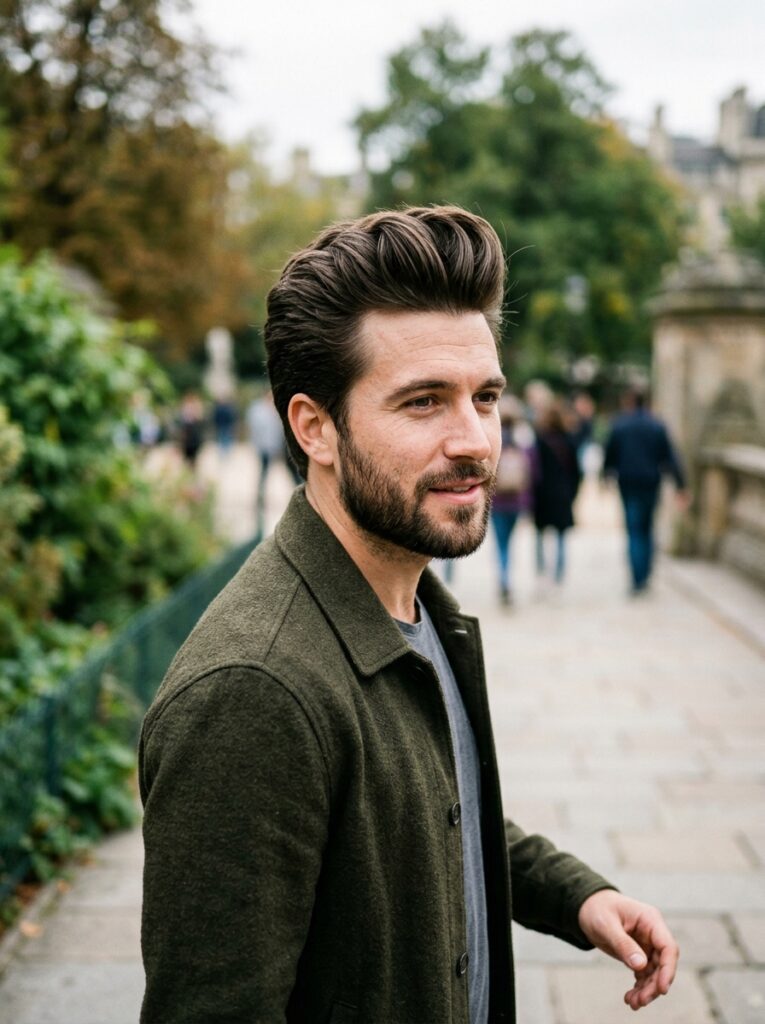
The layered pompadour takes the bold shape of the traditional version and adds internal layering on top. That layering spreads the volume through the length and depth of the style. Without it, a pompadour on thick hair sits as one dense mass. It looks heavy rather than voluminous and drops out of its swept-back shape faster than it should.
With layers, the weight distributes and each section sits more independently. The pompadour gains genuine internal structure instead of fighting its own bulk. It holds the swept-back direction more reliably, looks lighter and more refined, and moves naturally when the head turns. This is the version that reads as polished rather than simply large.
Side Part Taper: Clean Control for the Professional Setting
A side part with a taper is the thick hair style that reads as professional most consistently. It channels density into a structured, directional shape instead of letting the hair sit wherever it falls. The taper shortens the sides gradually while the top keeps enough length for a clear part.
Thick hair holds a part far better than fine hair, since the weight of each strand resists the drift that makes fine parts vanish by lunchtime. There is one problem specific to density, though. A thick section either side of the part can tent upward and create a visible ridge along the line. Ask the barber to remove a little internal weight along the parting itself, which lets both sides lie flat from the root. Two combs help at home: a wide-tooth to divide the hair, then a fine-tooth to set the line cleanly. Work a light pomade or cream through damp hair before combing for formal days. Skip the product entirely and the same cut reads as relaxed and contemporary, which covers creative offices and weekends. That range is why the combination appears so often among professional haircuts for men, and the taper keeps the perimeter tidy for four to five weeks.
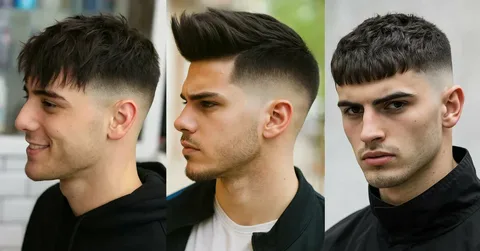
French Crop: Removing Bulk With a Structured Result

The French crop suits thick hair because it solves two problems at once. The short length throughout reduces the overall volume that makes dense hair feel unmanageable. The blunt fringe then gives the cut a defined front edge, so the short result looks deliberately styled rather than simply cropped.
The fringe holds its horizontal position through its own weight, which means density works in the cut’s favour here. The sides stay short and clean to balance the fringe and stop bulk building at the temples, where thick hair expands most visibly. A small amount of matte product through the top after washing sharpens the texture. Nothing heavier is needed, since the hair already supplies all the weight the style requires.
Messy Medium-Length Cut: Letting Natural Density Breathe
A messy medium-length cut lets thick hair show its volume and movement at a length where both are visible. Shorter cuts hide those qualities. The essential ingredient is light layering through the length, which removes weight and lets the hair move rather than sit as one mass.
Thick hair at this length has one predictable failure mode. It widens at the sides and narrows at the top, producing a triangular outline that no styling fixes. The cure is at the chair: ask for weight removed from the mid-lengths at the sides, above the ears, while the outline stays intact. Drying habits matter almost as much. Dense hair takes a long time to dry, and rubbing it with a towel to speed that up creates frizz and clumping. Squeeze the water out, then let it finish in the air. Wash frequency should follow the hair rather than routine, and dermatologists advise shampooing based on how oily the scalp actually gets, as set out in their guidance on healthy hair. Sea salt spray or a light texture cream on towel-dried hair before air drying keeps the sections separated as they dry.
Classic Taper Cut: The Reliable Foundation for Any Thick Hair Style
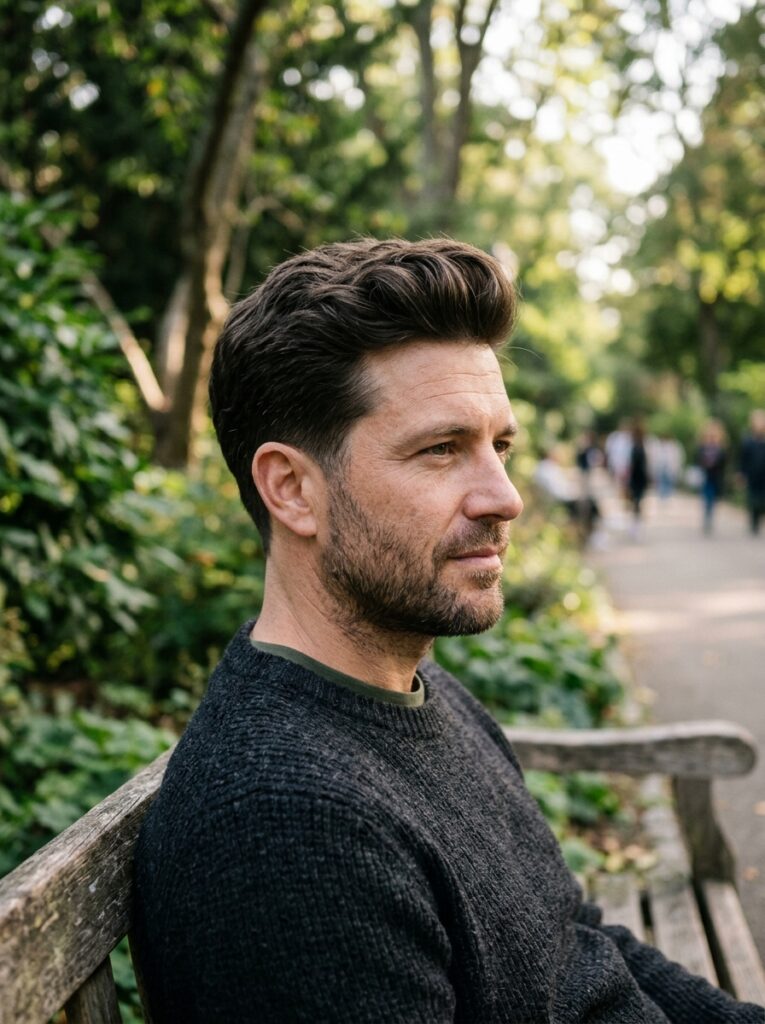
A classic taper gives the clean, graduated perimeter that most thick hair styles need. It creates a smooth transition from the longer top down to the natural hairline at the neckline and sideburns. Without it, thick hair develops a squared-off, undefined edge that looks cut rather than shaped.
Thick hair tapers particularly cleanly, because the density makes the graduation read smoothly rather than patchily. The taper improves every style on this list when combined with it. It is the single most useful addition to any thick hair appointment. Requesting a clean taper every visit, whatever style is being maintained, keeps the cut looking barbered between appointments instead of merely shorter.
Short Back and Sides: Volume Management Through Architectural Reduction
Short back and sides works by cutting volume exactly where thick hair builds most. That is around the temples and across the back of the head. The top keeps enough length to show character while the reduced sides keep the silhouette proportional to the face.
Two areas deserve naming at the barber. The first is the temple corner, where dense hair pushes outward and widens the whole head; asking for that corner to be rounded off rather than left square makes an immediate difference. The second is the occipital bone at the back, where thick hair forms a shelf that sticks out under a cap or a collar. A taper through that curve removes it. Guard length is worth agreeing too, since a number two or three keeps the sides genuinely short without exposing scalp. Expect to return every three to four weeks, because dense regrowth becomes visible sooner than it does on finer hair. The reward is flexibility. The top can be finished with natural texture, a side part, or a brush-back, and the proportions stay balanced whichever you choose.
Undercut with Volume: Letting the Top Do Everything
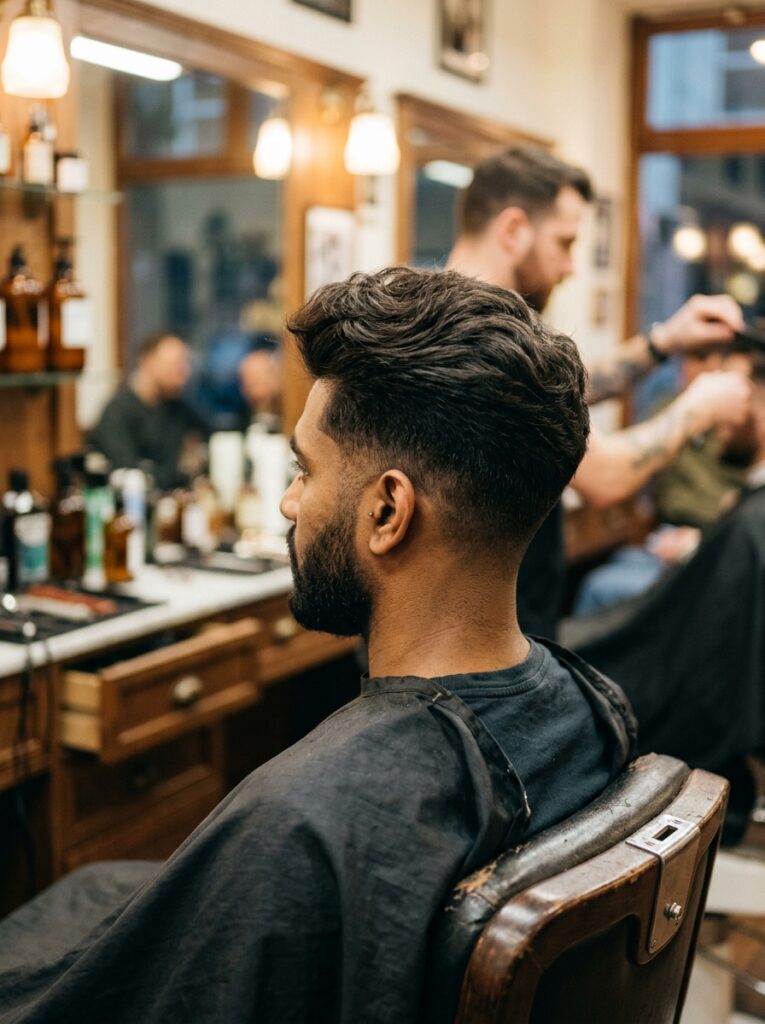
The undercut removes the sides entirely through a close-cut or shaved section. That creates an immediate contrast with the longer top. On thick hair the contrast is stronger than on any other type, because the density above has real visual weight instead of the flat layer fine hair produces in the same position.
The top can be worn several ways from the same base. Slicked back for formal occasions. Swept forward and textured for a casual modern finish. Pushed up into a quiff or pompadour for maximum impact. That range, combined with thick hair’s natural hold, gives several genuine daily outcomes from one appointment. It is the thick hair choice for men who want flexibility without daily compromise.
Thick Hair Ivy League: Structure Without Excessive Length
The Ivy League sits at the length where thick hair creates structure without becoming bulk. It is longer than a crew cut and shorter than a full side part. The top has enough length for a clean directional finish while the shorter sides keep the volume contained.
Getting the proportions right takes one specific request. Ask for about two inches at the front graduating shorter toward the crown, with internal weight removed through the top. Skipping that weight removal is why some thick Ivy Leagues sit as a dome rather than lying in a clean comb line. Thick hair then holds the direction better than any other type, since each strand’s weight resists the loosening that pulls lighter hair out of place. A pea of light-hold cream in the morning is enough, and the hair’s own weight carries it through the day with no afternoon adjustment. The cut also grows out evenly for four to six weeks. That combination of low effort and consistent result is why it endures among the classic men’s haircuts.
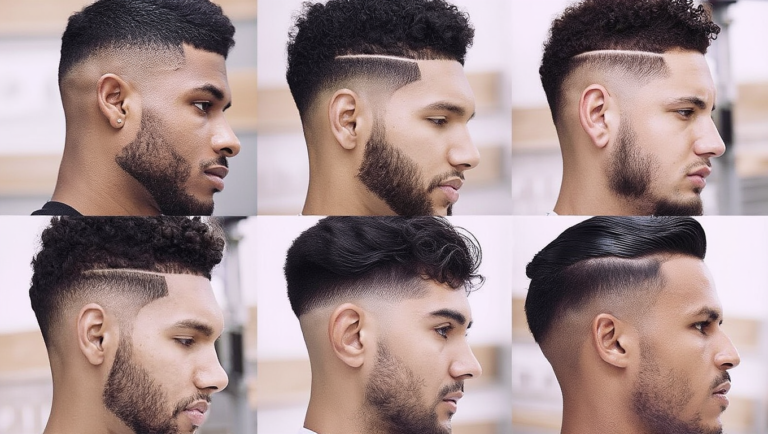
Low Fade with Texture: Modern Definition Through Controlled Reduction
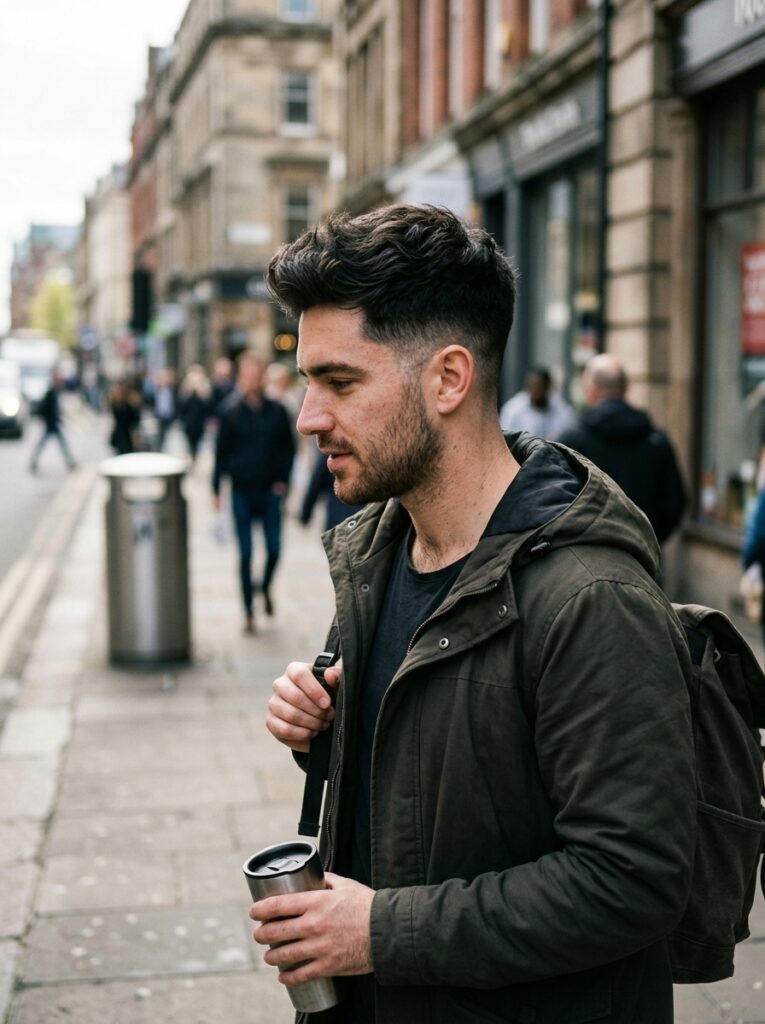
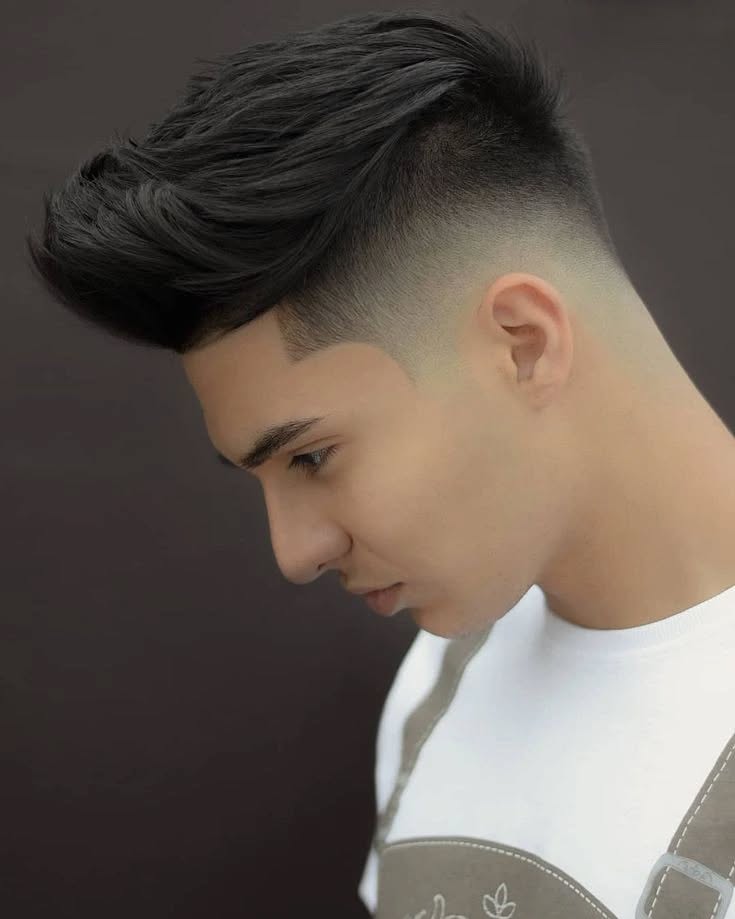
The low fade with texture is the combination that best delivers a contemporary barbershop finish on thick hair. The fade creates a smooth reduction at the sides and removes bulk at ear level while density stays higher up. The texture on top shows the hair’s character rather than suppressing it.
It works because each half solves a different thing. The fade handles the excess volume at the sides and temples. The texture preserves what makes thick hair worth having in the first place. Matte clay applied with the fingers to damp hair, then left to set as the hair dries, serves this style best. Heavier products flatten dense hair into a slicked surface and lose the texture the cut created.
Wavy Brush-Up: When Thickness and Wave Pattern Work Together
The wavy brush-up is for men whose thick hair also carries a natural wave. That pairing produces one of the most impressive results in men’s hairstyling when the cut supports it. The wave supplies texture and movement. The thickness supplies volume and hold. Brushing upward and back from the sides uses both at once.
Tool choice matters more here than product does. A vent brush or a wide paddle lifts and directs without stretching the wave flat, while a fine round brush pulls the bend out and leaves the hair looking merely swept. Dry to about eighty percent and stop, because taking dense wavy hair to bone dry with heat is what introduces frizz; dermatologists list high heat and rough brushing among the habits that damage hair most. Avoid straightening creams and heavy pomades for the same reason. A medium-hold mousse or wave cream on damp hair before drying amplifies what is already there. Humidity is the daily variable to plan around, since a wave that behaves in dry air expands in damp weather, and a slightly shorter cut keeps it under control. Further options for this texture are covered in this guide to haircuts that work with wavy hair.
Modern Caesar Cut: Clean Control on Thick Dense Hair

The modern Caesar is a cleaner reading of the classic forward-fringe shape. It directly addresses what happens when dense hair is cut uniformly short, which is that it sits heavy and flat. The modern version texturises through the top so the hair separates, and softens the fringe into something more graduated than the original’s rigid horizontal line.
The result looks current rather than vintage. It reads as deliberate rather than default. The texturising built into the cut does the weight removal that the original version leaves product to handle afterward. The short clean sides balance the fringe from below and stop the dense top dominating the proportions of the face.
Medium-Length Flow: Thick Hair at Its Most Expressive and Natural
Medium-length flow shows everything thick hair can do. The weight, the movement, the surface texture and the way it holds light all become visible. Shorter cuts prevent those qualities from appearing. Longer ones eventually dilute them under sheer weight.
Getting there requires a plan rather than simply not booking appointments. The hard stage arrives around the two-to-three month mark, when the sides flare outward above the ears while the top is still catching up. The fix is a trim of the sides only, with weight removed and the length left alone; most men give up at exactly this point instead. Expect roughly six months from a short cut to a genuine flow, since hair grows about half an inch a month. Light layering through the length is essential once you arrive, because without it thick hair hangs as a single heavy curtain with volume but no movement. Dense hair also needs more conditioner than most men use, particularly through the mid-lengths. A leave-in and a light cream on damp hair before air drying preserves the movement. The full grow-out timeline is covered in this guide to medium-length hairstyles for men.
Shaggy Layers Cut: Deliberate Texture Through Strategic Weight Removal

The shaggy layers cut gives thick hair a relaxed, multi-directional texture. It suggests hair with strong natural character that was cut to express it rather than contain it. Layers run at varied lengths through the top and sides, removing weight at specific points to create the organised disorder that defines a proper shag.
The line between a shag that looks intentional and one that looks overgrown is entirely in the cut. The barber builds the texture rather than leaving it to happen by accident. On thick hair the approach produces an unusually natural result, since the density gives every layer enough weight to sit independently instead of collapsing into the sections beside it. Sea salt spray or a light texture cream is the only product needed between visits.
Why Thick Hair Needs a Different Approach at the Barber
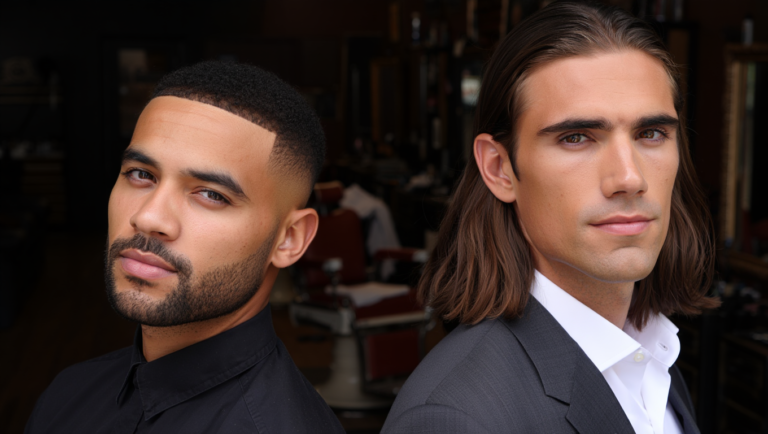
The most useful practical step is making sure the barber treats density as a technical variable. Standard lengths applied uniformly do not produce standard results here. Thick hair at a given short length looks different from fine hair at the same length, because it carries more volume, more surface area and more collective weight that changes how the whole mass sits.
Specific language gets specific results. Asking for texturising or point cutting on top tells the barber to remove internal weight rather than length. Asking for a taper instead of a straight cut at the neckline produces the graduated finish density needs. Naming a fade height, rather than saying short on the sides, gives the barber the information to balance the volume above.
One more habit is worth adopting. Bring a reference photo of the result on someone with similarly thick hair, not on a model with fine hair. The same cut behaves differently on the two, and a matched reference removes most of the guesswork before any scissors come out.