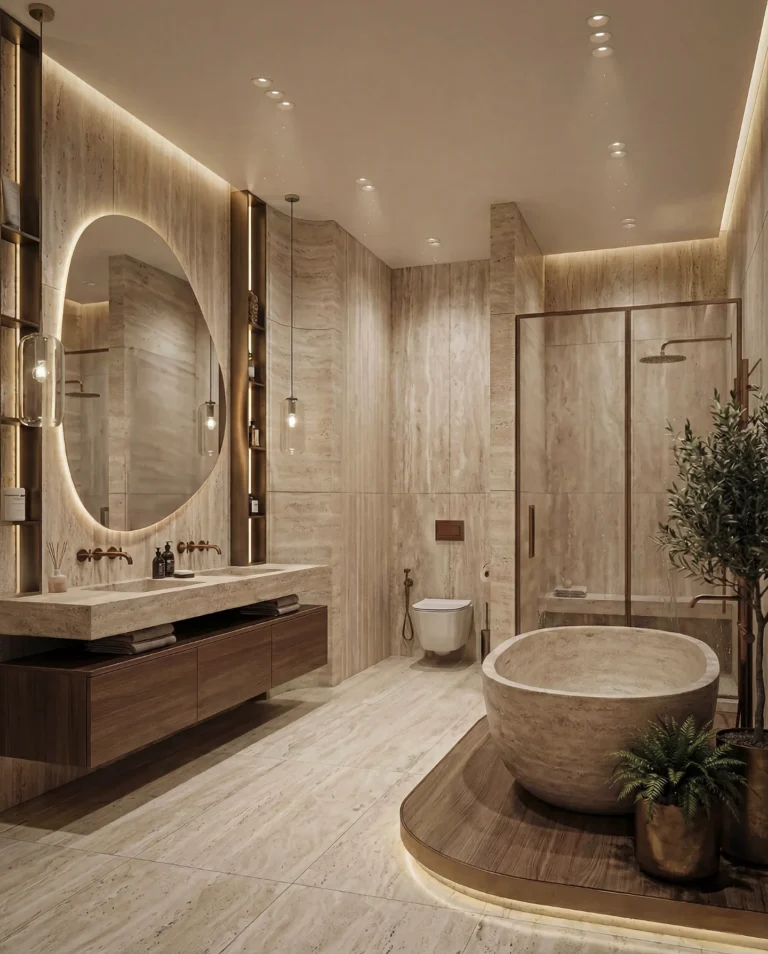

Lighting Decor Ideas That Change the Look of Your Home

People repaint, reupholster and rearrange, then wonder why the room still feels wrong. It is almost always the lighting.
Two things fix most of it, and neither is a product. One is understanding the three layers. The other is knowing what the numbers on a bulb box mean. Both come first here, because every idea below depends on them.
The Three Layers Every Room Needs
When a room feels flat despite having enough light, the cause is nearly always the same: all the light is one kind.
Ambient is the general illumination. Ceiling fixtures, recessed downlights, cove lighting.
Task is focused and brighter, for cooking, reading or grooming. Table lamps, under-cabinet strips, floor lamps.
Accent highlights an object or a feature. Sconces beside artwork, strips behind shelving, candlelight.
Adding one task lamp and one accent element to an ambient-only room produces an immediate, visible improvement. That single principle is worth more than any product on this page.
The Numbers on the Box
Most bad lighting is bought rather than installed badly. Two numbers explain it.
Kelvin is the colour. “Warm white” and “cool white” are marketing words; Kelvin is the actual measure, and it is printed on every box.
2700K is warm and slightly yellow, and it is what most living rooms and bedrooms want. 3000K is a touch crisper and suits kitchens and bathrooms. 4000K is neutral white, useful for a workshop, a garage or a home office. 5000K and above reads blue-white and belongs in retail and hospitals, which is exactly why a room lit at 5000K feels clinical no matter what furniture is in it.
Lumens are the brightness. Watts measure power consumed, not light produced, and with LED the two have come apart completely. A bulb sold as a 60-watt equivalent produces roughly 800 lumens. Buy by lumens and ignore the wattage.
One more rule: keep the Kelvin consistent within a room. Mixing 2700K and 4000K bulbs in the same space is the most common reason lighting looks wrong for no identifiable reason.
Fit a Dimmer Before Buying Anything
A dimmer is the highest-return lighting purchase available and almost nobody starts there.
It turns one fixture into a daytime light and an evening light. The same room works for cooking at seven and for sitting at ten, with no second fitting and no rewiring beyond the switch.
Check the bulb is dimmable before fitting one. Non-dimmable LEDs on a dimmer circuit flicker and buzz, and it is the single most common complaint after an otherwise sound lighting upgrade.
Pendant Lights in the Living Room
Replacing a flush ceiling fitting with a pendant is the most immediately transformative living room change available. It draws the eye upward, which makes the room read taller.
The shade decides the mood. Glass diffuses softly and suits contemporary rooms. Metal casts directional light for industrial spaces. Rattan filters it through the weave for warmth.
For the same money, a pendant usually changes a room more than a piece of furniture does.
A Floor Lamp in a Dark Corner

Dark corners make a room feel smaller and unbalanced. Filling one with warm light is the simplest fix in this guide.
An arc lamp throws light outward across the room. A tripod adds a sculptural quality. A mid-century column adds warmth and character.
It also needs no installation, which matters if you rent. Other approaches to the same problem are in our guide to empty corner decor ideas.
Under-Cabinet Lighting in the Kitchen
Overhead kitchen lights sit directly above the person working, which means they cast that person’s shadow onto the worktop. Under-cabinet lighting solves it by lighting from a lower angle.
LED strips are the standard choice: slim, efficient, and even along the full run.
In the evening with the overheads dimmed, under-cabinet light alone makes a kitchen feel like a room rather than a workspace.
Vanity Lighting in the Bathroom

The same shadow problem as the kitchen, applied to a face. An overhead bathroom light casts shadows straight down into the eye sockets and under the chin.
Vertical lights on both sides of the mirror fix it completely, which is the arrangement photographers and makeup artists use for exactly this reason. LED backlighting behind the mirror achieves a softer version.
3000K is the right temperature here. Warmer flatters but distorts colour; cooler is accurate but unflattering. Mirror choices are covered in our guide to mirror decor ideas.
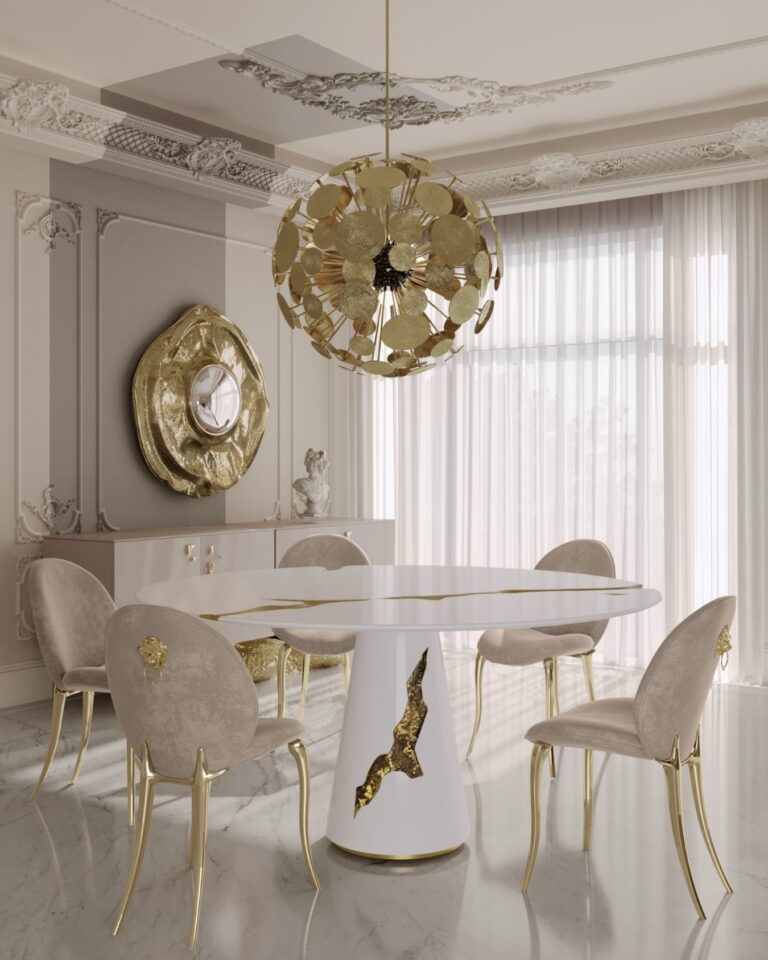
A Chandelier Over the Dining Table
The most effective single upgrade a dining room can have, because it defines the space around one point.
Height is the detail people get wrong: 75 to 90 centimetres above the table surface. Higher and it stops creating the enclosed feeling; lower and people cannot see across the table.
Crystal suits formal rooms, industrial metal suits open-plan spaces, rattan suits transitional ones. A chandelier also contributes in daylight with the light off, which few fixtures do.
Wall Sconces

Warm focused light that uses no floor or surface space. Beside a bed they replace table lamps entirely and free the whole bedside surface.
Flanking a mirror or artwork they create symmetry that makes the wall read as designed. Mount them around 150 to 160 centimetres from the floor.
They also work in hallways where a floor lamp would obstruct movement, and the fixture itself contributes during the day with the light off.
LED Strips in a Ceiling Cove
The source is hidden inside the recess, so what you see is a perimeter glow rather than a fitting. That is the whole effect.
Smart strips let the same room shift from bright white in the morning to warm amber in the evening on one tap, which is the clearest practical use of colour-changing lighting.
It does need a cove to sit in, which usually means a tray or false ceiling. What that costs in room height is covered in our guide to ceiling design ideas.
Recessed Downlights
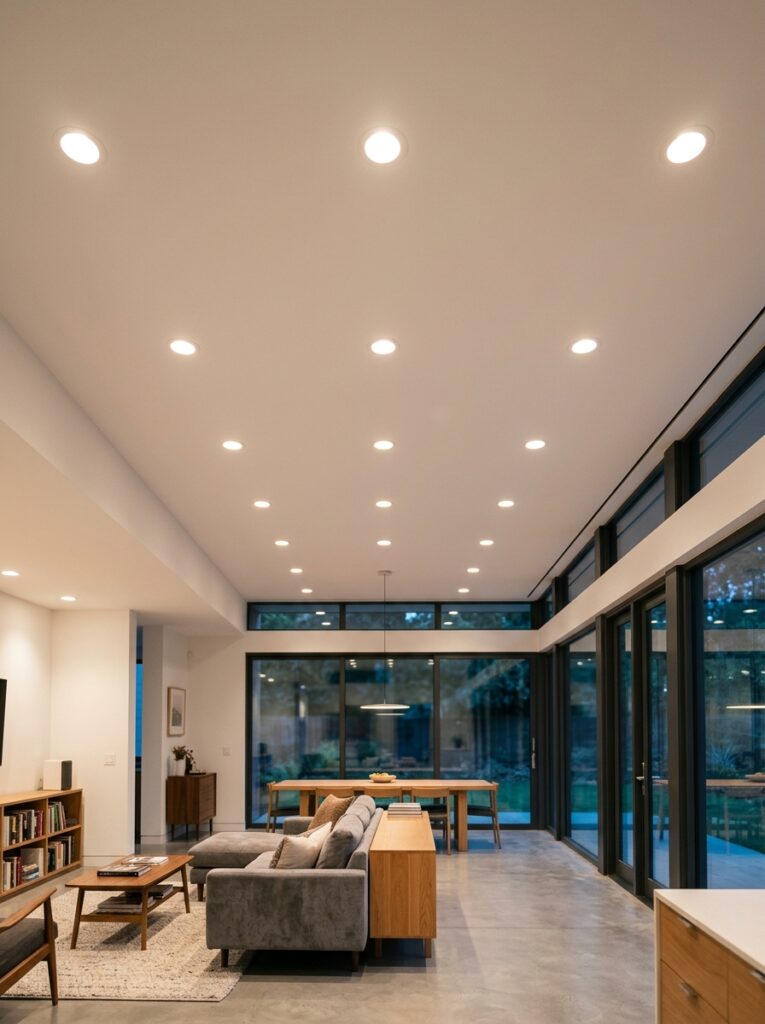
The right choice when the ceiling needs to stay visually clear. Nothing hangs down, and the light distributes evenly.
They suit kitchens, bathrooms and home offices, and open-plan spaces where a pendant would interrupt the ceiling line.
Downlights alone are the classic ambient-only mistake. On a dimmer, with a lamp and an accent added, they become one layer of three rather than the whole scheme.
A Bedside Lamp

A small decision with a disproportionate effect, because it puts light at human height instead of above it.
Ceramic bases add handmade character. Slim metal reads contemporary. Wood and stone add organic warmth. Two matching lamps give the room symmetry a single one cannot.
Go to 2700K here, and lower if the bulb allows.
Why Bedroom Light Colour Actually Matters
Warm light in a bedroom is usually presented as an aesthetic preference. It is not only that.
According to the Sleep Foundation, dim yellow and orange light has little impact on circadian rhythm and is a good choice at night, and exposure to it may support melatonin production compared with cooler colours. Bright, cool-coloured light does the opposite and makes it harder for the body to settle toward sleep.
So a 5000K bulb in a bedroom is not only unflattering. It is working against the room’s actual purpose.
That is also the strongest argument for dimmers in bedrooms and for string lights over an overhead fitting in the evening.
Fairy String Lights
The cheapest meaningful bedroom upgrade available. Draped behind a headboard they backlight the bed area; run along a wall or window they add dimension to a flat surface.
Warm white or soft gold only. Cool white string lights in a bedroom defeat the point entirely.
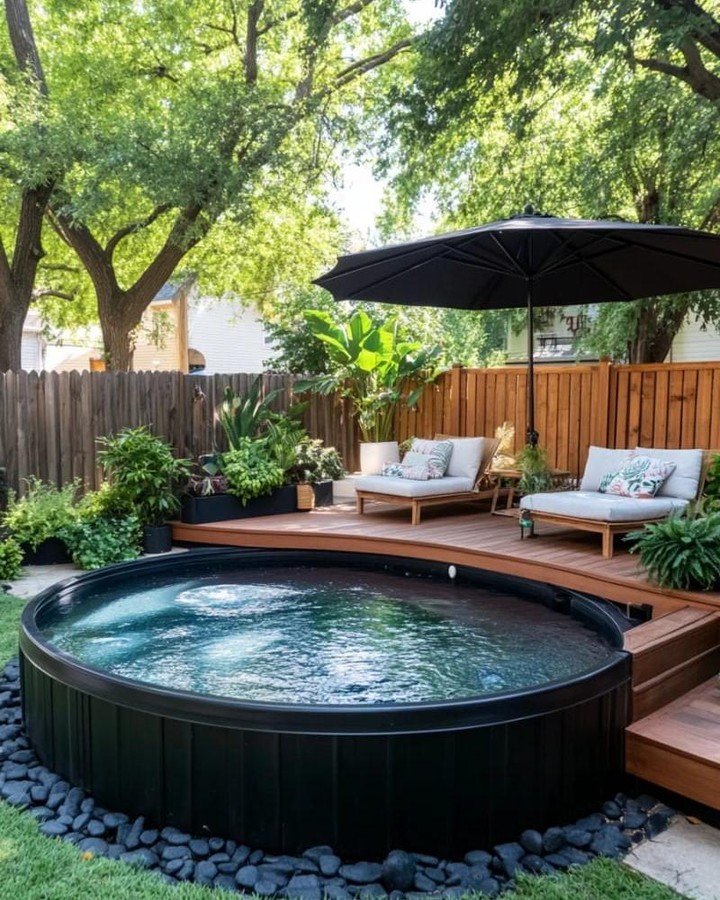
Outdoor String Lights
Without light, an outdoor space stops existing after sunset. With it, a patio becomes one of the most used rooms in the house for half the year.
Warm white globe lights hung overhead create the canopy effect. Solar versions remove the cable problem entirely in gardens away from a power point.
Use outdoor-rated fittings and an RCD-protected socket. It is the highest-return outdoor purchase there is.
Staircase Lighting

One of the few upgrades that improves safety and appearance at the same time, on a part of the house that is genuinely hazardous in the dark.
Evenly spaced wall lights at step level create a rhythm that reads architectural. LED lights built into the tread give a more minimal result.
Whichever you choose, aim the light at the treads rather than into the eyes of someone coming down.
A Reading Lamp
A dedicated lamp does something ambient light cannot: it defines a corner as a place with a purpose.
An adjustable arm lamp directs light precisely. A floor lamp beside an armchair does the same with more presence. Position it behind and to the side of the shoulder so the page is lit and the light is not in your eyes.
Warm tones reduce eye strain over a long session, so 2700K again.
Candle Lanterns and Neon Signs

Both are accent lighting, and both do something no ceiling fitting can.
Candlelight moves, and that flicker is calming in a way steady electric light is not. Glass lanterns diffuse it; perforated metal casts pattern across walls. Never leave one burning unattended, and keep them clear of curtains.
A neon sign works as graphic object by day and ambient glow by night. Warm white and soft gold read elegant; the phrase should mean something to the household rather than being chosen off a trend list.
If You Only Do Three Things
Fit a dimmer on the main light in the room you use most in the evening.
Replace every bulb in that room with 2700K, so the temperature is consistent.
Add one lamp at human height. That is task or accent light added to an ambient-only room, and it is the change people notice without being able to say what altered. Lower-cost approaches across the house are in our guide to budget friendly home decor.