Outdoor Jacuzzi Ideas: Design Your Perfect Backyard Relaxation Space
Outdoor Jacuzzi Ideas: Why the Setting Matters as Much as the Jacuzzi Itself
A jacuzzi either becomes one of the most used features of a home or sits idle for years. One factor decides which. It is whether the space around it makes using it feel appealing.
A jacuzzi on a bare concrete pad, overlooked by neighbours, gets used a handful of times. The same unit set into a considered outdoor space gets used through every season. Lighting, privacy and comfort do that work, not the jacuzzi itself.
The fifteen ideas below cover every approach. They run from fully integrated deck builds to low-cost changes that transform a standard backyard setup. Each one addresses the practical side as well as the atmosphere.
Deck-Integrated Jacuzzi: Built In, Not Placed
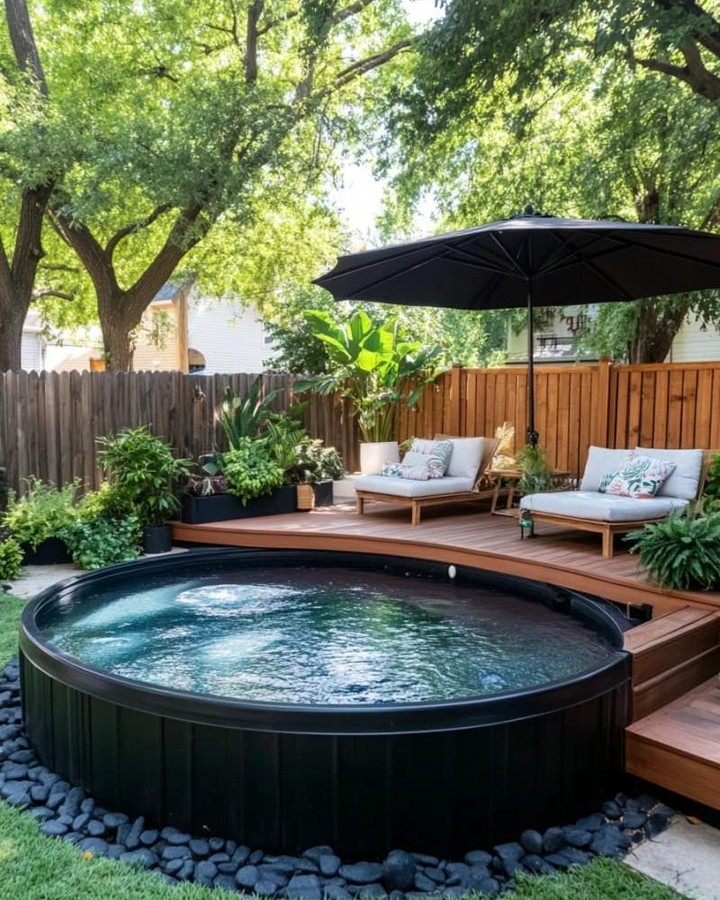
A deck-integrated jacuzzi sits flush within the decking rather than on top of it. The unit becomes part of the structure instead of an object placed on it. That single change is what gives the result an architectural quality.
The practical gains matter as much as the look. The step down into the water is lower and more controlled, so entry and exit get easier. The surrounding deck also gives you somewhere to put towels and drinks without buying furniture.
Warm-toned hardwood decking suits most shell colours. Composite costs more upfront but needs far less maintenance. Leave an access panel in the decking on the equipment side, since a fully boxed-in unit turns a routine pump repair into a demolition job.
Pergola-Covered Outdoor Jacuzzi: Shelter Without Enclosure
A pergola extends the usable season without closing the space in. It gives shade in summer, shelter from light rain, and an overhead boundary. The area starts to read as an outdoor room rather than a feature dropped in the garden.
Climbing plants trained up the posts add texture and seasonal change over a few growing years. String lights woven through the beams handle the evenings. Outdoor curtains on the sides give privacy when drawn and disappear when not.
Height is the detail people get wrong. Set the beams too low and steam collects underneath. Around 2.4 metres of clearance keeps the airflow right while still feeling sheltered.
Garden-Surrounded Jacuzzi Spa: Privacy and Nature Together
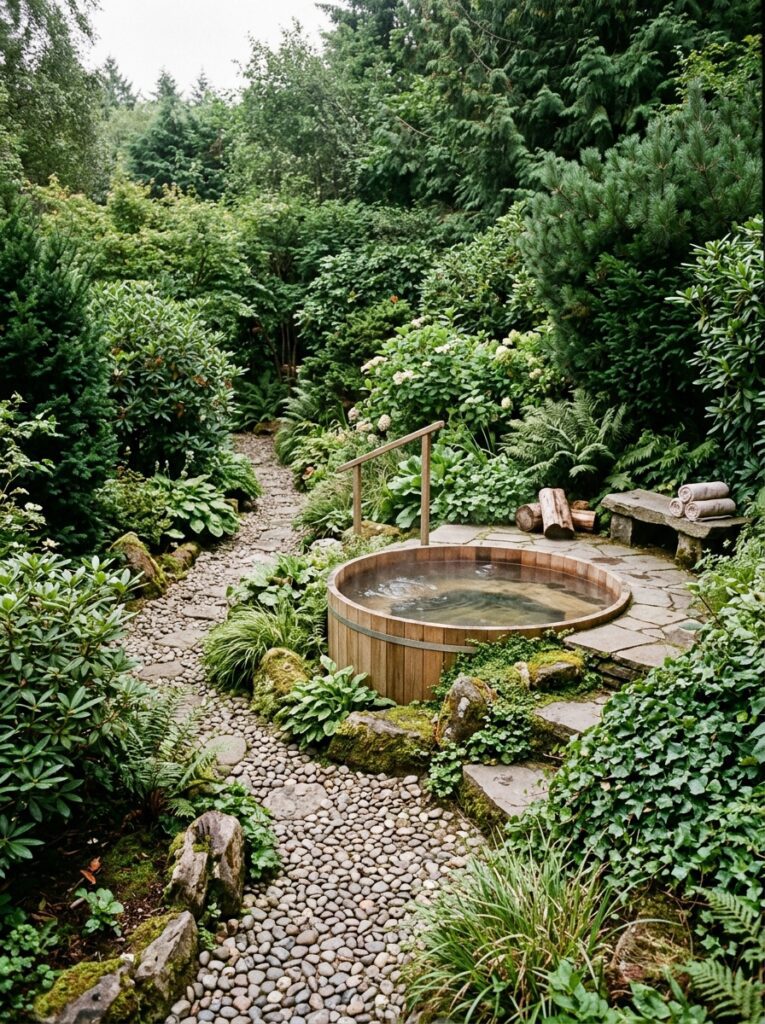
Placing a jacuzzi inside a planting scheme feels different from placing it on hardscape. The plants screen it without a fence. Their softness offsets the engineered look of the shell and cabinet.
Use dense evergreens on the most overlooked sides for year-round cover. Flowering shrubs and perennials suit the sheltered sides, where seasonal colour is the point. Pebble paths and a few specimen plants help the unit feel embedded rather than parked.
Keep leaf-shedding trees well back. Anything that drops constantly will end up in the filter, and you will be cleaning it more than using it.
Rooftop Jacuzzi Setup: The Urban Luxury Solution
A rooftop jacuzzi turns unused flat roof into a private retreat. It offers elevation and views that no ground-level garden can match. In city homes with no garden at all, the roof is often the only outdoor option.
The technical demands are serious and must be settled before purchase. A structural engineer needs to confirm the roof can carry the filled weight, which is several times the empty weight. Safety railings meeting local building regulations are required on every exposed edge.
Wind exposure is higher at roof level than most people expect. Glass panels or wind screens protect users while keeping the view that justified the whole project. Done properly, it is one of the strongest outdoor investments an urban property can make.
Sunken Outdoor Jacuzzi: Modern Aesthetics Through Flush Installation
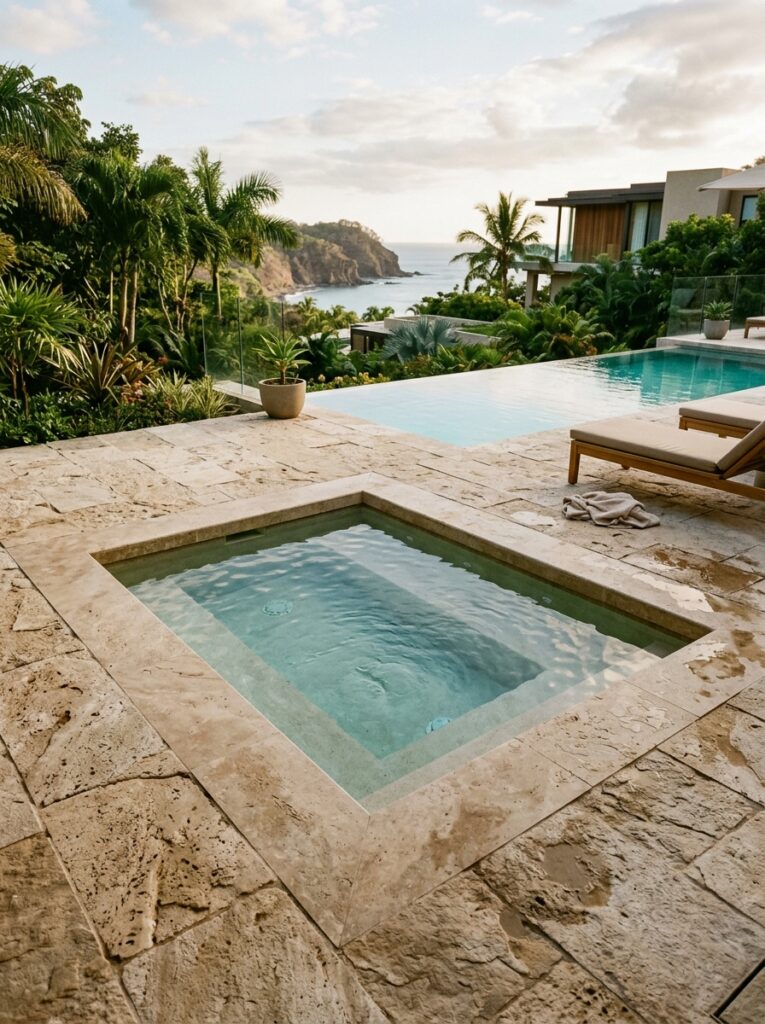
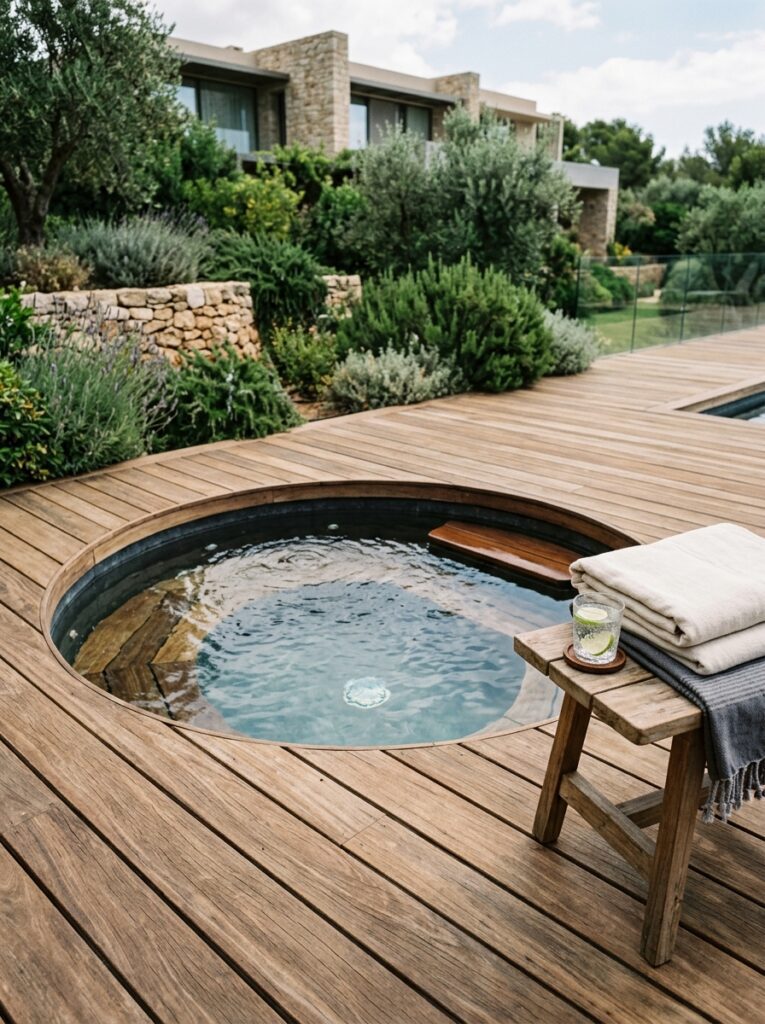
A sunken jacuzzi sits below the surrounding surface rather than above it. The shell disappears into the landscape. The stone, concrete or timber runs uninterrupted to the water’s edge, which gives the cleanest result available.
There are practical wins too. The step down is smaller, and there are no cabinet panels to keep looking presentable. What you see is water and one continuous surface.
The cost sits in the groundworks. Excavation, drainage and a service pit for the equipment all add up. This makes most sense during a new build or a full garden renovation, when the ground is open anyway.
Wood-Clad Jacuzzi Design: Natural Material That Ages Beautifully
Cladding the cabinet panels in real timber changes the whole character of a standard unit. The manufactured shell look gives way to natural warmth. Cedar, teak and treated hardwood all handle outdoor exposure well.
The material suits garden settings, timber decks and any scheme built on natural surfaces. Farmhouse, Scandinavian and contemporary rustic all take it comfortably. The cladding also adds a layer of insulation, which cuts heat loss in cold weather.
Wood-clad units age well rather than looking tired. Cedar silvers over a few seasons if left untreated. Oil it annually instead, and it keeps the warmer original tone.
Privacy Screen Jacuzzi Area: Seclusion Without Full Enclosure
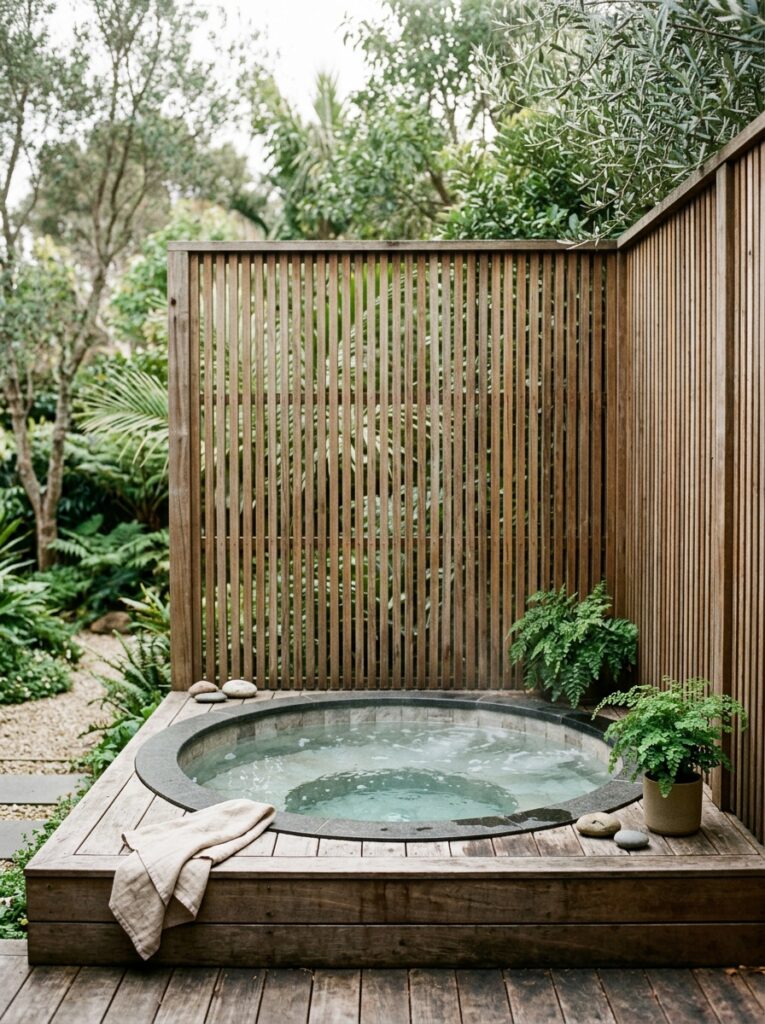
A screen gives you privacy on the sides that need it and leaves the rest open. It costs far less than fencing a whole area. It also avoids the closed-in feeling a full enclosure creates.
Hardwood slatted screens with small gaps let air and light through while blocking sightlines. Bamboo panels cost less and suit relaxed garden schemes. Tensioned wire with climbing plants makes a living screen that improves each year.
Check the sightlines before you build. Stand where the water will be and look up. Upper-floor windows are the ones most people forget, and they are the reason a waist-high screen often fails.
Stone Patio Jacuzzi: Timeless Durability With Natural Elegance
Stone works with traditional and contemporary exteriors equally. Its timeless quality connects to either direction without effort. The surface is durable, grippy underfoot and visually richer than manufactured alternatives at similar cost.
Sandstone, limestone and slate all suit jacuzzi areas. Their surface texture gives grip when wet. Their tonal variation adds depth that uniform paving cannot match.
Large-format tiles cut the number of grout joints, which reads cleaner across the area. Specify a textured or riven finish rather than a polished one, since polished stone turns dangerous the moment it gets wet. The same material logic applies across the whole exterior, and it is covered further in this guide to modern home entrance design.
Minimalist Outdoor Jacuzzi: The Approach That Lets the Jacuzzi Lead
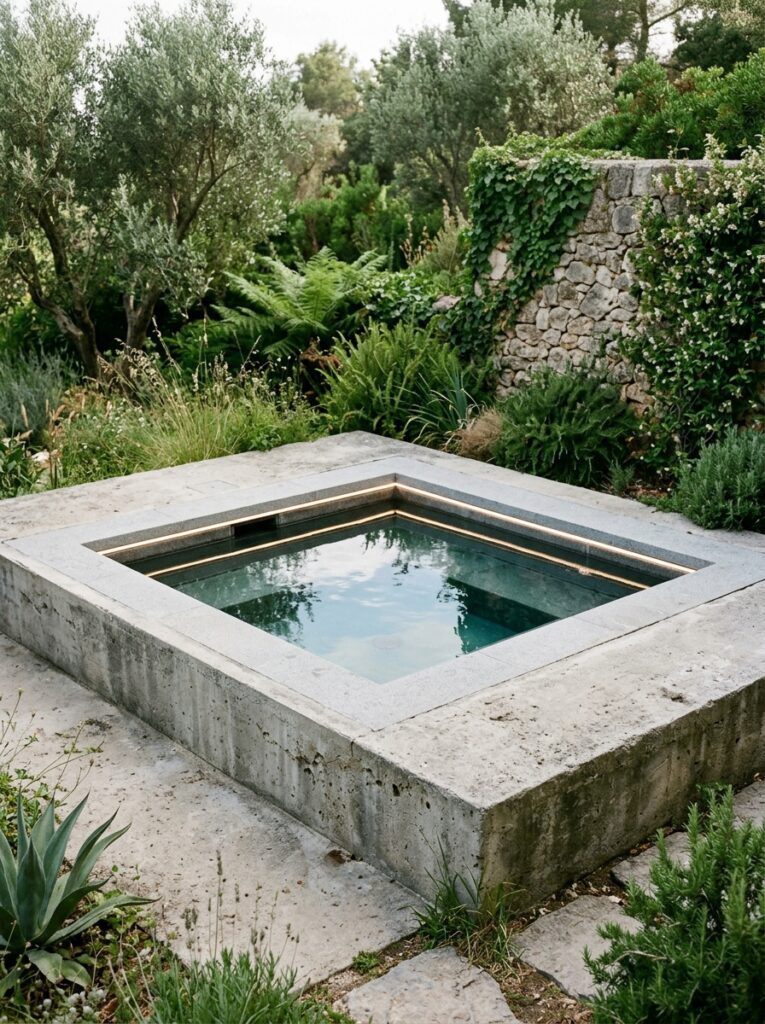
A minimalist installation strips out everything that does not serve the experience. No decorative planting, no peripheral furniture, no accessories. The jacuzzi becomes the unambiguous focal point.
Use one material for the surround in a single tone and finish. Concrete, stone or composite all work, provided you do not mix them. Recessed lighting in the surface handles the evenings without visible fixtures breaking the line.
This approach earns its place in small spaces. A larger garden absorbs extra planting and furniture. A compact one turns cluttered fast, and restraint is the only thing that keeps it feeling calm.
Backyard Jacuzzi With Fire Pit: Two Sources of Warmth Better Than One
Pairing a jacuzzi with a fire pit gives two complementary kinds of warmth in one area. The fire pit becomes the gathering point for anyone not in the water. It also covers the cold moment between getting out and drying off.
The visual contrast helps as much as the heat. Still water beside moving flame gives the space a character neither element has alone. Real firelight also does something no electric substitute quite manages.
Placement is the planning decision that matters. Keep the fire visible from inside the water but well clear of the shell, the cover and the equipment housing. This is also the combination that most reliably pushes the season into the colder months.
Corner Yard Jacuzzi Layout: Maximising Space Through Smart Placement
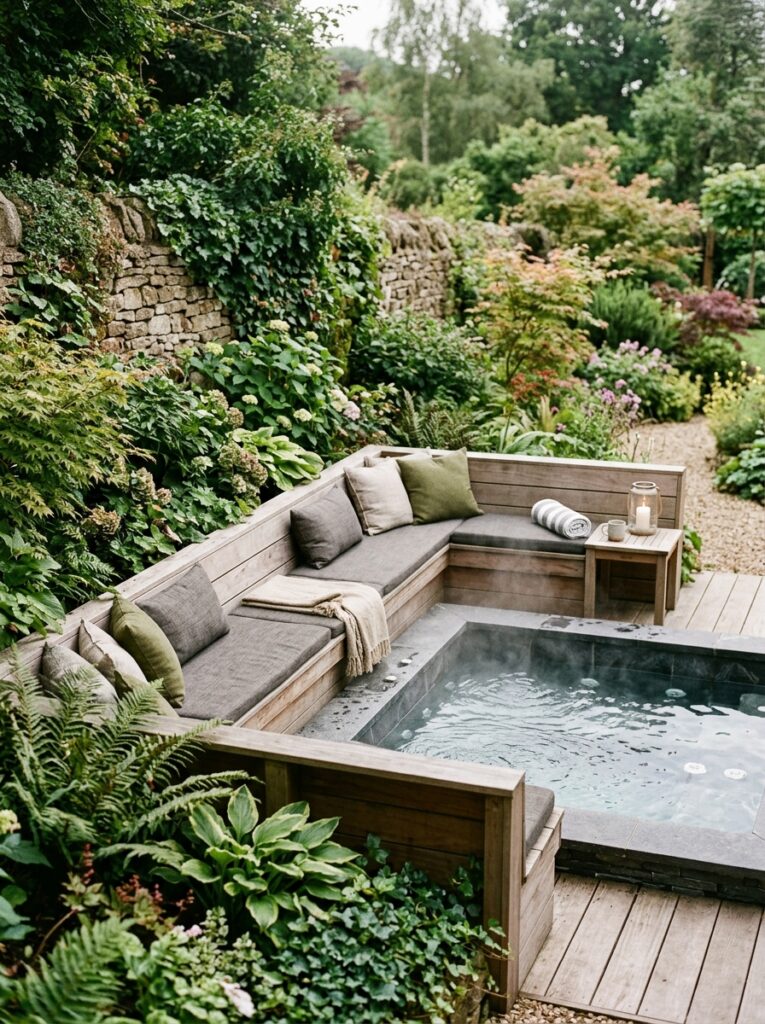
Garden corners are usually the least used space you own. Standard furniture and planting never quite fit them. A square or rectangular jacuzzi does, which recovers that area without touching the main lawn.
Corner placement also halves the screening work. Two sides face into the garden already, so only the two outer sides need cover. L-shaped built-in seating follows the same geometry and adds lounging space cheaply.
Leave at least 60 cm of clear access on the equipment side. Corners tempt people to push the unit tight against both fences, and that decision is regretted at the first service visit. The same corner-recovery thinking applies indoors too, as covered in these empty corner decor ideas.
Jacuzzi With Outdoor Shower: The Complete Outdoor Bathing Experience
An outdoor shower beside the jacuzzi improves both hygiene and experience. Rinsing before entry keeps body oils, lotion and sunscreen out of the water. That directly extends the time between water changes and chemical top-ups.
Rinsing afterwards removes chemical residue before you go back inside. In summer the shower also doubles as a cooling option on its own. That gives the area a second use through the warmest months.
A timber enclosure or a simple copper head against tiled stone both look like designed features rather than plumbing. Solar-heated supplies suit warm-season use without a permanent connection to the house system. Plan the drainage properly, since a shower with nowhere to run creates a permanent wet patch.
Poolside Jacuzzi Arrangement: The Resort Experience at Home
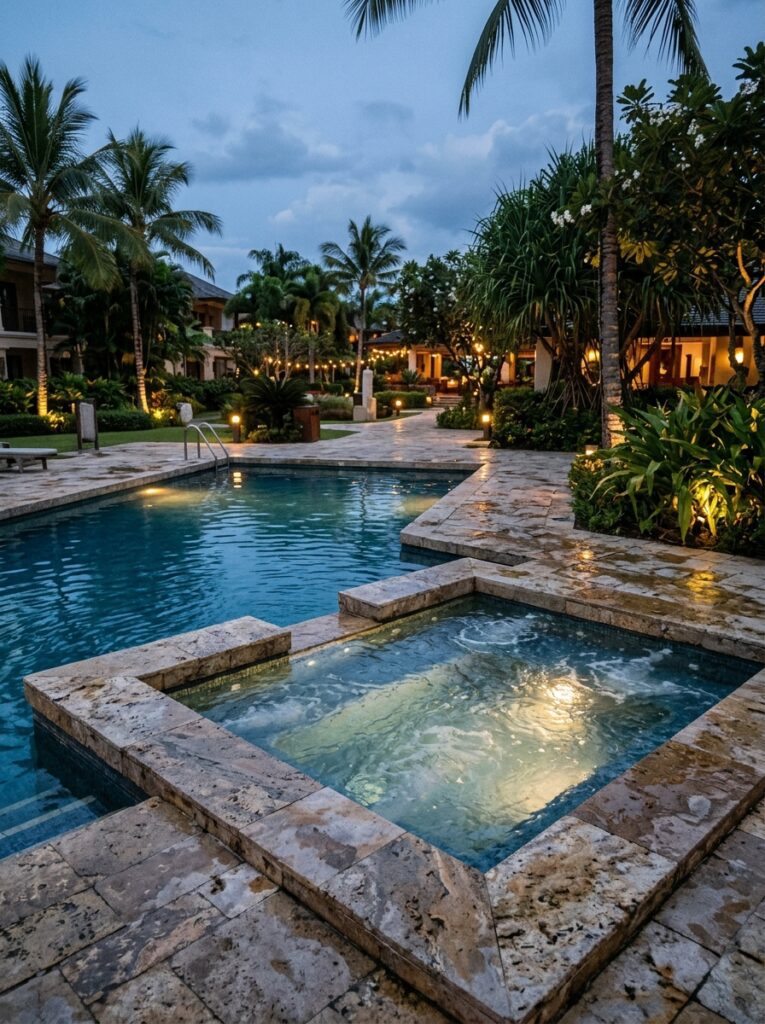
A jacuzzi next to a pool creates two contrasting water experiences in one space. Active swimming sits alongside passive soaking. Guests move between cool and warm the way spa facilities are designed around.
Coordinate the surround materials across both. Matching tile, stone or composite makes the pair read as one designed area rather than two separate purchases. Consistent lighting reinforces that connection after dark.
Keep the water chemistry separate in your head. Jacuzzi water is hotter and holds far fewer litres, so it needs testing and balancing much more often than the pool does.
Fence-Enclosed Jacuzzi Space: Complete Privacy as the Priority
A full enclosure puts privacy and security ahead of everything else. With cover on all sides, the jacuzzi is usable at any hour without a thought about who can see in. For some households that is the only arrangement that actually works.
Contemporary slatted timber panels suit most homes. Powder-coated metal suits harder modern architecture. Either way, plant along the inside of the fence line to soften the boundary.
Lighting at several heights stops the enclosure feeling like a box after dark. Add seating outside the water for warming up and cooling down. A lockable gate is worth specifying where children have access to the garden.
String-Light Jacuzzi Setup: Affordable Atmosphere That Changes Everything
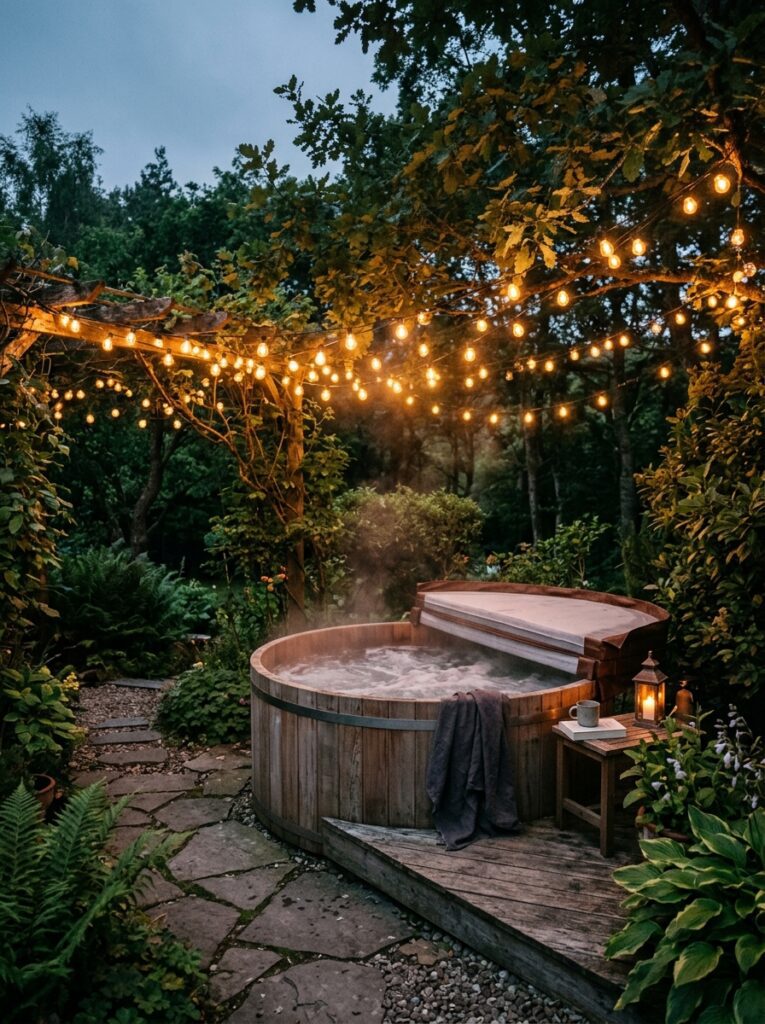
String lights are the cheapest meaningful upgrade available for any jacuzzi area. They fix the thing most setups lack, which is atmosphere after dark. A well-lit jacuzzi is usable; a jacuzzi under warm amber bulbs is somewhere you want to be.
Drape them from a pergola, between posts around the perimeter, or along the fence line. Warm white and soft amber flatter skin and water best. Cool white reads crisper and suits minimalist schemes.
Use outdoor-rated fittings and route the supply through an RCD-protected outdoor socket. A dimmer lets the level drop as the evening goes on. Lighting does more for a space than most people expect, and the principle is covered across the home in these lighting decor ideas.
Outdoor Jacuzzi Safety: The Rules Worth Knowing Before Anyone Gets In
Design decides whether a jacuzzi gets used. Safety decides whether that use stays enjoyable. A few published guidelines cover most of the risk.
Water temperature is the first one. The CDC’s guidance for pools and hot tubs says the water should never exceed 104°F, or 40°C. It also advises keeping children under five out of hot tubs entirely, fitting a lockable safety cover, and asking pregnant users to speak to a doctor first.
Alcohol is the second. The US Consumer Product Safety Commission has warned since 1979 that hot water plus alcohol raises the drowning risk sharply. Hot water alone causes drowsiness. Their guidance notes that soaking at 106°F can push body temperature toward heat stroke even in healthy adults.
Two more habits are worth building in. Avoid soaking alone, since most jacuzzi injuries are slips on exit. And fit a handrail wherever the step up or down is more than a comfortable stride.
Planning an Outdoor Jacuzzi: The Decisions Worth Making Before Installation
What you decide before installation shapes the result more than anything you add afterwards. Position sets the sun exposure through the day and the privacy the design has to solve. Foundation type sets the long-term stability.
Access to power and water sets the practical limits on placement. Most units need a dedicated protected circuit rather than an extension lead. Work that out with an electrician before you choose a spot, not after.
Then think about how the household will actually use it. Evening soakers need different lighting and screening from daytime users. Families with young children need different access and cover arrangements from a couple using it to unwind.
Get those choices right and the jacuzzi earns its place. Get them wrong and it becomes an expensive feature that never quite suited the way you live. Seasonal touches around it help too, and there are plenty of low-cost options in this guide to fall outdoor decor.
Outdoor Jacuzzi Ideas: Common Questions
What base does an outdoor jacuzzi need?
A level, load-bearing base is essential. A reinforced concrete pad is the usual answer. Decking works only if it was engineered for the filled weight, which is far higher than the empty weight.
Can a jacuzzi be used through winter?
Yes, and cold weather is when many owners use theirs most. A good insulated cover and a wind screen make the difference. Running costs rise in winter, so insulation quality matters more than heater size.
How much clearance is needed around the unit?
Leave at least 60 cm on the equipment side for servicing. Allow enough overhead room to lift the cover fully. Check the manufacturer’s figures, since they vary between models.
What is the cheapest way to improve an existing jacuzzi area?
Lighting first, then screening. Warm string lights cost very little and change the evening experience completely. A single privacy panel on the most overlooked side usually does the rest.