
Ceiling Design Ideas for Home: Modern Stylish Interior Looks
Designers call the ceiling the fifth wall, and it is the one surface most homes never touch. A considered ceiling changes a room in a way that rearranging furniture cannot.
Before any of the ideas below, though, there is one measurement that decides which of them are even available to you. Most ceiling guides skip it entirely, which is why so many people end up with a room that feels lower and heavier than it did before.
Measure Your Ceiling First
Most ceiling treatments cost you height. Some cost a lot. In a standard room that is the difference between elegant and oppressive.
A false or suspended ceiling typically drops the surface by 10 to 20 centimetres, sometimes more where ductwork is being concealed. Coffered ceilings lose similar depth at the beams. Exposed beams sit below the original line by definition. A tray ceiling is the exception in this group, because it raises the centre rather than lowering it, though the border section still steps down.
Now measure. Standard modern ceilings sit around 2.4 metres. At that height, anything that removes 15 centimetres will be felt rather than admired, particularly in a small room.
Under 2.4 metres: stay with treatments that add nothing. Paint, wallpaper, cove lighting built into the wall rather than dropped, skylights, gloss finishes. All of these change the ceiling without lowering it.
2.4 to 2.7 metres: a shallow tray, a light coffer grid or a slim false ceiling all work, provided the drop stays modest.
Over 2.7 metres: everything on this list is open to you, and the heavier treatments actually improve the room by making it feel more intimate.
Painted Ceilings

The cheapest change available and the most underused. It also costs zero height, which puts it first for anyone in a standard room.
Navy and forest green create an enveloping, cosy effect in bedrooms. Terracotta and muted ochre warm a room without darkening it much. A ceiling painted slightly lighter than the walls quietly lifts the room; painted darker, it lowers it, which is useful in a room with an awkwardly high ceiling.
Before committing to any structural work, paint the ceiling and live with it for a fortnight. It often turns out to be enough.
Ceiling Wallpaper
Another zero-height option, and more dramatic than most people expect. Peel-and-stick versions need no professional installation.
Floral patterns suit bedrooms, where the pattern sits mostly in peripheral vision and creates an immersive quality. Printed papers can mimic marble or wood convincingly at a fraction of the material cost.
Work with someone else. Wallpapering overhead alone is the kind of job that goes wrong in the last thirty seconds.
Tray Ceilings
A recessed central section sitting higher than the surrounding border. It is the one architectural treatment that can make a ceiling feel taller rather than shorter.
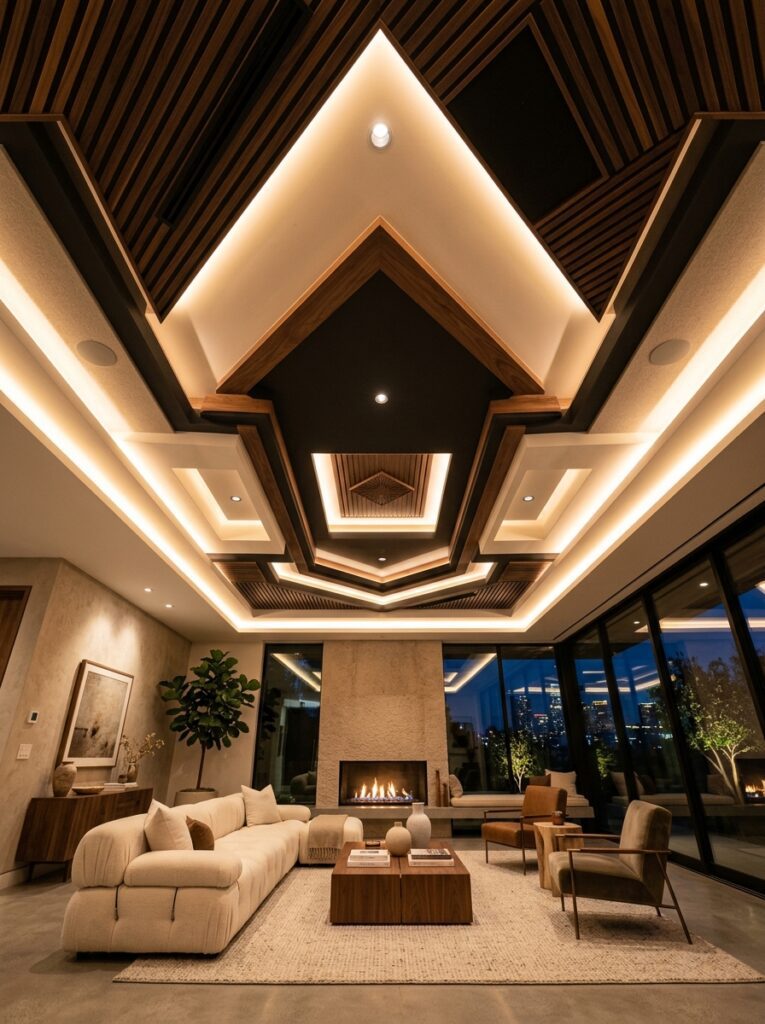
It suits living rooms, main bedrooms and dining spaces, creating a focal point directly above the part of the room that matters most. Colour inside the tray adds contrast; LED strip along the vertical face gives a perimeter glow after dark.
Circular and star-shaped trays are replacing the rectangular default in newer work.
Coffered Ceilings

A grid of recessed panels bordered by beams. It carries genuine architectural weight, which is why it reads as formal in dining rooms and entryways.
This one needs height. In a 2.4 metre room a coffer grid will close the space in. Above 2.7 metres it does the opposite and makes a cavernous room feel considered.
Paint inside each coffer makes it feel current rather than traditional. Recessed lights within each panel change the whole effect between day and evening.
False and Suspended Ceilings
The most practical option when there is something to hide. Wiring, pipework, ductwork or a genuinely bad original surface all disappear behind one.
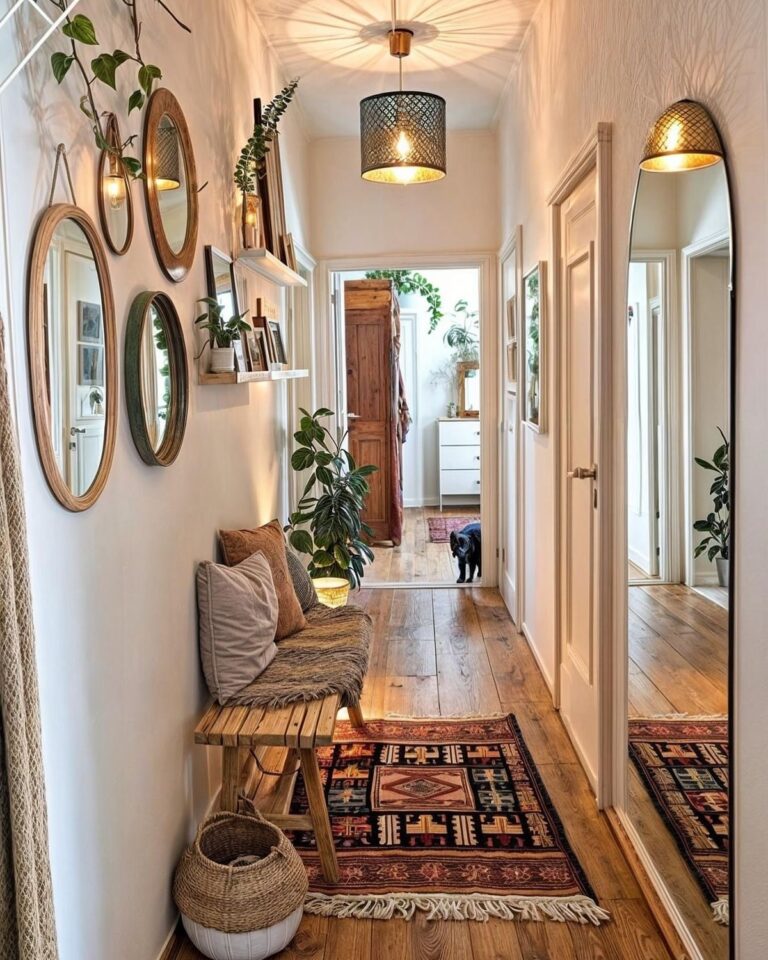
They also unlock lighting that is otherwise impossible: recessed downlights distributing light evenly, LED strips along the edges for indirect glow. Gypsum and POP are the usual materials because both are cheap and easy to shape.
Ask the installer for the exact drop before agreeing to anything. That single number is the difference between a good decision and a regretted one.
Wood Ceilings

Wood is the answer for a room that feels cold or impersonal. No other ceiling material adds warmth as directly.
Reclaimed planks bring grain and imperfection that new timber cannot fake. Shiplap and herringbone both read cosy. Cladding adds only a few centimetres, which makes wood one of the more height-friendly textural options.
Lighter stains keep the room feeling open. A dark wood ceiling in a small room will feel like a lid.
Exposed Beams
Beams work in farmhouse and industrial rooms equally, and they do something no flat ceiling manages. They make a high ceiling feel grounded rather than empty.
Painted white or grey they read contemporary. Dark stained against white walls gives the strongest contrast. Metal beams suit urban interiors.
They also divide open-plan space overhead, which is useful where there are no walls to define zones.
Cove Lighting

Light concealed in a ledge at the upper edge of the room, washing the ceiling rather than shining down into it. The source stays hidden, which is the whole effect.
It produces the soft, hotel-like quality that people usually attribute to expensive furniture. Warm white strips flatter skin tones; dimmable systems let the level drop through the evening.
Built into the wall rather than dropped from the ceiling, it costs almost no height. Combined with a tray it becomes the most luxurious result on this list.
LED and Perimeter Lighting
The shift away from a single central fixture toward perimeter lighting is the clearest ceiling trend of recent years, and it is a functional improvement rather than a fashion.
One pendant in the middle of a room creates a bright centre and dark corners. Light around the edges fills the room evenly and makes it feel larger.
Smart systems let colour temperature shift through the day: cooler in the morning, warmer in the evening. The lighting principles that apply elsewhere in the home are covered in our guide to lighting decor ideas.
Geometric Ceilings

Linear patterns, angled forms and three-dimensional panels give a ceiling structure that flat paint cannot.
Geometric crown molding is the lighter-touch version and suits living rooms and entryways. Full 3D panels in gypsum are the bolder one, and they need both height and good light to be worth the cost.
Integrated lighting within the pattern is what makes the difference after dark. Without it, a geometric ceiling flattens out in the evening.
Textured Ceilings
Texture adds dimension and does something practical as well: it diffuses sound and reduces echo, which matters in rooms with hard floors.
Venetian plaster and stucco catch light across the day and look genuinely handmade. Subtle woven finishes suit bedrooms. Metal tiles suit industrial rooms.
One serious caution applies if you are dealing with an existing textured ceiling rather than adding a new one. Spray-applied textured and popcorn ceilings installed before the early 1980s may contain asbestos, and older stock stayed in use for years after the ban. Intact and undisturbed, it poses little risk. Scraping, sanding or drilling it is what releases fibres.
You cannot identify it by looking. If your home predates the mid-1980s and you are planning to remove a textured ceiling, have it tested by a certified professional before any tool touches it.
Tin Ceilings

Embossed metal tiles with bas-relief patterns. They have been in use for well over a century and still look current in the right room.
The metallic surface reflects light, which suits kitchens, dining rooms and entryways. A distressed finish reads vintage; a clean one reads modern. Tiles are also easier to install than most decorative ceiling work and add minimal depth.
Mirrored and High-Gloss Finishes
The counterintuitive choice for a low ceiling. A reflective surface adds apparent depth upward, which is exactly what a 2.4 metre room lacks.
Stretch ceilings in high-gloss PVC give a seamless mirror-like plane across the whole area. Mirrored panels are the more dramatic version and suit entryways and dining rooms.
Use restraint in bedrooms. A fully mirrored ceiling above a bed is a decision most people reverse.
Skylights and Glass Panels

The most transformative ceiling change available, and the only one that gives back rather than taking away. Daylight from above reaches deeper into a room than daylight from a window.
It also changes through the day and across seasons, which no fixed treatment does. Rooms that felt permanently dim become usable without artificial light.
Two practical points. A south-facing skylight brings heat as well as light, so specify glazing accordingly. And it is the one idea here that involves the roof structure, which means professional work and usually permission.
Smart Ceiling Systems
Lighting that adjusts by app or voice, speakers built in above rather than cluttering shelves, acoustic panels that handle sound and light together.
The genuinely useful part is not the novelty. It is that a ceiling wired once for dimming and colour temperature can be re-tuned for years without touching the surface again.
If you are already installing a false or tray ceiling, run the wiring for it now even if you fit basic lights initially. Retrofitting later means opening the ceiling a second time, and that is where the real cost sits.
Where to Start
Measure the height. That one number removes most of the list or opens all of it.
If the ceiling is standard or low, paint it first. It costs almost nothing, takes a weekend, and tells you whether the room needed a ceiling treatment at all or simply needed the ceiling to stop being white.
If the ceiling is high, the heavier options are genuinely worth the money, because they solve a real problem rather than creating one. Coordinating the result with the rest of the house is covered in our guide to complete home decor ideas.