Dining Room Ideas That Transform How Your Home Feels to Live In
Dining Room Ideas: Why the Dining Room Deserves Specific Design Attention
The dining room is the room where the household gathers most consistently. Every day, multiple times a day, in moods ranging from rushed weekday mornings to relaxed Sunday lunches to the particular energy of hosting people who matter. That consistent daily use across widely varying emotional contexts makes the dining room one of the most demanding design briefs in the whole home.
The fifteen dining room ideas in this guide cover the full range of aesthetic directions from minimal and modern to rustic, vintage, and expressive boho. Each one prioritises specific qualities: the right atmosphere for the meals and gatherings this particular household has, the proportions that suit the space available, and the materials that perform well across daily use rather than only in photographs. Finding the right fit for the household’s actual dining life is the most important decision this guide can help with.
Modern Minimal Dining Room: When Clarity Becomes the Atmosphere
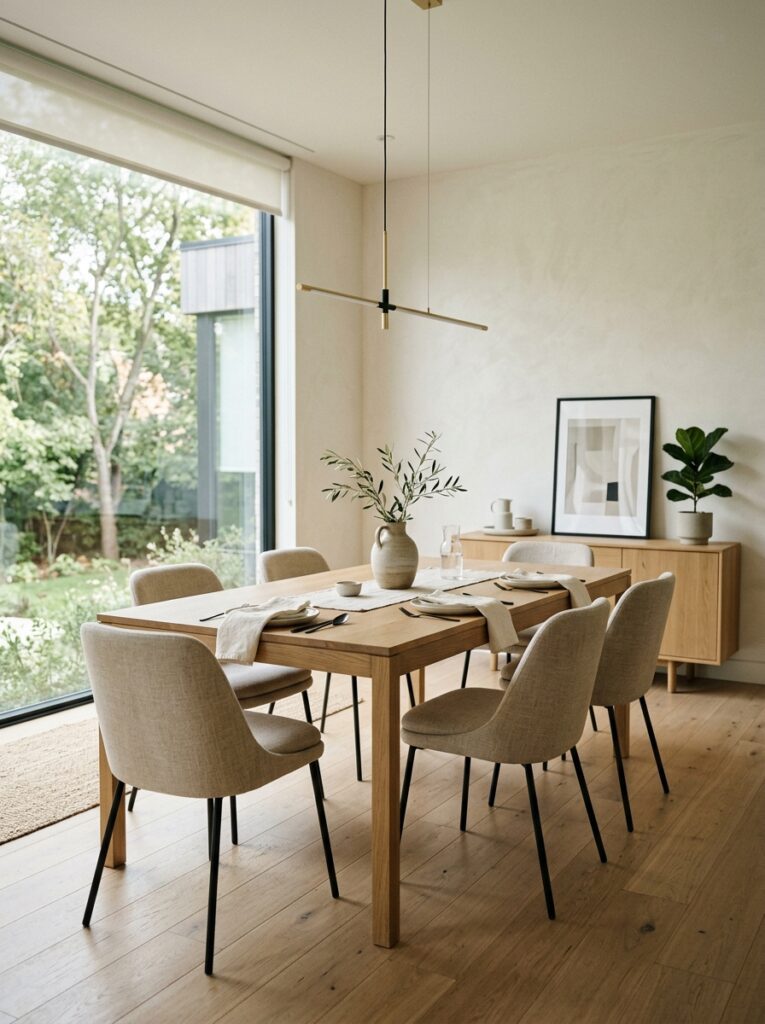
A modern minimal dining room removes everything that does not directly contribute to the experience of eating and gathering, which produces a specific kind of atmosphere that is difficult to achieve through any other approach. When the surfaces are clear, the furniture is well-proportioned, and the lighting is specifically designed for the table, the meals themselves become the event rather than the room’s decoration.
Clean-lined furniture in neutral tones, a single pendant light positioned at the right height above the table, and the deliberate absence of wall decoration all contribute to a room that reads as sophisticated and intentional. The minimal dining room ages particularly well because it is not built around any specific trend. The clarity is the design, and clarity does not date.
Scandinavian Dining Room Style: Functional Warmth for Daily Use
View this post on Instagram
The Scandinavian dining room achieves something that most other styles attempt and fewer accomplish: it is equally appropriate for a Tuesday evening meal as it is for a Saturday gathering with guests. The light colours, natural wood, and functional furniture make the room feel welcoming at every scale of use without requiring any adjustment between them.
White or pale grey walls amplify natural daylight and make the room feel generous even at modest dimensions. Light timber furniture adds the organic warmth that prevents the pale palette from feeling clinical. Simple textile details, seat cushions in natural fabric, a simple runner on the table, and a plant or two add the cozy quality that makes Scandinavian dining rooms feel specifically lived-in rather than styled. This is the dining room for households who want good design without ostentation.
Rustic Farmhouse Dining Room: Character That Comes From Honest Materials
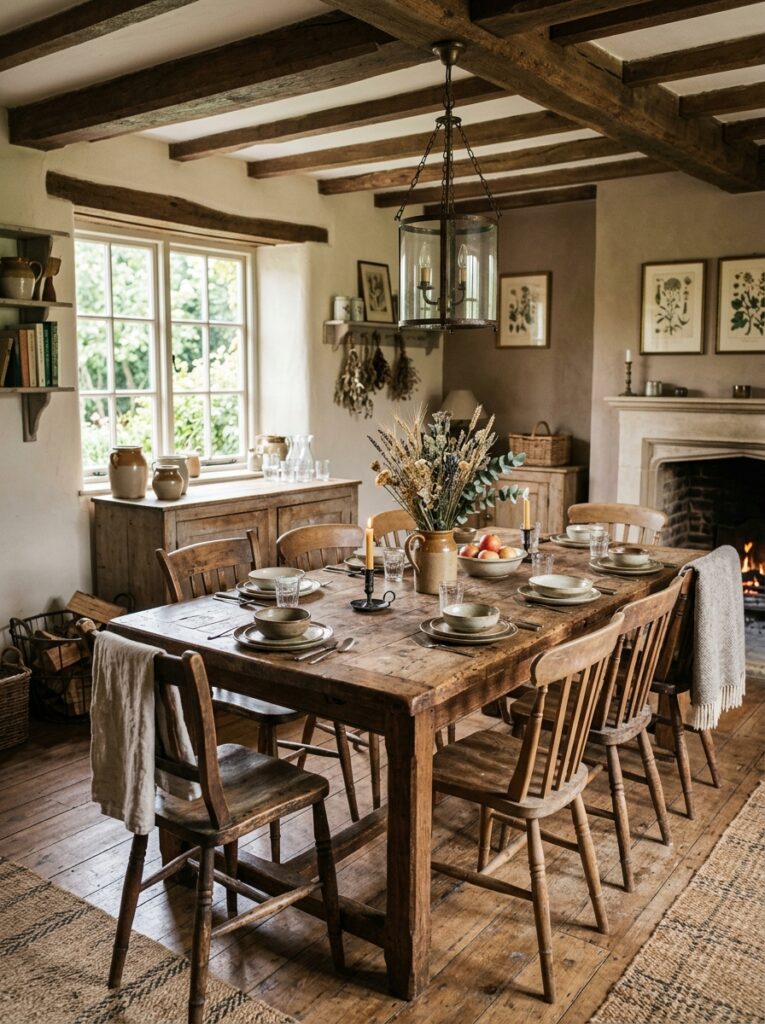
A rustic farmhouse dining room earns its warmth through the genuine character of natural and traditional materials rather than through applied decoration. A solid wooden dining table with visible grain and a surface that shows its history, vintage metal pendant lights with exposed bulbs, and chairs with woven or natural upholstered seats create a room that feels as though it has always been there.
This is the dining room that hosts the best long meals because its atmosphere is specifically warm and unhurried. Earthy tones in the soft furnishings and textured walls reinforce the grounded quality of the natural materials. Soft warm lighting from pendants and candles rather than bright overhead fixtures creates the specific evening quality that makes farmhouse dining rooms feel genuinely hospitable regardless of the size or formality of the gathering.
Neutral Tone Dining Room: The Versatile Foundation That Never Needs Updating
View this post on Instagram
A neutral tone dining room in beige, cream, taupe, and warm grey creates the most adaptable dining space available because the palette never becomes specifically wrong for any season, occasion, or decorating update made elsewhere in the home. Neutral dining rooms absorb changes rather than resisting them.
These tones also make the people eating in the room the visual interest rather than the room itself, which is the correct hierarchy for a dining space. Layered textures in linen curtains, upholstered dining chairs, and a simple textile centrepiece add depth to the neutral palette. The room reads as sophisticated rather than plain because the sophistication comes from the quality of the materials within the palette rather than from the palette’s complexity.
Small Space Dining Room Setup: Intelligent Design for Limited Dimensions
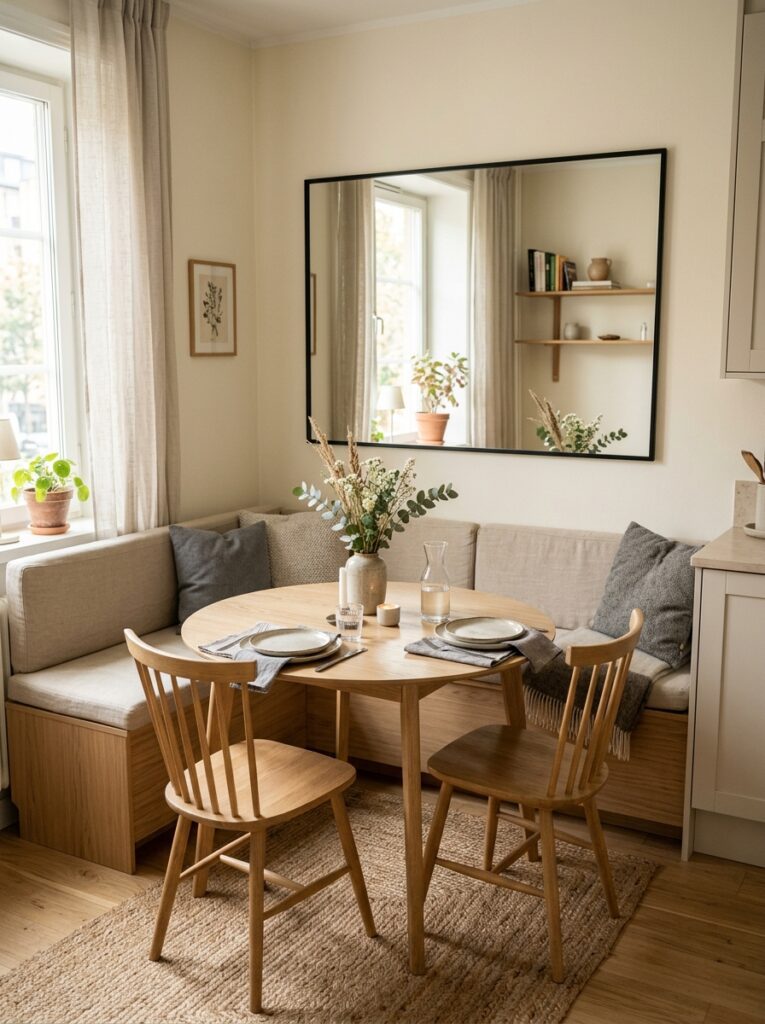
A small dining space does not need to feel like a compromise if the design decisions are made specifically for its dimensions rather than being scaled-down versions of decisions made for larger rooms. The furniture chosen for a compact dining area should be sized to the actual space rather than selected from standard ranges and placed wherever it fits.
Round or oval tables are specifically more effective than rectangular ones in small dining rooms because they remove the awkward corners that rectangular tables create in tight spaces and allow comfortable seating from every position. Bench seating against a wall replaces two chairs with a continuous seat that accommodates more people in the same footprint. Light colours and a well-placed mirror open the space visually. A single pendant light creates a defined dining zone within a larger room or kitchen without requiring any walls.
Boho Dining Room Decor: Personal Atmosphere Through Layered Expression
View this post on Instagram
A boho dining room creates its distinctive quality through the layering of textures, materials, and objects that reflect genuine personal interests and travel history rather than following a prescribed aesthetic formula. Woven chairs with natural fibre seats, a patterned rug beneath the table, hanging plants at different heights, and a collection of candles and objects on the table create an atmosphere that is warm, expressive, and specifically personal.
The key discipline in a boho dining room is colour. Keeping the overall palette within the warm earthy and neutral range, with individual bold or patterned elements appearing within that constraint, prevents the layering from becoming visually chaotic. The bohemian quality comes from the variety of texture and material rather than from competing saturated colours. Earthy boho is consistently more liveable as a daily dining environment than its fully saturated alternative.
Contemporary Dining Room Design: Modern Comfort That Performs Daily
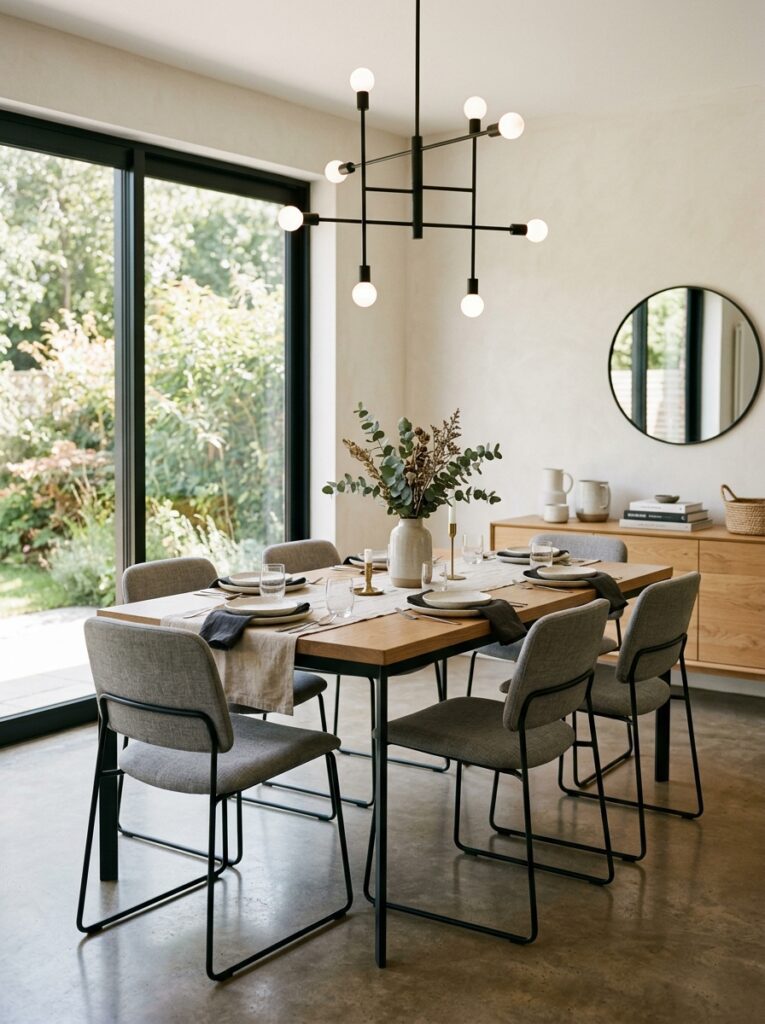
A contemporary dining room combines the visual quality of modern design, clean silhouettes, considered proportions, and deliberate material choices, with the functional comfort that daily use across many different meals and moods requires. It is the dining room for households who want their space to look genuinely current without the sterility that purely minimalist approaches can produce.
Sleek furniture in neutral or warm tones, a bold pendant light that creates a focal point without overwhelming the room, and a considered selection of textile and material accents create the polished yet inviting quality that distinguishes contemporary from simply modern. The pendant light specifically is the element that most determines whether a contemporary dining room feels warm or cold because it sets the lighting quality for every meal eaten beneath it.
Cozy Dining Nook: An Intimate Space for Daily Meals
View this post on Instagram
A dining nook creates an intimacy and physical comfort in daily meals that a formal dining table in an open room rarely achieves. Built-in bench seating along one or two walls with a well-proportioned table creates a contained, enclosed quality that makes meals feel like genuine occasions rather than functional pauses in the day.
The nook works specifically well at breakfast and for informal meals because the contained setting encourages lingering in a way that open dining arrangements do not. Soft cushions on the bench seating, warm lighting from a pendant directly above the table, and simple accessories on the adjacent wall create a space that feels both practical and genuinely inviting. In homes where dedicated dining room space is limited, a well-designed nook delivers more genuine daily dining satisfaction than a larger, less considered open arrangement.
Wooden Table Dining Room: The Centrepiece That Does Most of the Work
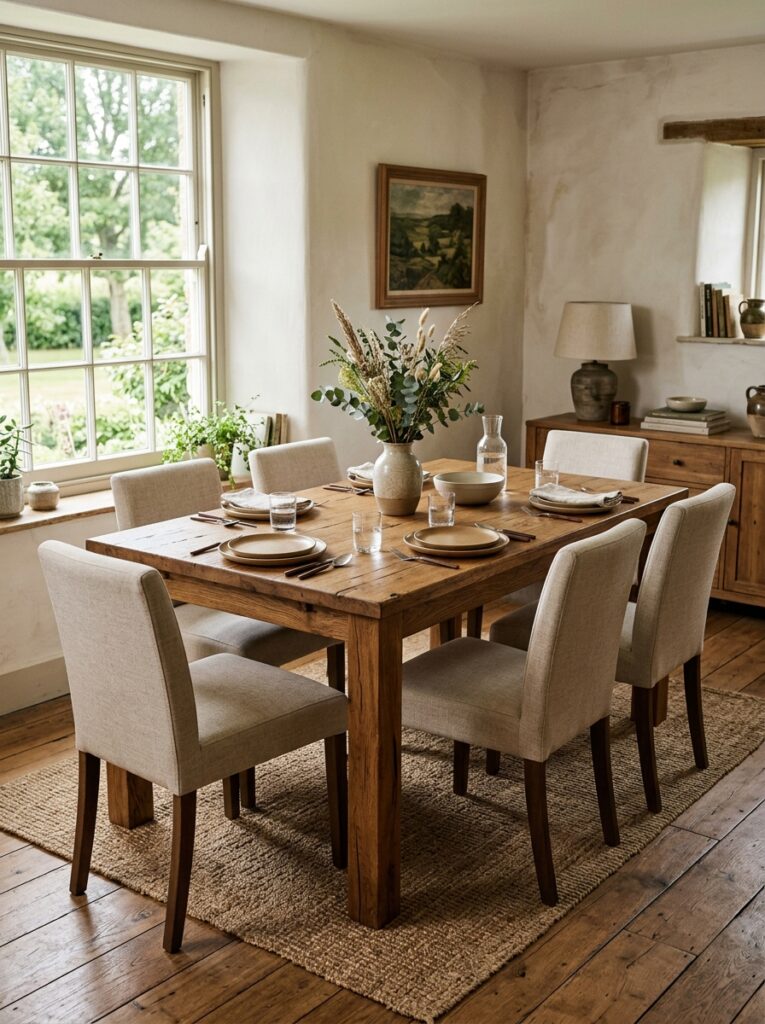
A quality wooden dining table is the single most impactful purchase available for any dining room because the table is the functional and visual centre of everything that happens in the space. Every meal, every gathering, and every daily interaction with the room involves the table specifically, which means its quality registers more persistently than any other element present.
Solid wood in medium or warm tones suits the widest range of dining room styles because the material’s natural warmth and grain variation belong naturally alongside both contemporary chairs and traditional ones. A well-made wooden table improves with use and develops a patina over years that manufactured alternatives simply cannot replicate. Pairing it with chairs in a complementary or contrasting material, upholstered in neutral fabric, metal-framed, or in a different warm wood tone, creates the visual interest that makes the table reading as the room’s deliberate centrepiece.
Black and White Dining Room: Bold Contrast as a Lasting Statement
View this post on Instagram
A black and white dining room uses the strongest available tonal contrast as the basis for a design that reads as both bold and classic because the palette has been used in interior design across every decade without ever becoming specifically dated. The contrast creates visual interest through a mechanism that does not depend on trend relevance.
Black dining chairs or a black table against white walls creates the foundational contrast. Introducing natural materials, a wooden floor, a linen runner, or a rattan pendant, prevents the scheme from feeling two-dimensional or purely graphic. The black and white dining room reads as deliberately designed from every angle because the strong contrast communicates intention clearly. It suits both formal and casual dining styles because the visual energy of the palette creates occasion regardless of the meal being served within it.
Natural Light Dining Room: The Quality That Changes Every Meal
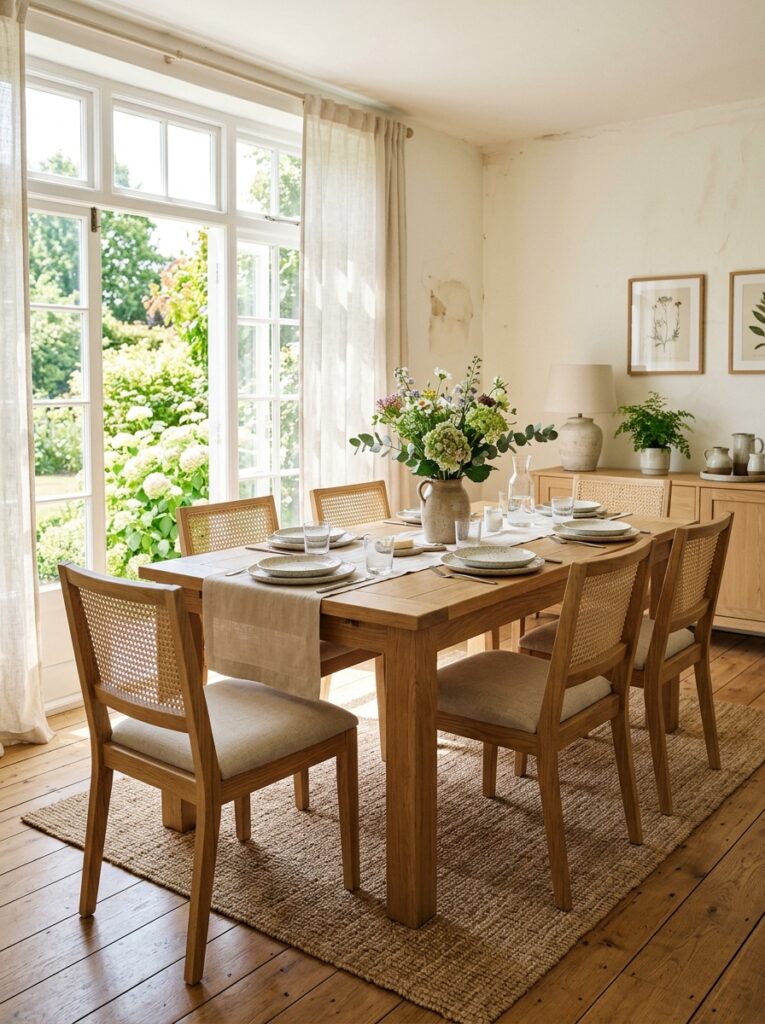
A dining room that maximises natural light creates a daily dining experience that is specifically better than an equivalent room without it. Natural light affects mood, energy, and appetite in ways that artificial light cannot replicate. A dining room designed to receive and distribute natural light well is a room that feels genuinely good to eat in throughout the day.
Large windows with minimal or sheer window treatments allow natural light to enter without obstruction and to diffuse softly rather than glaring directly across the table. Light-coloured walls and table surfaces reflect available light rather than absorbing it, amplifying the brightness without any additional light source. Positioning the dining table close to the main light source, rather than in the centre of the room where it may be furthest from the windows, makes the most of the natural light during the hours when the dining room is most used.
Vintage-Inspired Dining Room: Heritage and Character Through Collected Objects
View this post on Instagram
A vintage-inspired dining room creates a sense of accumulated personal history that no purely contemporary arrangement achieves because it includes objects with genuine age, heritage quality, or the appearance of both. An antique sideboard, chairs with heritage proportions, a vintage-style chandelier, and framed prints with patina all contribute a layered quality that reads as genuinely considered rather than newly purchased.
Soft colours in dusty rose, aged cream, muted sage, and pale terracotta suit the vintage aesthetic without making the room feel specifically old or dated. Mixing genuinely antique or vintage pieces with modern alternatives, a contemporary pendant light above a vintage table, keeps the room from reading as a period recreation rather than a considered personal aesthetic. The vintage-inspired dining room is for households who value design that communicates the passage of time as a positive quality.
Open-Concept Dining Room: Social Eating in Connected Space
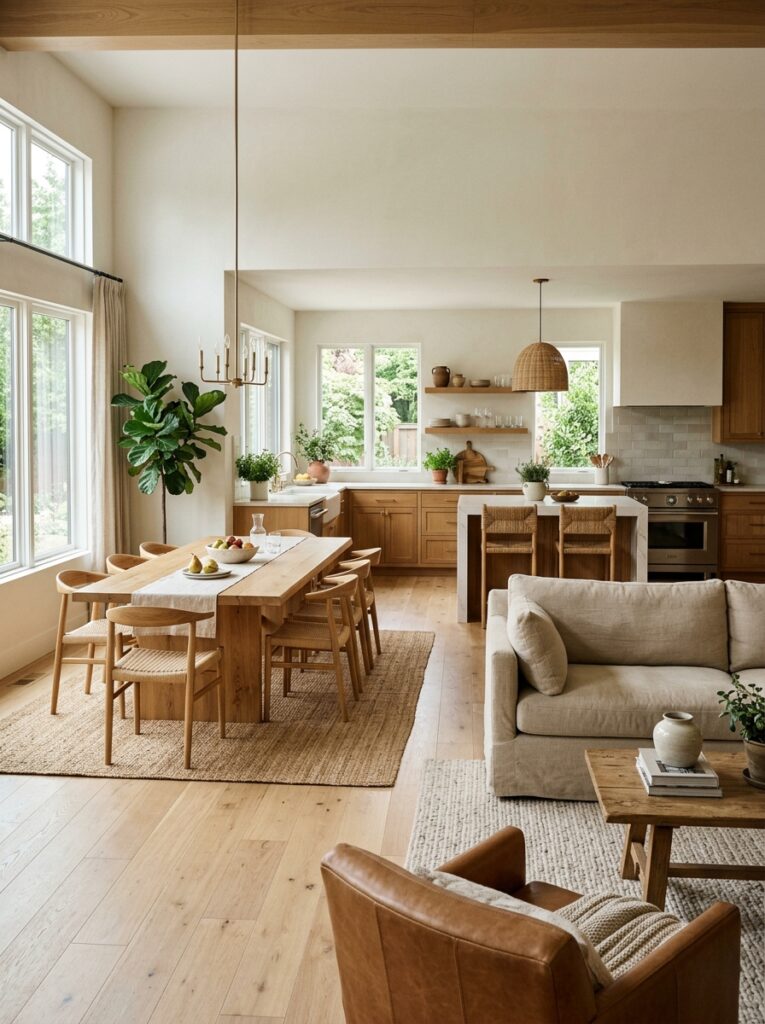
An open-concept dining area that flows naturally between the kitchen and the living space changes the social quality of daily eating more fundamentally than almost any other single design decision. The person cooking is no longer separated from the conversation. Guests move between sitting, eating, and standing without the transition feeling like a different occasion each time. Children are visible from the kitchen during meals without any compromise to the dining experience.
The design challenge is maintaining the dining area’s specific quality within the larger connected space so it reads as a defined zone rather than simply the place where the table happens to be. A pendant light centred above the table defines the zone from above. A rug beneath the dining furniture defines it from below. Consistent but differentiated treatment of the dining furniture relative to the living furniture, a different material, a different tone, or a different scale, creates the visual zone separation that walls previously provided.
Textured Dining Room Decor: Visual Richness Through Material Variety
View this post on Instagram
A textured dining room creates its visual depth and warmth through material variety rather than colour or pattern complexity, which makes it one of the most reliably sophisticated approaches for households who prefer calm, neutral palettes. When the eye travels across the room and encounters different surface qualities, woven chair seats, a rough-plastered wall, a smooth stone table surface, a soft linen runner, a woven pendant shade, it reads as richly designed even though no single element is visually demanding.
Rugs beneath the dining table add both visual and physical warmth while defining the dining zone within a larger room. Wall panels in timber, fluted plaster, or natural stone behind the seating area create an architectural backdrop that gives the room a sense of being specifically designed for the space it occupies. These texture decisions require no significant investment in expensive pieces because the richness comes from the combination of different material qualities rather than from the cost of any individual element.
Elegant Casual Dining Room: The Balance That Makes Every Meal Feel Like an Occasion
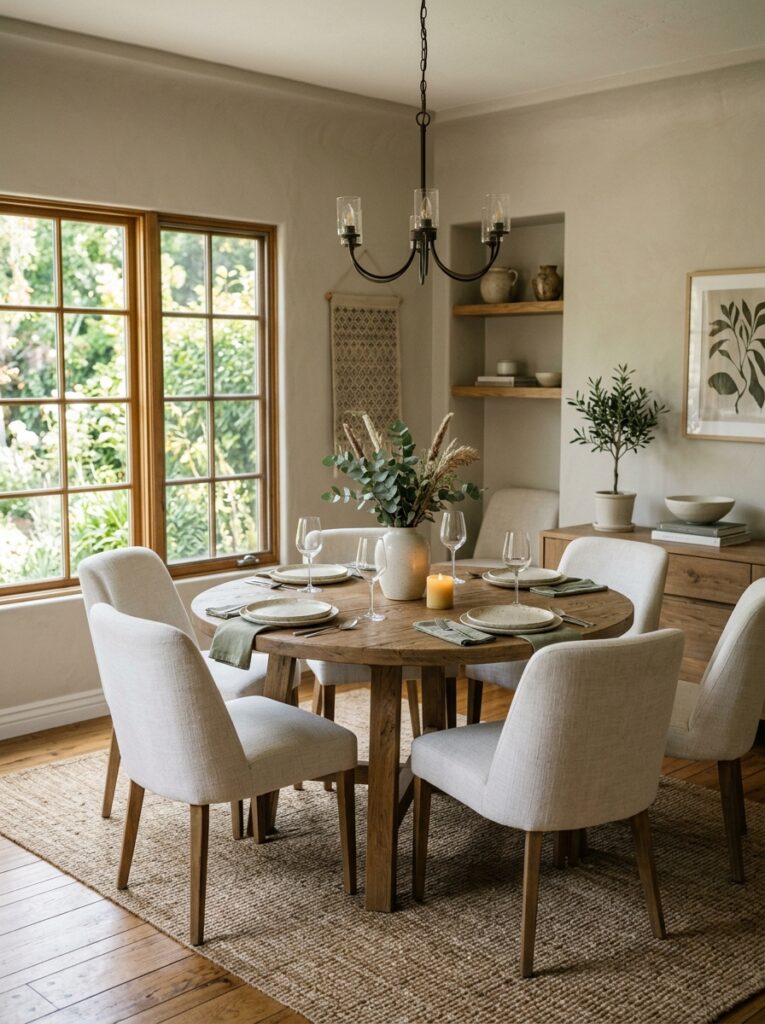
An elegant casual dining room is the hardest balance to achieve and the most genuinely rewarding when it works. The room feels polished enough that any meal served in it feels like a proper occasion, and relaxed enough that a Tuesday evening meal with children does not feel out of place within it. That specific combination, elevated but not precious, is what most households actually want from their dining room.
Comfortable upholstered chairs in a quality neutral fabric contribute physical ease alongside visual refinement. Simple table styling with quality candlesticks, a minimal floral arrangement, or one thoughtful centrepiece creates visual occasion without formality. Warm lighting from a well-chosen pendant and supplementary candlelight creates the evening atmosphere that makes a casual meal feel genuinely special. The elegant casual dining room requires restraint in decoration and generosity in comfort, which is a combination that rewards every meal taken within it.
The Dining Room Decision That Makes Every Other Decision Work
Before choosing any specific design direction for a dining room, one question determines how well all the subsequent decisions will perform: how does this household actually eat?
Households that eat casually and quickly every day need different chairs, different lighting, and different table materials from households that prioritise long, relaxed meals as the social centre of their domestic life. Households with young children need different upholstery, different table surfaces, and different floor treatments from those without. Households who entertain frequently need different storage, different table dimensions, and different lighting flexibility from those who primarily eat alone or as a couple.
The dining room that looks beautiful in a photograph but does not suit how the household actually lives will always feel slightly wrong. The dining room designed specifically for how the household eats will feel right from the first meal taken in it and will continue to feel right across every subsequent year of use. That is the design outcome worth working toward above any specific aesthetic direction.