Minimalist Home Decor Ideas: Clean Modern Living Spaces 2026
Minimalism is one of those words that gets misunderstood constantly. People hear it and picture cold, empty rooms with bare walls and nowhere comfortable to sit. That version exists, but it isn’t what the most liveable minimalist homes actually look like.
Modern minimalist decor in 2026 is about spaces that feel intentional and genuinely personal, where warmth and texture replace sterile white surfaces. The result is a home that’s easier to live in and easier to maintain than the cluttered alternative. If you’re working room by room rather than starting from scratch, our whole-house decor guide covers how to keep that sense of connection consistent from one room to the next.
Start with Decluttering: The Foundation of Everything
There’s no shortcut around this step, and no amount of styling compensates for skipping it. You can’t build a genuinely minimalist space around accumulated clutter — decorating over it only masks the problem temporarily.
The principle is simple: if something isn’t essential or genuinely loved, it doesn’t belong. That doesn’t mean removing everything personal — it means keeping only what earns its place, either through function or through how much you actually enjoy having it around. Go room by room rather than tackling the whole house at once, starting with the surfaces where the impact shows fastest: countertops, shelves, coffee tables.
Build Around a Neutral Color Palette
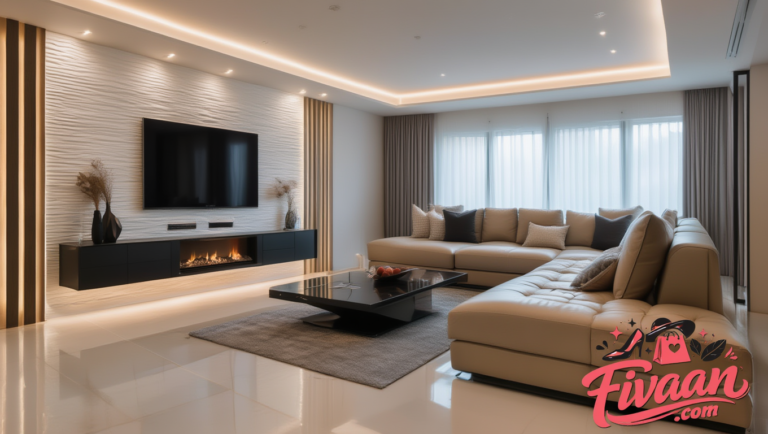
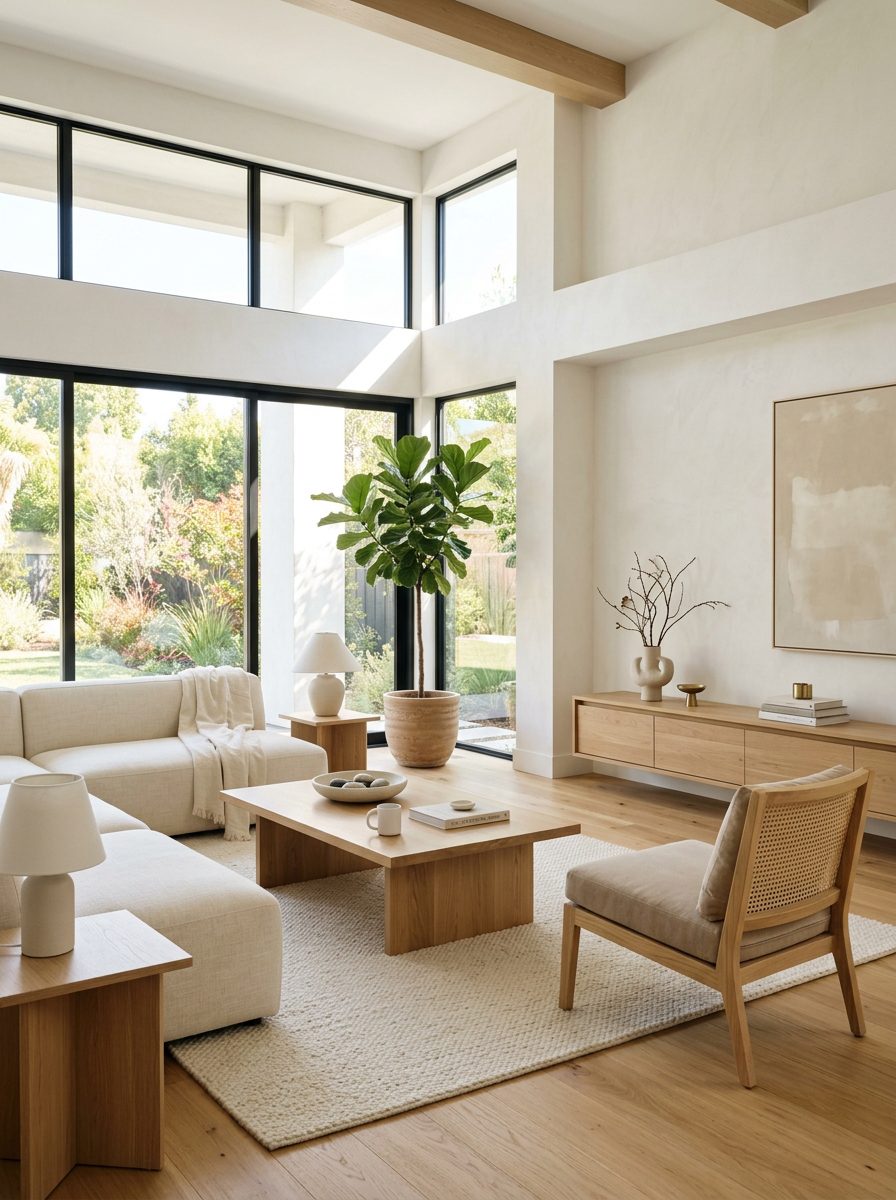
A neutral palette is the foundation of any minimalist interior. White, beige, warm grey, and soft cream create a calm backdrop that suits every room without competing with statement pieces or natural textures.
In 2026, warm neutrals are outperforming cold whites across minimalist interiors — mocha, warm taupe, and sandy beige feel considerably more liveable than sterile whites. Establish the palette across walls, floors, and large furniture first, and everything else becomes far easier to choose around it.
Prioritize Natural Materials
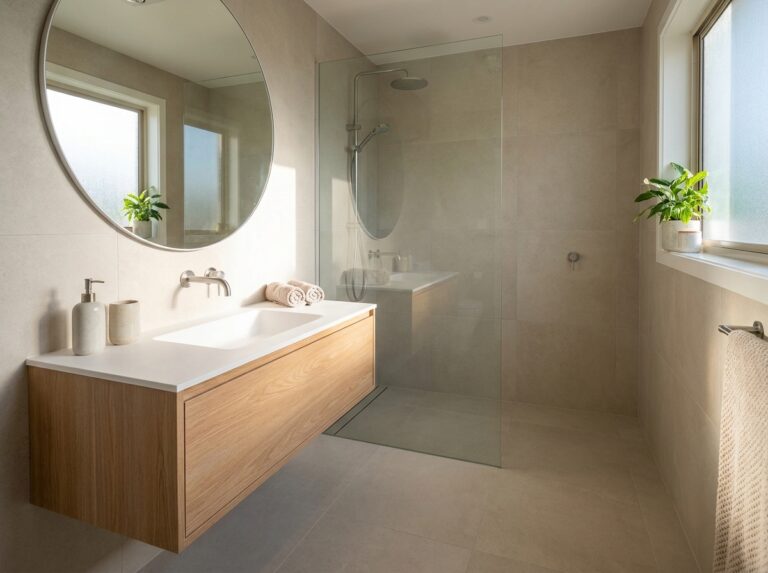
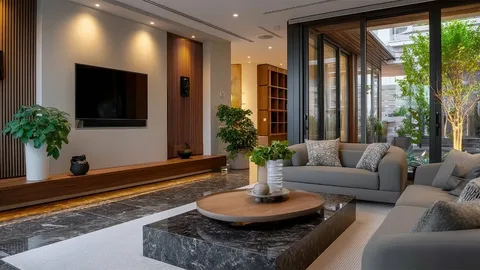
Natural materials are what separate a genuinely warm minimalist interior from one that just feels bare. Wood, stone, rattan, and linen bring tactile depth without introducing colour complexity or visual noise.
Reclaimed wood adds character and sustainability together, stone countertops bring a quiet sense of quality, and linen or wool textiles add warmth no synthetic can match either visually or to the touch. At a similar price point, the natural option will almost always look better, feel better, and age more gracefully.
Maximize Natural Light Before Buying Anything Else
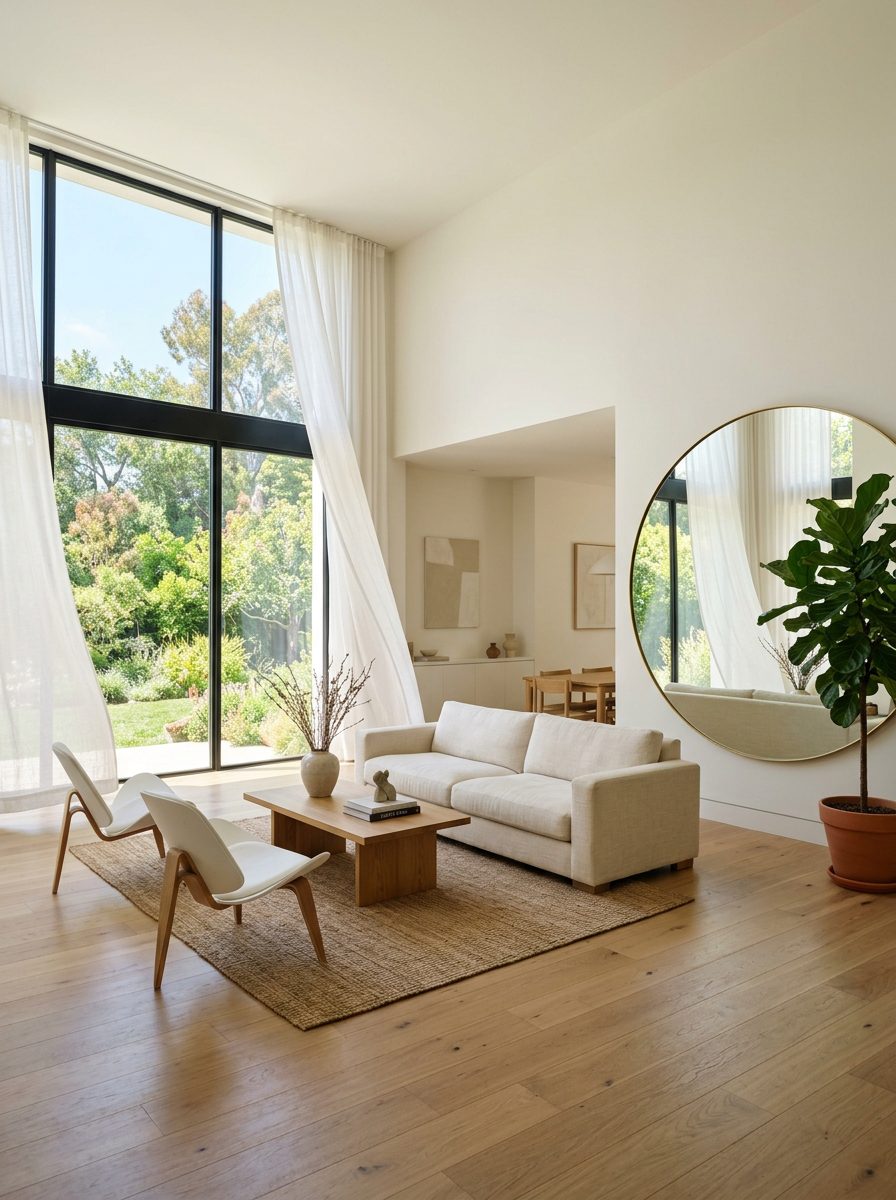
Natural light is the most cost-effective design element available in any home. A well-lit room consistently feels larger and more welcoming than a darker room with more furniture and more decoration crammed into it.
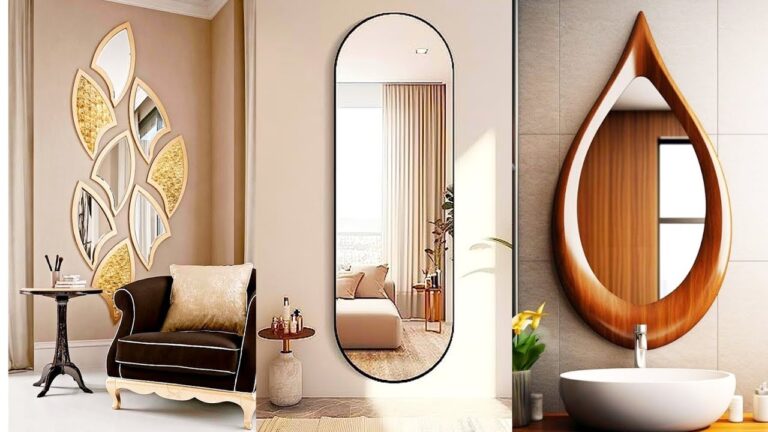
White or sheer window treatments let light flood in far more effectively than heavy, light-blocking curtains. Keep windows clean and unobstructed, and position mirrors opposite them to reflect and multiply what light does come in — our mirror decor guide covers a few placements worth trying beyond the obvious one.
Before spending money on additional decor, optimise how much light each room actually gets. Doing that first often reduces how much extra decoration the room needs at all.
Choose Quality Furniture Over Quantity
Every piece in a minimalist home should earn its place through beauty or function, ideally both. Fewer, better pieces create a more refined interior than filling a room with mediocre alternatives that work well enough without ever looking quite right.
Clean lines and simple geometric shapes define minimalist furniture — streamlined sofas and low-profile beds communicate calm without demanding attention. Multifunctional pieces, like a storage ottoman or a bed with built-in drawers, add utility without adding visual weight, in the same spirit our classy bedroom guide takes toward timeless furniture that doesn’t date. One exceptional piece you genuinely love always outperforms three average ones.
Use Negative Space as a Design Decision
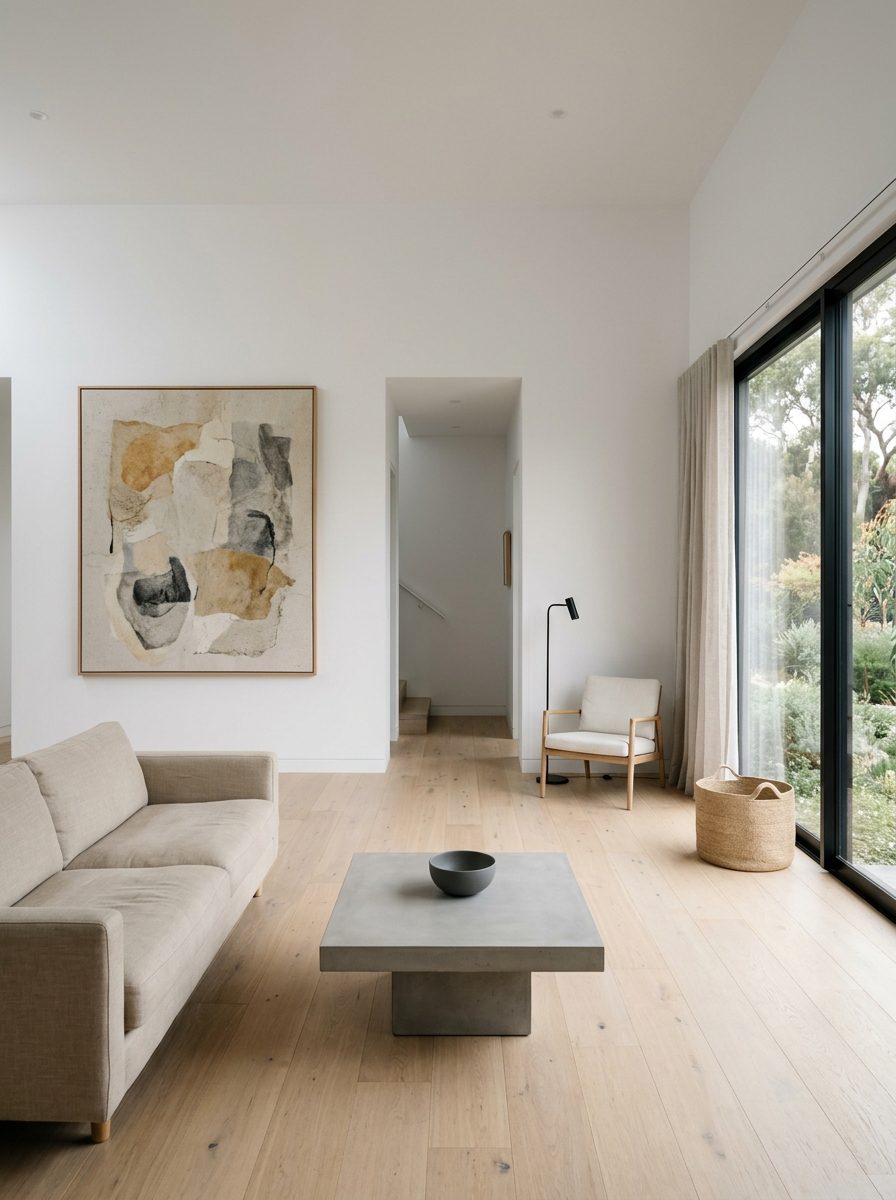
Empty space isn’t a problem to solve — it’s one of the most powerful tools in minimalist design, and most people underuse it badly.
Empty areas give the eye somewhere to rest, which makes a room feel considered rather than visually exhausting. A wall with one piece of art always looks more powerful than one covered with several competing pieces, and a surface with three carefully chosen objects reads as far more intentional than the same surface fully covered. Treat every empty area as a decision, not a gap waiting to be filled.
Bring in Plants for Natural Life and Warmth
Indoor plants bring something no inanimate object can: genuine living energy. A tall fiddle leaf fig or a trailing pothos adds organic shape and warmth that immediately makes a neutral, pared-back room feel inhabited.
One well-placed plant creates more impact than several smaller ones grouped without intention. Simple ceramic or terracotta planters complement a neutral palette without drawing attention to themselves, and if natural light is genuinely limited, a good faux plant achieves the same visual result without the upkeep.
Layer Texture to Add Depth Without Adding Clutter
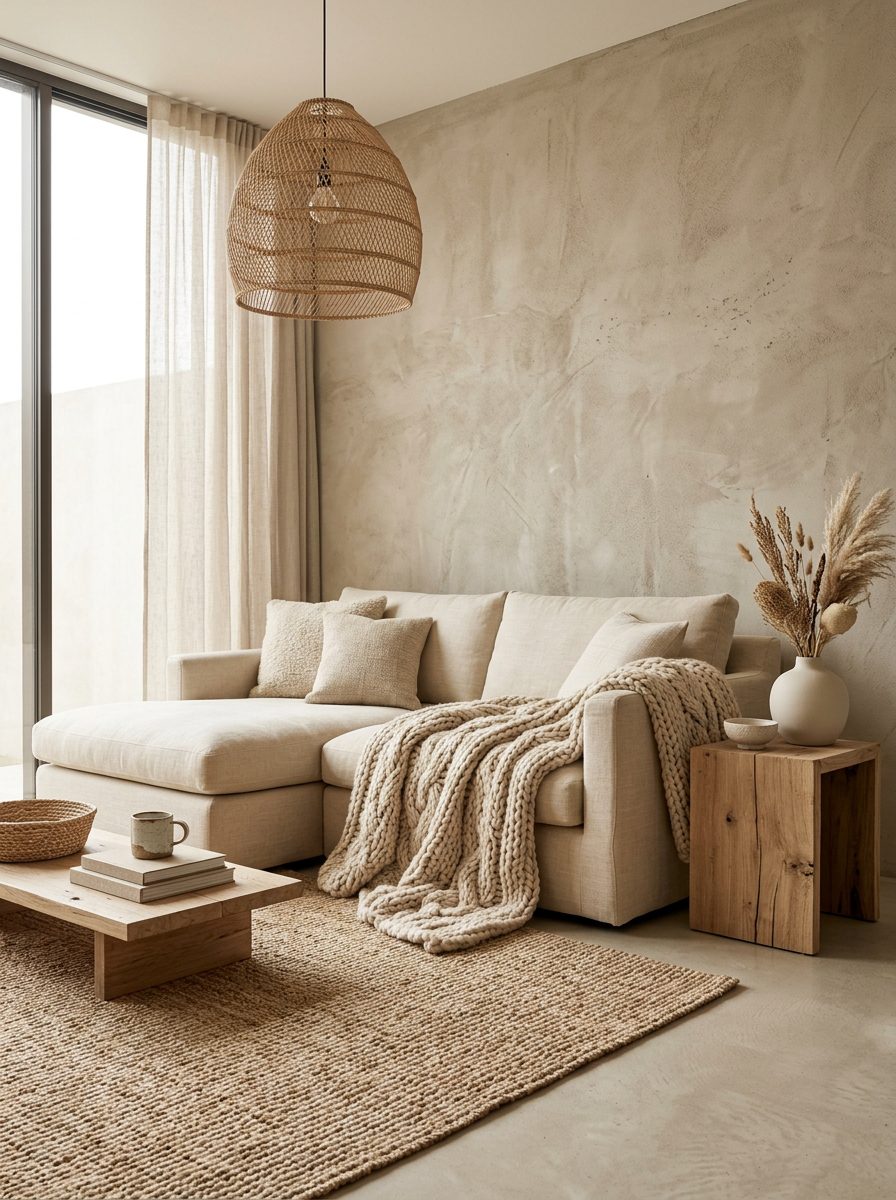
In a neutral space, texture becomes the main source of visual interest. Colour is minimal and pattern is restrained, so the variety has to come from the materials themselves.
A thick wool rug, a linen cushion, a woven rattan basket, and a smooth ceramic vase each add a different tactile note within one cohesive palette. Before adding anything new to a minimalist room, it’s worth asking whether it adds texture and depth or simply adds another object — the answer tends to make the decision for you.
Invest in One or Two Statement Pieces Per Room
Minimalism isn’t about removing all personality — it’s about letting fewer pieces speak more clearly than a room full of competing objects ever could.
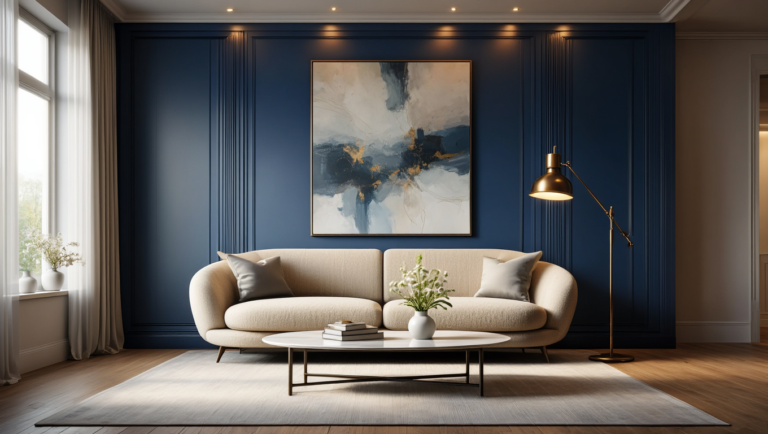
One or two carefully chosen statement pieces can anchor an entire room: a bold piece of abstract art, an architectural floor lamp, a sculptural coffee table. An oversized canvas above a minimalist sofa delivers drama and restraint at once — our gallery wall guide covers the alternative approach if a cluster of smaller pieces suits the room better than one large one. Put real thought and a proportionate budget into one or two pieces, and everything around them can stay simple.
Apply the One-In One-Out Rule
This is the single most practical habit for maintaining a minimalist home long-term. Every time something new enters, something existing leaves — the discipline prevents the slow accumulation of clutter that quietly undermines a minimalist space over weeks and months.
It works particularly well for decorative objects and small accessories, which tend to multiply without anyone noticing, and it applies just as usefully to furniture. A minimalist home that holds its quality over years needs habits as much as good initial decisions — this is the simplest and most effective of them.
Plan Smart Storage from the Start
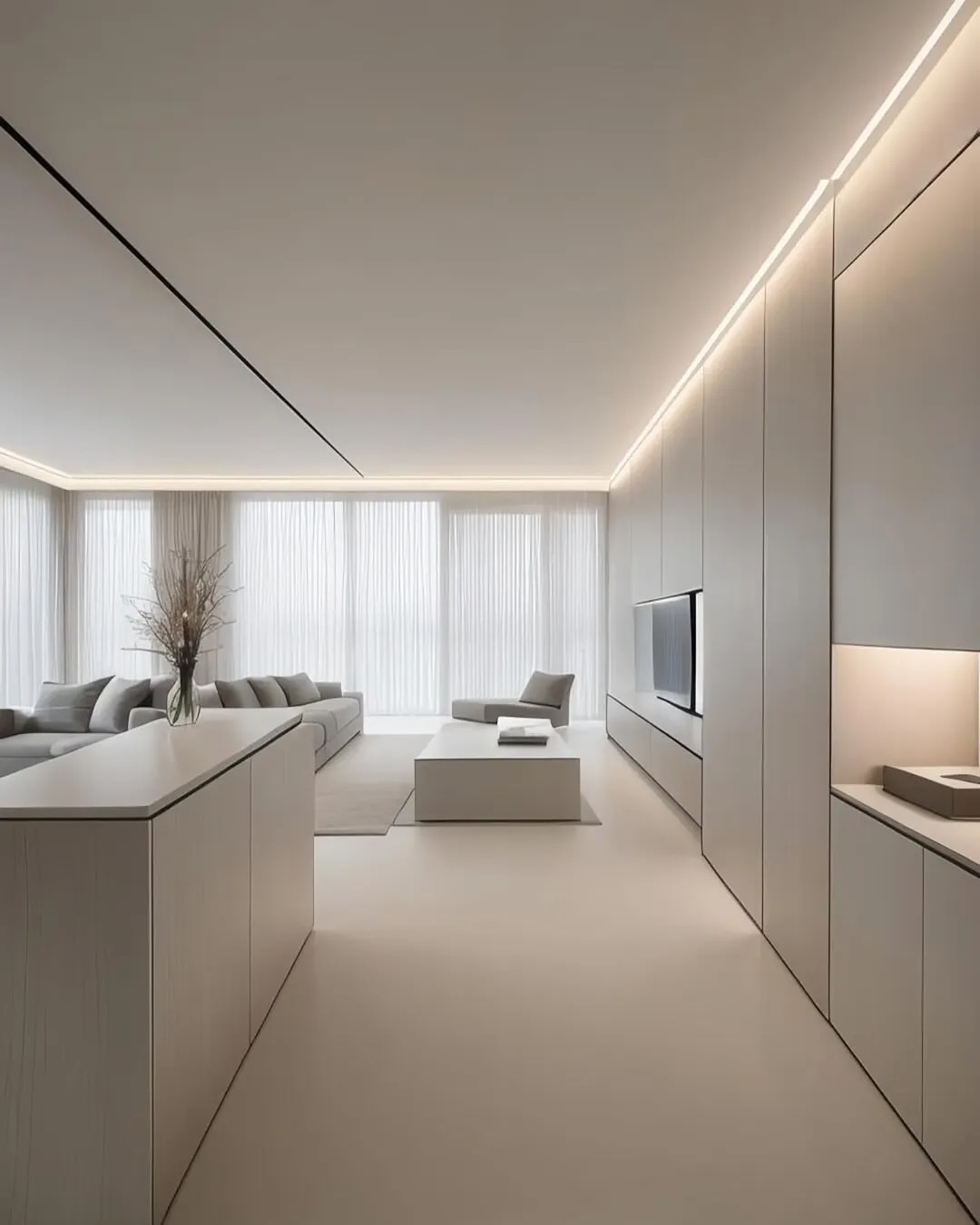
Visible clutter is the biggest enemy of minimalist design, and the most effective way to prevent it is planning storage as part of the room from the outset rather than adding it as an afterthought once things have already piled up.
Closed cabinetry hides daily-use items without visual cost, and furniture that pulls double duty — a bed frame with drawers, a bench with a lift-up seat, an ottoman that opens — solves the same problem without adding extra pieces to the room. Our mirrored furniture ideas post covers a few bedroom storage pieces that manage to do this while still reading as a design choice rather than a compromise. The goal is a home for everything decided in advance, not worked out later under pressure.
Layer Your Lighting for Evening Warmth
Overhead lighting alone creates a flat, clinical atmosphere that works against the calm quality minimalist interiors are going for. A single bright ceiling light is the most common lighting mistake in otherwise well-designed minimalist rooms.
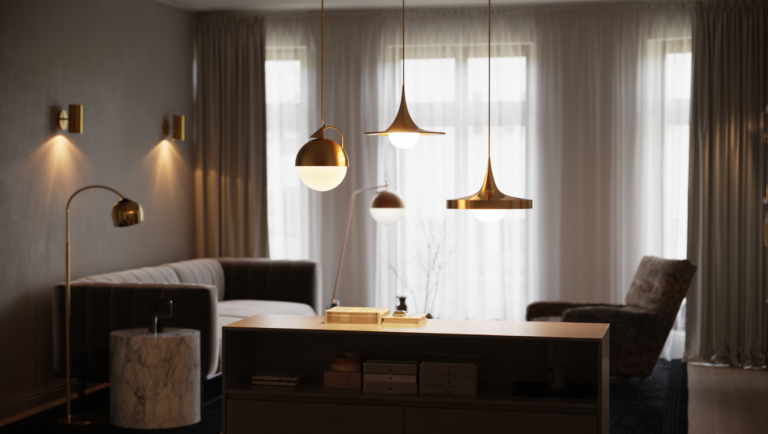
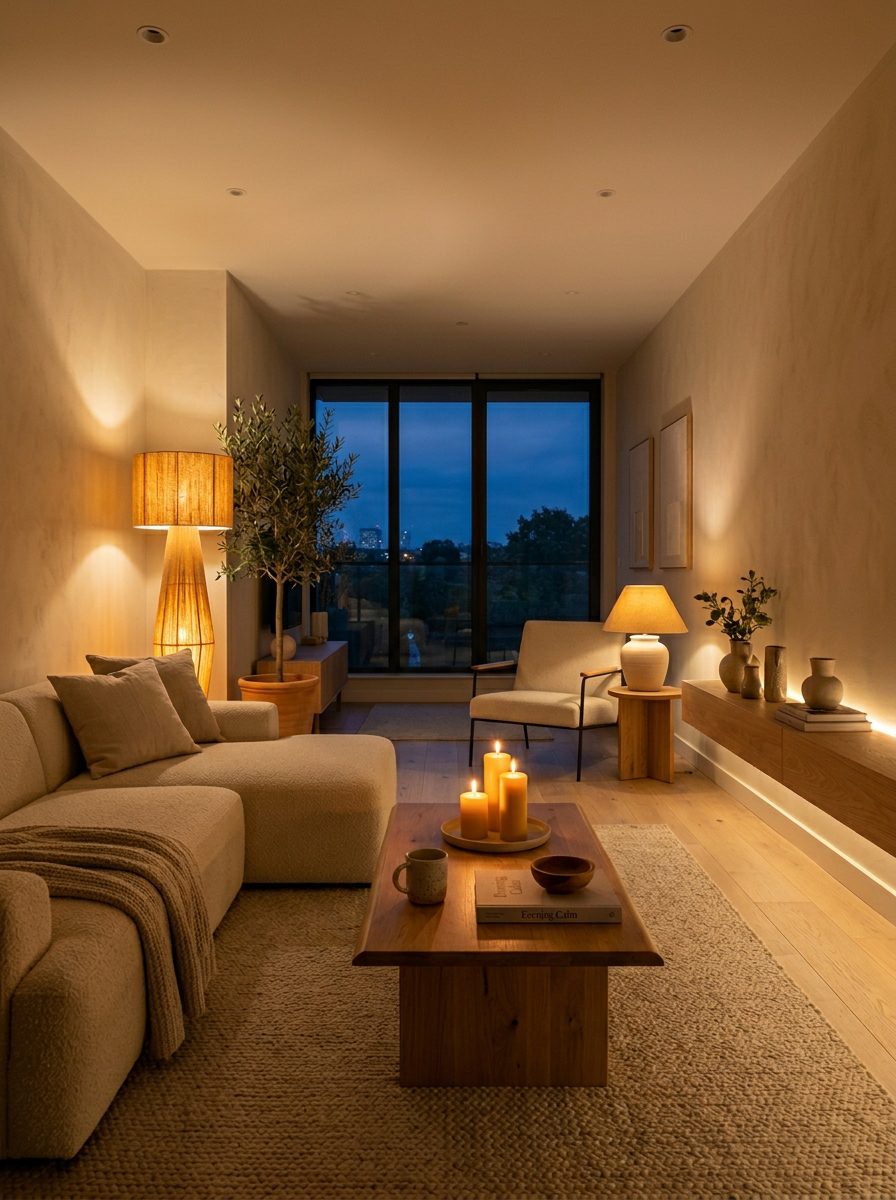
Floor and table lamps with warm, yellow-toned bulbs create a softer atmosphere than any overhead alternative. Sculptural floor lamps do double duty, filling vertical space while providing warm, directed light in the evening, and candles add a flickering warmth no electric light fully replicates.
Dimmer switches turn fixed overhead lights into a flexible mood tool that shifts a room from functional daytime space to something warmer at night. Layering at least three light sources across each main room makes the transition between day and evening one of the more enjoyable qualities of the whole interior.
Keep Surfaces Clear as an Ongoing Daily Habit
Clear surfaces are the most visible signature of a successful minimalist interior. A clean countertop and a bare dining table communicate calm the moment you walk in — surface clutter is the fastest way to undo everything else that’s been done well.
Keep surfaces deliberately bare except for one or two objects that belong there permanently, and use trays or boxes to contain necessary items that must stay accessible. A few minutes clearing surfaces before bed each night prevents the slow accumulation that erodes a minimalist room over days and weeks — it’s an ongoing practice, not a one-time styling achievement.
Try Minimalist Maximalism: Bold Shapes, Calm Colors
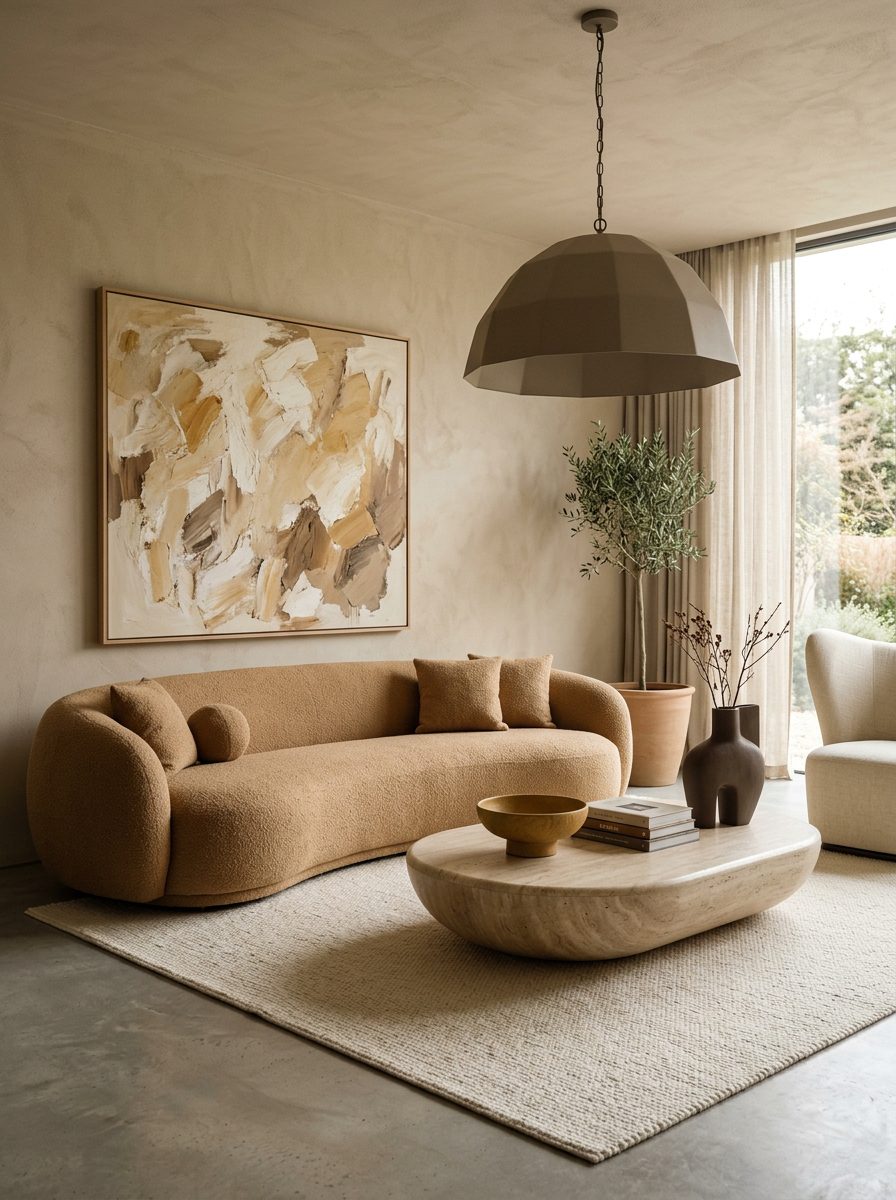
Minimalist maximalism is one of the more genuinely exciting directions in 2026 interiors — bold sculptural shapes and interesting forms, all held within a muted, earthy palette that keeps the space cohesive rather than chaotic.
A curved sculptural sofa or an oversized ceramic coffee table delivers real visual presence within a restrained colour range. For anyone drawn to minimalism intellectually but who’s always found it a bit austere in practice, this is the version that actually feels comfortable to live in.
Keep Personal Objects That Are Genuinely Meaningful
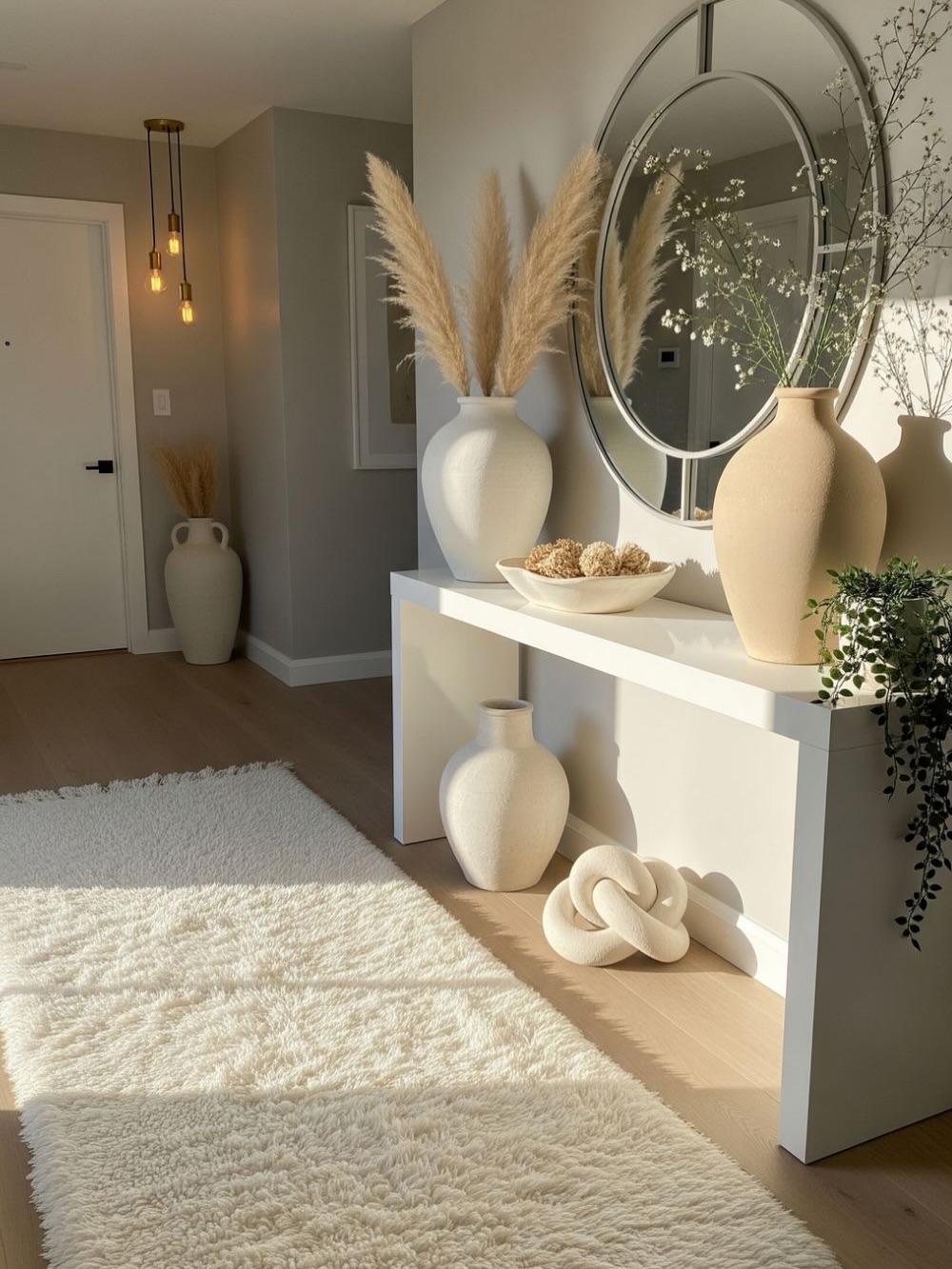
The most successful minimalist interiors feel personal and genuinely lived-in rather than staged. Removing everything that reflects the people who live in a space isn’t minimalism — it’s a show home.
A travel souvenir, a handmade ceramic, or a family photograph contributes authentic character that purely decorative objects can’t. Coordinate frames in the same finish to keep displays looking polished rather than random, and limit personal objects to two or three per surface so the minimalist quality holds alongside the personal warmth.
Why Minimalism Creates the Most Liveable Modern Homes
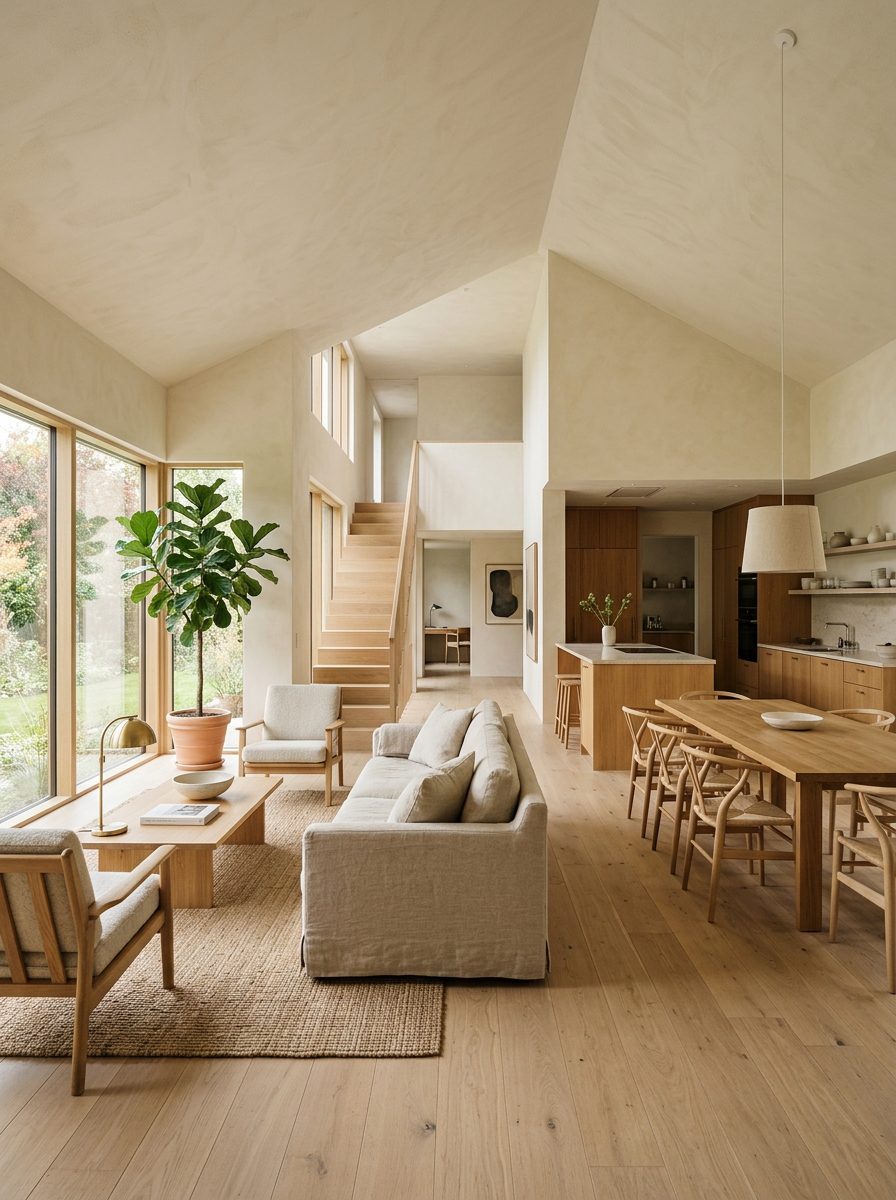
The practical case for minimalism is as strong as the aesthetic one. A decluttered home reduces daily stress and improves focus in a way cluttered, visually busy spaces consistently fail to. Princeton psychologist Sabine Kastner’s research on visual attention, covered in Princeton Alumni Weekly, found that visual clutter competes for the brain’s attention and tires out cognitive function over time — which lines up with why a calmer room tends to feel calmer to think in, not just to look at.
Minimalist homes are also faster to clean and maintain through the week. Less clutter means less surface area to manage and fewer decisions about where things belong, and that daily difference compounds rather than fading over time.
Minimalist design also ages well. Classic pieces in neutral, timeless tones don’t date the way trend-driven interiors tend to after a few years, which makes this less a styling decision than a long-term investment in the quality and calm of the space itself.