Entryway Decorating Ideas That Create a Genuinely Welcoming Home
Entryway Decorating Ideas: The First Thing Anyone Sees Deserves Real Attention
The entryway is the room every visitor experiences before any other. It is also the room every resident passes through twice a day, at minimum. Yet it consistently receives less decorating attention than anywhere else in the home. Most entryways are decorated by default: whatever was there on moving day, plus whatever accumulated afterward.
A deliberately decorated entryway says something immediate about the home and the people in it. It shows that care extended beyond the functional rooms. It also creates a transition between the outside world and the interior, which makes a home feel designed rather than simply occupied. The fifteen ideas below cover every approach worth knowing, from the single most impactful purchase to the small finishing details that complete the space.
Console Table Entryway Styling: Immediate Structure and Visual Purpose
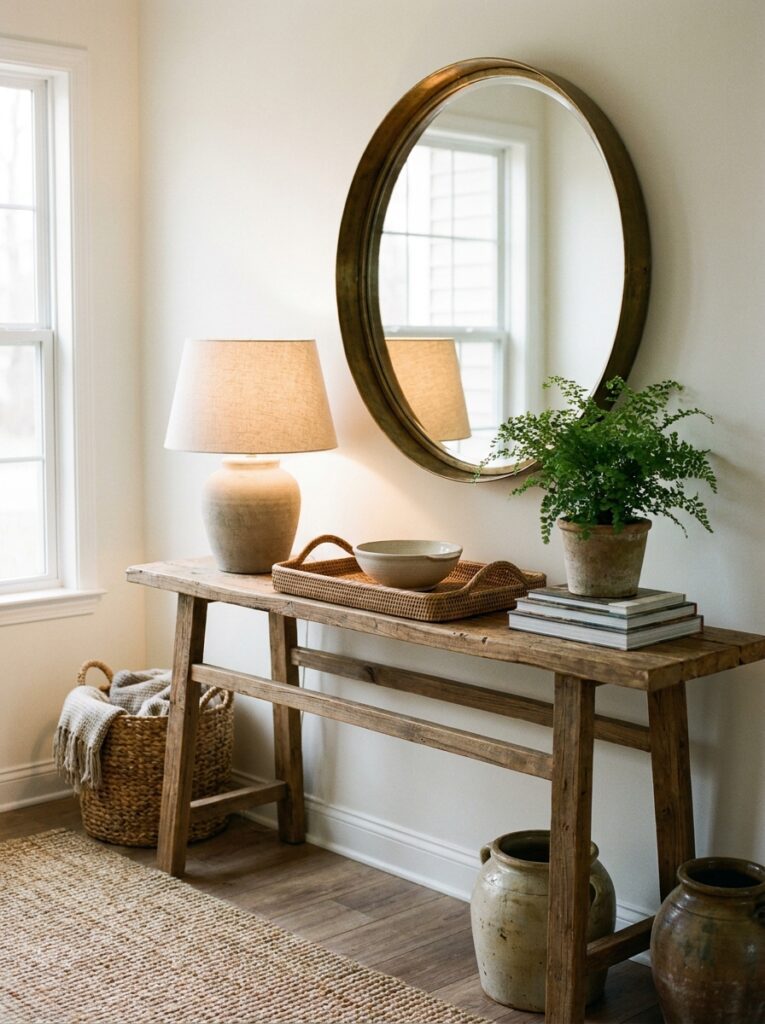
A console table transforms an entryway more completely than any other single piece of furniture. It provides a surface for daily essentials. It creates a visual anchor for the space. And it establishes a composition that every other decorative element can be built around.
What sits on top matters as much as the table itself. A lamp at one end gives warm light at human height. A tray in the centre contains keys, mail and small items that would otherwise scatter across the surface. A small plant or vase of flowers adds the organic quality that keeps the arrangement from looking staged. A mirror above creates depth and pushes light back down the corridor. Together those four elements produce a composed first impression that visitors register immediately, even without identifying what is working.
Mirror and Bench Entryway: The Practical Pair That Always Looks Considered
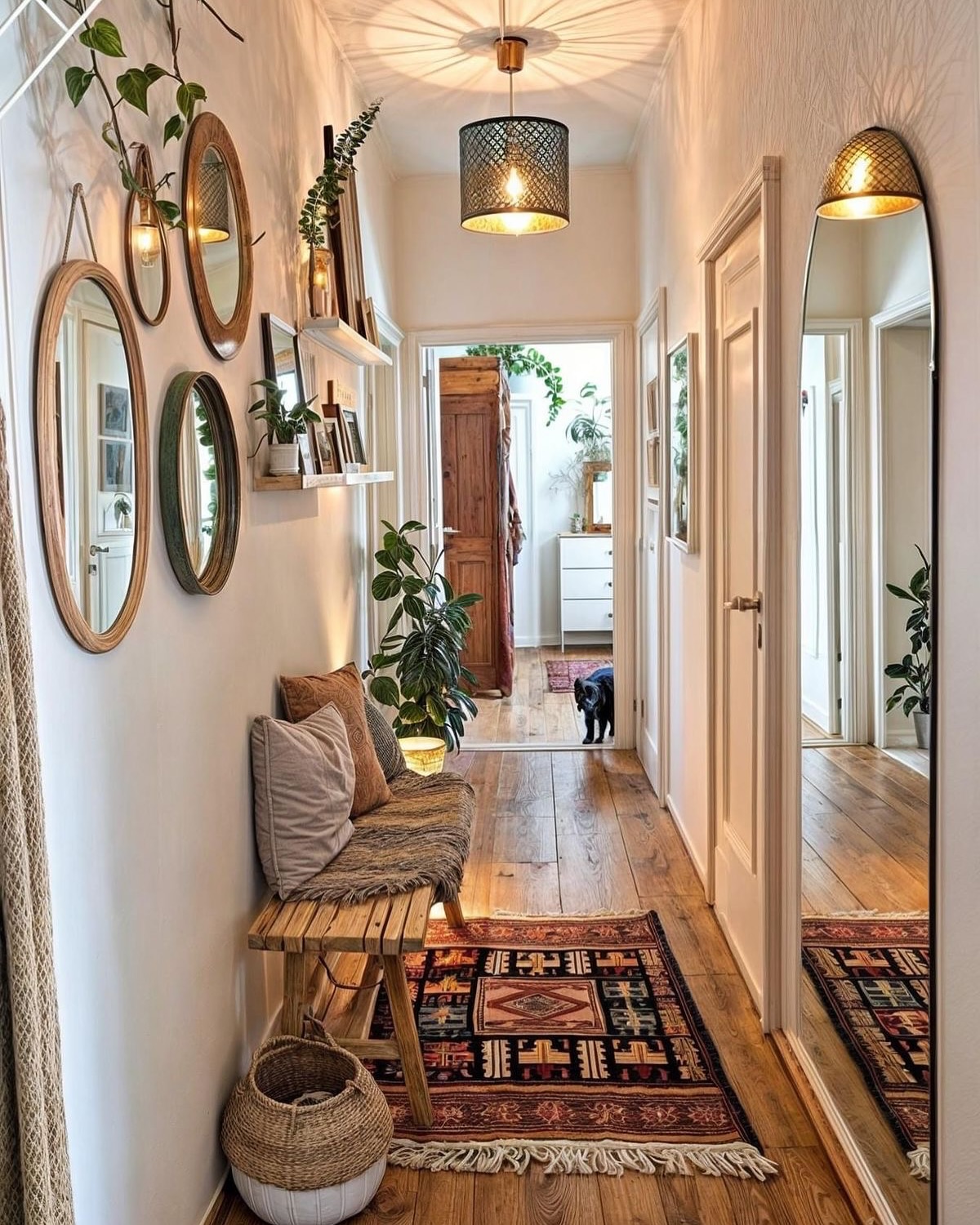
The mirror and bench pairing reads as designed because both pieces earn their place practically. The bench gives you somewhere to sit while dealing with shoes. The mirror provides a last check on the way out and, less obviously, doubles the available light in a dark corridor.
Measurements decide whether the pair looks right or awkward. Hang the mirror so its centre sits at roughly eye level, around 155 to 165 cm from the floor, rather than centring it on the bench. Leave about 20 to 25 cm of wall between the top of the bench and the base of the mirror; any more and the two stop reading as one arrangement. Bench height of 45 cm suits most adults for putting on shoes. Width should be at least two-thirds of the mirror’s width so the composition sits on a stable base. Coordination does the rest, and it works through material rather than matching. A natural wood bench under a wood or warm metal frame reads as cohesive, and a painted bench under a similarly toned frame does the same. Add a cushion and the bench actually gets used. In tighter hallways the same principle still applies at smaller dimensions, and more of those adaptations appear in this guide to small entryway decor ideas.
Minimalist Entryway Decor: The Calm That Makes Everything Else Feel Like Less
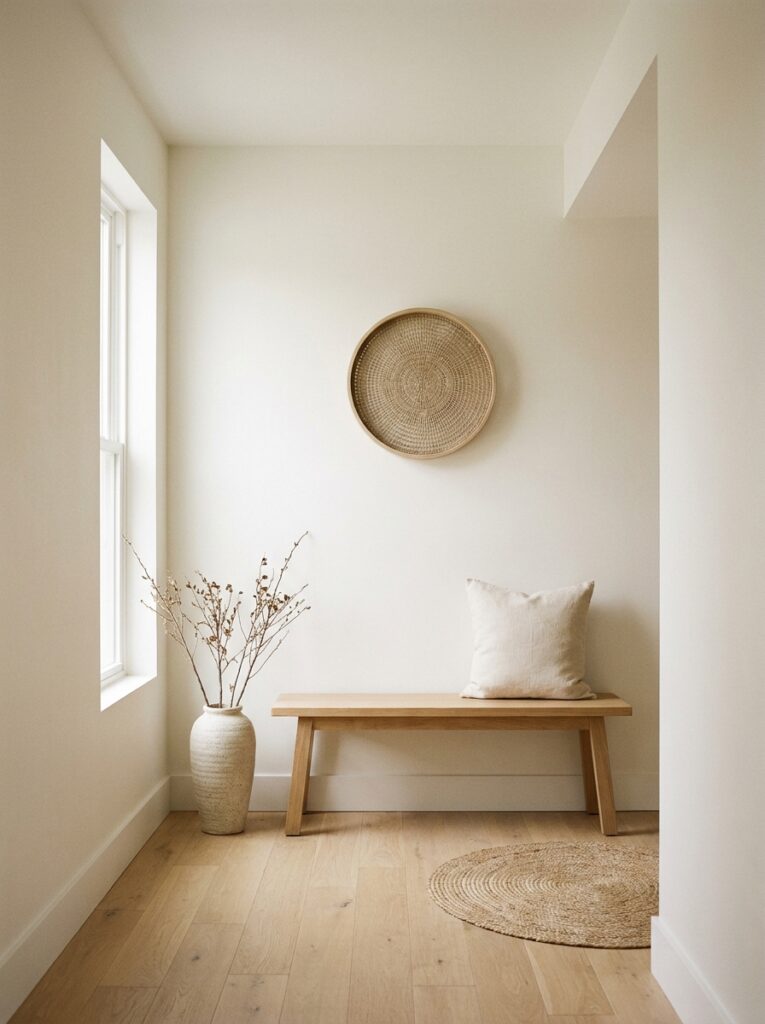
A minimalist entryway creates a calm at the front of the home that busier alternatives cannot match. When the first space you meet has clear surfaces, clean lines and only the objects that belong there, the transition from outside feels settled and deliberate.
The discipline behind it is hidden storage. Without somewhere for daily items to go, minimalism becomes a chore you repeat every evening. A coat hook behind the door, a slim drawer in the console for keys and cards, and a basket for shoes beneath the bench remove the three main sources of visible clutter. With those in place, the minimal quality maintains itself rather than requiring effort. Without them, it lasts about a week.
Gallery Wall Entryway: Personal Character from the First Step Inside
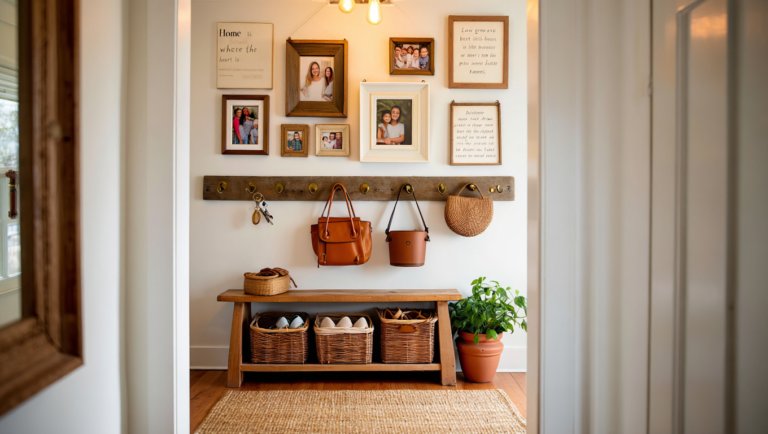
A gallery wall makes its strongest impression in an entryway, because it lands at the exact moment of arrival. Photographs, prints and pieces chosen for reasons beyond decoration say immediately that this is a particular person’s home rather than a furnished space.
Frame consistency inside content variety is the rule that makes it read as curated. Keep one frame finish throughout, whether black, white, natural wood or a single metal, and let the contents vary freely. A few measurements save frustration. Keep 5 to 8 cm between frames so the group reads as one unit. Centre the whole arrangement at around 145 to 150 cm from the floor, which is standard gallery hanging height. In a narrow hallway, hang the arrangement slightly higher so passing shoulders do not knock it. Lay the full layout on the floor first and photograph it before touching a drill, then cut paper templates and tape them to the wall to check spacing. Corridors are usually viewed at an angle rather than head-on, so a horizontal arrangement following the direction of travel works better than a tall square block.
Basket Storage Entryway: Function That Also Decorates
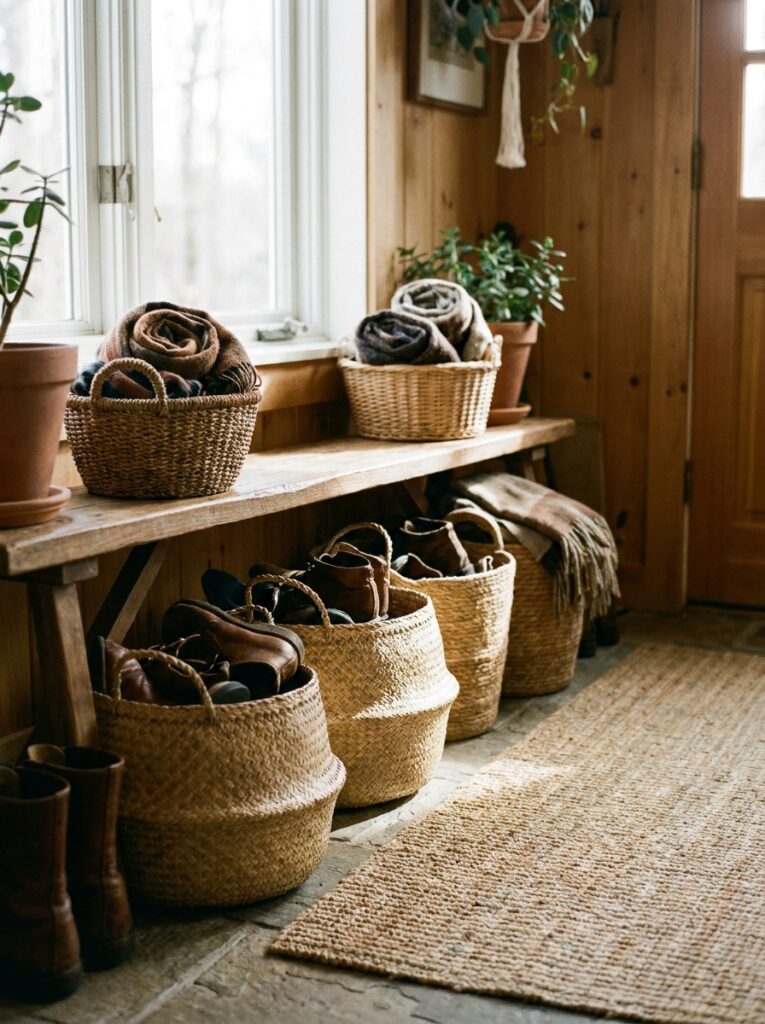
Woven baskets solve the entryway’s most persistent daily problem. Shoes, bags, scarves and odds and ends accumulate near the door no matter how carefully anyone manages them. A basket gives all of it an obvious destination and stops the spread across the floor and the console surface.
Natural fibre baskets in seagrass, rattan or woven grass add warmth and texture that plastic bins cannot. A large basket for shoes, a medium one for umbrellas or sports kit, and a small one on the console for daily items together form a complete system. Because the material contributes to the room’s warmth rather than just hiding mess, this is decorative storage rather than functional storage. That distinction is what keeps the entryway looking finished on a busy week.
Cozy Entryway Rug Setup: The Ground-Level Element That Defines the Space
An entryway rug works at the practical and atmospheric levels at once. It protects the floor from traffic and outdoor dirt. It adds colour and pattern where the eye lands first. And it marks the entryway as a defined zone inside a larger open layout.
Size generously. A runner should leave roughly 10 to 15 cm of bare floor on each side rather than reaching wall to wall, and it should be long enough to carry a person several steps into the room. Undersized rugs look like they were bought without measuring anything. Material matters just as much, and cotton flatweaves, jute and low-pile synthetics all handle daily traffic without showing wear quickly. Safety deserves a moment here too, since a rug directly inside a door meets wet shoes constantly. Loose and curling rugs are a recognised trip hazard, which is why fall-prevention guidance from the National Institute on Aging recommends securing floor coverings firmly. A rubber underlay or double-sided tape solves it in five minutes. Choose a mid-tone pattern rather than a pale solid, because a plain cream rug at a front door shows every footprint within a fortnight.
Farmhouse Entryway Decor: Warmth Through Honest Materials
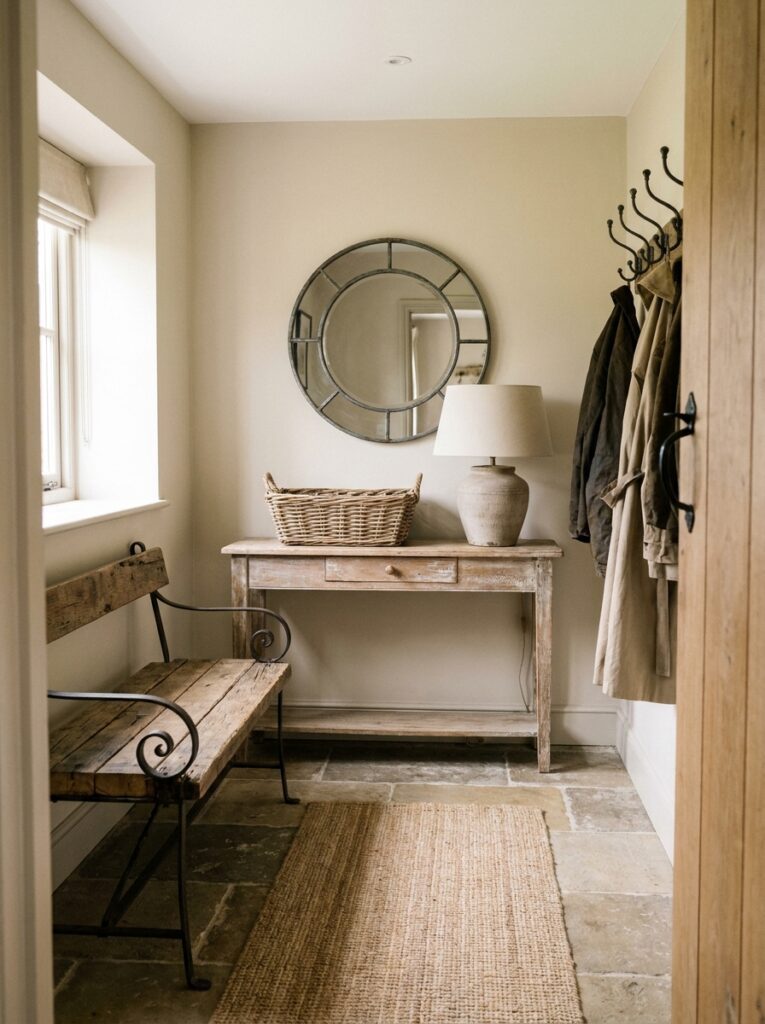
A farmhouse entryway builds its warmth from materials rather than applied decoration. Wooden furniture with visible grain and a natural finish. Metal hooks with a forged rather than polished quality. Neutral textiles in linen or cotton. Each element carries the character on its own.
A simple wooden bench, dark iron wall hooks, a woven basket and a dried botanical arrangement are enough for a complete farmhouse entry. The look does not come from quantity of rustic objects but from the honesty of a few. Filling the space with many different rustic pieces produces a busy quality that works directly against the calm the style is aiming for. Restraint is the part most people skip.
Modern Neutral Entryway: The Start of a Consistent Interior Language
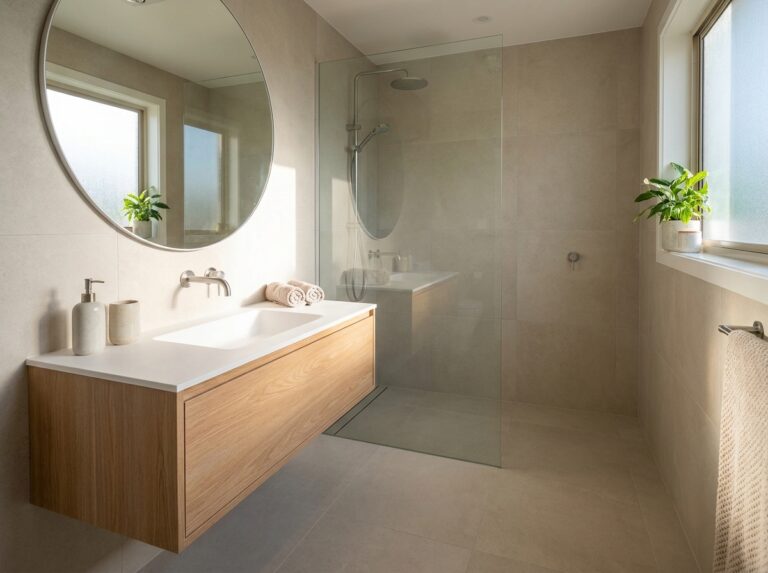
A modern neutral entryway in beige, warm grey and soft white gives a home the most flexible starting point. It sets a colour language at the door that every following room can continue without conflict. When the palette connects through the house, the whole place reads as designed rather than assembled room by room.
Warmth is the variable that decides whether neutral feels welcoming or corporate. Warm undertones do the work; cool greys in a corridor with little natural light drift toward grey-blue and feel cold on arrival. A practical test costs nothing: hold paint or fabric samples against the wall at the two times you actually use the space, early morning and after dark under artificial light. Keep hardware consistent across hooks, handles and light fittings, since mixed brass and black finishes break the calm faster than any colour mismatch. One good lamp, one considered object and a well-chosen rug supply all the interest needed.