Fall Outdoor Decor Ideas: Beautiful Autumn Displays for Every Space
Fall Outdoor Decor Ideas: Why the Outside Deserves as Much Attention as the Inside
Autumn rewards outdoor decorating more than any other season. The raw material is already outside. Leaf colour, dried grasses, and pumpkins in orange and buff tones all belong to that setting. They look their best in the place they came from.
The fifteen ideas below run from a single added element to fuller, layered displays. Every one uses materials that are easy to find. Most can be assembled in an afternoon. Garden centres, farm shops and hardware stores carry all of it through autumn.
Pumpkin Pathway Decor: The Simplest Welcome That Always Works
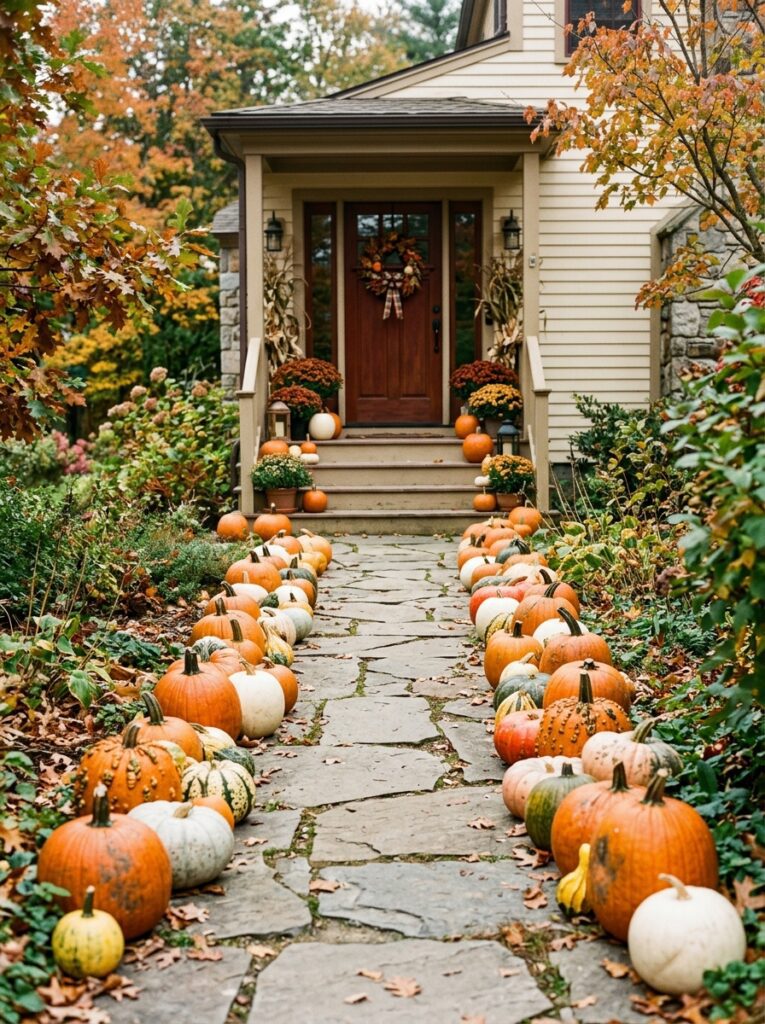
Lining a pathway or a set of front steps with pumpkins creates an instant autumn welcome. It needs no tools, no fixings and no styling skill. The pumpkins sit where you put them. The arrangement does the rest.
Varying the sizes along the route gives the display rhythm. Large pumpkins work at the start of the path or the base of the steps. Medium ones sit at intervals toward the door. Small ones finish the line closest to the entrance. That tapering pulls the eye toward the door. Mixing traditional orange with white, buff and green varieties adds a sophistication that a single colour cannot reach.
Outdoor Lantern Fall Display: Evening Atmosphere from the Moment of Arrival
Autumn gatherings happen after dark. That is exactly when most seasonal displays stop working. Light from a porch fixture falls straight down and flattens everything beneath it. A lantern lights the same display from the side, which brings out shape and texture instead.
Spacing does most of the work here. Set lanterns roughly one and a half to two metres apart along a path or step run. Stagger the heights so the line is not uniform, using a tall lantern beside a low one. Choose frames built for outdoor use, since powder-coated steel and galvanised finishes resist rust far better than untreated metal. Place them on flat paving rather than gravel or soft soil, where they tilt. In an exposed spot, add a handful of sand or small stones inside the base for weight. LED candles with a dusk-to-dawn timer switch on without anyone remembering. Match the shape to the house as well: square, clean-lined lanterns suit contemporary properties, and carriage-style ones suit period homes.
Autumn Porch Planters: Seasonal Planting That Changes With the Weeks
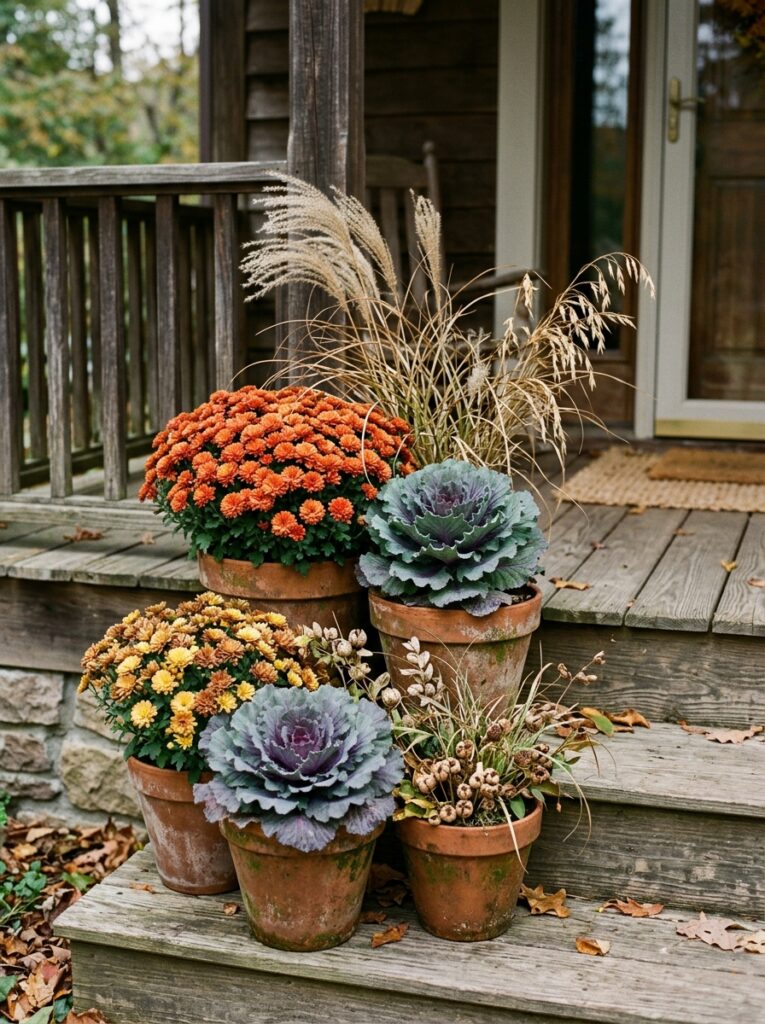
Porch planters bring living colour to the front of the home from mid-September through November. Chrysanthemums are the usual first choice. They come in every autumn shade from deep burgundy to gold and cream. They are cheap, and they bloom reliably through the cooler weeks.
Ornamental cabbage and kale add structure that flowers alone cannot. Their rosette form and dusky purple, cream and blue-green colouring reference the kitchen garden directly. Build the planter in layers for the best result. Put mums at the front, ornamental cabbage behind them, and dried grasses at the back as the tall element. That tiering is what professional seasonal displays use. Terracotta, galvanised metal and woven basket finishes all suit the autumn palette naturally.
Hay Bale Yard Decor: Structural Foundation for Layered Displays
Hay bales do two jobs at once. They lift pumpkins, lanterns and pots to a height where they read from the street. They also bring their own golden texture and blunt rectangular shape, which carries the harvest reference on its own.
A few buying and siting decisions decide how well they hold up. Ask for straw bales rather than hay where both are sold, because hay carries more seed, sprouts in wet weather and attracts rodents. Stand each bale on a pallet, a paving slab or gravel instead of wet grass, which stops the base rotting into a dark, collapsing mess. Keep them clear of downpipe splash for the same reason. Two bales either side of the path make the strongest statement, and a second bale stacked on one side adds height without extra cost. Cornstalks tied to the sides, pumpkins on top, or a wheat bundle across the face turn the platform into the display itself. Similar layering works closer to the door too, as covered in these Thanksgiving porch decor ideas. Break the bales up as mulch once the season ends.
Fall Garden Mum Display: Living Color Through the Whole Season
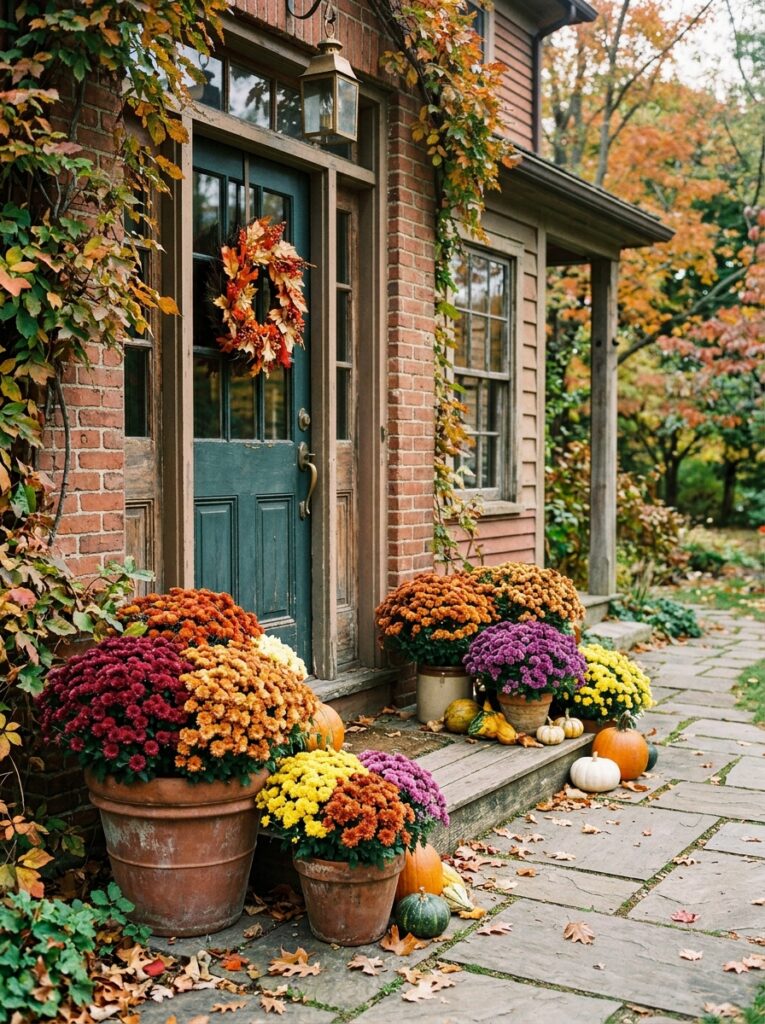
Mums deliver the longest run of colour of any fall decoration. Well-kept plants bloom from late summer to the first hard frosts. That covers the weeks when the rest of the garden is winding down. Few seasonal purchases keep paying out for that long.
Clustering three or five plants together looks generous in a way one pot never does. The group reads as a designed display rather than a single purchase. Position the clusters at different distances from the door as well. Some at the entrance, some further down the steps or path, creates depth that draws the eye toward the house. Deadheading spent blooms regularly extends flowering by several weeks.
Rustic Outdoor Crate Decor: Versatile Structure That Adapts to Every Display
Wooden crates give the most visual flexibility for the least money. One crate can be a platform, a container, a plant stand or part of a larger structure. Its job changes with how you turn it. Three identical crates can produce a full tiered display on their own.
Stand one upright at the back holding dried botanicals or a large pumpkin. Lay one horizontally in the middle for small gourds and a lantern. Tip a small one on its side at the front with trailing foliage spilling out. Old crates from markets and farm clearances are often free, and their aged surface beats anything new. Check them for protruding nails and splinters before use. A coat of exterior wood oil roughly doubles how long they survive outdoors. Raise the bottom crate on bricks and screw or cable-tie stacked crates together, since wind moves them easily. The slatted base helps in another way too: air circulates underneath, and pumpkins kept off wet ground last noticeably longer. Oregon State Extension’s guidance on storing pumpkins and winter squash explains the temperature and handling limits. Check the display weekly and remove any pumpkin that has gone soft.
Front Yard Pumpkin Patch: The Display That Reads as Seasonal Abundance
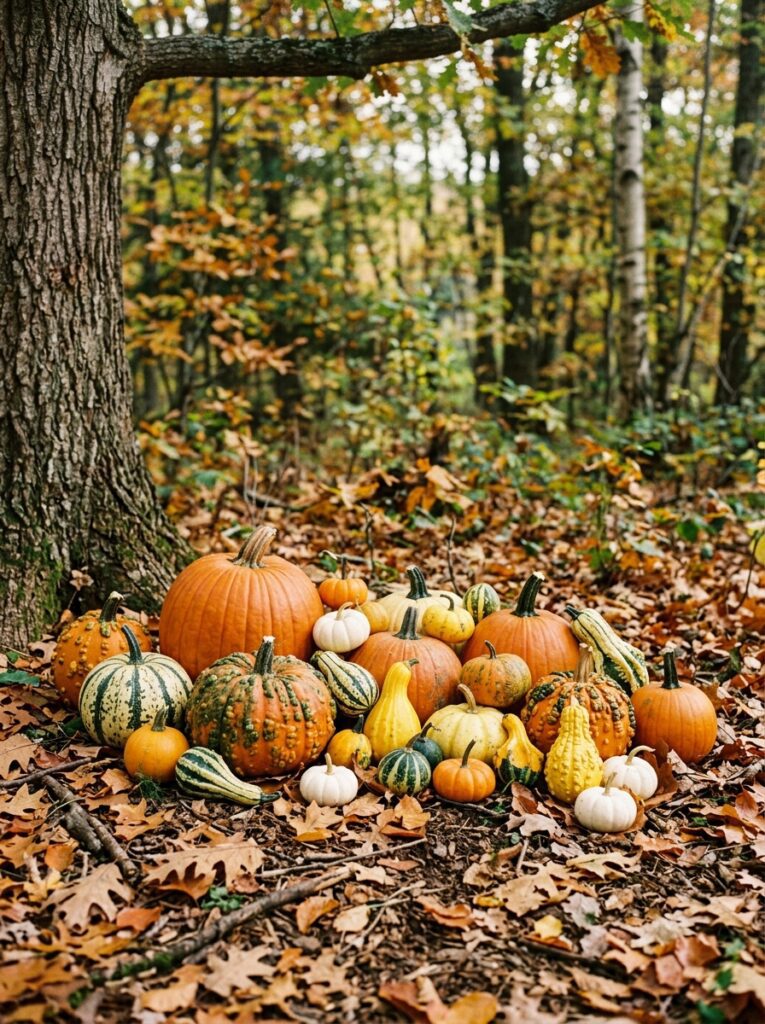
A loose cluster of pumpkins in the front yard suggests genuine abundance. A formal arrangement suggests decoration. The informal version reads as more authentically autumnal for that reason. It looks as though the pumpkins belong there rather than having been placed.
Vary the sizes dramatically inside the group. Very large specimens at the centre, small gourds at the edges, mimics how a real patch grows. Unusual varieties add to that impression. Bumpy Hubbard squash, elongated Cinderella pumpkins and striped gourds all give the group a collected look. Placement matters as much as content. Site the cluster against an existing feature, such as a tree, a fence section or the base of a garden structure. On bare lawn, the same group looks stranded from the street.
Fall Wreath Outdoor Styling: The Door as the Display
The front door is the one thing every visitor looks at directly. A wreath there earns more attention than any item placed elsewhere. One good wreath can carry an entire entrance. Nothing else gives the same return for a single purchase.
A grapevine or wire base is worth keeping year after year. Wiring on dried wheat, seed heads, oak leaves or eucalyptus lets you rebuild the same wreath in a new palette each autumn. Keep the weight moderate, because a heavy wreath swings in wind and scuffs paintwork over a few weeks. Hang it centred on the upper third of the door, at roughly eye height, so it sits above the handle rather than around it. Sunlight is the main enemy of dried material. A door facing full afternoon sun will bleach leaves and berries within a month, while a shaded or sheltered door holds colour far longer. Adding a few fresh stems the day before guests arrive lifts a wreath that has been up since September.
Cornstalk Yard Decor: Height and Harvest Heritage in One Element
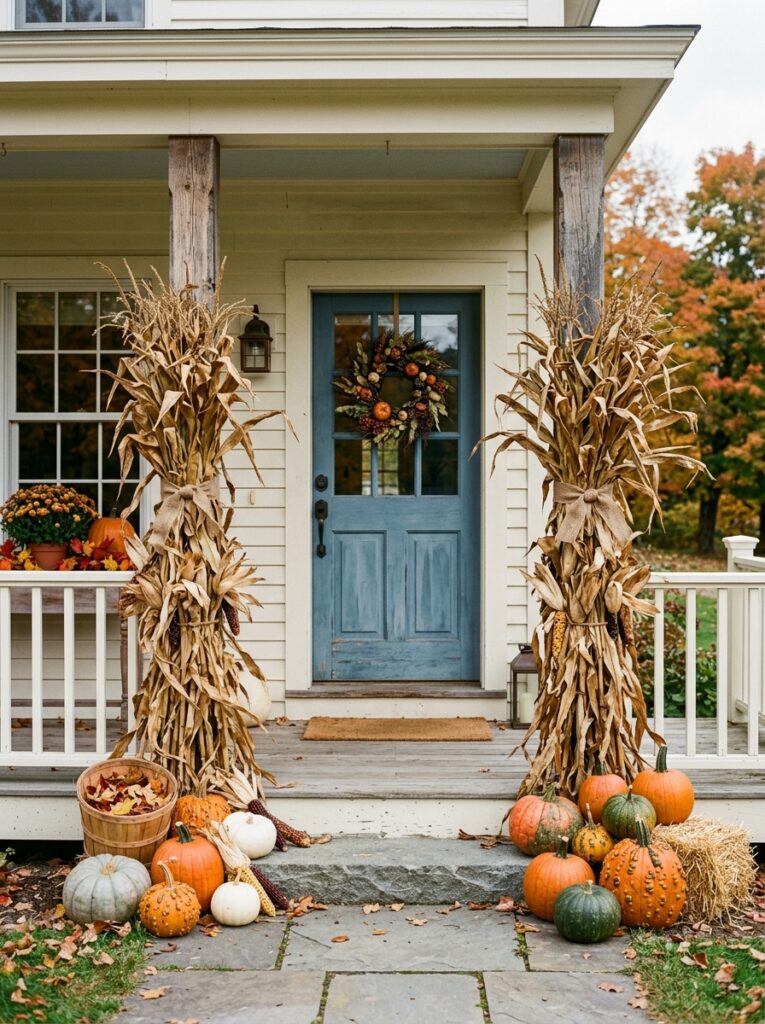
Cornstalks bring a direct link to the agricultural traditions behind Thanksgiving. They also solve a problem most fall decorations share. Almost everything else sits low. Cornstalks reach five to seven feet, so the display stays visible from well down the street.
Securing two bundles to the porch posts either side of the door is the strongest single-material entrance available. Tie each bundle with natural twine at the base, the middle and the top. That keeps the stalks compact and far more weather-resistant. A husk garland across the top, where the stalks meet the overhang, extends the effect upward. A small pumpkin grouping at the foot of each bundle finishes it. The result looks specifically arranged rather than propped in place.
Neutral Outdoor Fall Decor: The Contemporary Alternative to Traditional Colors
Cream, buff, beige and warm brown suit more houses than orange does. Neutral tones sit comfortably against any paint colour, brick or stone. There is no risk of the display fighting the façade. That is why this approach travels so well across architectural styles.
Variety choice does most of the work. Casper and Lumina give clean white, Fairytale gives a deep buff, and Jarrahdale brings a chalky blue-green. Group them in odd numbers and mixed sizes near the door. Texture then replaces colour as the interest: dried grasses, seed pods, a coir mat and warm amber glass all add surface variation. Keep hardware finishes consistent across lanterns and planters, because mixed black and galvanised metal breaks the calm quickly. One useful check before you finish: photograph the front of the house at dusk. The palette either reads clearly at that hour or disappears, and the photo shows which. Dark painted exteriors, white render and contemporary builds gain the most from this approach.
Cozy Outdoor Seating with Throws: Comfort That Invites People to Stay
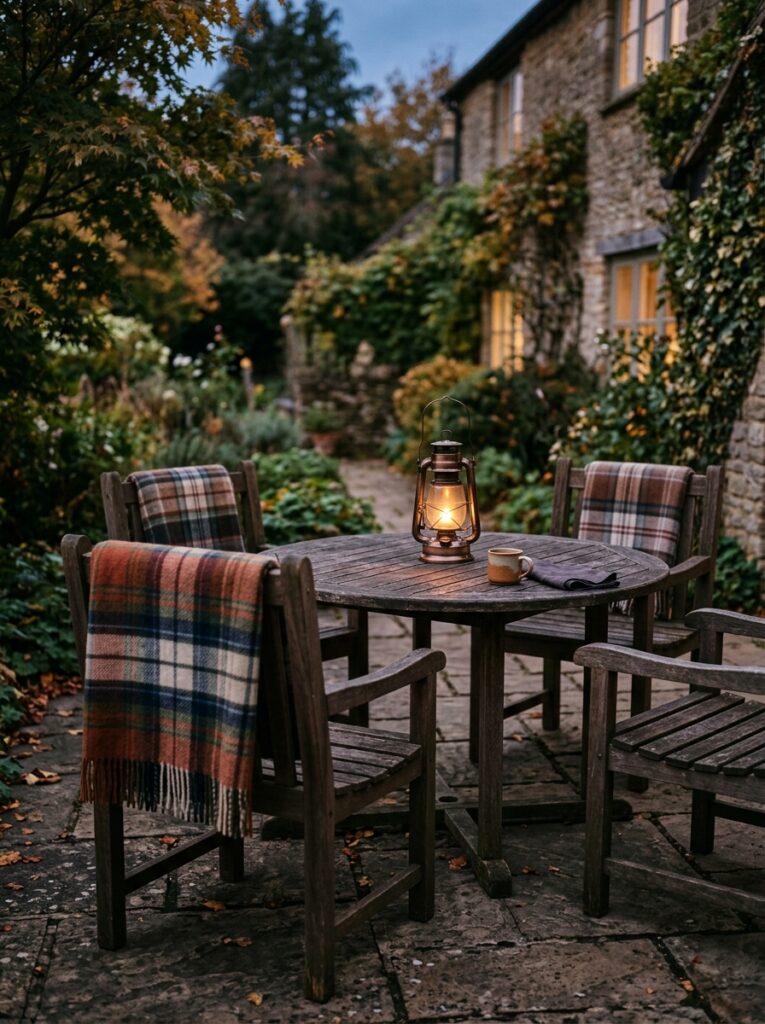
Adding wool or heavy cotton throws turns a summer patio into an autumn one. The change is practical as well as visual. The throw keeps people warm on a cool evening. It also signals that sitting outside is an invitation rather than a possibility.
Plaid throws in autumn tones supply a textile character that cushions alone cannot. Rust and cream, hunter green and navy, or burgundy and ochre all suit the season. Fold the throw over the arm or back of the seat rather than laying it flat. That casual placement says it is there to be used. A lantern on the adjacent table completes the arrangement. It also extends the seating into the hours when the temperature drops most.
Fall Garland for Railings: Seasonal Decoration at a Consistent Height
A garland works along a line rather than at a point. Individual elements create interest where they stand. A garland holds seasonal presence across the whole length of a railing or fence. That continuous band is visible from the moment anyone starts up the path.
Measure the run first, then add about thirty percent for swag. Without that extra, the garland pulls taut and looks like a rope. Fix it every 40 to 50 cm with florist wire or brown cable ties, tucked behind the rail where the fixings do not show. Keep each dip roughly equal so the line reads as deliberate. Dried and preserved material handles weeks outdoors far better than fresh cuttings, because the moisture that causes rot has already gone. Avoid draping anything across a handrail people actually grip. On a balcony, check the fixings and the wind exposure before hanging anything at all, which is worth doing whether or not you are working with a cantilevered balcony structure. Take the garland down before the first winter storms.
Wooden Sign Fall Decor: Personality and Message at the Entrance
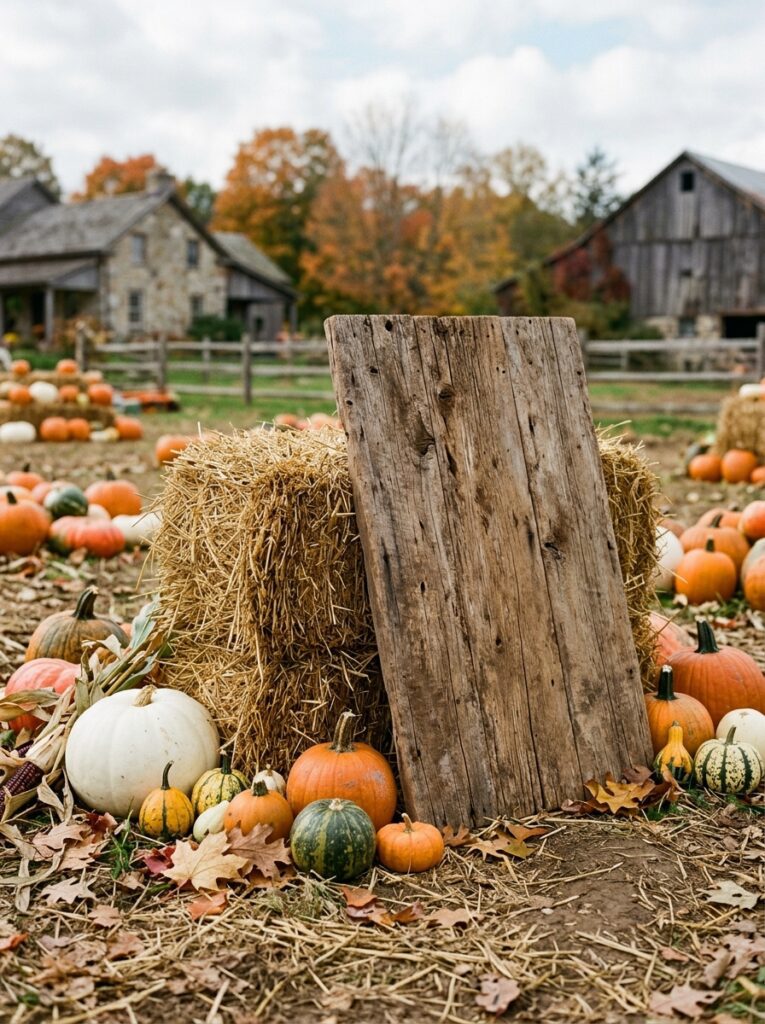
A wooden sign adds something arrangements cannot: a direct message from the household. Words like “Welcome”, “Gather”, “Grateful” or “Harvest Home” state the spirit of the season outright. The surrounding decoration handles the visual language. The sign handles the sentiment.
Placement decides whether it belongs. Lean it against a hay bale, set it inside a pumpkin grouping, or hang it from a hook beside the door. Each option ties it into the display rather than leaving it stranded. Match the material to the house as well. A distressed white-painted board suits farmhouse and coastal homes. A dark-stained board with pale lettering suits traditional and contemporary properties. A live-edge board with burned lettering suits rustic and organic schemes.
Outdoor Candle Fall Decor: Evening Atmosphere as a Design Priority
Candles change what a display does after sunset. That matters because autumn entertaining happens mostly in the dark. Flame light moves across the ridged surfaces of pumpkins and gourds. Fixed lighting cannot produce the same effect.
Wind is the first problem to solve. Hurricane holders, storm lanterns and deep glass vessels all shelter a flame well enough for outdoor use. Pour three to five centimetres of sand into the base of each vessel, which steadies the candle and catches drips. Group them at several heights on steps, beside door frames or inside a pumpkin arrangement. A single source at one height flattens everything around it. Safety deserves proper attention here, since straw, cornstalks and dried grasses ignite very quickly. Keep any flame at least a foot from those materials and follow NFPA candle safety guidance. Never leave a burning candle unattended outdoors. Battery LED candles with a realistic flame give the same evening effect with no weather or safety limit at all.
Harvest-Inspired Outdoor Decor: The Complete Autumn Display
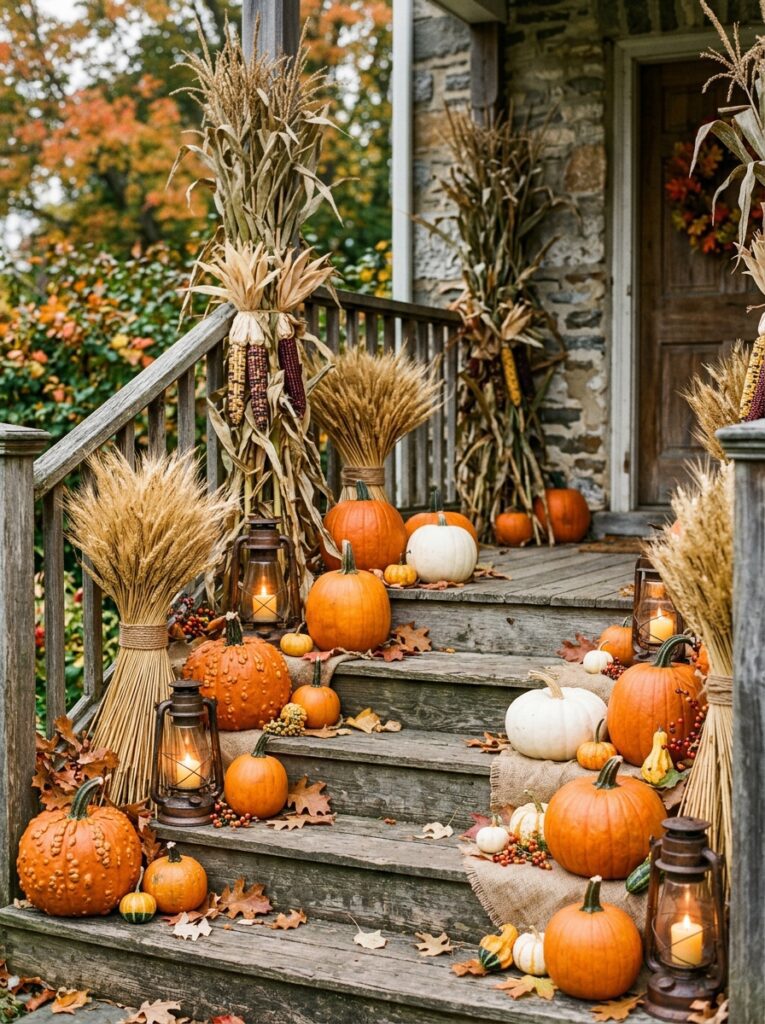
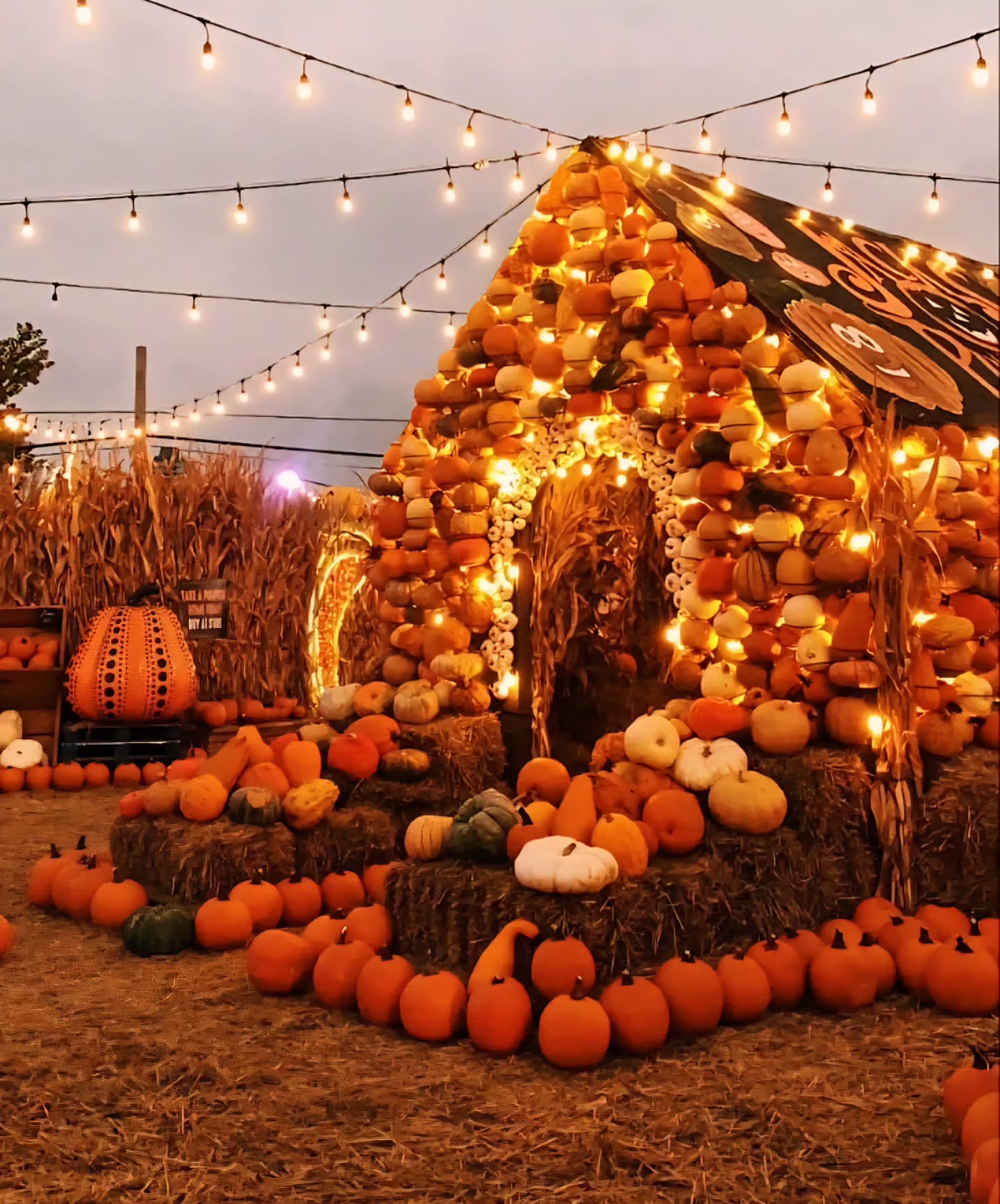
A harvest display gathers the whole vocabulary of autumn decoration into one arrangement. Pumpkins, dried wheat, lanterns, cornstalks, natural textures, timber and warm amber light all appear together. Every piece points at the same seasonal story. The result reads as a celebration rather than a set of separate purchases.
Coherence comes from the materials, not the quantity. Natural surfaces and warm earthy tones run through every element. One synthetic item in the group stands out immediately against the real ones around it. Keeping everything genuine holds the display together: real or preserved plant material, actual timber, natural fibre textiles, and light that is either real or convincingly warm. That consistency is what makes the harvest approach the most complete fall display available.
Building a Fall Display That Lasts the Full Season
The most common mistake is building something that peaks in week one. It then declines visibly through the eight or nine weeks that follow. Knowing which materials survive autumn weather avoids that. Otherwise the display looks worse than nothing by mid-October.
Pumpkins last three to six weeks outdoors, depending on temperature and moisture. Hard-skinned squash and gourds last considerably longer. Dried botanicals, wheat, cornstalks and preserved foliage hold up for the whole season. Fresh mums last two to four weeks with regular deadheading and consistent watering. Faux versions of any of these last several years when stored properly.
Build the display around the longest-lasting materials. Treat short-lived elements like fresh mums as accents you replace, not as the structure. Done that way, the display still looks intentional and fresh at the end of November.