Luxury Small Home Interior Design: High-End Ideas for Compact Spaces
Luxury Small Home Interior Design: Why Small Spaces Reward Better Decisions
Small homes do not become luxurious by adding more. They become luxurious by making better decisions with what they have. Every square metre that is well-considered feels more valuable and more genuinely comfortable than a larger space where the decisions were made carelessly. That is the genuine opportunity of small home design: constraint forces quality.
The fifteen interior design directions in this guide apply specifically to compact homes and apartments where space is genuinely limited and every design decision either contributes or costs. Each one offers a distinct aesthetic approach alongside specific principles for making a small home feel genuinely high-end rather than merely acceptably furnished. Finding the direction that suits the household’s actual lifestyle and aesthetic preferences is the most important first step.
Minimalist Small Space Design: When Less Space Demands Less Everything
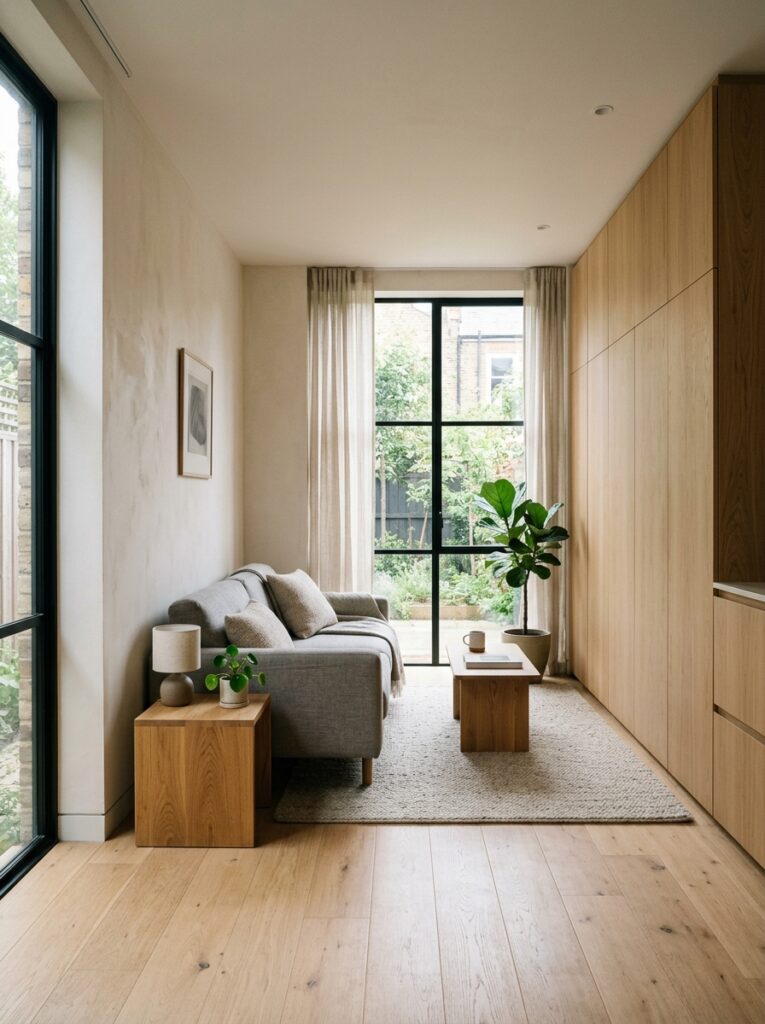
Minimalist design is not simply having fewer things. In a small home it is a considered response to the reality that visual clutter in a limited space creates genuine daily stress rather than background noise. When the eye has nowhere to rest in a small room, the space feels relentlessly demanding. When surfaces are clear and the layout is resolved, even a small room feels like somewhere a person can actually breathe.
The essential furniture principle in a minimalist small home is choosing fewer, better pieces rather than filling every corner with functional alternatives. A single excellent sofa, a well-chosen coffee table, and one quality lamp are enough for a small living room to feel complete. Everything beyond that must justify its presence specifically because storage is limited, circulation space is limited, and visual real estate is limited. Hidden storage maintains the clean surface quality that makes minimalist small spaces feel calm rather than sparse.
Scandinavian Small Home Style: Functional Beauty That Suits Limited Dimensions
View this post on Instagram
Scandinavian design has historically emerged from the practical need to make the most of limited indoor space during long, dark northern winters, which makes it particularly well-suited to small home design globally. The principles are directly applicable to compact spaces: maximize natural light, choose furniture that is proportioned to the room rather than to an ideal larger version of it, and include only what serves a genuine daily purpose.
White walls paired with light timber furniture and natural textile accents create a bright, warm atmosphere without the visual weight that darker or more saturated palettes introduce. The Scandinavian emphasis on craft quality means that each piece in the room looks genuinely considered rather than sourced for convenience. A cozy small home feels larger when it feels intentional, and Scandinavian design is the aesthetic that most consistently delivers intentionality at an accessible level.
Modern Compact Living Design: Intelligence as the Luxury
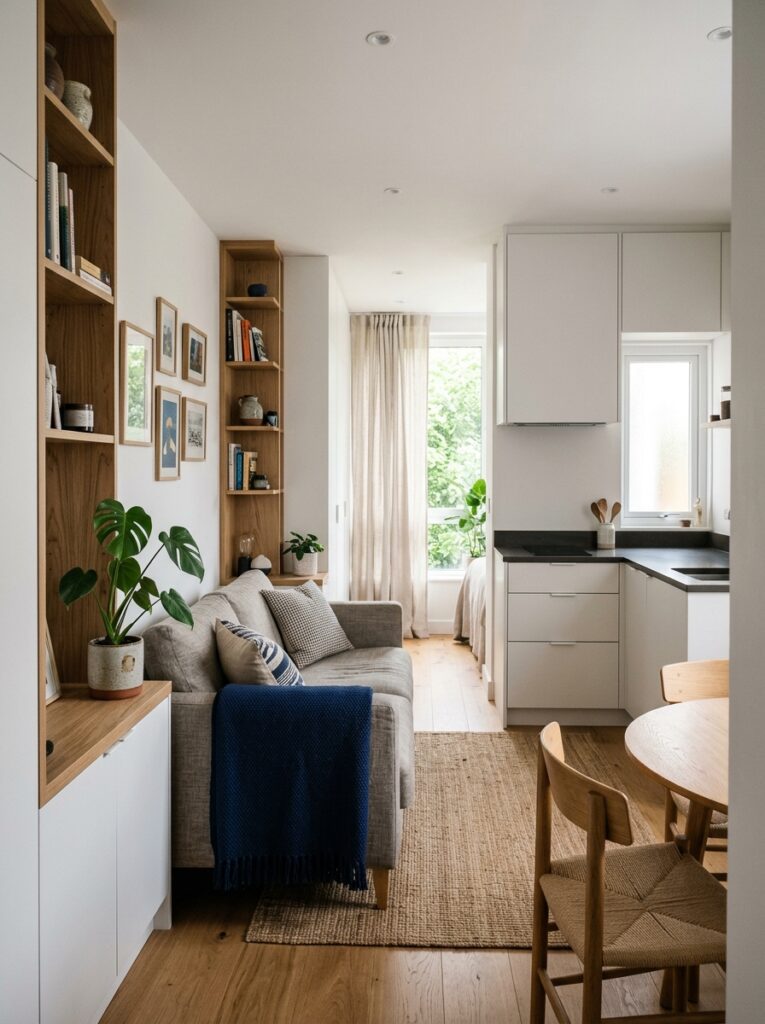
Modern compact living design treats intelligent space use as the primary luxury rather than treating luxury as a quality applied on top of functional decisions. Smart layouts that allow comfortable circulation, built-in storage that removes the need for freestanding alternatives, and contemporary furniture scaled to the room’s actual dimensions all create a living experience that feels genuinely high-end through its competence rather than its expense.
Sleek finishes in quality materials, neutral tones with carefully chosen accent details, and integrated technology that removes visual clutter all contribute the polished quality of a well-designed compact apartment. The neutral colour approach allows the quality of the surfaces and the intelligence of the layout to be what the room communicates, which is the approach most associated with the kind of urban luxury that high-end city apartments consistently achieve.
Cozy Neutral Small Home: Warmth Without Visual Weight
View this post on Instagram
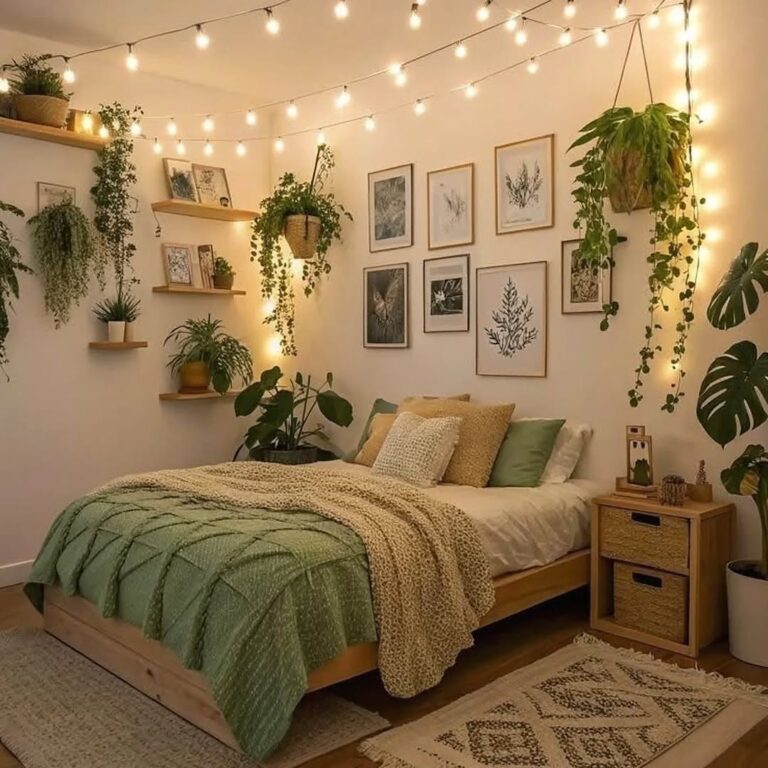
A cozy neutral small home in soft beige, cream, and warm taupe creates the specific combination of warmth and spatial openness that most small home residents want and that most decorating approaches fail to deliver simultaneously. Cool palettes can make a small space feel larger but colder. Warm palettes can make it feel cozy but smaller. The neutral warm palette resolves this tension directly by providing warmth at a tonal level that does not add visual weight.
Textured fabrics in throws, cushions, and rugs add sensory comfort and visual depth without the spatial cost of pattern or color complexity. Simple furniture in warm wood tones or upholstered in neutral fabric keeps the room from looking under-furnished while allowing the textiles to provide the layered quality that makes a room feel genuinely inhabited. This approach requires no significant investment, no structural change, and no specialist knowledge to achieve a genuinely welcoming small home result.
Japandi Small Home Interior: The Most Complete Small Space Philosophy
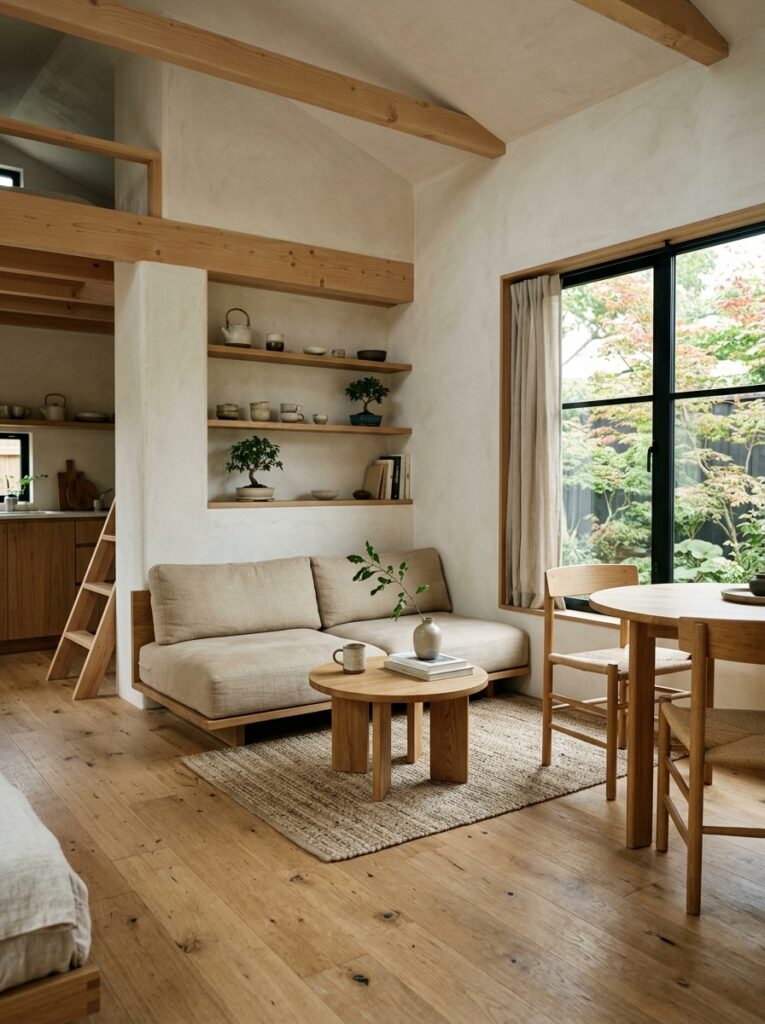
Japandi is the design aesthetic that applies most completely and most intelligently to small home interiors because both of its source traditions, Japanese minimalism and Scandinavian hygge, were developed in response to the need for calm, functional, genuinely beautiful small spaces. Japanese design specifically treats space as a design element, understanding that an empty area contributes to the room’s quality rather than representing a gap to be filled.
Applied to a small home, Japandi principles produce a living environment where every piece serves a clear purpose, every surface contributes to the room’s atmosphere, and the empty space between objects is as deliberately considered as the objects themselves. Low-profile furniture enhances the sense of volume in a small room by keeping the visual weight close to the floor. Muted natural colours and handcrafted material quality create the specific quality of calm that makes small Japandi spaces feel genuinely restorative.
Space-Saving Interior Design: Every Decision Earns Its Place
View this post on Instagram
Space-saving interior design in a small home is not about clever gadgets or novelty solutions. It is about designing the home so that every square metre serves its best possible purpose without compromise. Multifunctional furniture earns its place in this context specifically because each piece doing two jobs well is more valuable than two pieces each doing one job adequately in a space where only one piece can fit.
A bed with genuine storage capacity beneath it replaces a separate chest of drawers in the bedroom without any compromise to the sleeping experience. A dining table that extends when needed and folds flat when not creates a dining area from circulation space that returns to its original function when the meal is over. Wall-mounted shelving recovers wall area that floor-standing furniture would shade and makes both the storage and the wall above it useful simultaneously. These decisions produce luxury through intelligence rather than through expense.
Light and Airy Small Home: Brightness as the Primary Spatial Tool
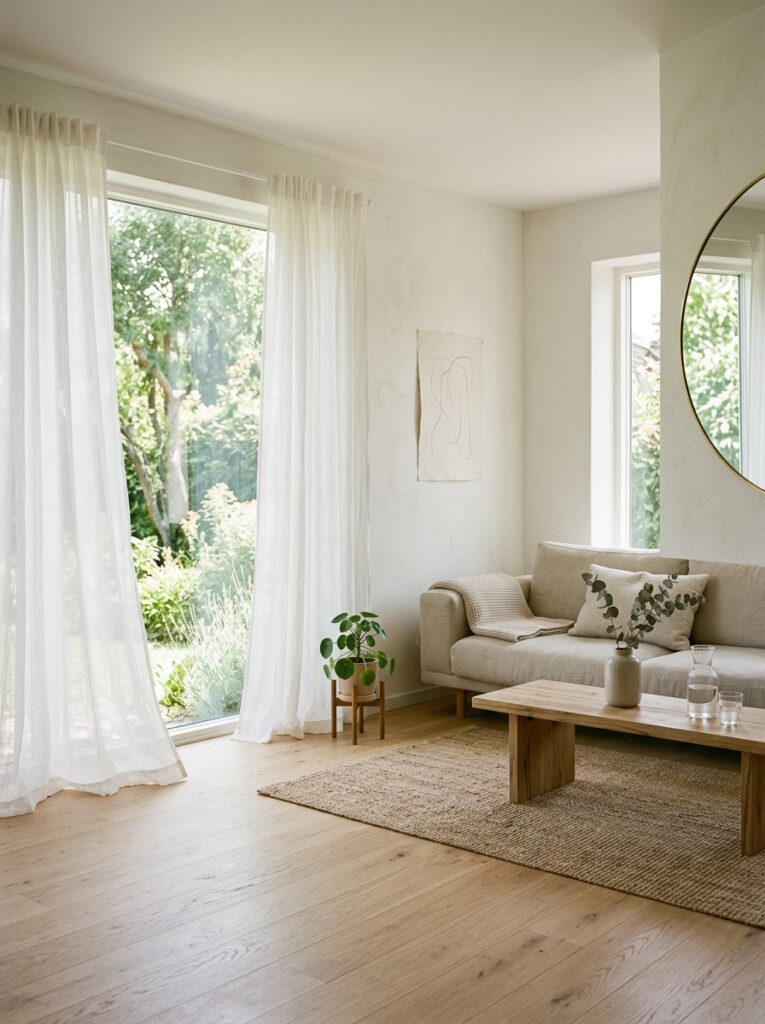
Natural light is the most powerful spatial tool available in any small home because it makes a room feel genuinely larger, warmer, and more open without any structural change or additional purchase. A small room with excellent natural light consistently feels more comfortable and more spacious than a large room without it. Managing and maximising natural light is therefore the highest-priority decision in any small home interior design project.
Sheer window treatments that diffuse light rather than blocking it maintain privacy without sacrificing brightness. Pale reflective surfaces on walls, ceilings, and floors amplify available light rather than absorbing it. Mirrors positioned opposite windows or light sources double the perceived brightness of the space by reflecting what is already there. Minimal furniture placement that keeps windows unobstructed ensures the light that enters the room reaches every corner rather than being interrupted by objects positioned without consideration of the light flow.
Functional Small Home Layout: The Foundation That Everything Else Serves
View this post on Instagram
A functional small home layout is the design decision that determines whether every other design investment delivers its intended value. A beautifully decorated small home with a poorly conceived layout is consistently less pleasant to live in than a simply decorated one where the layout allows comfortable daily movement, clear zone definition, and adequate storage within reach of where it is actually needed.
The functional layout principle is to map how the household actually moves through the home during typical daily activities before placing any furniture. The path from the entrance to the kitchen, from the bedroom to the bathroom, from the sofa to the dining area. Any furniture positioned across these natural paths creates daily friction that accumulates into genuine dissatisfaction with the living environment over time. Designing the circulation first and positioning furniture around it rather than into it is the most impactful single principle in small home layout design.
Contemporary Small Apartment Design: Urban Sophistication in Limited Space
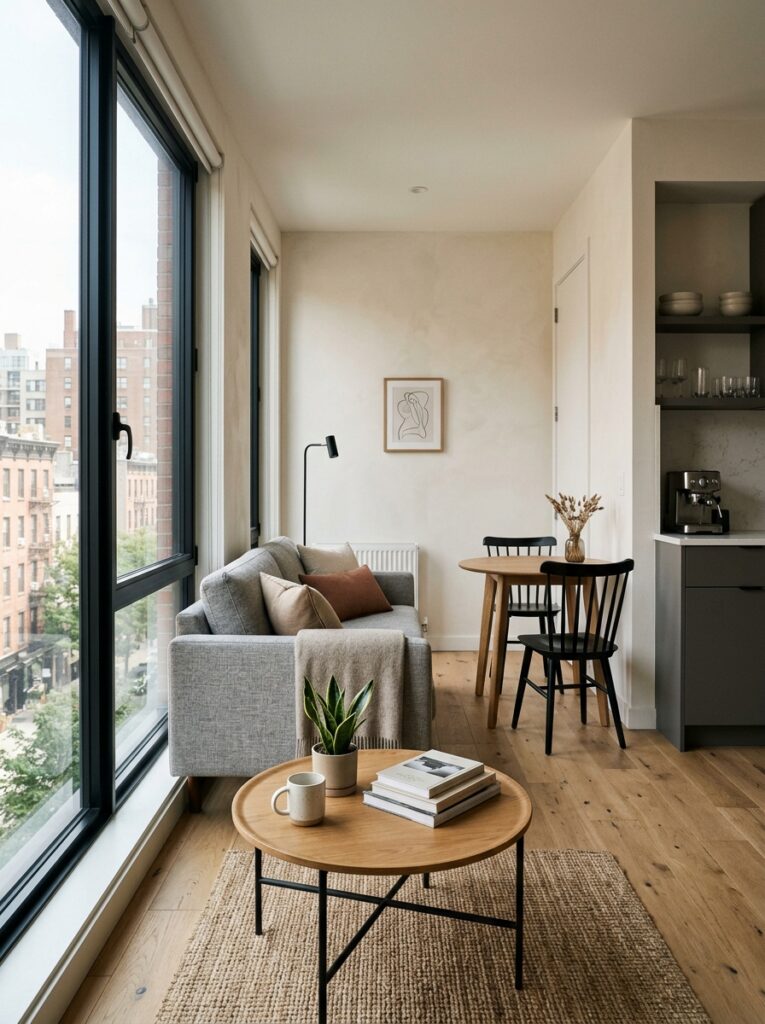
Contemporary small apartment design addresses the specific context of urban living where limited square footage, neighbours on multiple sides, and the visual complexity of city environments outside the windows all create specific interior design challenges that suburban and rural homes do not share. The design response is a clean, controlled interior environment that provides contrast with rather than extension of the stimulating external environment.
Modern finishes in quality materials, a neutral palette with carefully chosen texture and accent detail, and open layouts that maintain visual connection between living areas all contribute the urban sophistication that the city apartment context requires. The quality of the materials matters more in a small contemporary apartment than in larger spaces because every surface is visible at close range throughout the day. Cheap finishes in a small well-lit apartment read as cheap. Quality finishes in the same space read as luxury.
Warm Minimal Small Home: The Balance That Most Small Homes Need
View this post on Instagram
Warm minimalism is the specific design approach that solves the most common small home challenge: how to create a space that feels both uncluttered and genuinely inviting. Pure minimalism in a small home can feel cold and uninhabited. Warm layering can feel crowded and visually demanding. Warm minimalism positions precisely between the two by keeping the layout clean and the surfaces largely clear while ensuring that the few elements present are specifically warm in their material and tonal quality.
Soft warm lighting from floor and table lamps at human height, earthy neutral tones throughout the palette, and a small selection of high-quality tactile textiles, a wool throw, a linen cushion, a natural fiber rug, create warmth without accumulation. The warmth is in the quality of what remains rather than the quantity of what is added. This is the small home design approach that most consistently reads as genuinely luxurious to visitors who cannot identify exactly why.
Urban Small Space Interior: Character Through Considered Contrast
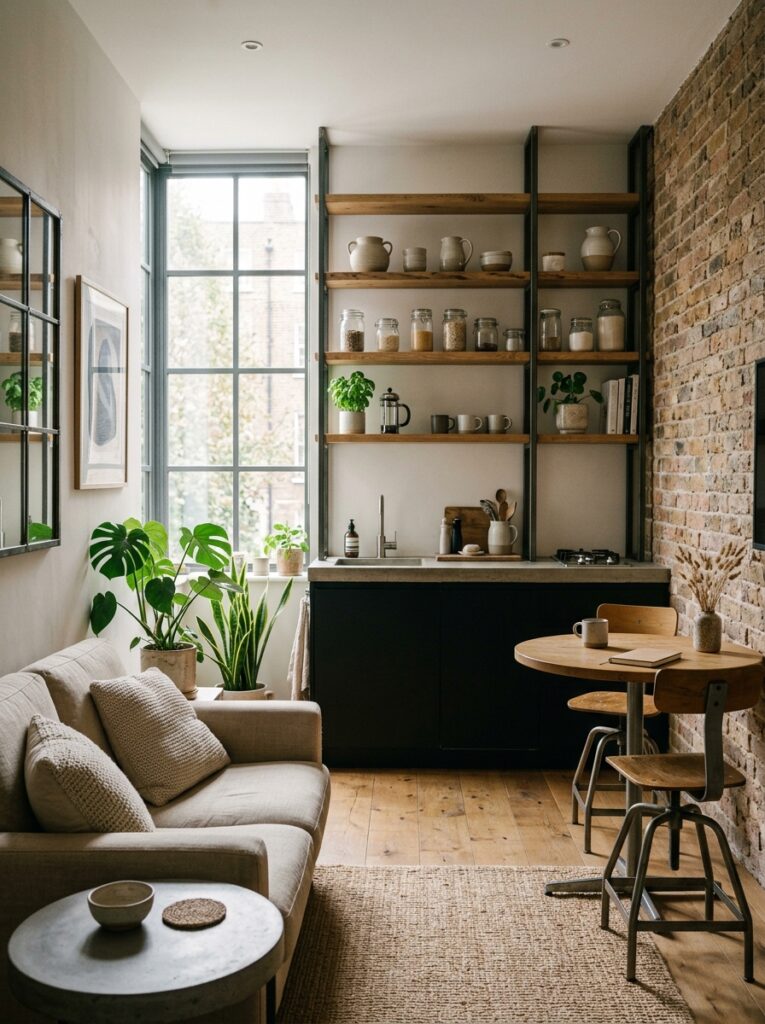
An urban small space interior uses the specific context of city living as a design opportunity rather than a limitation. Industrial elements like exposed brick, polished concrete, visible metal details, and raw timber reference the urban architectural context in a way that creates character without requiring any additional decoration. The building’s own materials become the design.
Compact furniture scaled to the room’s actual dimensions, open shelving that holds both functional items and genuinely attractive objects, and a neutral palette that allows the architectural materials to be the visual content all create an urban interior that feels genuinely considered rather than simply urban-adjacent. Industrial accents provide the character that purely minimal spaces sometimes lack without introducing the visual complexity that small spaces cannot support.
Soft Modern Small Home Design: Comfort Without Compromising Contemporary Quality
View this post on Instagram
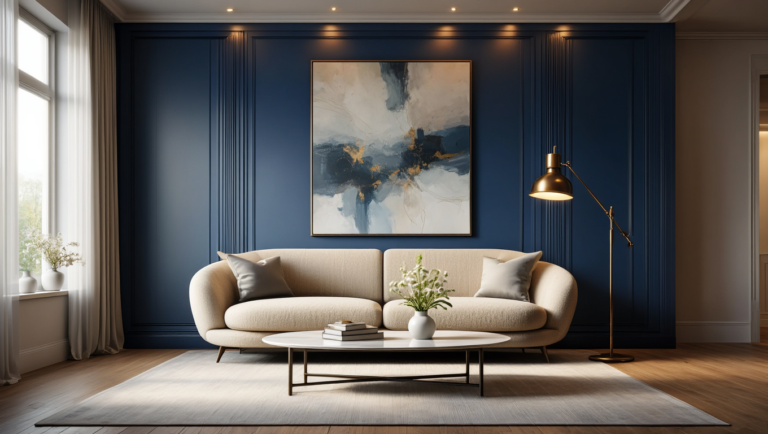
Soft modern design addresses the specific need for small homes to feel genuinely comfortable to live in every day while maintaining the visual quality of a contemporary interior. Curved furniture edges rather than sharp right angles, soft fabric choices rather than exclusively hard surfaces, and a palette that uses warmth alongside modern neutrals all contribute the comfort quality that makes this approach specifically well-suited to residential small spaces.
A small living room with a curved sofa, a rounded coffee table, and warm natural lighting feels consistently more welcoming than the same room with angular furniture and cool overhead lighting regardless of whether the furniture is more or less expensive. The curve and the warmth both signal comfort at a perceptual level that the eye and the brain respond to before any conscious assessment of the space occurs. Soft modern design uses these responses deliberately.
Natural Wood Small Home Interior: Organic Character in Compact Spaces
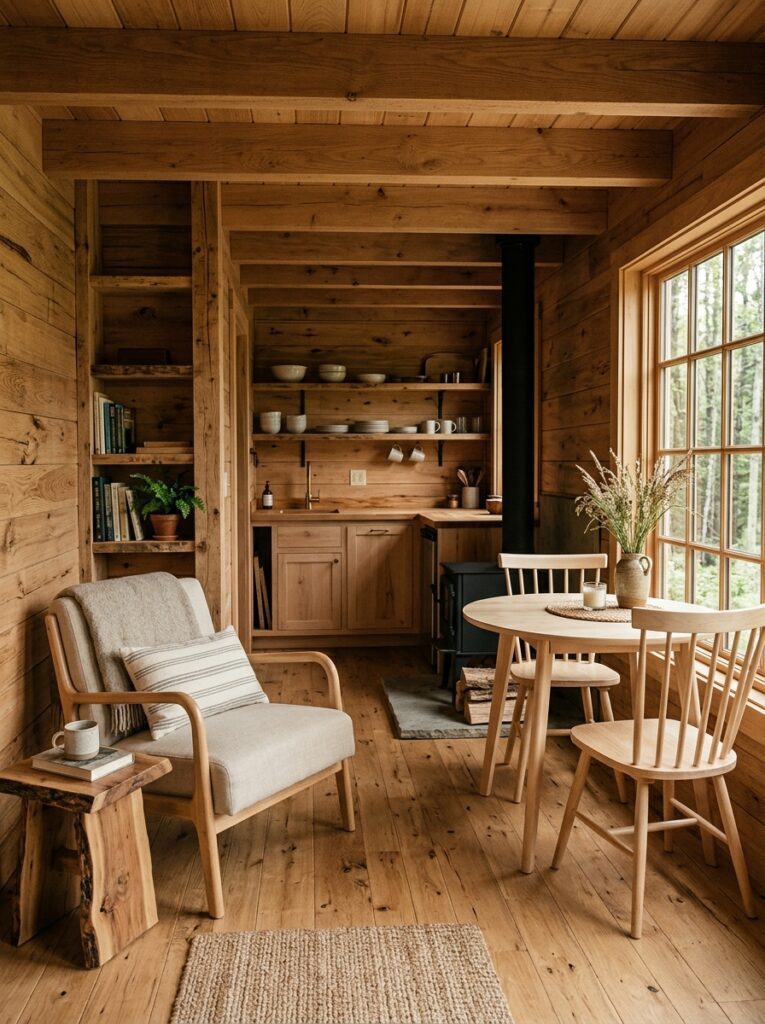
Natural wood brings an organic richness to small home interiors that no synthetic material replicates because real wood’s grain variation, warmth, and the way it ages all create a material quality that is visually interesting at close range throughout the day. In a small home where every surface is consistently visible and consistently close, that close-range quality matters significantly more than it does in larger spaces.
Light wood tones in pale oak or birch maintain brightness in small rooms while providing the warmth that painted or vinyl alternatives do not. Medium wood tones in warm honey or amber add richness without the visual weight of very dark alternatives. The combination of natural wood with light neutral walls and simple textile choices creates a small home that feels both complete and genuinely warm without any additional decorative effort required beyond the material quality of the wood itself.
Simple Luxury Small Home Style: Quality in the Decisions That Matter
View this post on Instagram
Simple luxury in a small home is the design approach that concentrates the available budget on the materials and elements that receive the most daily use and the most daily visual attention rather than distributing it equally across every surface and every piece. The quality investment goes to the sofa that is sat on every evening, the bedding that is slept under every night, and the lighting that determines the atmosphere of every evening hour. These are the purchases that deliver daily luxury.
Elegant materials and refined finishes in the key pieces elevate the room without requiring every item to be expensive. A genuinely quality sofa in a simple neutral fabric surrounded by simple accessories reads as luxurious because the central investment communicates what the approach values. Neutral colours throughout keep the focus on the material quality of the key pieces rather than distributing the eye across colour and pattern that compete with the quality statement.
Open-Plan Small Home Design: Spatial Generosity Through Connection
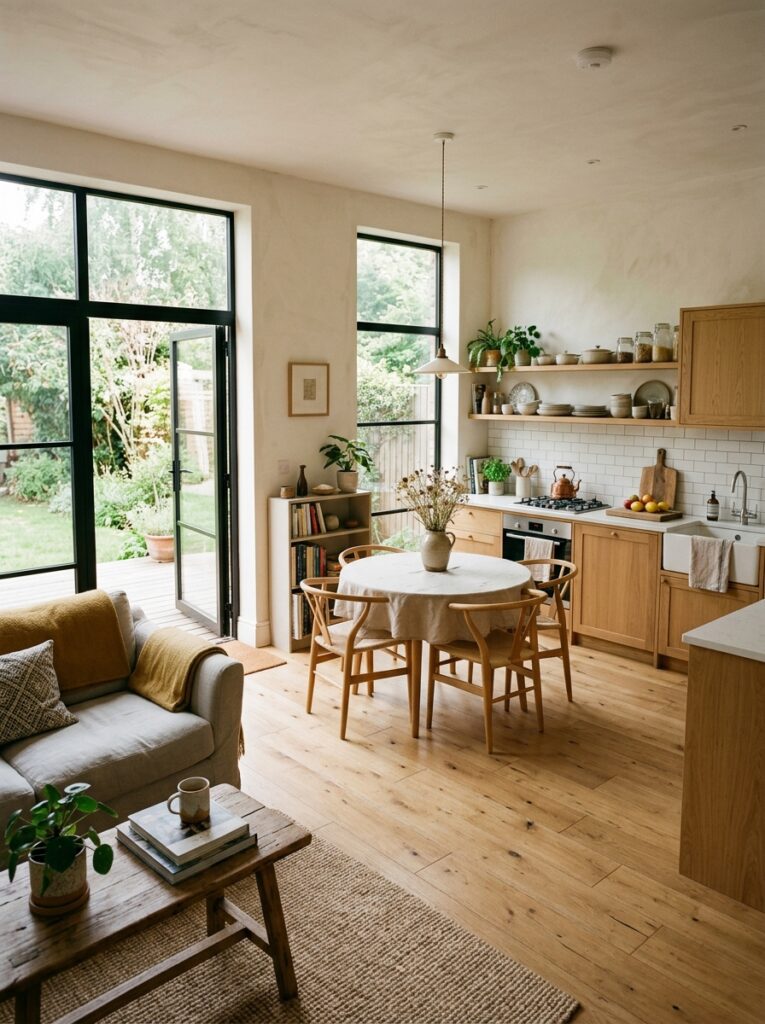
An open-plan layout is the single most impactful structural decision available for increasing the felt spaciousness of a small home because it connects previously separate spaces into one continuous visual field. When the eye can travel from the kitchen through the dining area into the living space without interruption, the perceived volume of the whole is significantly larger than the sum of the individual rooms it replaced.
Natural light penetrates further into the home when walls are removed because light from windows in the kitchen or living area now reaches the full connected space rather than being contained behind walls. The design challenge of open-plan small homes is defining the different zones clearly within the continuous space so that living, dining, and cooking areas each feel appropriately distinct despite sharing the same floor. Rugs beneath seating areas, pendant lights above dining tables, and material changes between zones all create the zone definition that partitioned rooms previously provided through walls.
The Small Home Luxury Principle
Every successful luxury small home on this list achieves its quality through the same underlying approach. The constraint of limited space was used as a reason to make better decisions rather than as an excuse to make cheaper ones. Better decisions about which furniture earns its floor space. Better decisions about which materials receive daily contact. Better decisions about how light moves through the rooms and how each space transitions into the next.
Small homes that feel genuinely luxurious consistently look more considered than large homes that feel ordinary. The consideration is the luxury. It is available to every budget, every size, and every aesthetic direction. It requires only the willingness to think carefully before purchasing, placing, and committing to any element in the home rather than filling available space reflexively. That willingness, applied consistently across every room and every decision, is what turns a small home into a genuinely high-end compact space.