
Budget Friendly Home Decor Ideas That Look Expensive
Some rooms cost a fortune and still look cheap. Others are furnished from charity shops and look expensive. The difference is rarely the money. It is a handful of small signals that the eye picks up in the first few seconds.
Those signals can be named, and each one has a fix that costs little or nothing. So this guide does not start with a shopping list. It starts with the six tells that make a room look cheap. For each tell, it gives the budget-friendly home decor fix that removes it.
Work through them in order. Most rooms suffer from two or three at once. Fixing those usually does more than any single new purchase.
How a Room Gives Away Its Budget
Nobody walks into a room and prices the sofa. What people notice is harder to name. The room feels either settled or temporary. That impression comes from scale, surface, quantity, fit, variety and colour.
Expensive rooms tend to get all six right. Budget rooms usually fail on a few. The good news is that none of the six depends on price. Each depends on a decision.
Tell One: Everything Is Slightly Too Small
This is the most common tell by far. Small things are cheaper, so budget rooms fill up with them. There is a rug that stops short of the sofa, curtains that end at the window sill and a small print floating on a big wall. Lamps are sized for a bedside table and set in a living room.
Each item is fine alone. Together they make the room feel like a waiting room. Undersized pieces read as stopgaps, bought until something proper arrives.
The fix is fewer, bigger things. One large rug beats two small ones. It should be big enough for at least the front legs of the sofa and chairs to sit on it. One large print beats six small frames. A flatweave or jute rug in a generous size costs less than most people expect, because the price is in the pile, not the size.

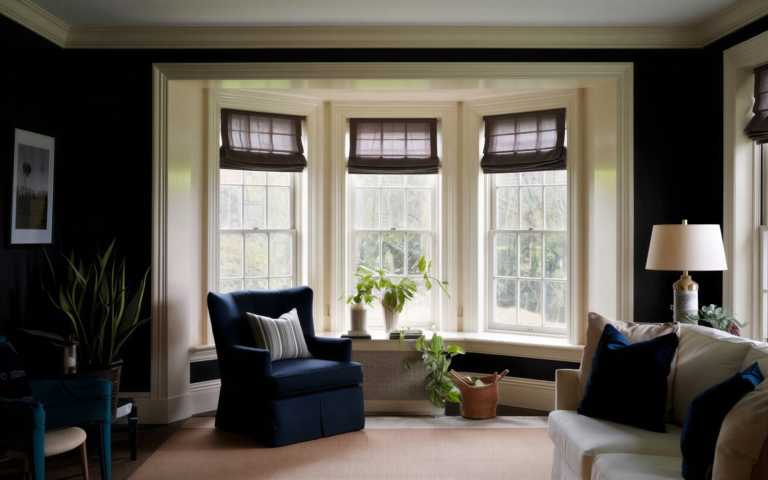
Curtains are the cheapest scale fix of all. Hang the pole close to the ceiling, not just above the frame. Extend it well past the window on each side, so the open curtains sit against the wall rather than over the glass. The window looks bigger and the ceiling looks higher. Even inexpensive cotton panels look tailored when they fall all the way to the floor. Our window decor guide covers the different treatments in detail.
Tell Two: Shine Where There Should Be Texture
Cheap materials often give themselves away through shine. Glossy plastic, printed laminate and shiny polyester all reflect light in the same flat way. The eye has learned to link that sheen with low cost.
Natural materials behave differently. Linen, wool, jute, raw wood and unglazed ceramic scatter light. They look soft even from across a room. That is why a room of real textures feels rich, even when every piece in it was cheap.

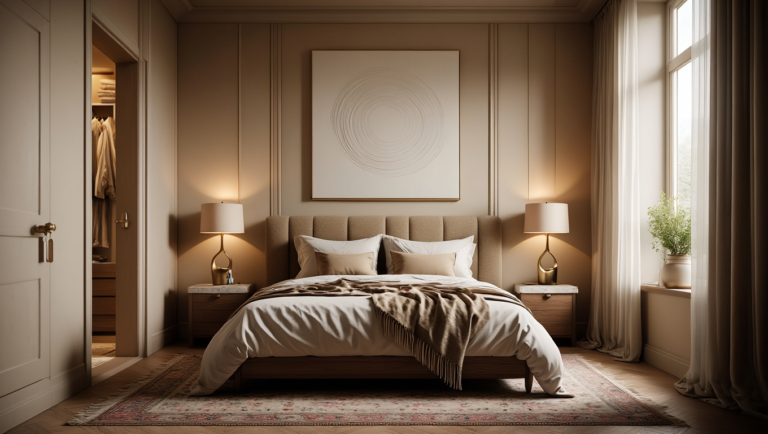
Start with the things you touch. Replace shiny cushion covers with linen, cotton or wool blends, and keep the inserts you already own. Covers cost a fraction of new cushions. Mix two or three textures within one colour family, such as rough linen, smooth cotton and a chunky knit. The layering does the work that price usually does.
Then look at hardware. Builder-grade kitchen and bathroom handles are usually thin, shiny and chosen on cost. New handles in a matte or brushed finish need only a screwdriver. Measure the distance between the screw holes before you buy. A handle with the same spacing avoids new holes in the doors.
Finally, use matte spray paint. It turns a shiny plastic frame, a dated brass lamp base or a glossy vase into something that looks deliberate. Matte black, warm white and soft stone are the safest colours.

Tell Three: Too Many Small Things, Scattered
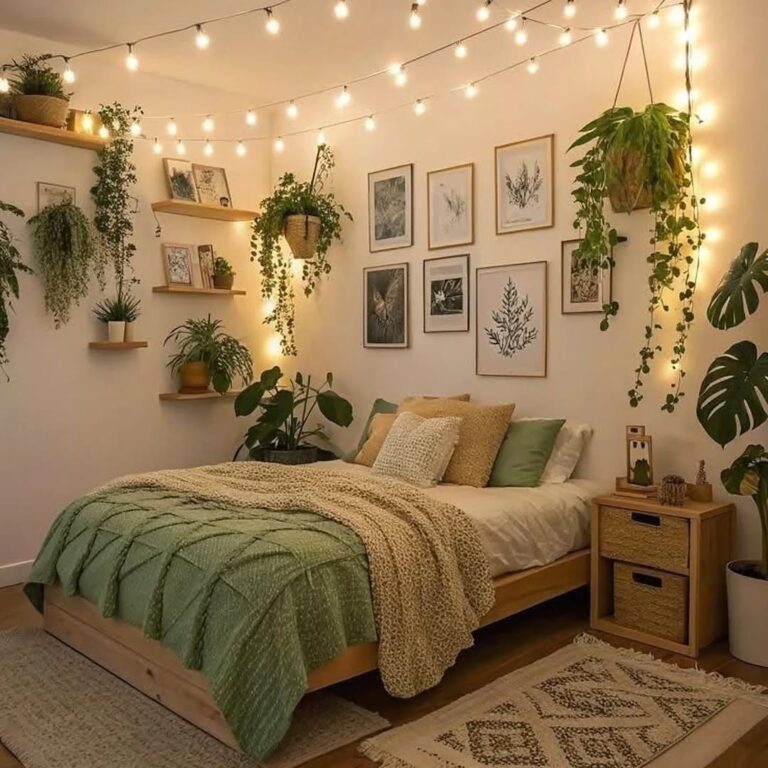
Budget decorating often means buying lots of little objects. Each one is affordable, so they multiply. A candle here, a figurine there and three small plants along a sill soon fill every surface.
Scattered objects read as clutter, however nice each one is. Grouped objects read as a display. The items do not change. Only the arrangement does.

Put small objects on a tray or in a shallow bowl. The edge of the tray gives them a boundary, and the eye reads the group as one thing. Vary the heights within each group. A stack of books can lift a short object up to meet a tall one.
Put everything else away. Woven baskets are the budget answer here. They hide throws, chargers and toys while adding natural texture of their own. A large basket beside the sofa and a lidded one under a console will clear more surface than any shelf. For open shelves, our guide to shelf decor ideas shows how to keep them from filling up again.
A useful rule is to remove one object from every surface before you add anything new. Empty space is free. It is also one of the clearest signals of a considered room.
Tell Four: Nothing Quite Fits
Expensive rooms look tailored. Things are the right length, the right fullness and the right height. Budget rooms often lose this without anyone noticing why.
Flat cushions are the classic example. A cover stuffed with a same-size insert looks thin and tired within weeks. Use an insert a little larger than the cover, and it stays plump. Curtains that hover above the floor look borrowed from another window. Let them touch the floor or break just onto it.
Other fit problems are just as cheap to fix. Straighten frames and fix them at the bottom corners with a little adhesive putty so they stay level. Tidy visible cables with clips or a cable box. Tighten wobbly chair legs. Iron the curtains once after hanging them. None of this costs much, and all of it removes the sense that the room was thrown together.
Check the height of lamps too. A table lamp should light the area beside you, not shine into your eyes. If you can see the bare bulb from where you sit, the shade is too high or too shallow. Our lighting guide covers the rest of the room’s light.
Tell Five: It All Came From One Shop
A room furnished in a single weekend from one store looks like a showroom. The sofa, side tables, lamps and art all share the same newness. That sameness is expensive in a strange way. It costs money yet reads as generic.
Rooms that look expensive usually look collected. They mix new pieces with old ones and plain pieces with one or two with character. Secondhand shops are the cheapest source of exactly that quality.
Shop secondhand for materials, not for looks. Glass, ceramic, solid wood and metal survive decades and can be cleaned or repainted. Judge a piece by its shape and material, and ignore its current colour. To spot solid wood, look at the back and the inside of the drawers. Solid timber shows grain on every face. Veneered board shows a pale core at the edges.
Old mirrors are a particularly good find. The glass rarely ages, and only the frame looks dated. A coat of paint changes that in an afternoon. Our guide to mirror decor explains where a large one will do most for a room.
Aim for one old or secondhand piece in every room. It breaks the showroom effect on its own.
Tell Six: Colour With No Plan
Colour is cheap, which is exactly why it gets overused. A bright throw, a patterned cushion and a painted wall can each look good. If none of them relate to each other, the room looks random.
The fix is to take your accent colour from something already in the room. Look at the rug, a print or the curtains. Pick one colour from it and use that for the wall or the cushions. The new colour then looks as if it was always intended.

One deeper wall behind a sofa, bed or dining table is the best value in decorating. A single tin of paint changes the room. Sage, dusty teal, terracotta and charcoal all work well against lighter walls. Keep the other three walls calm, so the colour looks confident rather than accidental. The wall decor guide covers what to hang on it afterwards.
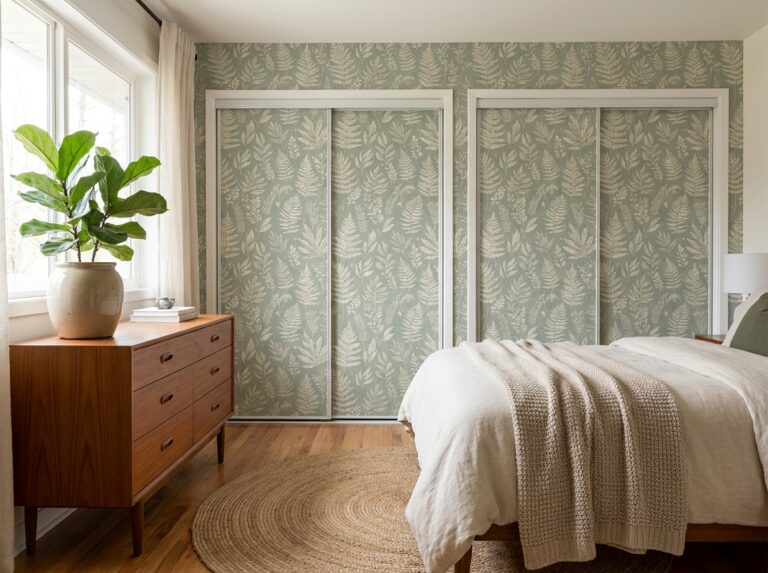
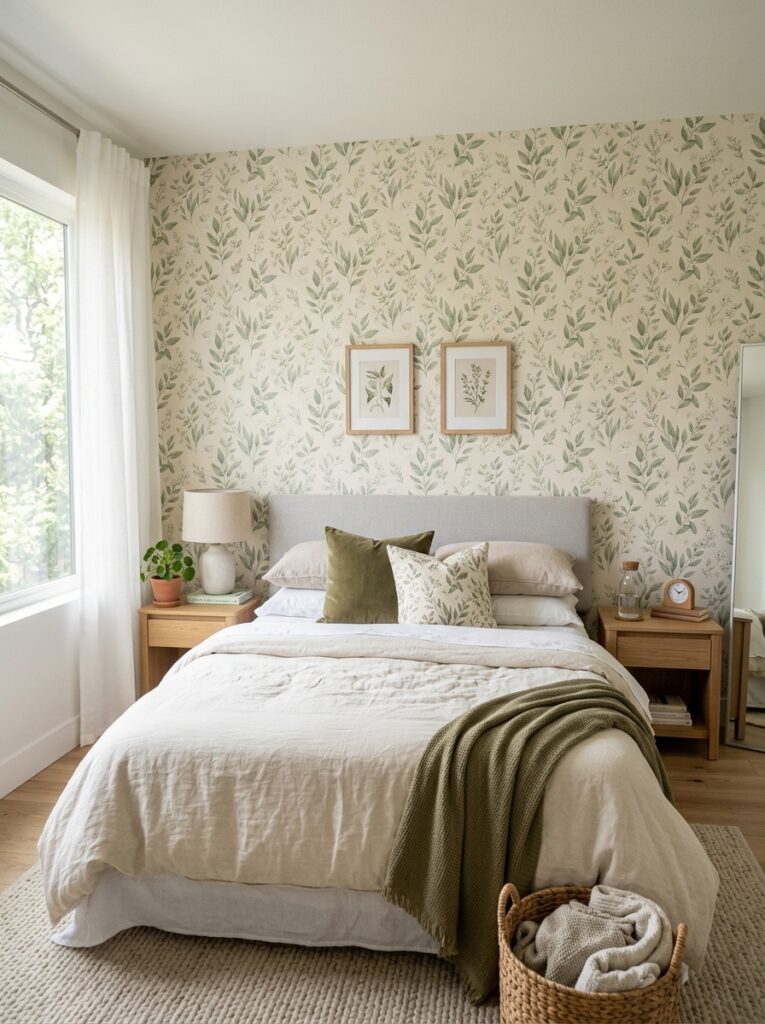
Renters can get the same effect with peel-and-stick wallpaper. Choose a quiet pattern in tones already present in the room. A botanical print or a fine texture looks more expensive than a bold geometric. Test one sheet first on a hidden patch of wall. Some paints lift when the paper comes off.
The Candle Tray, Without the Fire Risk
Three candles of different heights on a tray is one of the most repeated budget styling ideas. It works. A single candle looks forgotten, while three look arranged. But the trays in most styling photos also hold dried flowers, books and linen napkins. That is where the idea needs a caution.

The National Fire Protection Association advises keeping candles at least 30 cm from anything that can burn. Its figures show that over half of home candle fires start when something flammable is too close to the flame. More than a third start in the bedroom, and December is the peak month.
So style the candle tray with that in mind. Keep books, dried stems and fabric off any tray you plan to light. Put it on a sturdy, clear surface, well away from curtains and shelves above. Blow the candles out whenever you leave the room, and do not burn them all the way down.
For bedrooms, and for any tray styled with flammable things, use flameless candles instead. The NFPA recommends them. Good ones with a warm, flickering light now cost little, and in a photo or across a room they look the same.
The Fixes That Cost Nothing
Before buying anything, spend an afternoon moving what you own. Most furniture sits where it was first placed, not where it works best.
Pull the sofa a little away from the wall. A room with furniture pressed against every wall looks like a corridor. Move lamps, plants and art between rooms. A lamp from a spare room can transform a living room corner. The object is not new, but the room feels as if it is.

An empty corner can be filled with one tall plant in a plain pot. One large plant does more than several small ones spread around. If you have pets, check the species first, as some popular indoor trees are toxic to cats and dogs. Our guide to empty corner decor lists which ones to avoid.
Finally, clear every surface completely, then put back only what you miss. Most people return about half. The half that stays in the box is the clutter that was making the room look cheap.
None of the six tells is solved by spending more. They are solved by choosing bigger, rougher, fewer and better fitted. For the next step, see our guides to simple home decor ideas and to making the whole house feel connected.