How to Choose the Perfect Bathroom Vanity for Small Spaces
Bathroom vanities carry a lot of responsibility for such a small piece of furniture. They need to hold your everyday essentials, give you counter space for getting ready, and somehow still leave enough room to open a door or turn around without bumping an elbow. In a small bathroom, that balancing act gets a lot trickier.
Walk into any home improvement store and you’ll find rows of vanities in every size, finish, and configuration imaginable. It’s overwhelming, and it’s easy to fall for one that looks great in the showroom but turns your cramped bathroom into an obstacle course once it’s installed. Choosing the right vanity for a small space isn’t about finding the smallest option available — it’s about finding the one that fits your actual layout, your storage habits, and how you use the room every day.
Measure Before You Even Start Browsing
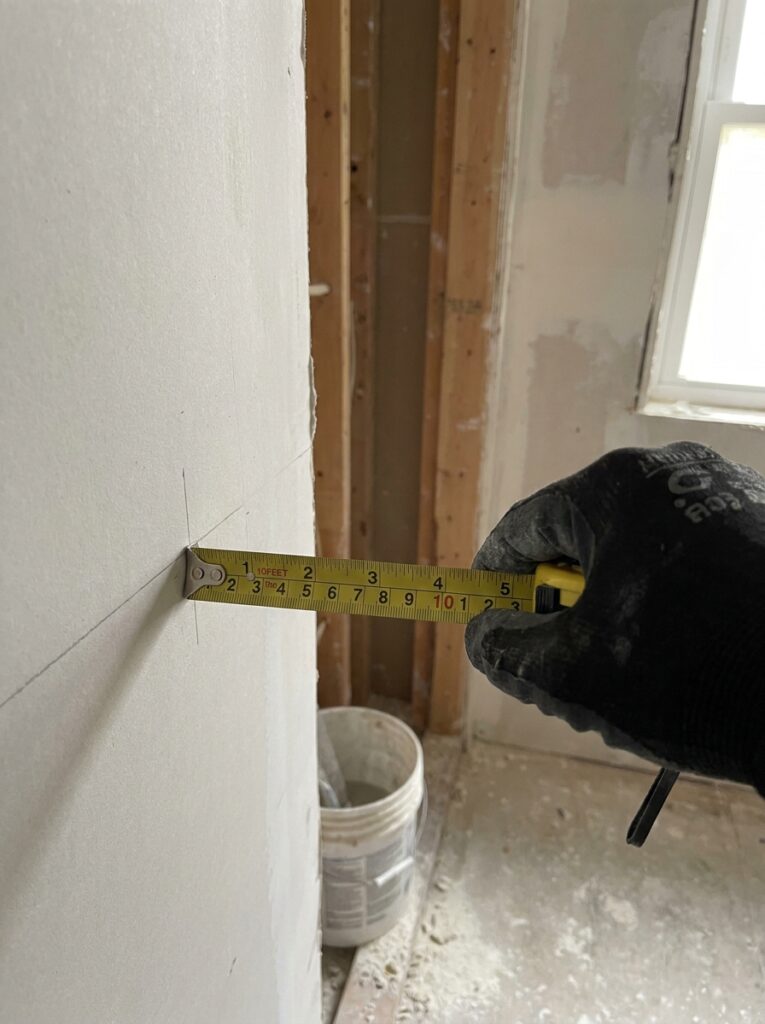
It sounds obvious, but skipping proper measurements is one of the most common reasons people end up disappointed with a new vanity.
Start with the width of the wall where the vanity will sit, then measure the depth from the wall to wherever the door swings or where a person needs to stand comfortably. Don’t forget to check the height of any nearby fixtures, since a vanity that’s too wide can crowd a toilet or interfere with a door swing in ways that aren’t obvious until it’s already installed.
It also helps to measure diagonally if your bathroom has an odd layout, since some small bathrooms are narrower at one point than another. A vanity that technically fits the width on paper can still feel tight if the room narrows near the entry.
A good rule of thumb is to leave at least 21 inches of clear floor space in front of the vanity for comfortable movement, and at least 4 inches between the edge of the vanity and any adjacent fixture, like a toilet or tub. These numbers come from standard building guidelines, but they’re worth double-checking against your specific bathroom before committing to a purchase.
Decide Between a Floating Vanity and a Freestanding One
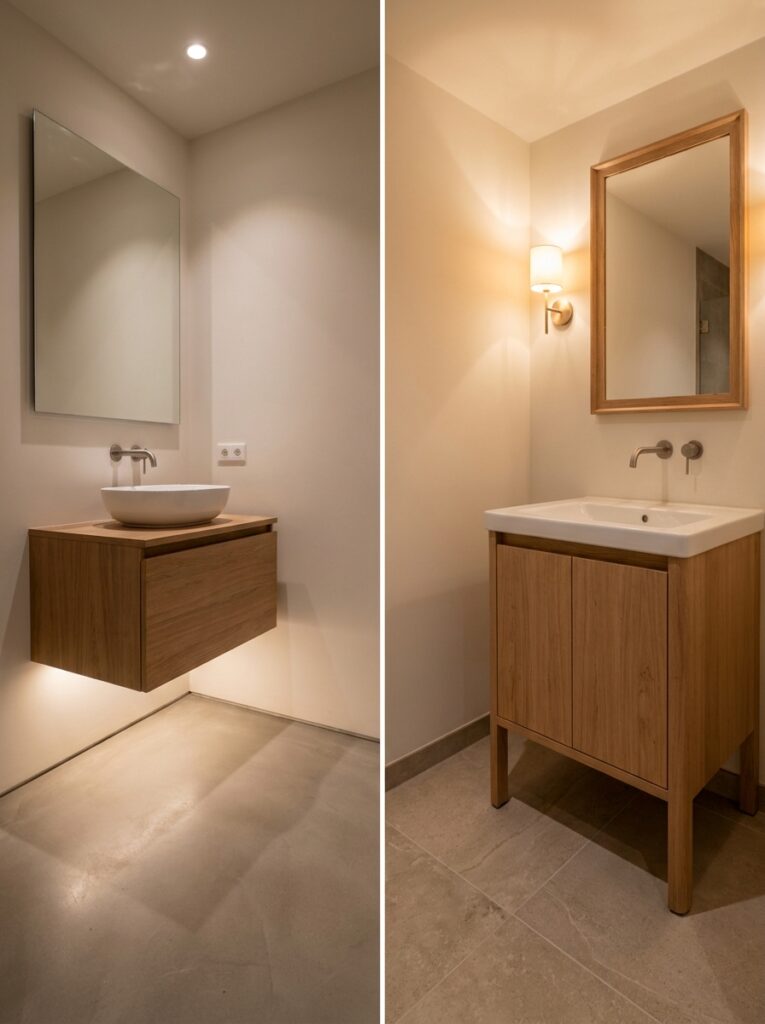
This is one of the biggest decisions you’ll make, and it has a real impact on how spacious a small bathroom feels.
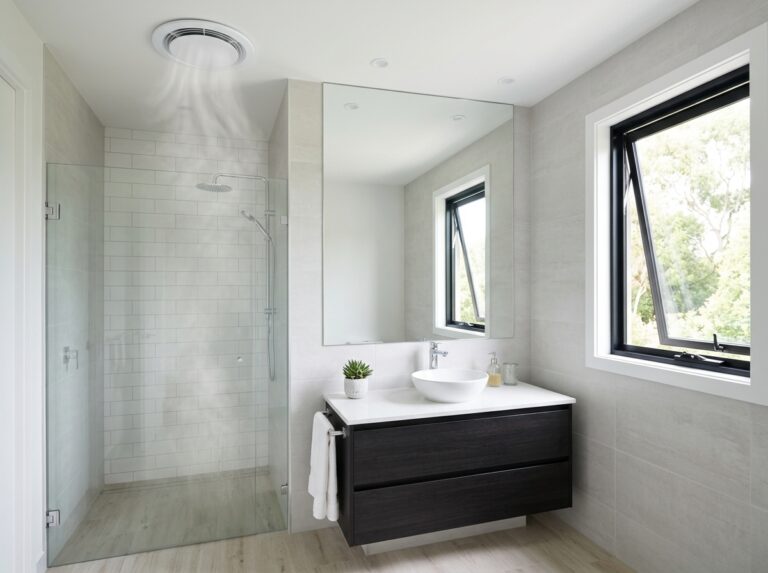
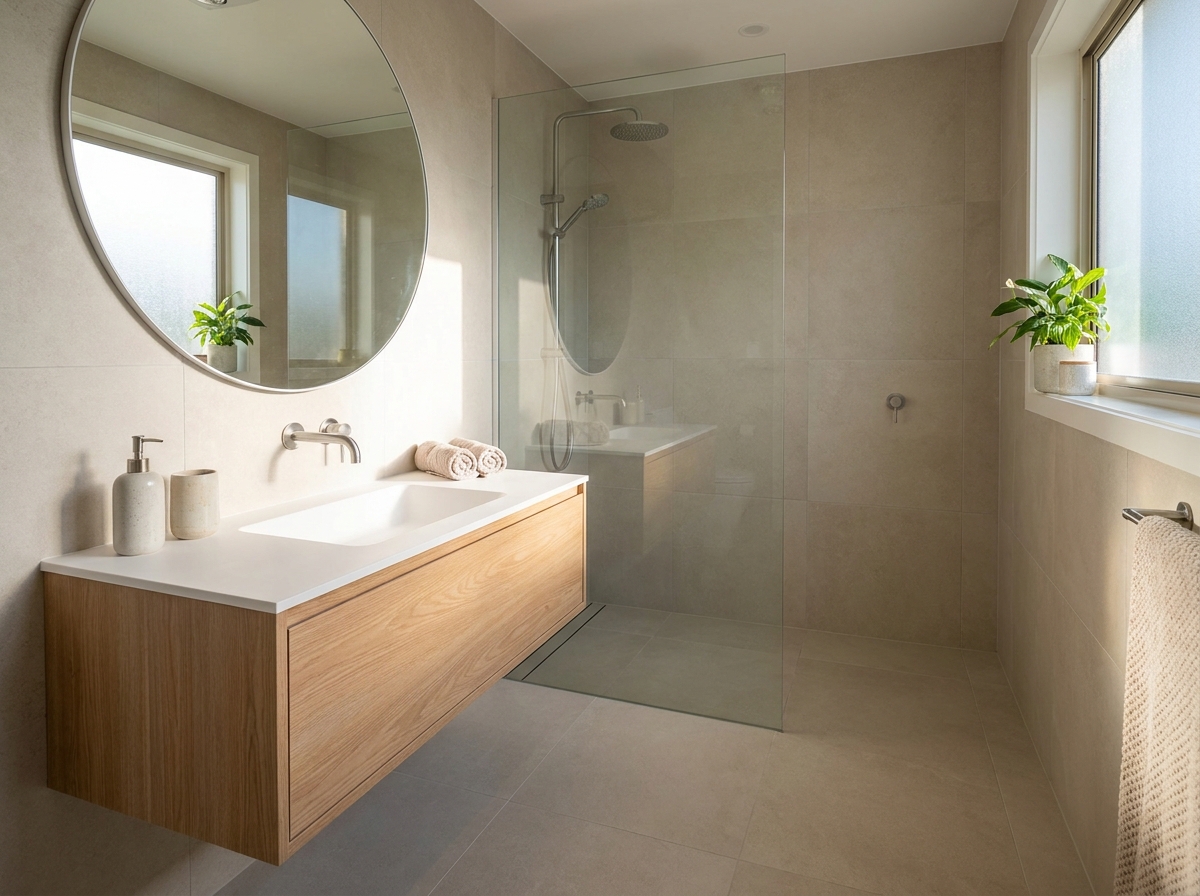
Floating vanities are mounted directly to the wall, leaving the floor beneath them completely open. This creates a visual gap that makes the room feel larger, and it also makes cleaning the floor much easier since there’s nothing blocking a mop or vacuum. Floating vanities tend to work especially well in bathrooms with tile or patterned flooring you want to show off.
Freestanding vanities sit directly on the floor like traditional furniture. They tend to offer more storage since the base isn’t limited by wall-mounting hardware, and they can feel more grounded and traditional in style. The tradeoff is that they visually take up more space, which can make a small bathroom feel more closed in.
Neither option is universally better. If floor space and an airy feel are the top priority, floating wins. If maximizing storage matters more than visual openness, freestanding is usually the stronger choice.
Prioritize Storage Type Over Storage Size
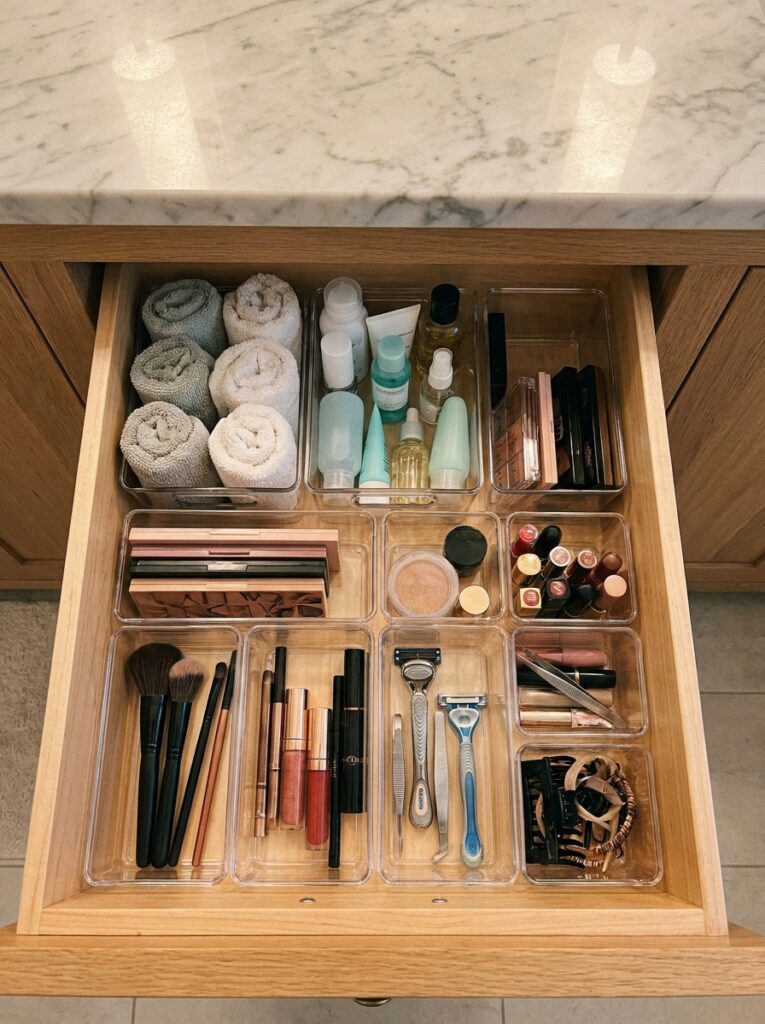
In a small bathroom, it’s tempting to chase the vanity with the most storage possible. But storage type often matters more than storage volume, especially when space is tight.
Drawers tend to be more efficient than cabinets with doors, since everything is visible and accessible at once without digging through a dark, deep cabinet. Drawers also make it easier to use organizers and dividers, which keeps small items like makeup, hair tools, and toiletries from turning into a jumbled mess.
Open shelving built into the vanity base can be useful for towels or baskets, and it avoids the bulky feel of a solid cabinet front — this works particularly well in bathrooms with a more casual or coastal aesthetic.
A single cabinet with adjustable shelving gives flexibility for taller items like cleaning supplies or extra toilet paper, but it can waste space if not organized with bins or stackable containers. Think honestly about what actually gets stored in the bathroom before deciding — a vanity with three shallow drawers might serve better than one with a single deep cabinet that becomes a black hole for random items.
Choosing the Right Size and Shape
Bathroom vanities typically range from around 18 inches to 60 inches wide, but for small bathrooms, most practical options fall between 24 and 36 inches.
A vanity around 24 inches wide can work well in a powder room or a very compact full bathroom, though it usually only accommodates a smaller sink and minimal counter space. A 30 to 36 inch vanity tends to be the sweet spot for small bathrooms that still need a reasonable amount of storage and counter room without overwhelming the space.
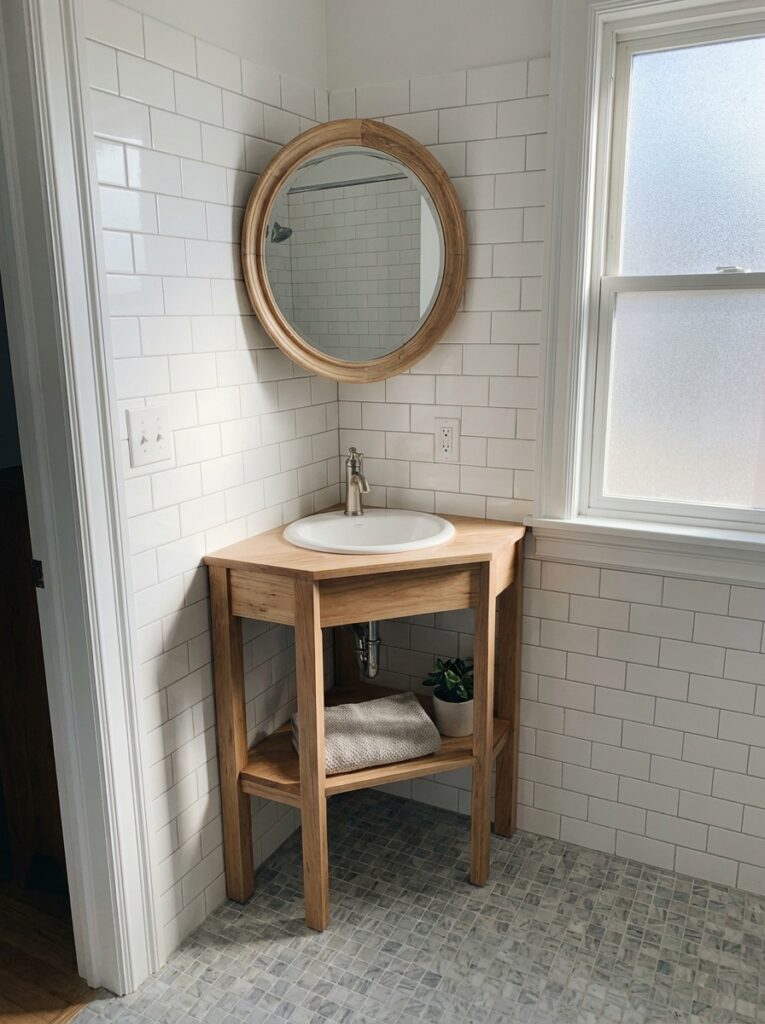
Corner vanities deserve a mention too. They’re designed specifically for awkward layouts and can make use of a corner that would otherwise sit empty — not the most common style, but for oddly shaped bathrooms they can be a smart solution a standard rectangular vanity simply can’t offer.
If a bathroom is narrow rather than short on width, consider a vanity with a shallower depth. Standard depth is typically around 21 inches, but slimmer options around 17 to 18 inches are available and can make a real difference in a tight space.
Sink Style Matters More Than People Expect
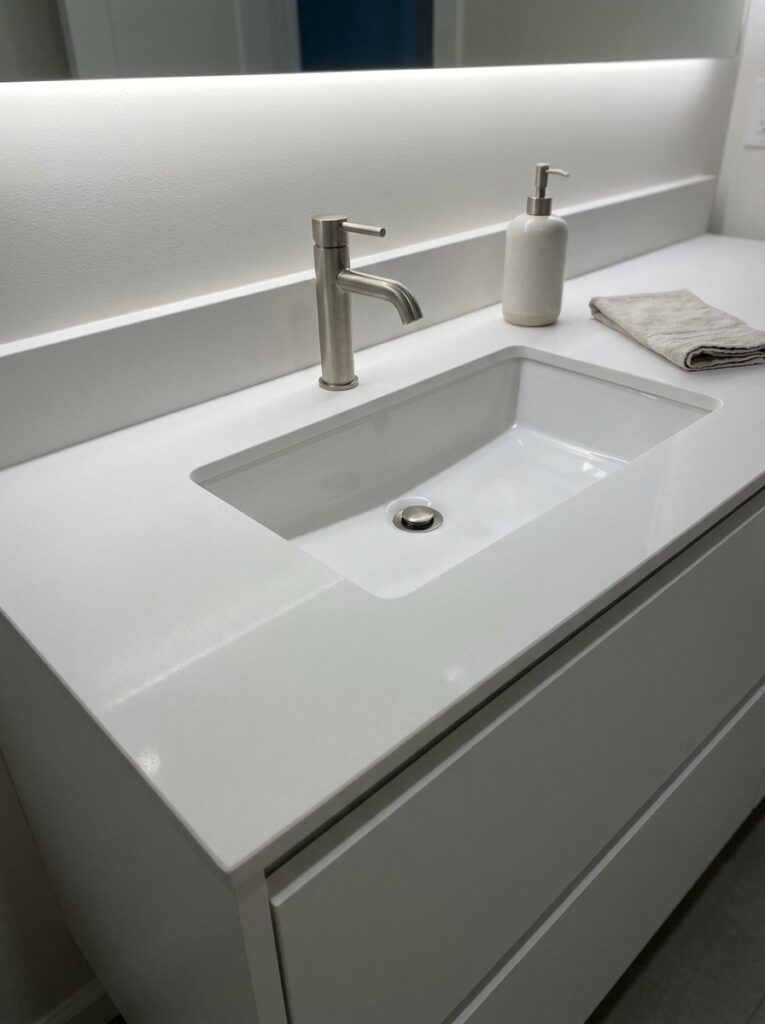
The type of sink built into or paired with a vanity affects both function and how much usable counter space actually remains.
Undermount sinks are installed beneath the counter, creating a seamless look and making it easy to wipe crumbs or water directly into the sink without a lip getting in the way. They tend to maximize usable counter space, which is valuable in a small bathroom.
Vessel sinks sit on top of the counter and add a decorative, modern touch, but they reduce usable counter space and can make the vanity feel visually taller, which isn’t always ideal in a room with low ceilings or limited vertical space.
Integrated sinks, where the sink and counter are molded from a single piece of material, are extremely easy to clean since there are no seams for grime to collect in — a popular choice for small bathrooms because of how streamlined they look. For most compact bathrooms, an undermount or integrated sink tends to be the more space-efficient, practical choice.
Material and Finish Considerations
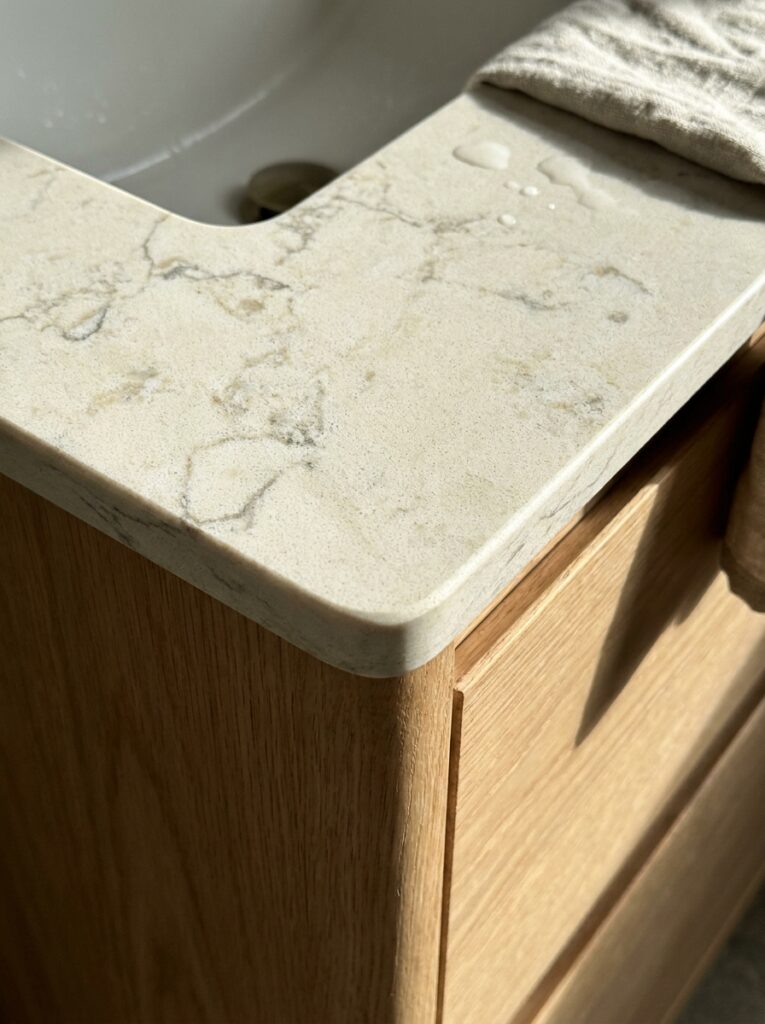
Small bathrooms tend to see more humidity exposure relative to their size, since steam from showers has less room to dissipate. This makes material choice more important than it might seem.
Solid wood vanities offer a timeless look but need to be properly sealed to resist moisture damage over time. Engineered wood or MDF options with a laminate or thermofoil finish are more budget-friendly and often more resistant to warping in humid conditions, though they don’t have quite the same long-term durability as solid wood.
For countertops, quartz and solid surface materials tend to hold up well against moisture and daily wear, while natural stone like marble looks beautiful but requires more maintenance to avoid staining or etching. Lighter finishes — pale wood, white, soft gray — tend to make a small bathroom feel more open, while darker finishes can make the room feel cozier but visually smaller. Neither is wrong, but it’s worth considering how the finish interacts with the overall size of the room.
Don’t Overlook the Faucet and Hardware
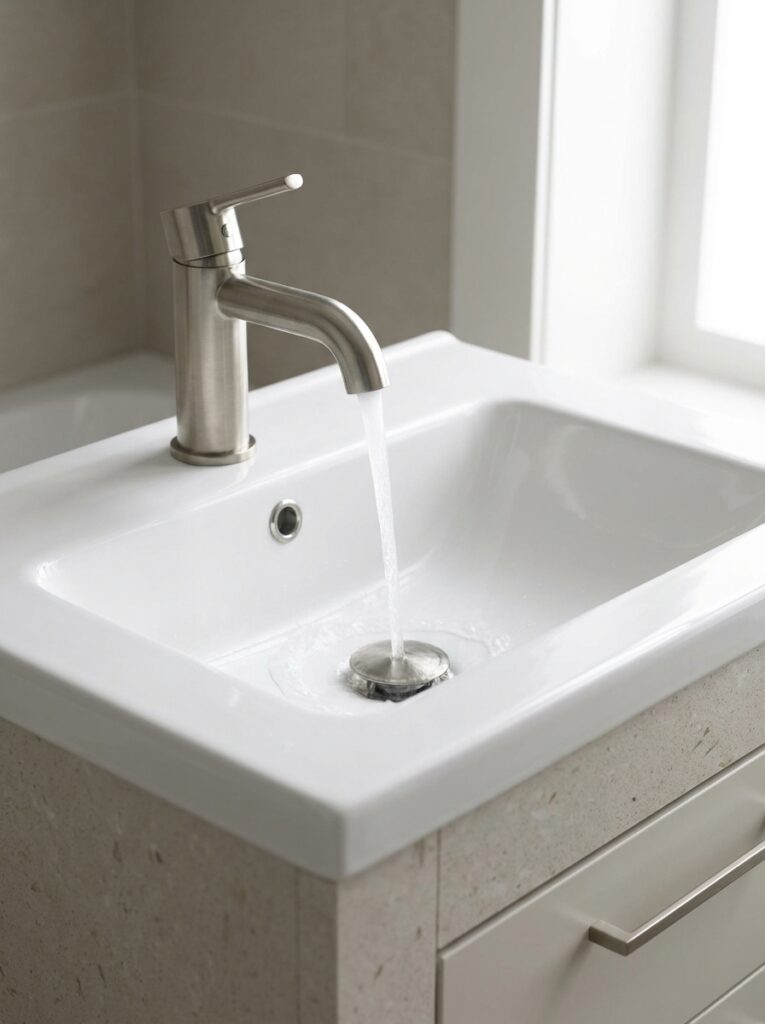
It’s easy to focus entirely on the vanity itself and treat the faucet as an afterthought, but in a small bathroom, hardware choices genuinely affect how much usable space is available.
A single-hole faucet takes up less visual and physical space than a widespread faucet with separate handles, which can matter on a narrower vanity top. Wall-mounted faucets are another option worth considering, since they free up counter space entirely by moving the faucet off the vanity surface.
Cabinet hardware, like knobs and pulls, should also be chosen with small spaces in mind. Bulky, oversized hardware can make a compact vanity feel cluttered, while slim, low-profile pulls keep the overall look clean and unobtrusive.
Common Mistakes to Avoid
A few missteps show up again and again when people shop for small bathroom vanities.
Buying based on width alone. Depth is just as important as width, especially in narrow bathrooms where a few extra inches can be the difference between comfortable movement and constantly bumping into the vanity. Choosing style over function. A beautiful vanity that offers almost no usable storage often creates more frustration than the aesthetic benefit is worth, especially for households sharing one small bathroom.
Ignoring plumbing locations. Existing plumbing can limit where a sink and faucet can realistically be placed — moving plumbing adds significant cost, so it’s worth designing around existing lines whenever possible. Forgetting about door and drawer clearance. A vanity with doors that swing outward needs enough floor space to open fully, and drawers need room to pull out without hitting a toilet, tub, or wall. Skipping ventilation considerations. Enclosed cabinets under a sink can trap moisture if the bathroom lacks proper ventilation, leading to mildew over time — a vanity with slightly raised legs or ventilated cabinet backs can help with airflow.
Expert Insights for Small Bathroom Vanities
Designers who specialize in compact spaces often point to a few consistent themes when it comes to choosing the right vanity.
Floating vanities are frequently recommended for very small bathrooms, since the visual openness beneath them tends to make the biggest perceived difference in room size, even more than the vanity’s actual footprint. Light, reflective countertop materials paired with a mirror above the vanity can amplify natural or artificial light, making the entire room feel brighter and larger than it actually is.
Multi-functional storage — a vanity with a built-in outlet for hair tools, or a pull-out organizer for toiletries — tends to offer more day-to-day value in a small bathroom than simply having more cabinet volume. Ultimately, the vanities that perform best in small bathrooms are the ones chosen with the household’s actual routine in mind, not just the ones that photograph well.
Matching the Vanity to Your Household Needs
A single person or couple with minimal counter clutter can often get away with a smaller vanity, prioritizing a clean look and open floor space over maximum storage. A family sharing one small bathroom usually benefits more from a vanity with multiple drawers or a double-sink configuration if the space allows, since storage and simultaneous use become more important than visual minimalism.
Anyone dealing with a particularly awkward layout — an angled wall, an oddly placed door — may find that a corner vanity or a custom-built option solves problems that standard sizes simply can’t address. There’s no single perfect vanity for every small bathroom; the right choice depends on layout, storage habits, and how many people are sharing the space day to day.
Frequently Asked Questions
What is the smallest size a bathroom vanity can be?
Bathroom vanities can go as narrow as 18 inches wide, though these are usually best suited for powder rooms or half baths rather than a primary bathroom used daily.
Are floating vanities good for small bathrooms?
Yes, floating vanities are often ideal for small bathrooms since they leave the floor visible, which creates a more open, spacious feel and makes cleaning easier.
How much clearance should be left in front of a bathroom vanity?
Most building guidelines recommend at least 21 inches of clear floor space in front of a vanity for comfortable movement and use.
Do vessel sinks work well in small bathrooms?
Vessel sinks can work in small bathrooms, but they reduce usable counter space and add visual height, so they’re better suited to bathrooms with adequate vertical space and minimal counter needs.
What material is best for a bathroom vanity in a humid bathroom?
Materials like quartz countertops and moisture-resistant engineered wood with a sealed or laminate finish tend to hold up best in bathrooms with higher humidity levels.
Should I choose a vanity with drawers or cabinet doors?
Drawers are generally more efficient for small bathrooms since they allow full visibility and access to stored items, while cabinets with doors can waste space in the back corners.
Final Thoughts on Choosing a Small Space Vanity
Picking the right bathroom vanity for a small space comes down to more than style. Measurements, storage habits, sink type, and even ventilation all play a role in whether a vanity genuinely improves a daily routine or just looks good for the first few weeks.
Take the time to measure carefully, think honestly about how the room actually gets used, and choose a configuration that supports real needs rather than just following a trend. A well-chosen vanity, even a compact one, can make a small bathroom feel far more functional and far less cramped than its square footage would suggest.