
How to Stop Your Bathroom Mirror from Fogging Up for Good
A fogged up mirror right after a shower is one of those small daily annoyances that feels like it should have a simple fix, and yet most people just wait it out, wiping a streaky patch clear with a towel and calling it good enough. It doesn’t have to be this way. Mirror fog is a predictable physics problem with a handful of genuinely reliable solutions, some of which cost nothing at all.
This guide covers why bathroom mirrors fog up in the first place, and walks through the methods that actually work long-term, from quick pre-shower tricks to permanent fixes that solve the problem for good.
Why Bathroom Mirrors Fog Up in the First Place
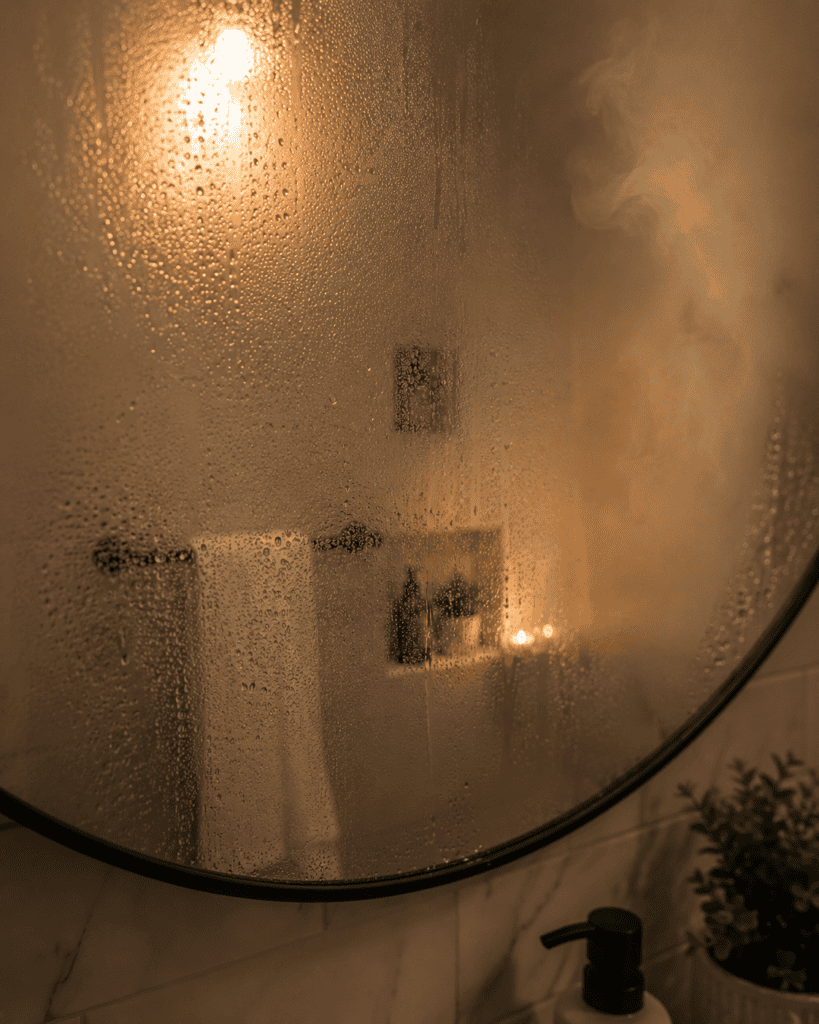
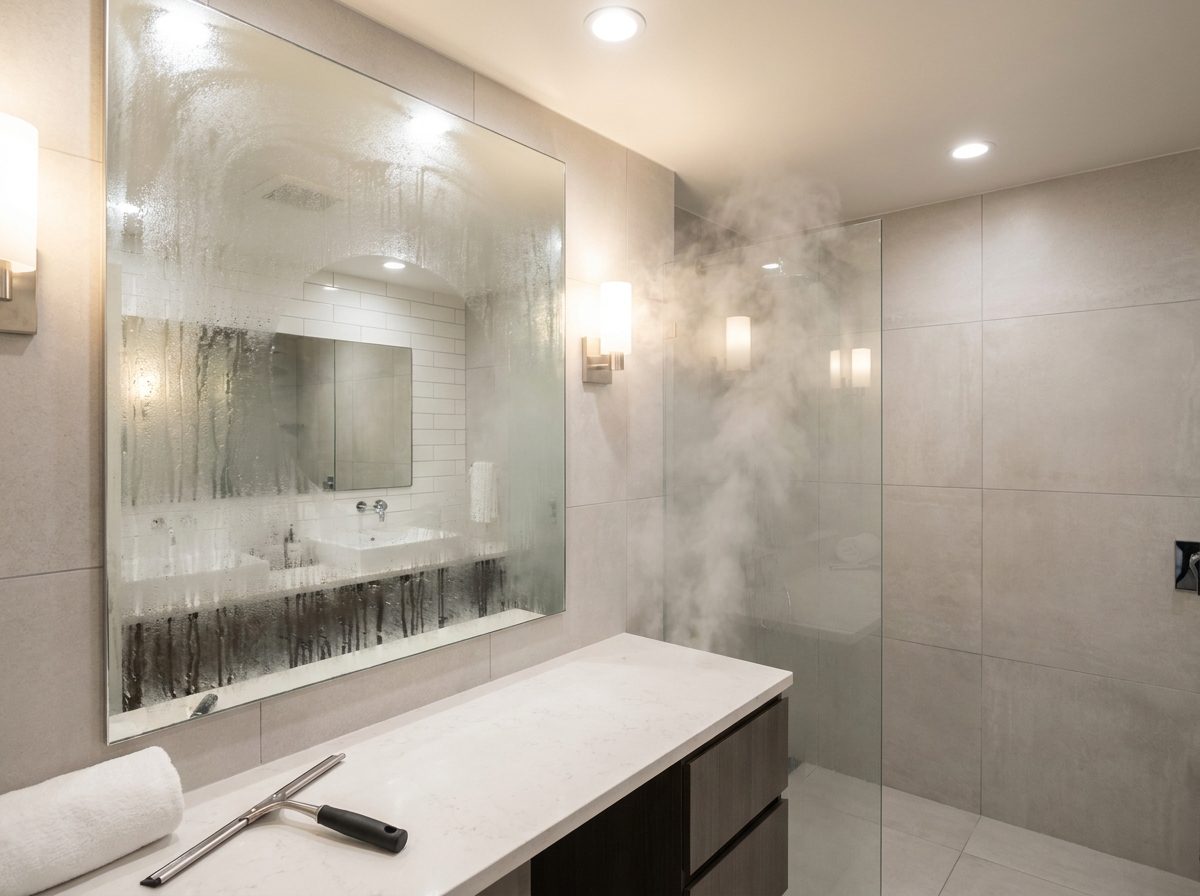
Fogging happens when warm, moist air from a hot shower meets the cooler surface of the mirror. That temperature difference causes water vapor in the air to condense into tiny droplets on the glass, the same way a cold drink sweats on a warm day, just in reverse.
The mirror itself isn’t doing anything wrong. It’s simply the coldest surface in a room that’s suddenly full of warm humid air, which makes it the natural landing spot for condensation. Tile, painted walls, and other surfaces fog too, but mirrors show it more obviously because you’re looking directly at the glass expecting to see your reflection.
Poor ventilation makes the problem worse, since humid air has nowhere to go and lingers in the room longer than it needs to. Bathroom size, shower temperature, and how long the water runs all affect how quickly and how badly a mirror fogs.
Once you understand it’s a temperature and humidity issue rather than a mirror defect, the fixes start to make a lot more sense.
Improve Your Bathroom’s Ventilation First
Before trying any product or trick, it’s worth looking at whether your bathroom is actually venting moisture out the way it should. This is the root cause fix, and it often solves more than just the mirror problem.
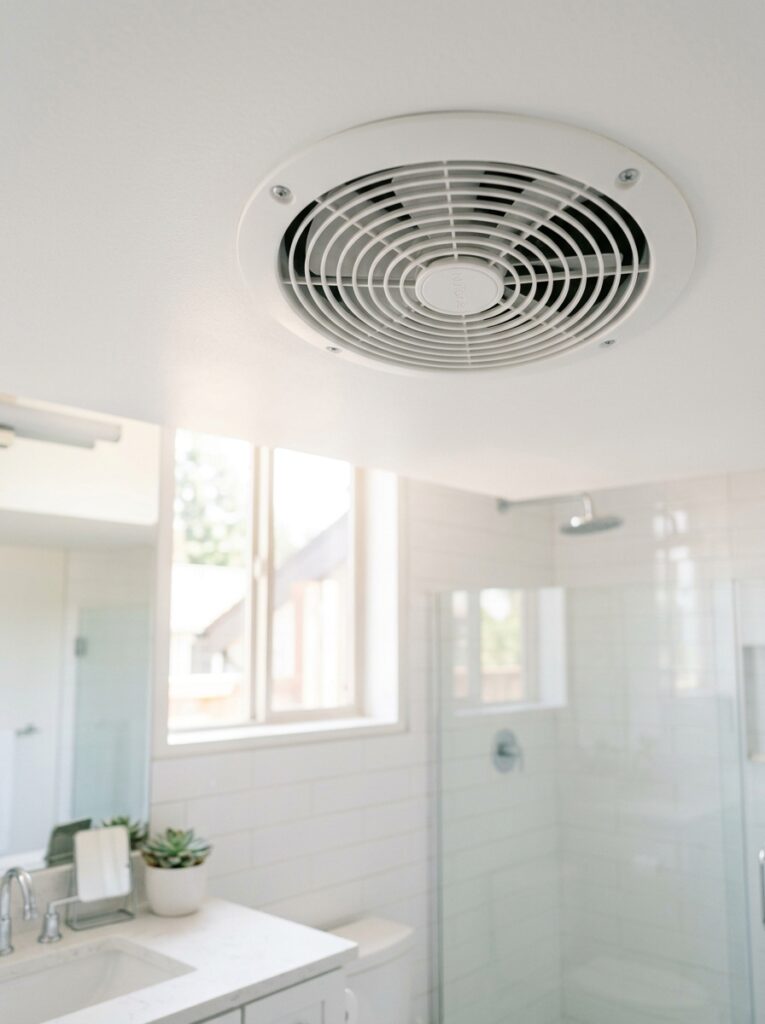
Check that your exhaust fan is running during every shower and for at least fifteen to twenty minutes afterward. A lot of people turn the fan off the moment they step out, which stops the moisture removal process before the room has actually cleared.
If the fan seems weak or barely pulls air, it might be undersized for the room or clogged with dust. Exhaust fans are rated in CFM, cubic feet per minute, and a fan that’s too small for the bathroom’s square footage will struggle no matter how long you run it. Cleaning the fan cover and checking the duct for blockages is a simple first step before assuming a replacement is needed.
Cracking a window, even slightly, while showering gives humid air somewhere to escape and noticeably speeds up how fast the room clears. In colder climates this obviously has limits, but even a few inches for the last few minutes of a shower helps.
Adjust the Shower Itself

Small changes to how you shower can reduce fogging without touching the mirror or the ventilation system at all.
Slightly cooler water temperature produces less steam, which means less humidity hitting the mirror in the first place. This doesn’t mean a cold shower, just dialing back a few degrees from scalding hot can make a real difference in how much fog builds up.
Closing the shower curtain or door fully during use keeps steam more contained near the water source rather than spreading across the whole room. It sounds obvious, but a curtain left partially open lets warm humid air escape into the room faster than the fan can keep up with.
Running the exhaust fan before you even start the shower, rather than waiting until you’re in it, gives the ventilation system a head start on moving air before humidity levels spike.
Try Anti-Fog Sprays and Wipes
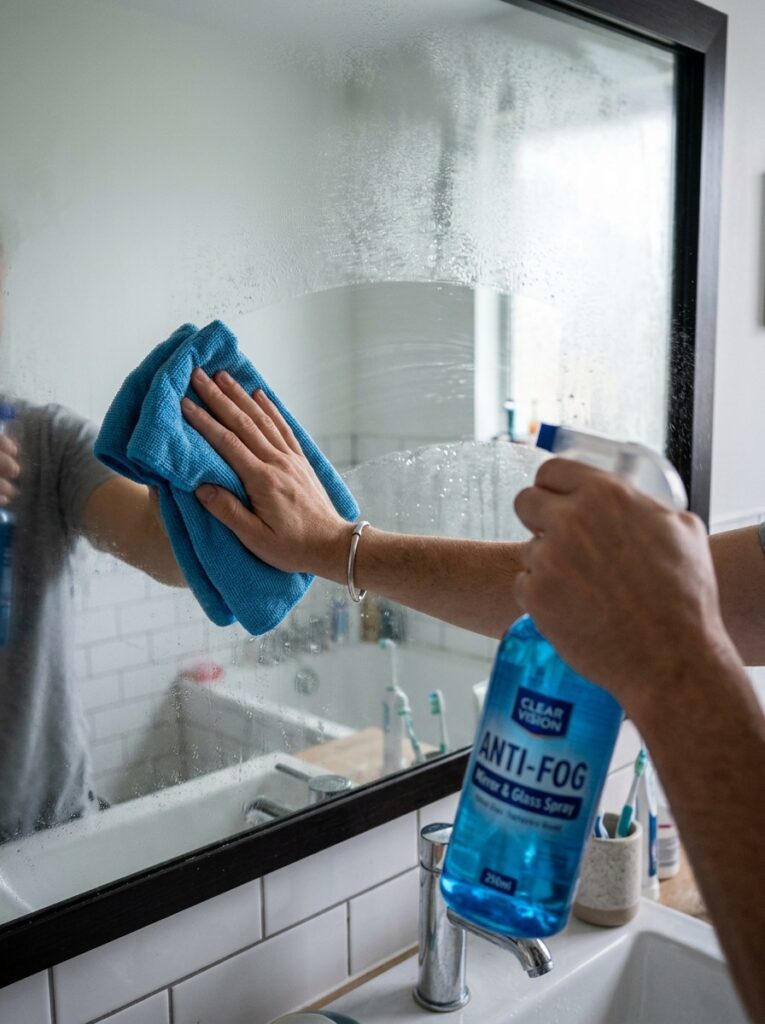
Anti-fog products are widely available and work by creating a thin surfactant layer on the glass that changes how water behaves on the surface.
Instead of forming individual droplets that scatter light and create that hazy look, the coating causes moisture to spread into a thin, even film that’s much harder to see. The mirror technically still has condensation on it, it just doesn’t look foggy anymore.
Most sprays need to be applied to a clean, dry mirror and buffed off with a microfiber cloth, then left to cure for a few minutes before use. Reapplication is usually needed every few days to a couple of weeks depending on the product and how often the bathroom sees hot showers.
Shaving cream is a well-known DIY alternative that works on a similar principle. A thin layer rubbed onto the mirror and wiped off with a clean cloth leaves behind enough residue to reduce fogging for a few days, though it’s a temporary fix rather than a lasting solution.
Install a Demister Pad for a Permanent Fix
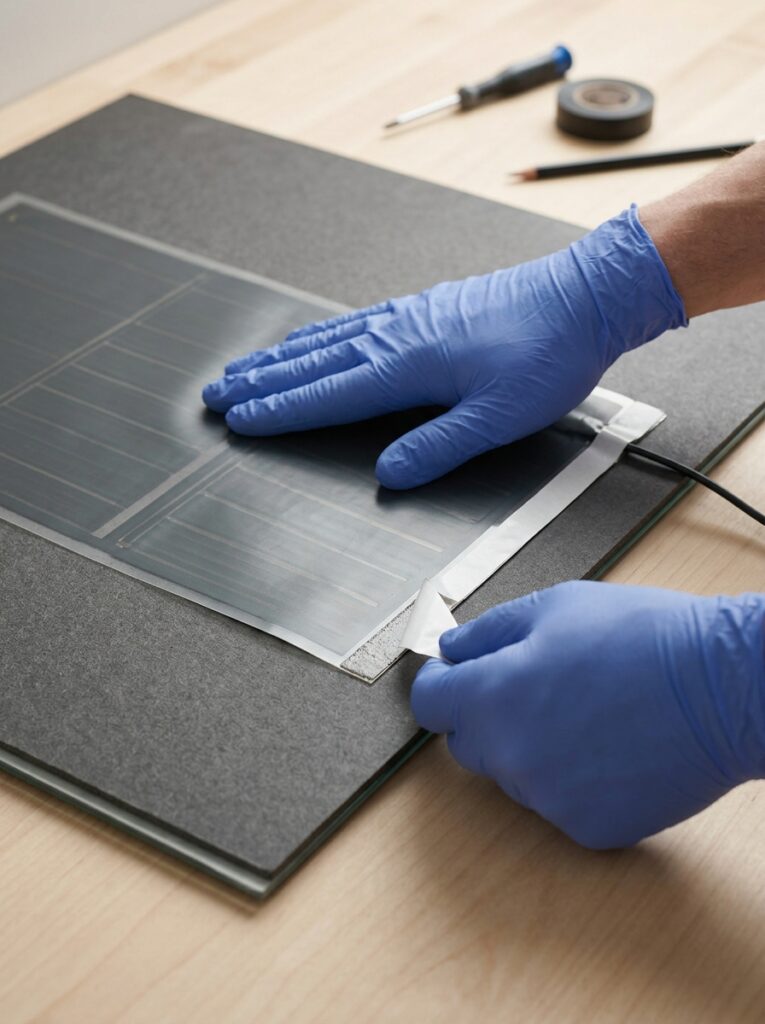
For anyone tired of reapplying sprays every week, a demister pad is the closest thing to a set-it-and-forget-it solution.
A demister pad is a thin heating element installed directly behind the mirror, usually adhered to the back of the glass with a strong adhesive pad. It gently warms the mirror’s surface just enough to prevent condensation from forming in the first place, since fog can’t form on a surface that’s the same temperature as the surrounding air.
These pads run on low voltage and are typically wired into the bathroom’s electrical system, often connected to the same switch as the exhaust fan or light so they turn on automatically. Installation can be a straightforward DIY project for anyone comfortable with basic electrical work, though hiring an electrician is a reasonable choice if the bathroom doesn’t already have easy access to wiring near the mirror.
Demister pads are especially worth considering for anyone renovating a bathroom or installing a new mirror, since it’s far easier to add one during installation than to retrofit it later behind an already mounted mirror.
Consider Replacing the Mirror Entirely
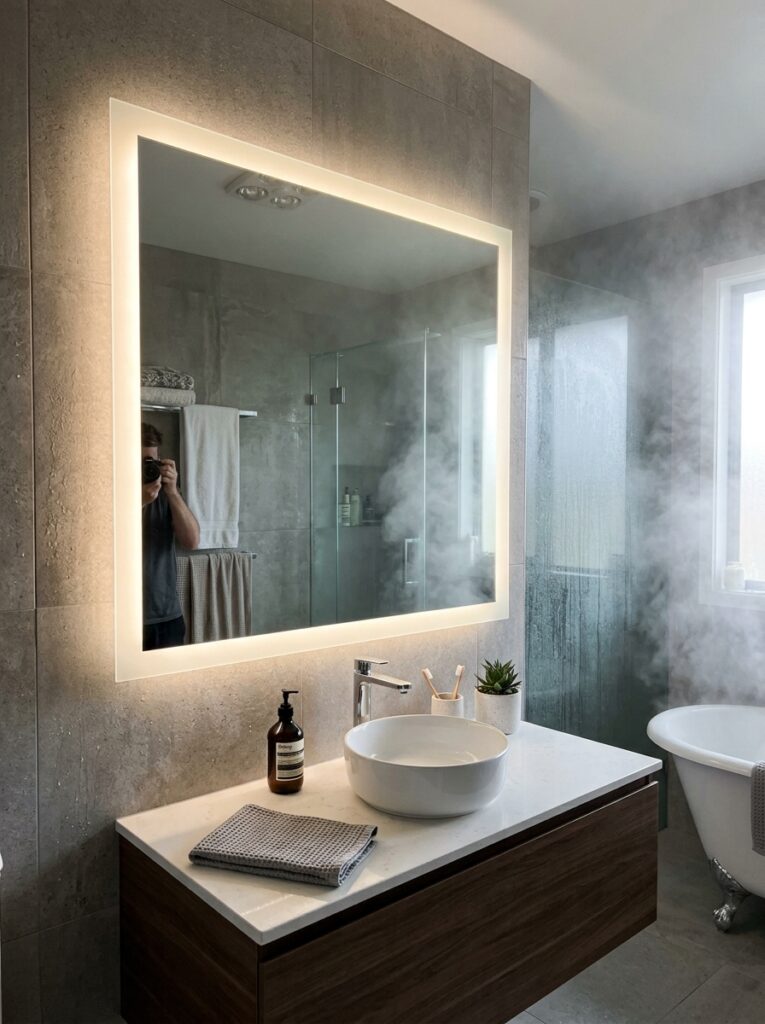
If fogging is a constant frustration and a full bathroom update is already on the table, some mirrors are designed specifically to resist fog without any added product or pad.
LED mirrors with built-in demister technology have become increasingly common and combine lighting with a built-in heating element behind the glass, solving the fogging problem and the lighting problem in a single fixture.
Anti-fog coated mirrors, sometimes labeled as hydrophobic or fog-resistant glass, use a factory-applied coating that lasts far longer than spray-on products, often for years before any reapplication or maintenance is needed.
This option obviously involves more cost than a bottle of anti-fog spray, but for a primary bathroom used daily, it can be worth the investment simply for the convenience of never dealing with a foggy mirror again.
Practical Tips for Immediate Results
For anyone who wants a foggy mirror fixed today rather than after a ventilation upgrade or product order arrives, a few quick tricks help right away.
- Wipe the mirror with a mixture of one part dish soap to three parts water using a clean cloth, then buff dry, which works similarly to shaving cream as a short term anti-fog layer
- Keep a squeegee near the mirror to quickly clear condensation without leaving streaks, especially useful right after a shower when you need the mirror clear immediately
- Run the bathroom fan for a few minutes before showering, not just during and after, to lower the room’s starting humidity level
- Use a hair dryer on a cool setting aimed briefly at the mirror to clear fog fast without leaving streaks behind, useful in a pinch when you’re in a hurry
- Place a small dehumidifier in the bathroom if the room stays humid long after showers, particularly helpful in bathrooms without windows or strong ventilation
None of these are permanent fixes on their own, but combined with better ventilation habits, they close the gap while you work on a longer term solution.
Common Mistakes People Make When Dealing With Foggy Mirrors
A handful of habits tend to make mirror fog worse without people realizing it’s happening.
- Turning off the exhaust fan the moment the shower ends, which stops moisture removal before the room has actually cleared
- Using a fan that’s undersized or clogged with dust, which struggles to move enough air regardless of how long it runs
- Wiping the mirror with a dry towel, which often just smears condensation into streaks rather than actually removing it
- Skipping anti-fog product reapplication and assuming a single application will last indefinitely, when most sprays need refreshing every one to two weeks
- Showering with the bathroom door wide open, which lets humid air spread into hallways and other rooms without actually reducing what hits the mirror
- Ignoring a consistently humid bathroom as just how the room is, rather than a sign that ventilation needs an upgrade
Most of these come down to treating the symptom in the moment rather than addressing why the room gets so humid to begin with.
Frequently Asked Questions About Foggy Bathroom Mirrors
Why does my bathroom mirror fog up so fast?
It’s usually a combination of hot shower steam, a small or poorly ventilated bathroom, and a weak or improperly used exhaust fan, all of which allow humid air to condense quickly on the mirror’s cool surface.
Does shaving cream really stop mirrors from fogging?
Yes, temporarily. A thin layer wiped onto the glass and buffed off leaves behind a residue that prevents fog for a few days, though it needs to be reapplied regularly.
What is the best permanent solution for a foggy mirror?
A demister pad installed behind the mirror is generally considered the most reliable permanent fix, since it keeps the glass warm enough that condensation never forms in the first place.
How long should I run my bathroom fan after a shower?
Most professionals recommend running it for fifteen to twenty minutes after showering to fully clear humidity from the room, not just until the visible steam disappears.
Are anti-fog mirror sprays safe to use regularly?
Yes, most anti-fog sprays designed for bathroom use are safe for frequent reapplication, though it’s worth checking that the mirror’s backing isn’t damaged by the specific product used.
Final Thoughts
A foggy bathroom mirror is a genuinely solvable problem, not just something to live with. Whether the fix is as simple as running the exhaust fan a few minutes longer or as permanent as installing a demister pad, the underlying cause is always the same gap between warm humid air and a cold mirror surface.
Start with ventilation, since it solves more than just the mirror and costs nothing beyond a habit change. From there, anti-fog sprays, shaving cream, or a squeegee can bridge the gap while a more permanent fix like a demister pad or fog-resistant mirror is on the table.
However you approach it, a clear mirror right after a shower is a small daily convenience that’s worth the fairly minor effort it takes to get there.