Inswing vs. Outswing French Doors: Which Should You Pick?
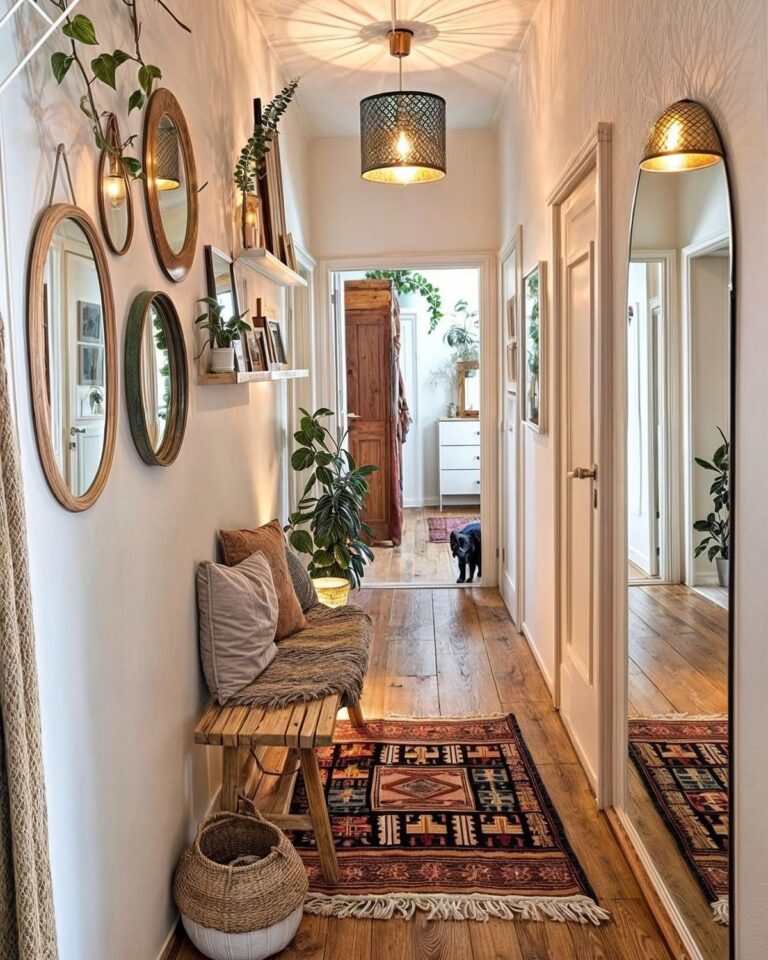
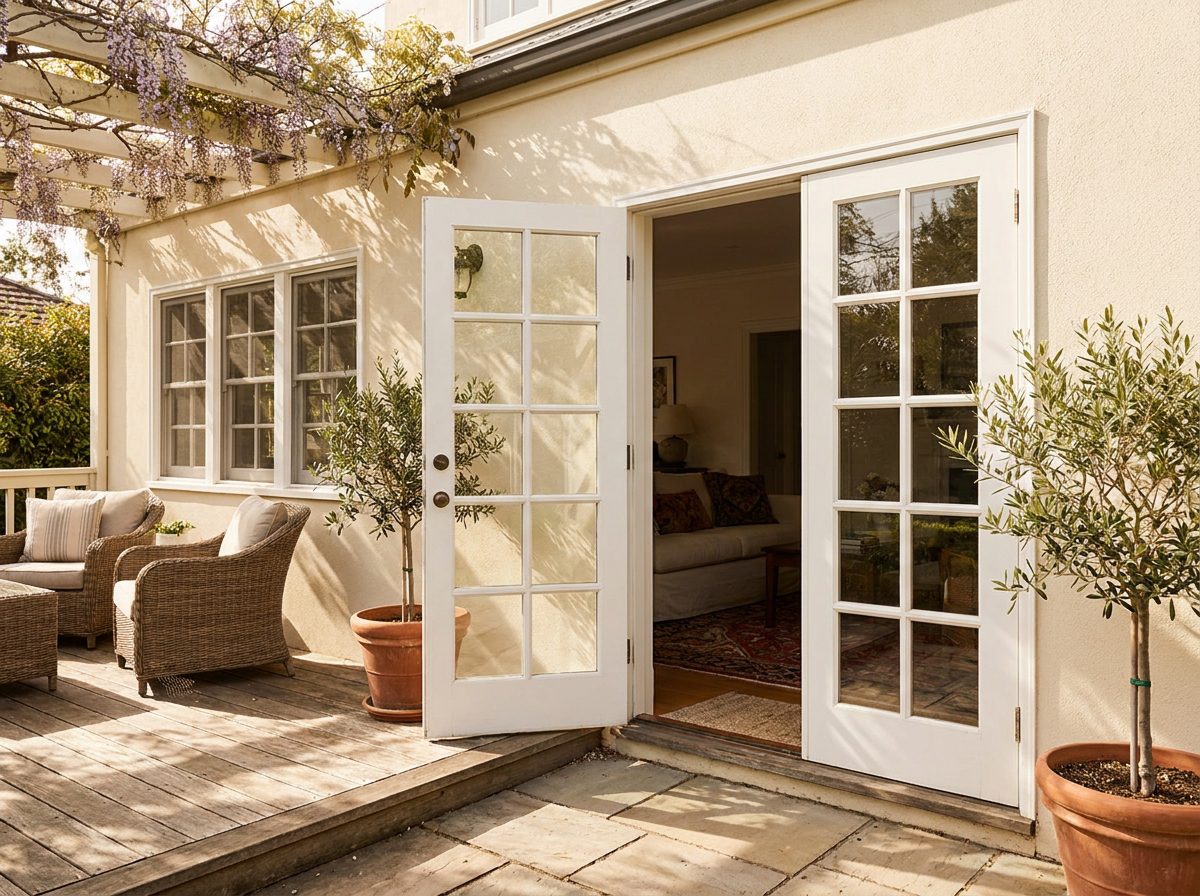
French doors add a certain kind of charm that regular doors just don’t, but before any of that charm shows up in your home, there’s a practical decision to make first. Do the doors swing in, or do they swing out? It sounds like a small detail until you realize it affects everything from furniture placement to weatherproofing to how easily you can actually walk through them with your hands full.
Most people don’t think about swing direction until they’re standing in a showroom or scrolling through a supplier’s website, staring at two nearly identical door options with very different implications. The right choice depends heavily on where the doors are going, what the space around them looks like, and how the room gets used day to day.
This guide breaks down the real differences between inswing and outswing French doors, so the decision feels obvious by the time you’re done reading instead of another thing to second guess.
What Inswing and Outswing Actually Mean
The terms are simpler than they sound, but it’s worth being precise since the wrong assumption here can lead to ordering the wrong doors entirely.
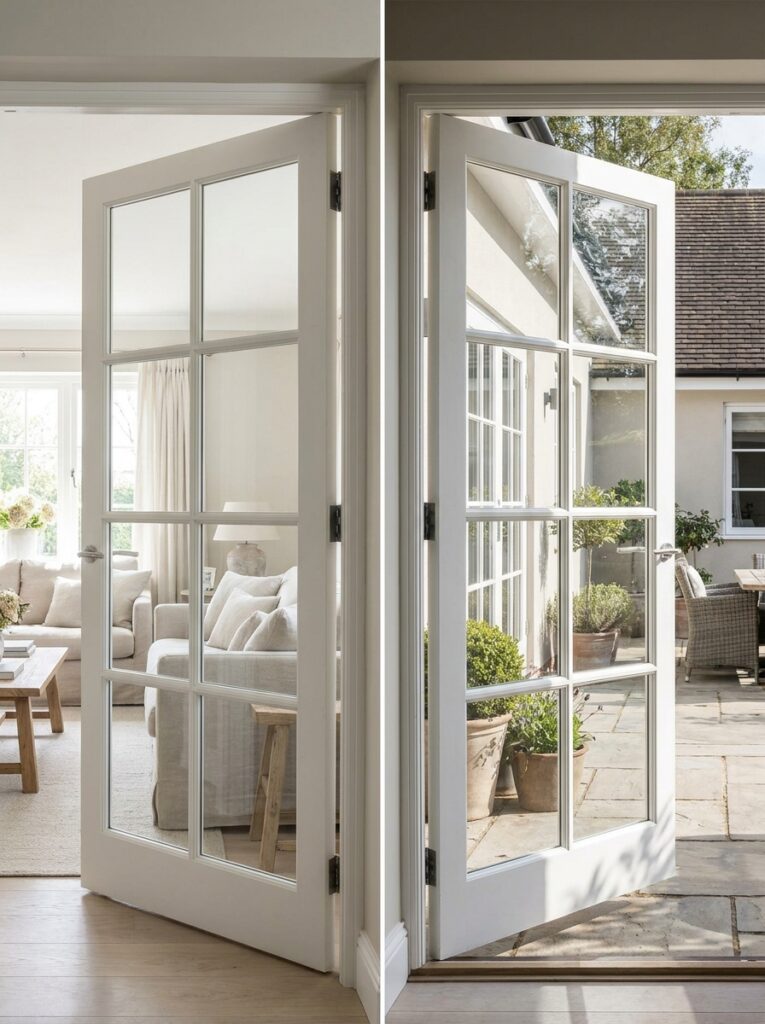
Inswing doors open into the room, toward the interior of the house. Outswing doors open away from the room, out toward a patio, yard, or exterior space. Standing outside the door facing it is usually the easiest way to check which direction you’re dealing with when looking at existing doors or product listings.
This distinction matters because it changes what needs to happen on both sides of the doorway. An inswing door needs clear floor space inside the room to open fully. An outswing door needs the same clear space, just outside instead.
Manufacturers list this clearly on spec sheets, but it’s easy to overlook when you’re focused on style, glass panes, or hardware finish instead. Getting the swing direction right from the start saves a lot of hassle later.
Why Swing Direction Matters More Than It Seems
It’s tempting to treat swing direction as a minor technical detail, something to check off rather than actually think through. In practice, it shapes how a room functions every single day.
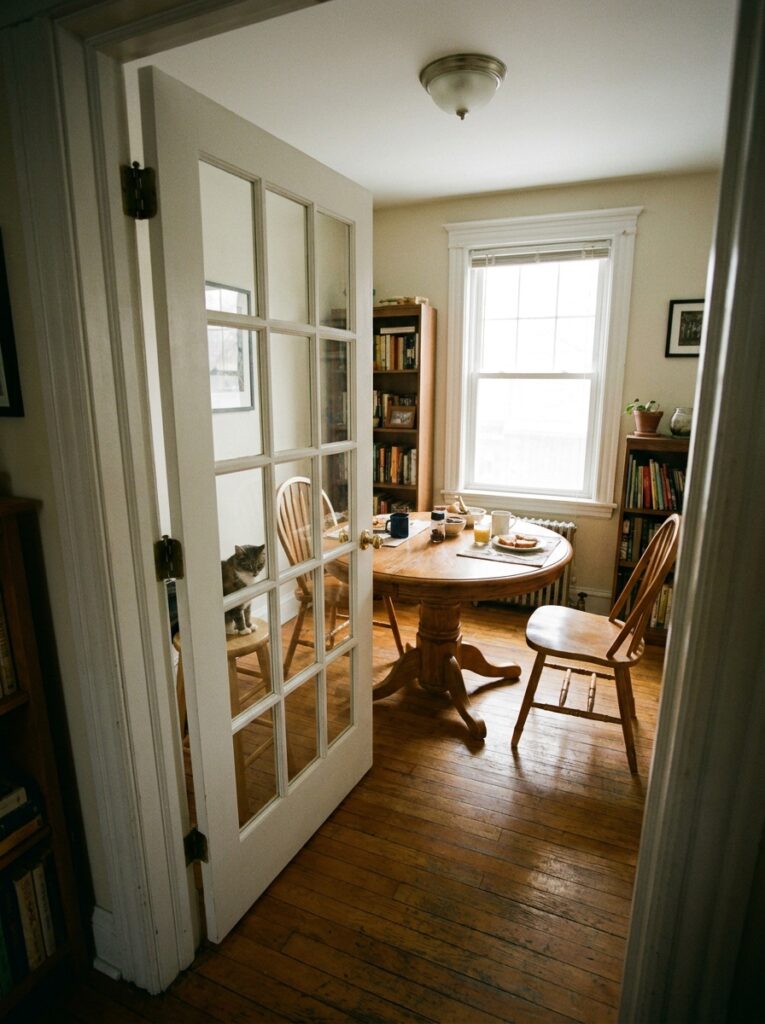
An inswing door opening into a small kitchen or narrow hallway can block cabinets, bump into furniture, or make the space feel cramped every time someone walks through. An outswing door opening onto a busy walkway or narrow porch can create a tripping hazard or block foot traffic outside.
Swing direction also affects things people rarely consider upfront, like where you’ll mount curtains, where furniture can safely sit, and how much usable floor space the room actually has once the door is factored in.
Getting this decision right the first time avoids a frustrating cycle of working around a door that swings the wrong way for the room it’s in.
The Case for Inswing French Doors
Inswing doors are the more traditional choice in many parts of the country, and they come with some genuinely practical advantages.
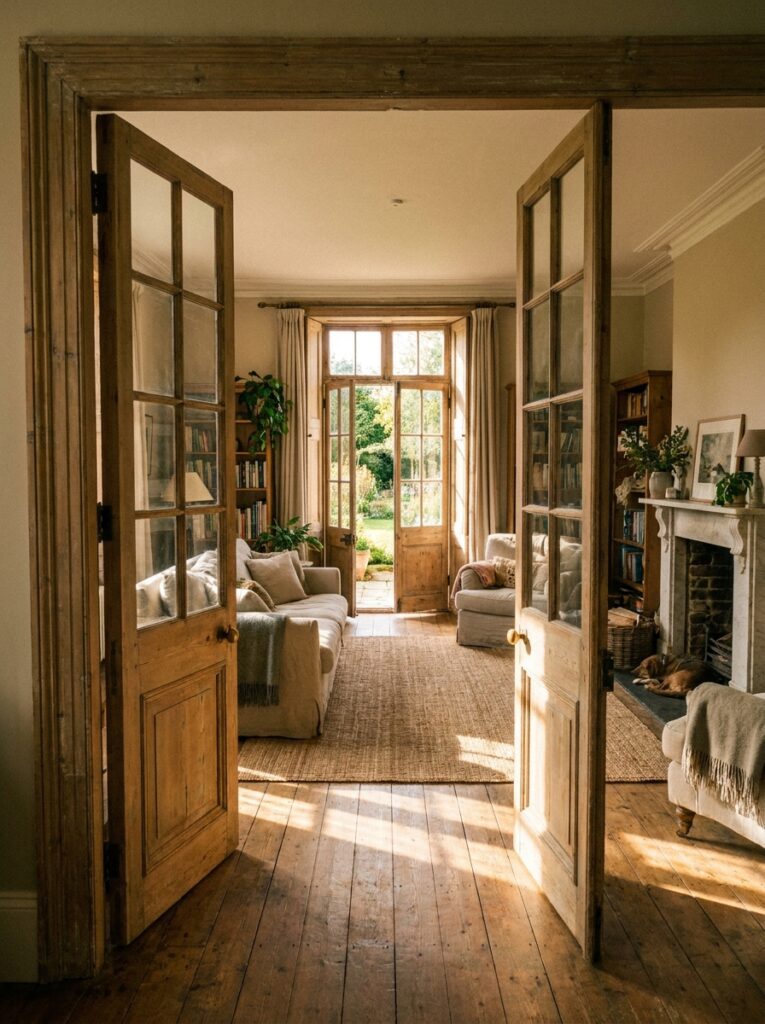
Weatherproofing tends to be simpler with inswing doors. Because the door swings toward the inside of the house, the seal sits in a position that naturally sheds rainwater away from the threshold, which can mean fewer issues with water intrusion over time, especially in areas with heavy rain or wind-driven storms.
Security hardware is often easier to install and more robust on inswing doors as well, since hinges are on the interior side, out of reach from anyone standing outside the home.
Inswing doors also tend to work better for exterior spaces where you want to preserve every inch of an outdoor area, like a small deck, narrow porch, or patio close to a walkway. Since the door doesn’t swing outward, there’s no risk of it blocking outdoor furniture or catching someone walking by.
The tradeoff is interior space. If the room on the inside is tight, an inswing door can eat into usable floor space and interfere with nearby furniture, especially if there isn’t a clear arc for the door to swing through.
The Case for Outswing French Doors
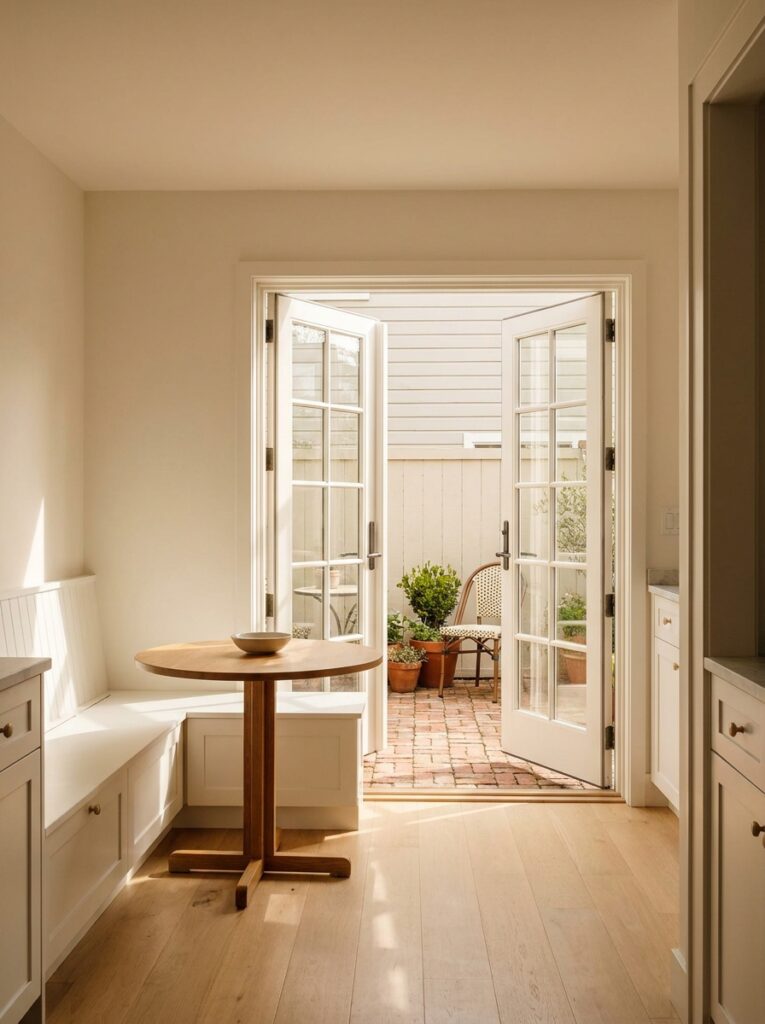
Outswing doors solve the interior space problem directly, which is exactly why they’re such a popular choice for smaller rooms.
Because the door swings outward, it doesn’t take up any floor space inside the home. This makes outswing doors a strong choice for smaller rooms, tight hallways, or spaces where furniture placement is already a bit of a puzzle.
Outswing doors also tend to pair well with screens, since a screen door can be added on the inside without interfering with the French door’s swing, giving you the option of fresh air without needing the main doors fully open.
Weatherproofing is the main tradeoff here. Because the door swings away from the house, the seal faces outward, which can make it slightly more prone to water intrusion during heavy storms if the weatherstripping and threshold aren’t installed correctly. This isn’t a dealbreaker, but it does mean outswing doors benefit from slightly more attention to installation quality and regular maintenance of the seals.
Outswing doors also require enough clear space outside the doorway, which matters if there’s a step, a narrow porch, or outdoor furniture positioned close to the exit.
Comparing Both Options Side by Side
Looking at the two options next to each other makes the decision easier, especially once you know which factors actually apply to your specific space.
- Interior space: outswing doors preserve interior floor space, inswing doors require room to swing inward
- Exterior space: inswing doors preserve exterior space, outswing doors require room to swing outward
- Weatherproofing: inswing doors generally handle wind-driven rain better, outswing doors need more attention to sealing
- Security: inswing doors keep hinges hidden from the exterior, which can be a small security advantage
- Screen compatibility: outswing doors pair more easily with interior screen doors
- Furniture placement: outswing doors give more flexibility for furniture near the doorway inside the room
Neither option is universally better. The right choice really does come down to the specific room, climate, and how the space around the door gets used.
Climate Considerations You Shouldn’t Skip

Where you live plays a bigger role in this decision than most people expect going in.
In regions with heavy rain, hurricanes, or strong wind-driven storms, inswing doors are often the safer choice specifically because of how the seal handles water. Coastal areas and regions prone to severe weather frequently see inswing doors recommended or even required by local building codes for exactly this reason.
In milder climates with less driving rain, outswing doors perform perfectly well as long as they’re installed with quality weatherstripping and a properly sloped threshold to direct water away from the doorway.
It’s worth checking local building codes before making a final decision, since some areas have specific requirements around swing direction for exterior doors, particularly in hurricane-prone regions where outswing doors may need additional reinforcement or may not be permitted at all in certain applications.
Matching Door Swing to the Room Itself
Beyond climate, the room the doors lead into or out of often makes the decision fairly obvious once you actually look at the space with fresh eyes.
A small kitchen, tight dining nook, or narrow hallway usually benefits from an outswing door, simply because there isn’t enough interior space to comfortably accommodate a door swinging inward without disrupting furniture or foot traffic.
A larger living room or bedroom with generous floor space can handle an inswing door without much issue, and may actually benefit from the better weatherproofing if the room faces a direction that catches a lot of wind or rain.
Rooms leading to a small deck, narrow balcony, or patio close to a walkway often do better with inswing doors, since there’s limited room outside for a door to swing through without becoming an obstacle.
Walking through the space and physically imagining the door swinging both directions, or using painter’s tape on the floor to mark out the swing arc, is a simple way to test which option actually fits before committing to an order.
Common Mistakes People Make With French Door Swing Direction
A handful of avoidable mistakes come up repeatedly when people choose French door swing direction without fully thinking it through.
- Choosing based on appearance alone, since inswing and outswing doors often look identical from the outside once installed and closed
- Forgetting to measure the exterior swing space, especially on porches, decks, or patios with furniture or planters nearby
- Overlooking local building codes in storm-prone areas, which can require a specific swing direction for safety reasons
- Assuming both doors need to swing the same direction, when in some cases one door swinging in and one swinging out, sometimes called an active and passive configuration, solves a tight space problem
- Skipping quality weatherstripping on outswing doors, which is the single biggest factor in preventing water issues over time
- Not accounting for screen door compatibility until after the French doors are already installed
Most of these mistakes come from treating the decision as purely aesthetic rather than functional. A few extra minutes of planning avoids almost all of them.
Expert Insights on Making the Final Decision
Contractors and door installers tend to agree on a few things that don’t always show up in general buying guides.
Threshold quality matters just as much as swing direction. A well-installed threshold with a proper slope and quality weatherstripping can make an outswing door perform nearly as well as an inswing door in moderate weather, while a poorly installed inswing door can still develop leaks despite the swing direction working in its favor.
Hardware placement is worth a close look regardless of which direction you choose. Multi-point locking systems, common on higher-quality French doors, add security and help doors seal more tightly against the frame, which matters more for long-term performance than swing direction alone.
For anyone renovating rather than building new, it’s worth checking what direction the existing doors swing before assuming you need to match it. Sometimes switching swing direction during a renovation solves a longstanding furniture or traffic flow problem that’s been quietly annoying for years.
Finally, if the decision still feels close, it’s worth prioritizing the space that gets used more. A door that swings awkwardly into a rarely used corner of a large room is a much smaller inconvenience than one that swings into a frequently used walkway multiple times a day.
Frequently Asked Questions About French Door Swing Direction
Which is better, inswing or outswing French doors?
Neither is universally better. Inswing doors typically offer better weatherproofing and security, while outswing doors preserve interior floor space, so the right choice depends on the room and climate.
Do outswing French doors leak more than inswing doors?
They can be slightly more prone to water intrusion if not installed correctly, but quality weatherstripping and a properly sloped threshold largely close that gap.
Can I have one door swing in and the other swing out?
Yes, this is sometimes called an active and passive configuration and can be a practical solution for tight spaces on both sides of the doorway.
Do building codes require a specific French door swing direction?
In some storm-prone or hurricane-affected regions, local codes may require inswing doors or additional reinforcement for outswing doors, so it’s worth checking before ordering.
Are outswing French doors a security risk?
Not inherently, though inswing doors do keep hinges on the interior side, which some homeowners consider a small added security benefit.
Final Thoughts
Choosing between inswing and outswing French doors comes down to a fairly simple question once you strip away the style considerations: which side of the doorway can actually spare the space for a door to swing through?
From there, climate and local building codes narrow things down further, especially in areas that deal with heavy storms or strict weatherproofing requirements. A quick walk through the space, tape measure in hand, usually makes the right answer obvious.
Both options can look equally beautiful once installed. The difference shows up in how the doors actually function every day, which is exactly why it’s worth getting right the first time.