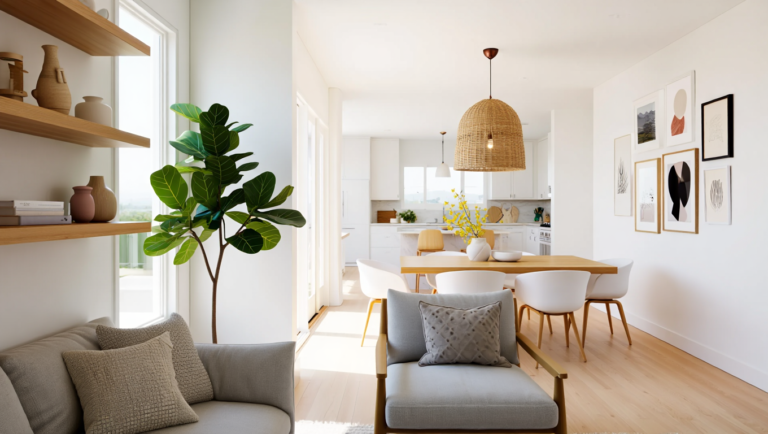
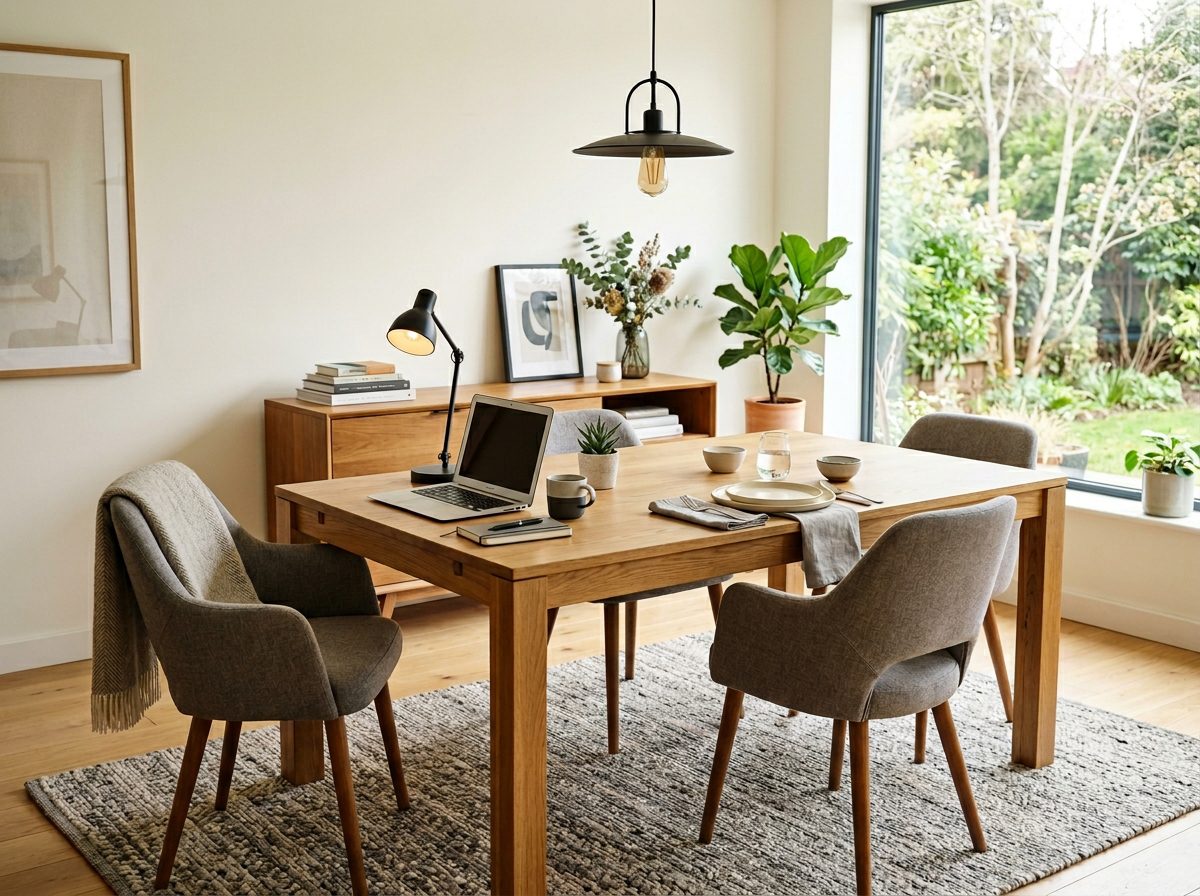
How to Make a Dining Room Double as a Workspace
There was a time when the dining room had one job. You ate there, maybe hosted the occasional dinner, and the rest of the week it sat mostly empty. Those days are largely gone. More of us are working from home, studying at the kitchen table, or simply needing a quiet spot to handle bills and projects. The dining room has quietly become one of the hardest working rooms in the house.
The challenge is making it work for both purposes without one taking over the other. Nobody wants to eat dinner surrounded by stacks of paperwork, and nobody wants to start their workday clearing away last night’s dishes. I have spent years tweaking my own shared dining and work space, and I have learned that the secret is not buying more furniture. It is being thoughtful about how the room flows between its two roles.
This guide walks you through expert-backed tips for creating a dining room that doubles as a workspace, so the room feels intentional rather than cluttered and chaotic.
Start by Defining How You Actually Use the Room
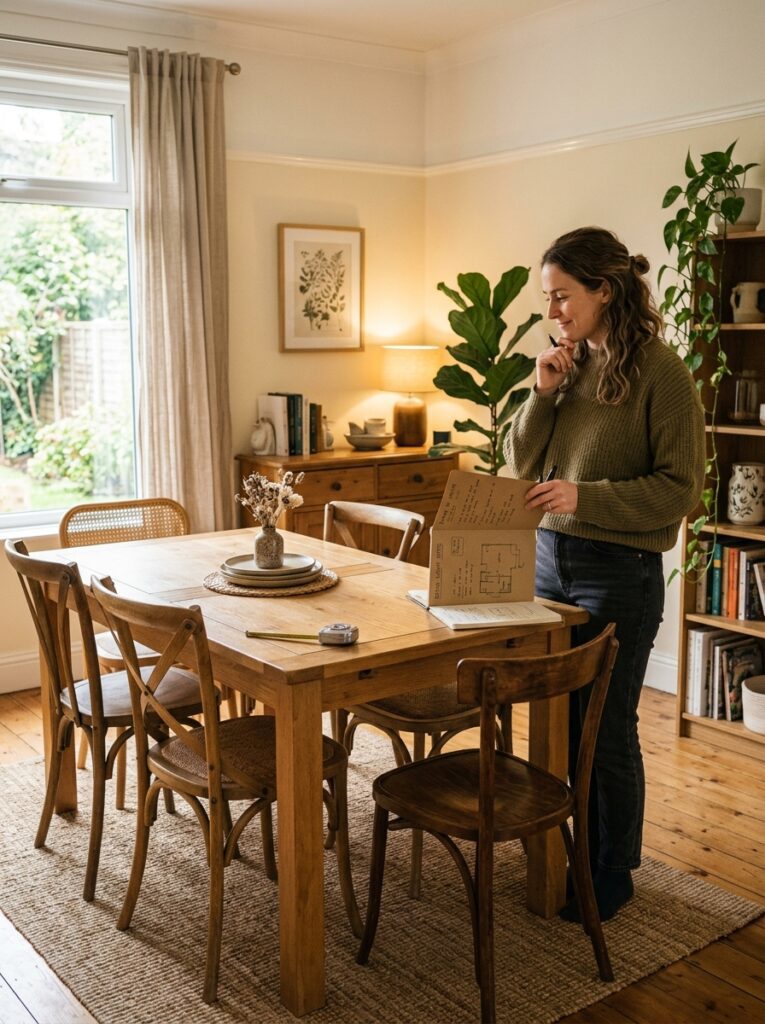
Before you move a single chair, get honest about how you really use the space. The best dual-purpose rooms are designed around real habits, not ideal ones.
Ask yourself when you work and when you eat. If you work standard daytime hours and only use the table for dinner, the room naturally divides itself by time. If you eat lunch at your desk and host dinners often, you will need a setup that transitions quickly and cleanly throughout the day.
Think about who else uses the room. A space you share with kids doing homework or a partner taking calls needs more flexibility than a room only you use. Knowing this upfront shapes every decision that follows, from furniture to storage to lighting.
Once you understand the real rhythm of the room, you can design around it instead of fighting it. This single step prevents most of the frustration people run into with shared spaces.
Choose Furniture That Earns Its Place
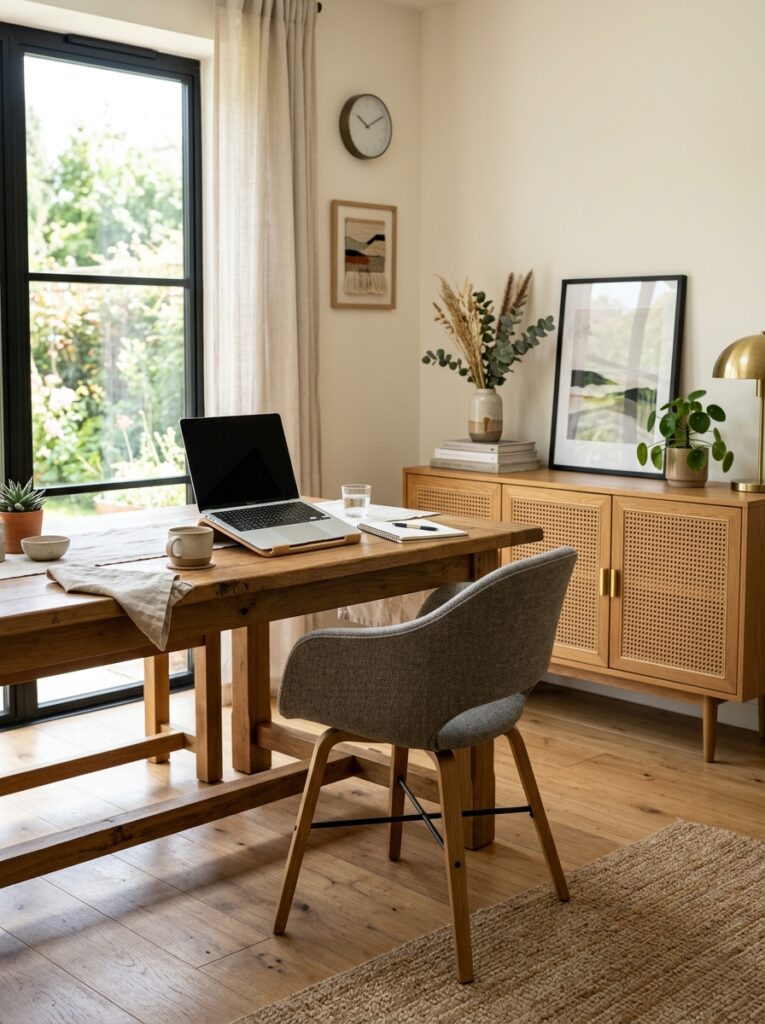
In a room doing double duty, every piece of furniture needs to pull its weight. The dining table itself is the heart of the room, so start there.
A sturdy table works best because it has to handle both meals and a laptop, papers, or a monitor. Wobbly or delicate tables that feel fine for occasional dinners become a daily annoyance when you work on them. If you are buying new, look for a table at a comfortable working height with enough surface area for both functions.
Consider the depth and shape too. A table that is a little deeper gives you room to push your work toward the back during meals without clearing everything away. A rectangular table often suits dual use better than a round one because it offers a natural division of space.
Chairs matter more than people expect. A dining chair that feels lovely for a one-hour dinner can wreck your back over an eight-hour workday. If you spend long hours working, it is worth keeping one supportive chair that you swap in during the day. A comfortable chair that still looks at home in a dining room is the ideal compromise.
Storage furniture earns its place too. A sideboard, buffet, or slim cabinet gives you somewhere to tuck away work supplies at the end of the day and dining items when you need the surface for work.
Create Smart Storage That Hides the Work
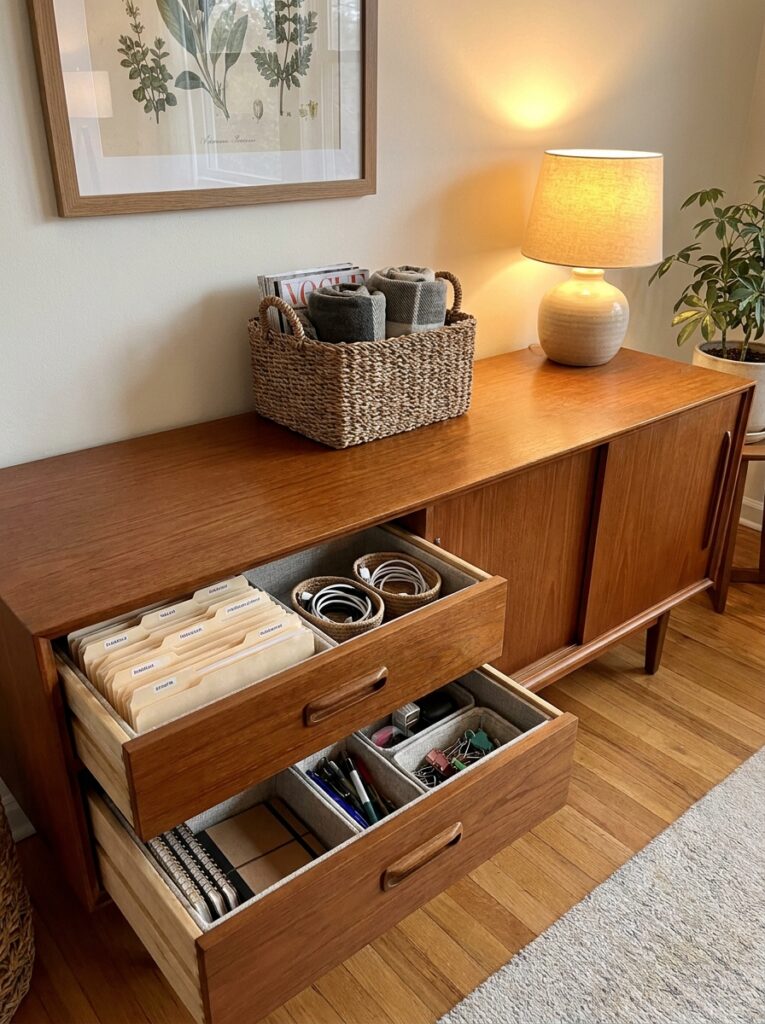
The single biggest difference between a shared room that feels calm and one that feels chaotic comes down to storage. When work items have a real home, the room can switch roles in minutes.
The goal is to be able to clear your work setup quickly and completely. Loose papers, chargers, notebooks, and pens scattered across the table are what make a dining room stop feeling like one. Give all of it a designated spot you can sweep it into fast.
A few storage approaches work especially well in this kind of room:
- A sideboard or buffet with drawers for files, devices, and office supplies right where you need them.
- A rolling cart that holds your work gear and can be wheeled aside or into a closet when you are done.
- A decorative box or basket on the table or a nearby shelf to drop everyday items into at mealtime.
- A drawer organizer inside existing storage so cables and small items do not become a tangled mess.
The key is keeping your work essentials close enough to set up quickly but contained enough to disappear when you are eating. Think of it as a setup-and-pack-down routine rather than a permanent installation taking over the table.
Get the Lighting Right for Both Tasks
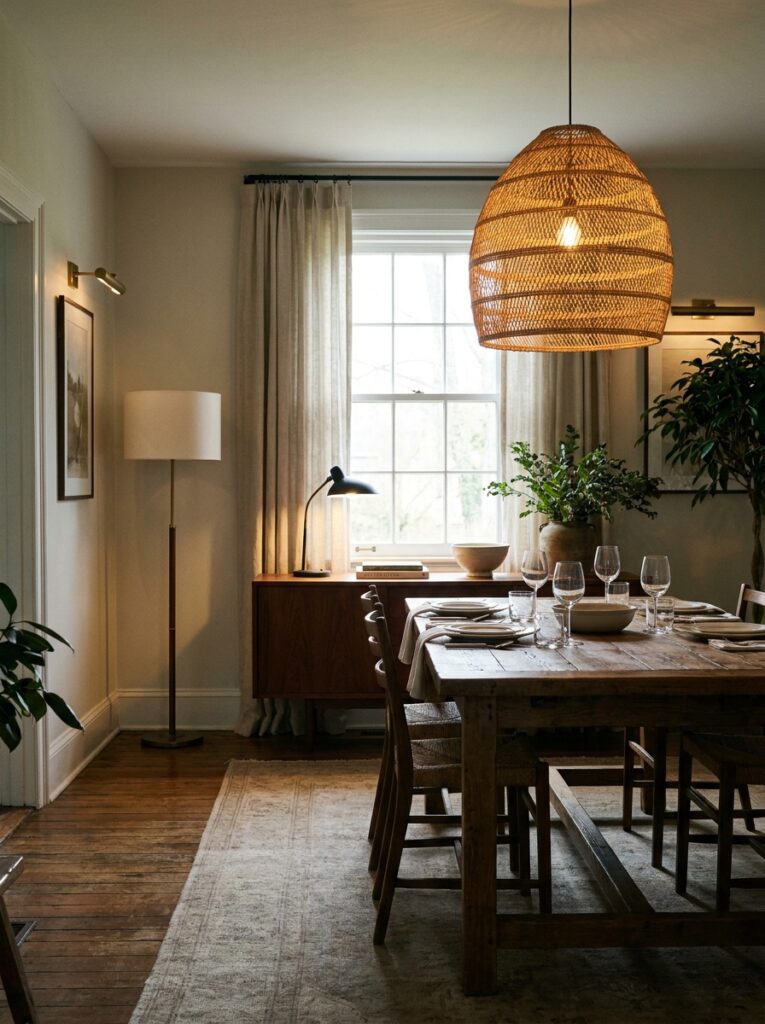
Lighting is one of the most overlooked elements in a dual-purpose room, yet it changes everything about how the space feels and functions. Dining and working call for very different lighting, and a good setup handles both.
For dining, you want warm, softer lighting that feels relaxed and inviting. A pendant light or chandelier over the table creates that cozy atmosphere people associate with shared meals.
Working, on the other hand, needs brighter, cooler, more focused light so you can see clearly and avoid eye strain. Relying on a dim, moody dining light all day will leave you squinting and tired.
The solution is layered lighting. Install a dimmer on your main fixture so you can brighten it for work and soften it for meals. Add a small desk lamp or task light for focused work, and tuck it away or switch it off when it is time to eat. This flexibility lets the same room feel productive by day and welcoming by night.
Natural light deserves attention too. If you can position your working spot near a window, you will benefit from better light and a more pleasant work experience. Just be mindful of glare on screens and adjust with blinds or curtains as needed.
Define Zones Without Building Walls
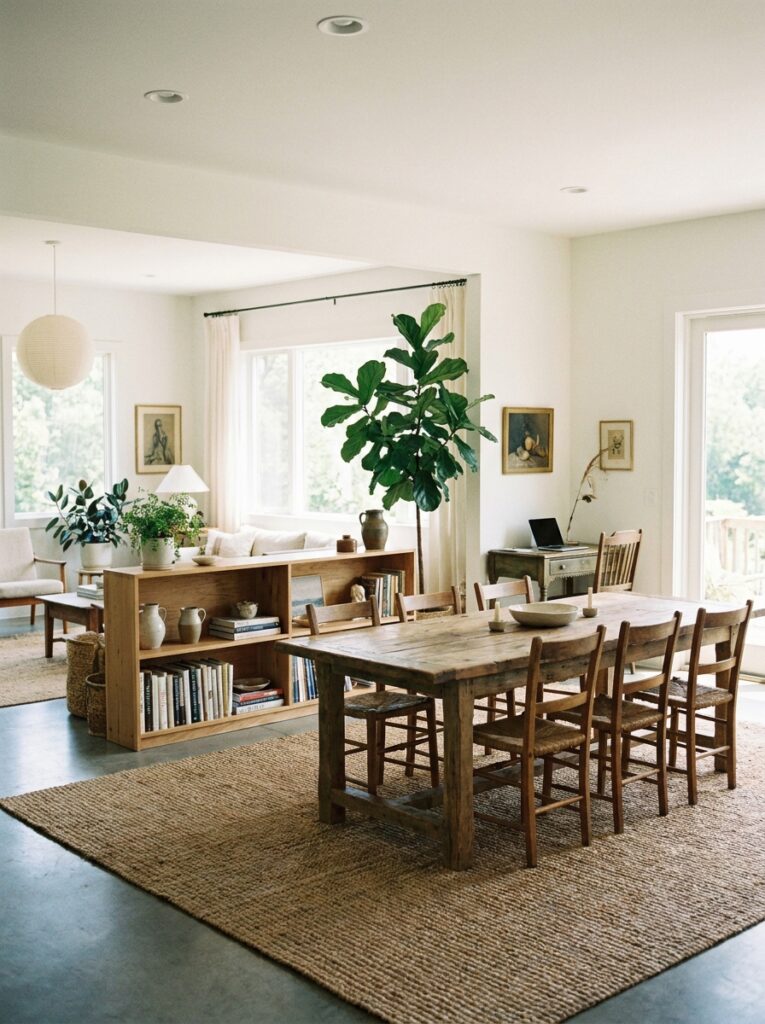
Even in a single room serving two purposes, a little visual separation goes a long way. You do not need walls or dividers to create distinct zones. Subtle design choices do the work.
A rug under the dining table helps anchor the eating area and visually sets it apart. If you have a dedicated corner for work, a different rug or a small shelf can quietly mark that zone as its own space.
Use a console table, a low bookshelf, or even a tall plant to softly suggest a boundary between areas when the room is large enough. These pieces divide the space without closing it off or making it feel cramped.
When the room is too small for separate zones and the table must serve both roles, lean into the transition instead. Make the act of switching from work to dining a clear ritual: clear the surface, change the lighting, set the table. That shift in the room signals to your brain that the function has changed, which matters more than you might think for staying focused and then truly relaxing.
Keep the Aesthetic Cohesive
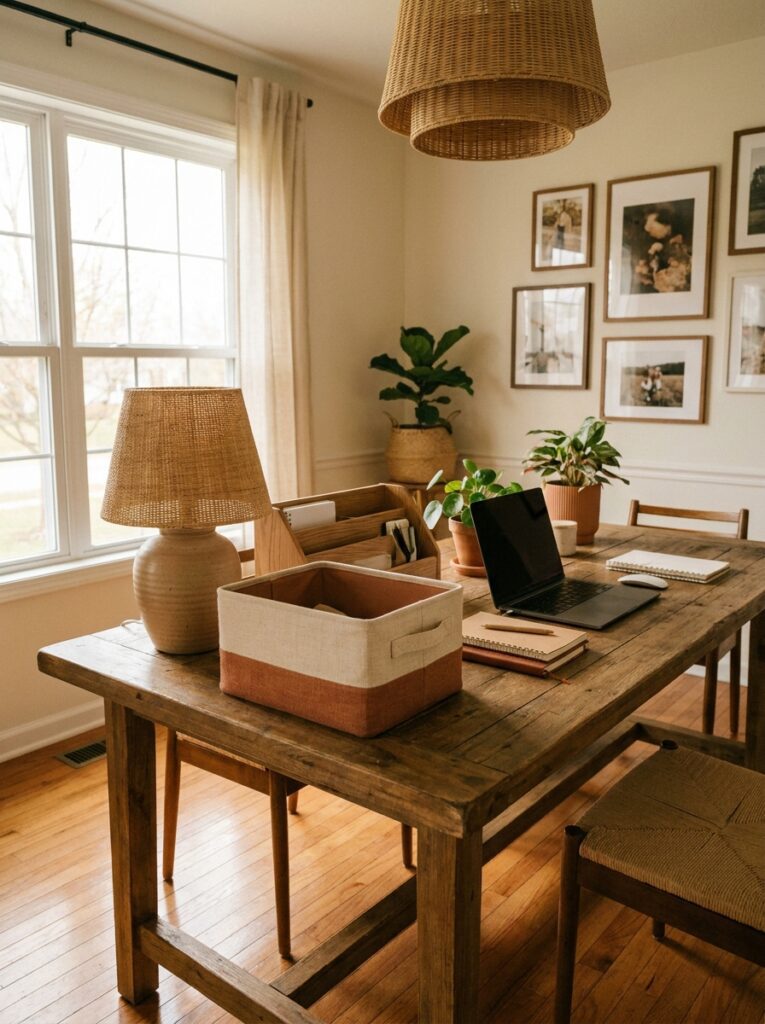
One worry people have about a dual-purpose dining room is that it will end up looking like a cluttered office crammed into a nice space. The fix is keeping everything visually cohesive so the work elements blend in rather than clash.
Choose work accessories that match the room’s style. A wooden desk organizer, a fabric storage box, or a lamp that complements your decor looks intentional rather than out of place. Skip the bright plastic office supplies in favor of pieces that feel like they belong.
Cable management makes a huge visual difference. Tangled cords are an instant giveaway that a room is working overtime. Use clips, sleeves, or a small box to hide chargers and wires, and the whole space looks tidier.
When your work setup matches the dining room’s look, the eye does not register two competing functions. It just sees one well-designed, flexible room. That cohesion is what separates a thoughtful shared space from a makeshift one.
Practical Tips for Daily Use
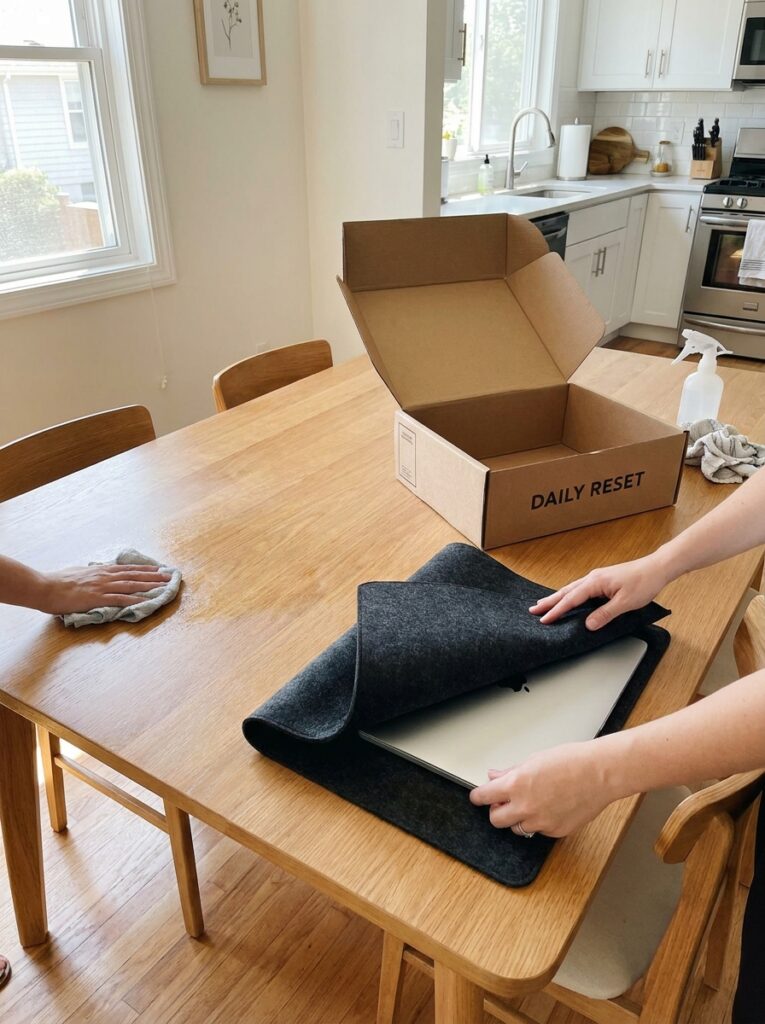
The design is only half the battle. The habits you build around the room determine whether it stays pleasant or slowly descends into chaos. These small practices make a big difference day to day.
- Pack down your work setup at the end of each workday so you never eat surrounded by it.
- Keep a designated container for work items so cleanup takes seconds instead of minutes.
- Use a placemat or desk pad to protect the table surface from laptops, mugs, and pens during work hours.
- Wipe the table down as part of your transition between work and meals to mentally reset the space.
- Keep a charger and the essentials stored right in the room so you are not hunting for them every morning.
- Set a clear end to your workday so the room can return to its relaxing role each evening.
These habits take only a few minutes but protect the dual function of the room. A shared space works best when packing up is just part of the routine rather than a chore you dread.
Common Mistakes to Avoid
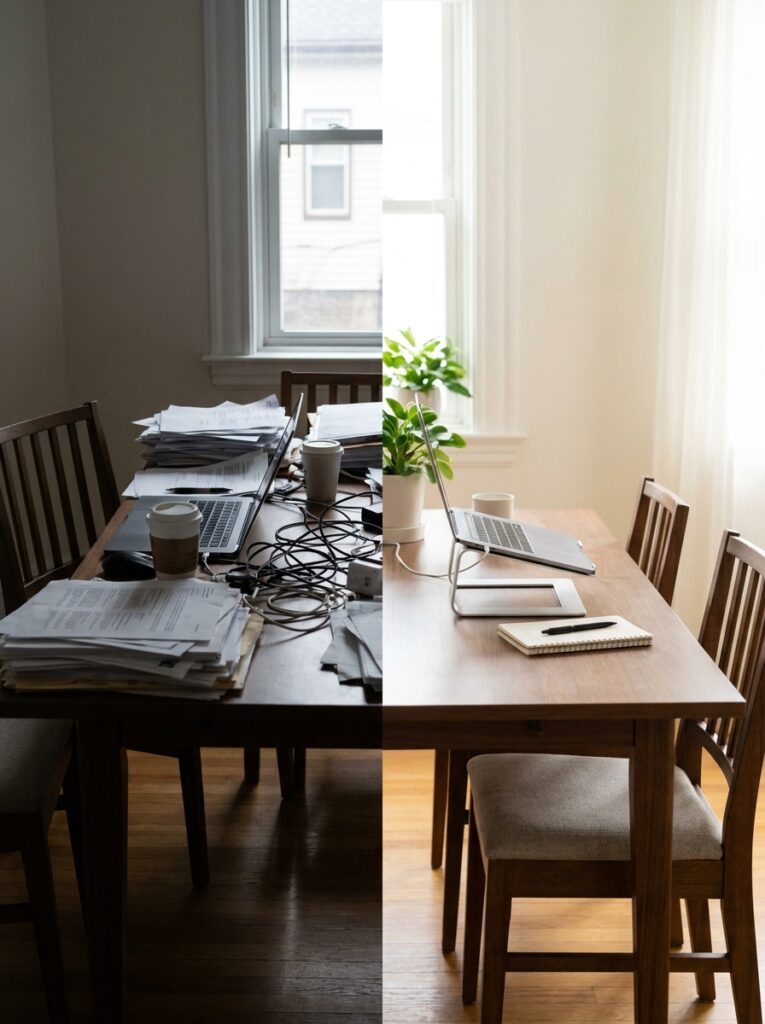
Plenty of people set up a dining room workspace and then quietly give up on it because of a few avoidable errors. Knowing these ahead of time saves a lot of frustration.
The most common mistake is letting work permanently take over the table. Once papers and devices live there full time, the dining function disappears and the room loses its balance. Always maintain the ability to clear it.
Another frequent error is ignoring comfort for the sake of looks. A beautiful dining chair that hurts your back after an hour will sabotage your workday. Comfort and function have to share the spotlight with style.
People also tend to underestimate storage. Without enough designated space for work items, those items spill onto every surface. When in doubt, plan for more storage than you think you need.
Poor lighting is another trap. Trying to work under soft dining lighting strains your eyes, while harsh task lighting ruins the dinner mood. Skipping a flexible lighting plan undercuts both functions at once.
Finally, some people forget to separate the two activities mentally. If you never truly pack up work, you never fully relax in the room. The physical reset matters just as much as the design.
Expert Insights on Long-Term Success
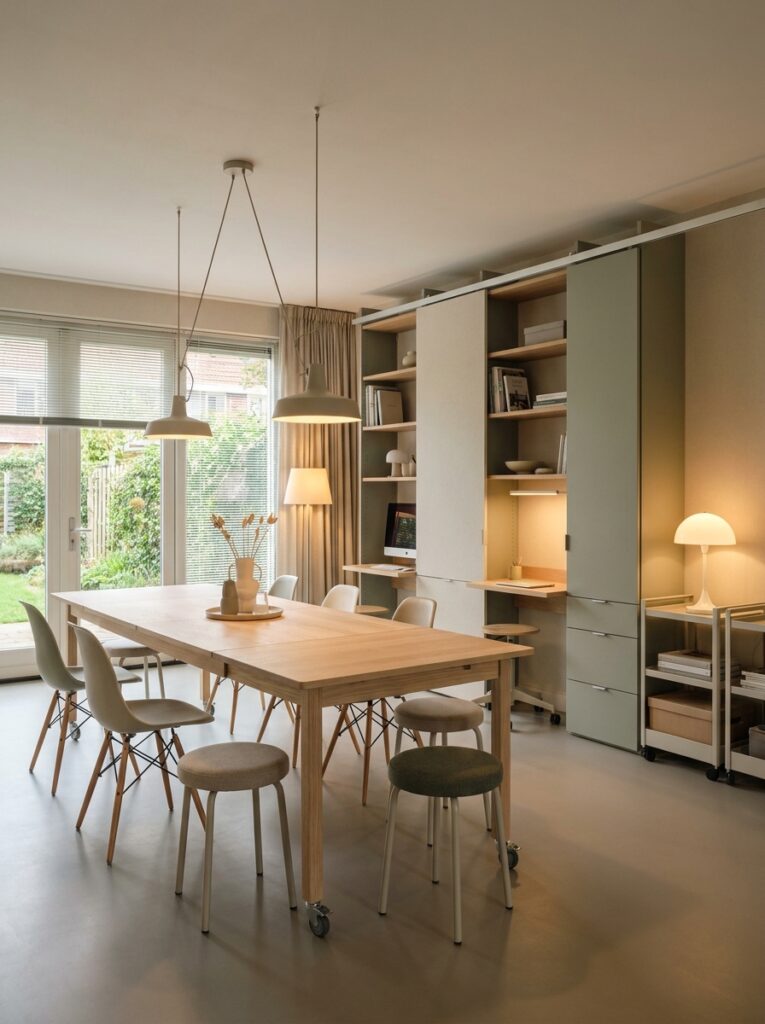
Interior designers who handle multifunctional spaces tend to repeat a few core ideas. The first is that flexibility beats permanence. The most successful dual-purpose rooms are built to transition easily, not locked into one rigid arrangement. Furniture that moves, lighting that adjusts, and storage that hides things quickly all support this.
Designers also emphasize designing for your worst-case clutter, not your best-case tidiness. Plan storage and surfaces around the messiest your work gets, and the room will hold up even on busy days. A setup that only works when everything is perfectly minimal will fail the moment real life arrives.
Another insight worth holding onto is the value of ritual. Professionals who work from shared spaces often point to the simple act of setting up and packing down as the thing that keeps both functions healthy. That small daily boundary protects your focus during work and your peace during meals.
Lastly, experienced designers remind us that the room should serve you, not the other way around. If your setup feels like a constant struggle, it is worth rethinking rather than forcing. The best shared dining and work spaces feel effortless because they were designed around how their owners actually live.
IF you Like: Coffee Table Decor Ideas
Frequently Asked Questions
Can a dining table really work as a desk?
Yes, as long as it is sturdy and at a comfortable height. The main thing is using a supportive chair and a desk pad to protect the surface, then packing your work away at the end of the day so the table can return to dining use.
How do I keep my dining room from looking like an office?
Choose work accessories that match your decor, manage your cables carefully, and store work items out of sight when you are not using them. When the work elements blend with the room’s style, the space stays looking like a dining room.
What is the best way to separate work and dining areas in one room?
Use subtle zoning tricks like rugs, a console table, a bookshelf, or a plant to suggest boundaries. In smaller rooms where the table serves both roles, focus instead on a clear transition routine between functions.
How can I make a dining chair comfortable for working?
Add a supportive cushion or back support, or keep one more ergonomic chair to swap in during work hours. Comfort matters far more for long work sessions than it does for short meals.
Do I need special lighting for a dining room workspace?
Layered lighting works best. A dimmable main fixture lets you brighten the room for work and soften it for meals, while a small task lamp adds focused light when you need it.
Conclusion
A dining room that doubles as a workspace can be one of the most practical rooms in your home when you set it up with a little intention. The secret is not squeezing in more furniture or sacrificing one function for the other. It is choosing pieces that earn their place, creating storage that hides the work, getting your lighting right, and building simple habits that let the room shift smoothly between its two roles.
Start with how you actually live in the space, then design around that reality. With the right setup, the same room can help you stay productive through the day and gather comfortably for meals at night, without ever feeling like a compromise. A well-planned dual-purpose dining room does not just save space. It makes your whole home work harder for you.