Kitchen Design Ideas That Transform the Most Important Room in the Home
Kitchen Design Ideas: Why the Kitchen Deserves the Most Attention
The kitchen is the room that gets used more than any other in the home. It is where the day starts, where food and conversation happen simultaneously, and where most gatherings eventually migrate regardless of where they were intended to begin. That level of daily use means the kitchen deserves more deliberate design attention than most other rooms receive.
The fifteen kitchen design ideas in this guide cover every major style direction from minimal white and Scandinavian to farmhouse, earth tone, and contemporary modular. Each one offers specific design principles and practical decisions rather than simply a visual reference. Finding the style that matches how a household actually uses the kitchen is as important as finding one that looks impressive in a photograph.
Modern Neutral Kitchen: The Style That Never Needs Updating
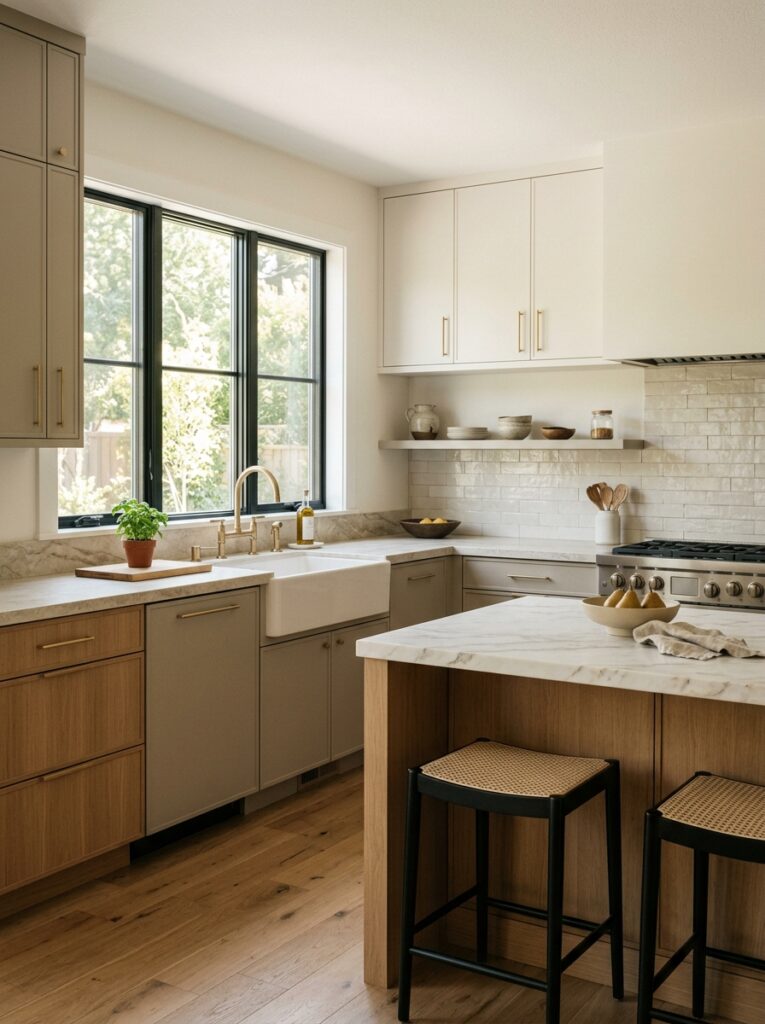
A modern neutral kitchen built around soft shades like beige, greige, and warm white creates a calm and genuinely timeless space that ages better than any specific trend-driven design direction. These tones reflect light consistently throughout the day and across every season without creating the stark contrasts or dated color associations that bolder palettes develop over time.
Clean cabinetry with subtle hardware, a simple backsplash in a complementary material, and countertops in a warm stone or engineered alternative maintain the balanced quality that makes this style so consistently popular. The modern neutral kitchen is not a default choice made by avoiding decisions. It is a considered direction that prioritizes long-term livability over short-term visual novelty. For kitchens that need to look equally appropriate now and in a decade, this is the most reliably sound starting point available.
Scandinavian Style Kitchen: Functional Beauty Through Simplicity
View this post on Instagram
Scandinavian kitchens achieve their distinctive quality through a combination of principles rather than through any single design element. Light wood finishes in pale oak or birch, white or soft grey cabinetry, minimal decoration, generous natural light, and genuinely functional layouts that prioritize the cooking experience all work together to create a space that feels simultaneously airy and warmly inhabited.
Open shelving in place of some upper cabinets is a common Scandinavian kitchen choice because it reduces the visual weight of the room and creates a display opportunity for beautiful everyday objects like ceramics, glassware, and herbs. The functional principle means every element earns its place by doing something genuinely useful rather than existing purely for appearance. The result is a kitchen that works brilliantly as a cooking environment and looks beautiful without any deliberate effort to make it so.
Minimalist White Kitchen: Maximum Space, Maximum Light
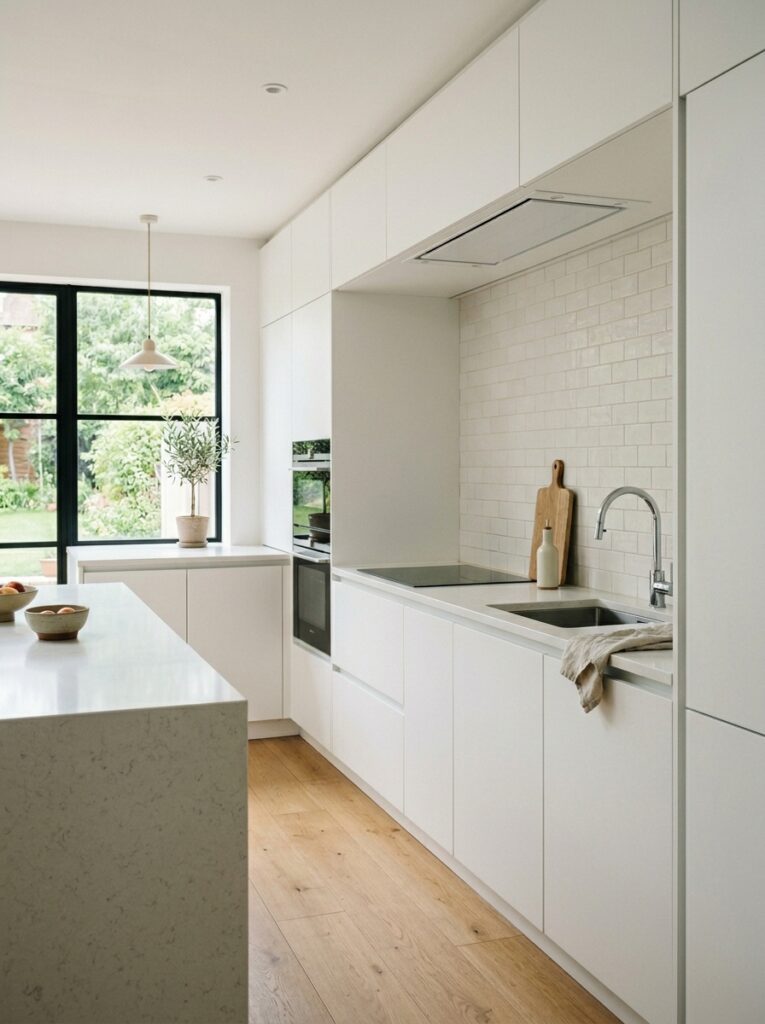
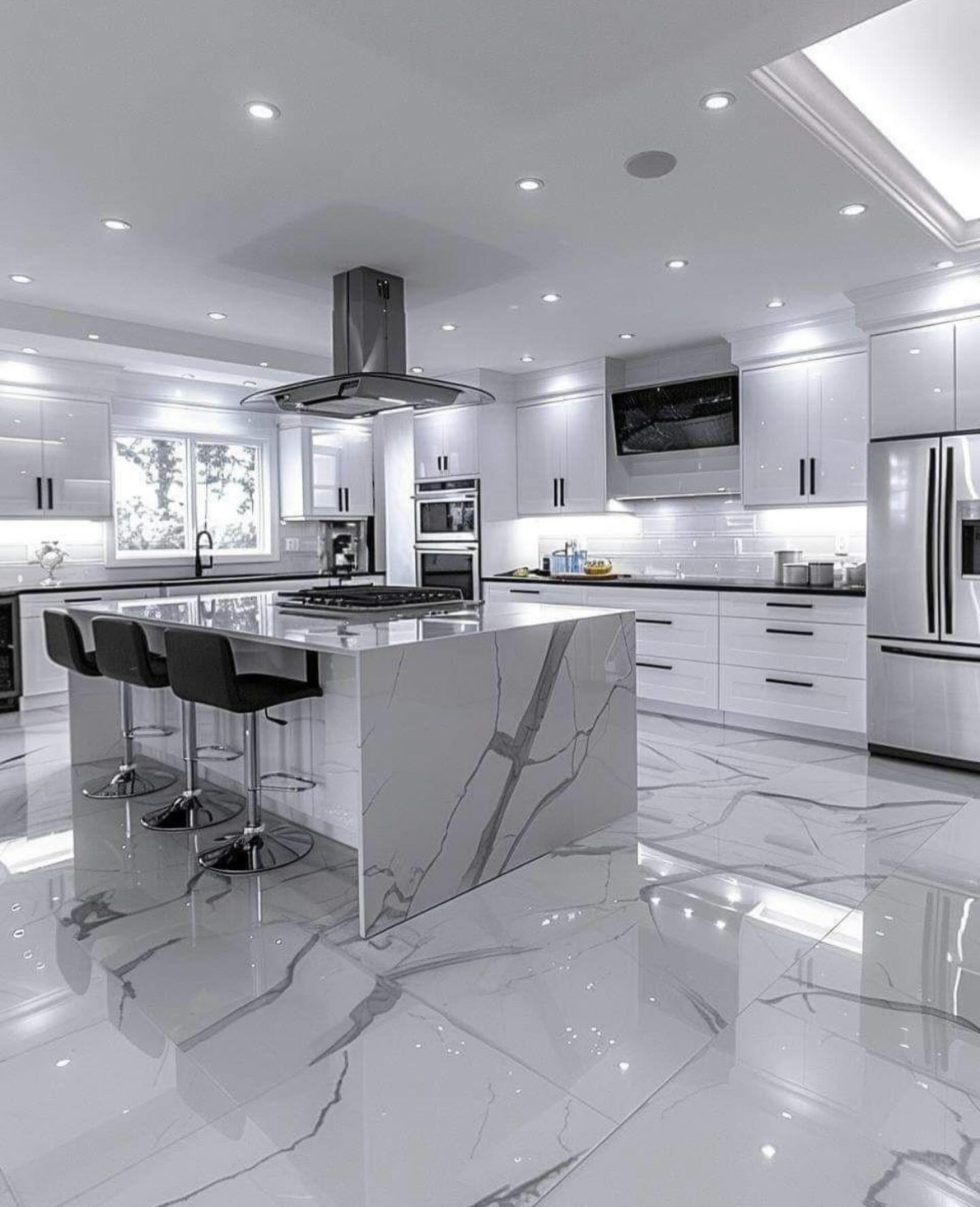
A minimalist white kitchen maximizes both perceived space and natural light through a combination of pale surfaces, clean lines, and the deliberate elimination of visual clutter. Handle-less cabinets with push-to-open mechanisms remove the visual interruption that hardware creates across cabinet fronts. Integrated appliances disappear into the cabinetry rather than sitting as separate objects. Every surface remains visible and unobstructed.
The minimalist white kitchen feels larger than its actual square footage suggests because the eye has nothing to stop on as it travels across the room. This quality makes it particularly valuable in compact urban kitchens where the physical dimensions cannot be changed but the perceived space can be significantly improved through careful design decisions. The one principle that makes this work rather than feel clinical is the quality of the materials. A minimalist white kitchen with cheap finishes reads as unfinished. With quality surfaces and good lighting it reads as genuinely luxurious.
Warm Wood Kitchen Design: Natural Character That Always Feels Right
View this post on Instagram
Wood brings something to a kitchen that no manufactured material can replicate. Its grain variation, natural warmth, and the way it ages into genuine character over years of use create an environment that feels inhabited and cared for in a way that purely synthetic kitchens never quite achieve. Even relatively modest wood elements, a simple wooden countertop on an island, open shelving in natural timber, or wood-faced lower cabinets, shift the entire atmosphere of the room toward genuine warmth.
Wooden kitchens pair naturally with neutral wall colors because the wood itself provides all the material richness the space needs without additional color complexity. Paired with quality stone or engineered stone countertops, brushed metal hardware, and well-positioned task lighting, a warm wood kitchen creates one of the most genuinely welcoming cooking environments available at any budget level.
Open-Concept Kitchen Layout: Social Cooking That Changes How the Home Feels
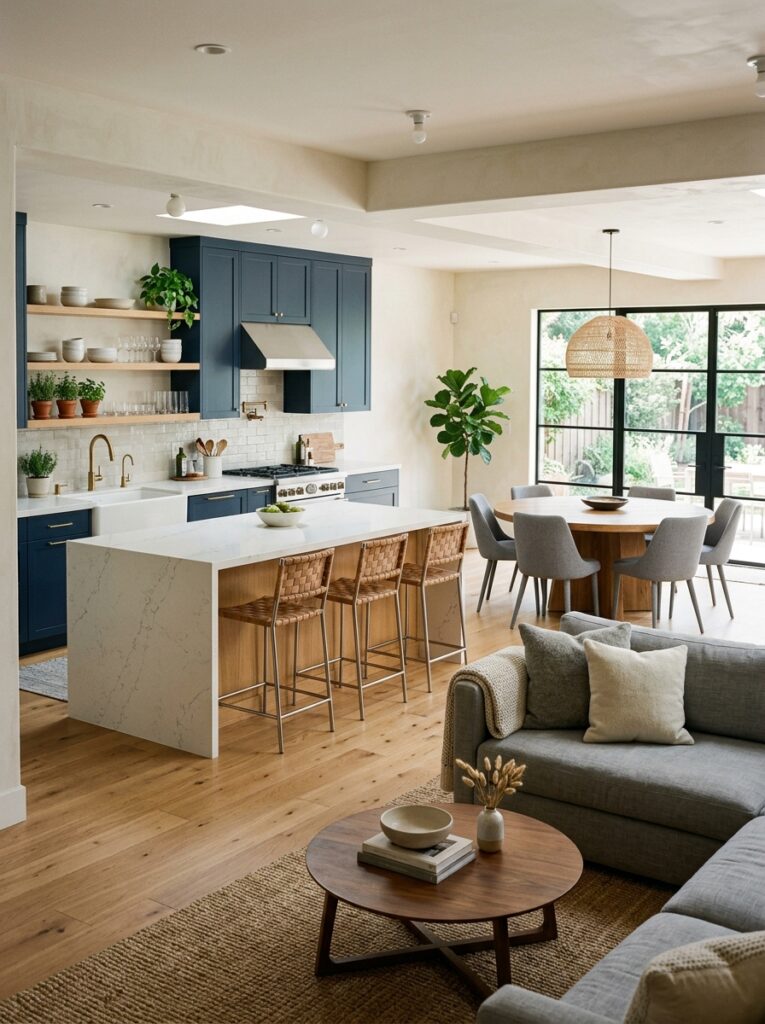
An open-concept kitchen that connects directly to the dining and living areas changes the social quality of daily home life more fundamentally than almost any other single design decision. The person cooking is no longer separated from the conversation, the children are visible from the kitchen while homework happens at the dining table, and gatherings flow naturally between cooking, eating, and relaxing without anyone being isolated in the process.
The design challenge of an open-concept kitchen is maintaining the spatial quality of the kitchen’s cooking zone while allowing it to read as part of the broader living area rather than a separate room that happens to have its wall removed. Consistent flooring throughout, careful placement of the kitchen island to define the cooking zone without enclosing it, and lighting that addresses both the kitchen work area and the dining and living areas separately all contribute to a successful open-concept result.
Contemporary Modular Kitchen: Smart Storage That Changes Daily Life
View this post on Instagram
A contemporary modular kitchen addresses the most consistent frustration in kitchen design, which is the gap between available storage capacity and the actual organization of that storage for daily use. Pre-designed cabinet systems with pull-out drawers, corner solutions, integrated organizers, cutlery inserts, and vertical storage for trays and baking sheets transform the experience of cooking by making everything genuinely accessible rather than technically present somewhere in a deep cabinet.
The sleek finishes and clean visual lines of contemporary modular kitchens are appealing. The genuine daily functional improvement is more significant still. A kitchen where everything is easy to find, easy to reach, and easy to return to its place is a kitchen that gets used more and creates less daily friction. For families and households where the kitchen is a seriously used room, the investment in proper modular storage consistently delivers greater daily return than any visual design improvement.
Cozy Farmhouse Kitchen: Warmth and Character Through Honest Materials
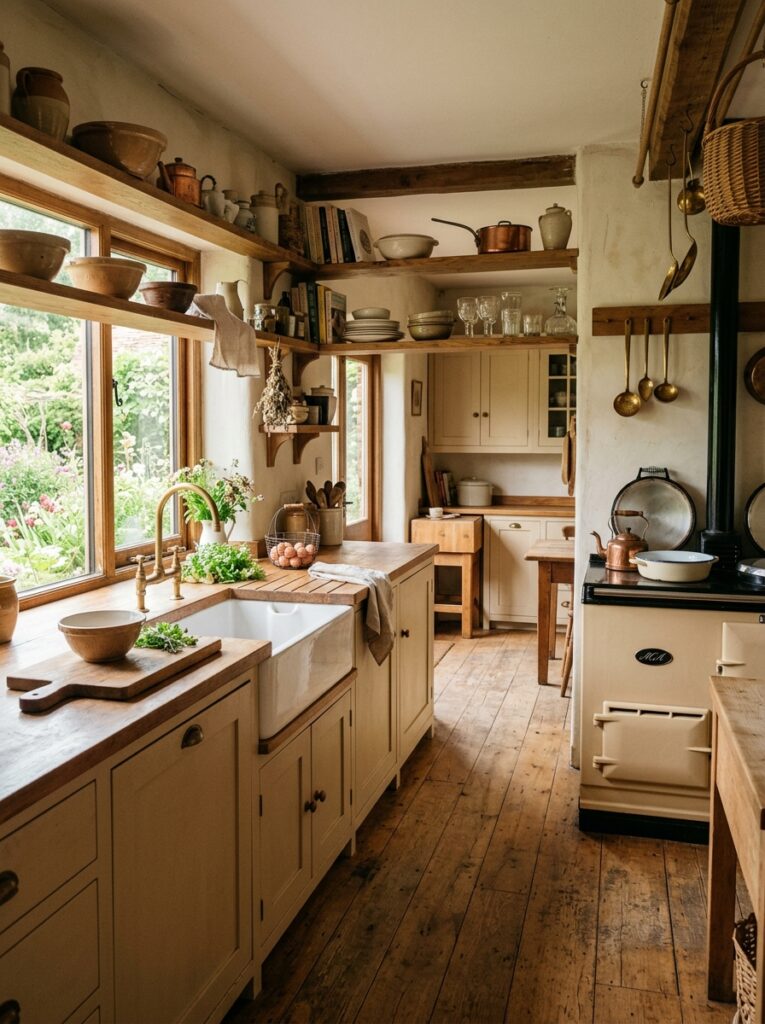
A farmhouse kitchen earns its warmth through the honest use of traditional materials and forms rather than through decoration or accessories. Shaker cabinet doors with their clean recessed panel construction, an apron-front sink with its generous depth, open wooden shelving with visible brackets, and warm-toned countertops in butcher block or honed stone all contribute a character and substance that contemporary kitchen styles sometimes lack.
The farmhouse kitchen also handles imperfection more gracefully than purely modern alternatives. The slight irregularity in handmade ceramics on open shelves, the patina that develops on brass or unlacquered copper hardware, and the gentle wear marks that appear on wooden countertops over time all add to the authentic, lived-in quality rather than undermining it. Soft warm lighting enhances the atmospheric depth of these natural materials particularly effectively during the evening hours.
Two-Tone Cabinet Kitchen: Visual Interest Through Contrast
View this post on Instagram
Two-tone cabinet kitchens use contrasting colors between upper and lower cabinets to create a kitchen with genuine visual depth and personality without committing to a single bold color across the entire space. The most effective combinations typically pair darker, more saturated lower cabinets with lighter upper cabinets because this weighting anchors the room visually and allows the upper area to remain light and open.
Dark navy or forest green lower cabinets paired with cream or warm white uppers is currently one of the strongest two-tone combinations because both tones suit the warm neutral palette that works across most homes without conflict. The color break typically occurs at the countertop level, which is already a natural visual boundary in the kitchen. Consistent hardware across both cabinet tones maintains the cohesive quality that prevents two-tone from reading as indecisive rather than intentional.
Light and Airy Kitchen Design: Brightness That Improves Every Moment in the Room
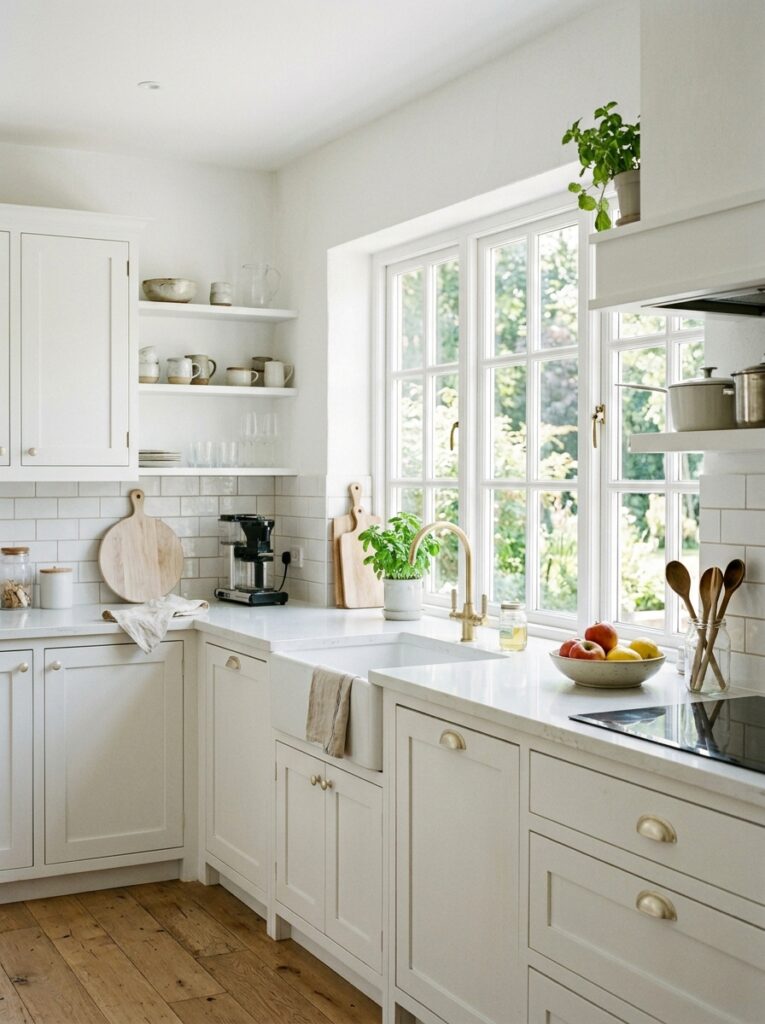
A light and airy kitchen design uses pale surfaces, reflective materials, and maximized natural light to create a cooking environment that feels genuinely uplifting throughout the day. Most people spend significant time in their kitchen during morning hours when natural light quality directly affects their energy and mood. A kitchen designed to make the most of available morning light delivers a daily benefit that no amount of evening styling can replicate.
Pale wall colors in warm white or soft cream, light-toned countertops in marble, quartz, or pale stone, glass-fronted cabinet doors in the upper section, and minimal window treatments that allow maximum light penetration all contribute to the airy quality. Reflective backsplash materials like glazed ceramic tile or glass add the light-bouncing quality that amplifies whatever natural light is available throughout the day.
Small Space Kitchen Design: Every Decision Counts Twice
View this post on Instagram
Small kitchens require the most deliberate design decisions because there is no floor area, wall space, or cabinet depth to absorb the consequences of choices made without careful consideration. Every decision that works in a small kitchen works twice. Every decision that does not work disrupts both the visual quality and the daily functional experience simultaneously.
Vertical storage through tall cabinets that extend to the ceiling maximizes storage without consuming additional floor space. Light colors throughout prevent the enclosed quality that darker finishes create in compact spaces. Compact or integrated appliances save worktop and floor space without sacrificing the cooking performance the kitchen needs for daily use. A single pendant light above the primary work area or island creates a focal point and provides task illumination without the visual weight of multiple fixtures competing in a small ceiling area.
Matte Finish Modern Kitchen: Sophisticated Surface Quality
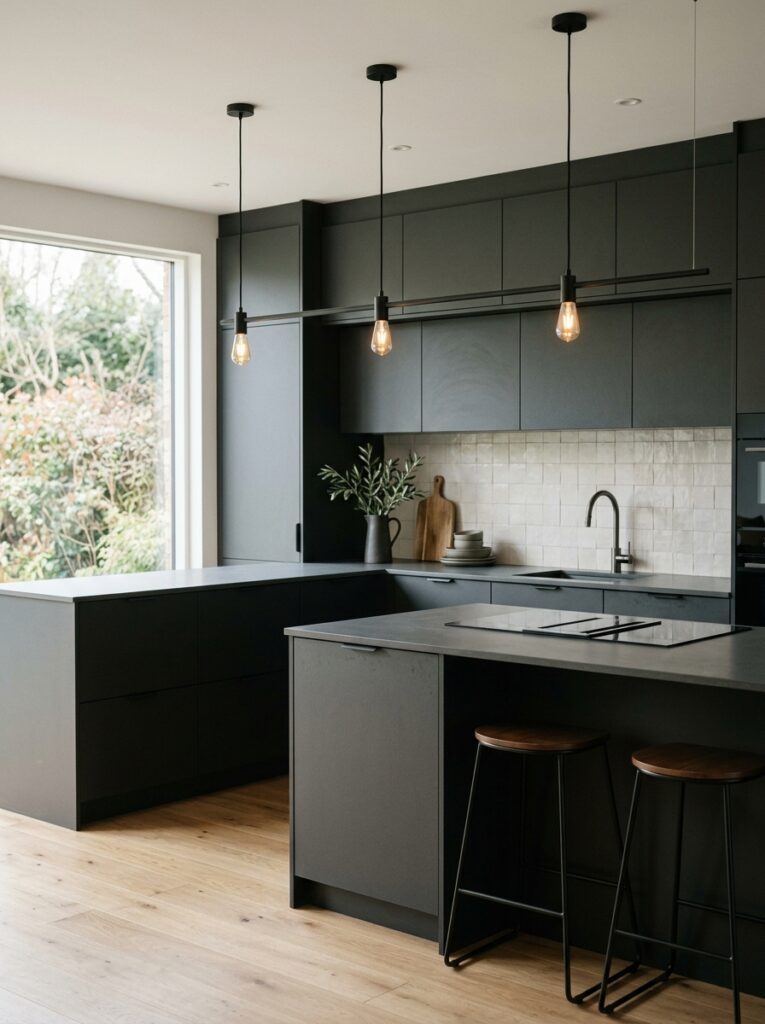
Matte finish kitchen cabinets have overtaken high gloss as the contemporary preference for a straightforward reason. Matte surfaces hide fingerprints, water marks, and minor surface imperfections far more effectively than glossy alternatives, which means they look significantly better after daily use rather than requiring constant cleaning to maintain their surface quality. That practical advantage aligns with the visual quality of a matte finish, which reads as genuinely sophisticated rather than showroom-shiny.
Matte cabinetry works particularly well in darker kitchen colors where high gloss would create a reflective quality that reads as plastic rather than premium. A matte charcoal or deep forest green kitchen with subtle brushed metal hardware and a natural stone countertop creates a genuinely high-end result that costs far less to achieve than the visual impression suggests. Minimal visible hardware and clean architectural lighting complete the refined appearance that matte finishes specifically suit.
Earth Tone Kitchen Interior: Natural Colours That Ground the Cooking Space
View this post on Instagram
An earth tone kitchen in taupe, olive, terracotta, and warm brown creates a grounded, calming cooking environment that feels connected to the natural world in a way that more saturated or artificially derived kitchen colors do not. These tones belong to the same warm natural family and coordinate with each other without any deliberate color theory knowledge required.
Combined with natural materials like unsealed timber, raw terracotta ceramics, woven rattan pendant lights, and stone countertops, the earth tone kitchen feels genuinely organic rather than simply colored toward nature. The palette also photographs exceptionally well in natural light, which makes it one of the most visually compelling kitchen directions for anyone who documents their home life regularly. For a kitchen that feels genuinely warm and visually interesting without anything aggressive or trend-dependent, earth tones consistently deliver.
Classic White and Wood Kitchen: The Combination That Always Works
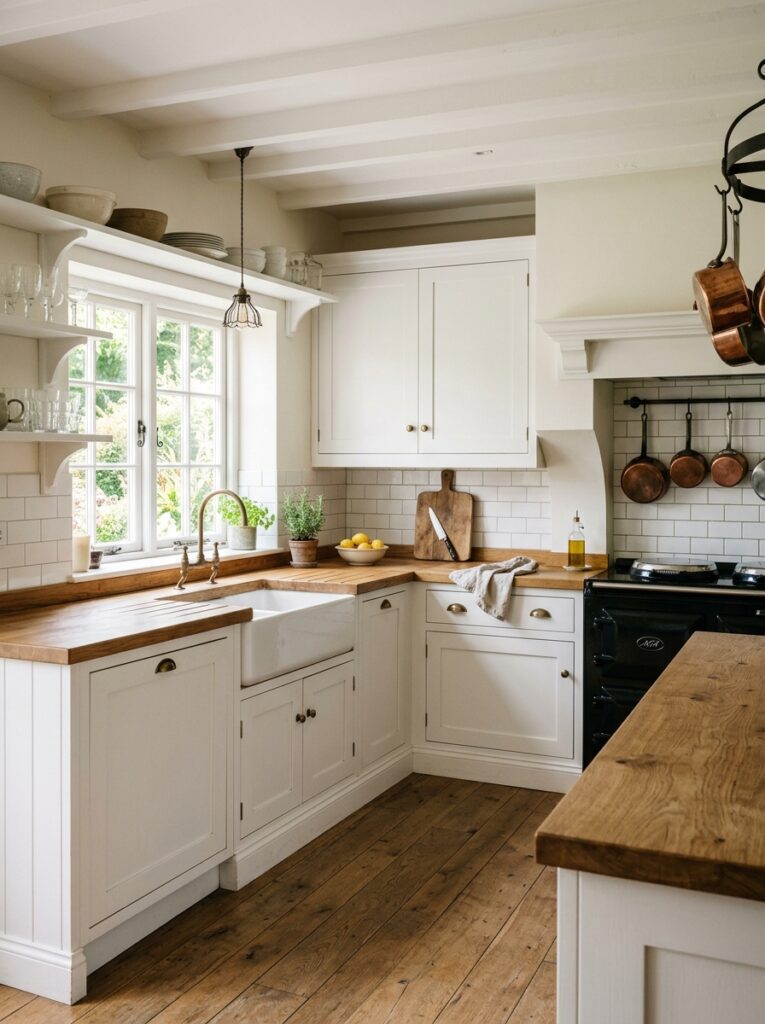
White cabinets paired with warm wooden elements, whether wooden countertops, open wood shelving, or wooden floor or ceiling details, is the kitchen combination that has remained consistently relevant across every decade of modern kitchen design because it solves the most fundamental kitchen challenge. White provides the brightness and visual cleanliness that a functional cooking environment needs. Wood provides the warmth and natural character that prevents a kitchen from feeling clinical.
The two materials balance each other naturally without requiring careful coordination because white is essentially neutral and wood belongs next to almost everything. The contrast between the crispness of painted white cabinetry and the grain and warmth of natural timber creates exactly the visual interest that makes a kitchen feel designed rather than simply finished. This combination suits traditional, transitional, and modern architecture with equal effectiveness.
Sleek Handleless Kitchen: The Most Uninterrupted Kitchen Surface Available
View this post on Instagram
A handleless kitchen creates the most visually clean and uninterrupted cabinet surface possible by eliminating the hardware that normally punctuates every cabinet door and drawer front. Push-to-open mechanisms, J-pull integrated channels cut directly into the cabinet edge, and grip profiles built into the door top edge all allow the cabinet fronts to remain completely smooth from edge to edge.
This visual quality makes handleless kitchens the most striking and architecturally clean kitchen style available because the eye travels across the cabinet surfaces without interruption. It suits contemporary architecture and modern interiors where the absence of decorative detail is itself the design statement. The practical consideration is ensuring the push-to-open mechanisms are quality components because they are used significantly more frequently than traditional handles and must perform consistently across years of daily use.
Soft Neutral Kitchen Design: Gentle and Always Welcoming
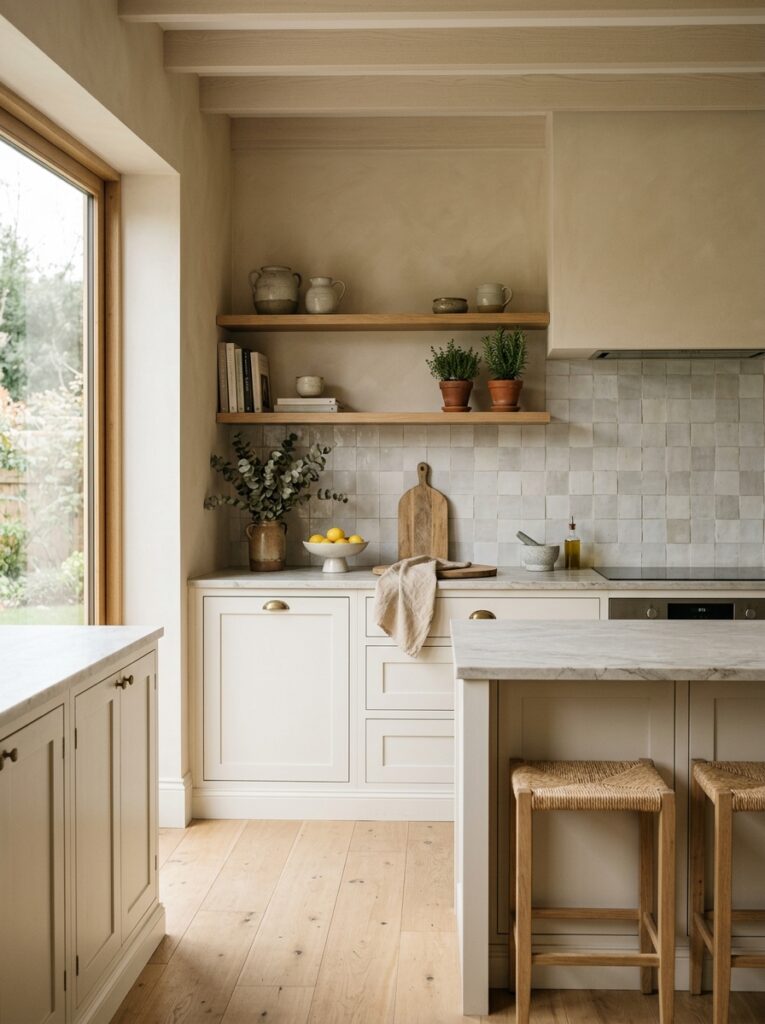
A soft neutral kitchen in cream, warm sand, and light grey creates a soothing and consistently welcoming cooking environment that suits the full range of daily kitchen moods from energized morning routines to relaxed evening meals. These gentle tones never assert themselves at the wrong moment or create the strong ambient color that bolder kitchens sometimes push into every dish and surface in the room.
The success of a soft neutral kitchen depends on texture variation because the palette itself provides no color contrast to create visual interest. A ribbed ceramic tile backsplash against smooth cabinet fronts, a honed stone countertop against a brushed wood shelf, and a woven pendant light against a painted ceiling all create the material richness that keeps the palette feeling refined rather than flat. Soft neutrals reward investment in quality materials specifically because every surface is visible and comparable against every other.