Undercut Haircuts for Boys: Styles and School-Rule Checks
The undercut is one of the most requested boys’ haircuts in barbershops, and it is also the one parents most often have to undo before a new school term. The cut itself is rarely the problem. The version of it is.
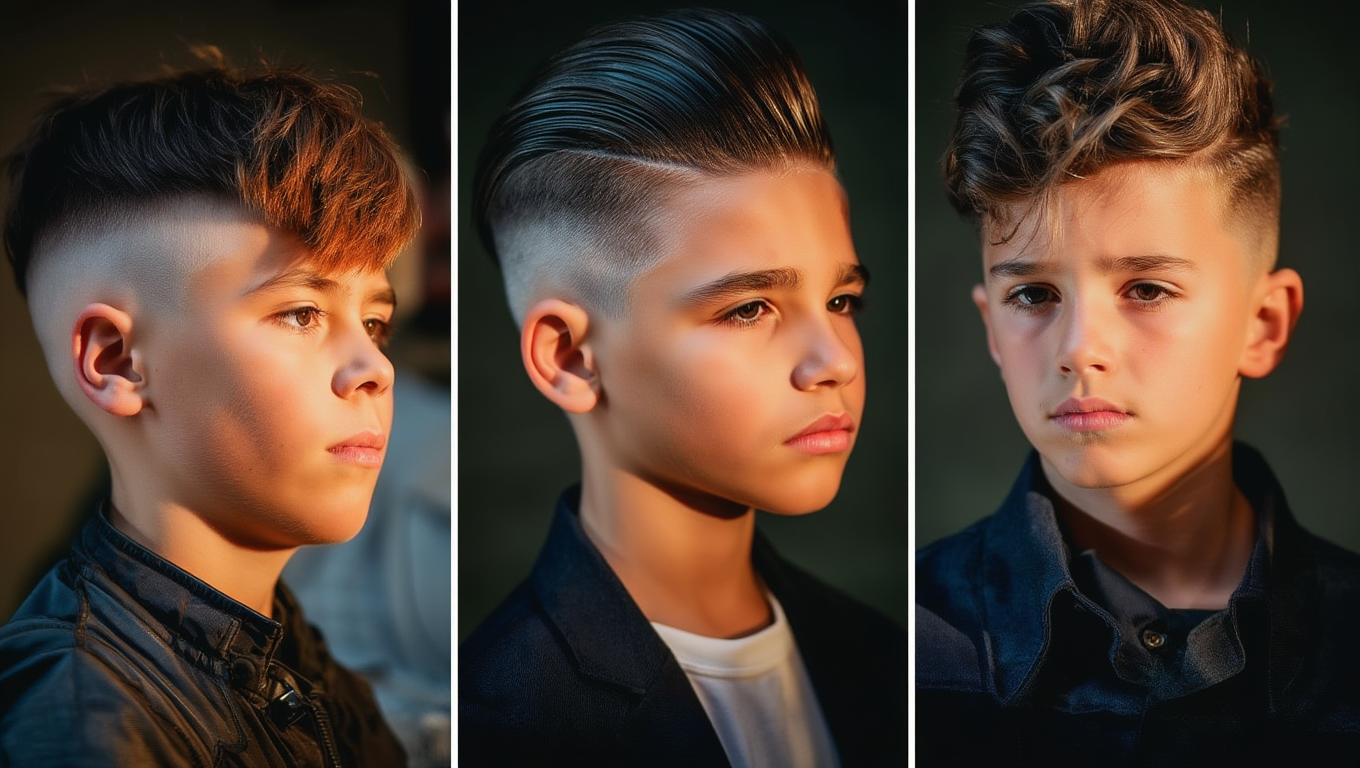
The structure is simple: very short or shaved sides against a longer top. Every variation below is built on that, and each one sits differently against a school dress code. So each section says plainly whether it passes, and what to change if it does not.
It is worth knowing the cut has been around far longer than the current trend suggests. The undercut was fashionable from the 1910s through the 1940s, faded, began a revival in the 1980s and returned fully in the 2010s. Its origins are working class: it was historically the cut of men who could not afford a barber skilled enough to blend the sides properly. What was once a mark of going without is now a deliberate style choice.
The School-Rule Check
Dress codes vary between schools and countries, but the objections cluster around three things. Knowing which three makes reading any policy straightforward.
Extreme contrast. Most codes use wording like “no extreme styles”. In practice that means a shaved or skin-level side against a much longer top. A blended fade almost never triggers it. A hard disconnected line often does.
Shaved patterns. Lines, hash marks and geometric designs are the single most commonly banned element across school policies. If a code mentions only one thing, it is usually this.
Length on top. Some codes specify that hair must sit above the collar or out of the eyes. That affects the longer-top undercut variations rather than the sides.
Read the actual wording before the appointment rather than after. And if the policy is vague, the safe combination is a low or blended fade with a textured top and no shaved design. That passes almost everywhere. Broader school-safe options across all cut types are covered in our guide to school haircuts for boys.
Classic Undercut
The version everything else is built from. Clipped sides, noticeably longer top, immediate visual contrast.
Its strength is daily flexibility. Slicked back it suits a school event. Left tousled it reads casual. The cut does not change; the styling does. Straight, wavy and thick hair all take it.
School verdict: passes if the sides are clipped rather than shaved to skin. Ask for a number two or three rather than a zero.
Textured Undercut
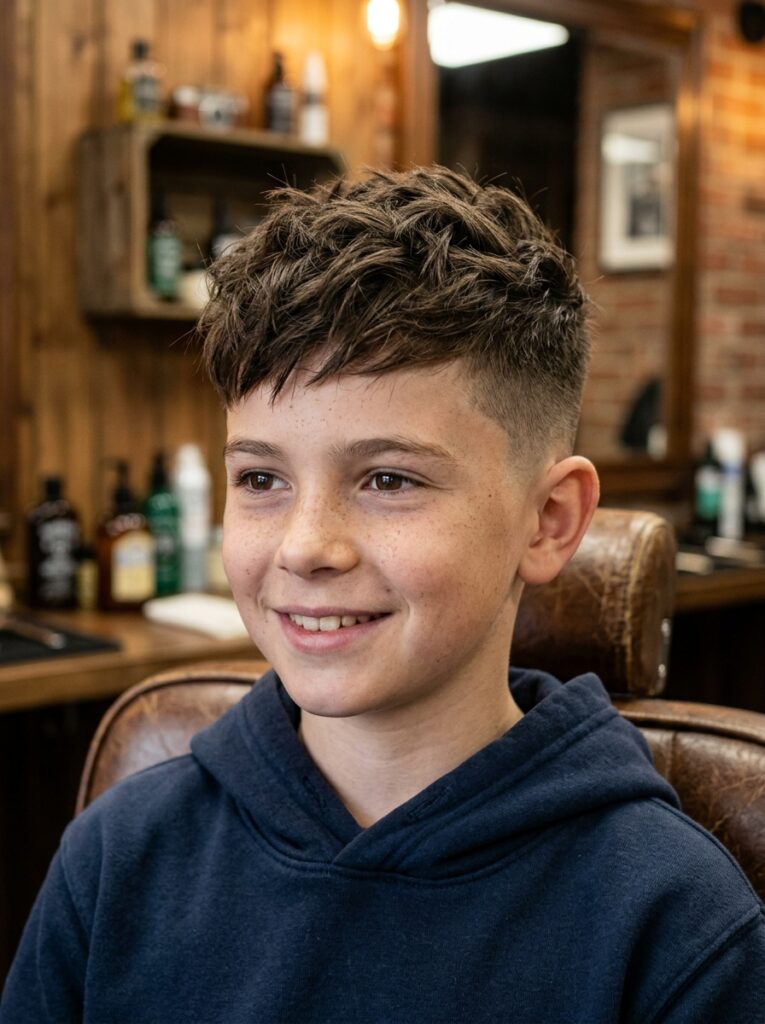
The lowest-effort option that still looks deliberate. A choppy layered top carries movement built into the cut rather than created with product each morning.
It suits straight, wavy and fine hair equally, because the choppy texture creates depth that flat tops cannot manage regardless of density. Matte clay through damp hair and a quick blow-dry is the entire routine.
School verdict: the safest choice on this list. Paired with a mid or low fade, it passes essentially any policy.
Undercut Fade
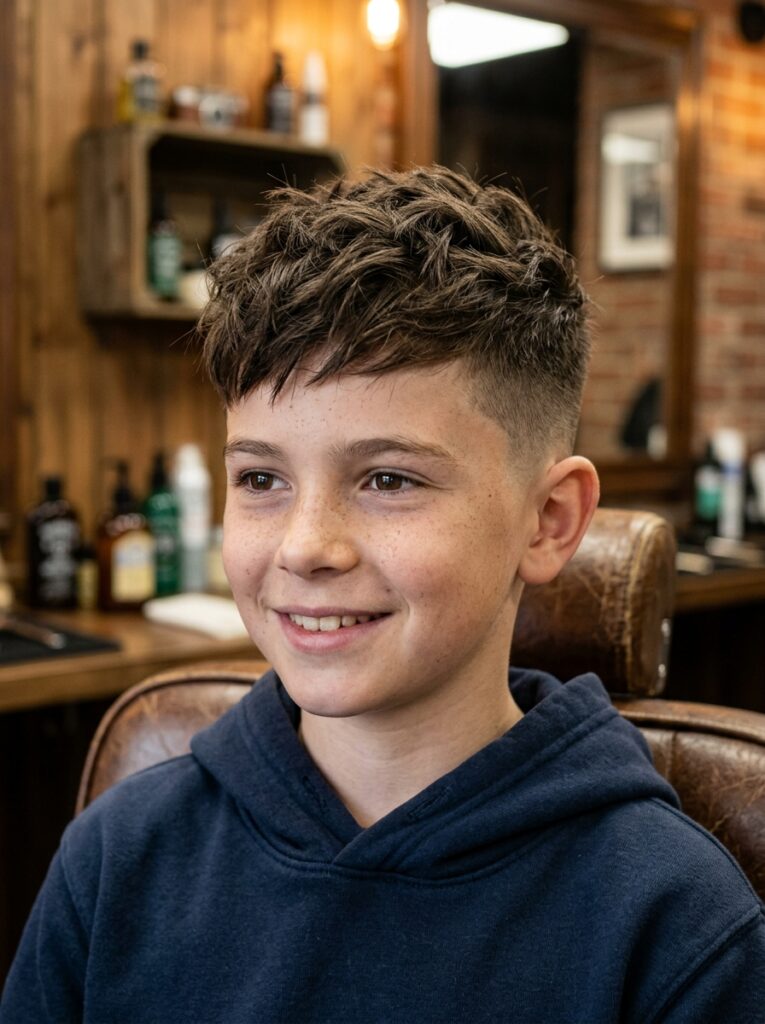
The undercut structure with a graduated fade replacing the hard line. Cleaner and more refined, with the impact intact.
Fade height sets the register. High gives drama; low gives restraint and stretches further between visits. Active boys favour it because it stays sharp through sport with little daily attention. How to ask for each height is in our taper fade guide for boys.
School verdict: low and mid fades pass. A high fade may be questioned where the policy mentions extreme contrast.
Slicked-Back Undercut
The most formal variation. Shaved sides with the top combed straight back, reading mature and deliberate rather than merely tidy.
Oval, square and oblong faces suit it, since the backward sweep elongates proportions. Strong-hold pomade on damp hair, combed back and blow-dried, holds through a full day without reapplication.
School verdict: the top passes anywhere. The risk sits in the sides, so ask for clipped rather than shaved.
Undercut with Curtain Fringe
One of the most requested boys’ cuts globally at the moment. A centre-parted top sweeps to both sides, softening the face against the sharp sides.
It suits almost every face shape and works on straight and wavy hair with no modification. Styling cream holds the sweep without stiffness.
School verdict: check the eye-line rule. This is the variation most likely to fall foul of a policy about hair out of the eyes, and a slightly shorter fringe solves it.
Undercut with Quiff
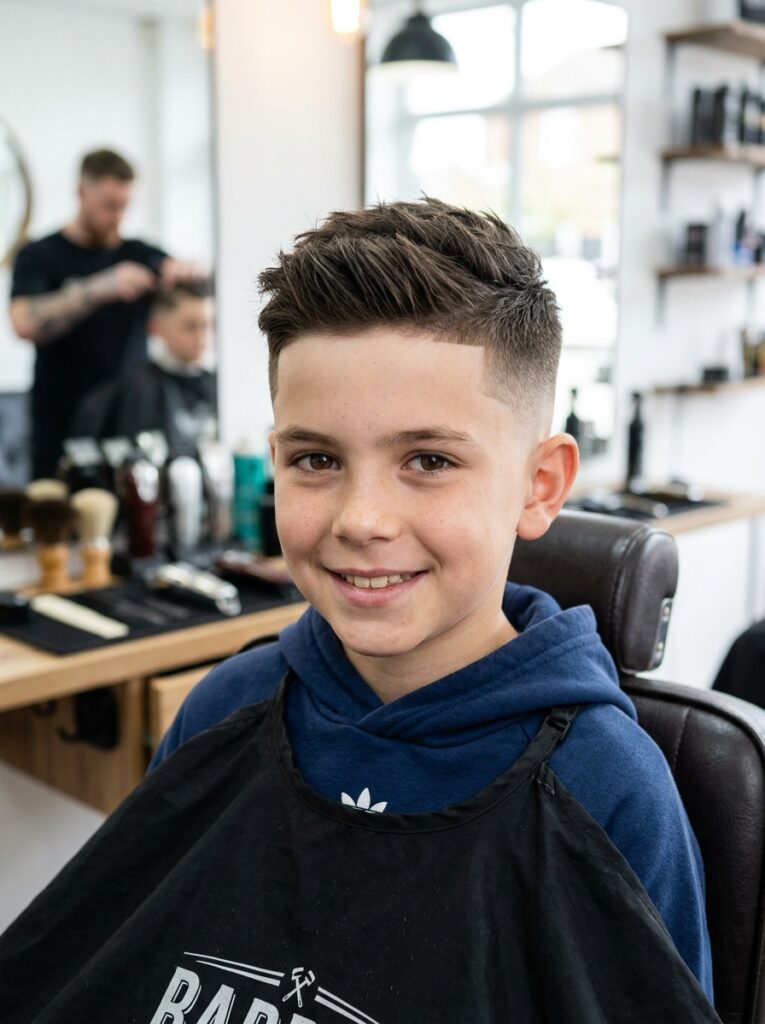
The most visually commanding option. Clean sides with a quiff sweeping up and forward, giving real height and presence.
Round and rectangular faces gain most, since crown height lengthens the proportion. Blow-dry upward with a round brush, then medium-hold pomade to hold it through an active day.
School verdict: generally fine, since height is rarely what codes object to. Keep the sides moderate and it is not an issue.
Undercut with Textured Fringe
A longer top falling forward into a choppy fringe. It frames the face with visible movement and suits straight to slightly wavy hair.
The fringe can sit forward for a sharper look or sweep to one side for something softer. Light wax or texturising spray shapes it without crunch.
School verdict: same caution as the curtain fringe. Keep it clear of the eyes.
Undercut with Wavy or Curly Top
Tight sides against a full textured crown. The contrast between smooth and voluminous is what makes it work, and it celebrates the curl rather than suppressing it.
Curl cream or sea salt spray on damp hair, then a diffuser for lift without disturbing the pattern. Ask for a dry cut so the barber can see where each curl actually falls. More by curl type is in our guide to boys’ haircuts for curly hair.
School verdict: passes. Volume is almost never the thing a policy objects to.
Disconnected Undercut
The boldest version. A sharp visible separation between the long top and shaved sides, with no blending to soften it.
Thick or straight hair holds the separation cleanly through an active day. Fine hair falls into the gap and blurs the effect. Expect a barber visit every two to three weeks before the line softens.
School verdict: the most likely to be flagged. If the policy mentions extreme styles, take the blended fade version instead.
Undercut with Shaved Designs
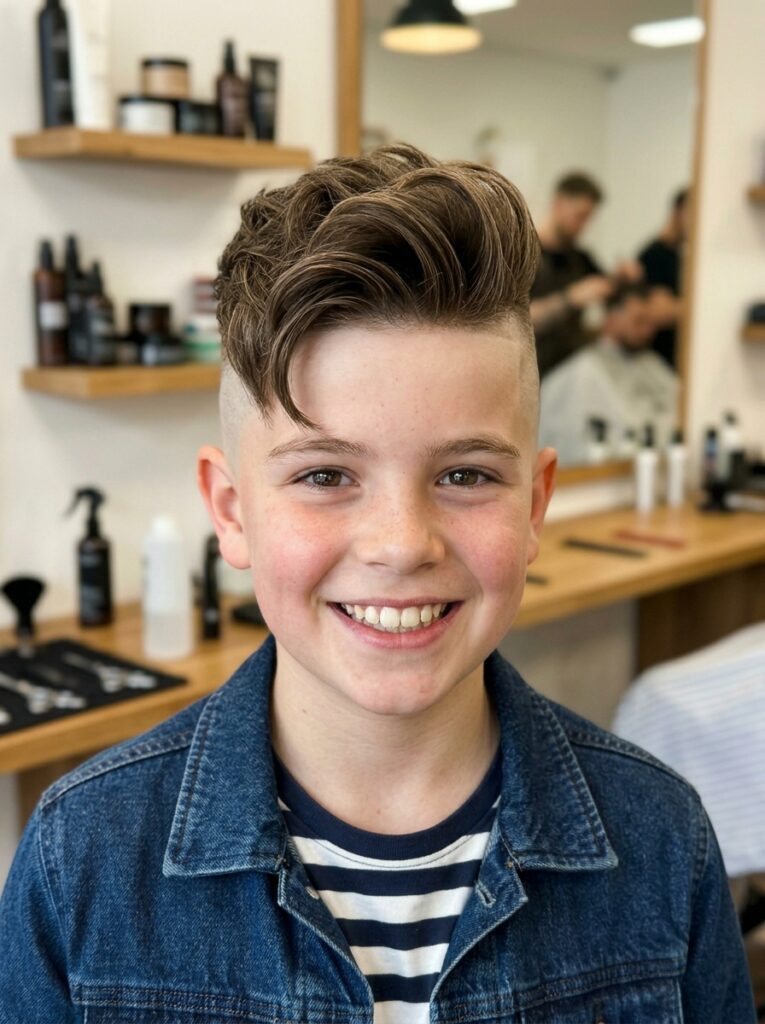
Lines, hash marks or geometric patterns cut into the sides. This is where the haircut becomes genuinely personal, and most boys who want one already have a specific idea.
Bring a reference image. Designs blur within about two weeks, so treat it as a short-term choice rather than a standing style, and budget for the return visits.
School verdict: the one element most commonly banned outright. Save it for the holidays, which is genuinely the best answer here.
Matching the Undercut to His Face Shape
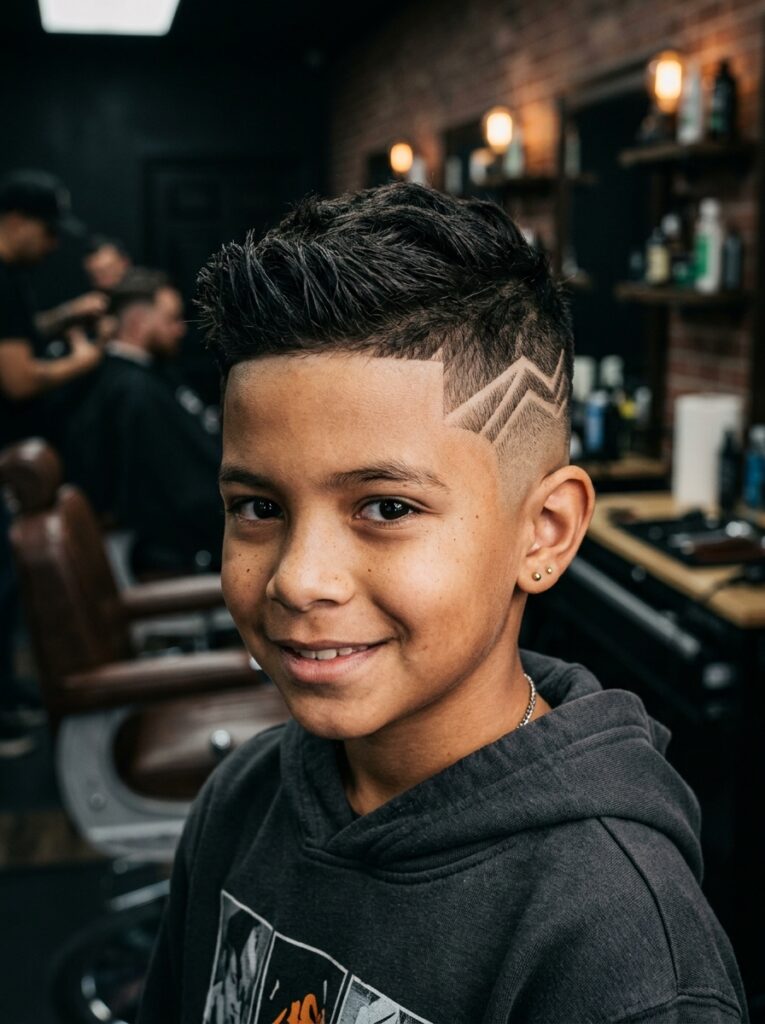
Round faces want height, so a quiff or high-volume top works. Square faces suit the classic and blended versions, which soften strong angles. Oval faces take everything.
Longer and rectangular faces need width rather than height, which means textured or side-swept tops. Diamond faces suit a side-swept fringe that softens wider cheekbones. The full breakdown is in our guide to boys’ haircuts by face shape.
Keeping It Sharp Between Visits
The sides grow out faster and more visibly than the top, which is why undercuts need more barbershop time than most boys’ cuts.
Disconnected versions and skin fades need two to three weeks. Blended fades stretch to three or four. Shaved designs look their best for about two.
Between visits, wash two to three times a week and apply product to damp rather than dry hair. That is the whole routine for every version above. The style variations themselves are covered further in our guide to modern undercut hairstyles for boys.
Which Product for Which Version

Most households need two of these, not five.
Pomade suits slicked-back and polished tops. Matte clay is the all-rounder for textured and casual ones. Texturising spray adds volume with little weight. Curl cream defines curly and wavy tops and controls frizz.
Apply to damp hair, and use roughly a pea-sized amount. Too much product is the most common reason a good cut looks greasy by lunchtime.