Boys’ Haircuts by Face Shape: How to Pick the Right One
Most face shape guides work one way round. You identify the shape, then you read what suits it. That is useful when you are starting from scratch.
It is less useful in the situation most parents are actually in: your son has already seen a haircut he wants, and you want to know whether it will suit him. So this guide runs the other way. Each cut below is listed with the face shapes it flatters and the ones it fights. If you want to work from the face shape instead, our companion guide to boys’ haircuts by face shape takes that route.
The Two Rules Behind All of It
Before the cuts, two principles explain every recommendation here.
Height lengthens, width widens. Volume at the crown makes a face look longer. Hair left full at cheek level makes it look wider. Every proportional fix is some combination of those two.
A fringe shortens the face. Covering part of the forehead lowers the point where the eye starts reading the face. That helps a long face and hurts a short one.
Once those two are clear, most of what follows is predictable rather than something to memorise.
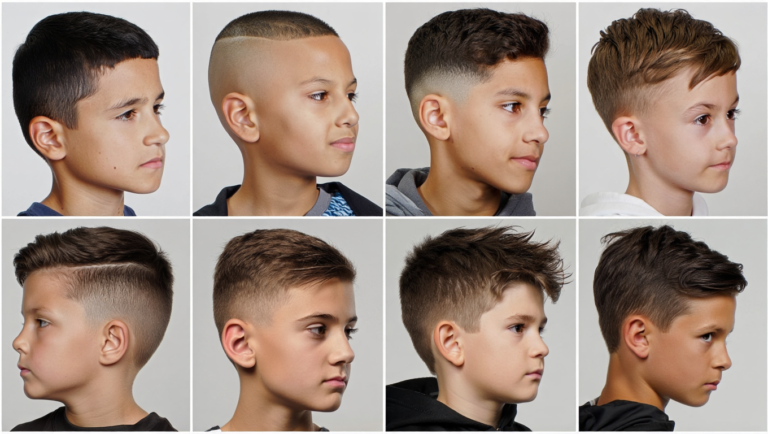
Textured Crop

Works on: almost everything. Oval, square, round and diamond all take it.
The reason it travels so well is that it is adjustable. Ask for volume at the crown and it lengthens a round face. Ask for a softer fringe and it eases a square jaw. Ask for a flatter, shorter version and it suits an oblong face without adding height.
Be careful with: nothing much, provided you specify which version. Our textured crop guide for boys covers how to describe each one.
Quiff
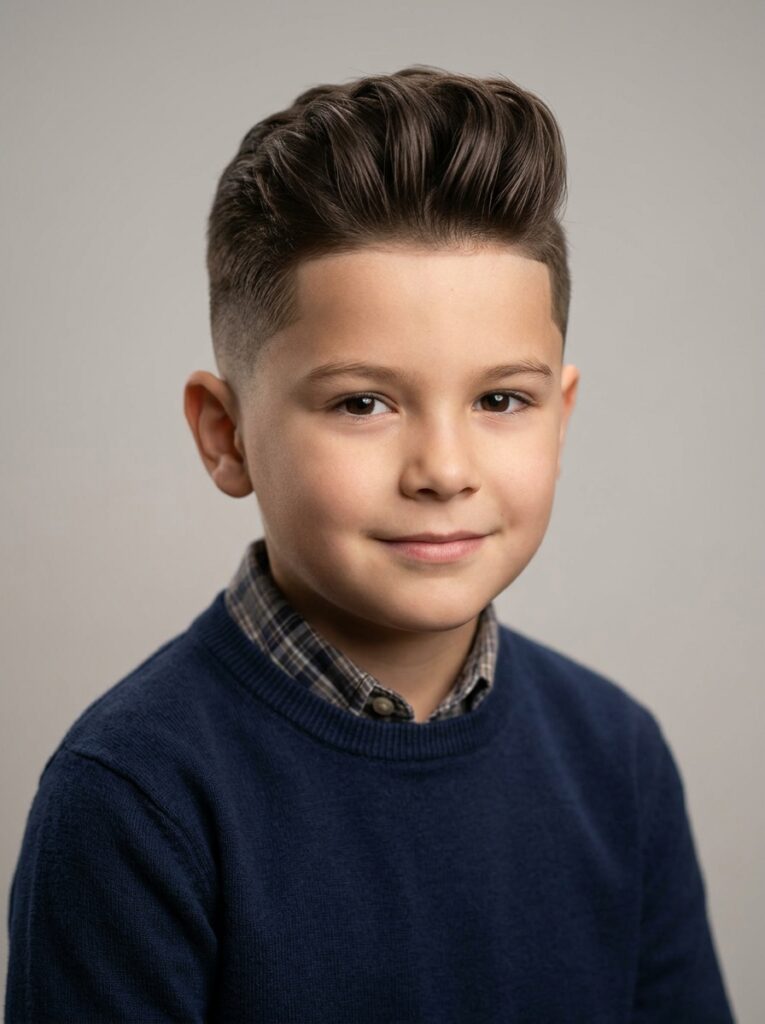
Works on: round and square faces. The height is the whole point.
Lifting the front adds vertical length, which is exactly what a round face needs. On a square face the softness at the crown balances the jaw below.
Be careful with: oblong faces. Adding height to a face that is already long makes it longer. Also heart faces, since sweeping everything up exposes the full forehead width.
Faux Hawk
Works on: round faces, strongly. Close sides remove width and the central ridge adds height.
It has a second advantage that matters at school age. Left flat it reads as an ordinary short cut. Styled up it reads as bold. Two looks from one appointment.
Be careful with: oblong faces, for the same reason as the quiff.
French Crop
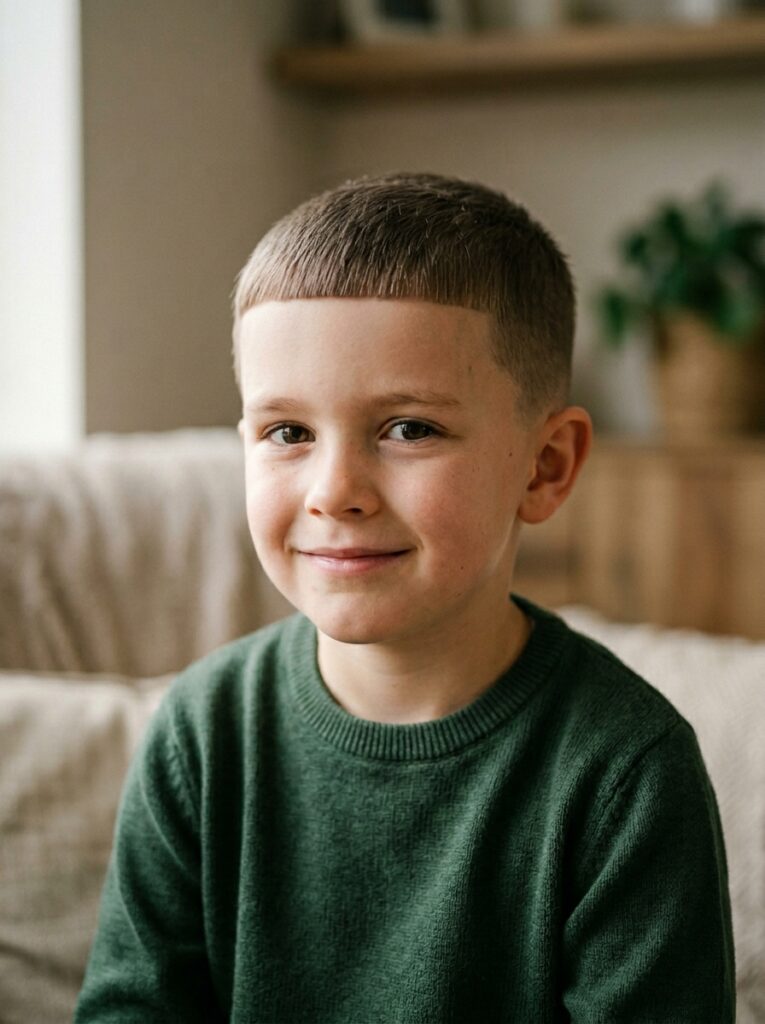
Works on: heart and oblong faces. This is the strongest fringe cut on the list.
The blunt horizontal fringe gives the eye a lower edge to read instead of the full forehead above it. On a heart face that narrows the widest point. On an oblong face it shortens the apparent length.
It also holds its position by weight rather than product, so there is no morning routine attached to it.
Be careful with: round faces, where a horizontal fringe adds width to a face that does not need it.
Crew Cut
Works on: square and oval faces, with one condition.
Leave enough length on top for natural texture. A crew cut clippered perfectly flat on a square face strips away everything above and leaves the jaw as the only feature anyone reads. With slight movement at the crown it becomes one of the best square-face cuts available.
The cut also has a formal name and a documented history. Barbering references call it part of the regular haircut family, which travels under short back and sides and several other names depending on the country.
Ivy League
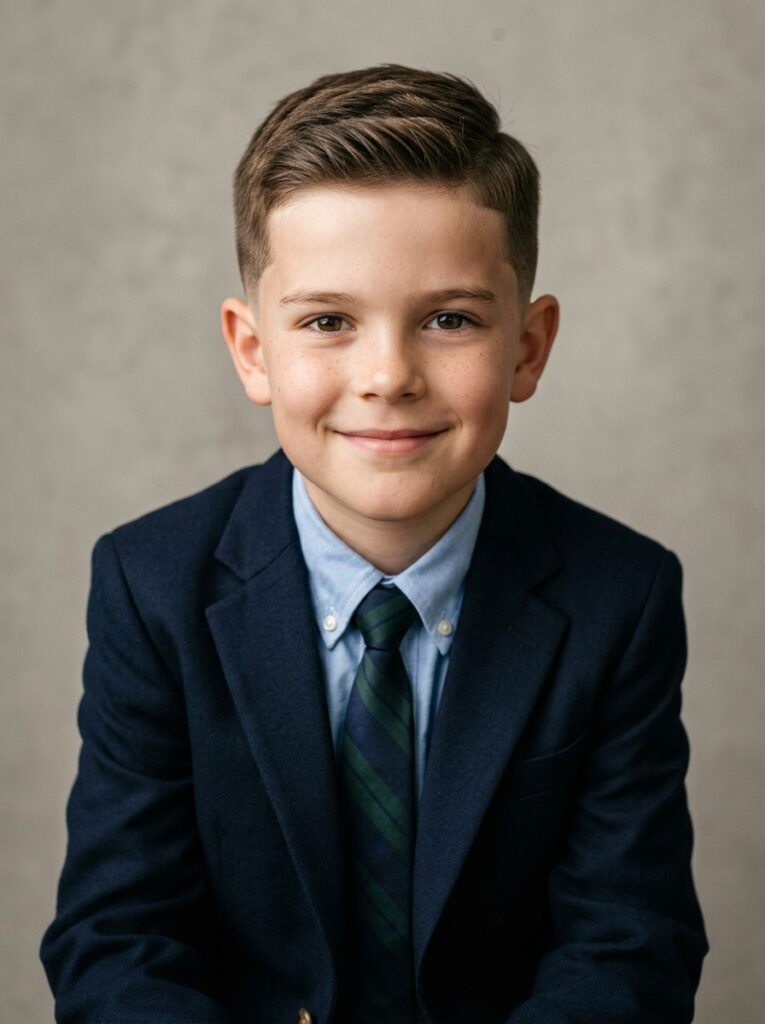
Works on: square and oval faces, and it is the most school-reliable cut here.
The top sits at the length where hair falls with natural movement rather than lying flat. That movement is what softens a square jaw. It is formal enough for photographs and relaxed enough for a Tuesday, which removes the need for a separate occasion haircut. That overlap is covered further in our guide to formal haircuts for boys.
Side Part
Works on: round, square and diamond faces.
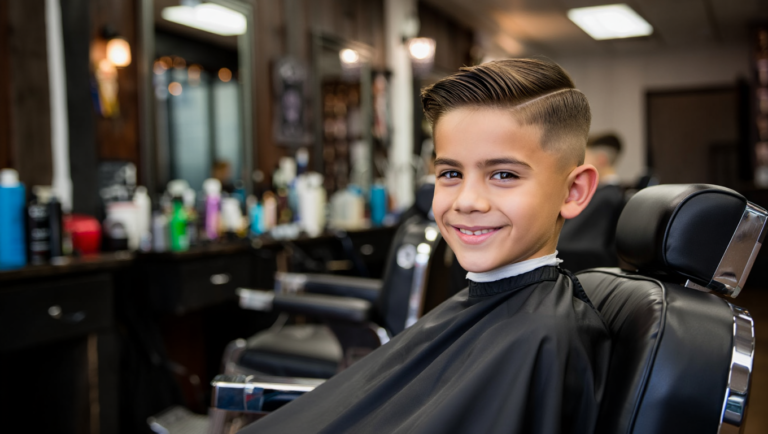
The parting creates a diagonal line across the forehead, and diagonals lengthen a face more effectively than horizontals. On a square face the same diagonal softens the straight lines of forehead and jaw at once.
Ask the barber to cut along his natural part rather than against it. Cut against the growth, and you will fight the same cowlick every school morning.
Comb Over with Low Fade
Works on: oblong and rectangular faces, better than anything else on this list.
Sweeping hair horizontally across the forehead breaks the vertical run of a long face. The low fade is the other half of the fix, because it leaves some hair at cheekbone level and that adds apparent width.
Keep the top at medium length. A very short top on an oblong face leaves all the length exposed with nothing to counter it.
Fades, by Height
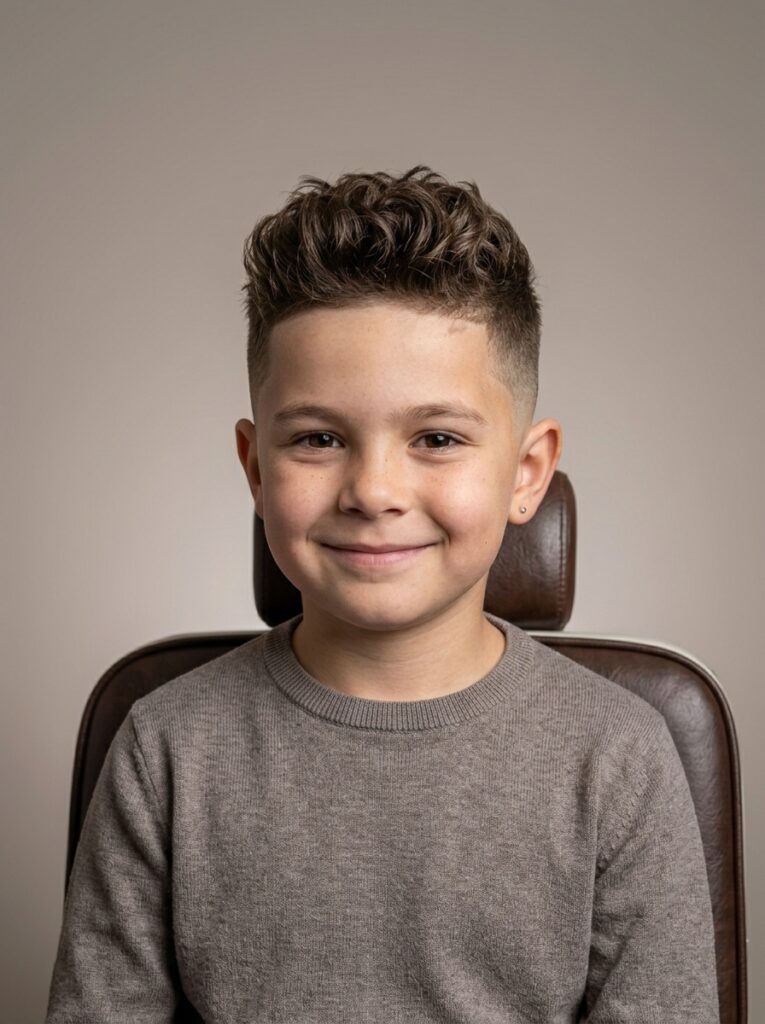
The fade is not a cut so much as a setting, and its height changes which face it suits.
High fade: removes the most width. Best on round faces. Worst on diamond faces, where taking the sides that short exposes the cheekbones completely and exaggerates the taper above and below them.
Low fade: keeps some hair at cheek level, so it adds apparent width. Best on oblong and diamond faces. It also grows out more gracefully, which matters if appointments are hard to schedule. How to ask for each is in our taper fade guide for boys.
Slick Back
Works on: oval and square faces, mostly for occasions rather than school days.
Be careful with: heart faces specifically. Pushing everything back exposes the full forehead width and leaves the narrow chin looking narrower by comparison. It is the single least flattering combination on this page.
Longer Tops and Fringes

Works on: heart and diamond faces, because a fringe adds width exactly where those two shapes are narrowest at the top.
A side-swept fringe is the gentler version and suits most ages. A textured fringe gives more movement and suits older boys who will actually style it.
Be careful with: round faces, and with very thick hair, which needs weight removed before a longer top will sit rather than puff outward. Our guide to boys’ haircuts for thick hair covers that.
Quick Reference
If you remember nothing else, remember the one cut to avoid for each shape.
Round: avoid wide untapered sides and horizontal fringes. Square: avoid a flat top with no texture. Heart: avoid anything swept fully back. Oblong: avoid tall quiffs and pompadours. Diamond: avoid skin fades that strip the sides at cheekbone level. Oval: nothing to avoid, so let him pick.
None of these are permanent mistakes. Hair grows and the next appointment is a few weeks away. But a barber told the face shape before the clippers come out will avoid all six without being asked again.
Saying It at the Barbershop

Name the cut, then name the adjustment. That is the whole conversation.
“A textured crop, but with some height on top” gives a barber more than any photo does. So does “a crew cut, but leave enough on top for texture.” Both name a starting point and the one change that makes it fit the face in front of them.
Most barbers read a face shape in seconds anyway. Saying it out loud simply removes the guesswork about what you were hoping for.