School Haircuts for Boys That Pass Dress Codes
School hair policies are written in language that sounds clear until you try to apply it. “Neat and tidy.” “No extreme styles.” “Off the collar.”
Parents are left guessing what any of it permits, usually in a barbershop chair with a child who has already picked a photo. So this guide decodes the wording first, then lists the cuts that sit safely inside it whatever your school’s version says.
What the Policy Wording Actually Means
Five phrases cover almost every school hair rule in circulation.
“No extreme styles.” The vaguest and the most common. In practice it means high contrast between top and sides, or a silhouette that draws attention from across a room. A blended fade with a textured top has never been flagged under this phrase. A skin-faded disconnection sometimes is.
“Off the collar” or “out of the eyes.” These are the only measurable rules most policies contain, which makes them the easiest to satisfy and the easiest to accidentally breach. They affect longer tops and fringes rather than sides.
“No patterns, lines or designs.” The clearest rule on any list and the one most consistently enforced. If a policy bans one thing specifically, it is usually this.
“Natural colours only.” Straightforward. It rules out dyed tips and bleaching, which is worth knowing before a summer experiment carries into September.
“Neat and tidy.” Almost meaningless as written, and usually applied to how the hair looks rather than how it was cut. A well-executed cut two weeks grown out passes. The same cut six weeks grown out may not.
Read the written policy rather than relying on what other parents say. Most are two paragraphs on the school website, and the difference between schools is larger than people assume.
The Side Part
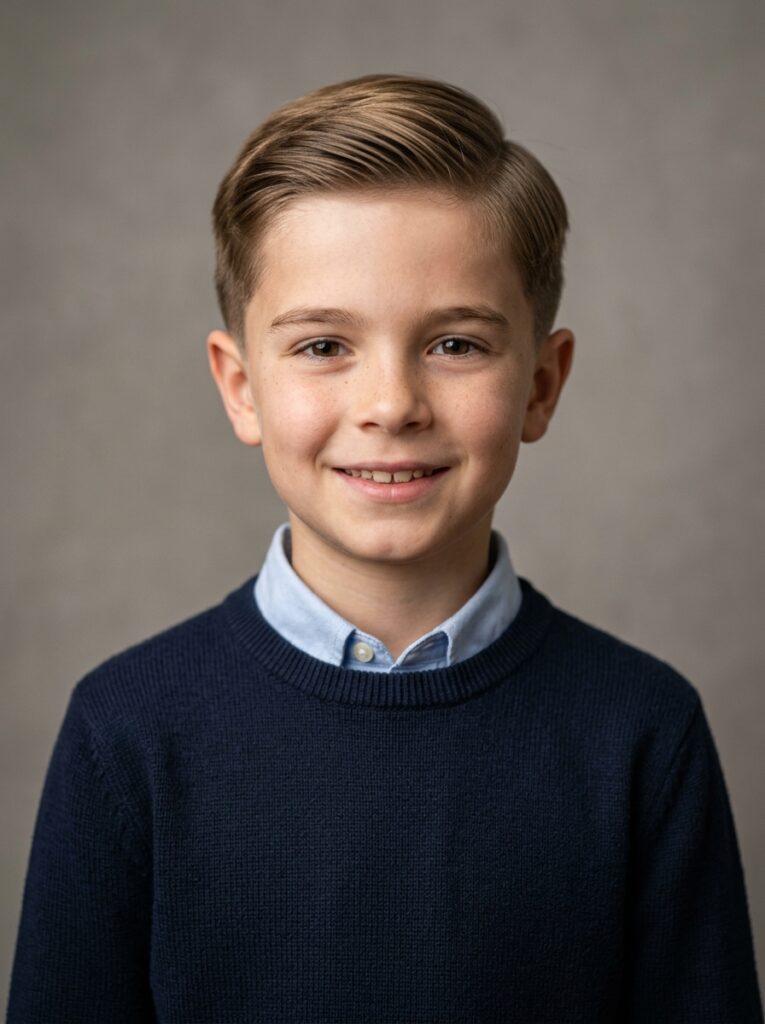
The cut no policy has ever objected to. Hair combed to one side, tapered sides, nothing to interpret.
It suits straight and slightly wavy hair and almost every face shape without adjustment. A little light cream holds it through the day.
Ask the barber to cut along his natural parting. Cut against it and you will be re-combing a cowlick every morning until it grows out.
The Textured Crop
The most requested boys’ cut anywhere, and comfortably inside every phrase above.
Tapered or lightly faded sides with choppy texture cut into the top, so the hair sits with movement rather than lying flat. The small forward fringe keeps it clear of the eyes.
Its real advantage for school is that it needs no product to look intentional. Nothing to reapply, nothing to go wrong by second period.
Low Fade with a Comb Over
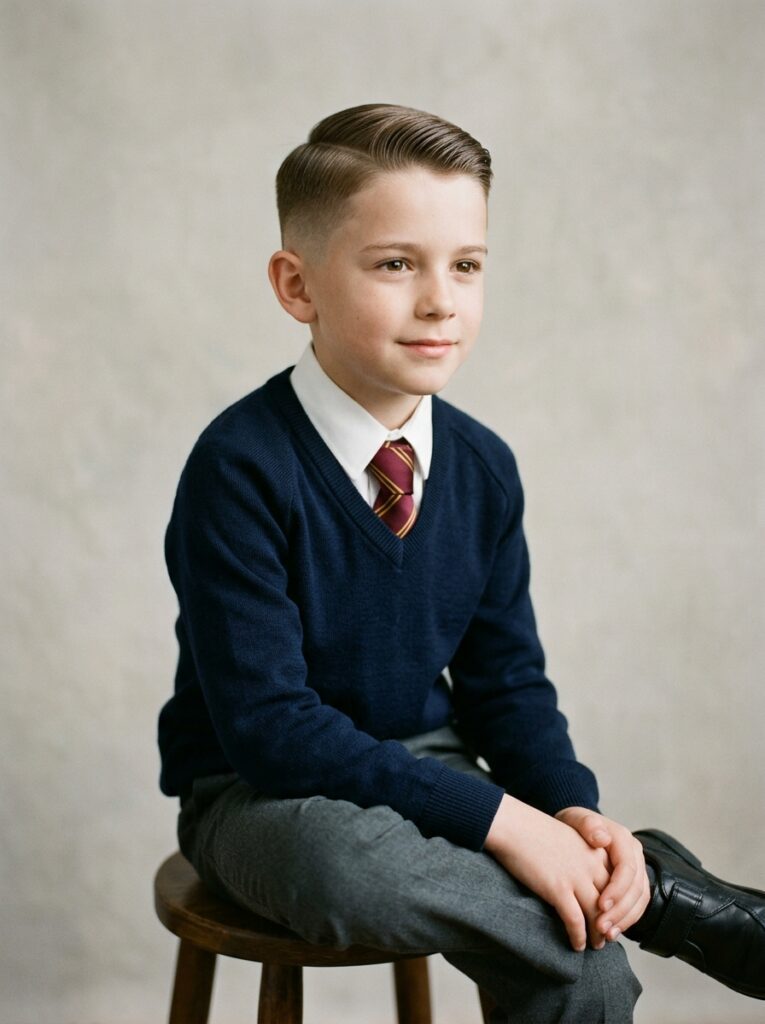
The fade starts low near the natural hairline and blends up into a longer top combed to one side.
Because the contrast is gentle, it avoids the “extreme styles” question entirely while still looking current. A low fade also grows out more gracefully than a higher one, so it holds up between visits.
Fade heights and how to ask for each are compared in our taper fade guide for boys.
The Ivy League
Longer than a crew cut, shorter than a full side part. Enough on top for a comb-through when the occasion needs it, short enough to look neat without one.
It grows out evenly and keeps its proportions, which stretches the gap between appointments. Parents pick it for that reason more than any other.
The Buzz Cut
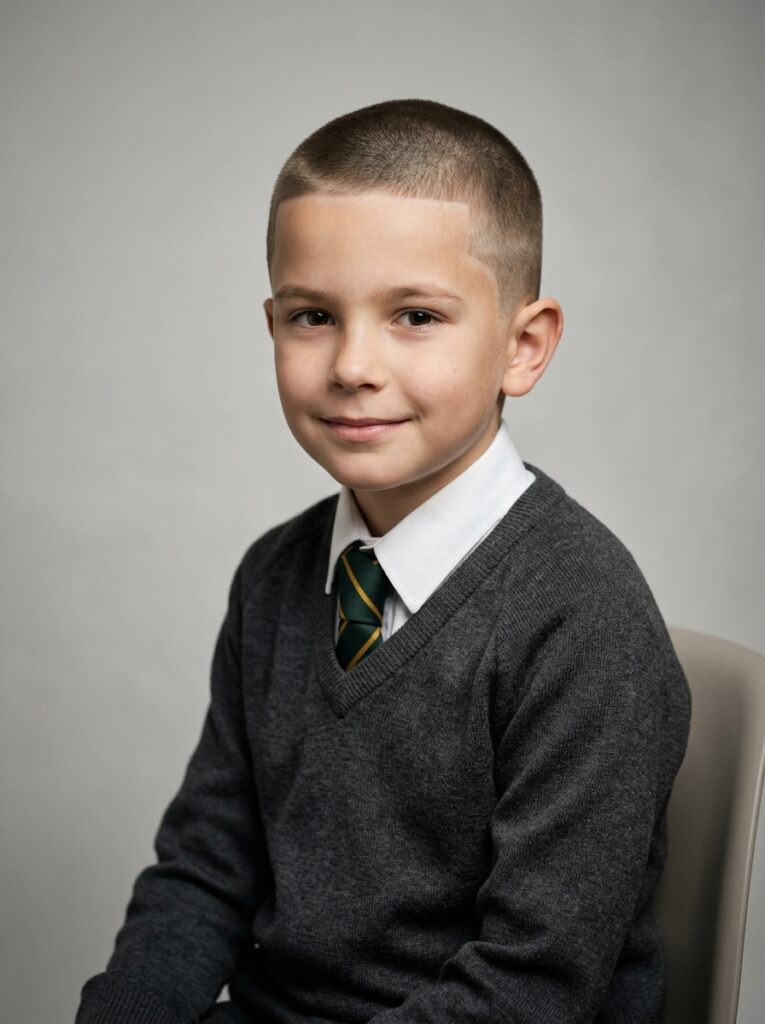
No combing, no product, no mirror. The morning routine disappears entirely.
It also grows out without ever looking wrong, which is unusual. Warm weather and outdoor activity suit it particularly.
One caution worth knowing: a buzzed head sunburns easily, so a cap matters on long days outside. More zero-effort options are in our guide to low-maintenance boys’ haircuts.
The Taper
The most traditional option here, and the one that never looks wrong in any school context.
Hair shortens gradually toward the neckline and around the ears. The top can stay longer and be styled however suits the hair type.
Ask specifically for a natural tapered neckline rather than a squared one. A squared neckline becomes a visible untidy edge within about two weeks, which is exactly what “neat and tidy” gets applied to.
The French Crop
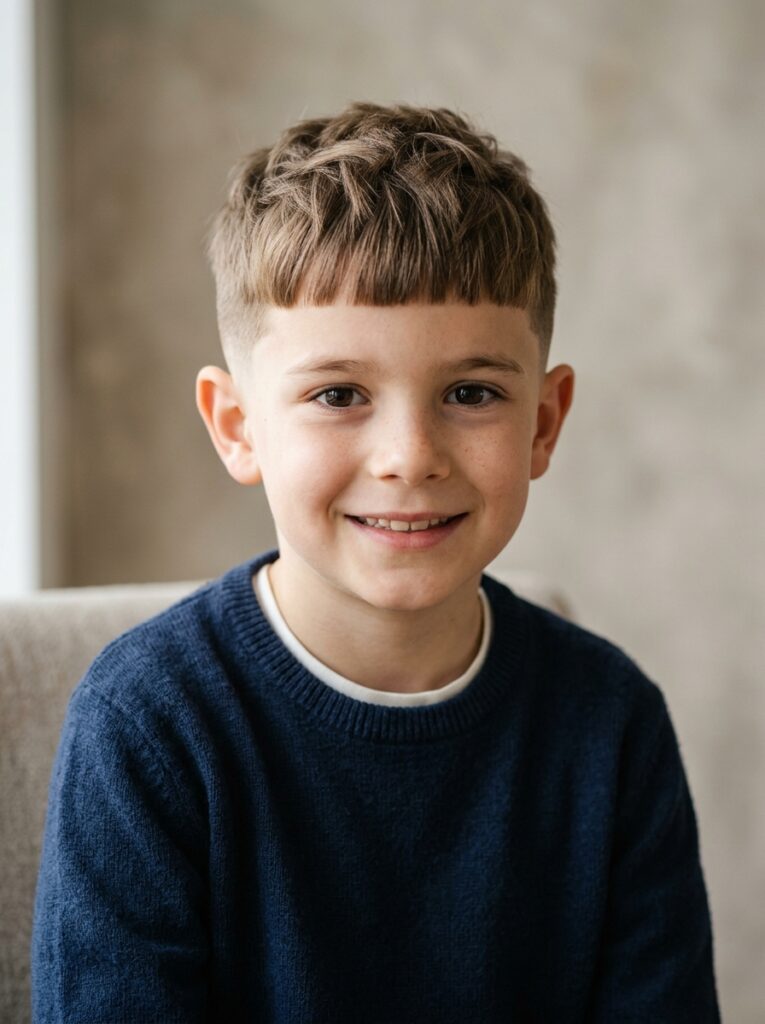
A short blunt fringe across the forehead with faded or tapered sides, and slight texture on top so it does not sit flat.
The fringe holds its position by its own weight, so there is no daily styling and nothing falls into the eyes during play. That combination is what makes it one of the most genuinely self-maintaining school cuts available.
A Mid or Low Fade
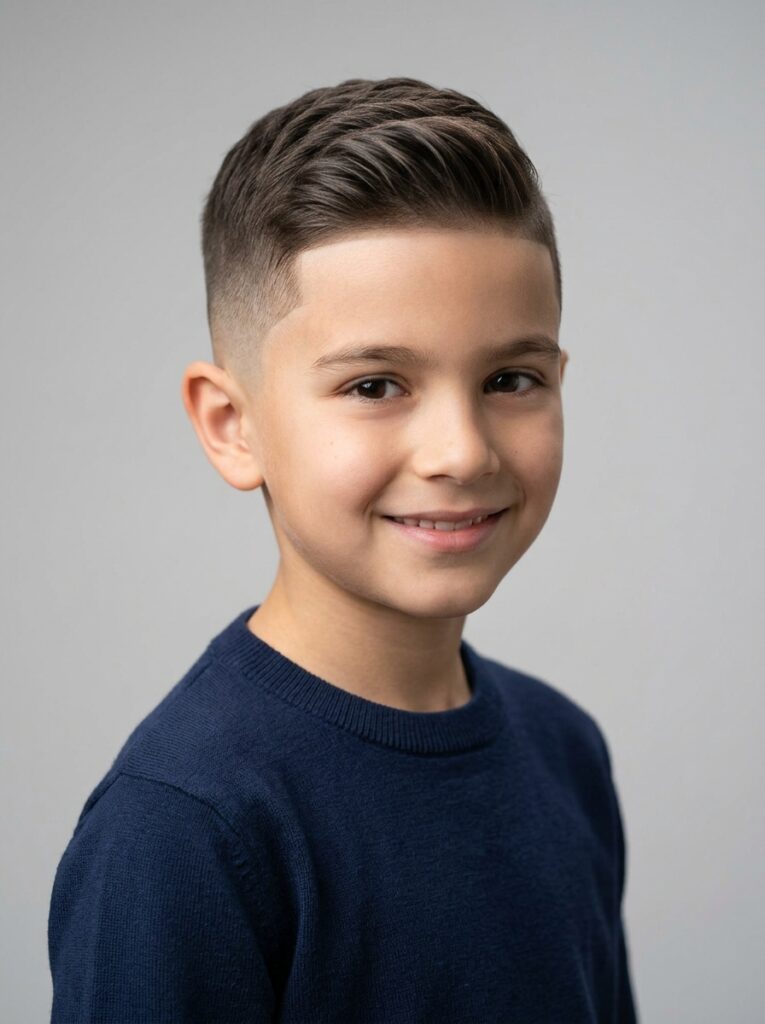
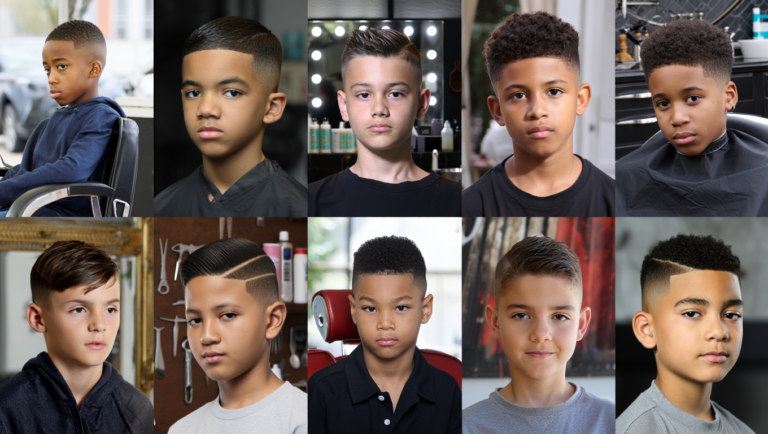
A fade on its own is a technique rather than a style, and the height is what decides whether a policy notices it.
Mid and low fades read as well-groomed. They are also the versions that look acceptable at week four rather than only at week one, which matters more for school than for anything else.
Skin fades and very high fades are where questions start. If the policy uses the word “extreme” without defining it, stay below that line.
The Quiff
Height at the front with tapered or faded sides, for boys who take an interest in how they look.
Policies rarely object to height, which surprises parents. It is contrast and patterns they react to, not volume.
It works best on thicker hair that holds the upward direction, and it needs a medium-hold product to last the day.
The Faux Hawk
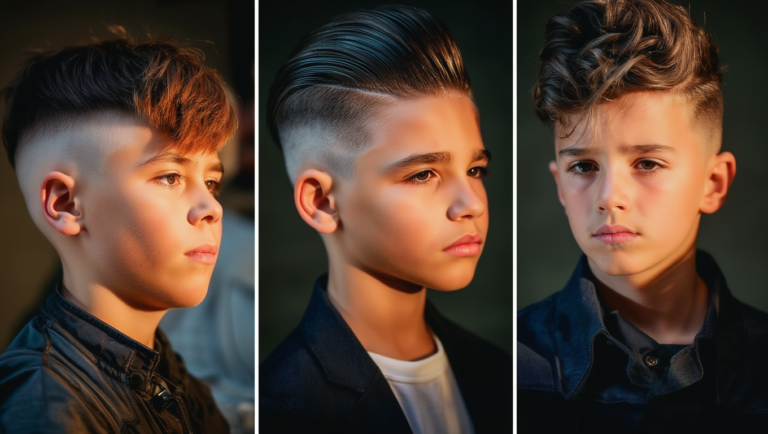
Slightly longer down the centre with cleanly faded sides. The most school-friendly way to reference a bold style.
Its advantage is that it is two cuts in one. Left flat after washing it reads as an ordinary short style. Styled up at the weekend it reads as bold.
That flexibility is why it works where a full mohawk would not, and the versions are compared in our mohawk and faux hawk guide.
Curly Top with a Fade
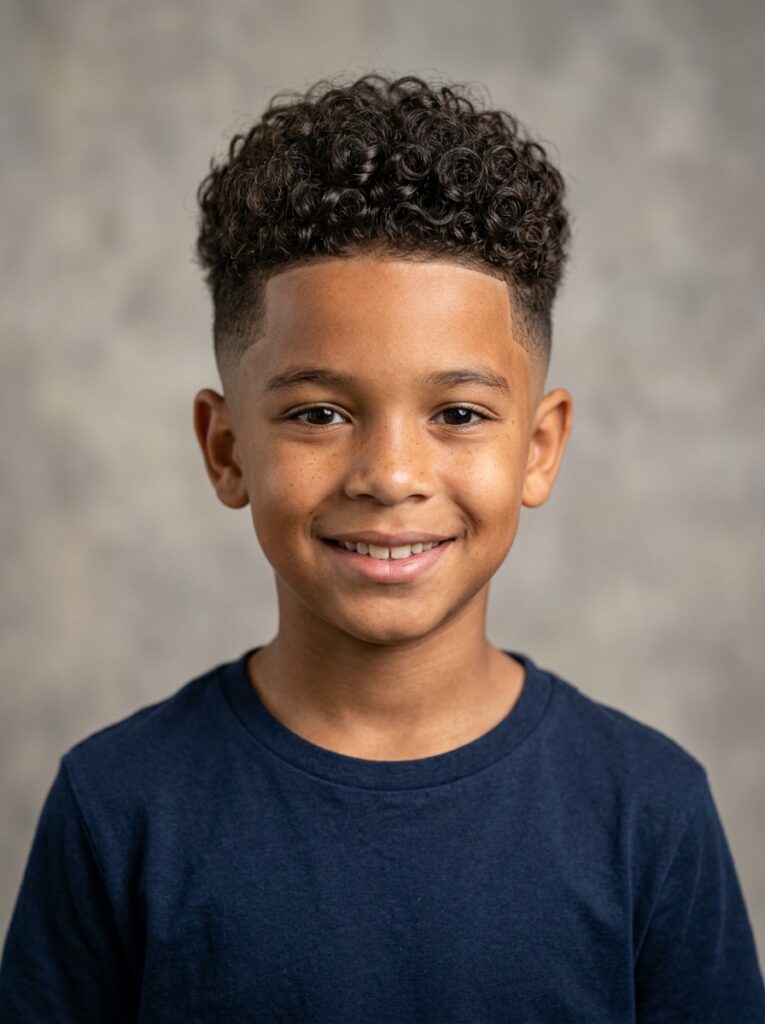
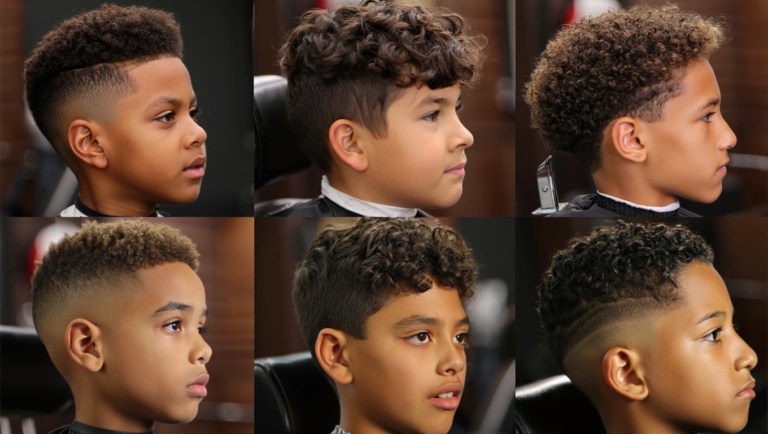
The fade gives a clean defined frame while the curls stay full on top, which is what makes natural texture read as intentional rather than unstyled.
Light curl cream on damp hair before air-drying handles definition with no real routine attached.
Ask for a dry cut so the barber can see where each curl actually falls. Options by curl type are in our guide to boys’ haircuts for curly hair.
The Messy Textured Top
Faded sides with the top left in natural movement. Deliberately relaxed rather than strictly styled.
The clean structure around it is what stops it reading as untidy, which matters under a “neat and tidy” clause. Wavy and textured hair suit it best.
The Slick Back
Longer top brushed back with shorter sides. It reads polished in photographs and formal assemblies.
It needs medium or thick hair to hold the direction through a day, and pomade to keep the surface smooth.
If the sides go to an undercut rather than a taper, check the policy first. That specific pairing is covered in our guide to undercuts and school-rule checks.
The Hard Part
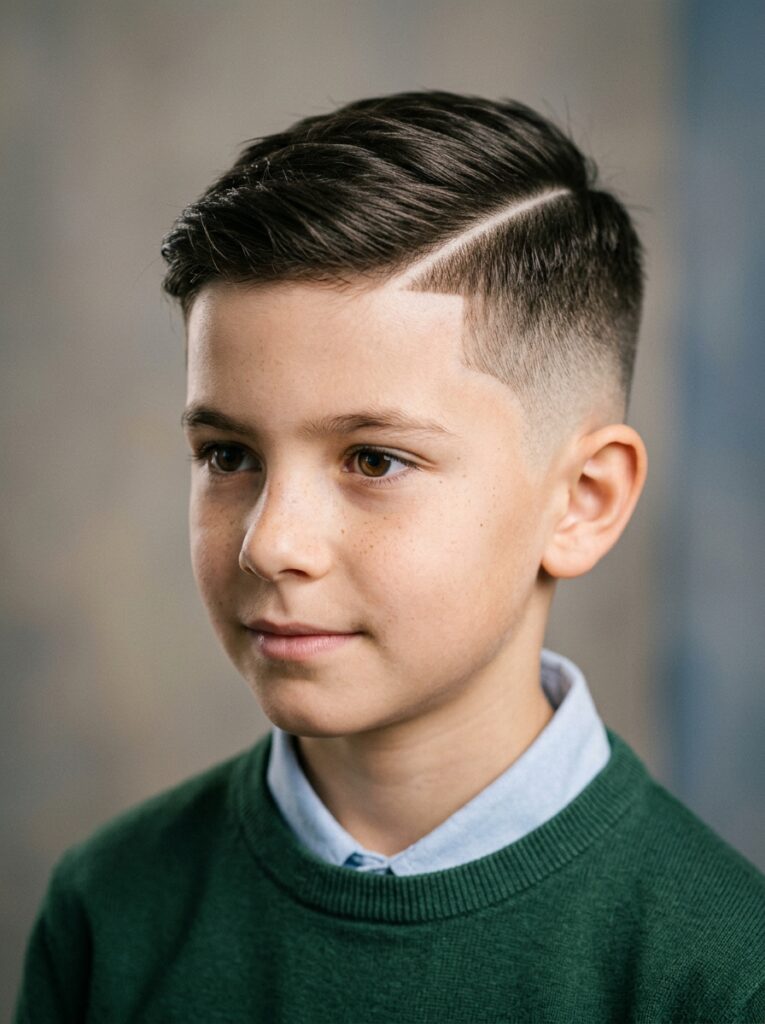
A shaved line separating the top from the sides. It holds the parting in place all day without any re-combing, which is a genuine practical advantage between lessons.
Worth flagging honestly, though. Some policies that ban “lines” mean designs, and some mean any shaved line at all, including this one.
It is the one cut on this page where the wording genuinely decides it, so read the clause before the appointment rather than after.
The Line-Up
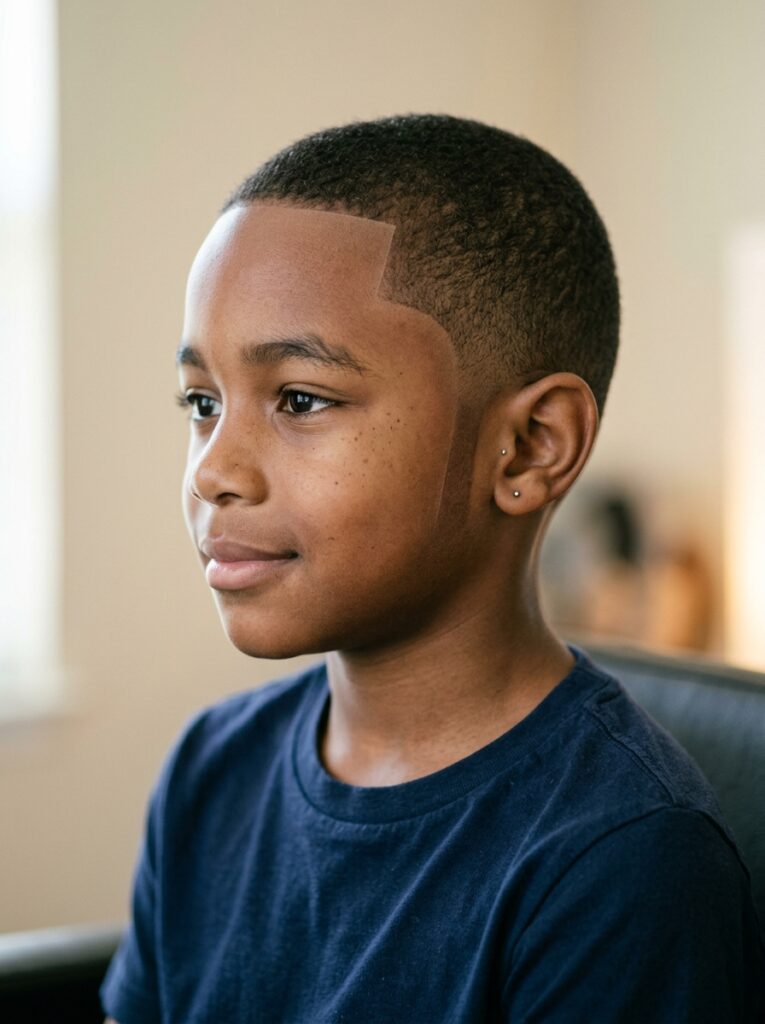
Not a style but a finishing step: clean edges at the hairline, sideburns and neckline, cut with a trimmer or razor.
It makes even a basic crew cut read as well-groomed, and the defined edges stay visible as the hair grows, which is what buys time under a “neat and tidy” rule.
A line-up is not a pattern and is almost never covered by a design ban, though it softens within about two weeks.
If the School Does Raise It
Most parents never need this section. For those who do, a few things are worth knowing.
Ask which specific clause the cut breaches, in writing. Policies are often applied from memory, and the written rule frequently says less than the person quoting it believes.
Then be realistic about time. Sides grow back at roughly half an inch a month, so a fade that was judged too high is usually a three to four week problem rather than a permanent one.
There is also a legal dimension that parents are rarely told about, and it matters most for boys with Afro-textured hair. Guidance from Britain’s Equality and Human Rights Commission on preventing hair discrimination in schools states that uniform and appearance policies banning certain hairstyles, without the possibility of exceptions on racial grounds, are likely to be unlawful. That covers natural Afro hairstyles, braids, cornrows, plaits and head coverings.
The Commission’s own research and the court cases behind that guidance found hair-related rules disproportionately affect pupils with Afro-textured hair. If a policy is being applied to your son’s natural hair or a protective style, that is worth raising directly with the school rather than simply cutting it off.
This is UK guidance specifically. Other countries have their own equivalents, and a school’s written policy is the place to start wherever you are.