Modern Wall Decor Ideas for Living Room: Instantly Upgrade Your Space
Gallery Wall with Mixed Frames: The Personal Display That Always Looks Curated
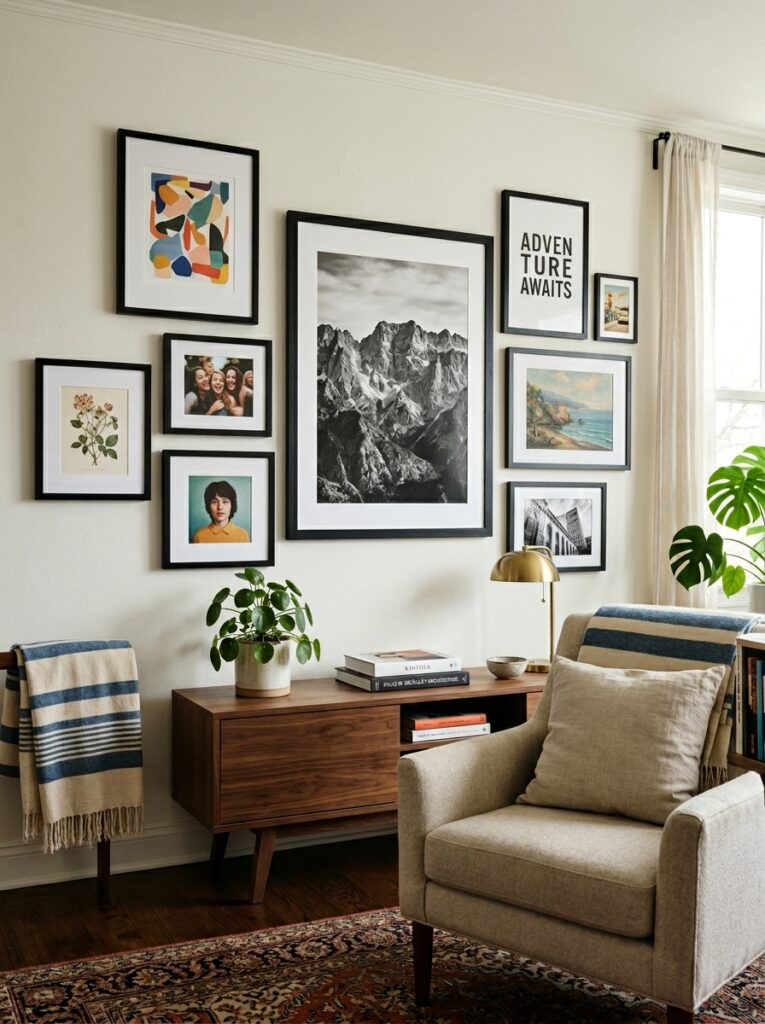
A gallery wall done well is one of the most personal things a living room can have. It tells you something real about the people who live in the space in a way that a single purchased print simply cannot.
The mix of frames in different sizes, the combination of photographs and prints and art, and the arrangement that looks effortless but took a Sunday afternoon to get right all communicate a life being lived rather than a showroom being maintained. The key to a gallery wall reading as curated rather than cluttered is consistency in one element while allowing variation in others. Same frame color in different sizes works well. Same frame sizes in different finishes works. All black and white photography in mixed frames works. The moment all three variables, which are size, finish, and content, become completely random, the gallery wall starts to look like a wall where things were hung rather than a wall that was designed.
Start with a large anchor piece near the center and build outward from it. Lay everything on the floor first before committing a single nail. That single step prevents most gallery wall mistakes before they happen.
Large Statement Art: The Single Work That Does Everything a Wall Needs
View this post on Instagram
One large piece of art on an otherwise empty wall is the treatment that most interior designers reach for first. It solves the wall’s visual purpose completely with a single decision and makes everything else in the room fall naturally into place around it.
A canvas or print sized genuinely large, large enough that it fills the visual space of the wall rather than floating uncertainly in the center of it, creates a focal point for the entire room. The subject matter matters less than the scale and the quality of the piece. An abstract in warm tones, a large-scale black and white photograph, a bold graphic print, or a landscape in muted tones can all transform the wall into the room’s most interesting feature at the right scale.
The most common mistake with wall art is buying pieces that are too small. A piece that feels too large in the shop is usually correct on the wall. Err significantly toward bigger and the result will almost always be better.
Floating Shelves: Functional Decor That Adds Depth and Life
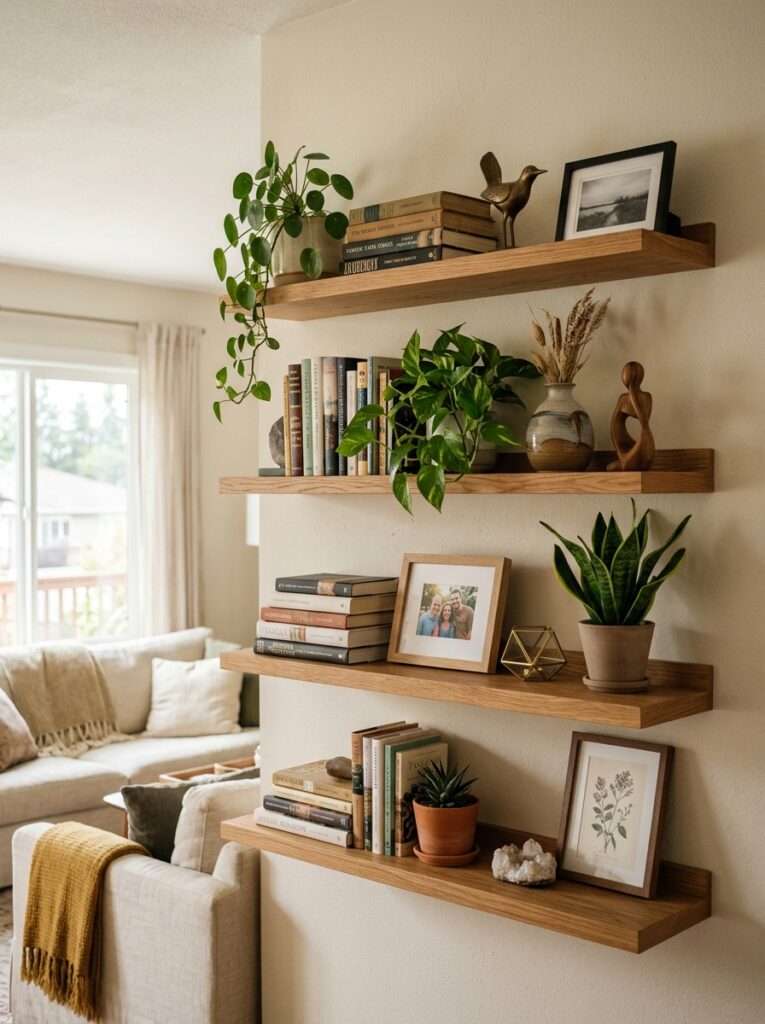
Floating shelves on a living room wall do something that artwork alone cannot. They bring three-dimensionality and daily life into the wall display. Plants, books, small sculptures, candles, and framed photographs on floating shelves create a layered, lived-in quality that a flat print or painting does not have.
The shelves themselves should disappear visually rather than compete with what is on them. Slim profiles in the same color as the wall, or a warm wood tone that reads as natural rather than heavy, both work well. The arrangement on the shelves matters as much as the shelves themselves. A mix of tall and short objects, some negative space between groups of items, at least one plant for organic texture, and a consistent overall palette all contribute to a display that reads as intentional.
Floating shelves are the wall treatment for people who want their walls to feel inhabited and personal rather than simply decorated and finished.
Woven Macrame or Textile Wall Hanging: Texture and Warmth That Paint Cannot Provide
View this post on Instagram
A large woven wall hanging brings something to a living room wall that every other treatment on this list cannot provide: genuine three-dimensional texture at scale. The fibers catch light differently throughout the day and the natural material quality reads as warm and organic against painted or plaster walls.
In a living room dominated by hard surfaces like wooden floors, glass, and metal furniture, a large textile wall hanging introduces a softness that balances the room’s material quality. A natural off-white or cream macrame on a warm grey or terracotta wall creates a particularly strong and cohesive combination. The piece should be sized generously because a small textile on a large wall looks like it was chosen to fill space rather than to be the feature.
Scale the hanging to the wall and the result reads as genuinely considered. That principle applies to every wall treatment on this list, but it is especially true for textiles where scale determines whether the piece reads as art or accessory.
Large Round Mirror: Light, Space, and Instant Visual Impact
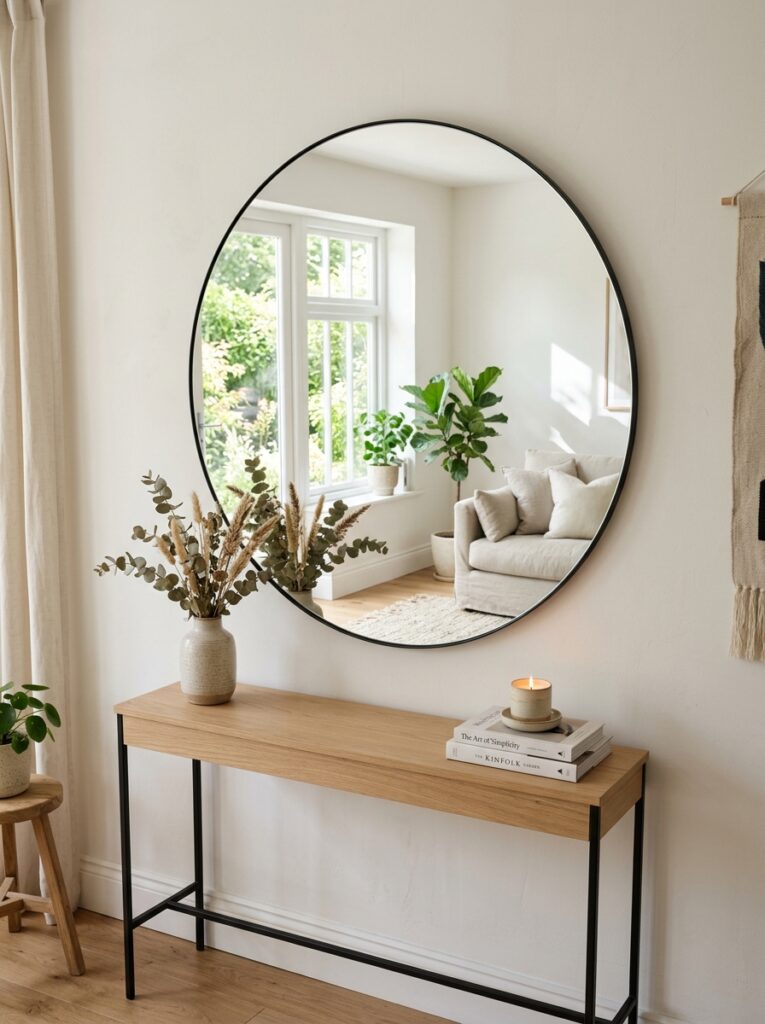
A large round mirror does three things simultaneously that no other wall treatment achieves. It reflects light and brightens the room. It makes the space feel larger than it actually is. And it adds a strong circular form to a room that is usually dominated by rectangular furniture and right angles.
The circular shape specifically softens a living room because it introduces a curve into a geometry that is otherwise entirely straight-edged. The frame contributes significantly to the overall effect. A thin black metal frame reads as contemporary and minimal. A thick rattan or natural material frame reads as warm and organic. A frameless mirror reads as clean and architectural.
Hung above a fireplace, a sofa, or a console table, a large round mirror becomes the room’s primary decorative focal point. Positioning it opposite a window or a lamp source amplifies the light-reflecting quality considerably, which brightens even naturally dark living rooms.
Wood Panel Accent Wall: The Texture Upgrade That Changes the Room’s Entire Character
View this post on Instagram
A wood panel accent wall behind the sofa or main seating area is the treatment that produces the most dramatic transformation of the space per square meter installed. The texture of wood, whether natural timber panels, engineered wood strips, or a slatted screen, introduces a material warmth and visual depth that paint and wallpaper do not replicate.
A slatted wood panel in a warm oak or walnut tone behind a neutral sofa creates a backdrop that makes every piece of furniture in front of it look more considered and more expensive than it did against a painted wall. The wood does not need to be genuine timber to be effective because engineered panels and MDF profiles finished in a wood-look paint achieve a similar visual result at lower cost.
The accent wall principle, which means treating one wall distinctly from the others, focuses the visual impact of the material rather than diluting it across the entire room. That concentration of the effect is what makes it feel like a design decision rather than a surface treatment.
Abstract Canvas Painting: Color, Movement, and Mood
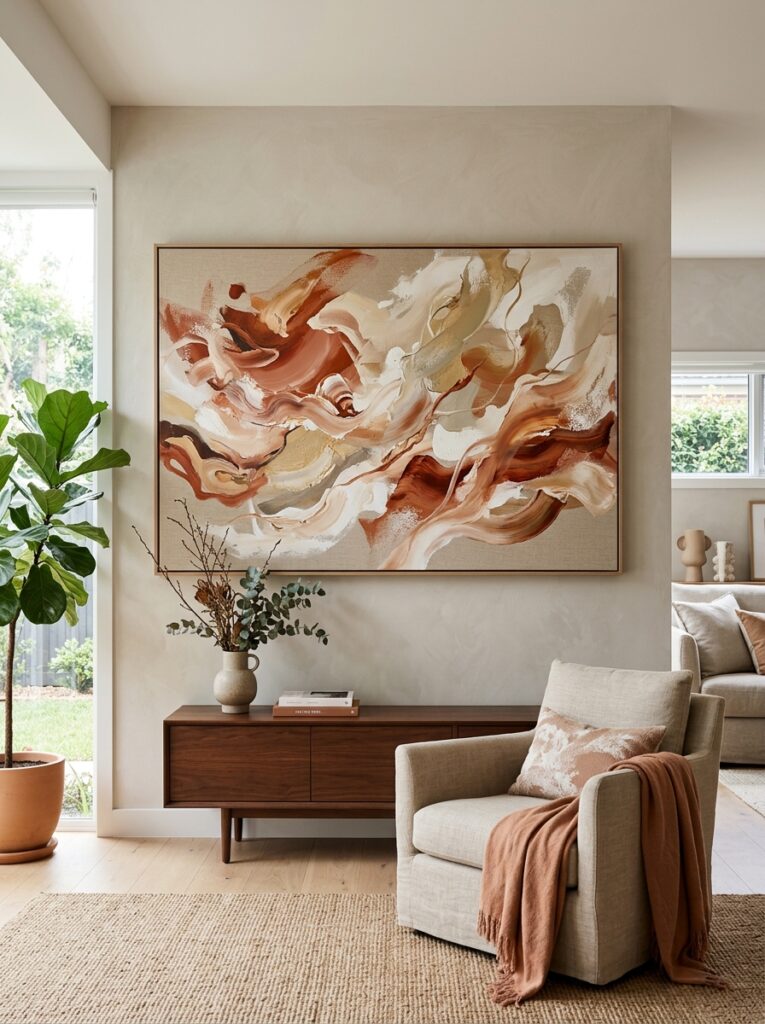
An abstract canvas painting allows the viewer to bring their own interpretation to the piece, which means it becomes a different experience for every person who sits in front of it. That quality makes abstract art particularly well-suited to living rooms where the room is used by different people with different relationships to the space.
The practical advantage of abstract art for living rooms is that it introduces color, movement, and visual energy without the subject matter needing to relate to the room’s theme or function. A large abstract in warm terracotta and cream tones against a neutral wall brings warmth and movement without requiring the room to be decorated around a specific subject.
Choose an abstract canvas by color first, picking tones that work with the existing palette, and then by composition. The scale should be large enough that the painting reads as a feature rather than a decoration, which for most living rooms means at least 80 to 100 centimetres on the shortest side.
Oversized Wall Clock: A Functional Piece That Becomes a Design Statement
View this post on Instagram
An oversized wall clock, genuinely large at 60 to 80 centimetres in diameter or more, earns its place on a living room wall by being useful and decorative simultaneously. That combination is one that most purely decorative wall treatments cannot honestly claim.
The size is what separates an oversized clock as a design statement from a standard clock as a functional object. At the right scale, the circular form, the typography of the numerals, and the graphic quality of the hands all read as intentional design elements rather than simply a device for telling the time. A minimal flat face in black and white reads as contemporary. A more ornate face in aged brass or dark metal reads as industrial or vintage.
Either approach at the right scale on the right wall creates a focal point that works every time someone enters the room because the practical purpose of checking the time means the eye is drawn to it consistently.
Neon or LED Sign: Ambient Light and Personal Expression Combined
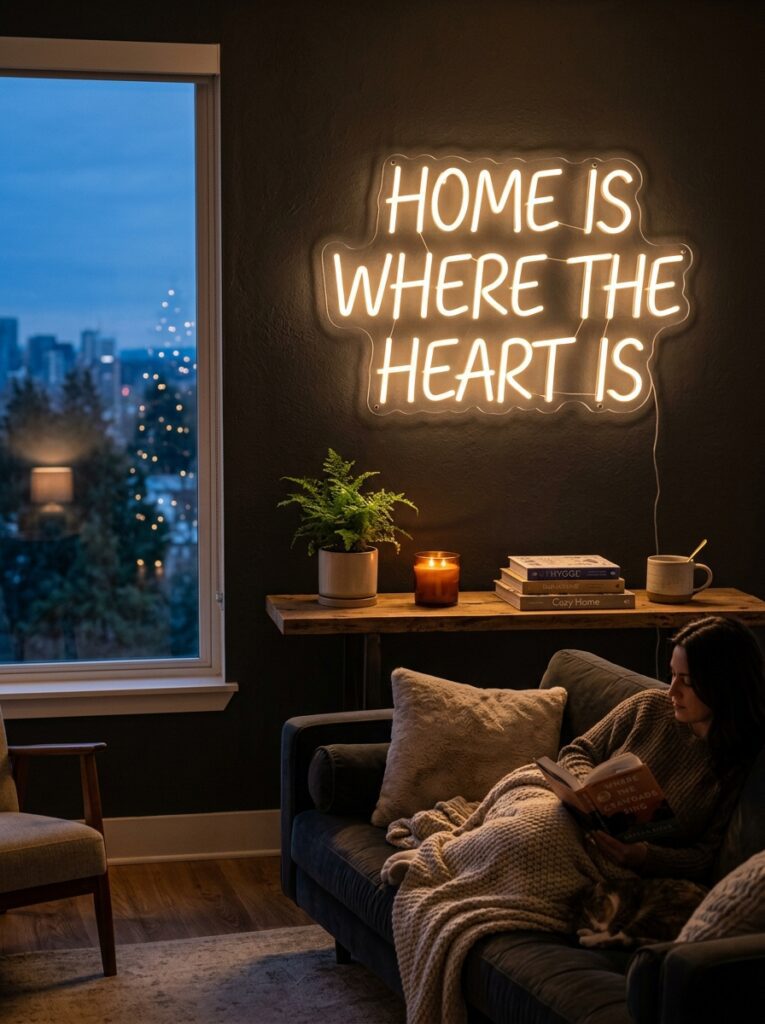
A neon or LED flex sign on a living room wall is simultaneously a light source, a piece of art, and a personal statement. That combination of three functions in one object is something no other item on this list manages.
The right phrase, word, or shape in warm or cool colored light creates an ambient glow that changes the room’s atmosphere after dark in a way that conventional wall art cannot. During the day the sign reads as a graphic object. In the evening with the main lights dimmed, it becomes the room’s most atmospheric element.
The choice of phrase or symbol should be personal enough to mean something to the people in the room. Warm white neon reads as elegant and subtle in most living rooms. Softer tones like dusty rose or warm amber read as intimate and modern. The sign should be sized proportionally to the wall space because a small neon sign on a large wall looks like an accessory rather than a feature.
Textured Plaster or Limewash Wall Finish – The Material Treatment That Makes Paint Look Flat
View this post on Instagram
A textured plaster finish or a limewash paint treatment is not wall decor in the conventional sense. It does not hang on the wall, it does not frame anything, and it does not display anything. What it does is turn the wall surface itself into the most visually interesting material in the room.
Venetian plaster applied in thin, burnished layers creates a depth of surface that catches light differently throughout the day. Limewash paint applied in overlapping, slightly varied layers creates a soft, mottled finish with a European heritage quality that reads as genuinely artisanal. Either treatment transforms a wall from a background into a feature surface that the rest of the room’s decor is displayed against.
For living rooms where the owner wants a sophisticated, textured backdrop without hanging anything on the walls, a plaster or limewash finish on the primary wall is the most architecturally considered choice available.
Indoor Plant Wall or Vertical Garden: Living Decor That Breathes With the Room
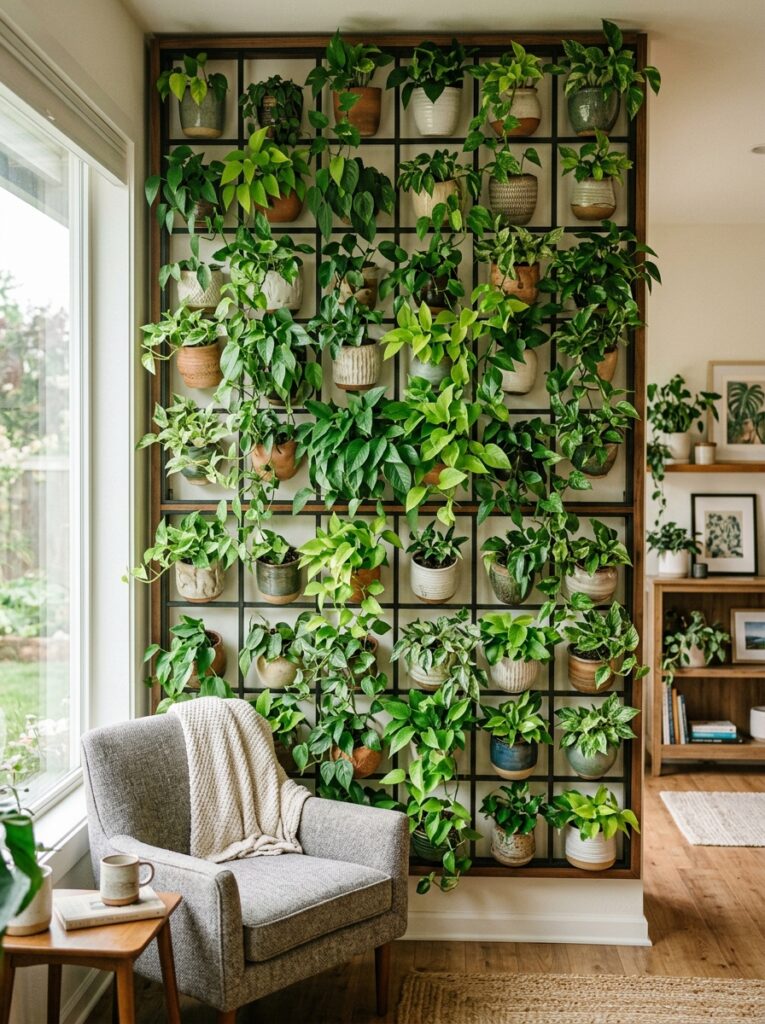
A vertical plant wall makes the wall feel alive in a way that no other treatment achieves. The movement of leaves in a slight draft, the variation of green tones across different plant species, and the genuine organic texture of living plants against a painted wall creates a naturalness and calm that manufactured materials cannot replicate.
Even a partial vertical garden, a section of wall with a grid of simple wall-mounted planters, introduces enough living material to change the atmosphere of the room. Trailing plants like pothos or string of pearls work well in wall planters because they fill vertical space naturally as they grow.
The maintenance requirement is the honest consideration here. Plants need water, light, and regular attention. But in a living room where a wall of greenery provides daily visual benefit and genuinely improves the atmosphere, the maintenance tends to feel proportional to the result rather than excessive.
Wall Sconces: The Detail That Makes the Wall Feel Designed
View this post on Instagram
Wall sconces in a living room serve a double function: practical lighting and decorative object simultaneously. Their placement on either side of a mirror, an artwork, or a fireplace creates a symmetrical framing effect that makes the entire wall composition read as deliberate interior design rather than functional lighting.
The warm light they cast at human height, rather than from above, adds a layered quality to the room’s lighting that ceiling fixtures alone cannot provide. The fixture itself contributes to the wall’s visual character during the day even when the light is off. A well-chosen sconce in a dark metal, aged brass, or ceramic material adds texture and form to the wall surface.
Installing two matching sconces flanking a mirror or a piece of art is the living room wall treatment that most consistently reads as the work of someone who understands how a room should feel after dark. That is ultimately the most important test of any living room design.
Black and White Photography Wall: The Timeless Display That Suits Every Interior Style

A wall of black and white photography works in every interior style because the absence of color makes images read as art rather than snapshots, regardless of the subject matter. A family photograph in black and white in a simple black frame reads as considered and meaningful. A landscape, a cityscape, or a portrait in black and white at scale reads as editorial and striking.
The consistency of the black and white palette across multiple images creates a cohesive wall display that a mixed-color photography wall rarely achieves. Frames should be consistent in finish, whether all black, all white, or all natural wood, while varying in size to create visual interest in the arrangement.
A large black and white photograph as the anchor piece surrounded by smaller prints in a loose grid arrangement is the most reliable composition for a photography wall that reads as deliberately curated rather than simply collected over time.
Board and Batten or Panel Moulding Wall – The Architectural Detail That Adds Real Value
View this post on Instagram
Board and batten or decorative panel moulding applied to a living room wall is the treatment that most convincingly makes a room feel designed rather than decorated. It adds genuine architectural detail rather than objects hung on a plain surface, which is a fundamentally different kind of visual statement.
Vertical battens at regular intervals across the lower or full height of the wall, painted in the same color as the wall surface, create a dimensional texture and a formal rhythm that gives the room a quality of considered proportion. Panel moulding arranged in rectangular frames creates a classic, heritage quality. Painted in a deep tone like dark green, navy, or warm charcoal, the panelled wall becomes the strongest feature in the room. Painted in the same neutral as the rest of the wall, it adds subtle texture and architectural depth without dominating the space.
Either approach produces a wall that reads as deliberately designed and that photographs exceptionally well as the backdrop to a furnished room.
Tapestry or Large Textile Print: The Soft Statement That Fills a Wall Completely
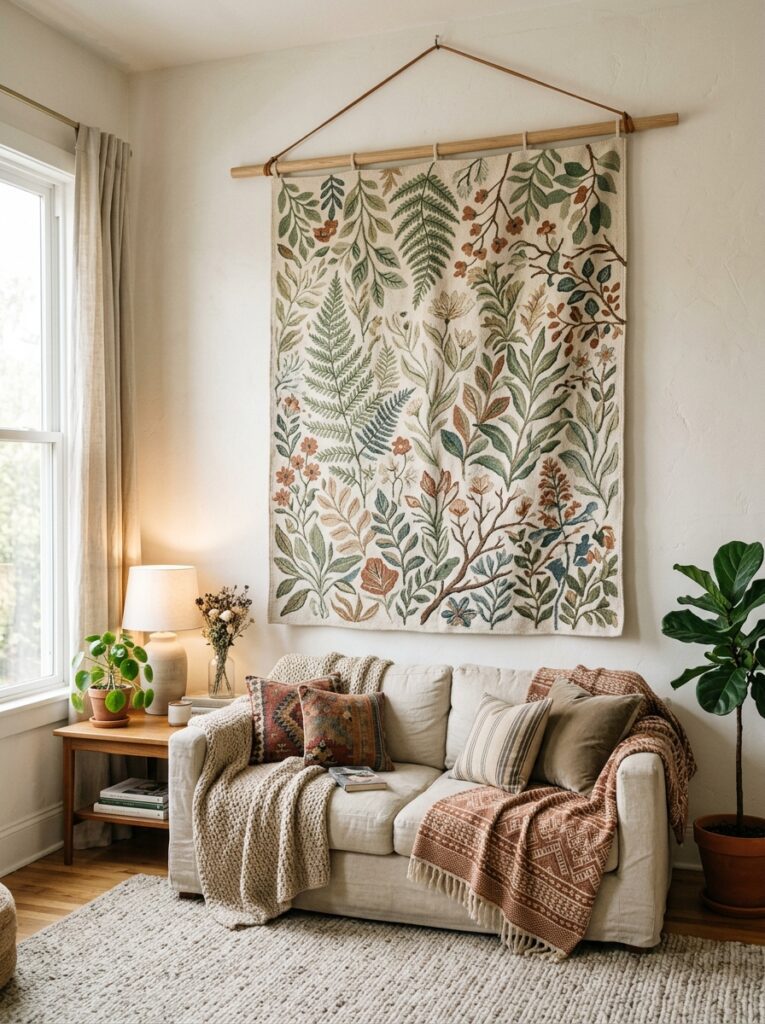
A large tapestry or oversized textile print is the wall treatment for spaces where the wall is large enough that a single artwork would need to be very expensive to fill it proportionally, or where the softness of a textile is preferable to the hardness of a canvas or frame.
A well-chosen tapestry, whether a botanical pattern, an abstract geometric, or a tonal landscape, brings color, pattern, and soft texture to the wall simultaneously. The scale of a tapestry means it can fill a wall that would otherwise require a gallery arrangement or a very large canvas. The textile quality introduces a warmth that printed or painted surfaces do not naturally carry.
Hung on a simple wooden dowel or a metal rod at the top edge, the tapestry has a relaxed quality that suits living rooms with a warm, layered aesthetic. For living rooms where the wall needs to be filled completely with a single decorative decision, a tapestry is the most cost-effective and visually generous answer available.