
Smart Casual Outfit Ideas for Men That Always Look Stylish
Smart casual is the dress code men ask about most. It is also the one they worry about most. An invitation says “smart casual” and the questions start at once. Is a blazer too much? Are jeans allowed? Can you wear trainers? Nobody seems to give the same answer twice.
This guide takes a different route. Instead of another list of outfits, it gives you one working principle. Then it groups fifteen outfits by that principle. Once you see how it works, you can build your own combinations. You will not need a list at all.
What the Term Actually Means
If smart casual feels vague, that is because it is vague. Even the reference books admit it. Wikipedia’s entry on smart casual calls it an ambiguously defined Western dress code. It describes casual clothing with some “smart” parts borrowed from the lounge suit.
The history is useful here. The term first described a lounge suit in an unusual colour and a lighter, less formal cloth. Over time the suit itself fell away. What remained was the idea of mixing tailored and relaxed pieces. The same entry notes that personal judgment is required. You read the context, the people, the place and the weather.
That is actually good news. It means there is no secret rulebook you have missed. There is only judgment, and judgment can be learned.
The Principle: Decide Where the Smart Sits
Every good smart casual outfit has a clear anchor. One or two pieces carry the formality. The rest of the outfit relaxes around them. The anchor might be a jacket, a fine knit, a crisp shirt or tailored trousers.
Outfits fail when the formality is spread evenly and thinly. A slightly smart shirt, slightly smart jeans and slightly smart shoes add up to nothing in particular. The eye finds no focus. Compare that with a sharp navy blazer over a plain white tee. The contrast is obvious and deliberate. It reads as a choice.
So before you get dressed, ask one question. Which piece is doing the smart work today? Build everything else to support it. The sections below are grouped by that answer.
When the Jacket Carries It
A jacket is the strongest anchor available. It adds shoulders, structure and a clean line from neck to hip. Because it does so much, everything beneath it can be very simple.
Navy blazer, dark jeans and a white tee. This is the classic for a reason. The blazer settles the dress code question. The tee stops the look from feeling stiff. Dark, clean denim without rips holds the middle ground. Wear leather shoes for a dinner or white leather sneakers for a relaxed lunch. For more jacket combinations, see our guide to smart casual blazer outfits.
Bomber jacket and chinos. A bomber gives structure without the formality of tailoring. Choose olive, navy or black in a smooth fabric. Keep the tee underneath plain. The ribbed collar and zip already give the chest a finished look, so a busy print would compete with them.

A suit without a tie. This is the historical version of smart casual, and it still works. Remove the tie and open the top button. Skip the pocket square and cufflinks, since both pull the look back toward business dress. A navy or grey suit with a white or pale blue shirt is the most flexible choice. It suits the dressier end of the range, such as a wedding reception that says “smart casual” on the card.
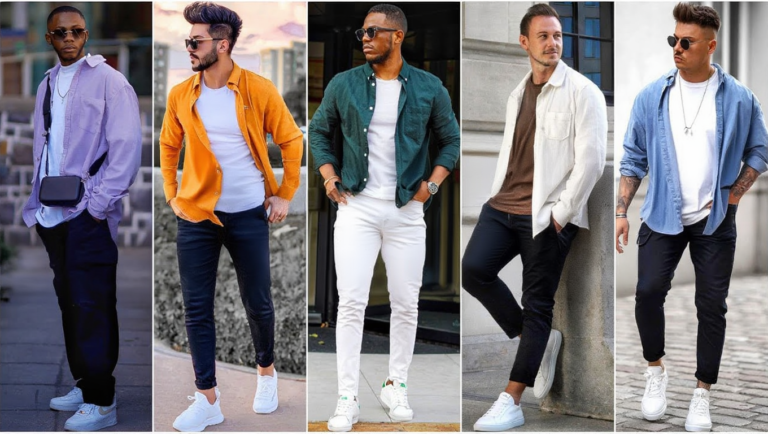
Denim jacket over a white shirt and tailored trousers. This one reverses the usual logic. The jacket is the casual piece here. The shirt and trousers carry the formality. It works because the contrast is clear. Keep the trousers dark and pressed, and the shirt crisp.
When the Knit Carries It
Fine knitwear is the most underrated anchor in smart casual. A thin merino or cashmere knit looks polished without any tailoring at all. It is also forgiving. There is no collar to manage and no buttons to decide on.

Roll neck, tailored trousers and Chelsea boots. The roll neck removes every collar decision. It gives a clean, finished neckline on its own. Pair it with charcoal, navy or camel trousers. Chelsea boots keep the line of the leg smooth at the ankle. This outfit carries you through autumn and winter with no changes at all.

Turtleneck and dark jeans. This is the lighter version of the outfit above. Denim relaxes it for a casual dinner or a gallery visit. The fit of the knit decides everything. A fitted turtleneck looks sharp. A baggy one looks like loungewear. Finish with Chelsea boots or leather sneakers.
Crew neck over an Oxford shirt. Here two pieces share the work. The collar and cuffs of the shirt show at the neck and wrists. That small detail makes the outfit look composed. A crew neck over a button-down is the cleanest arrangement. A V-neck shows more of the shirt, which suits a plain collar better.

Cream knit and light grey trousers. This is the quietest outfit in the guide. No single piece draws the eye. The tones sit together calmly. Add one good accessory, such as a simple watch or a belt that matches your shoes. Then stop. Restraint is the whole point of this look.
When the Shirt Carries It
In warm weather, jackets and knits drop away. The shirt becomes the anchor. That puts real pressure on it. It needs a proper collar that holds its shape, and a fit that follows your shoulders.

Chinos, white shirt and loafers. This combination has lasted so long that it is barely a trend anymore. Choose navy, khaki or stone chinos in a slim or straight cut. Tuck the shirt for a restaurant, or leave it untucked for a daytime event if it is short enough. Wear loafers with no-show socks for a modern finish.
Linen shirt and chinos. Linen is the smart casual answer to real heat. It breathes far better than most fabrics. Choose white, pale blue or a muted earth tone. Roll the sleeves to the forearm and leave the top button open. Accept the creases, because they are part of the fabric’s character. Our guide to linen outfits covers this in depth.

Slim cargo trousers and a button-down. Cargo trousers only work here in their modern form. That means a slim or straight leg, flat pockets and a dark, solid colour. Olive, stone, navy and charcoal all work. The button-down shirt does the smart work. Without it, the outfit slides straight into streetwear.

Overshirt, trousers and loafers. An overshirt sits between a shirt and a jacket. It is heavier than a normal shirt and holds its shape when worn open. A camel overshirt over a white tee, with olive chinos and tan loafers, is a strong combination. Button it partly and keep the sleeves down for a smarter version.
When the Trousers Carry It

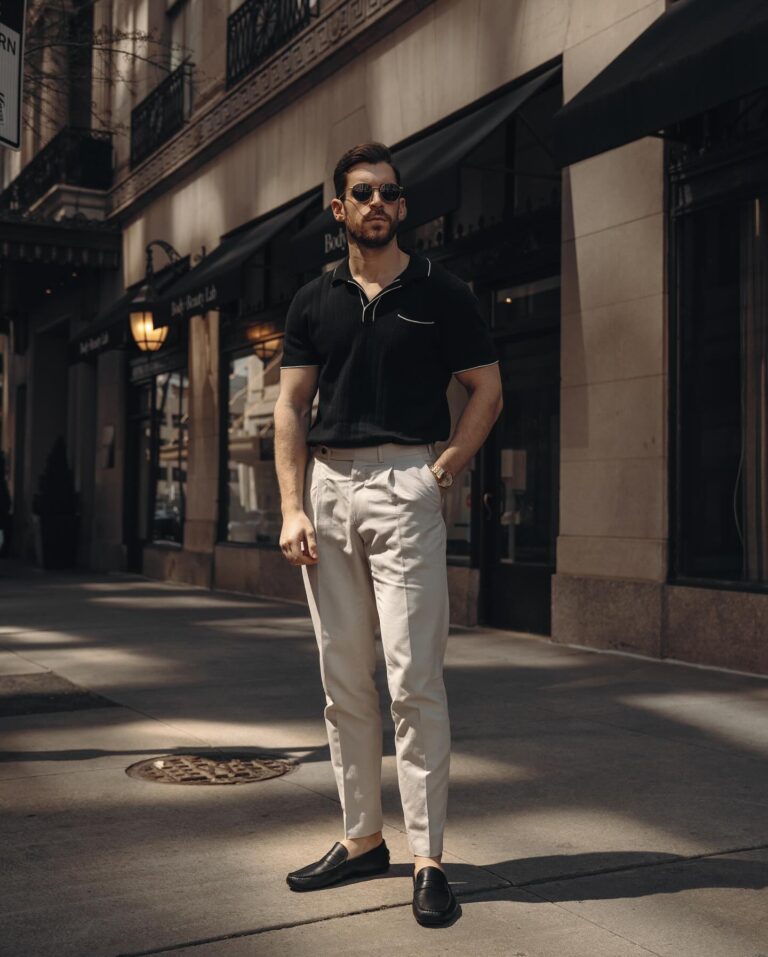
Polo, grey trousers and clean sneakers. This is the least obvious anchor, but a reliable one. Grey wool or wool-blend trousers with a proper crease look professional on their own. That frees the top half to relax. A knitted or piqué polo keeps a collar in the picture. Plain white leather sneakers finish it. The polo must fit closely, though. A loose one undoes the effect immediately.
Two Palette Shortcuts
All black. An all-black outfit removes colour as a variable. That makes fit and texture the only things left to judge. Mix a matte knit with smoother trousers so the outfit does not look flat. Black slim trousers, a black roll neck and black Chelsea boots make a sharp evening option. Our monochrome outfits guide explains why different blacks rarely match.
Earth tones. Camel, olive, rust, tan and muted brown belong to the same warm family. They combine with very little effort. The overshirt outfit above is the easiest example. If you want a wider system for pairing colours, see our colour combinations guide.
Shoes Settle Most Arguments
If you are unsure whether an outfit is smart enough, look down first. Shoes shift the reading of an outfit more than any other single item. The same chinos and shirt look relaxed with canvas trainers and polished with loafers.
Four shoes cover almost every smart casual situation. Loafers sit in the exact middle of the range. Chelsea boots suit colder months and darker outfits. Suede desert boots add texture. Plain white leather sneakers work when the rest of the outfit is sharp.
Two kinds of shoe cause most problems. Running trainers and chunky sports shoes look out of place with tailoring. At the other end, black cap-toe Oxfords can make a relaxed outfit look like office wear. Our men’s footwear guide covers each style in detail.
Read the Room Before You Dress
Since the code is loose, the setting fills in the detail. Four clues do most of the work.
Time of day. Evening events lean smarter than daytime ones. A lunch invites a polo and sneakers. A dinner at the same venue invites a knit or jacket.
Venue. A hotel bar and a beer garden can both say “smart casual”. They do not mean the same thing. Look at photos of the venue online. Notice what the staff wear.
Climate. Expectations shift in hot places. A jacket that looks right in London in October can look strange at a summer event in a hot city. In heat, a good linen or cotton shirt can carry the whole outfit.
The host. When the stakes are real, simply ask. A short message to the organiser is normal. Nobody minds the question. Many people will be glad someone asked it.
Smart Casual Is Not Business Casual
The two codes are often confused. Business casual is a workplace code. It usually assumes collared shirts, tailored trousers and leather shoes, with a jacket optional. Smart casual is broader and more social. It allows denim, knitwear and clean sneakers more readily. For workplace outfits, see our separate guide to business casual outfit ideas.
Three Mistakes That Undo a Good Outfit
One tired piece. A sharp blazer cannot rescue faded, baggy jeans. The weakest piece sets the level of the whole outfit. Replace worn items before adding new smart ones.
No anchor at all. A tee, jeans and trainers can be clean and well-fitted. It is still casual. Smart casual needs at least one piece that clearly carries formality.
Too many anchors. A blazer, a tie, a pocket square and Oxfords together are simply formal. If you have added three smart pieces, take one away.
The Short Version
Smart casual has no fixed uniform, and it never did. What it has is a pattern. Pick one or two pieces to carry the formality. Keep everything else clean, simple and well-fitted. Let the shoes confirm the level. Then check the setting and adjust by one step if needed.
If you are building a wardrobe that makes this easy every day, start with our capsule wardrobe guide. Most of the pieces in this article appear there too.