Thanksgiving Tablescape Ideas: Elegant and Easy Designs for Every Style
Thanksgiving Tablescape Ideas: Why the Table Sets the Entire Tone
The Thanksgiving table is where the meal happens. It is also where the gathering feels most intentional. A well-set table tells every guest that their presence was prepared for. That message lands before anyone sits down and before the food arrives.
The fifteen ideas below cover every style direction. They run from a two-element setup to fuller, layered arrangements. All of them are achievable at home with accessible materials. The focus is on the specific decisions that make each approach work, not simply a list of things to put on the table.
Rustic Harvest Tablescape: Natural Materials That Belong Together
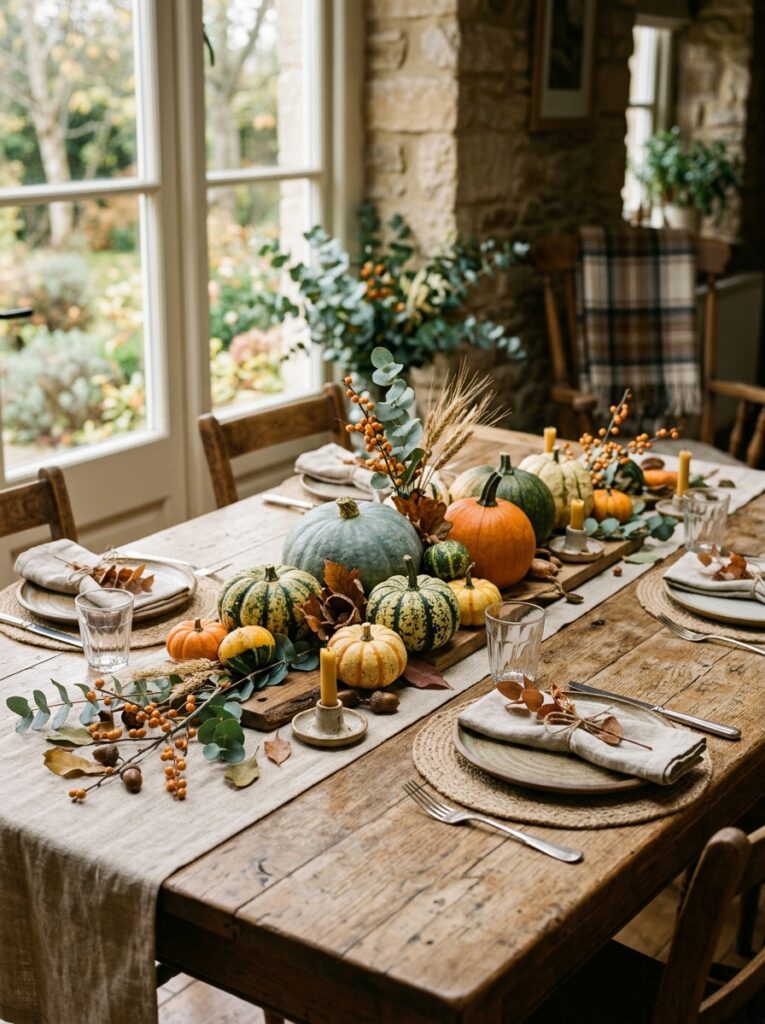
A rustic harvest tablescape works because every element points at the same agricultural world. Wooden boards, pumpkins and gourds in orange and buff, plain linen runners and dried botanicals all speak one visual language. They coexist with no coordination effort at all.
This is the most forgiving style in the guide. Nothing needs to match precisely, and small imperfections improve the result rather than spoiling it. Vary the heights as you build it: place some pumpkins on a wooden board and others straight on the table. That layering is what professional event tables do. A few pillar candles complete it, since natural materials glow most impressively once the light drops.
Neutral Thanksgiving Tablescape: Calm and Timeless Above Any Single Trend
Neutral tables photograph well in any decade. Beige, cream and taupe never date the way a fashionable colour scheme does. Guests remember the warmth of the occasion instead of the palette. That is the whole argument for this approach.
Without colour contrast, texture has to carry the interest. Pair a matte finish against a glazed one, a rough weave against a smooth plate, a raw wood board against fine linen. Undertone matters more than most people expect here. Warm neutrals such as oatmeal and sand sit comfortably against wooden tables, while cool greys can read as flat next to warm timber. Keep the whole table within one temperature and the scheme holds together. One sprig of dried botanicals beside each setting adds the organic note that stops a neutral table feeling merely understated. A single deeper accent, such as a bronze candleholder or a dark seed pod, gives the eye somewhere to land.
Pumpkin and Candle Tablescape: The Simplest Setup That Always Works
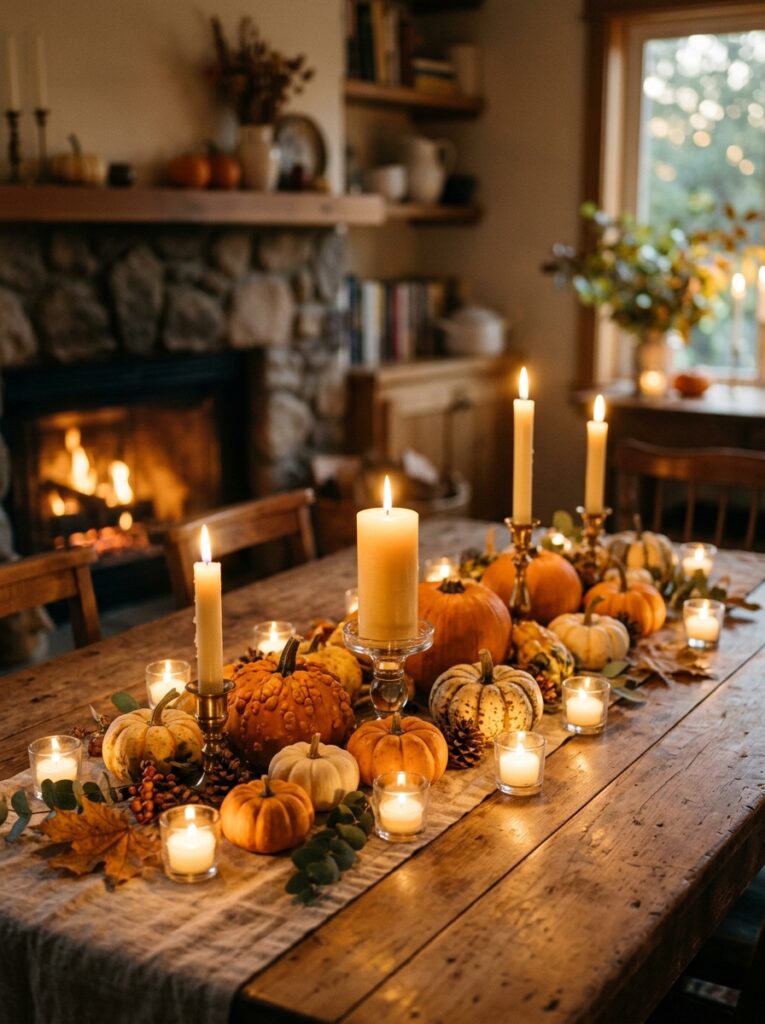
Pumpkins and candles solve the table’s two main jobs at once. The pumpkins supply the seasonal identity that says Thanksgiving specifically. The candles supply the warm evening light that makes the meal feel like an occasion. That is why the pairing has lasted.
Vary the pumpkin sizes for rhythm. Large at the centre, medium and small toward the ends, gives a designed centrepiece with no extra materials. Mixing real pumpkins with faux ones at the smaller sizes cuts the cost and extends the display well past a single week. LED candles in glass votives keep the light consistent. They also remove the open-flame concern at a table full of people and passing dishes.
Mini Pumpkin Place Setting: The Personal Touch That Guests Remember
A mini pumpkin at each seat is the detail people talk about afterward. It signals individual attention in a way a shared centrepiece cannot. The message is simple: someone thought about the person sitting there.
Variety choice makes this easier than it looks. Jack Be Little and Baby Boo both have flat bases, so they sit steady beside a plate instead of rolling into the cutlery. Anything wider than about 10 cm starts crowding the setting. Wipe each one with a damp cloth and dry it before it goes near a plate, since field dust travels home from the farm shop with them. Tie a small kraft tag to the stem with twine and write the name on it. That covers the place card, the decoration and the take-home favour in one item. Mixing orange with white and buff across the table adds variety without buying anything extra.
Dried Wheat Thanksgiving Tablescape: Harvest Character With Minimal Cost
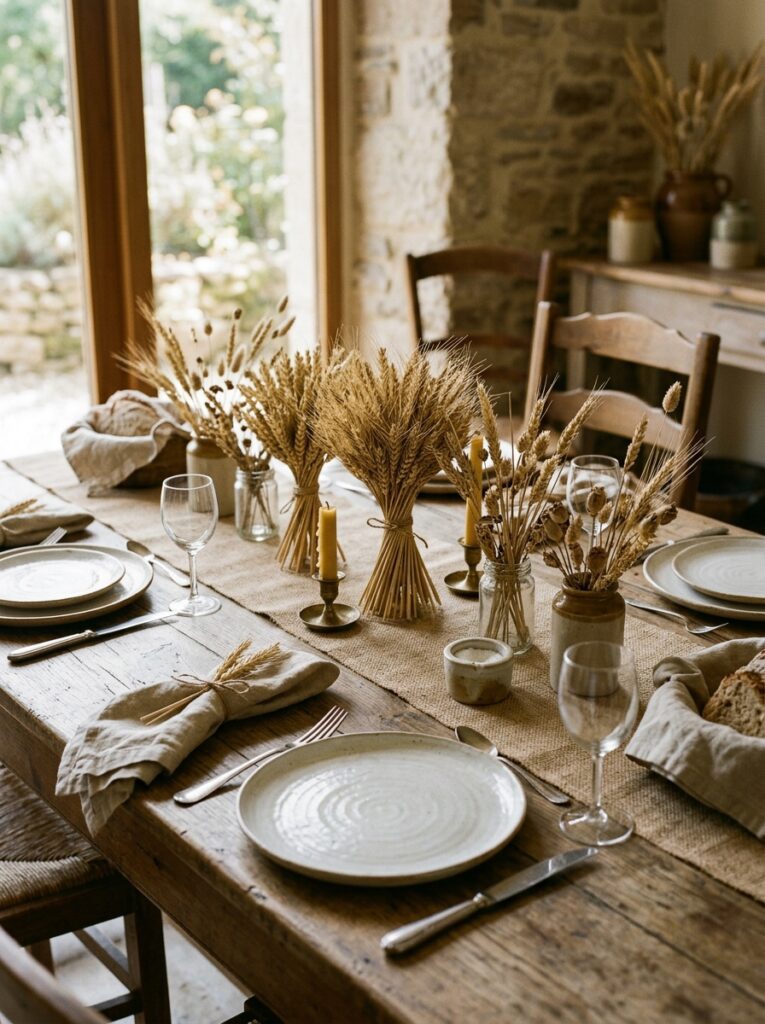
Dried wheat is one of the cheapest harvest materials available. It also references the season more directly than almost anything else. The stems add texture and warm golden colour. They never compete with whatever sits beside them.
One bundle tied with twine at the centre of the table is enough on its own. It gives the whole arrangement a harvest character that costlier centrepieces sometimes miss. On a longer table, three smaller bundles at intervals create a repetition that reads as designed rather than scattered. Wheat is also the most stable material here. It does not wilt, fade or need water across the whole Thanksgiving period.
Farmhouse Thanksgiving Tablescape: Everyday Warmth Made Special
Farmhouse styling upgrades what a household already owns. The effect comes from how the pieces combine, not from what any of them cost. White or cream dishes, wooden boards, cotton or linen napkins and a few seasonal touches are the whole kit.
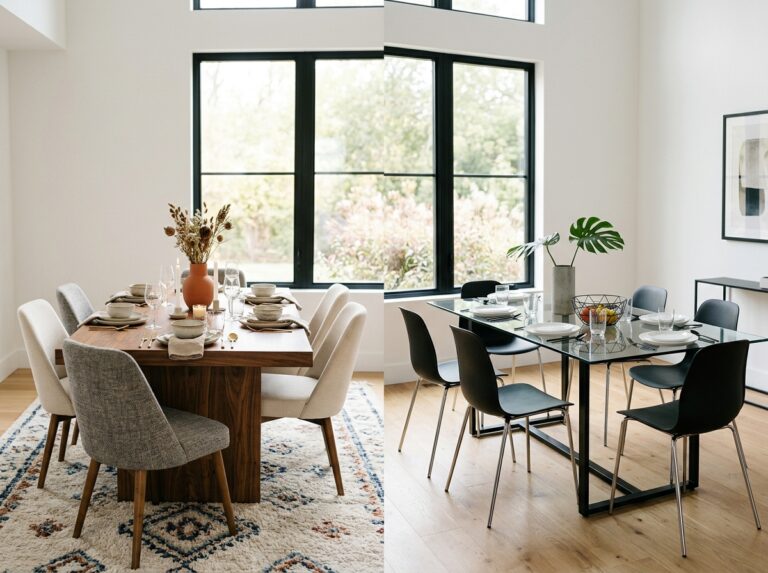
Composition is where it succeeds or fails. Layer each setting: board or charger, then plate, then a napkin folded loosely and laid across or beside it. Two or three plate shapes in the same white family look collected rather than mismatched, so an odd serving bowl from another set is an asset here. Leave the linen slightly creased instead of pressing it flat, because a hard iron crease reads as formal and pulls against the style. Consider the surface underneath as well, since a bare timber top does half the work on its own and the choice between a wood or glass dining table changes how much covering the setting needs. Then stop adding. Farmhouse tables lose their ease the moment a fourth or fifth decorative object joins each place.
White Pumpkin Tablescape: Modern Restraint in a Traditional Season
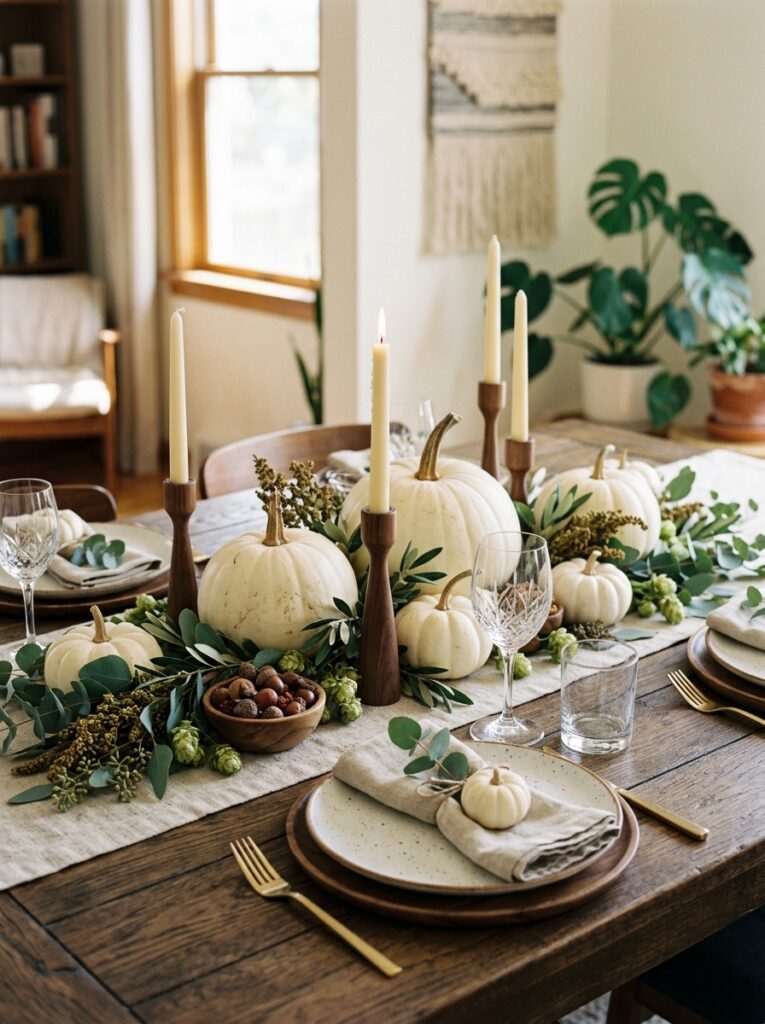
White pumpkins give a contemporary reading of the Thanksgiving table. They suit modern interiors more naturally than traditional orange. Their neutral tone works with a far wider range of linens, plates and centrepiece materials. Orange can clash against cooler or more saturated palettes, and white sidesteps that entirely.
Pair them with dark greenery, eucalyptus stems or dusty sage leaves. The pale pumpkins give gentle contrast against the green without the competition orange would introduce. Warm amber candles complete the scheme. They add the evening warmth that stops a neutral palette reading as cold once the sun goes down.
Eucalyptus Greenery Tablescape: The Organic Runner That Sets Every Color Off
A eucalyptus runner changes a table faster than almost any other single purchase. Laid stems have a flowing, unforced quality. Manufactured runners and formal florist centrepieces rarely achieve it at the same price. Two or three supermarket bunches usually cover a six-seat table.
Lay it as a spine rather than a carpet. Run the longest stems end to end down the centre, then tuck shorter ones in facing the opposite direction so the line looks full at every point. Keep the band to about 20 cm wide, which leaves room for serving dishes and stops leaves reaching the plates. Silver dollar eucalyptus gives round, flat leaves that sit low; seeded eucalyptus adds more depth but takes up more height. Fresh stems last two to three days out of water, and preserved stems give the same look with no time limit. One caution is worth knowing before you decorate: eucalyptus is listed by the ASPCA as toxic to cats and dogs, so keep dropped leaves off the floor if pets are around. Small pumpkins, candles or seed pods tucked into the greenery finish the centre.
Plaid Runner Thanksgiving Tablescape: Seasonal Pattern as the Centerpiece
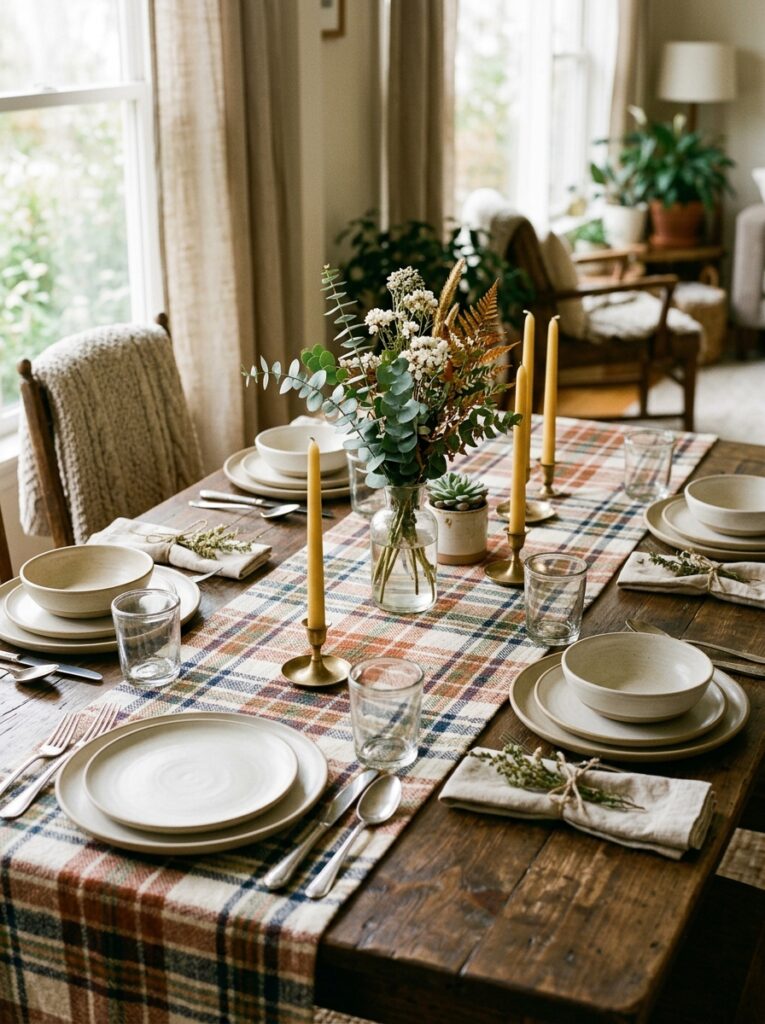
A plaid runner brings the most seasonal warmth of any single decision. The pattern carries the autumn and harvest association on its own. Nothing else has to work to complete the impression.
Pair it with plain everything else. Simple white or cream dishes, plain napkins and a minimal centrepiece let the pattern read as the intended statement. The more neutral the surroundings, the more confident the plaid looks. Restraint is the entire technique here. One small centrepiece is the ceiling: three candles at different heights, or a modest pumpkin grouping, and the table is finished.
Mason Jar Thanksgiving Tablescape: Versatile Vessels That Do Multiple Jobs
Few table items work as hard as a mason jar. The same jar holds a candle, a few stems, a name tag, a favour, or napkins and cutlery for a buffet. One set covers several jobs across one table. That is why they keep reappearing every autumn.
Some practical points make the difference. Use tea lights or votives inside rather than tapers, since a flame close to the glass wall heats one spot and can crack a thin jar. A layer of sand, small stones, dried corn or cranberries in the base steadies the jar and adds interest at eye level. Soak off old labels in warm water with a little bicarbonate of soda, then rub away the adhesive with oil. Keep centre-line jars below about 25 cm so nobody is talking around them. Vary the sizes, using quart jars for candles and tall stems and jelly jars for individual settings. Afterward they move straight outside onto steps or a porch rail, which is one of the cheapest ideas in this guide to fall outdoor decor.
Burlap and Linen Tablescape: Two Natural Textures That Belong Together
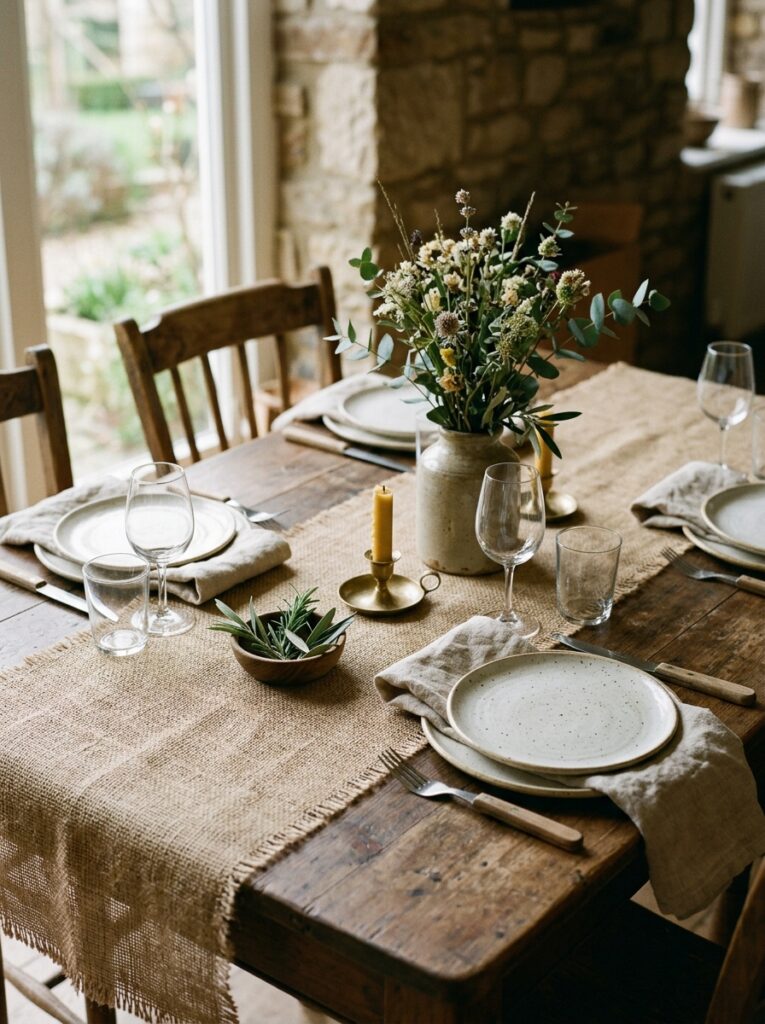
Burlap and linen make the most tactile natural pairing available. Their textures differ clearly while both belong to the same woven family. Burlap’s rough, open weave reads as rustic and substantial. Linen’s finer weave reads as soft and refined. Together they produce a layered quality neither achieves alone.
The simplest version is also the best one. A burlap runner down the centre, linen napkins at each setting, and the contrast is complete. The burlap grounds the middle of the table and carries the harvest character. The linen brings softness to each individual place. The combination feels seasonal and welcoming in equal measure.
Candlelit Thanksgiving Tablescape: Evening Atmosphere as the Priority
A candlelit table puts atmosphere ahead of every other consideration. That suits Thanksgiving, since many households eat after dark. The warmth of the gathering matters more here than how the table photographs at noon.
Height variation is the core principle. Uniform candle height flattens the centre, while a mix moves the eye up and down through the arrangement. Tapers in simple holders at intervals, pillars at a lower level, and votives lower still gives that composition. Two practical rules keep it comfortable: choose unscented candles, because perfume at a dining table competes directly with the food, and keep flame height either below chin level or above head level so nobody is squinting through it at the person opposite. A wobbling taper is fixed with a small piece of floral putty in the holder. Keep flames clear of dried wheat, leaves and paper napkins, and follow NFPA candle safety guidance at a full table. LED versions in the same heights give an identical result with none of that concern.
Autumn Leaf Tablescape: The Material the Season Provides for Free
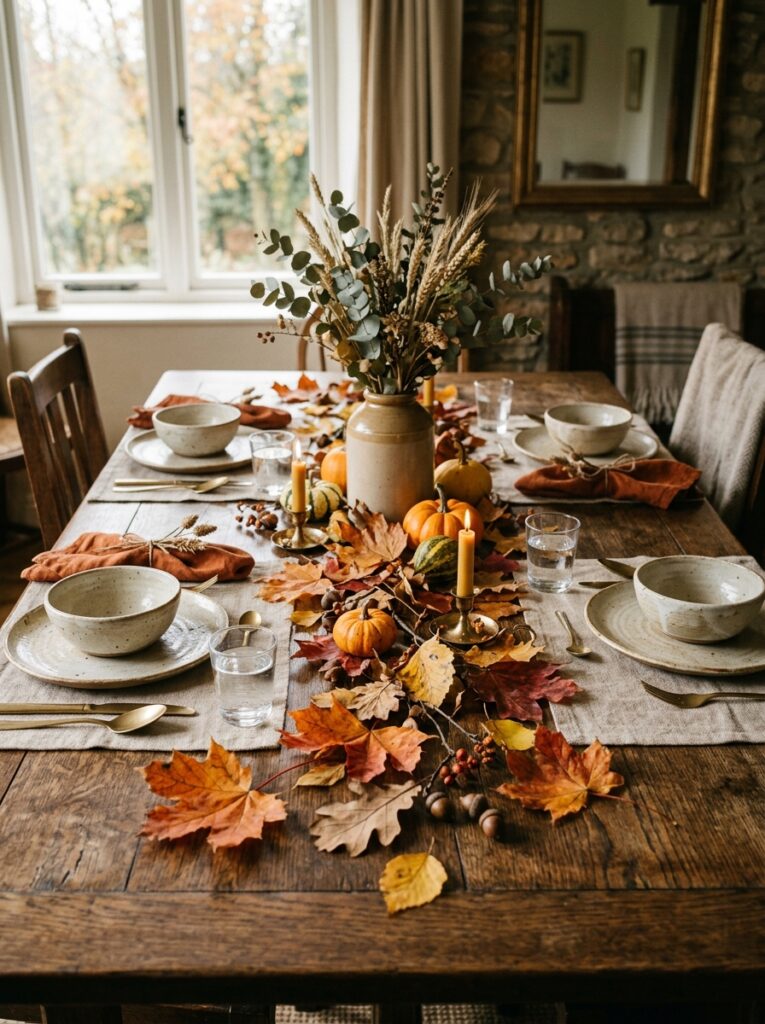
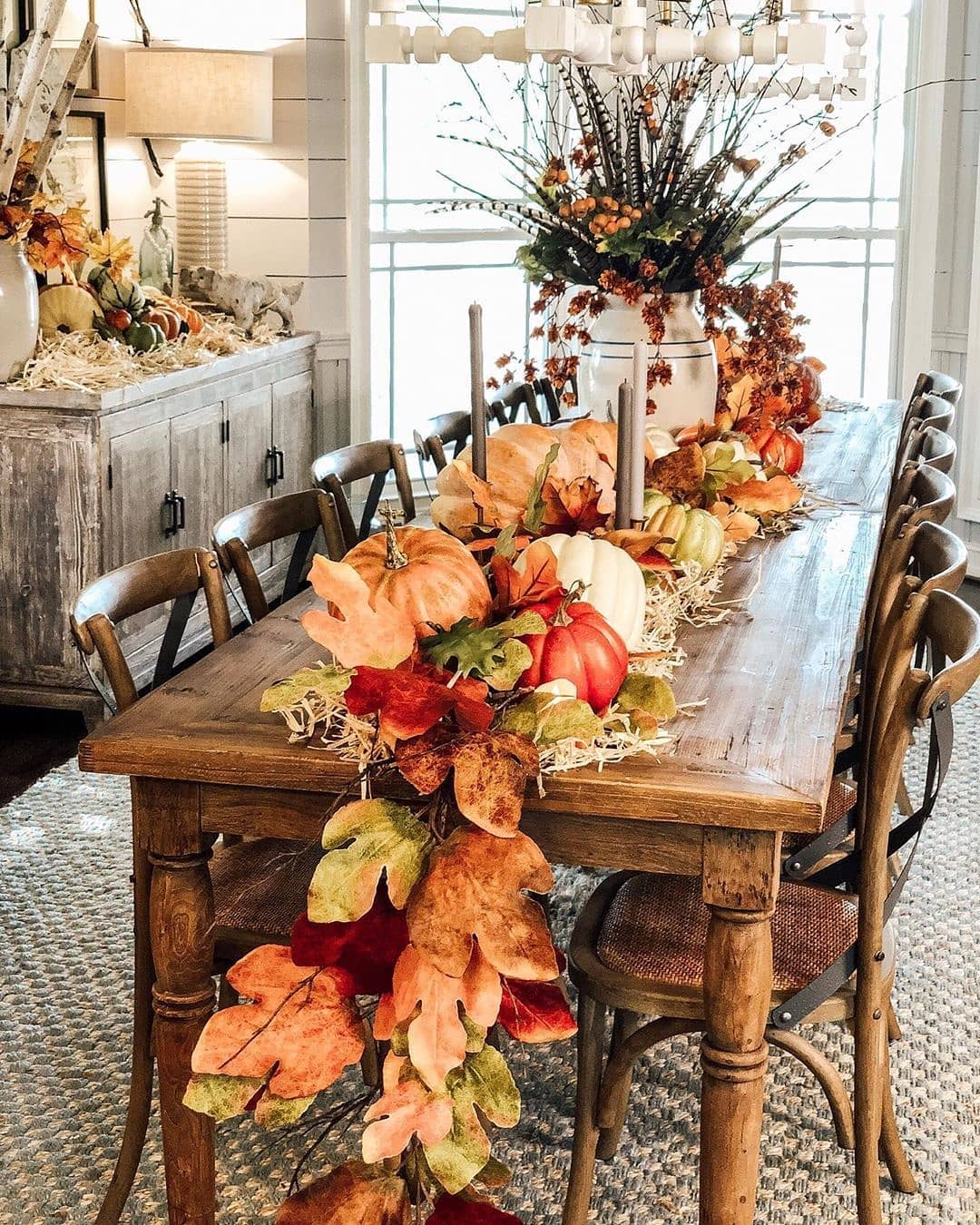
Autumn leaves down the centre of the table bring the season indoors in its most literal form. The colours run from deep burgundy through orange, red, amber and gold. Those are the actual colours of autumn rather than an approximation of them.
Leaves gathered and pressed flat in the days beforehand hold their colour and shape through the meal. Preserved leaves from craft shops keep their appearance year after year. Scatter them loosely instead of arranging them into a pattern. The windfall look is what makes a leaf table read as organic rather than applied. Small pumpkins and tea lights among the leaves add the height that a flat arrangement needs.
Simple Fall Tablescape: The Proof That Less Is More
A simple table gets the most from the fewest elements. Every item present is there for a reason. Three neutral pumpkins in a small cluster, a linen runner, two tapers and clean white dishes make a complete setting. Nothing else is required.
The difficulty is that tables grow while you set them. Most hosts keep adding until the surface feels decorated enough, and that is usually two or three objects past the right point. A more reliable method reverses it. Set out everything you were considering, then take away one item at a time and stop at the moment the table starts to look bare. Leave roughly 30 cm of clear surface per person for plates, glasses and elbows. Keep the decoration inside a defined band down the middle rather than letting it drift toward the settings. A table edited this way looks more assured than one that collected every seasonal object in the cupboard.
Natural Wood Thanksgiving Tablescape: Material Warmth That Outlasts Any Trend
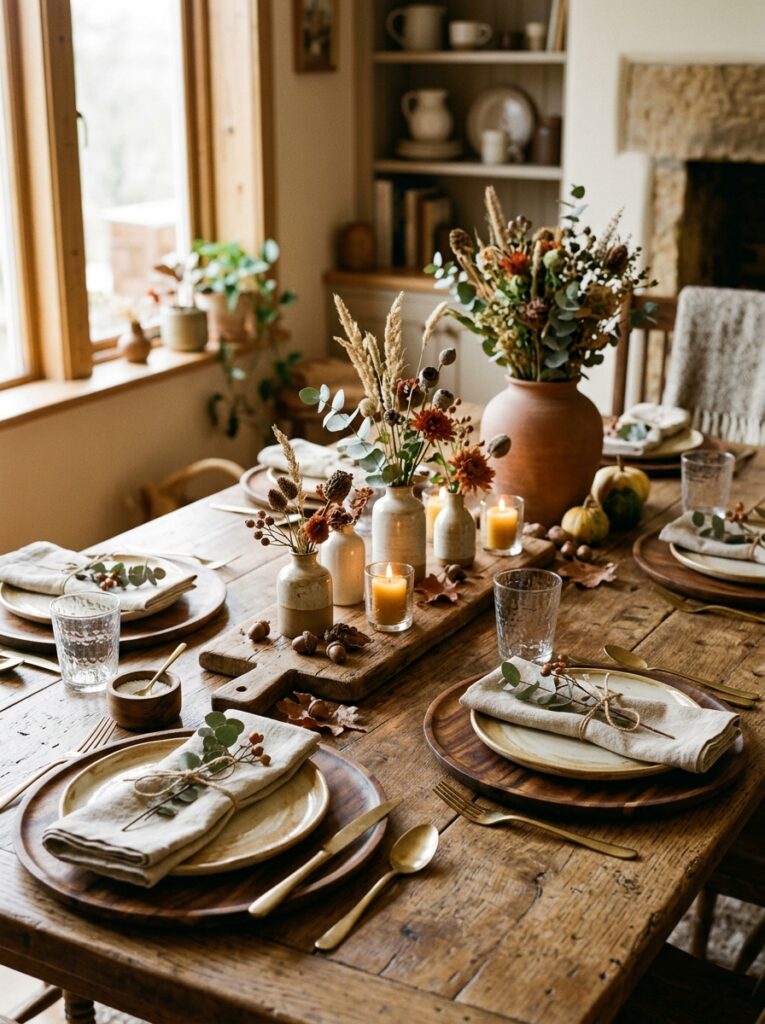
Wood gives a warmth that manufactured alternatives cannot copy at any price. Grain variation, tonal range and surface character all read as genuine material. At close range across a long meal, the eye responds to that positively.
Wooden chargers under each plate are the highest-impact piece at the individual scale. A board or a cut slice works as a centrepiece platform, lifting whatever sits on it and warming the middle of the table. Small wooden candle holders or serving vessels carry the material through the rest of the setting. Tonal differences between pieces are a benefit rather than a flaw. They read as collected and personal instead of matched and corporate, which is exactly what a Thanksgiving table wants.
Setting a Thanksgiving Table That Serves the Meal and the Gathering
A good tablescape has to satisfy two demands at once. It should look impressive in the moments before the meal starts. It should also stay workable while people are actually eating.
A centrepiece taller than seated eye level blocks the conversation across the table. Candles placed on the route to the serving dishes are impractical and unsafe, since someone will reach over a flame. Settings crammed too closely together prioritise visual density over the comfort of everyone seated. Each of these problems is easier to avoid than to fix mid-meal.
Work to those constraints first, then style within them. Tables built in that order feel both attractive and comfortable, rather than trading one for the other. The best Thanksgiving table is the one that makes the meal easier, not the one that photographs best.