How to Add Sage Green to a Kitchen That Already Has Terracotta Tile
Sage green has become one of the most requested kitchen colors of the last few years, but it doesn’t always get paired with existing terracotta tile without some hesitation first. Terracotta leans warm and earthy, while sage green can swing either warm or cool depending on the exact shade, which makes people understandably nervous about clashing tones once paint or cabinetry gets involved.
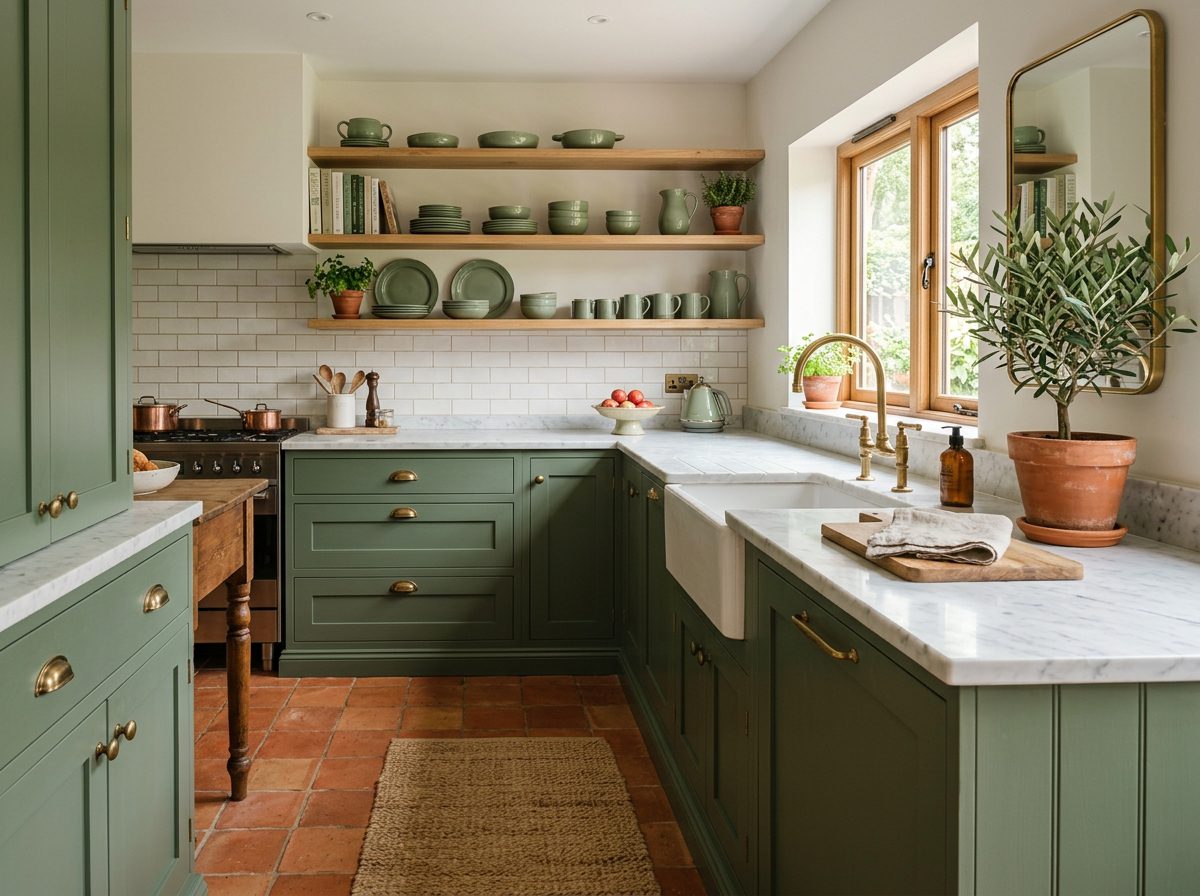
The good news is that these two colors actually complement each other more often than not, as long as a few details get handled with some intention. This guide walks through how to bring sage green into a kitchen that already has terracotta tile, creating a sage green and terracotta kitchen that feels pulled together rather than like two separate design decisions competing for attention.
Why Sage Green and Terracotta Work So Well in the Same Kitchen
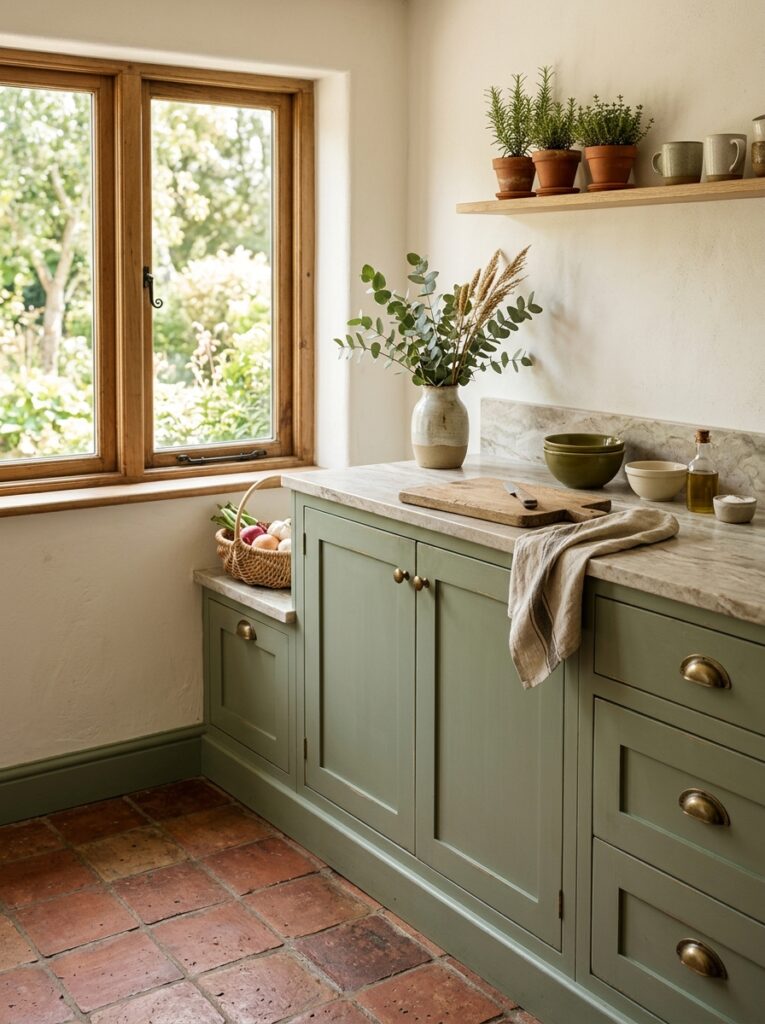
A sage green and terracotta kitchen might sound like an unlikely pairing on paper, but the two tones actually share more in common than most people expect.
Both colors sit firmly in the earthy, muted end of the color spectrum. Terracotta pulls from clay, rust, and sun-baked earth tones, while sage green pulls from dried herbs, olive leaves, and weathered stone. Neither is a bright, saturated color, which means they naturally avoid the kind of visual competition that happens when a muted tone gets paired with something bold or highly saturated.
Color theory also plays a role here. Terracotta sits on the warm side of the color wheel, close to orange and red, while sage green sits just barely on the cool side, close to gray and blue. That slight contrast, warm against a gently cooled green, creates enough visual interest to keep the kitchen from feeling flat, without the harsh clash that comes from pairing true complementary opposites like red and green.
Look at Your Terracotta Tile’s Undertone First
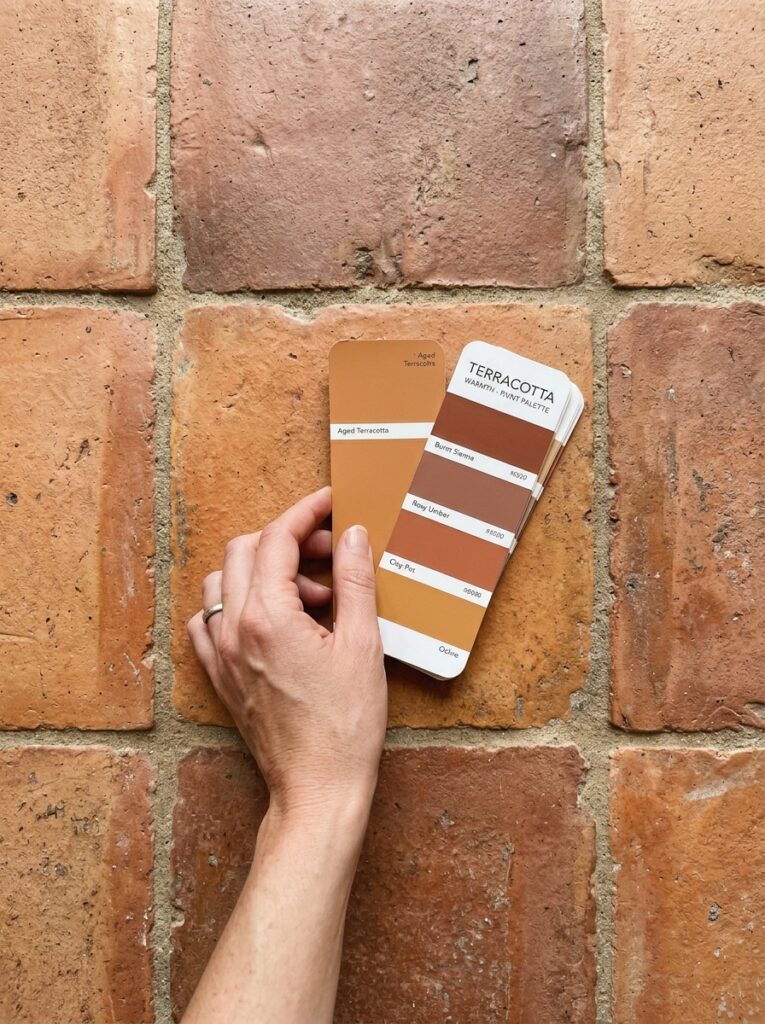
Before choosing a specific shade of sage green, it’s worth spending a few minutes really looking at the terracotta tile already in the kitchen, since terracotta varies more than people realize.
Some terracotta tile leans distinctly orange, almost like a traditional clay pot. Other terracotta leans more pink or rosy, and some leans brown or rust colored with very little orange visible at all. This undertone matters because it determines which sage green shades will feel intentional against it and which will feel slightly off.
A simple way to check is to look at the tile in both natural daylight and warm artificial light, since undertones can shift noticeably between the two. Taking a photo of the tile in each lighting condition and comparing them side by side often reveals an undertone that’s easy to miss when just glancing at the floor. This step alone makes a real difference in whether a sage green and terracotta kitchen looks cohesive or slightly accidental once paint goes on the wall.
Choosing the Right Shade of Sage Green
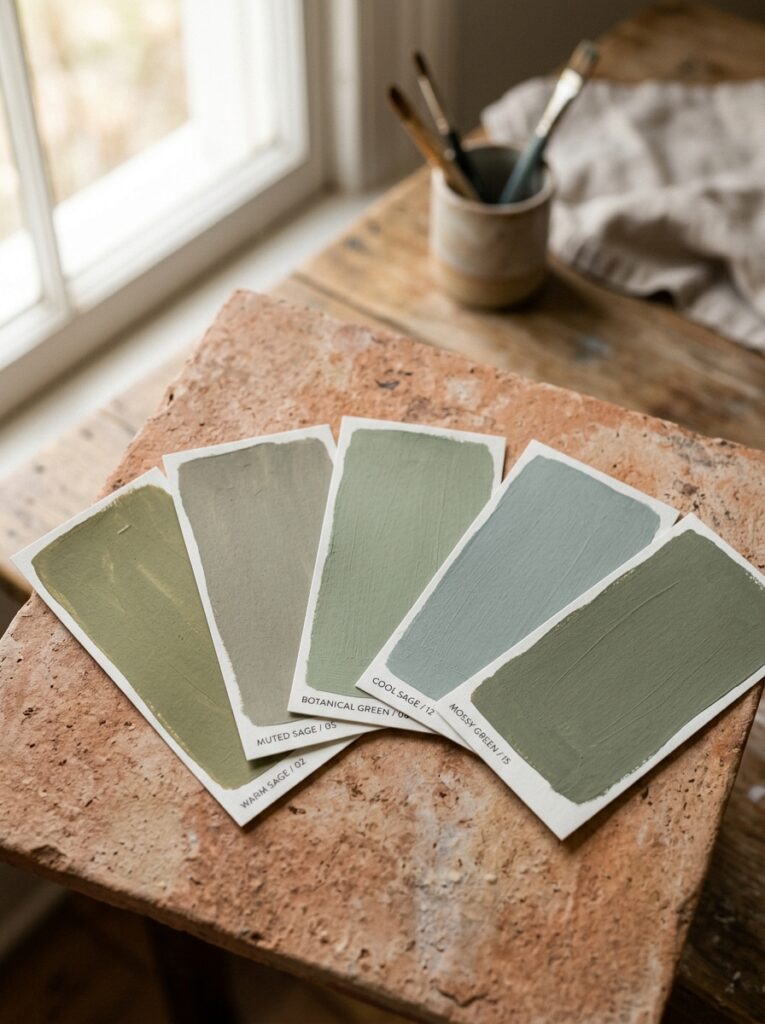
Not all sage greens are created equal, and the specific shade chosen has a bigger impact on the final look than most people expect going in.
Warmer, more yellow-based sage greens tend to pair beautifully with orange-leaning terracotta, since the yellow undertone in the paint echoes the warmth already present in the tile. Cooler, more gray-based sage greens work better against pink or rosy terracotta, since the added gray helps balance out any pink undertones rather than fighting against them.
Testing paint samples directly against the tile, rather than relying on a paint chip held at a distance, is worth the extra effort. Undertones become much more obvious up close and in the same lighting the kitchen actually gets throughout the day. Most paint brands offer sample sizes specifically for this kind of testing, and it’s a small cost compared to repainting an entire kitchen, since the undertone match is really what makes or breaks a sage green and terracotta kitchen.
Where to Introduce Sage Green First
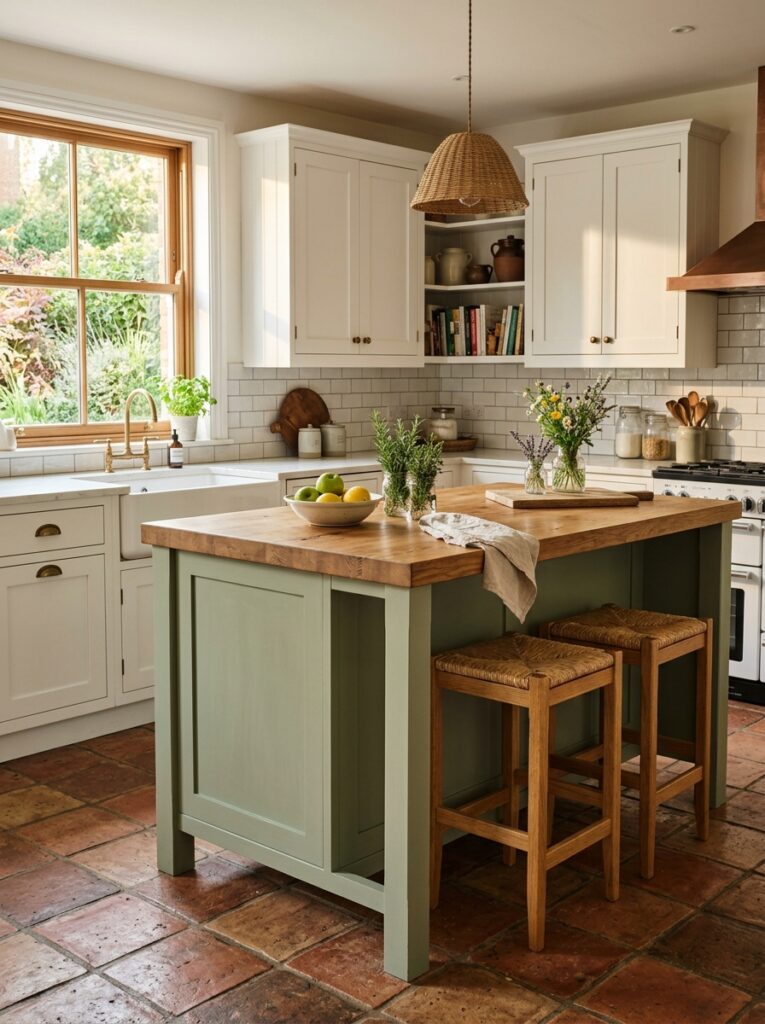
Once the right shade feels confirmed, the next decision is where sage green actually shows up first, since jumping straight to full cabinetry isn’t the only option.
Painting the lower cabinets alone, while keeping upper cabinets white or a warm cream, is one of the more forgiving ways to introduce the color. It keeps the terracotta tile as the visual anchor at floor level while sage green adds contrast just above it, without overwhelming the whole room at once.
An accent wall, particularly one that doesn’t sit directly behind open tile sightlines, works well for kitchens with an eat-in area or a wall that isn’t covered in cabinetry. This approach is also one of the easiest ways to start a sage green and terracotta kitchen without a big commitment, since a wall can always be repainted if the combination doesn’t feel right after living with it for a few weeks.
A kitchen island is another popular starting point, especially in larger kitchens where the island sits somewhat separate from the main cabinet run. Painting just the island allows the two colors to interact without either one dominating the space, and it’s a manageable weekend project rather than a full renovation.
Bringing Sage Green in Through Decor and Textiles
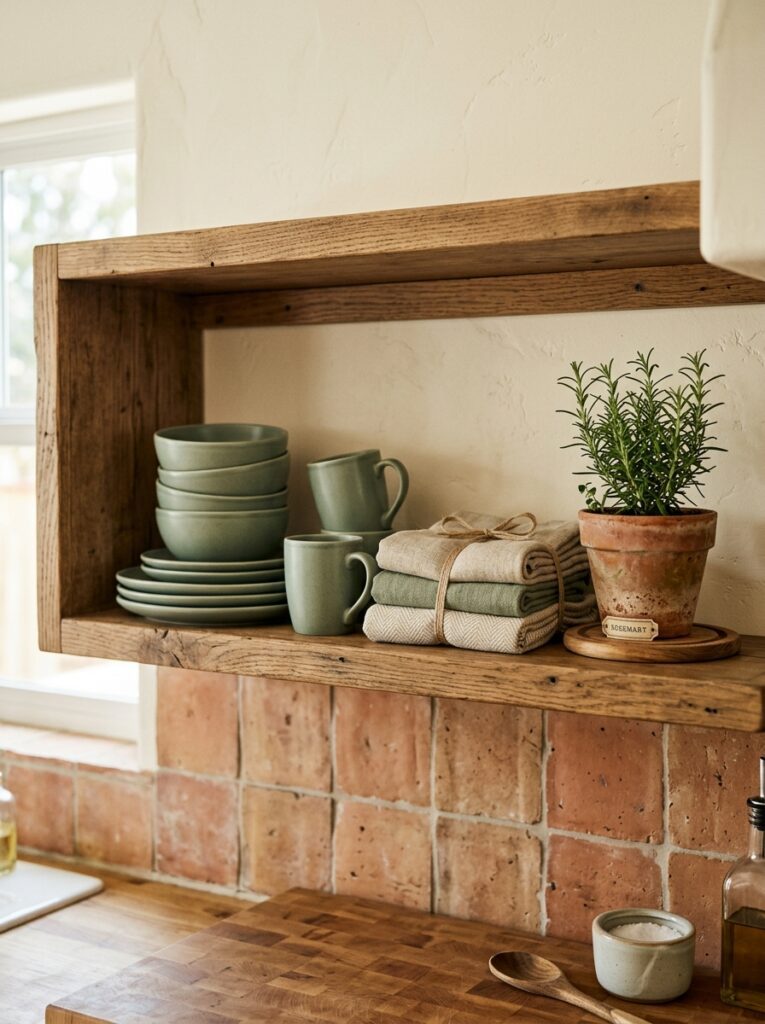
For anyone not ready to commit to paint or new cabinetry, sage green can be introduced just as effectively through smaller, lower-commitment choices.
Dish towels, curtains, and a runner rug in sage green add color without any permanent changes, and they’re easy to swap out if the look doesn’t feel right after all. Open shelving is another natural spot, since sage green dishware, canisters, or a few cookbooks with green spines add color in small, controlled doses that are simple to rearrange.
Small appliances have also caught up with this trend, and a sage green stand mixer, kettle, or toaster can act as a functional piece of color that doesn’t require touching a single wall or cabinet. This approach works particularly well for renters or anyone who wants to live with the pairing for a while before committing to a full sage green and terracotta kitchen renovation.
Balancing the Two Tones So Nothing Clashes
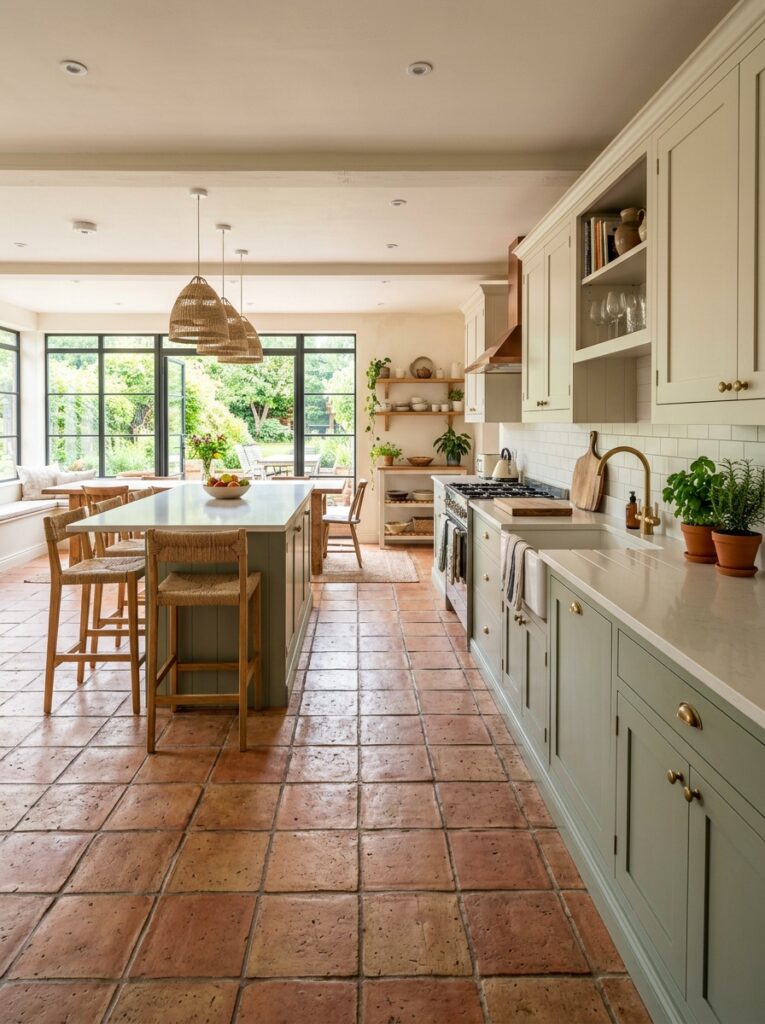
Getting the balance right is what separates a polished sage green and terracotta kitchen from one that feels busy or like it’s competing for attention.
A rough guideline that tends to work well is treating terracotta as the dominant tone, since it’s likely already covering the largest surface area in the room, and letting sage green play a supporting role rather than an equal one. This usually means sage green shows up on roughly a third of the visible surfaces, cabinetry, an accent wall, or a concentrated cluster of decor, rather than spreading evenly across everything.
Neutral tones act as a buffer between the two colors and make a huge difference in how cohesive the final result feels. White, cream, warm wood tones, and natural stone counter tops all give the eye a place to rest between the terracotta and the sage green, which keeps the combination from feeling like two competing color schemes crammed into one room.
Choosing Counter tops and Backsplash Materials That Support Both Colors
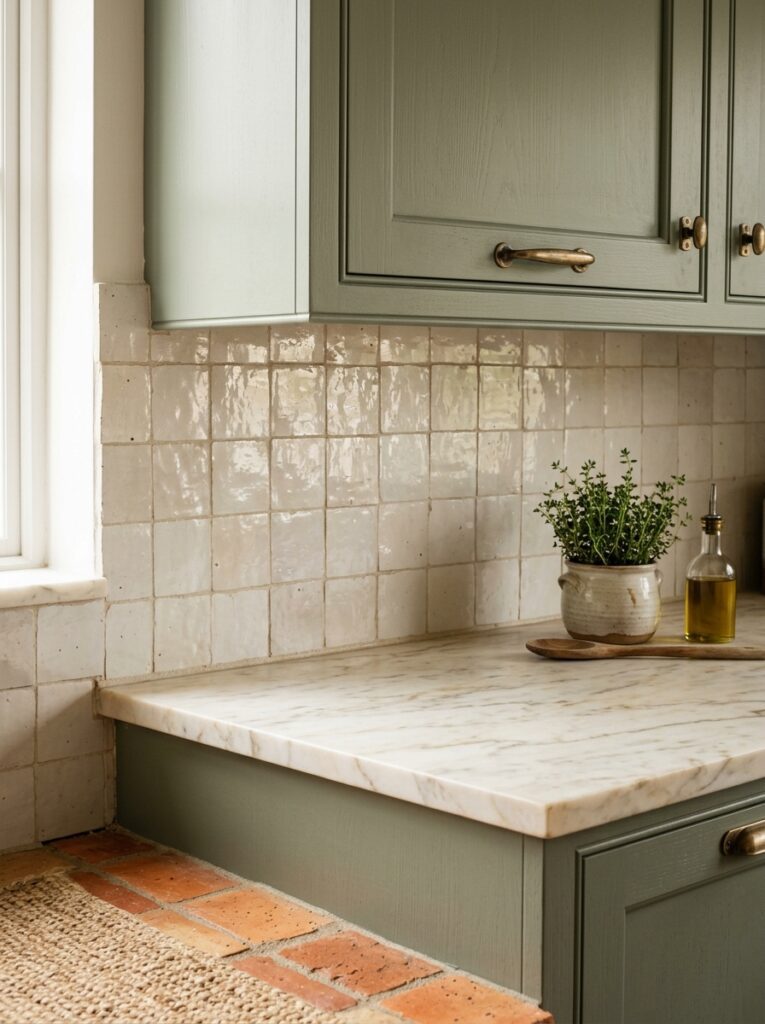
Counter tops and backs plash choices matter just as much as paint when it comes to tying a sage green and terracotta kitchen together, especially in kitchens where the terracotta tile covers a large portion of the floor.
Warm white or cream counter tops, particularly ones with subtle veining, tend to work as a visual buffer between sage green cabinetry and terracotta flooring, giving both colors room to breathe rather than competing directly. Butcher block counter tops in a warm wood tone achieve something similar, echoing the earthiness of both colors at once.
For backs plash tile, sticking to a simple, less saturated option, plain white subway tile, a soft cream zellige, or a warm-toned natural stone, keeps the focus on the wall paint and floor tile rather than introducing a third competing pattern. Patterned or brightly colored back splash tile can still work, but it takes a much more careful hand to avoid visual overload in a kitchen already balancing two distinct tones.
Lighting’s Effect on How These Colors Read
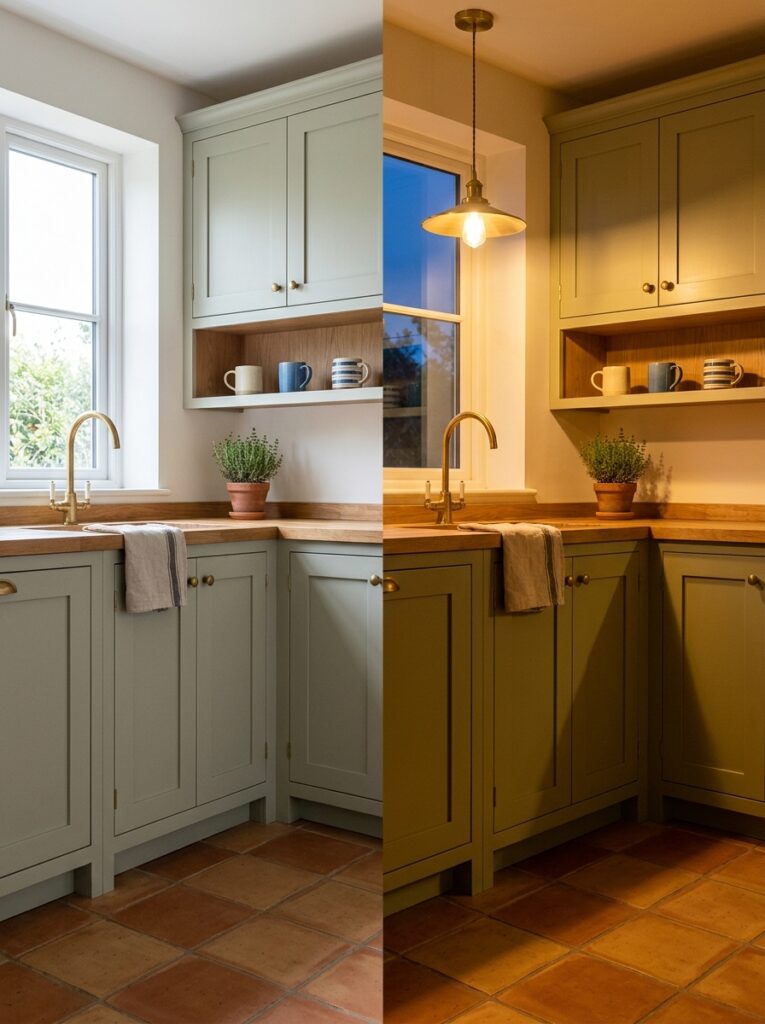
Lighting changes how both terracotta and sage green appear throughout the day, which is worth planning around rather than being surprised by later.
Natural daylight tends to bring out the coolness in sage green, making it read slightly more blue or gray than it might appear on a paint chip indoors. Warm artificial lighting, like most standard kitchen fixtures, pulls sage green toward a more olive, yellow-leaning tone, which usually harmonizes even more closely with terracotta once the sun goes down.
This is part of why testing paint samples at different times of day matters so much. A shade that looks perfect at noon might read completely differently under evening kitchen lighting, and it’s much easier to notice this before painting an entire wall or cabinet run than after the fact.
Common Mistakes in a Sage Green and Terracotta Kitchen
A handful of avoidable mistakes come up repeatedly when people try to combine these two tones, and most of them trace back to skipping the undertone check early on.
- Choosing a sage green shade based on a paint chip alone, without testing it directly against the tile in the kitchen’s actual lighting
- Letting sage green and terracotta compete for equal visual weight, rather than choosing one to lead and the other to support
- Skipping neutral buffer tones like white, cream, or wood, which forces the two colors to interact directly with nothing to soften the transition
- Painting an entire kitchen at once instead of testing a smaller area first, like one wall or a single cabinet
- Ignoring how the paint looks under both daylight and evening lighting before committing to a full room
- Assuming every terracotta tile behaves the same way, when undertone differences between orange, pink, and brown-leaning terracotta genuinely change which sage green works best
Most of these mistakes come down to moving too quickly toward the final decision. A little patience during the sampling stage saves a lot of repainting later.
Frequently Asked Questions About Sage Green and Terracotta Kitchens
Does sage green really work with terracotta tile?
Yes, a sage green and terracotta kitchen is one of the more forgiving color combinations, since both tones sit in the same muted, earthy family and rarely clash when the undertones are matched thoughtfully.
What shade of sage green pairs best with orange-toned terracotta?
Warmer, more yellow-based sage greens tend to complement orange-leaning terracotta best, since the shared warmth keeps the two tones from feeling disconnected.
Do I have to paint my cabinets to add sage green to my kitchen?
No, sage green can be introduced through textiles, open shelving decor, or small appliances first, which is a lower-commitment way to test the combination before painting anything permanent.
Should terracotta or sage green be the dominant color?
Terracotta usually works best as the dominant tone, especially if it’s covering the floor, with sage green playing a smaller supporting role on cabinetry, an accent wall, or decor.
How do I know if my sage green choice will clash with my tile?
Testing a paint sample directly against the tile in different lighting conditions is the most reliable way to catch a mismatch before committing to a full paint job.
Final Thoughts
A sage green and terracotta kitchen doesn’t have to happen all at once, and honestly, it usually turns out better when it doesn’t. Testing undertones, starting with a smaller commitment like an island or a set of curtains, and paying attention to how the colors shift under different lighting all add up to a kitchen that feels considered rather than rushed.
Terracotta tile isn’t a limitation here. It’s actually a strong, warm foundation that sage green can build on, as long as the shade gets chosen with the tile in mind rather than in isolation. Once that undertone match is right, the rest of the kitchen tends to come together with far less trial and error than people expect going in.