How to Organize a Tiny Kitchen When You Have Zero Cabinet Space
If you have ever stood in the middle of your kitchen holding a pot with absolutely nowhere to put it, you already understand the special kind of frustration that comes with limited storage. A tiny kitchen with little or no cabinet space can feel like a daily puzzle. You want it to function like a real cooking space, but every drawer is jammed, every counter is covered, and your patience runs out before dinner even starts.
The good news is that you do not need a renovation or a bigger apartment to fix this. After living in several small rentals over the years, including one galley kitchen that had exactly two narrow cabinets, I learned that the real solution is not about owning less for the sake of it. It is about using every inch you have in a smarter way. This guide walks you through practical, tested ways to organize a tiny kitchen even when cabinet space is basically nonexistent.
Start by Understanding What You Actually Have
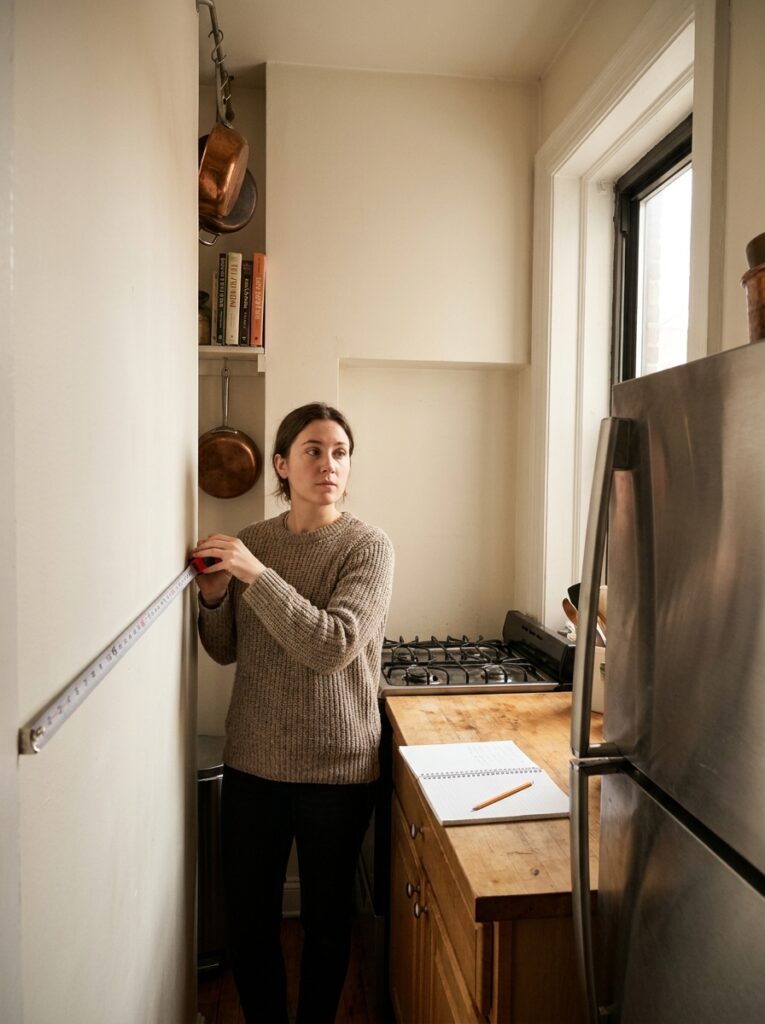
Before buying a single organizer, take a slow look at your kitchen. Most people skip this step and end up with bins and racks that do not fit anywhere. You want to know your real working space first.
Walk around and notice the spots that usually go ignored. The side of the fridge. The wall above the stove. The empty gap beside the counter. The back of the pantry door. These overlooked areas are where most of your new storage will come from when cabinets are not an option.
Measure everything that matters. Write down the height of your walls, the width of any open gaps, and the depth of your counters. Tiny kitchens punish guesswork. A rack that is two inches too wide becomes useless, and returning bulky items is a hassle nobody enjoys.
Once you know your space, group your kitchen items by how often you use them. Daily items like your favorite mug, a cutting board, and a couple of pans should stay within easy reach. Things you use a few times a year can move to the hardest spots to access, or out of the kitchen entirely.
Go Vertical Because the Walls Are Your Best Friend
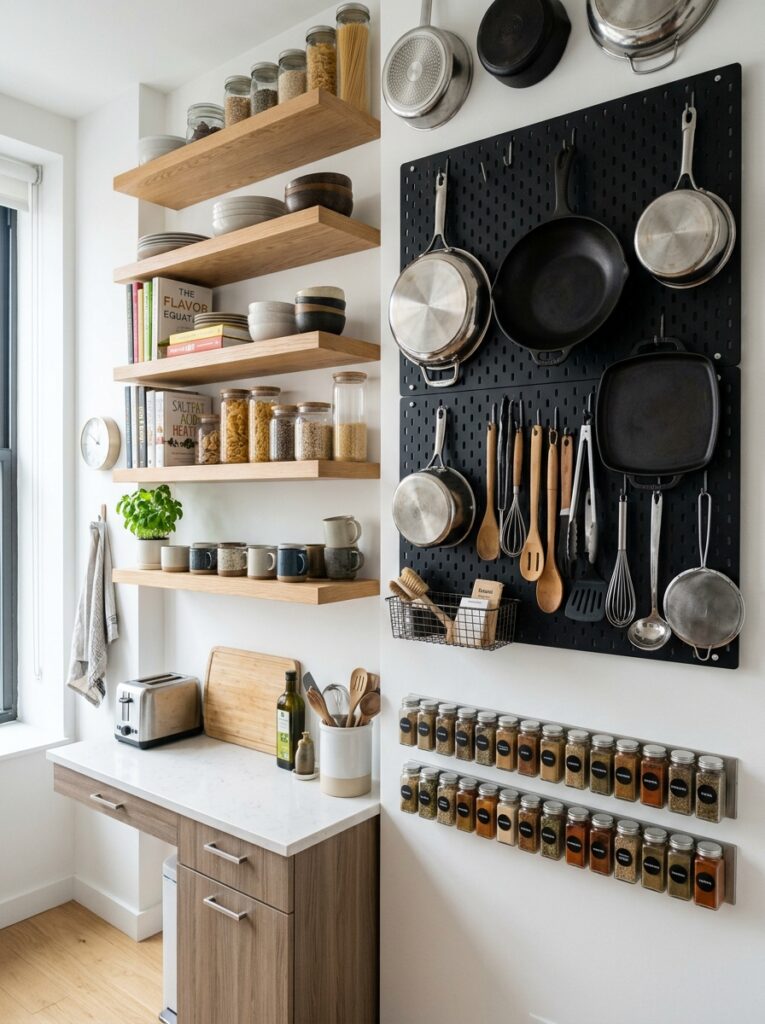
When you cannot build out, you build up. Vertical space is the single most valuable resource in a small kitchen, and most of it sits empty above eye level.
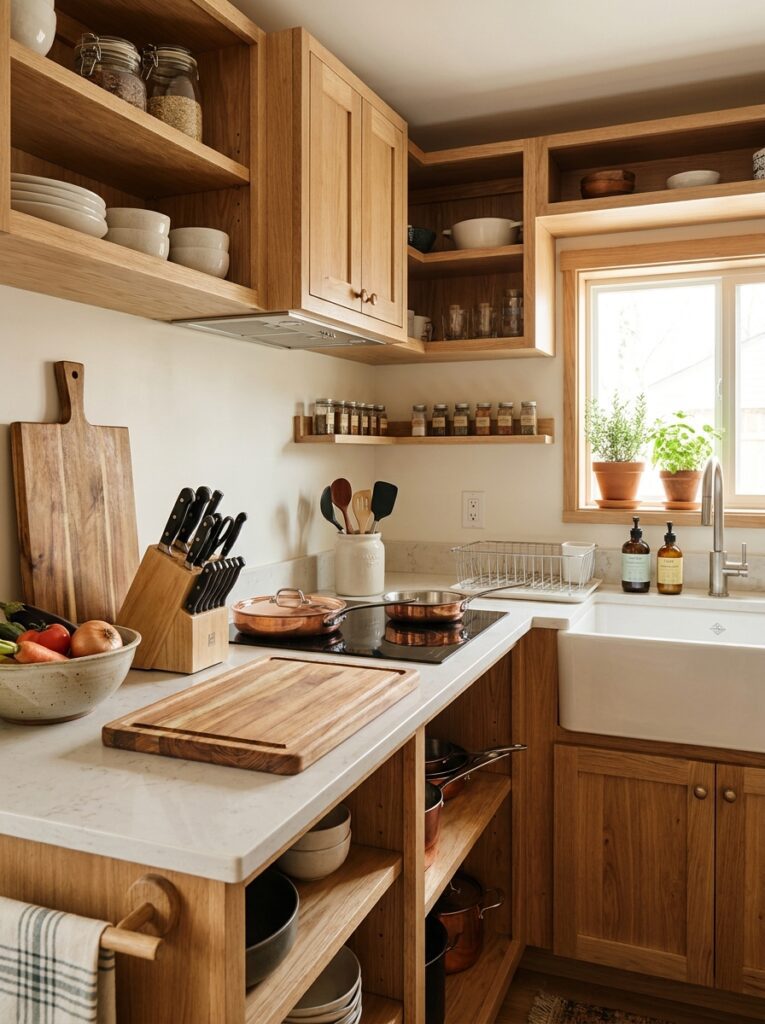
Wall-mounted shelves are the obvious starting point, but the trick is placing them where they earn their spot. A narrow shelf above the stove can hold spices and oils you reach for constantly. A higher shelf near the ceiling is perfect for items you rarely touch, like a slow cooker or a big serving platter.
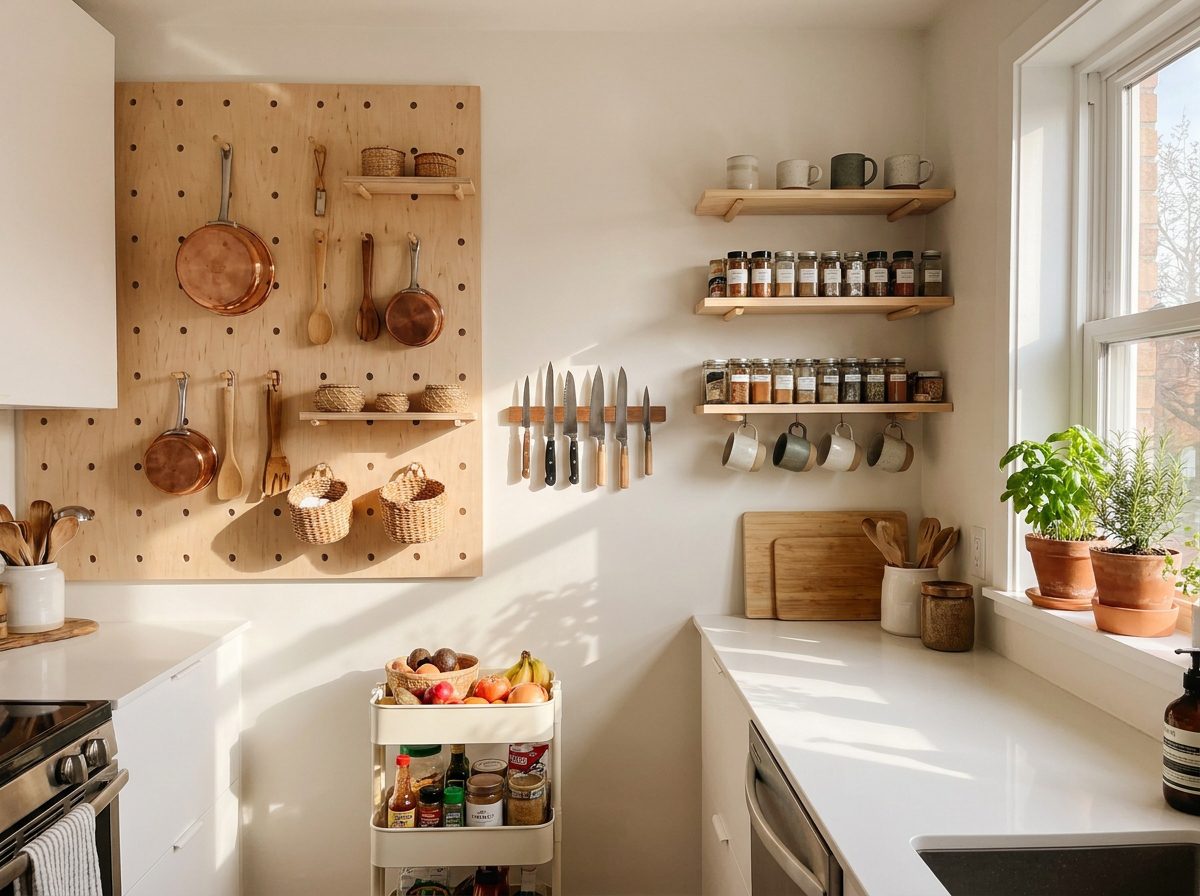
Pegboards changed everything for me in my smallest kitchen. You can hang pots, pans, utensils, measuring cups, and even small baskets on hooks. The best part is how flexible they are. When your needs change, you just move the hooks. A pegboard turns a blank wall into a fully customizable storage system without any cabinets at all.
Magnetic strips deserve a mention too. A magnetic knife strip frees up counter and drawer space immediately and keeps your blades safer than tossing them in a drawer. You can also use magnetic spice tins on the side of your fridge, which clears out an entire shelf you probably needed for something else.
Tension rods are another quiet hero. Mount one under a shelf to hang spray bottles, or place one inside a narrow gap to create a vertical slot for cutting boards and baking sheets.
Use the Backs of Doors and Hidden Gaps
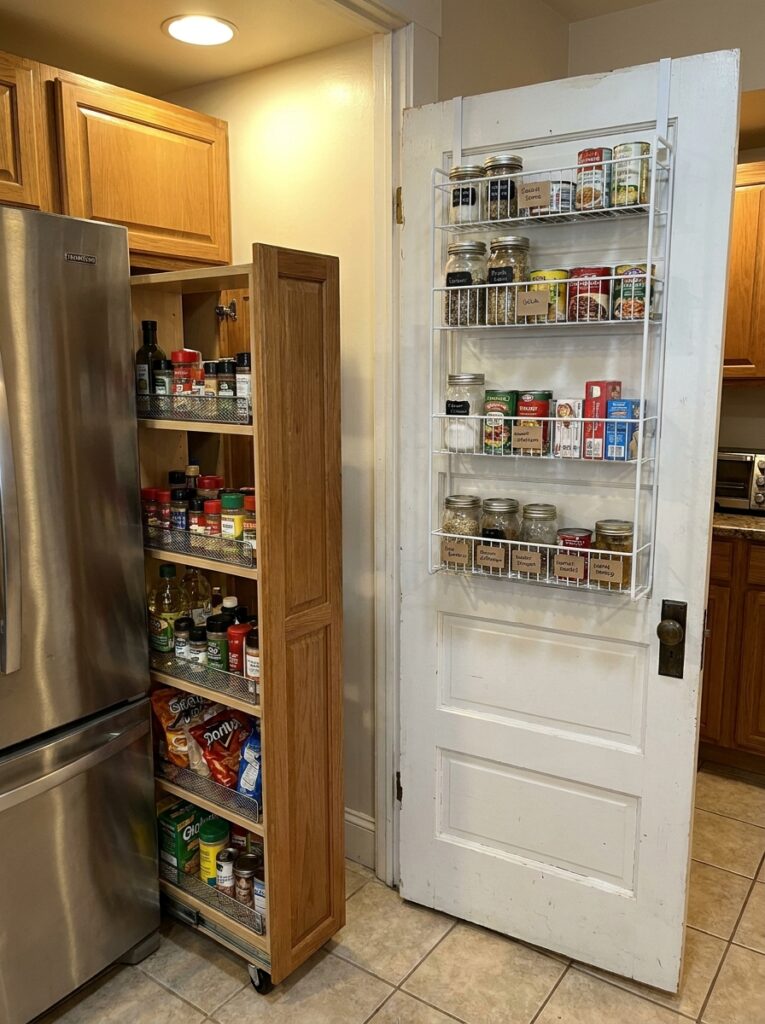
Doors are some of the most wasted real estate in any kitchen. The back of a pantry door, a closet door, or even the door under your sink can hold a surprising amount.
Over-the-door organizers come in wire or fabric versions and work for everything from cleaning supplies to snacks to foil and wrap. If you do not have a pantry, the back of any nearby closet door will do the job just as well.
The narrow gaps in a kitchen are easy to forget but incredibly useful. That slim space between your fridge and the wall can fit a rolling pull-out pantry. These tall, skinny carts roll out to reveal shelves for cans, bottles, and dry goods, then slide back into a space you were not using anyway.
Look under your sink too. It is usually a chaotic mess of pipes and bottles, but a two-tier expandable shelf works around the plumbing and instantly doubles your usable space down there.
Make Your Counters Work Harder Without Cluttering Them
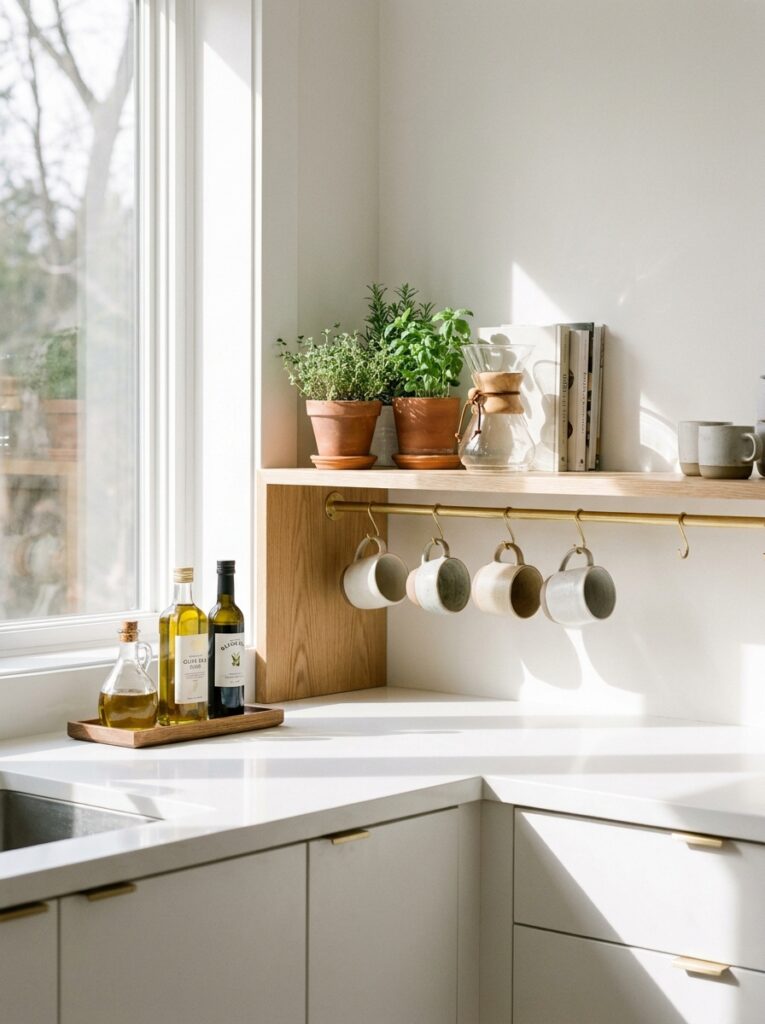
Counters in a tiny kitchen are sacred. You need them clear for actual cooking, but they also tempt you to pile things up. The goal is to add storage without sacrificing your work surface.
A small shelf riser placed on the counter creates a second level, so you can store things underneath while keeping the top usable. This works beautifully in a corner where you would not be chopping anyway.
Hanging rails mounted just under a shelf or along a backsplash let you suspend mugs, utensils, and small baskets, keeping them off the counter entirely. Anything you can lift off the surface gives you back precious room.
If you have a windowsill, use it. A few herbs in small pots or a tray of frequently used oils can live there without crowding your prep area.
Rethink Your Cookware and Dishes
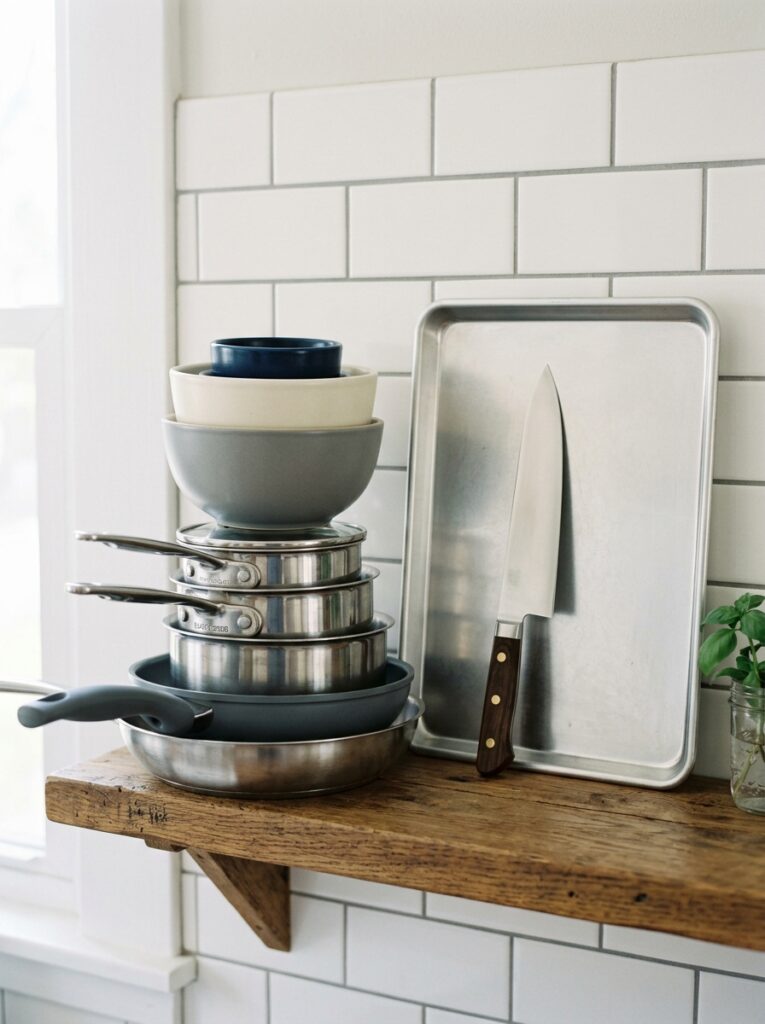
Sometimes the storage problem is really a quantity problem. When space is this tight, the items you own matter as much as where you put them.
Switch to stackable and nesting cookware. A nesting set of bowls, pots, and pans can collapse into the footprint of a single item. The difference in space is dramatic, and you lose almost nothing in function.
Be honest about duplicates. Most of us keep three spatulas when one good one would do. The same goes for mismatched mugs, extra baking dishes, and gadgets you bought once and never touched. Clearing these out is free and frees up more room than any organizer you could buy.
Choose multipurpose tools where you can. A good chef’s knife replaces several specialty knives. A sheet pan handles roasting, baking, and reheating. When every tool does more than one job, you simply need fewer of them.
Build Storage Outside the Kitchen When Needed
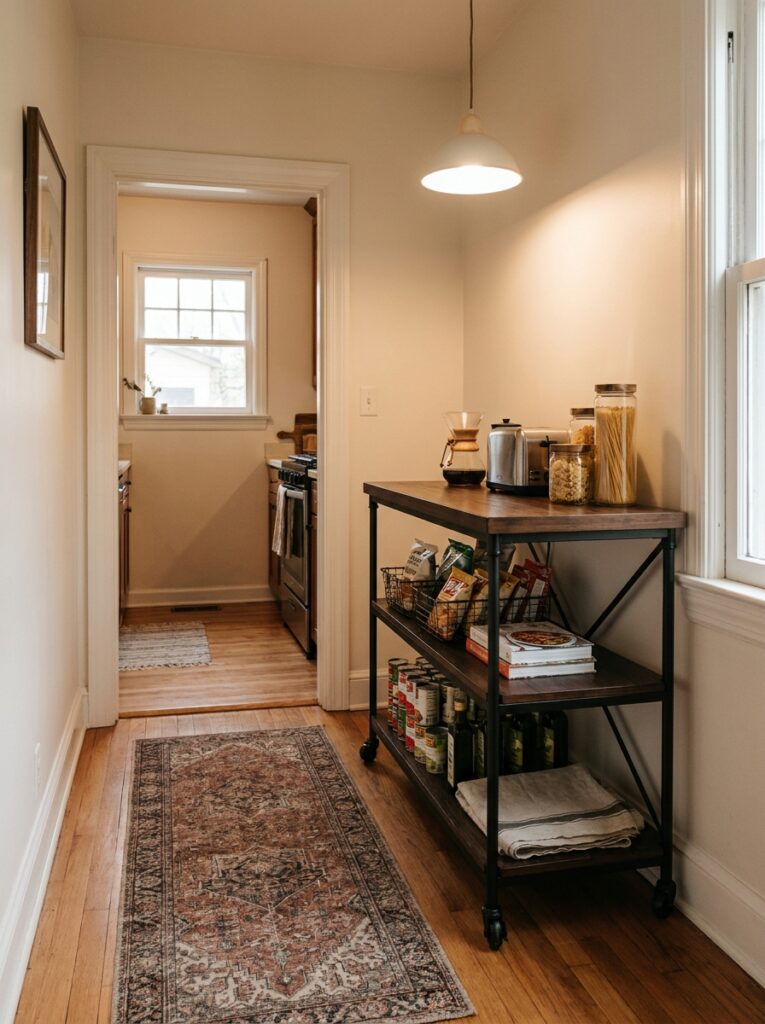
Here is something people forget. Your kitchen storage does not have to live inside the kitchen. When cabinet space is truly gone, the rooms around it can help.
A nearby hallway, a corner of the dining area, or even a closet can hold a small bookshelf or storage cart dedicated to kitchen overflow. Use it for appliances you only pull out occasionally, bulk pantry items, or party dishes.
A rolling kitchen cart is one of the smartest investments for a tiny space. It gives you extra counter, shelves, and sometimes a drawer or two, and you can move it wherever you need it. When guests come over, it doubles as a serving station.
Just keep the daily essentials in the kitchen itself. The point is to relocate what you rarely use, not to make your morning coffee a scavenger hunt.
Practical Tips That Make a Real Difference
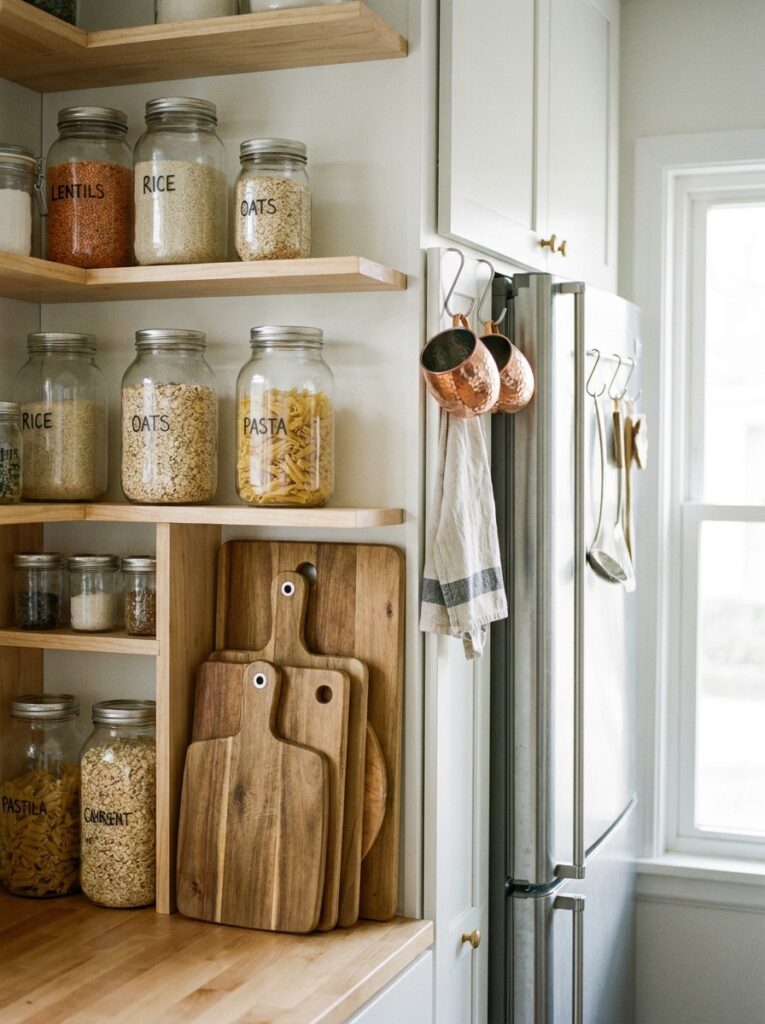
Small changes add up fast in a tiny kitchen. These are the habits and tricks that kept my own cramped spaces functional.
- Use clear containers for dry goods so you can see what you have at a glance and stack them neatly.
- Label shelves and bins, especially in shared spaces, so everything has a clear home and stays that way.
- Keep a small “use it or lose it” box. When something sits unused for a month, it leaves the kitchen.
- Store flat items vertically. Cutting boards, sheet pans, and lids take up far less room standing up than lying down.
- Hang a magnetic timer or a few hooks on the fridge to use that vertical metal surface fully.
The biggest tip of all is to maintain it. A tiny kitchen falls back into chaos faster than a large one, so a quick five-minute reset each evening keeps your system working.
Common Mistakes to Avoid
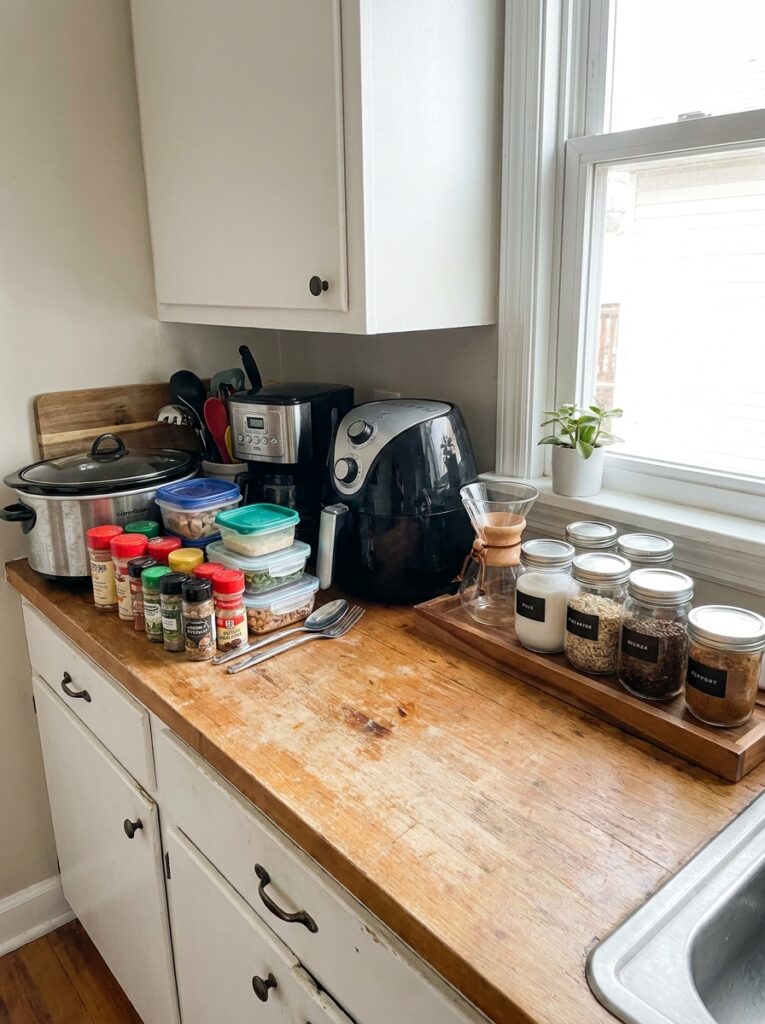
Even with the best intentions, it is easy to make a small kitchen feel worse. Watch out for these traps.
The first mistake is buying organizers before measuring and planning. Bins that do not fit just become clutter themselves, which is the opposite of what you want.
Another common error is overstuffing every surface. When every inch is packed, the kitchen feels stressful and nothing is easy to grab. Leave a little breathing room, even when space is tight. Empty space is not wasted space in a small kitchen.
People also tend to store heavy or frequently used items in hard-to-reach spots. If you have to move three things to get your everyday pan, you will stop putting it back, and the system collapses. Keep daily items easy to reach and save the high shelves for rarely used pieces.
Finally, do not ignore the items hiding in the back. Out of sight quickly becomes forgotten, and you end up with duplicate buys and expired food taking up room you cannot spare.
Expert Insights on Long-Term Small Kitchen Living
Professional organizers often repeat one idea that applies perfectly here. Storage should match how you actually live, not how you wish you lived. If you cook simple meals, do not build an elaborate baking station you will never use. Design your kitchen around your real routine.
Another insight worth remembering is the value of zones. Even in a tiny kitchen, creating a small prep zone, a cooking zone, and a cleaning zone helps everything flow. Keep the tools for each task near where you do that task. Your knives and cutting board near the prep area, your pot holders near the stove, your sponge near the sink.
Experienced small-space dwellers also swear by the rule of returning items immediately. In a big kitchen you can let dishes pile up for a while. In a tiny one, a single dirty pot can shut down your entire counter. Cleaning as you go is not just tidy, it is survival.
Lastly, accept that your system will evolve. The setup that works in winter when you cook hearty meals may shift in summer. Stay flexible and adjust as your habits change rather than forcing an old system to fit a new routine.
Frequently Asked Questions
How do I store pots and pans without cabinets?
Hang them on a pegboard, a wall-mounted rail, or a ceiling-mounted pot rack. Nesting cookware sets are also a great option because they collapse into a single stack and fit almost anywhere.
What is the best way to store spices in a tiny kitchen?
Magnetic spice tins on the fridge or a metal strip work wonderfully, as do narrow wall-mounted spice shelves near the stove. A tension rod with small hanging containers can also create a tidy spice rack on an empty wall.
Where do I put a microwave or small appliances with no counter space?
Mount a sturdy shelf for the microwave or place it on a rolling cart. Appliances you use rarely should be stored outside the kitchen and brought in only when needed.
How can I make a small kitchen feel less cramped?
Keep counters as clear as possible, use vertical storage so the floor and surfaces stay open, and avoid overstuffing. A little visual breathing room makes the whole space feel calmer and larger.
Is it worth using the space outside the kitchen for storage?
Absolutely. A nearby cart, shelf, or closet can hold overflow items and occasional-use appliances, freeing up your limited kitchen space for the things you reach for every day.
Conclusion
Organizing a tiny kitchen with zero cabinet space is not about cramming more into a small room. It is about being intentional with every surface, wall, door, and gap you have. Once you start seeing your walls as storage and your doors as shelves, the whole space opens up in ways that feel almost surprising.
Start small. Pick one wall to go vertical, clear out the duplicates you do not need, and add a cart or pegboard where it makes sense. Each change builds on the last, and before long your tiny kitchen will feel far more functional than its size suggests. The space you have is enough. You just have to use it well.