Affordable Thanksgiving Table Decor: Beautiful Ideas on Any Budget
Affordable Thanksgiving Table Decor: Getting the Most From What You Spend
The most beautifully decorated Thanksgiving tables are rarely the most expensive ones. What makes a table feel prepared and welcoming is intention, not budget size. A handful of elements chosen and placed with care will beat a table covered in every seasonal item from the nearest home store.
This guide looks at Thanksgiving table decor from the budget side. It identifies the decisions that deliver the most visible change for the least cost. Each idea uses accessible, affordable materials that most households can source without a special shopping trip.
A Trio of Pumpkins on a Wooden Board: More Impressive Than Its Cost Suggests
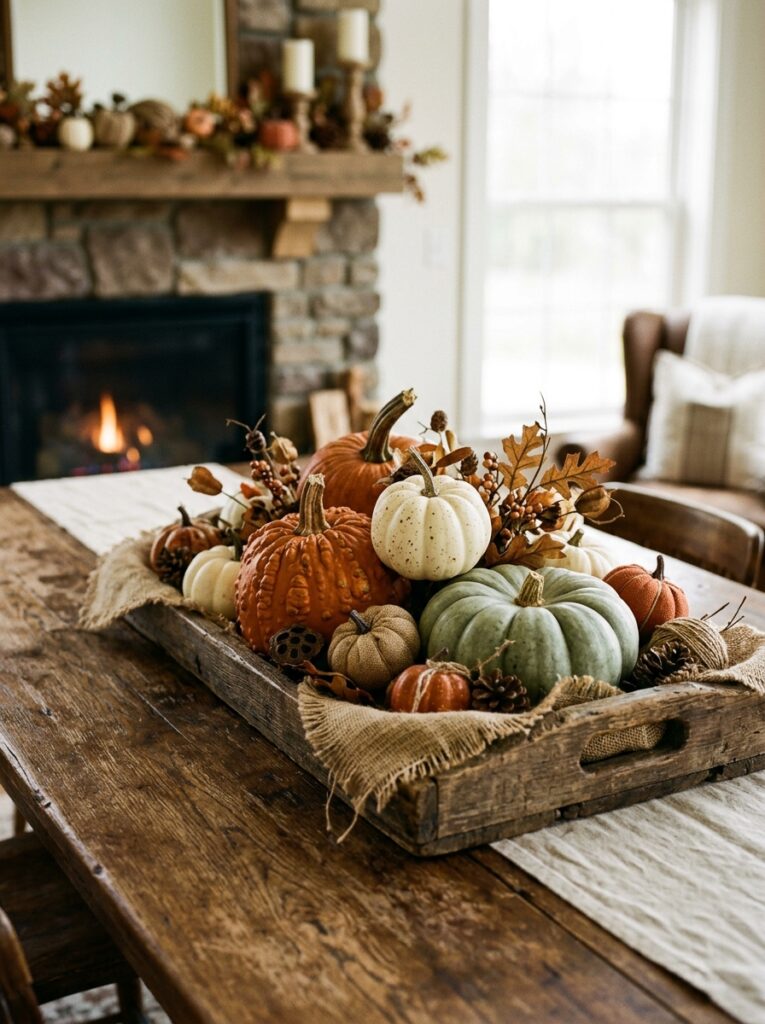
Three pumpkins of different sizes on a flat wooden board look far more designed than the cost suggests. The board does two jobs at once. It contains the arrangement inside a clear visual boundary. It also adds the natural warmth that pumpkins on a bare tablecloth cannot provide.
Use one large, one medium and one small pumpkin. That size variation is what makes any grouping read as composed rather than casually placed. Mixing a traditional orange with a white and a small buff or green variety adds colour interest. A few sprigs of dried eucalyptus tucked in at the base finish the arrangement. They cost very little and improve the result noticeably.
A Linen Tablecloth in a Single Warm Neutral: The Foundation That Makes Everything Else Work
The tablecloth covers more surface than anything else you put out. That alone makes it the most influential choice on the table. Plain white can look clinical under warm autumn light. A busy print competes with every object placed on top of it. A single warm neutral avoids both problems.
Oatmeal, cream, warm grey and soft sand all work well. Linen suits the season because its texture belongs to the same material world as pumpkins, wood and dried stems. It also needs no ironing, since creases in linen read as relaxed rather than careless. Measure before buying. Allow roughly 25 to 30 cm of overhang on each side. Longer than that sits in laps, and shorter looks undersized. If the table itself is handsome, consider a runner instead of full coverage. That question is easier to answer once you know how the surface behaves, which is worth weighing when choosing between a wood or glass dining table.
One Pumpkin Per Seat as a Personalized Welcome: Simple Hospitality That Guests Notice
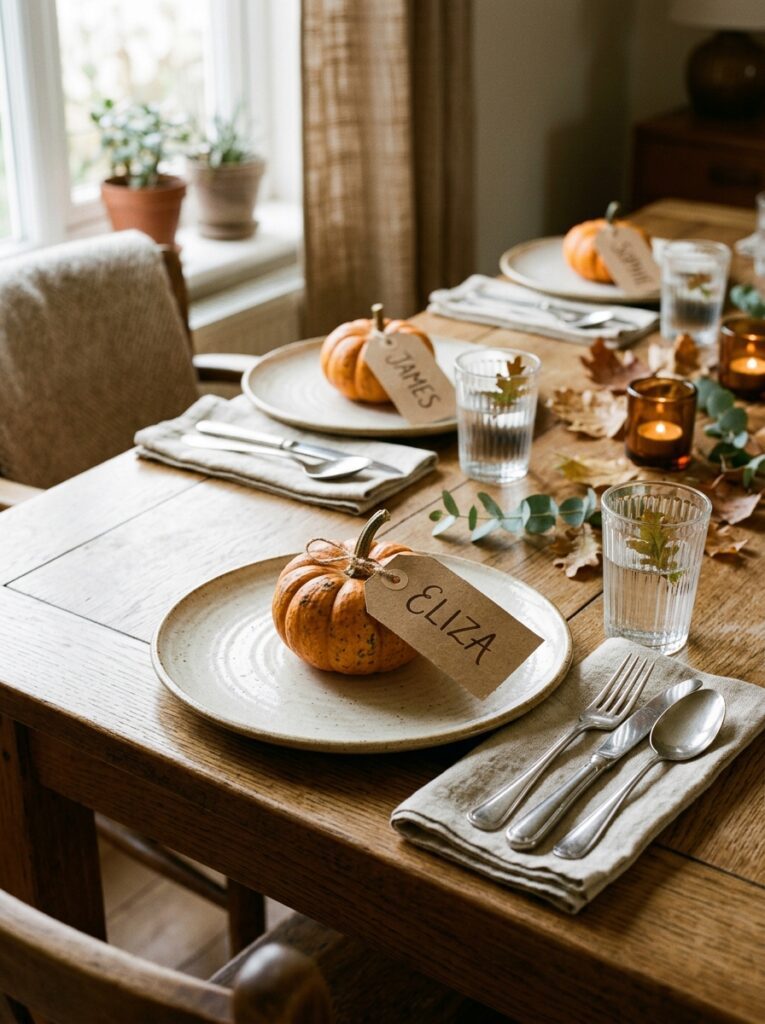
Place one small pumpkin at each seat with the guest’s name on a small folded card beside it. This is the detail guests mention afterward. It signals individual attention in a way a shared centerpiece cannot. Each person can see that their place was prepared for them specifically.
Small ornamental pumpkins cost very little each. Writing the names and setting them out takes under fifteen minutes for a table of eight to ten. Guests can take their pumpkin home afterward as a keepsake. That makes this the cheapest idea here with the longest afterlife. A gold paint pen or white chalk marker writes directly on the pumpkin skin and removes the need for separate place cards.
A Dried Grain Runner Down the Center: Natural Beauty at Almost No Cost
Dried wheat, barley and oat stems cost very little through autumn. Florists, garden centres and farm shops sell them by the bundle. Laid down the middle of the table, they read as harvest without requiring any styling skill at all.
Arrange the stems in loose, overlapping groups rather than a straight line. Alternate the direction the heads point. Keep the band around 20 cm wide so serving dishes still fit. Cutting the stems to slightly different lengths adds depth. Break the line every 30 cm with a small pumpkin, a gourd or a votive. One practical step first: shake the bundles outdoors, because dried grain sheds a surprising amount of chaff indoors.
Candles at Three Heights in the Center: The Quickest Way to Create Evening Atmosphere
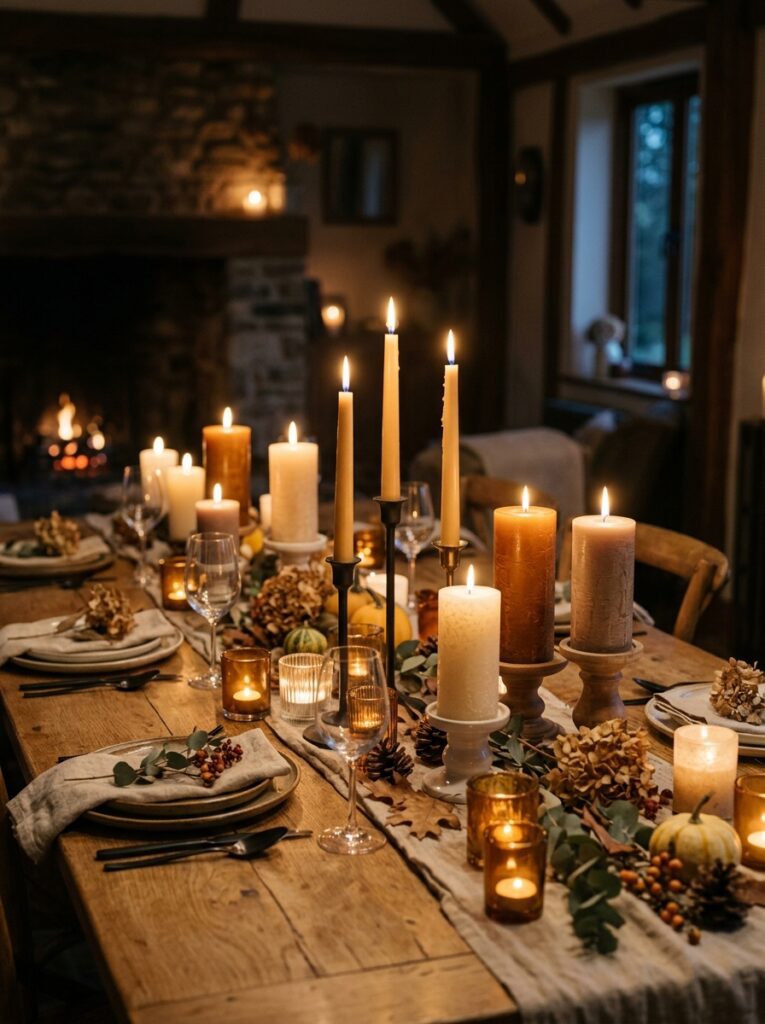
Three candles of clearly different heights make the fastest improvement to an evening table. The height variation creates movement and depth in the centre. Warm flickering light after dark also flatters every other element on the table. Overhead lighting never does the same.
A tall taper, a medium pillar and a small votive is the reliable combination. Neutral colours in white, cream and warm amber suit Thanksgiving best. Strongly coloured candles compete with the seasonal elements around them. LED versions in the same shapes give the same atmosphere with no fire risk. Grouping all three on a small plate or mirrored tile catches wax drips and contains the arrangement visually.
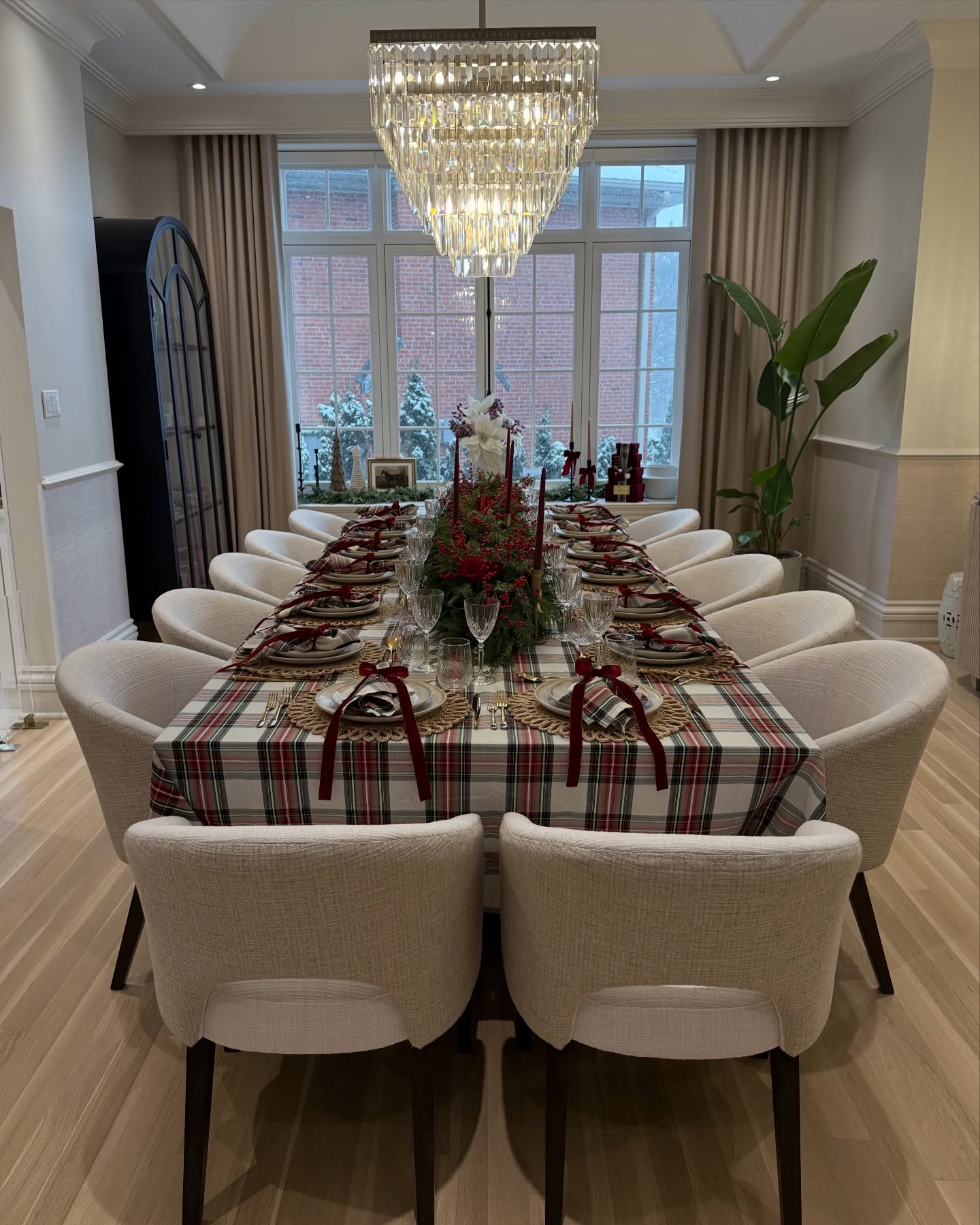
A Plaid Runner Over a Plain Cloth: Pattern Without Complexity
A plaid runner carries the seasonal pattern on its own. Everything else can then stay plain. Existing white plates, clear glasses and neutral napkins all still work. No new dishware is needed for the table to look finished.
Rust and cream, dark green and gold, deep red and natural: each reads as autumn immediately. Width is the detail most people get wrong. Aim for roughly one third of the table’s width. Any wider and the runner starts to look like a second tablecloth. Cotton and wool blends drape better than stiff polyester. Press out the fold lines with a warm iron before laying it down. Setting the plates over the ends, or a centrepiece on top, stops it sliding during the meal.
White and Cream Pumpkins with Dark Foliage: The Contemporary Alternative to Orange
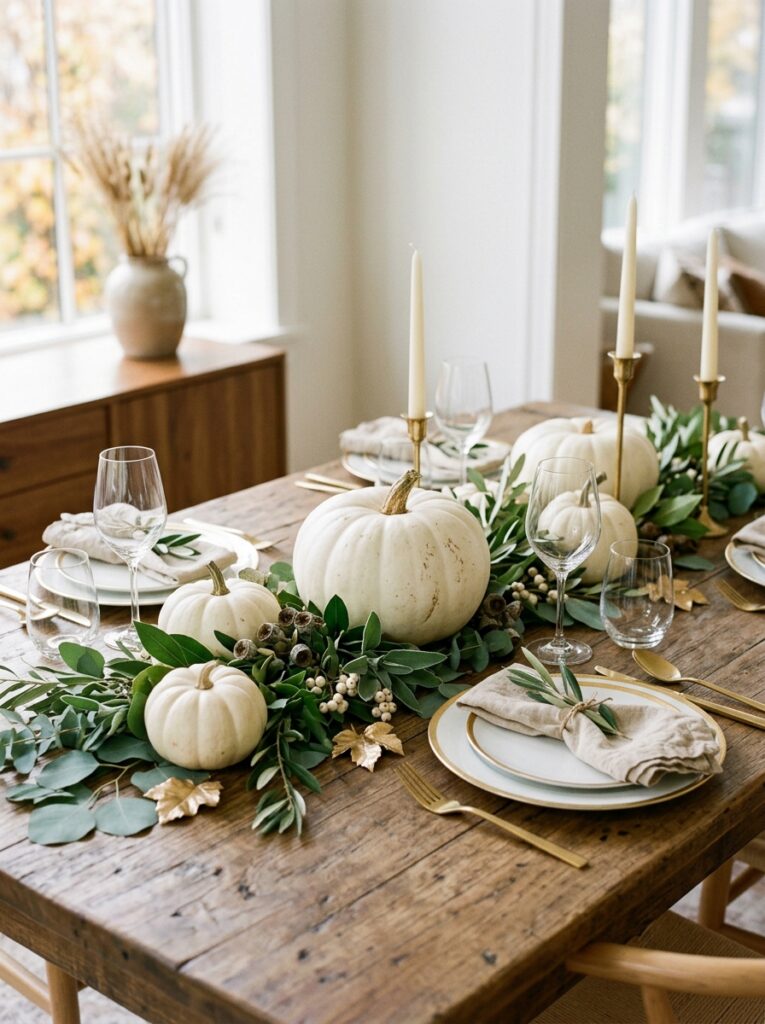
White and cream pumpkins grouped with dark green eucalyptus, deep burgundy berries or forest-toned foliage look specifically contemporary. The combination also photographs well in warm autumn light. Pale pumpkins against darker botanicals create a contrast that orange groupings cannot match. Orange and dark foliage simply sit closer together in tone.
This suits homes that lean neutral, contemporary or Scandinavian in style. In those rooms, traditional Thanksgiving orange can feel out of character. It also works where the dishware is strongly coloured. Neutral pumpkins let the plates and glasses stay the most active element at each setting. Nothing on the table ends up fighting for the same attention.
Fresh or Preserved Eucalyptus Laid Loosely as a Green Base: Organic Texture That Ties Everything Together
Loose eucalyptus stems work as a base layer for everything else. Candles, pumpkins and jars sit directly on top of them. The green also cools the orange and buff tones nearby. Fresh stems release a light scent as the room warms up.
Fresh eucalyptus holds its condition for about three days indoors. Cut the stem ends at an angle and stand them in water overnight before laying them out. Preserved stems keep their colour for years and store flat in a box. Both cost far less per stem than cut flowers. Preserving your own is straightforward too, and the glycerin method for foliage is explained clearly in Clemson Extension’s guide to drying and preserving flowers. Strip any leaves that would otherwise touch plates or food.
Mason Jars as Candle Holders and Vases: The Most Versatile Budget Table Vessel
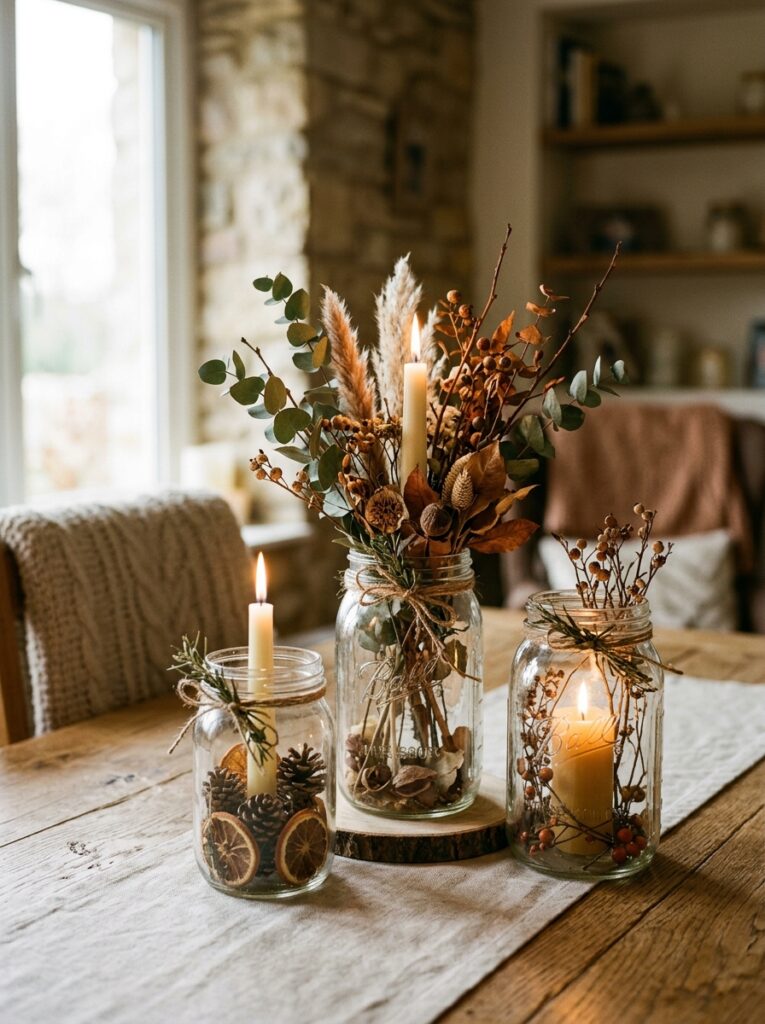
Mason jars cover more jobs than any other single item on the table. The same vessel holds a candle, a few dried stems or a cluster of grain. It works as a utensil holder for a buffet-style meal. It can also display small seasonal objects. One purchase covers several table needs at once.
Vary the sizes, from wide-mouthed quart jars down to small jelly jars. That range gives the grouping proportion instead of a row of identical shapes. Fill the bases before adding candles or stems. Dried cranberries, seed pods, autumn-toned sand or small stones all work. The weight stops jars tipping and adds interest at the base. Mason jars are cheap, easy to find, and reusable every following year.
A Wooden Charger Beneath Each Plate: The Single Setting Upgrade Worth Prioritizing
A charger sits beneath the dinner plate at each seat. It gives the setting a defined edge and a warm foundation. The difference is visible the moment guests sit down. Plain everyday plates look considerably better framed this way.
Wooden chargers appear in home stores and online at modest prices through autumn. A set of eight costs a fraction of new seasonal dishware. Grain variation between pieces is an advantage rather than a fault. Slight tonal differences read as organic, not mismatched. Check two things before buying. Look for a diameter of 33 cm or more, so the dinner plate is fully framed. Look also for a sealed or oiled finish that wipes clean. Wipe them rather than soaking, and store them flat with cloth between each one.
Burlap Runner with Simple Linen Napkins: Two Textures That Belong Together
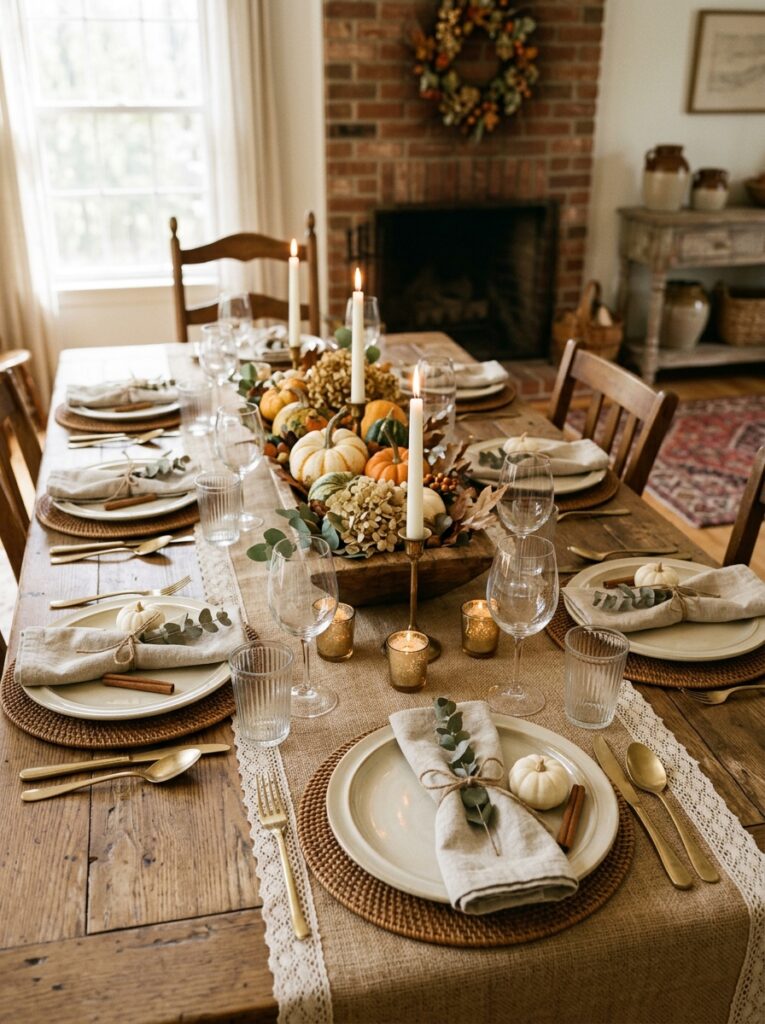
A burlap runner and plain linen napkins complement each other for a specific reason. Burlap has a rough open weave, and linen a softer closed one. The contrast creates interest, while both belong to the same natural material family. The result looks considered without the formality of matched sets.
Tying each napkin with a loop of natural twine adds a finishing detail that reads as deliberate. Tuck a single sprig under the twine as well. Dried lavender, a rosemary stem or a pressed leaf all suit the season. The cost is nothing if the twine is already in the house. The effect is far more composed than a napkin folded flat on the plate.
Gourds and Candlesticks in a Neutral Palette: Calm and Considered Together
Neutral gourds, small cream pumpkins and candlesticks in coordinating materials make a calm centre. Terracotta, bare wood and bone-coloured ceramic all belong to the same tonal family. The group supports the table rather than competing with the food. It also suits rooms with warm existing finishes, such as a kitchen built around terracotta tile.
Keep the whole arrangement below eye level, around 30 cm at most. Guests need to see each other across the table. Odd numbers of objects group more comfortably than even ones. Vary the heights, then keep the colours close together. Open flames need real attention at a crowded table. Keep candles well clear of anything that can burn and follow NFPA guidance on candle safety. Flameless candles remove that concern completely.
Autumn Leaves as the Table Runner: Free, Seasonal, and Instantly Beautiful
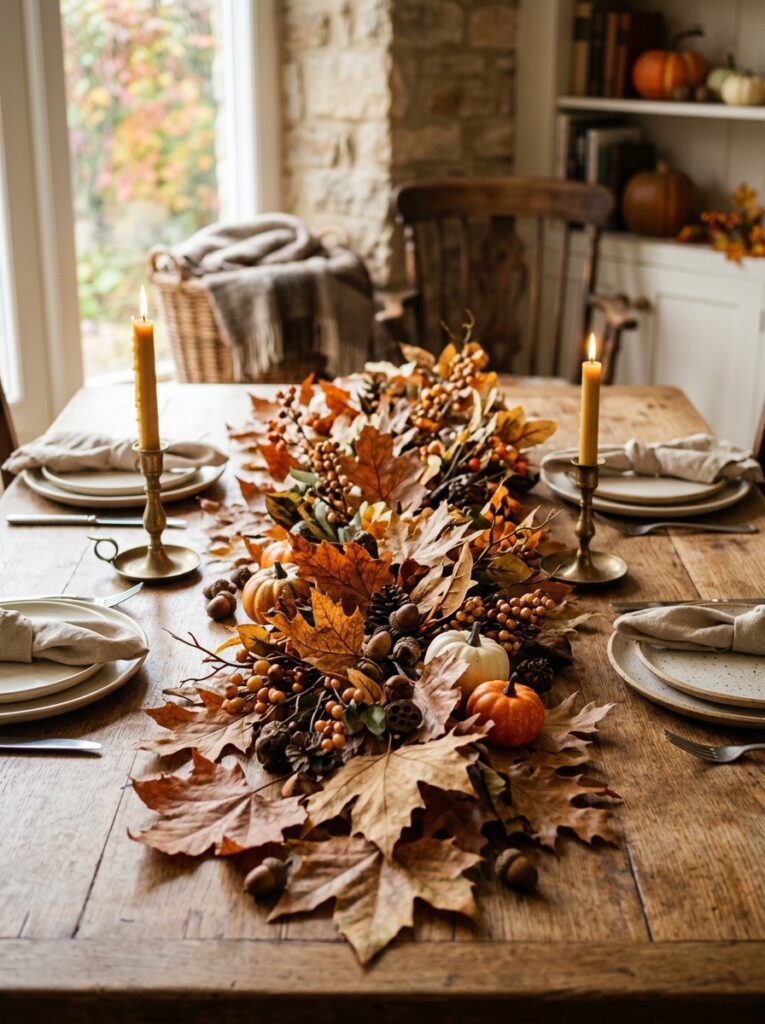
Collect autumn leaves from the garden or a local park in the week before Thanksgiving. Scattered loosely down the centre of the table, they are the most literally seasonal decoration available. The material is the season itself rather than a copy of it. Real leaves also carry the full autumn range, from deep burgundy through orange, amber and gold.
Press the leaves between heavy books for a few days first. Pressed leaves lie flat instead of curling on the table. A light spray of hairspray or clear varnish preserves them without much colour change. Add small pumpkins, votives and a few candles among them. Those pieces give height to what is otherwise a flat surface. Excluding the pumpkins and candles most hosts buy anyway, this centerpiece costs nothing.
Unmatched Wooden Elements Throughout the Setting: Natural Cohesion Without Matching Sets
Wood forgives mismatching better than any other material. A serving board, a small tray and a set of chargers can each be a different tone. The material itself connects them. Nobody reads the result as inconsistent. That makes it ideal for a table assembled from pieces bought at different times and different prices.
Keep one thing consistent: the finish. Oiled and matte pieces sit together comfortably. A single high-gloss item will stand out against them. Sand any rough edge lightly before the meal so nothing catches on linen. Wipe wooden pieces rather than washing them, then dry them straight away. Keep hot serving dishes on trivets instead of directly on decorative wood.
Simple Corn Husk Bundles Tied with Twine: The Most Authentically Harvest Centerpiece Available
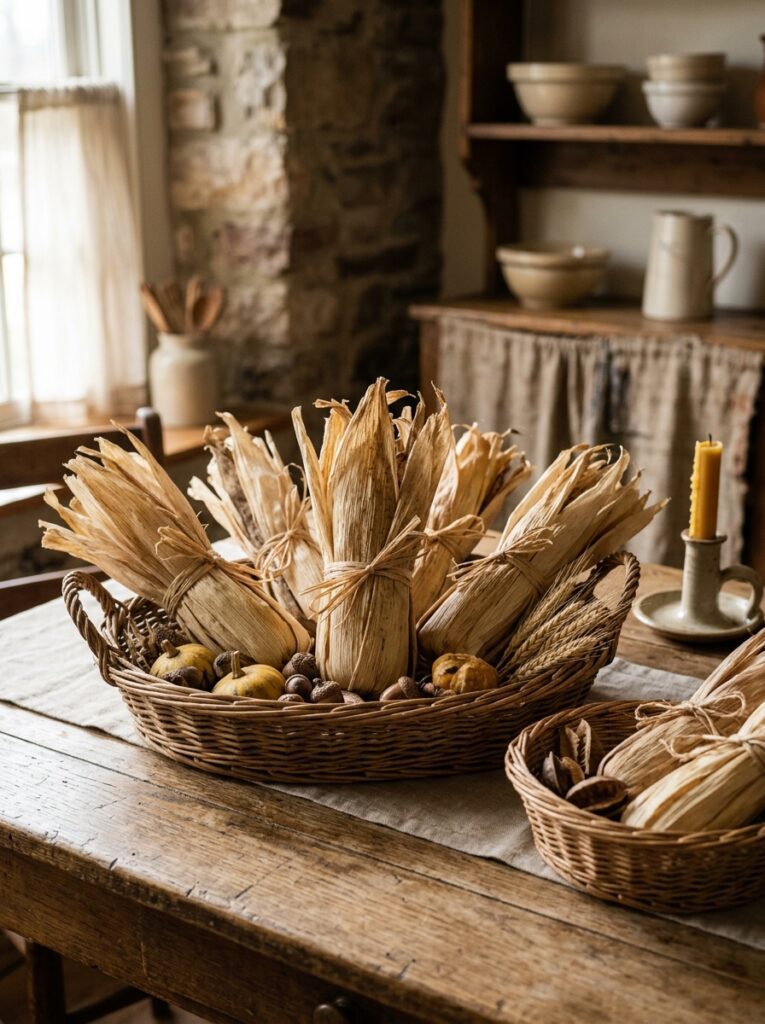
Dried corn husks tied with natural twine are the most directly harvest-connected element here. Their origin is agricultural rather than decorative. They are what remains after the harvest of the crop that feeds the meal itself. That gives them an authenticity purchased decorations cannot match.
Stand small bundles upright in a terracotta pot, lay them flat on a wooden tray, or prop them against a taller piece. Each version reads as traditional and honest. Farm suppliers and garden centres sell them for almost nothing through autumn. Combined with pumpkins, dried grain and a candle or two, they complete a centerpiece rooted in harvest tradition rather than retail trend.
The Budget Table Decor Principle: Three Elements Done Well Beat Fifteen Elements Done Cheaply
Every table in this guide works for the same reason. Fewer, better-chosen elements produce a stronger result than a surface covered in everything seasonal the budget allowed.
Take three elements chosen to work together: a linen tablecloth, a pumpkin grouping on a wooden board, and three candles at different heights. That table looks more prepared and more welcoming than fifteen scattered inexpensive items. Choosing less and arranging it carefully is the budget skill that delivers the most for the least. It also produces the most timeless result, whatever the trend cycle happens to be that year.