TV Wall Decor Ideas: Modern Stylish Living Room Setup 2026
The television wall gets more daily attention than almost any other surface in the house, yet it is usually the last thing anyone actually designs around. Most setups start and end with a screen on a blank wall and a media unit pushed underneath it.
The best living rooms in 2026 treat that wall as a real design opportunity, whether the space is a small apartment or a wide open-plan room. This guide runs through the full range of options, from major built-in projects down to changes that take an afternoon, and it pairs naturally with the ideas in our cozy living room guide if warmth matters to you more than the screen itself.
Built-In TV Wall Units: Clean, Integrated, and Timeless
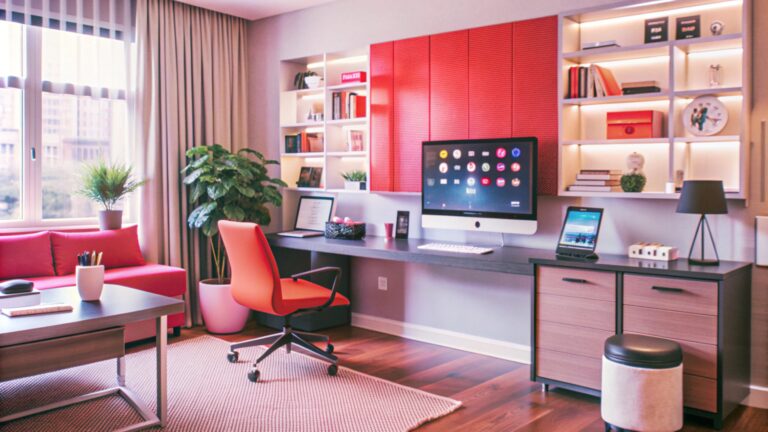
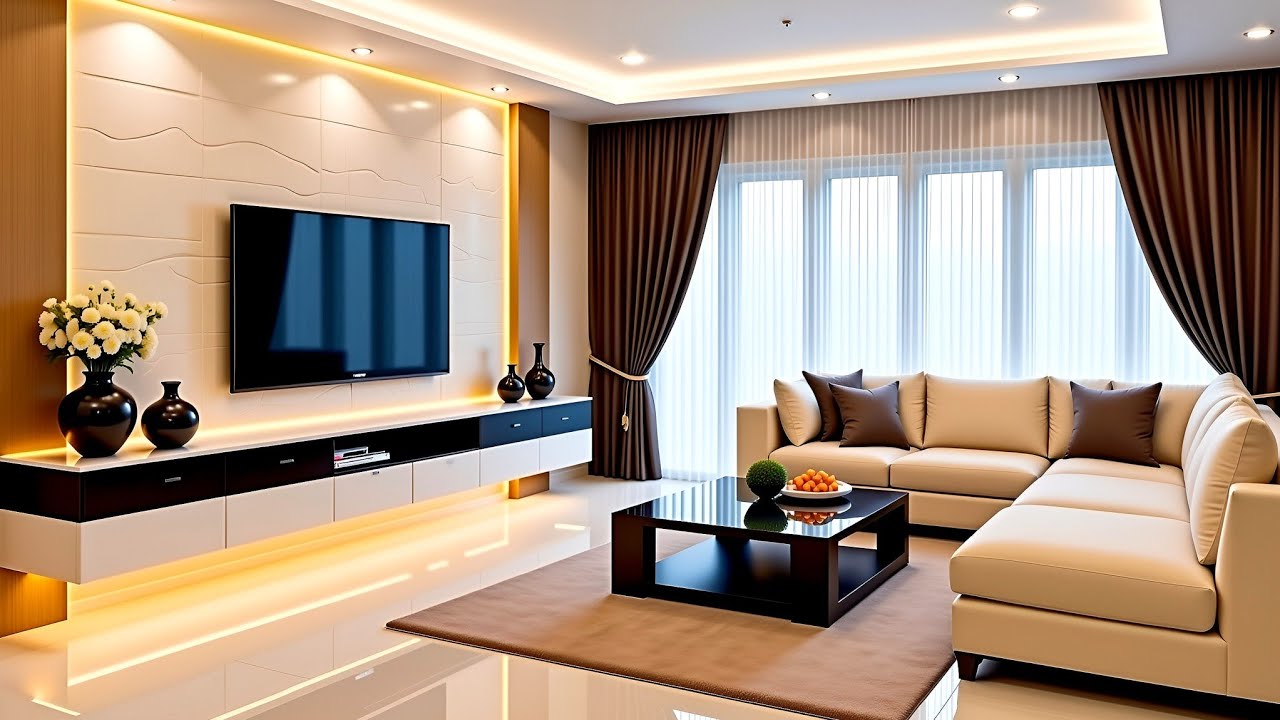
Built-in units remain one of the most refined options available in 2026. The screen sits flush inside custom cabinetry, flanked by shelving and closed storage that work together as one composition instead of a collection of separate furniture pieces.
Tall side cabinets hide the clutter while open shelves hold books, plants, and objects that keep the whole thing from feeling corporate. Matte or natural wood finishes read warmer than gloss, and accent lighting tucked inside the cabinetry adds a sense of depth that a flat media unit cannot match.
If there is room in the budget for one significant living room investment, a custom built-in delivers the strongest and longest-lasting return of anything on this list.
Accent Wall Behind the TV: Bold Backdrop with Real Depth
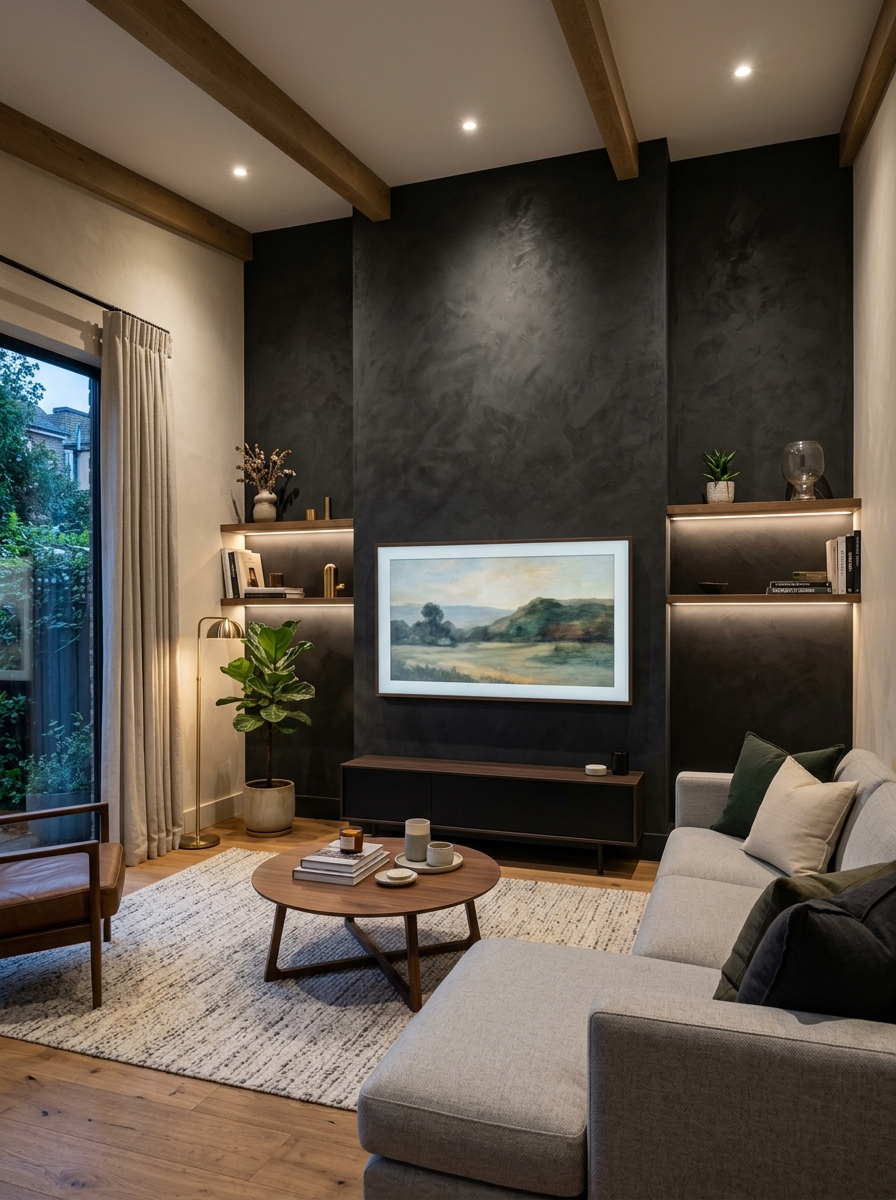
A deliberate accent wall directly behind the television is one of the most transformative changes available without any structural work. Dark paint, textured plaster, or bold wallpaper gives the screen a real backdrop instead of a default one.
Deep, moody tones work particularly well in open-plan rooms, where the TV wall needs to visually anchor the space without a physical divider. The same thinking runs through the accent wall ideas we’ve covered for bedrooms — one deliberate surface, done with intent, consistently outperforms several timid ones.
Wood Slat TV Wall Panel: Warm Texture with Modern Lines
Vertical wood slats behind the television are one of the defining TV wall trends of 2026, showing up everywhere from Japandi interiors to fully contemporary ones. The repeating lines add rhythm without leaning on color or pattern to do the work.
Soft LED lighting integrated between the slats changes the wall’s whole character between daylight and evening. It also happens to be one of the more realistic weekend DIY projects on this list for anyone comfortable with basic tools.
Gallery Wall Around the TV: Art Meets Entertainment

Wrapping the television inside a gallery arrangement makes the screen feel far less dominant, treating it as one element in a bigger composition rather than the single thing the room revolves around.
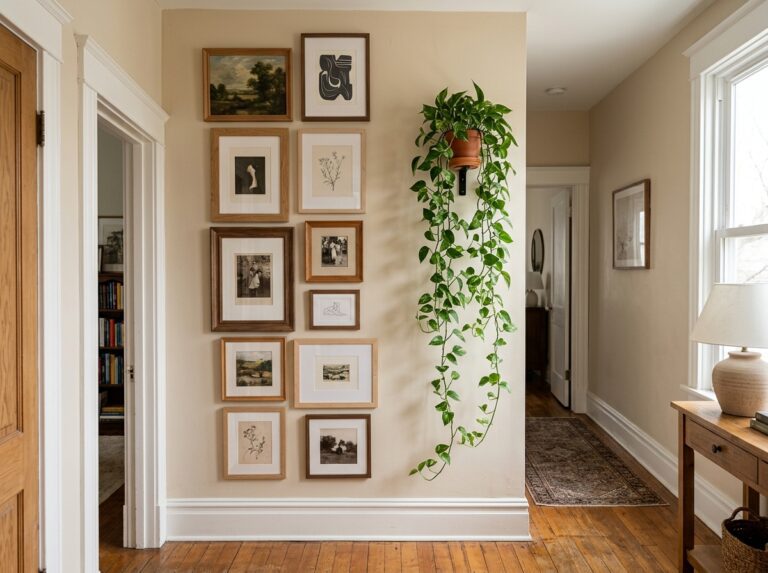
Mixing frame sizes and leaving deliberate negative space is what makes a gallery wall feel collected over time instead of bought in one trip — our full breakdown of gallery wall layouts goes further into spacing and frame mixing if this is the direction you are leaning. Frame TVs that display art when switched off suit this approach especially well, since the screen disappears into the arrangement rather than sitting as a dark rectangle in the middle of it.
Japandi Style TV Wall: Calm, Minimal, and Purposeful
The Japandi approach blends Scandinavian minimalism with Japanese restraint, and it produces a TV wall that feels calm rather than decorated for effect. Light wood panelling, a low media console, and a tightly limited palette define the look without a single unnecessary object.
Linen or bamboo textures on cushions and baskets keep it from tipping into clinical, and mounting the television low on the wall maintains the grounded, horizontal feel the style is known for. It is a particularly good fit for smaller apartments, where visual simplicity does more to open up a room than extra decoration ever could.
Fireplace and TV Combined Wall: Cosy Meets Contemporary
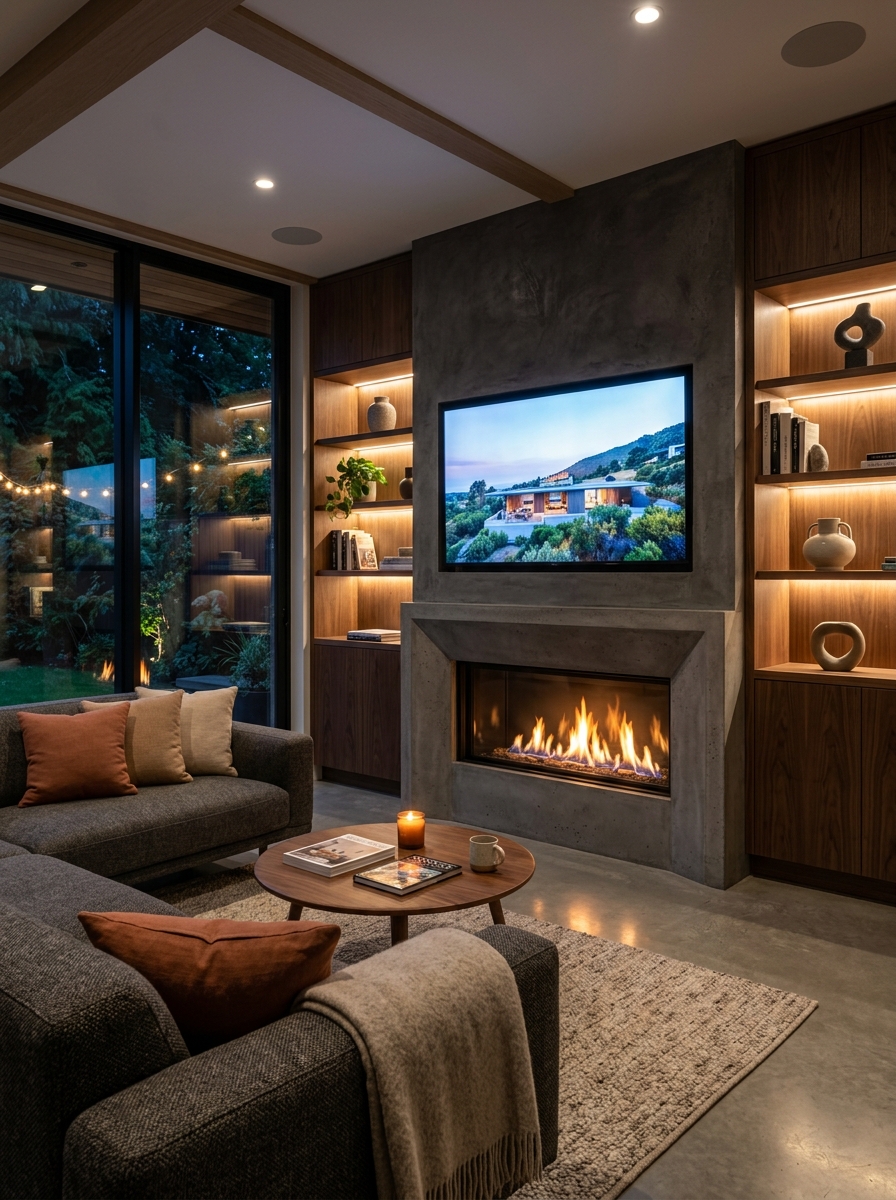
Combining a fireplace and television on one feature wall is one of the most requested living room layouts, and 2026’s version leans into clean stone, concrete, or tile surrounds rather than anything overly rustic.
The screen usually sits directly above the fireplace or offset to one side, tied together with shelving or cabinetry. Heat is worth planning for early — a television mounted too close to an active fireplace can suffer real long-term damage — and an electric insert sidesteps the issue completely while still giving the same evening glow.
Mirrored TV Backdrop: Reflective Surface for Smaller Rooms
A mirrored backdrop is a smart move for a living room that needs to feel larger or brighter without any construction. Reflective surfaces bounce daylight around the room and make even a compact space feel noticeably more open.
With the television off, the mirror absorbs the dark screen into its own reflection, which softens how much the technology dominates the wall. Gold or bronze framing around the panel adds a further sense of intention without needing any extra decoration nearby.
Floor-to-Ceiling Bookshelf TV Wall: Library Meets Media Hub

Building the television into a floor-to-ceiling shelving system turns the entertainment wall into a personal library at the same time. Books, plants, and framed photographs surround the screen and visually balance it on every side.
Cabinet lighting tucked into individual shelves gives the whole wall a layered quality that changes noticeably once the room dims in the evening. Keeping the color palette consistent across everything displayed is the one styling rule that stops this approach from tipping into chaos.
Curved TV Wall Design: Soft Lines for a Futuristic Feel
Curved and arched details are one of the strongest movements in 2026 interiors generally, and the TV wall is a natural place to apply the softening effect. Rounded shelving or a gently bowed backdrop panel does something a sharp rectangular wall simply cannot.
Warm tones and natural wood balance the modern curve so it does not feel experimental. It is an especially good fit for smaller rooms, where soft lines let the eye travel around the space instead of stopping abruptly at a hard corner.
Hidden TV Behind Sliding Panels: Clean When Off, Ready When On

Concealing the screen behind sliding or hinged panels suits anyone who wants the living room to feel technology-free when the television is not in use. Panels finished in wood, fabric, or printed artwork open on demand and close again once viewing is over.
This works particularly well in interiors where visual simplicity is a genuine priority rather than an afterthought. Renters who cannot make permanent changes can get a similar effect with a freestanding room divider positioned in front of the screen instead.
Smart LED Panel TV Wall: Tech-Forward Mood Lighting
Programmable LED panels around the screen or across the full wall shift color temperature and intensity to match the moment, from bright warm light for a gathering to deep ambient tones for a late film.
Bias lighting installed directly behind the television does more than look good. The American Academy of Ophthalmology notes that a screen much brighter than its surroundings makes the eyes work harder, and adjusting the room’s ambient light is one of the simplest ways to ease that strain during longer viewing sessions. If lighting is a bigger interest generally, our lighting decor guide covers the same principle applied to the rest of the home.
This kind of setup pairs naturally with a smart home system that already handles the room’s temperature and audio, since the lighting becomes just one more thing on the same schedule.
Console Table Styling Below the TV: Functional and Decorative

Styling the console beneath the television addresses the lower half of the wall that most people leave completely unconsidered, even after getting everything above it right.
A vase, a trailing plant, a small stack of books, and one sculptural lamp add warmth without cluttering the space — the same restraint that works on a coffee table applies just as well here. Cable management routed through the console or down the wall behind it finishes the look properly, rather than undoing it.
Stone and Textured Plaster TV Wall: Natural and Sculptural
Stone cladding or textured plaster gives the television wall a naturally warm, sculptural quality that no printed panel or painted surface can fully replicate. Natural stone’s tonal variation shifts subtly depending on the light throughout the day.
Textured plaster is the softer alternative, with a handcrafted feel that suits both contemporary and transitional rooms without committing fully to either. Both materials pair well with warm wood tones elsewhere in the room, and a television mounted flush against either one reads as grounded rather than dominant — which is the whole point of a well-executed TV wall.
Cable Management: The Detail That Makes or Breaks the Whole Setup
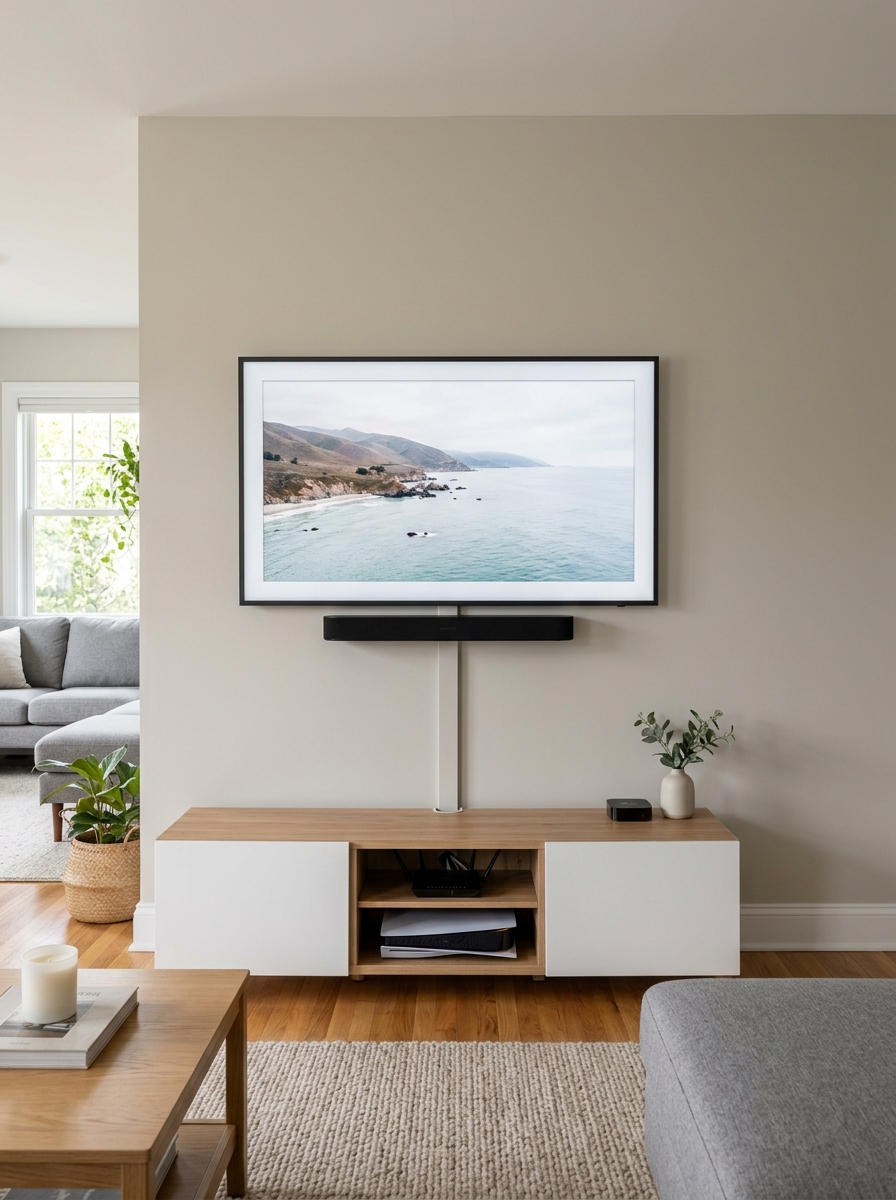
No TV wall idea reaches its full potential with cables running visibly down the wall or bunched behind the console. It is the most common finishing mistake, and the one that undoes the most effort spent everywhere else.
Paintable raceways finished to match the wall colour conceal wiring without permanent changes, which makes them a solid option for renters as well as owners. In-wall cable kits give the cleanest possible finish but are worth checking against a rental agreement first, and fabric cord covers are a reasonable middle ground for anything running behind furniture.
A media console with built-in cable channels solves most of this from the outset. Treat the cables as part of the initial plan rather than a problem to solve later, and the whole wall will look considerably more finished for it.