Smart Casual Blazer Outfits for Men: Modern Stylish Looks 2026
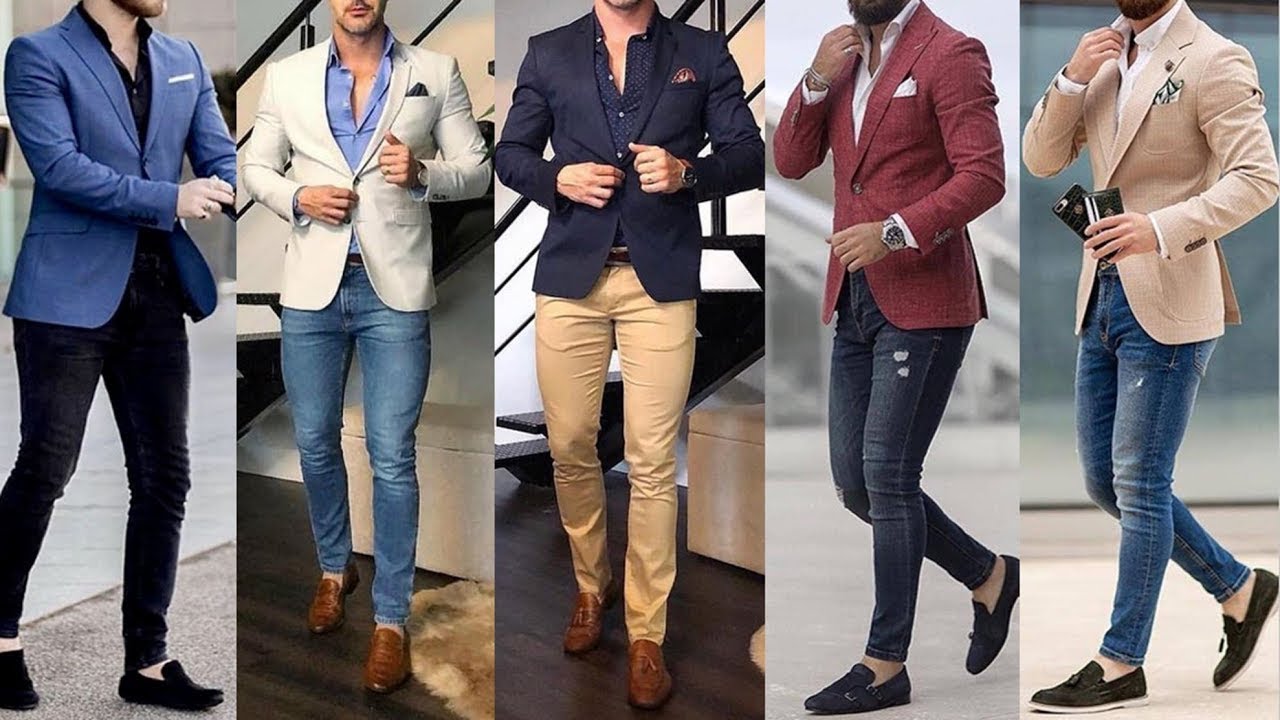
The blazer is the single most versatile piece in any man’s wardrobe. Nothing else sits so naturally between formal and casual dressing, and nothing else adds structure and intentionality to an outfit as quickly. Pull a well-fitted blazer over almost anything and the combination immediately reads as considered rather than accidental.
In 2026, unstructured blazers in soft fabrics and neutral shades dominate the smart casual category — the rigid shoulder pads and stiff linings of older blazer styles are gone, replaced by pieces that move naturally through a full day. Most modern dress codes now fall under smart casual territory, which is one reason mastering the blazer pays off across so many settings; our broader smart casual outfit ideas guide covers the dress code itself if the blazer isn’t the only piece in question. This guide covers every essential combination, color strategy, and styling principle worth knowing.
Blazer with White T-Shirt and Dark Jeans: The Easiest Formula
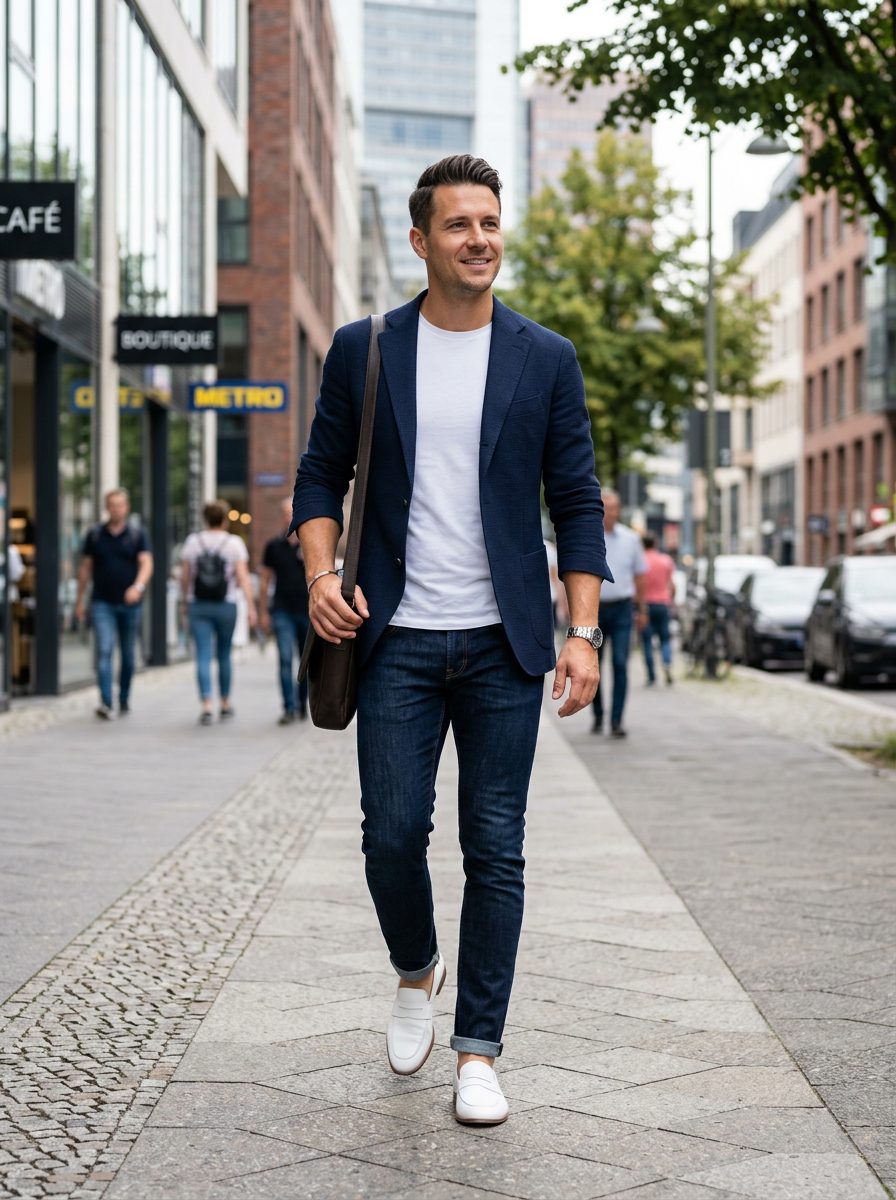
This is the combination every man should know by instinct. A blazer over a plain white tee with dark jeans removes almost all styling effort while still producing a result that looks genuinely put together.
The blazer adds structure while the white tee keeps everything relaxed. It suits dates, casual meetings, and social gatherings without adjustment between them. Choose a plain white tee with no graphics, and dark indigo or black jeans, which sit closer to the formal end of the denim spectrum than mid or light wash. Clean white leather sneakers or loafers both finish it well — and shoulder fit is worth getting right before anything else, since it’s the one element a tailor can’t fully correct after the fact.
Navy Blazer with Chinos: The Timeless Smart Casual Combination
Navy and chinos is the combination experienced dressers return to consistently, since it works every time without requiring much effort to assemble. Navy adds quiet authority while chinos in beige, sand, or olive bring relaxed warmth that balances the structured jacket above.
It suits professional environments, creative workplaces, and social occasions equally. Pair with a crisp white Oxford shirt for an office-appropriate result, or a quality knit polo for something more weekend-ready. Leather loafers or clean Derby shoes complete it naturally, and rolling the sleeves slightly adds an effortless edge that keeps the outfit from feeling too formal for its setting.
Blazer Over a Turtleneck: Sophisticated and Tie-Free
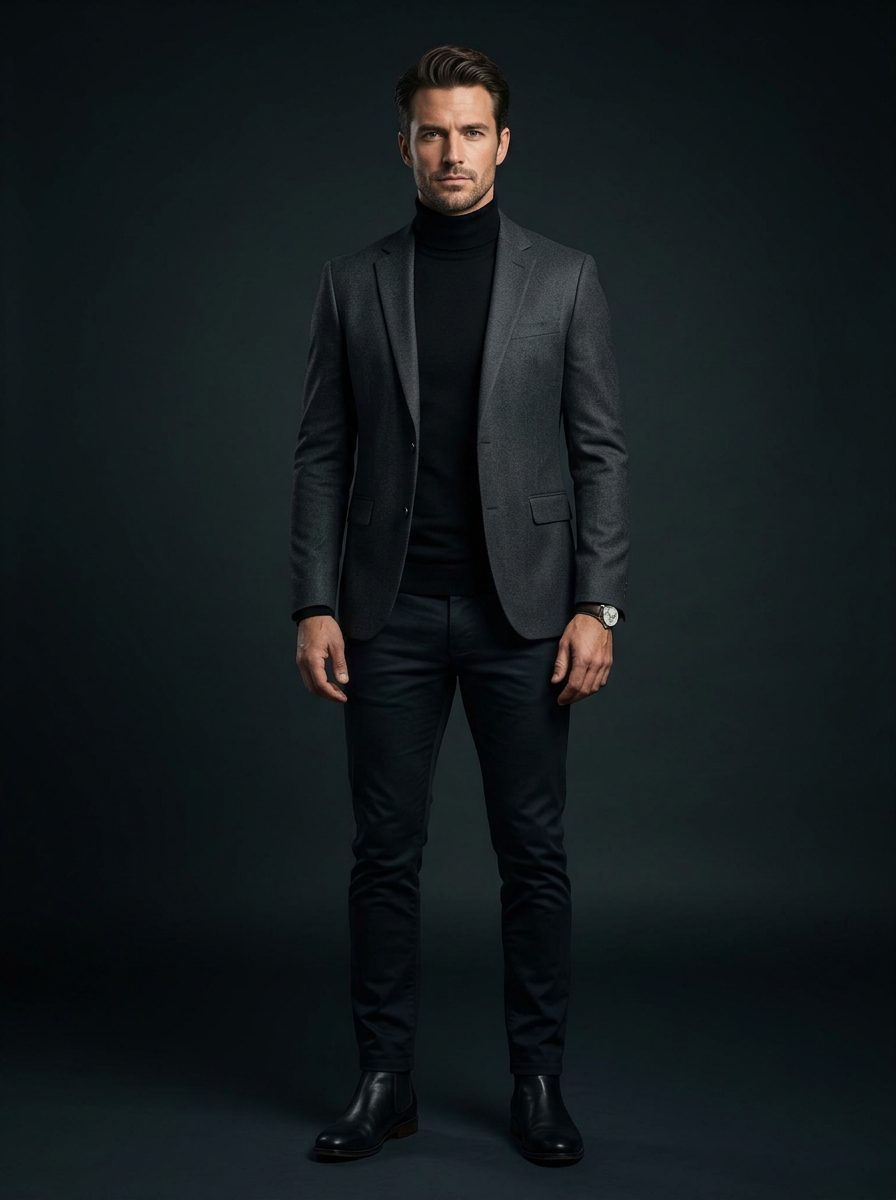
The blazer over a turtleneck is the most sophisticated tie-free combination available. The turtleneck replaces the shirt and tie entirely, creating a cleaner silhouette that suits creative offices and evening events with equal confidence — the same restrained aesthetic our old money style guide covers in more depth.
A navy or charcoal blazer over a black turtleneck with slim trousers looks effortlessly refined without visible effort in the assembly. This layered look earns its keep most during autumn and winter, when the extra warmth is genuinely useful rather than decorative. Pair with leather Chelsea boots or Oxford shoes, and keep accessories to a single quality watch — adding more risks disrupting the clean, controlled quality that makes the whole thing work.
Grey Blazer with Dark Trousers: Clean Contrast Done Right
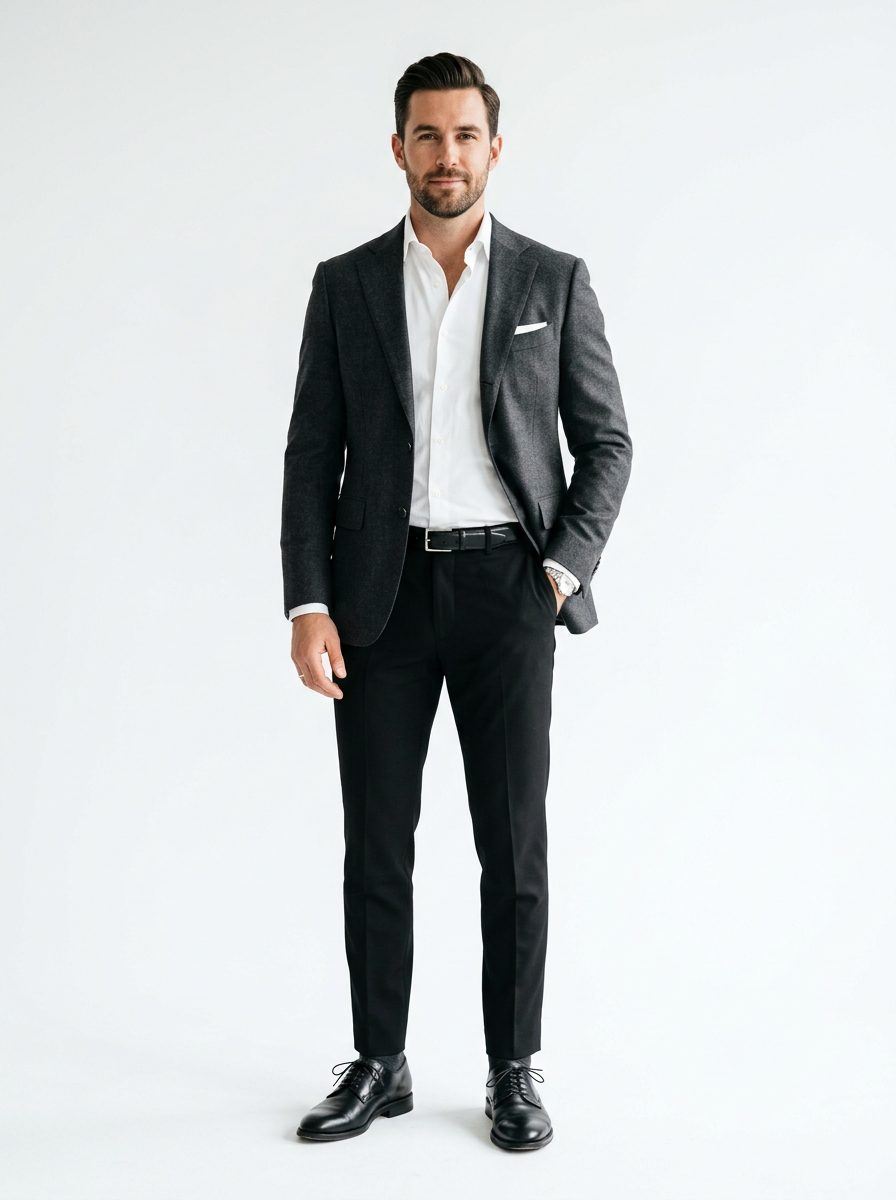
A grey blazer with dark trousers delivers a refined result through tonal contrast rather than color drama. The subtle difference between the grey jacket and the darker trouser reads as polished without any complexity in the assembly.
A useful starting point is roughly 75 percent dark tones to 25 percent light across the outfit — a charcoal blazer with black trousers and a white shirt hits that balance naturally. White, pale blue, and cream shirts all pair well with grey wool or cotton-blend blazers, and leather loafers or Derby shoes bring it together. This pairing never reads as trend-dependent, which means it looks just as appropriate next year as it does today.
Unstructured Blazer with Slim Jeans: Relaxed and Modern
The unstructured blazer with slim jeans is the most wearable smart casual combination in 2026. Unstructured blazers in cotton, linen, or soft wool feel comfortable through a full day while still providing the visual structure that separates smart casual from purely casual dressing.
It suits creative offices, casual Fridays, and relaxed social events where a fully structured blazer would feel like too much. Pair with a quality plain tee or an open-collar Oxford shirt, dark slim jeans, and clean white sneakers or loafers. Minimal or no branding on the blazer keeps it the most versatile and timeless — this is the version of the blazer that actually gets worn most often, since the unstructured fit never looks formally dated.
Blazer with a Knit Polo: The Weekend Smart Casual Favourite
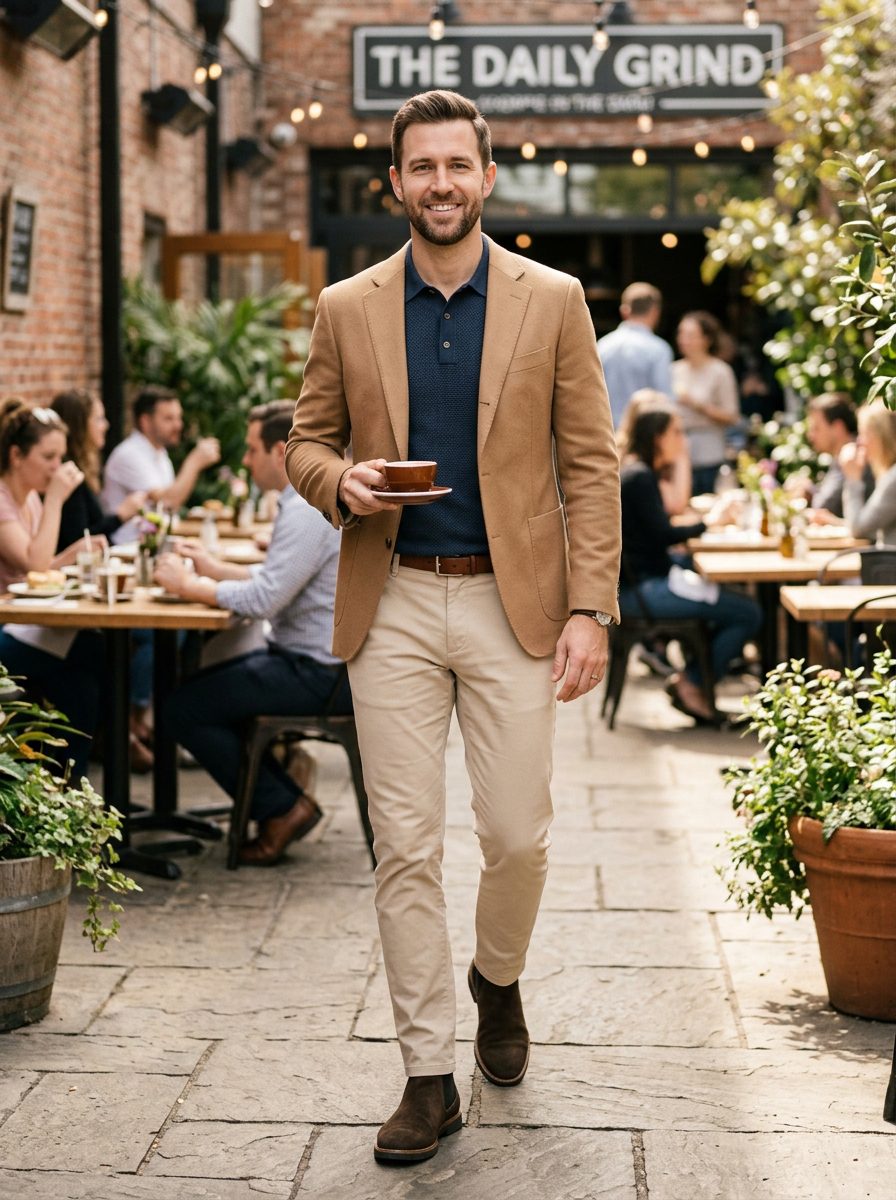
A blazer with a knit polo is one of the most effortlessly stylish combinations for relaxed weekend occasions. The knit polo adds visual texture a standard dress shirt can’t replicate, and the whole combination feels modern and quietly sharp at once.
A navy or earth-toned knit polo under a grey or camel blazer with clean chinos is a particularly strong arrangement, suited to casual dinners and weekend brunches. Loafers or suede Chelsea boots finish it without risking over-dressing — leave the polo collar neat and unfussy, and the outfit reads as intentional without any single element fighting for attention.
Blazer with Oxford Shirt and Chinos: The Office-Ready Classic
When a professional occasion calls for smart casual, the blazer over an Oxford shirt with chinos is the most reliable combination available — a close cousin to the shirt-focused pairings in our casual shirt outfits guide, just elevated with a jacket on top.
White and pale blue Oxford shirts are the most versatile choices here and work with navy, grey, or camel blazers alike. Match the belt to the shoe color for a cohesive finish, and leave the collar button open rather than fully buttoned to keep the look sitting in smart casual rather than pushing toward business formal.
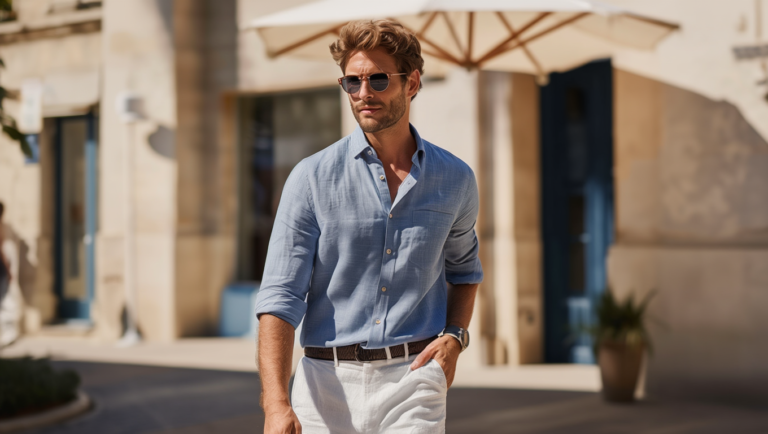
Blazer with a Linen Shirt: Effortless Summer Smart Casual

A blazer paired with a linen shirt is the summer solution for when every heavier option feels like too much. Linen’s natural texture adds depth that plain cotton can’t replicate, and a lightweight unstructured blazer over a relaxed linen shirt suits outdoor events and summer evenings well.
This works beautifully for rooftop dinners and garden parties, where a structured blazer would feel overdone and a tee alone would feel underdressed. A white linen shirt under a light beige or sky blue unstructured blazer with white trousers is particularly strong, finished with white leather loafers or minimalist leather sandals. It’s one of the more genuinely practical pairings in this guide, since linen blazers breathe all day without adding visible weight — a good companion to the lighter dressing in our summer outfit ideas guide.
Blazer with Turtleneck and Slim Trousers: Autumn Power Dressing
A blazer over a turtleneck with slim trousers is one of the most powerful autumn and winter combinations. The turtleneck removes the need for a shirt collar entirely, and the layered result creates depth and warmth that works in boardrooms and creative offices alike.
Dark charcoal, camel, or olive blazers over black or navy turtlenecks with well-fitted slim trousers work best. The silhouette reads as deliberately curated rather than assembled from whatever was closest to hand. Leather Chelsea boots or dark Oxford shoes add authority, and this outfit needs virtually no accessories beyond a quality watch — fewer decisions here tend to mean a better result.
Color Strategy: Building Blazer Outfits That Always Work
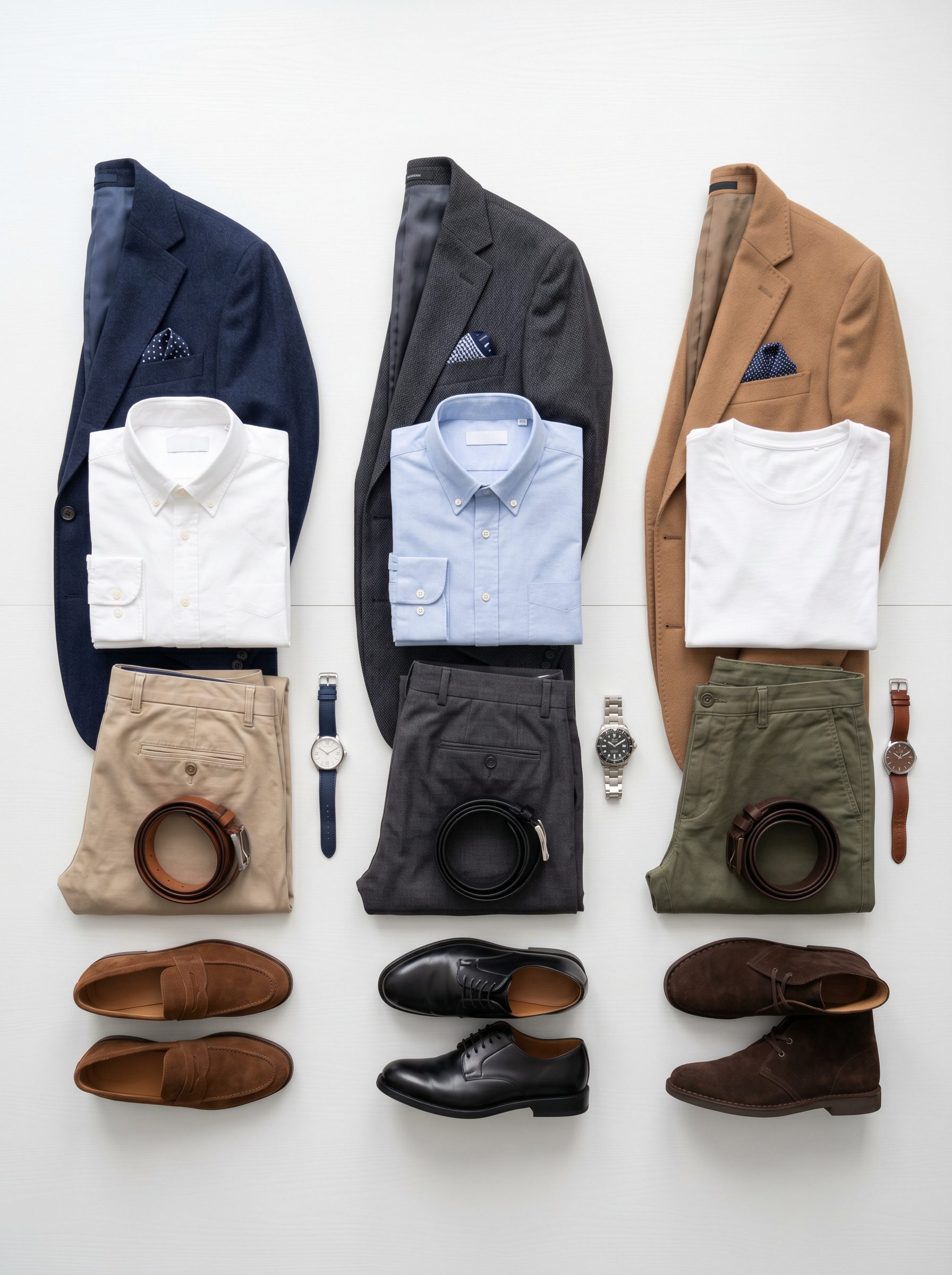
Color is the most important principle behind consistently successful blazer outfits, and the approach that works most reliably is straightforward: build around neutral tones and let one element carry whatever accent exists — the same logic our color combinations guide applies more broadly across a wardrobe.
Navy, grey, beige, olive, and camel are the safest and most sophisticated blazer colors, since they coordinate naturally with each other and with almost everything else in a neutral wardrobe. Avoid overly bright colors or bold patterns in the blazer itself — these narrow versatility significantly and make the piece considerably harder to wear across settings. A patterned blazer in subtle houndstooth or fine check works well when everything beneath it stays strictly neutral.
Footwear: The Detail That Makes or Breaks the Combination
Footwear is the most critical finishing detail in any smart casual blazer outfit. The wrong shoe undermines even a carefully assembled combination above the ankle, while the right shoe pulls everything together without drawing attention to itself.
Leather loafers remain the most universally flattering choice, bridging formal and casual dressing without effort. Clean white leather sneakers add a contemporary edge when kept spotlessly maintained, and Chelsea boots in leather or suede suit autumn and winter particularly well. Always match shoe color with belt color for overall cohesion, and avoid athletic trainers entirely — they pull the outfit too far into casual territory and remove the smart quality the blazer is meant to provide.
Accessories: Enhance Without Overwhelming
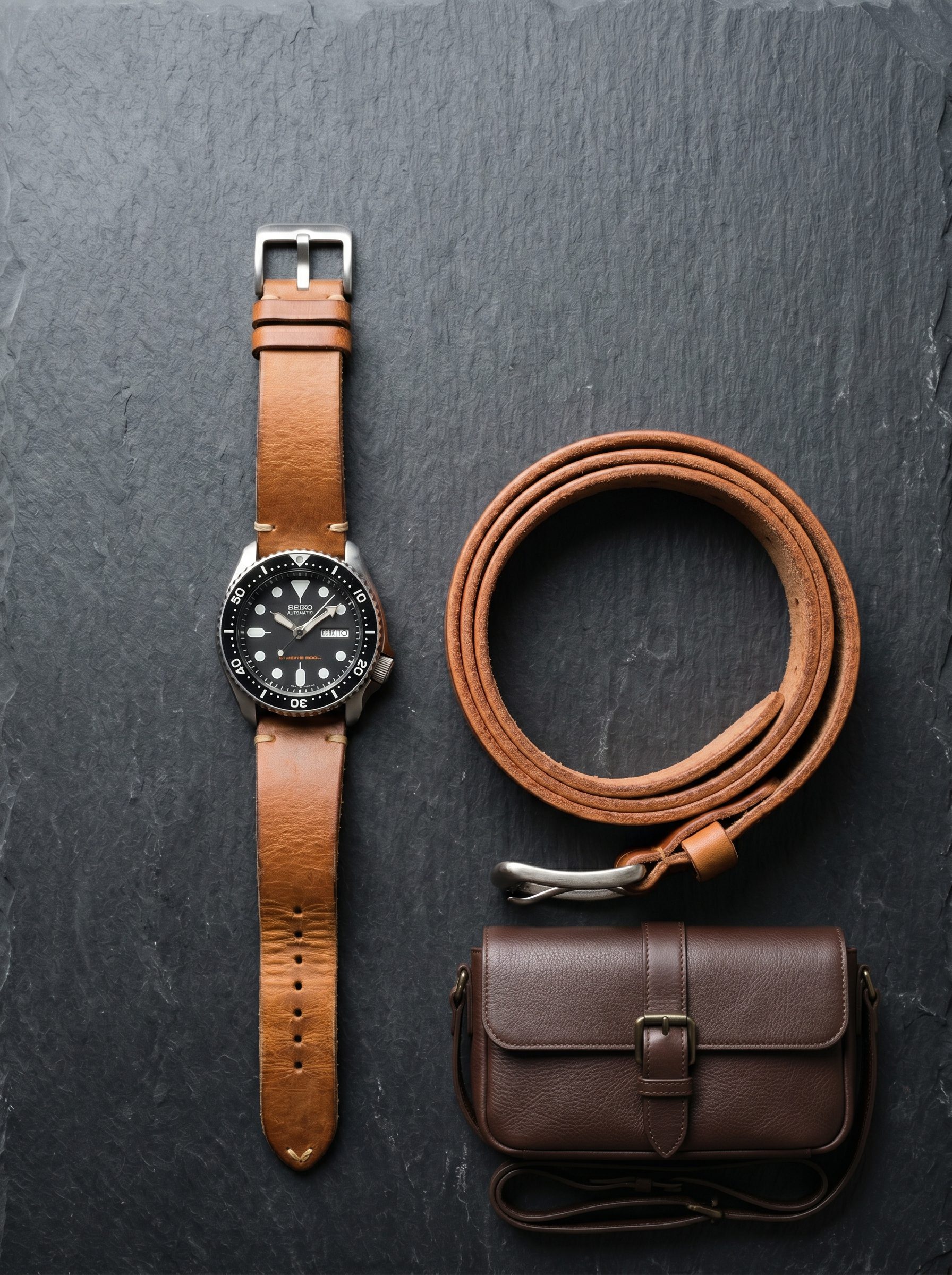
The modern smart casual accessory rule is intentional restraint. One or two carefully chosen pieces elevate the outfit; multiple competing accessories undermine the clean, considered quality smart casual blazer dressing depends on.
A quality watch is the most universally appropriate accessory regardless of the combination — something classic and understated, like a diver or field watch, suits this dress code most naturally. A slim leather belt matching the shoe color adds subtle cohesion. Avoid stacking multiple rings, chains, or bracelets, and keep metals consistent throughout rather than mixing gold and silver in one outfit. The best blazer outfits look like the man wearing them didn’t try particularly hard, and that comes from restraint rather than accumulation.
Common Mistakes to Avoid
Knowing what goes wrong is as useful as knowing what works. A poorly fitted blazer is the most frequent and most damaging error — the shoulders must align with the natural shoulder line and the sleeves should end near the wrist bone. No amount of good pieces below the blazer compensates for a jacket that doesn’t fit correctly there.
Wearing a blazer over overtly casual items — graphic tees, heavily distressed jeans, athletic trainers — pushes the outfit into confused territory rather than smart casual, as though two separate outfits were assembled at once without a clear intention linking them. Mixing too many bold colors or patterns creates visual chaos, mid or light-wash jeans stray too far toward casual to sit well under a blazer, and over-accessorizing undermines the refined tone the blazer is building.
Building a Smart Casual Blazer Wardrobe from Scratch
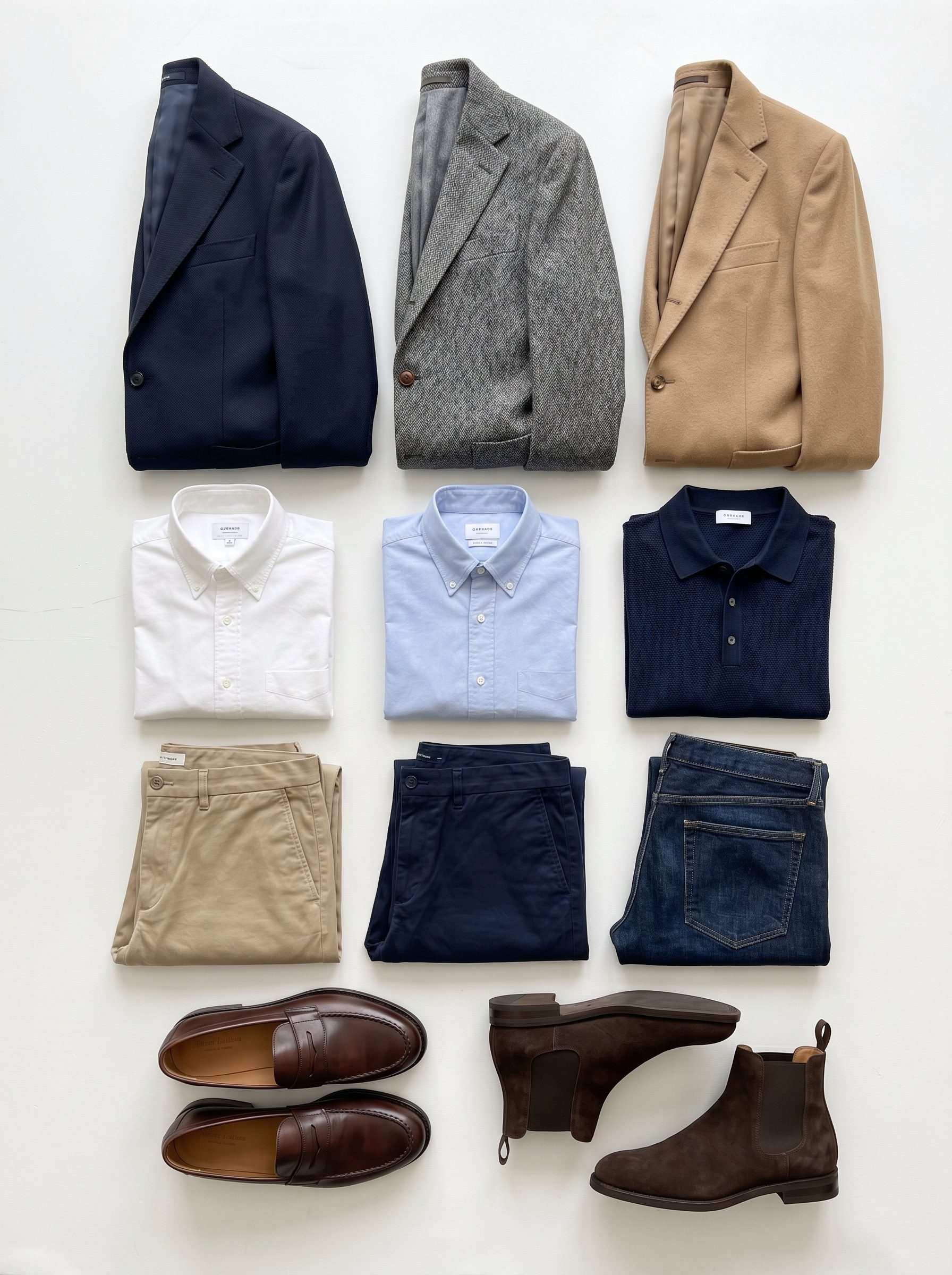
A deliberate, strategic approach to building a blazer wardrobe produces better results than a large, haphazard collection of mediocre pieces.
Start with three foundational blazers — navy, grey, and a neutral tone like camel or stone — which combine with almost everything already in a wardrobe and create a genuinely large number of distinct combinations between them. Pair each with two or three shirt options: a white Oxford, a pale blue Oxford, and a knit polo cover most smart casual scenarios across every season. Chinos in beige, navy, and olive alongside dark wash jeans complete the trouser foundation, and quality loafers, Chelsea boots, and clean leather sneakers cover the footwear. Three quality blazers deliver more daily styling power than ten poorly fitted alternatives at half the individual price.
Why the Blazer Remains the Most Powerful Smart Casual Piece
No other garment bridges formal and casual dressing with the same effortless authority. Even the simplest outfit beneath a well-fitted blazer gains immediate sophistication without requiring extensive styling knowledge to achieve.
Modern blazers have evolved considerably from their stiffer predecessors — today’s unstructured versions in cotton, linen, and wool provide enough visual structure without becoming uncomfortable through a full day of wear. They suit a wider range of body types and lifestyle contexts than traditional tailored alternatives, and need far less maintenance to keep looking their best. Investing in even one genuinely excellent blazer in a classic neutral tone is one of the more impactful upgrades any man can make to his wardrobe — everything around it becomes easier to dress, and the range of occasions it covers expands from a single purchase.