
Simple Everyday Outfits for Men That Always Look Good
The men who look good every day are rarely the ones with the most clothes. Usually they have a handful of combinations that work. They wear them often, without apology. Nobody notices the repetition. People only notice that they always look put together.
This guide is built around that idea. It gives you fifteen simple outfits, grouped by the weather you will actually wear them in. It then covers the part most outfit guides skip. Simple clothes show wear faster than anything else you own. Keeping them in good condition matters as much as choosing them.
The Case for a Personal Uniform
Most men already wear a small part of their wardrobe most of the time. The rest just sits there. The Love Your Clothes campaign, run by the UK waste charity WRAP, estimates that around 30% of the clothes in our wardrobes have not been worn in the last year.
That is not a failure of discipline. It is simply how people dress. We reach for what works and ignore what does not. A personal uniform accepts this and makes it deliberate. You choose a few reliable formulas and improve them over time. You stop buying pieces that never join the rotation.
The outfits below are those formulas. Pick the three that suit your life, and treat the rest as ideas.
Warm Days
In heat, there are fewer layers to hide behind. Each piece has to earn its place. Lighter colours and breathable fabrics do most of the work.

1. White tee and blue jeans. This is the most useful outfit a man can own. It suits almost every casual setting. The tee should skim your body without clinging. The jeans should be a clean, mid or dark wash. Add white sneakers and you are done. The only real risk is condition, which we cover below.
2. Linen shirt and light trousers. When the temperature really climbs, linen is the fabric that copes. Wear the shirt loose or half-tucked. Choose white, cream, pale blue or light olive. Pair it with linen shorts or light cotton trousers. For more, see our linen outfits guide.
3. Polo and chinos. A polo is a step up from a tee without the effort of a shirt. Choose navy, white, black or forest green. Pair it with chinos in a colour that contrasts gently. Loafers or white sneakers both work. It suits a family lunch, a casual meeting or a weekend trip into town.

4. Earth tones. Olive trousers, a rust or warm brown shirt and tan leather shoes. These colours come from the same natural palette, so they sit together easily. The look is at its best outdoors in daylight. A plain leather belt is all it needs.
Mild Days
Spring and autumn give you the most freedom. One light layer is usually enough. That layer is where most of the style comes from.
5. Plain tee and chinos. Chinos are smarter than jeans and just as comfortable. Tan, navy, olive and grey cover almost everything. Wear the tee untucked if it finishes around the hip. Tuck it loosely if it runs longer. Switch between sneakers and leather shoes depending on your plans.

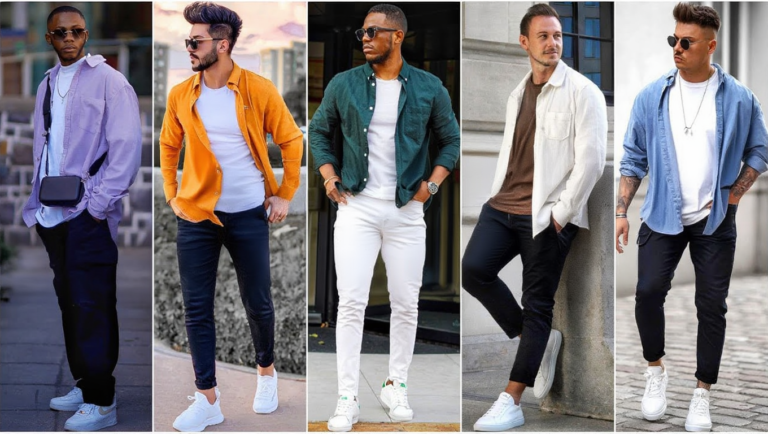
6. Overshirt over a tee. An overshirt is heavier than a normal shirt. Worn open, it behaves like a light jacket. Flannel, cotton twill and light denim all work. Roll the sleeves slightly and wear it with dark jeans or chinos.

7. Open shirt over a tee. This is the lighter cousin of the overshirt. An unbuttoned denim, flannel or linen shirt adds a layer and some shape. Because the tee underneath is plain, the shirt can carry a pattern or texture. If you wear denim on denim, keep the shades clearly different.
8. Denim jacket. Few jackets age as well. A good one bought years ago still looks current. Wear it over a white tee or a grey sweatshirt. With jeans, make sure the jacket and trousers are clearly different washes.

9. Tailored trousers and loafers. Some days jeans feel too casual, but a full outfit feels like too much. This is the answer. Straight-cut trousers in navy, grey or camel. A plain fitted tee or a simple shirt. Leather loafers to finish. The shoes lift everything else. Our footwear guide explains why loafers sit so well in the middle.

10. Cream shirt and navy trousers. This is the minimalist default. A cream or white shirt, navy or light grey trousers and clean minimal shoes. No loud accessories and no pattern mixing. After a while it stops feeling like an outfit. It becomes the thing you put on without thinking.
Cool Days
Colder weather brings heavier fabrics. That makes proportion harder, because thick layers add bulk quickly. Keep the lower half slim when the top half gets heavier.

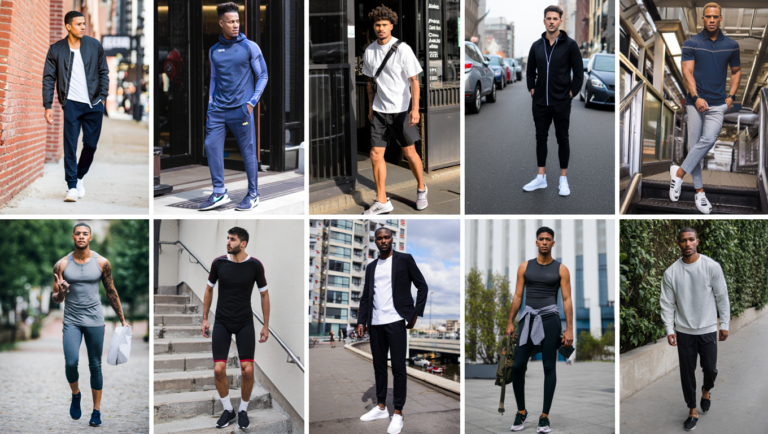
11. Grey sweatshirt and dark jeans. A grey sweatshirt goes with nearly everything. It takes seconds to put on. Choose one that fits at the shoulders rather than one that drowns you. Dark slim jeans give the outfit a sharper lower half. White or grey sneakers finish it.

12. Hoodie and joggers. This combination looks lazy only when the fit is wrong. Choose joggers that taper at the ankle. Choose a hoodie in a solid colour that does not hang past your hips. Grey, navy, black and cream all work. Clean sneakers keep it on the right side of the line.
13. Zip-up jacket and joggers. A plain zip-up track or knit jacket gives more shape than a hoodie. It looks deliberate rather than just comfortable. Stick to one solid colour. Unfaded pieces make the difference here. Faded ones look like old gym kit.
14. All black. For days when you do not want to decide anything, all black is the reliable answer. A black tee or knit, black trousers or dark jeans, black boots or sneakers. The outline becomes clean and simple. Just know that different blacks fade at different rates. Our monochrome guide explains why.
15. Neutral tones head to toe. Cream, beige, oatmeal and sand sit together naturally. Vary the texture so the outfit does not look flat. A chunky knit over smooth cotton trousers works well. Our neutral tone outfits guide goes deeper into this palette.
Simple Clothes Show Wear First
Here is the catch with simple outfits. They hide nothing. A patterned shirt can disguise a faded patch. A plain white tee cannot. When an outfit has only three pieces, each flaw is easy to spot.
Watch for four signs in particular. A tee collar that ripples instead of lying flat. A white that has turned grey or yellow. A black that has faded to charcoal. Knitwear covered in small bobbles. Any one of these makes a good outfit look tired.
Most of this damage happens in the wash. A few habits slow it down considerably.
Wash cooler. The same Love Your Clothes campaign recommends washing at 30°C. It helps clothes last longer and uses less energy. Heat is hard on fibres and dyes.
Turn things inside out. Jeans, dark tees and printed pieces fade mainly on the outside. Turning them inside out protects the face of the fabric from rubbing in the drum.
Wash less often. Jeans, knits and outer layers rarely need washing after one wear. Air them overnight instead. Tees and underlayers are different, since they sit against the skin.
Skip the tumble dryer for key pieces. Heat shrinks cotton and stretches collars out of shape. Dry tees flat or on a hanger. Fold knitwear rather than hanging it, so the shoulders do not stretch.
Replace on a Rhythm, Not on a Whim
Even with good care, the pieces you wear most will wear out first. That is a sign the uniform is working. Plan for it rather than waiting for a crisis.
When you find a tee that fits perfectly, buy two or three. Brands change their cuts often, and the same size can fit differently next year. Replace white tees once they start to discolour. Check your jeans and chinos at the start of each season. This steady approach costs less than buying a large batch of new clothes at once.
Build Your Own Three Formulas
You do not need all fifteen outfits. You need one formula for each kind of day. Choose one warm-day outfit, one mild-day outfit and one cool-day outfit from the lists above. Make sure they share some pieces. Chinos, white sneakers and a navy layer overlap easily.
Wear those three for a month. Notice which piece you reach for most. Notice which one always feels slightly wrong. Improve the weakest piece first. Over a season, the uniform sharpens itself.
If you want to go further and build a full wardrobe around this idea, our capsule wardrobe guide sets out what to buy and in what order.
The Short Version
Simple outfits win because they are easy to repeat. Choose a few reliable formulas and match them to the weather. Keep the pieces in good condition, since simple clothes hide nothing. Replace the most-worn items steadily. Do that, and looking good every day stops being a daily decision.