Small Kitchen Remodel on a Budget: Affordable Renovation Ideas
Small Kitchen Remodel on a Budget: Where to Start and What Actually Works
Small kitchen renovations go wrong in a predictable way. The budget gets spent on the visible surfaces and nothing changes about how the kitchen functions. Or the layout improves but the room still looks dated because the surfaces were never touched. The improvements that deliver genuine value are the ones that address both problems simultaneously without requiring large individual expenditures.
The fifteen ideas in this guide are specifically organized around that principle. Some cost almost nothing and deliver an immediate visual transformation. Others require modest investment but produce a functional improvement that lasts for years. None of them require structural work or professional contractors for most homeowners. Understanding which category each improvement falls into before starting makes the budget go further and the results arrive in the right order.
Modern Small Kitchen Remodel: Discipline Is the Design
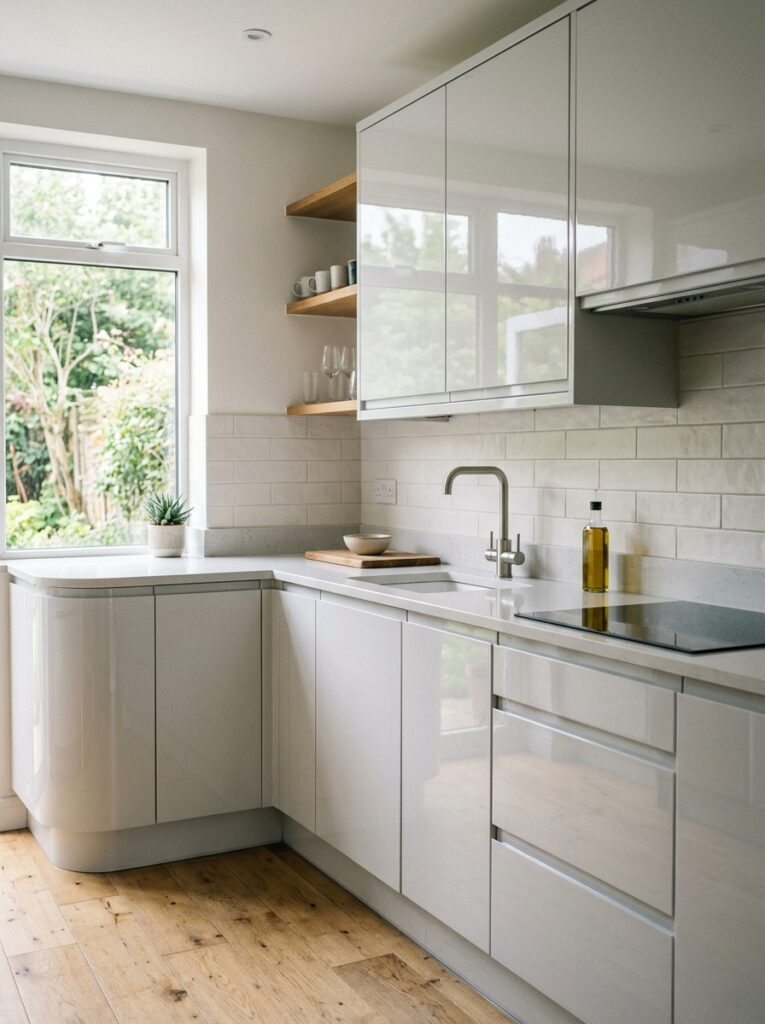
The thing about modernizing a small kitchen is that you do not need to tear anything out to make it feel completely different. Clean lines and handle-less cabinets can both happen with a coat of paint and some new hardware. No contractor required.
Getting rid of anything decorative that sits on a counter frees up visual space in a way that is immediately noticeable. Glossy or semi-gloss cabinet paint catches the light and makes the room feel bigger than it actually is. The modern small kitchen is really about discipline. Fewer things, better chosen, properly placed. That discipline is free to apply and it delivers a stronger result than most purchases made in the same space.
Minimalist Kitchen Update: Removal Before Addition
View this post on Instagram
A minimalist kitchen update is less about buying things and more about removing them. Once you clear the counters of everything that does not genuinely need to be there daily, something shifts. The room gets quieter, more spacious, and easier to actually cook in.
Hidden storage is the key enabler here. Drawers with dividers, a pull-out bin cabinet, hooks inside a cupboard door for lids. When the visual noise is gone, even a very modest kitchen reads as calm and put-together. It is one of those rare renovation improvements where the budget version and the expensive version look nearly identical from every angle.
Budget-Friendly Kitchen Remodel: Surfaces Change Everything
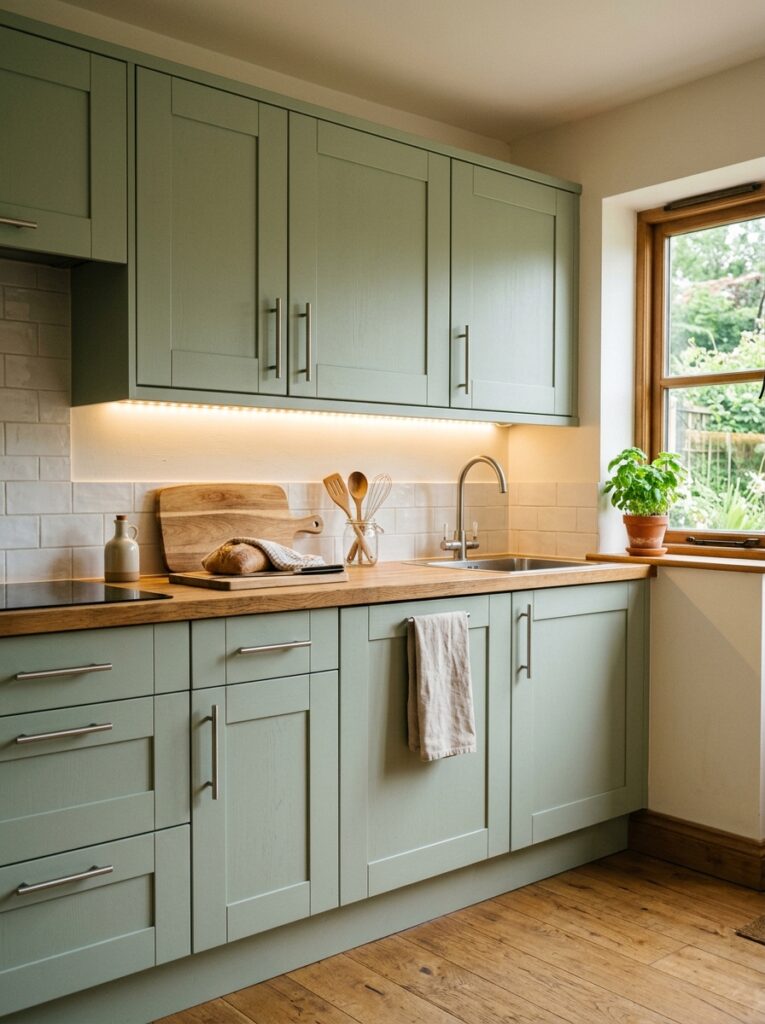
A budget kitchen remodel works because most of what makes a kitchen feel dated is not the structure. It is the surfaces. Cabinet doors painted in a fresh warm white or sage green, old round knobs swapped for simple bar pulls, fluorescent lighting replaced with warm LED strips under the cabinets. None of these changes are expensive individually.
Together they completely change what the room looks and feels like. Peel-and-stick backsplash tile has become genuinely convincing in recent years. It handles the area where kitchens tend to look most tired without requiring significant investment. This combination of three surface changes is the most cost-effective way to make a dated kitchen read as deliberately renovated.
Compact Kitchen Makeover: Honest Thinking About What Earns Its Space
View this post on Instagram
Compact kitchens demand honest thinking about what is actually being used and what is just occupying space. Appliances used once a year belong in a cabinet or out of the kitchen entirely. Slim-profile appliances, narrower fridges, single-basin sinks, compact dishwashers, exist specifically for this situation and they make a real difference when space is genuinely limited.
Light colors on every surface prevent the room from feeling enclosed. Corner solutions like lazy Susans or pull-out corner drawers recover space that usually goes to waste entirely. When every inch is accounted for deliberately, a small kitchen stops feeling like a compromise and starts feeling like a considered design decision.
White Small Kitchen Remodel: The Choice That Never Goes Wrong
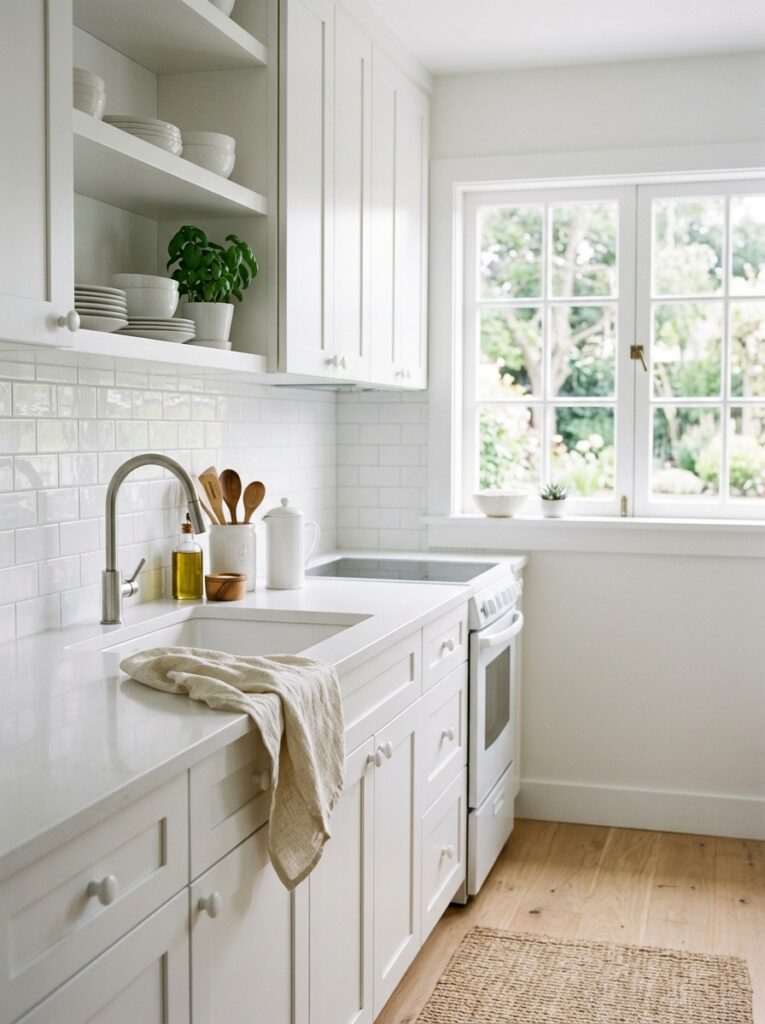
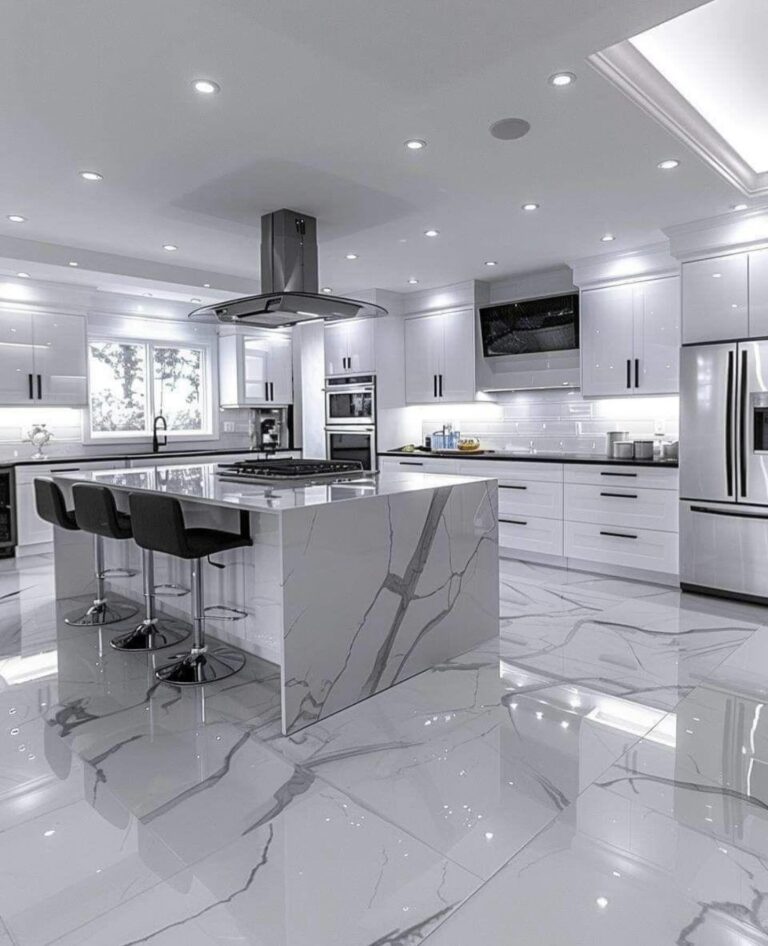
White is one of those kitchen choices that never goes out of style because it was never really in style either. It just always works. White cabinets, white countertops, white subway tile backsplash. It sounds monotonous but in practice it creates a brightness and cleanliness that is especially valuable in a small space where natural light is limited.
The key to keeping it from looking sterile is texture. A matte cabinet finish against a glossy tile, a rough linen tea towel against a smooth stone counter. Those small contrasts give the eye something to land on without cluttering anything up. White kitchens that work do so because someone understood that texture is doing the visual work that color is not.
Galley Kitchen Renovation: Stop Fighting What It Is
View this post on Instagram
Galley kitchens have an undeserved bad reputation. They are actually one of the most efficient cooking layouts available. Everything is close, the work triangle is tight, and you never have to walk far to get anything done. The renovation challenge is making the narrow corridor feel open rather than tunnel-like.
Consistent cabinetry color on both sides, under-cabinet lighting that illuminates the countertop work surfaces, and keeping upper cabinets light or glass-fronted all help considerably. A runner rug down the center adds warmth without occupying visual space. The galley kitchen works best when you stop fighting what it is and start designing it for what it does well.
Space-Saving Kitchen Design: Every Surface Is an Opportunity
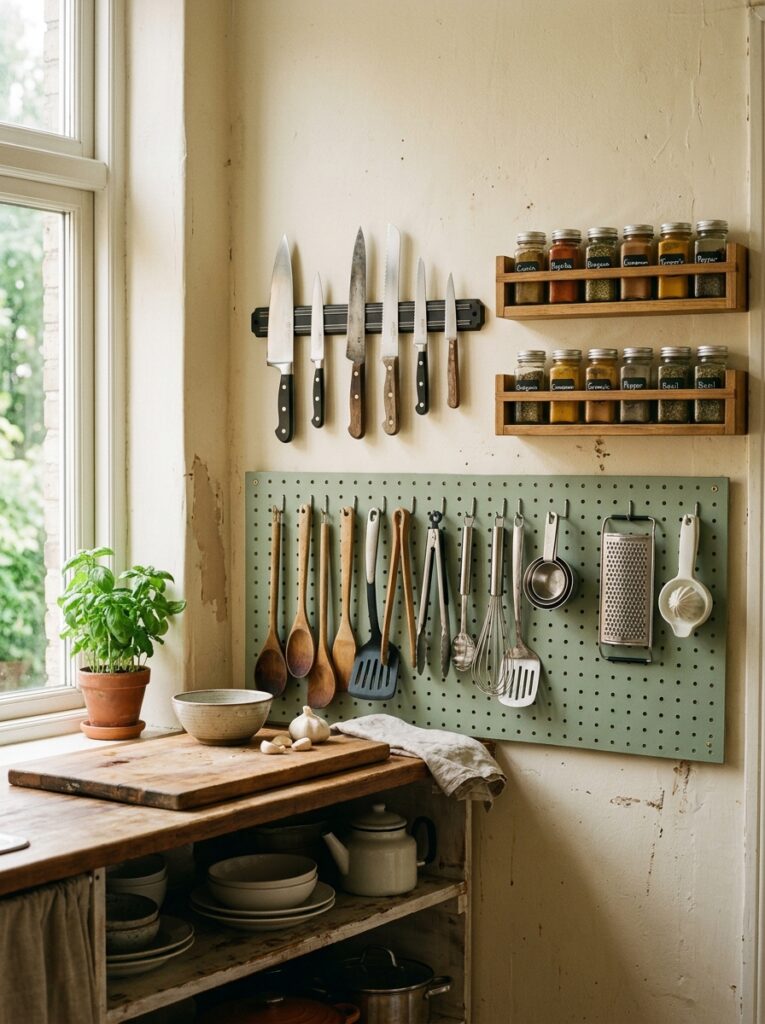
A space-saving kitchen is one where every surface and wall is treated as an opportunity rather than a boundary. A magnetic knife strip frees up a drawer. Wall-mounted spice racks clear jar clutter from the counter. A fold-down table mounted to the wall handles meal prep and folds flat when not in use.
A pegboard painted to match the wall holds utensils in a way that looks intentional rather than improvised. Multi-functional pieces, a cutting board that slides over the sink, a stool that tucks under a counter, reclaim space without requiring any construction at all. The goal is a kitchen where nothing sits somewhere unless it absolutely has to be there.
Open Shelf Small Kitchen Remodel: The Most Dramatic Change Without Touching a Wall
View this post on Instagram
Replacing upper cabinets with open shelving is one of the most dramatic things you can do to a small kitchen without touching a single wall. The cabinet doors disappear and suddenly the space opens up. You can see the back wall, the room feels taller, and there is an airiness that closed cabinets simply cannot create.
The trade-off is that what is on those shelves is always visible. That means editing carefully: matching dishes, a few nice glasses, some plants or small objects that genuinely earn their place. Done well, open shelving looks like it was designed that way from the beginning. Done carelessly, it just looks disorganized. The discipline of what is displayed is what makes the difference.
Light and Bright Kitchen Remodel: Light Does More Work Than Any Material Choice
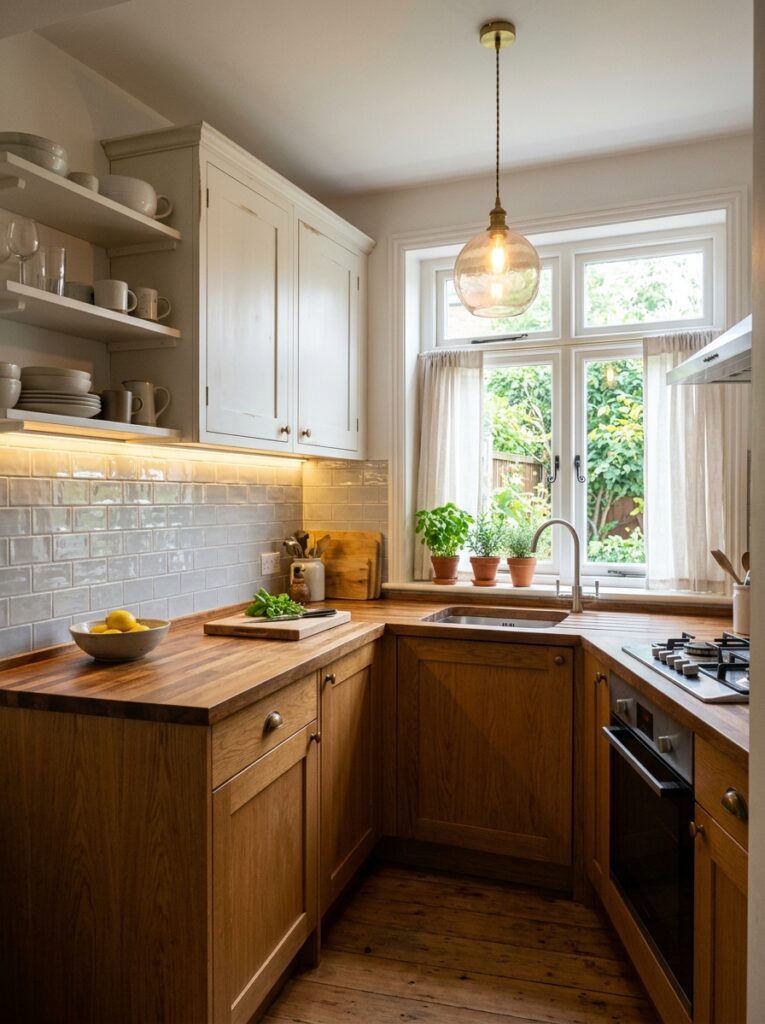
Light does more work in a small kitchen than any cabinet or countertop decision. Getting the lighting right, warm under-cabinet strips that illuminate the workspace, a pendant or two over the counter if the ceiling allows, natural light let in fully by keeping window treatments minimal, transforms how the room reads at every hour of the day.
Reflective surfaces amplify whatever light is available. A glossy backsplash, glass cabinet fronts, a light-colored countertop with some sheen. A small kitchen with good light feels genuinely welcoming. A small kitchen without it feels like a closet regardless of how it is decorated. Addressing the lighting before any other surface change consistently produces the most immediate and noticeable improvement.
Small Kitchen Cabinet Refresh: The Highest Return-on-Investment Move
View this post on Instagram
Cabinet refresh is the highest return-on-investment move in any small kitchen renovation budget. The bones of most kitchens are perfectly fine. The boxes are solid, the layout works. What makes them feel old is usually the door style, the finish, and the hardware.
Repainting doors in a current color, anything from warm off-white to deep navy to earthy green, costs a fraction of replacing them and can look just as good. New hardware is an afternoon project that changes the whole personality of the cabinets immediately and visibly. If the doors are genuinely beyond saving, refacing is still significantly cheaper than replacing and the result is indistinguishable to most visitors. Start here before considering any structural changes.
Scandinavian Small Kitchen Design: More with Less by Design
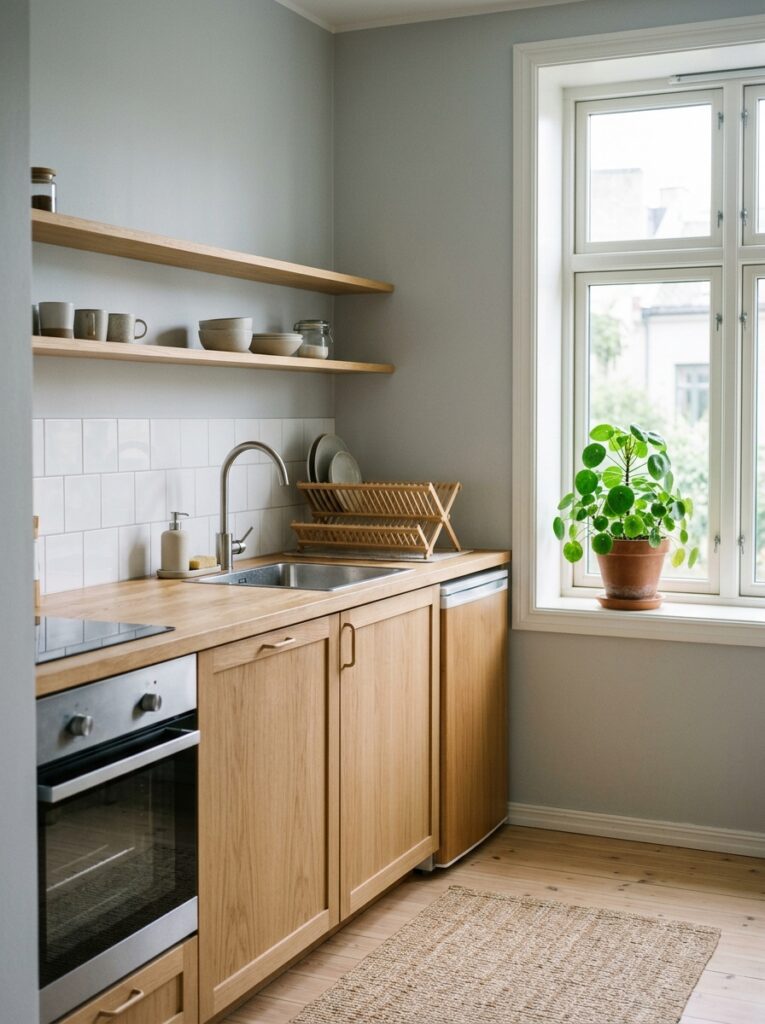
The Scandinavian kitchen is a natural fit for small spaces because the whole design philosophy is built around doing more with less. Light wood grain on lower cabinets or an open shelf, white or very pale grey everywhere else, clean lines with no decorative flourishes, and a commitment to keeping surfaces clear throughout the day.
It feels warm because of the wood and honest because nothing is performing or trying to impress. Plants, one or two simply potted, add the only softness needed. This is a style that costs very little to achieve if you are willing to commit to the edit. The edit is the hardest part and it is also the most important one.
Farmhouse Small Kitchen Remodel: Warmth Over Grandeur
View this post on Instagram
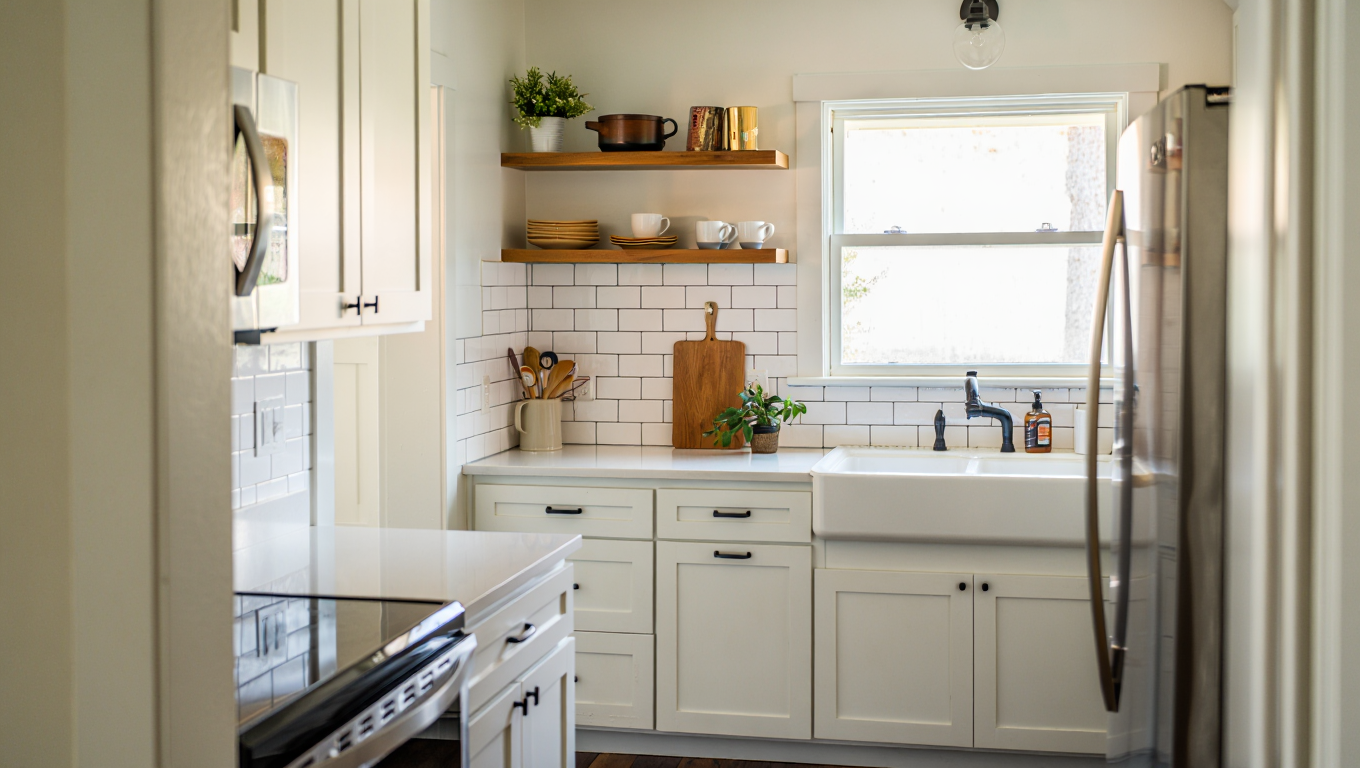
A farmhouse kitchen in a small space works because the style is inherently about warmth rather than scale. Open wooden shelves with simple brackets, a deep ceramic sink, cabinet hardware in matte black or aged brass, shiplap or white tile on the backsplash wall. None of it needs to be expensive.
In fact, farmhouse style often benefits from pieces that look slightly worn or imperfect rather than perfectly matched and freshly purchased. Even a small galley kitchen carries a farmhouse feel when the finishes are right. It is one of the most forgiving styles to work with on a limited budget because character does not require a high price point. It requires genuine material choices applied with honest intention.
Contemporary Small Kitchen Update: Restraint Is the Style
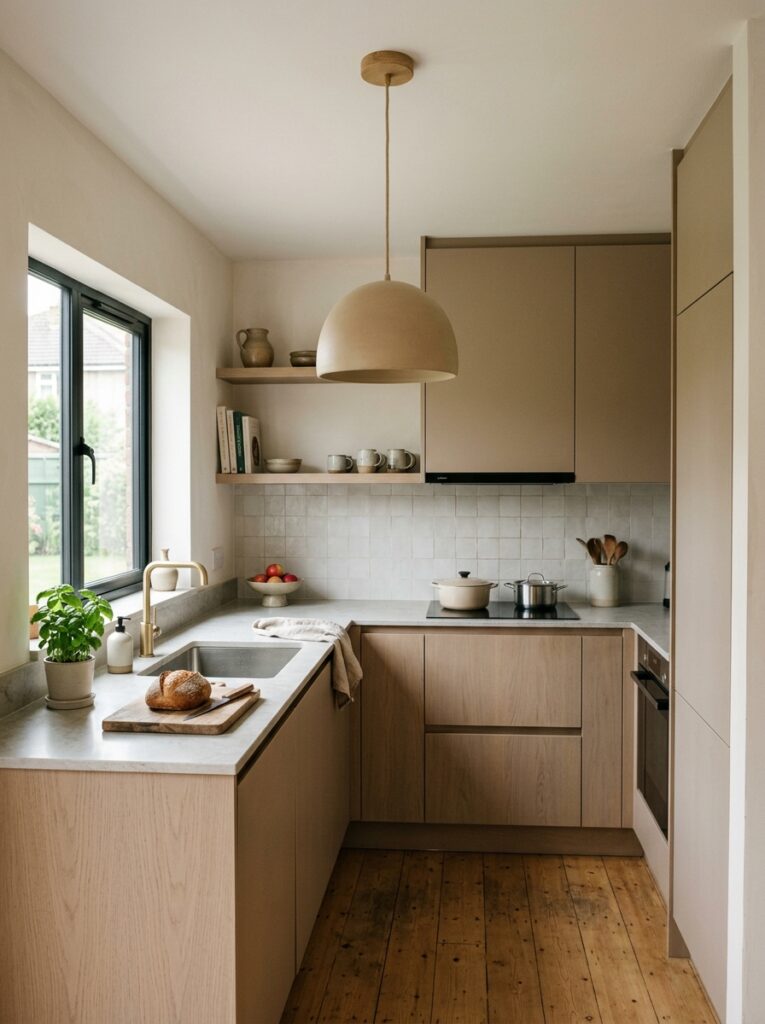
A contemporary kitchen update is about clean surfaces, subtle contrast, and good lighting more than any specific material or style choice. Smooth cabinet fronts in a warm neutral, a countertop with quiet veining rather than a bold pattern, a backsplash that blends rather than competes.
Modern pendant lighting or a single statement fixture does significant work in pulling the contemporary aesthetic together without requiring any cabinet or countertop changes. The key is that nothing feels fussy. No decorative molding, no intricate hardware, no busy competing patterns. When it is done correctly, the restraint is the style rather than an absence of one. That distinction is what separates genuinely contemporary from simply unfinished.
Small Kitchen Layout Redesign: Sometimes the Problem Is Flow Not Finish
View this post on Instagram
Sometimes the issue with a small kitchen is not how it looks but how it flows. The refrigerator is in the wrong position, the stove is backed into a corner that makes cooking awkward, the prep area is too far from the sink. Rethinking the layout, even just moving where major appliances sit, can transform the daily experience of cooking in a way that no coat of paint achieves.
This is the renovation idea that requires the most planning but often delivers the most practical return of anything on this list. Even in a rented space, rearranging freestanding elements and optimizing the existing layout costs nothing at all. Start by mapping how you actually move through the kitchen during cooking and let that honest observation drive the changes rather than a design magazine photograph.
Functional Small Kitchen Remodel: Effortlessness Is Entirely Designed
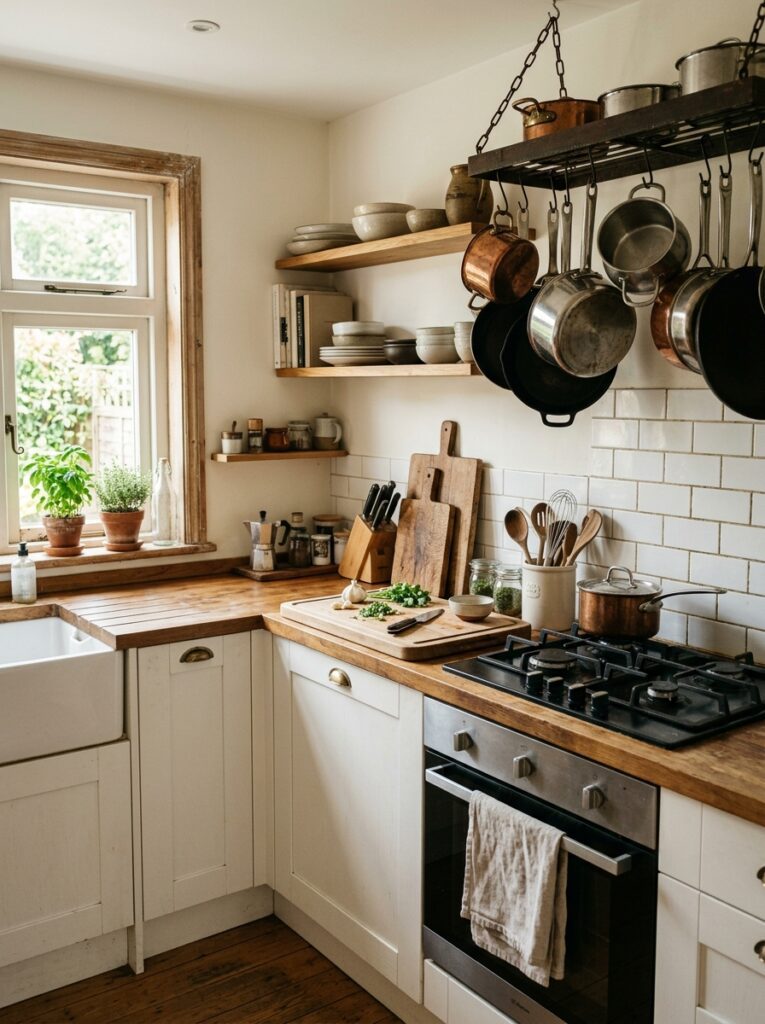
A functional small kitchen is one that gets out of its own way. Storage is positioned where it should logically be: pots near the stove, cutting boards near the prep area, glasses close to the sink. The countertop holds only what is used daily. The lighting actually illuminates the work surfaces rather than just the ceiling.
There is a logical sequence from fridge to prep area to stove to plating that does not require crossing back and forth unnecessarily. Achieving this is not expensive. It is mostly about thinking through how the kitchen is actually used and then making small, deliberate changes that support that pattern rather than working against it. The best small kitchens feel effortless to cook in, and that effortlessness is entirely a result of considered design decisions rather than available square footage.
Where to Start When the Budget Is Genuinely Limited
The most common small kitchen remodel mistake is starting with the most visible change rather than the most impactful one. Repainting cabinet doors and replacing hardware is consistently the right first move because it transforms the room’s overall appearance at the lowest cost of anything on this list.
Once the cabinets look current, addressing the lighting is the second step because light changes how every other surface in the room reads. After lighting, clearing the counters and investing in proper hidden storage removes the visual noise that undermines everything else. These three changes, cabinets, lighting, and decluttering, cost very little and together produce a result that most visitors assume represents a much larger renovation investment than it actually involved.
Everything else on this list is worth doing but these three come first because they deliver the most improvement per pound spent and they create the best foundation for every additional change that follows them.