12+ Stylish Overlays for Mirrored Closet Doors: Space-Saving Ideas
Mirrored closet doors have a complicated reputation. Builders love them because they make bedrooms feel bigger, and that part genuinely works. But the style itself often screams a very specific decade, and waking up to a full wall of your own reflection is not everyone’s idea of a peaceful bedroom.
Replacing those doors is the obvious fix, except it is also expensive, wasteful, and completely off the table for most renters. That is where overlays come in. With the right materials and a little creativity, you can transform dated mirrored doors into something genuinely stylish without removing them, without losing your closet space, and often without spending much at all.
I went down this exact rabbit hole in a rental bedroom with floor-to-ceiling mirrored sliders, and the transformation options surprised me. This list gathers more than twelve overlay ideas that update mirrored closet doors beautifully, including several that keep some of that space-expanding reflection while hiding the dated look.
Peel and Stick Wallpaper Panels
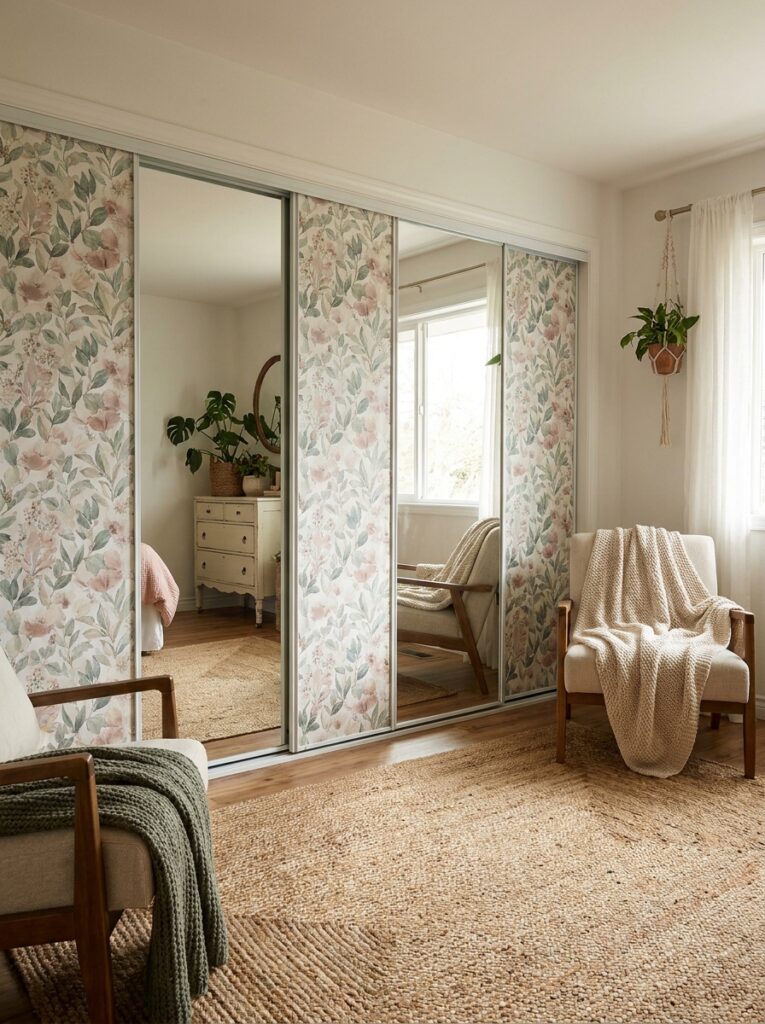
The most popular overlay solution for good reason. Peel and stick wallpaper applies directly onto the mirror surface, adheres well to the smooth glass, and removes cleanly when you move out or change your mind.
Bold botanical prints, textured linen looks, and soft mural designs all turn the doors into a feature wall rather than an eyesore. Because mirrors are perfectly smooth, the wallpaper goes on with fewer bubbles than on textured walls.
Measure your doors carefully and order a little extra for pattern matching. This single weekend project can change the entire personality of a bedroom.
Wood Slat Overlay
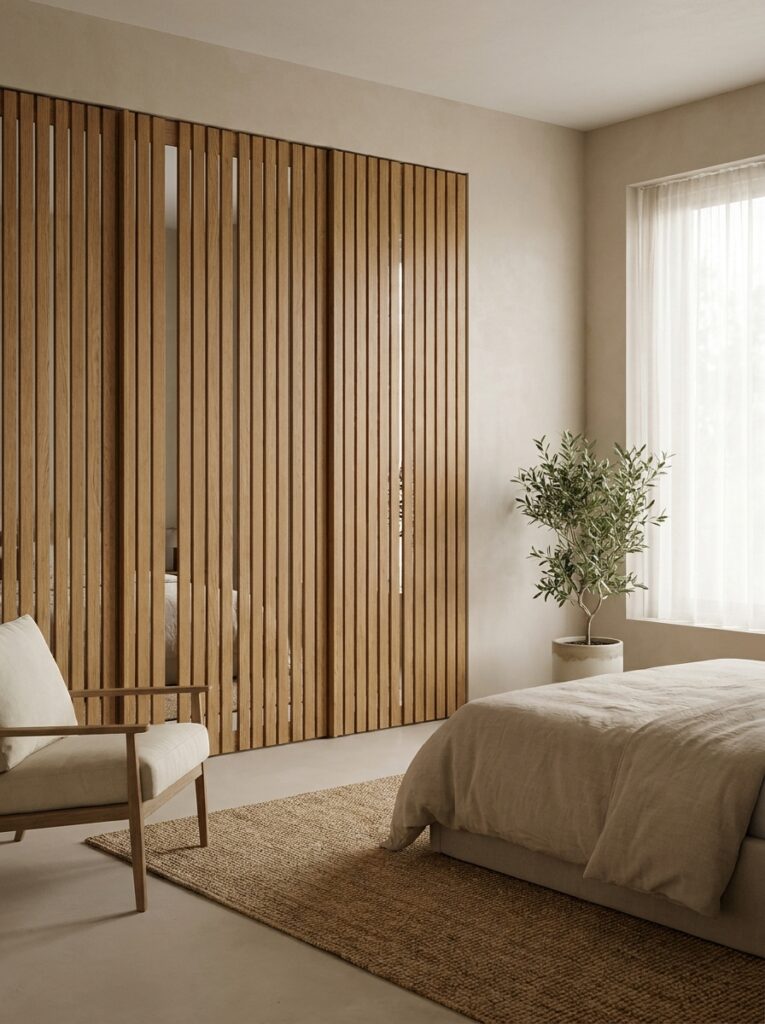
Thin wood slats applied vertically across mirrored doors create a warm, modern, spa-like look that feels genuinely high-end. Lightweight slat panels or individual balsa and pine strips attach with removable adhesive strips, keeping the project rental-friendly.
The vertical lines add height and architecture to the room, and the natural wood warms up spaces that mirrors tend to make feel cold. This overlay works beautifully in modern, Scandinavian, and japandi style bedrooms.
Leaving small gaps between slats lets slivers of mirror peek through, which keeps a hint of the light-bouncing benefit.
Fabric Panel Overlay
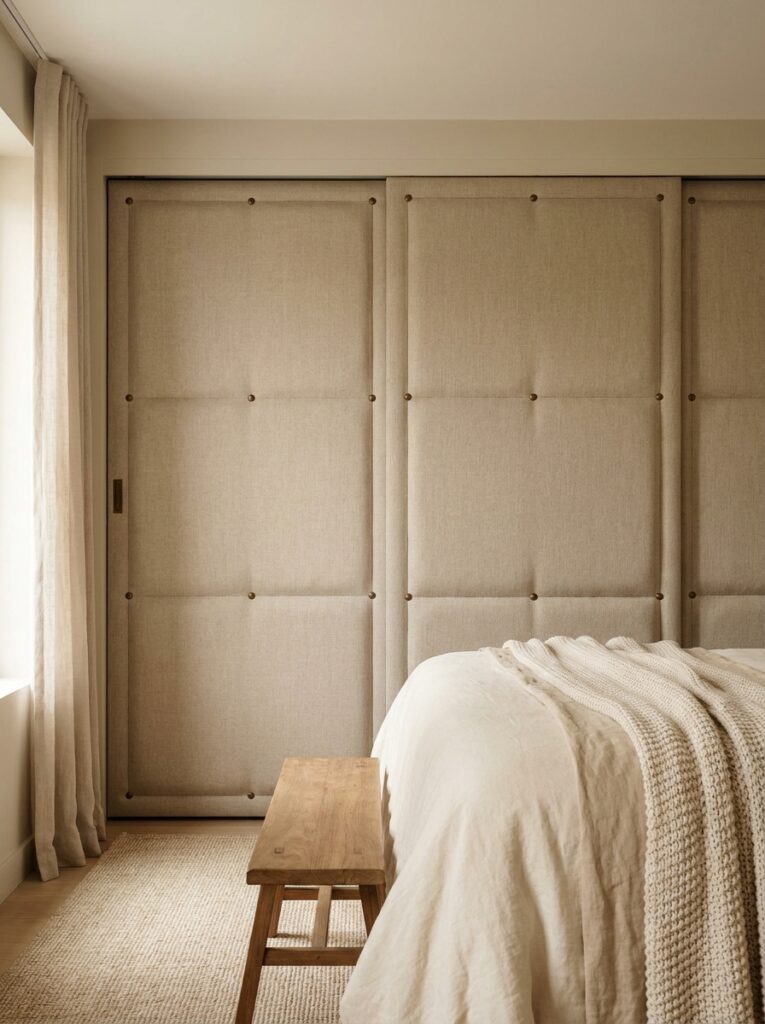
Stretching fabric over lightweight frames sized to your door panels creates a soft, upholstered look that completely changes the room’s texture. Linen, canvas, and woven fabrics bring warmth that glass never could.
The frames attach with removable hooks or adhesive strips, and the fabric can be swapped seasonally or whenever your taste changes. This approach also quietly improves bedroom acoustics, softening the echo that big glass surfaces create.
Neutral fabrics keep things calm and elegant, while a patterned fabric turns the closet wall into a statement.
Frosted Window Film
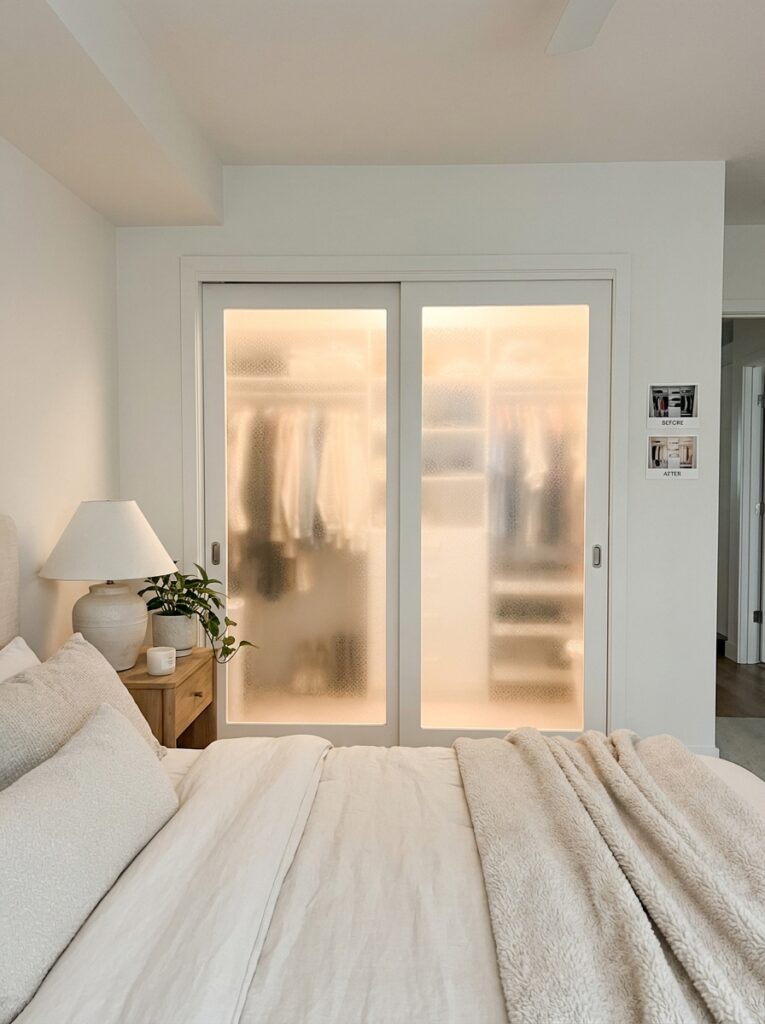
For anyone who wants to keep light bouncing around the room while losing the constant reflection, frosted film is the perfect middle ground. The translucent film applies with soapy water and a squeegee, just like on windows, and transforms harsh mirrors into soft, glowing panels.
The frosted surface still reflects light diffusely, so the room keeps much of its brightness. Patterned frosted films with stripes, gradients, or geometric designs add extra style beyond the plain matte version.
This is one of the cheapest options on the list and one of the easiest to remove later.
Decorative Window Film in Stained Glass Styles
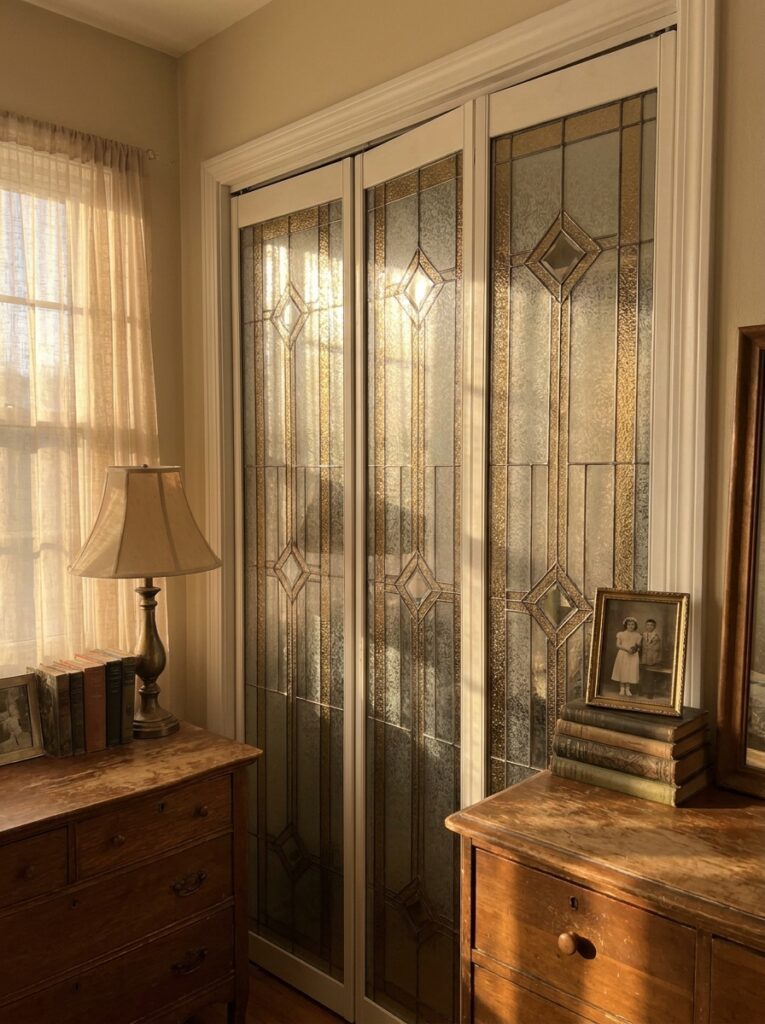
Going a step beyond plain frosting, decorative films that mimic stained glass, rice paper, or textured glass bring genuine charm to mirrored doors. Art deco patterns, leaded glass looks, and botanical etched designs make the doors feel intentional and vintage in the best way.
The film maintains translucency, so light still plays across the surface throughout the day. In a bedroom that leans vintage, cottage, or eclectic, this overlay makes the closet doors look like an original architectural feature.
Cane and Rattan Webbing Panels
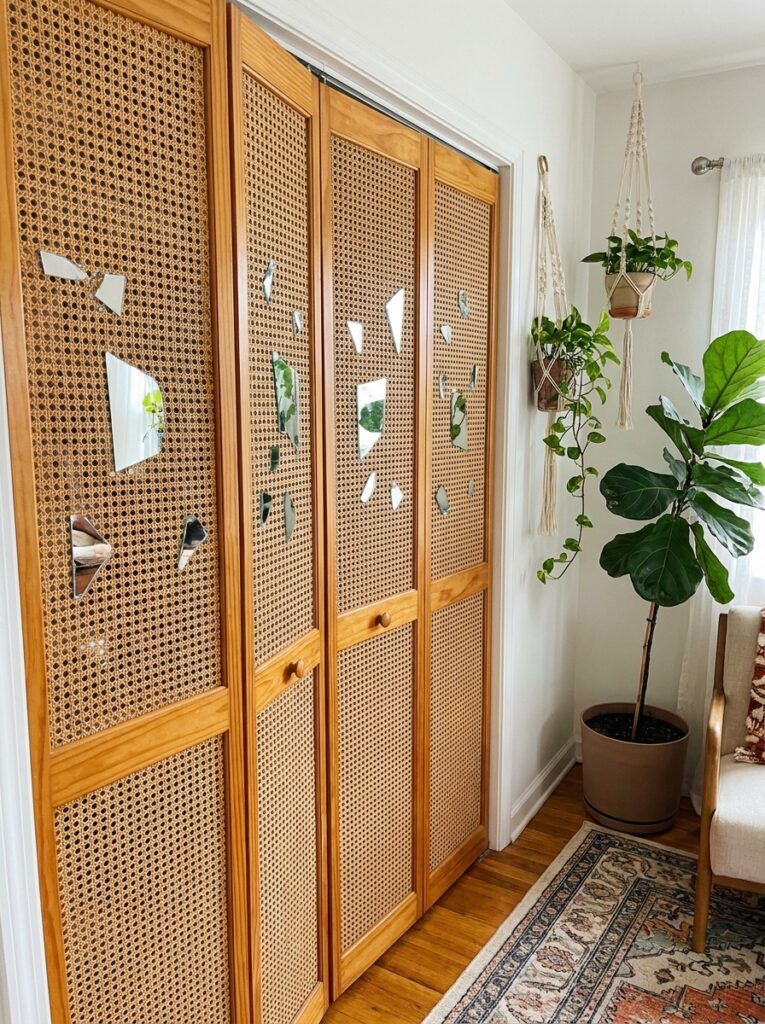
Cane webbing has made a huge comeback, and applying it over mirrored doors delivers one of the most fashionable transformations available. Sheets of cane or rattan webbing attach to lightweight frames or directly to the door edges, covering the mirror with warm, breathable natural texture.
The organic pattern brings boho and coastal warmth while still letting tiny glimpses of reflection sparkle through the weave. Paired with plants and natural wood furniture, cane-covered closet doors look like a deliberate designer choice.
Board and Batten Grid Overlay
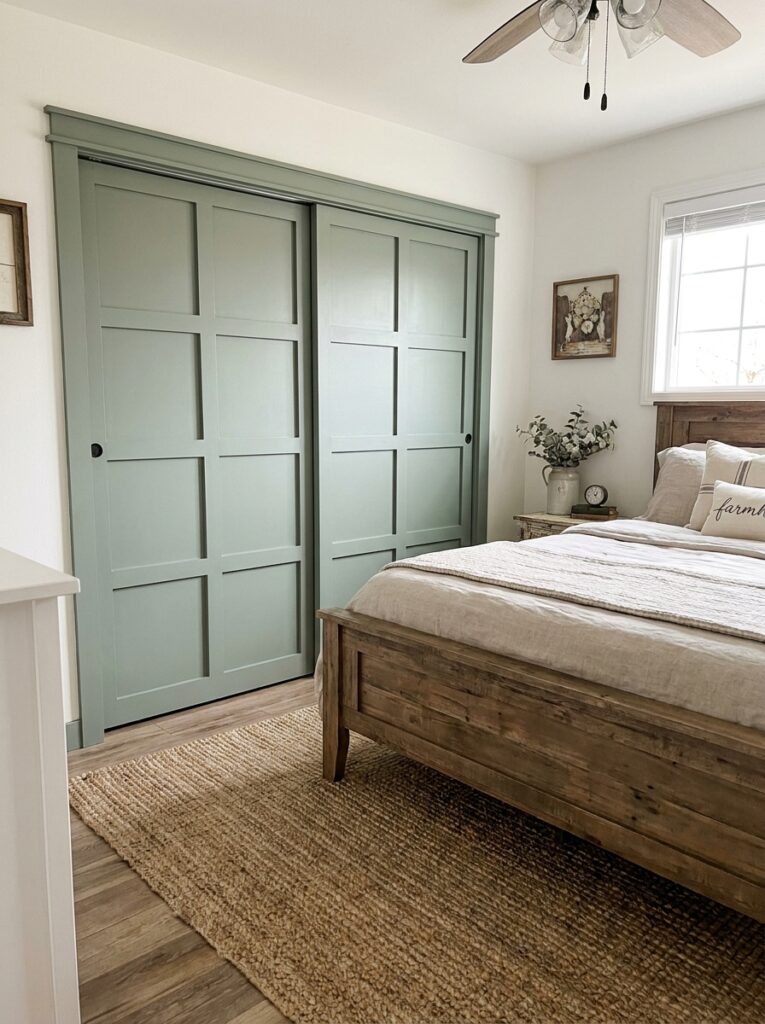
Lightweight trim pieces arranged in a board and batten grid over a painted or papered base turn flat mirrored sliders into doors with genuine architectural character. Foam or lightweight MDF trim attaches with removable adhesive, keeping things reversible.
Painted in a soft sage, warm cream, or moody charcoal, the paneled look reads as custom millwork. This overlay suits farmhouse, traditional, and modern classic bedrooms beautifully.
The key is using the lightest trim materials available so sliding doors continue to glide smoothly.
Curtain Track Cover
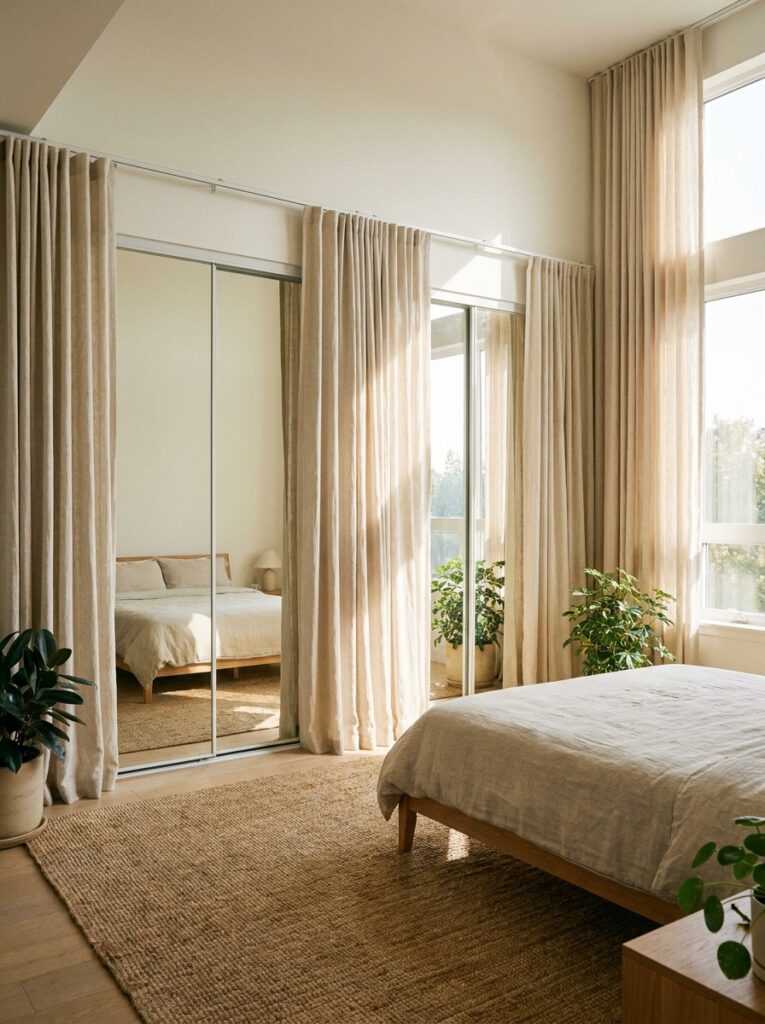
Sometimes the smartest overlay is not attached to the doors at all. A ceiling-mounted curtain track in front of the closet lets floor-to-ceiling curtains hide the mirrored doors entirely while adding softness and height to the room.
Linen curtains create an airy, breezy feel, while heavier fabrics bring coziness and better sound absorption. Pulling the curtains open still gives full access to the sliding doors and even reveals the mirrors when you want them.
This solution installs in under an hour and moves with you to the next home.
Chalkboard or Whiteboard Vinyl
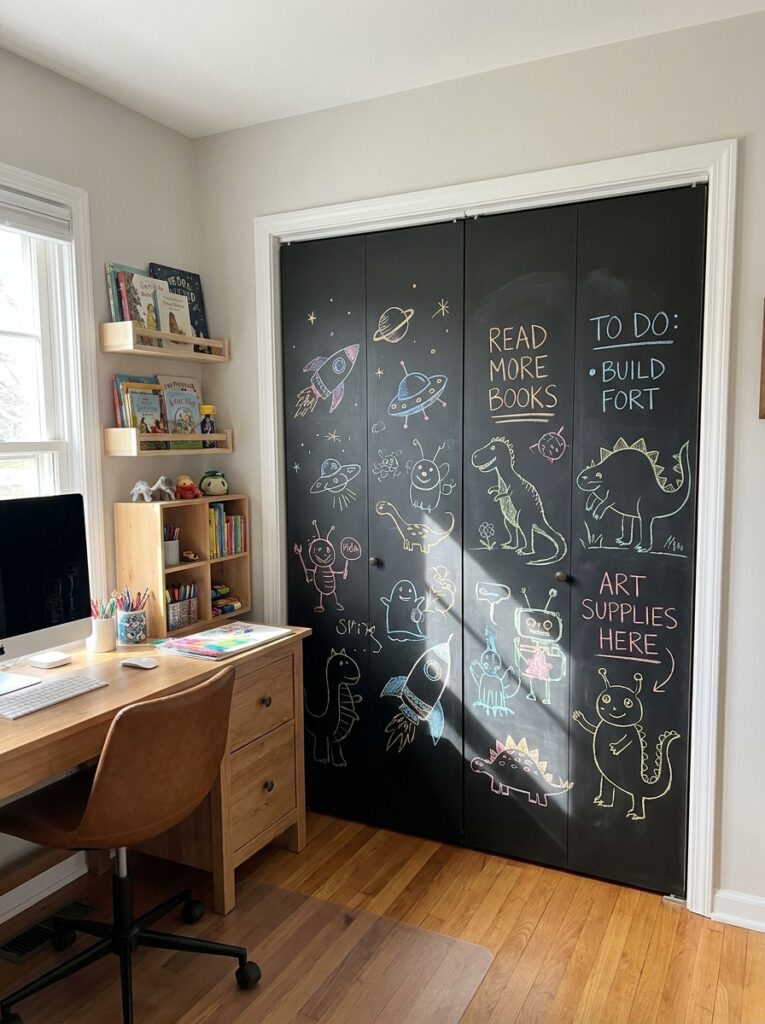
For kids’ rooms, home offices, and creative spaces, chalkboard vinyl applied over mirrored doors turns the closet wall into a giant functional canvas. Children can draw at full scale, adults can plan and brainstorm, and the black matte surface looks sleek and modern in its own right.
Whiteboard vinyl offers the same function with a brighter, cleaner look. Both apply smoothly to glass and peel away without damage, making them ideal for rentals and growing families.
Gallery Wall Overlay
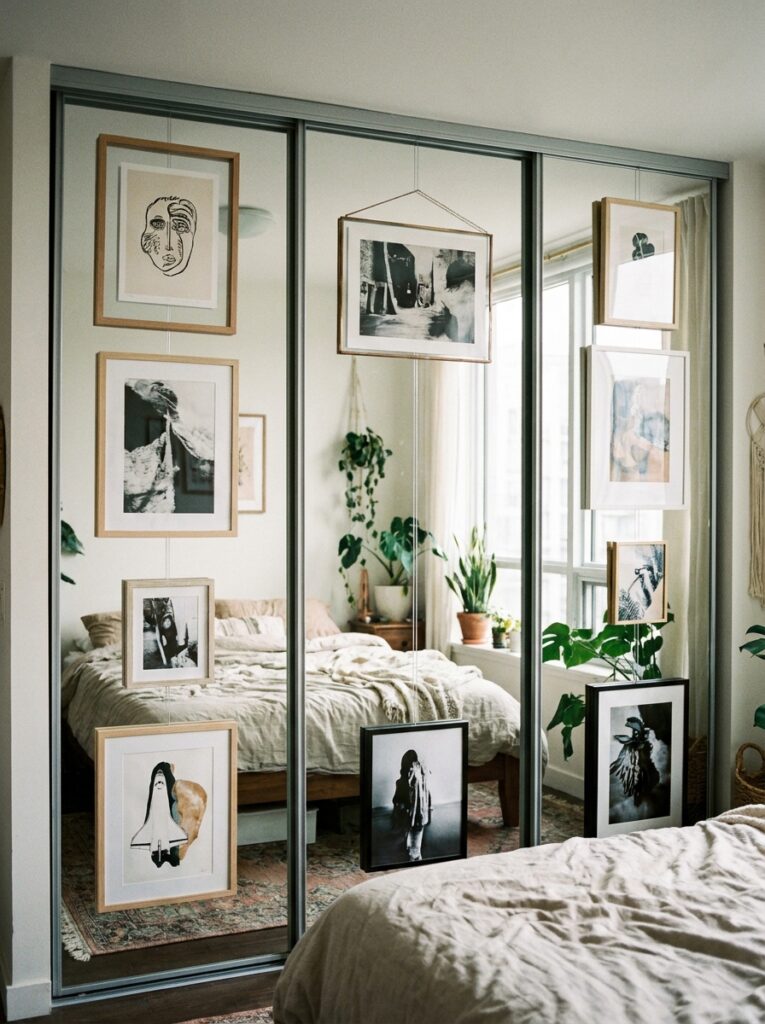
Hanging lightweight framed art directly on mirrored doors with removable adhesive hooks creates a gallery wall effect that breaks up the reflection beautifully. The mirror peeking between frames becomes a design feature, adding depth behind the art.
Light frames with prints, pressed flowers, or photographs keep the weight manageable for sliding doors. This approach lets you keep most of the mirror’s brightness while giving the eye something far more interesting to land on.
Arrange the frames on the floor first to plan the layout before committing.
Geometric Washi Tape Design
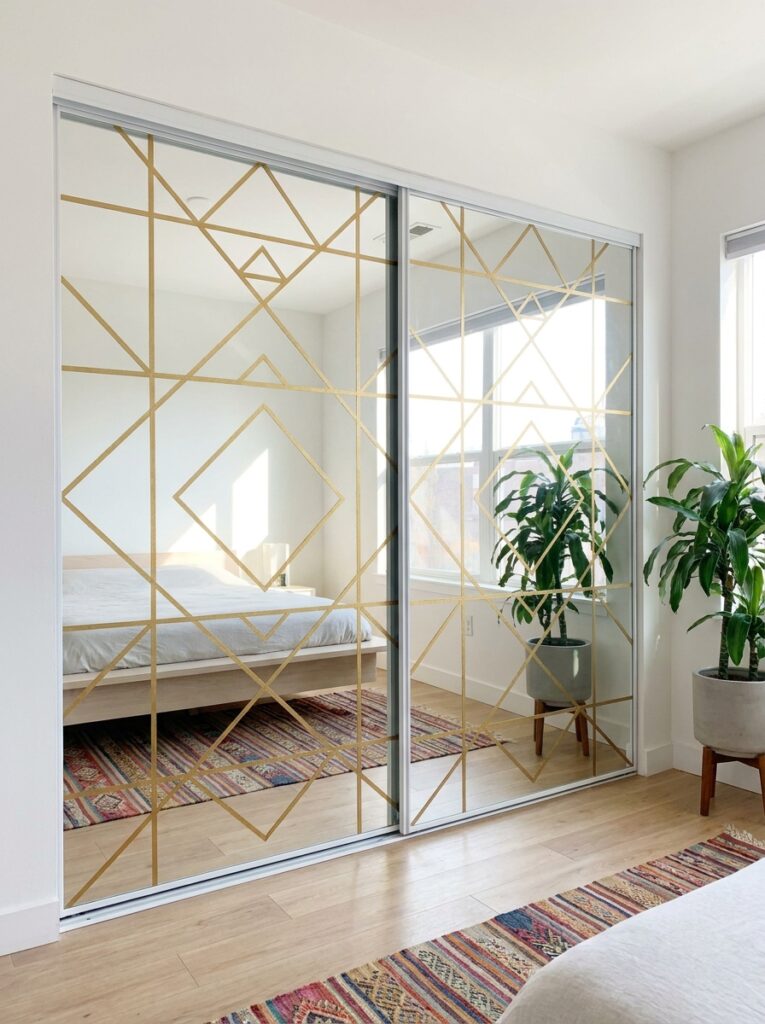
The lowest-commitment overlay of all costs just a few dollars. Washi tape applied in geometric patterns, grids, arches, or mountain designs across the mirror adds playful graphic interest while keeping the full reflective function.
The tape peels away instantly without residue, making this perfect for renters, dorms, and anyone who likes changing things often. Gold, black, and colored tapes each create completely different moods on the same doors.
This idea also works as a temporary test run before committing to a more permanent overlay.
Full Mural Wallpaper Statement
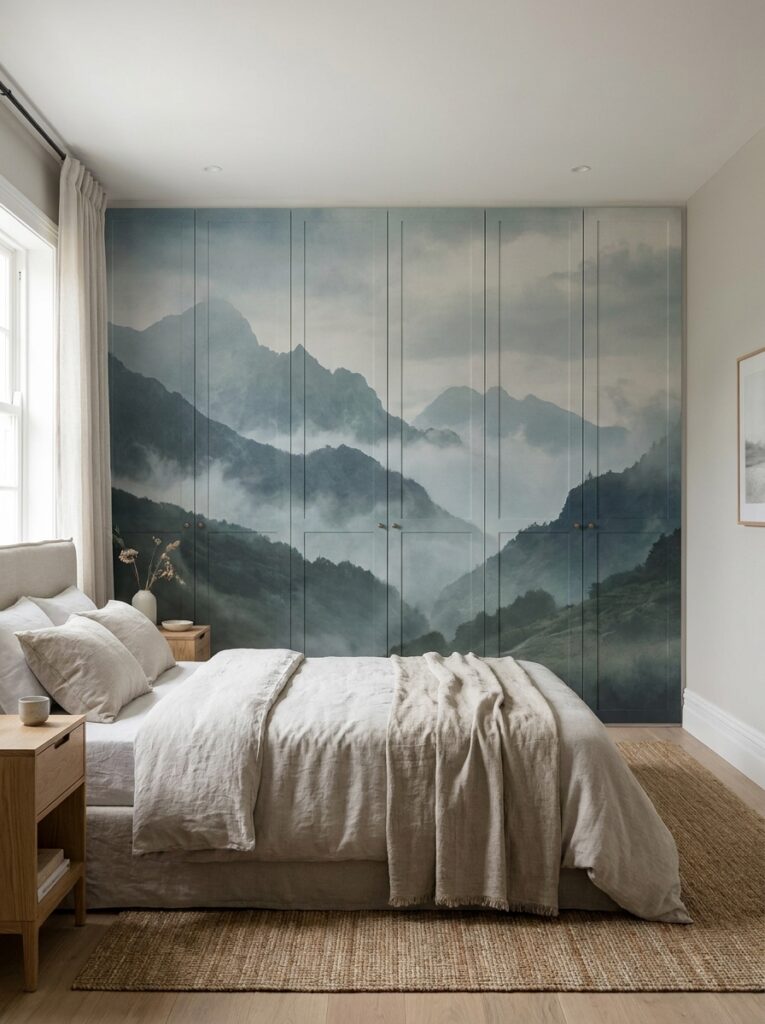
For maximum transformation, a mural-style wallpaper spanning all the door panels turns the closet wall into the room’s centerpiece. Misty mountains, vintage botanical scenes, abstract watercolors, and textured plaster looks all read as high-end design.
Because the doors slide, choose a mural where the pattern still works when panels shift and overlap. Murals with soft, organic patterns handle this movement better than scenes with precise focal points.
The result looks like a custom feature wall, and nobody will guess there are builder-grade mirrors underneath.
Plant Screen Overlay
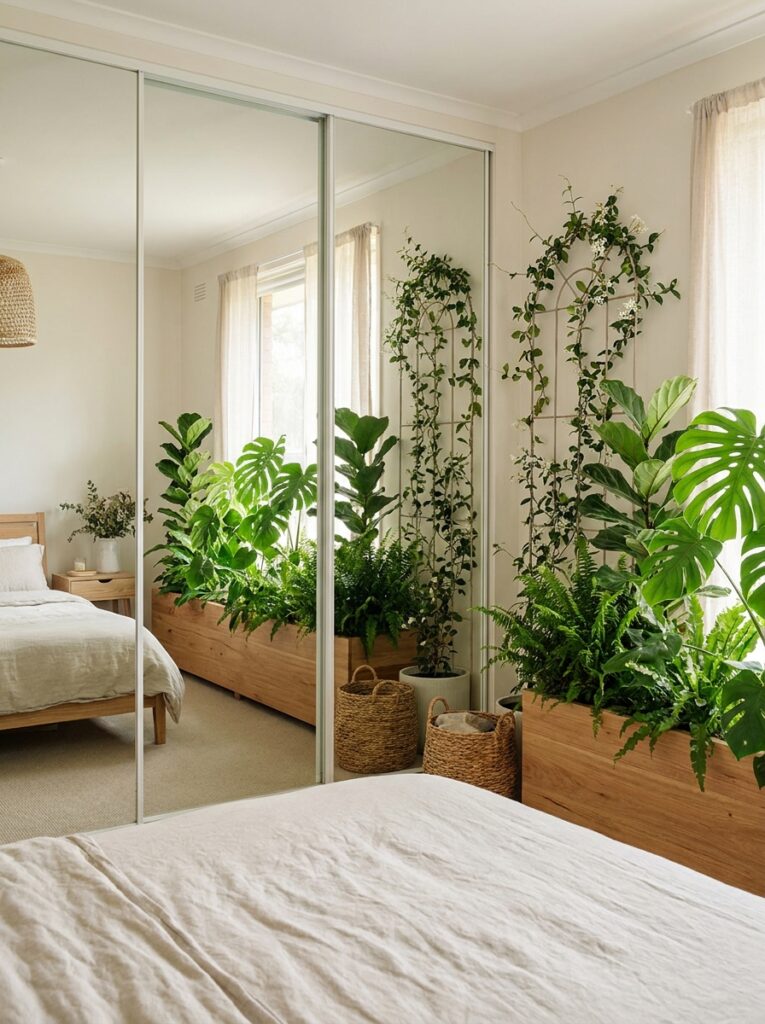
Positioning a row of tall plants, a slim plant shelf, or a freestanding trellis with climbing greenery in front of mirrored doors softens the reflection with living texture. The mirrors actually double the visual greenery, making the plant collection look twice as lush.
This approach requires zero attachment to the doors and works around whichever panels you use most. Snake plants, dracaenas, and tall ficus trees suit the low-light conditions many bedrooms have.
Common Mistakes to Avoid
The most common mistake is adding too much weight or thickness to sliding doors. Heavy wood panels or thick frames can strain rollers and stop panels from passing each other. Always check how your doors move and choose materials accordingly.
Skipping surface preparation causes most adhesive failures. A mirror that looks clean still carries invisible oils, and overlays applied over them peel within weeks. Two minutes with rubbing alcohol prevents the problem entirely.
Another misstep is covering every trace of mirror in a small, dark room. The reflection was doing real work brightening the space, so consider translucent or partial overlays before committing to full coverage.
Finally, ignoring how sliding panels overlap leads to patterns that clash when doors move. Test the pattern alignment with doors in different positions before finalizing placement.
Conclusion
Mirrored closet doors do not have to be the feature you apologize for. With the right overlay, those dated panels become a wallpapered statement wall, a warm wood slat feature, a soft curtained backdrop, or a charming frosted glass moment, all without the cost and waste of replacement.
Start by deciding how much reflection you want to keep, then match the overlay to your style and your lease. Clean the glass properly, keep materials light, and test how your doors slide before committing. A single weekend and a modest budget are genuinely all it takes to turn the most dated feature in the room into the best one.